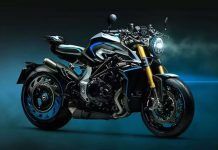
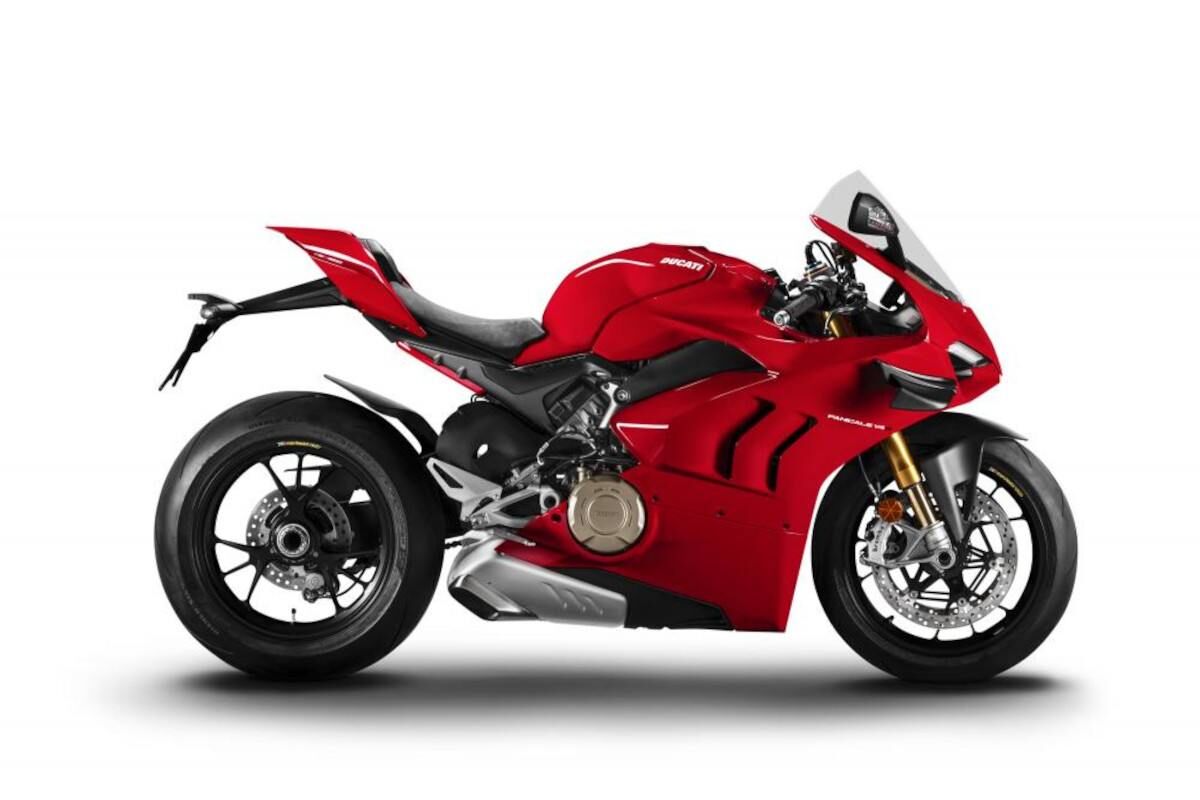



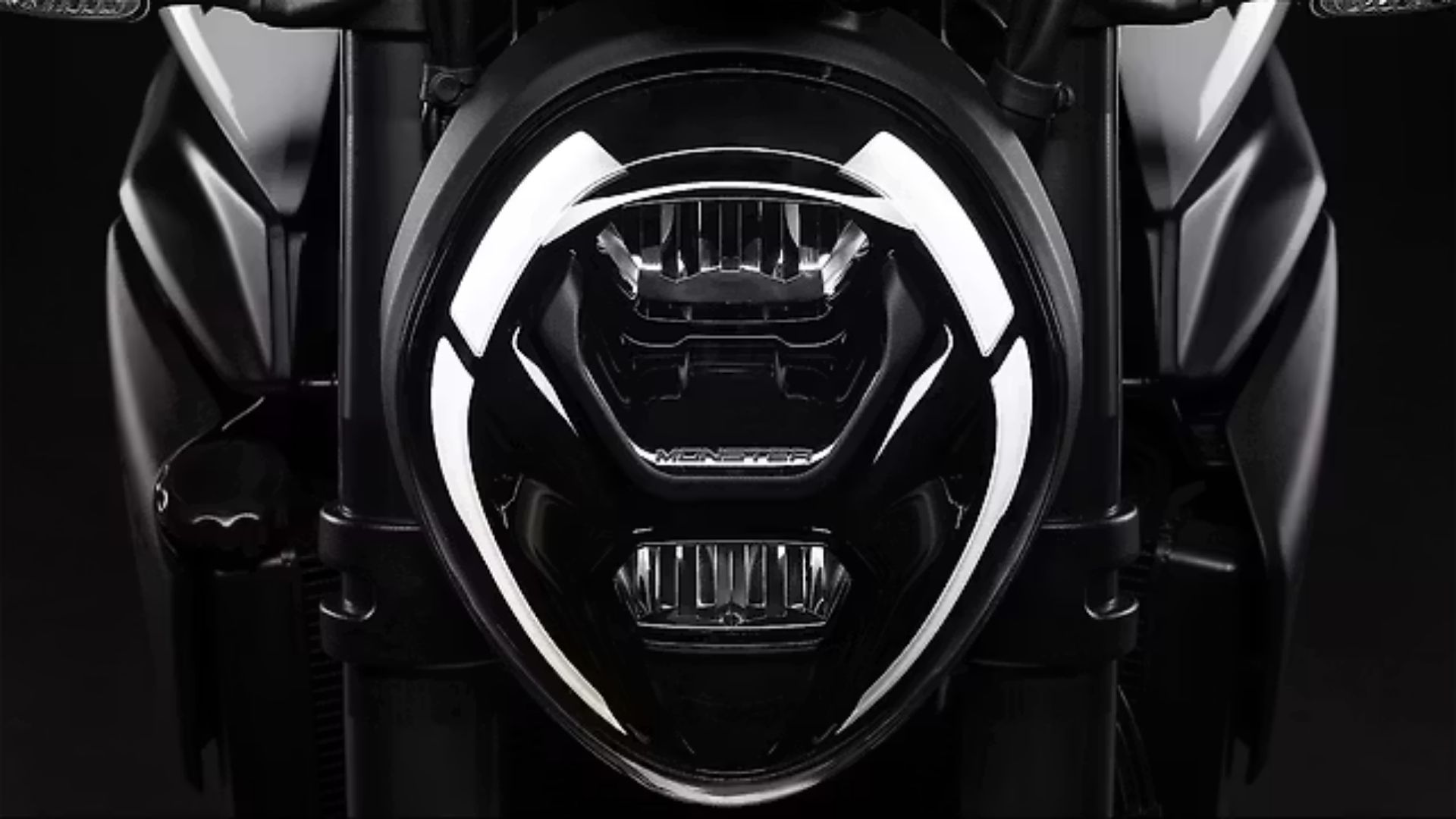
The Ducati Monster didn’t just change the “naked bike” game in 1993; it redefined the face of motorcycling—literally. For over three decades, the Monster’s headlight has been the North Star of minimalist design, evolving from a simple glass bucket to a sophisticated piece of optoelectronic engineering.
In 1993, the Ducati Monster gave the world a raw, analog stare that defined an entire genre. Thirty years later, that simple glass bucket has evolved into a high-intensity, digital halo controlled by silicon and software. From the thermal harmonics of the original M900 to the sub-millisecond MOSFET switching of the modern 937, this is the deep-tech saga of how Ducati engineered the most iconic face in motorcycling.
The transition from a 1993 glass bucket to a 2026 digital halo isn’t just about style—it’s about a 90% reduction in power draw and a massive leap in luminous efficacy.
1. The Analog Era (1993–2007): The 60-Watt Heater
The original Monster used a classic 7-inch (178 mm) circular unit. It was less of a precision instrument and more of a light-emitting furnace.
- Bulb Specs: Dual-filament H4 Halogen.
- The Numbers: * Power Draw:60W (High) / 55W (Low).
- Luminous Flux: ~1,000–1,200 lumens.
- Efficiency: Only 5% of the energy used produced light; the rest was wasted as heat.
- Deep Tech (Thermal Harmonics): Because the M900 used an air-cooled L-twin, engine vibrations were high-amplitude. The H4 filament—a fragile tungsten coil—had to be supported by a specific vibration-resistant bridge within the bulb. Even so, the 7-inch glass lens acted like a drum skin, amplifying frequencies that could cause premature filament failure.
2. The Cyclops (2008–2013): Optical Segmentation
With the 696/1100, Ducati shrank the housing depth. This was a move for Mass Centralization, pulling the headlight’s weight closer to the steering axis.
- Bulb Specs: Split H1 (High) and H7 (Low).
- The Numbers:
- Total Power: 110W when both were active.
- Focal Length: Reduced by ~15% compared to the 7-inch round unit.
- Deep Tech (Complex Surface Reflectors): This was Ducati’s first use of CAD-modeled reflectors. Instead of a simple parabolic bowl, the reflector had “facets” calculated to shape the beam without needing a fluted glass lens. This allowed for a clear polycarbonate lens, which was 40% lighter than the old glass.

Evolution from 1993 to Present
3. The LED Hybrid (2014–2020): Passive Aero-Cooling
The Monster 1200 S introduced the “Horseshoe” DRL. This era marked the transition from glowing wires to semiconductor-based light.
- The Numbers:
- DRL Power: Only 5–10W.
- Output: Increased to ~2,500 lumens while cutting total power consumption by 50%.
- Deep Tech (Heatsink Integration): LED chips fail if they exceed 100°C. Ducati designers integrated die-cast aluminum heatsinks directly into the rear of the headlight housing. These weren’t just hidden parts; they were sculpted into the bike’s “shoulders” to use passive airflow to keep the junctions cool during high-speed runs.
4. The Digital Halo (2021–Present): Light-Guide Mastery
The current Monster (937cc) returns to the circle, but it is a “Digital Eye” that uses zero filaments.
- The Numbers:
- Luminous Flux: 3,000+ lumens.
- Color Temperature: 6,000K (Daylight equivalent), compared to the 3,200K (Yellowish) of the 90s halogens.
- Weight: The entire assembly is roughly 1 kg lighter than the original M900 unit.
- Deep Tech (Total Internal Reflection):
- Light-Guides: The outer “O” ring uses Total Internal Reflection (TIR). A few high-power LEDs fire into a transparent acrylic ring. Micro-prisms etched into the ring “leak” the light forward evenly, creating a solid halo instead of individual hot spots.
- Dynamic Cut-off: The “Free-Form” central optics are so precise that the vertical light bleed (the “glare” for oncoming drivers) is reduced by 70% compared to the 2008 model.
Comparison of Photons & Power
| Metric | 1993 (M900) | 2008 (M696) | 2026 (Monster 937) |
| Technology | Halogen H4 | Halogen H1/H7 | Full LED |
| Power Draw | 60W | 110W (Total) | ~25W (Average) |
| Luminous Flux | 1,100 lm | 1,500 lm | 3,200+ lm |
| Lifespan | 500 hours | 1,000 hours | 30,000+ hours |
| Lens Material | Fluted Glass | Polycarbonate | Hard-Coated PC |
To wrap up this deep-dive, let’s look at the “ghost in the machine”—the electronic nervous system that manages these lights. On a modern Ducati, there is no fuse for the headlight. If the light fails, the bike “knows” and talks to you.
5. The “No-Fuse” Era: CAN Bus & Digital Fusing
In the old days (M900), if your headlight drew too much current, a physical strip of metal (the fuse) would melt to save the wiring. Today, that process is entirely virtual.
Internal heatsink and LED light-guide assembly of the current Monster
- The Tech: CAN Bus (Controller Area Network) communication.
- The Brain: The BBS (Black Box System) or the Dashboard acts as a central “gatekeeper.”
How the Digital “Fuse” Works:
- Current Monitoring: Instead of a fuse, the bike uses a Solid-State Power Controller. It constantly measures the Amperage flowing to the LED array.
- The “Check Engine” Logic: The system is programmed with an “Expected Load Window.”
- Halogen Era: Expected ~4.5 to 5.0 Amps.
- Modern LED Era: Expected ~1.5 to 2.0 Amps.
- The Ghost Fault: If you put a modern LED bulb into an older Monster without a “CAN Bus Canceller” (a resistor), the bike sees the draw drop from 5A to 1.5A. It thinks the bulb is half-dead and triggers a “LAMPR” (Lamp Error) code on your dash, even if the light is shining brightly.
- Instant Protection: If a wire shorts out, the computer detects the spike in milliseconds—faster than a physical fuse can melt—and digitally “unplugs” the circuit. To “replace the fuse,” you simply fix the wire and cycle the ignition.
The “Deep Tech” Data Sheet: 30 Years of Progress
| Feature | 1993 M900 | 2026 Monster 937 | Improvement |
| Lumens per Watt | ~18 lm/W | ~120+ lm/W | 560% more efficient |
| Front-End Weight | ~2.4 kg | ~1.3 kg | 45% Weight reduction |
| Circuit Protection | 10A Blade Fuse | Digital MOSFET | Sub-millisecond response |
| Beam Control | Fixed Reflector | CAD Free-Form | 70% less glare to others |
| Start-up Speed | 200ms (Warm-up) | 0.01ms (Instant) | Faster signaling/safety |
Why this matters for the ride:
By moving the weight of heavy glass and copper wiring away from the forks, Ducati reduced the steering inertia. This is why the modern Monster feels “flickable” and light, while the original felt more “planted” and heavy. You aren’t just seeing better; the bike is literally handling better because of the headlight’s diet.
Source
Ducati Official Tech & Model History: Ducati Monster: Model History & Tech
Engineering Insights on LED & Heat Management: Ducati Media House – Technical Press Kits
CAN Bus & Electronics Architecture: Ducati Electronics Evolution – Magneti Marelli Systems
Naked Bike Design Philosophy: Design Museum – Miguel Galluzzi and the Monster
Our Social Media Handles
Facebook : LivingWithGravity
Instagram : LivingWithGravity
Medium : Akash Dolas
YouTube Channel : Gear and Shutter