














I. Executive Summary: The Royal Enfield Phoenix Jacket at a Glance
1.1 Overview
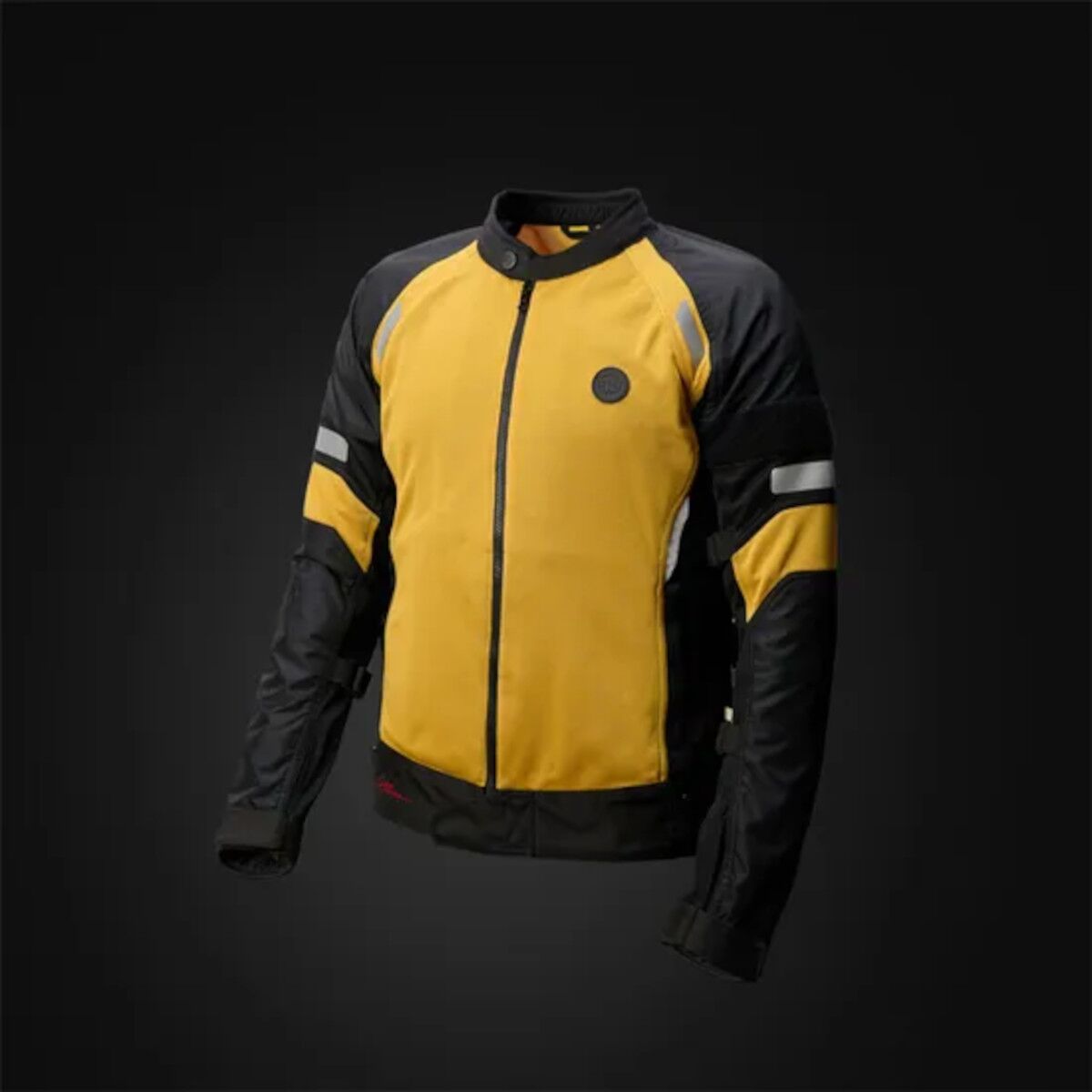
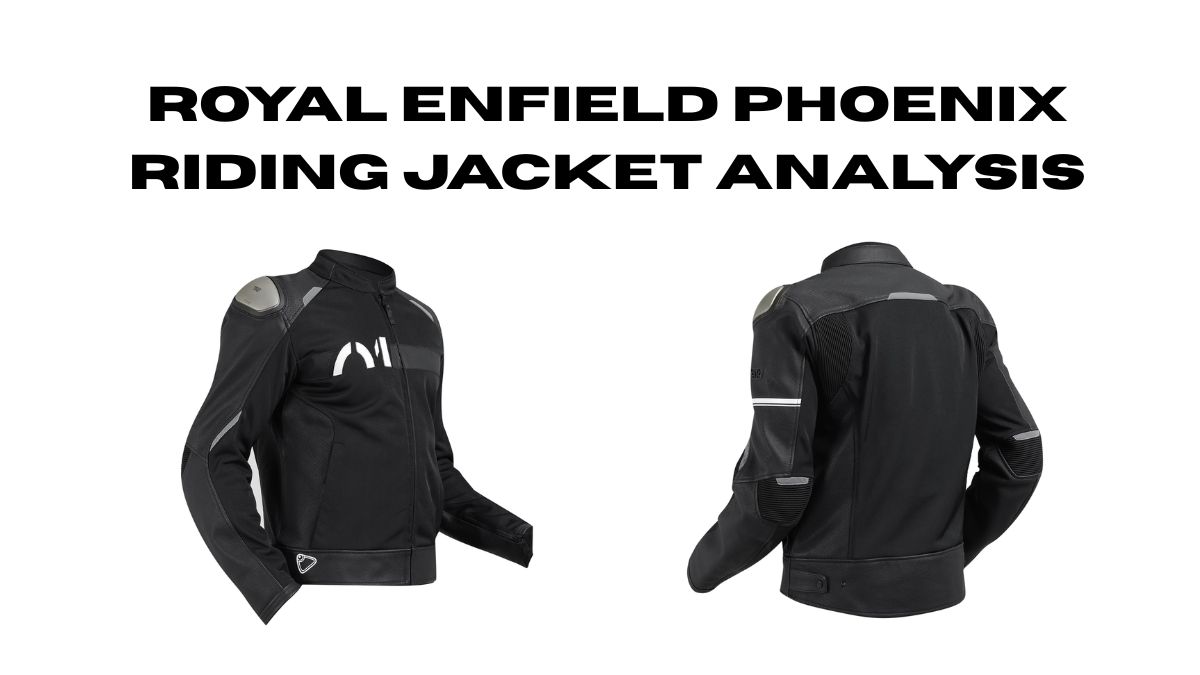
The Royal Enfield Phoenix Jacket is a hybrid riding garment engineered for urban touring and use in warmer climates. Its core identity is defined by a strategic combination of materials and protective features. The jacket is constructed from 100% genuine leather with integrated perforation and polyester mesh panels, a design intended to optimize ventilation without compromising durability. Key safety features include CE Level 2 armor at the shoulders, elbows, and back, as well as titanium sliders on the shoulders. The garment is officially CE certified to CLASS AA standards for overall protection, positioning it as a robust option for a wide range of riding conditions.1
1.2 Expert Assessment
A professional assessment of the Royal Enfield Phoenix Jacket reveals a product that aims to provide a high level of safety at a compelling price point. The jacket’s CE-Class AA rating, paired with a complete suite of CE Level 2 armor and a genuine leather outer shell, represents a significant commitment to rider safety. The inclusion of titanium sliders is an additional high-end feature not typically found in this market segment. However, the analysis is limited by the absence of specific, independent user reviews for this product. Furthermore, while the proprietary nature of the armor allows for a more accessible price, it leaves certain performance characteristics, such as long-term comfort and multi-impact resistance, to be inferred rather than directly evaluated against established industry benchmarks.

1.3 Key Findings & Recommendations
The report’s analysis finds that the Phoenix Jacket offers a strong price-to-protection ratio, making it an excellent value proposition for the safety-conscious rider. The jacket is a suitable choice for urban commuters and light tourers who ride in moderate-to-hot climates. It offers substantial protection that is well-suited for highway speeds, but its leather-based construction may not be a complete solution for the most extreme heat and humidity. The jacket is recommended for riders who prioritize core safety features from a known brand and who value a balanced approach to protection and comfort over the absolute maximum, track-focused standards.

II. Product Foundation: Construction, Materials, and Design Philosophy
2.1 Core Materials and Build Quality
The Royal Enfield Phoenix Jacket’s construction is a notable departure from traditional full leather riding gear. It is crafted from a fusion of 100% genuine leather and polyester mesh, with strategic perforation on the leather panels.1 This hybrid design is a calculated compromise, seeking to address the inherent limitations of each material in isolation. Leather has long been regarded as the gold standard for abrasion resistance, capable of withstanding several seconds of sliding before wearing through, far surpassing most synthetic textiles.2 However, its density also makes it heavy and limits its breathability, leading to rider discomfort and heat stress in warm climates.3 Conversely, mesh jackets are celebrated for their superior airflow, providing a cool and comfortable experience, but they offer significantly less abrasion resistance than leather.4
By combining these materials, Royal Enfield’s design team has created a garment that provides a greater degree of abrasion resistance than a pure mesh jacket while offering significantly more ventilation than a traditional, non-perforated leather jacket.1 This positions the jacket as a versatile and practical option for its intended purpose: “urban touring” and “safe and cool rides in hotter climates”.1 The use of genuine YKK zippers, a known hallmark of quality and durability in the apparel industry, reinforces the jacket’s robust construction.1
2.2 Ergonomics, Fit, and Adjustability
The jacket’s design incorporates several features aimed at enhancing rider comfort and freedom of movement. Leather accordions are strategically placed at the shoulder back and elbows to provide flexibility and a comfortable range of motion, crucial for a rider’s dynamic posture on the motorcycle.1 Additionally, polyester stretch fabric gussets are located at the underarms to prevent restriction and improve ease of movement. The jacket’s fit can be fine-tuned via adjustable straps with snap buttons at the waist, a key feature for ensuring the garment remains snug and that the protective armor stays correctly positioned in the event of an impact.1
While no specific consumer reviews for the Phoenix Jacket were available on the official product page at the time of this analysis 1, a broader look at user feedback for other Royal Enfield jackets, such as the Streetwind V2, provides a degree of qualitative insight. Users have noted that Royal Enfield’s sizing is generally “consistent” across its product line and that the “quality is also on par” with previous purchases.7 This suggests a brand pattern of reliable fit and consistent build quality, which can be extended as a reasonable assumption to the Phoenix Jacket, offering some predictability for prospective buyers.
2.3 Additional Features
Beyond its core construction, the jacket includes several functional details. Reflective elements are incorporated into the design to improve the rider’s visibility in low-light conditions, which is a vital safety consideration for urban commuting and night riding.1 The jacket also features utility pockets for convenient storage, a practicality that is often overlooked in performance-oriented gear but is essential for daily use.1
III. The Fortress of Safety: A Deep Dive into Protective Attributes
3.1 Comprehensive CE Certification Breakdown
The Royal Enfield Phoenix Jacket is CE certified to CLASS AA standards for overall garment protection.1 The Conformité Européenne (CE) mark signifies that a product conforms to stringent European Union health and safety standards.8 For motorcycle gear, the CE certification is broken down into a hierarchy of classes that indicate the garment’s ability to withstand abrasion, tearing, and seam bursts.9
| CE Garment Rating | Level of Protection | Ideal Use Case |
| A | Basic Protection | Urban and light riding. |
| AA | Moderate Protection | Touring and highway riding. Balances safety with comfort. |
| AAA | Maximum Protection | Racing or high-speed track conditions. Heavier and more rigid. |
The AA rating is a critical distinction that communicates a considered design philosophy. While leather is often associated with the highest AAA rating, achieving this standard requires thick, heavy materials that would render a jacket rigid and uncomfortable for daily commuting or touring in warm weather.9 The AA certification indicates that Royal Enfield has purposefully chosen a lighter, more pliable, and perforated genuine leather 1—likely trading the absolute maximum level of abrasion resistance for a significant increase in rider comfort and ventilation.10 This choice aligns perfectly with the jacket’s marketing for urban and hot-weather use and demonstrates a calculated balance of protection and practicality.
3.2 Impact Protection Systems and Armor Analysis
The jacket’s impact protection is anchored by a full suite of CE-certified armors. It is equipped with Royal Enfield’s proprietary Ergo Protech CE Level 2 armors at the shoulders and elbows, and a Safe Tech CE Level 2 armor for the back.1 The distinction between Level 1 and Level 2 armor is significant and often misunderstood.
| CE Armor Level | Maximum Transmitted Force | Protection Comparison |
| Level 1 | 35 kN | Provides a foundational level of impact protection, often more flexible and lighter. |
| Level 2 | 20 kN | Offers a higher degree of protection, reducing transmitted force by nearly 40% to 50% compared to Level 1. |
According to the CE EN 1621 standard, CE Level 2 armor is verified to absorb and disperse a greater amount of energy upon impact, making it the superior choice for high-speed riding or scenarios where a more forceful impact is possible.9 While a promotional video for the Phoenix Jacket incorrectly cites “CE level one protection” 6, the official product page consistently specifies CE Level 2 armor in all three key areas.1 This discrepancy is likely a marketing error, and the product page is considered the authoritative source.
The use of proprietary Royal Enfield “Ergo Protech” and “Safe Tech” armor is a notable consideration. While these armors are certified to meet the CE standard, they do not have the widespread brand recognition of industry leaders like D3O, Knox, or SAS-TEC.14 These leading brands are celebrated for their advanced materials, which often offer superior flexibility, breathability, and multi-impact performance.11 Royal Enfield’s choice to use its own branded armor could be a cost-saving measure that contributes to the jacket’s competitive price. While the CE certification ensures the armors have passed a minimum safety test, there is no public data on their comparative comfort or long-term durability. This is a point of consideration for a buyer who may be accustomed to the feel and performance of established armor brands.
3.3 The Role of Titanium Sliders
The jacket features 100% Titanium Metal Sliders at the shoulders.1 These sliders serve a critical function that extends far beyond aesthetics. In the event of a crash, a rider’s body can “grip” the road surface, causing a sudden, uncontrolled stop or a tumbling motion.17 This can lead to severe rotational injuries in the limbs. The purpose of a slick material like titanium is to ensure a smooth, controlled slide, which dissipates kinetic energy over a longer period and prevents the body from catching on the asphalt.17 By providing this low-friction surface, the sliders work as a vital secondary defense mechanism, protecting against broken bones and sprains by reducing the risk of a violent tumble.17
IV. Real-World Performance: Comfort, Ventilation, and Perceived Value
4.1 Ventilation and Warm-Weather Performance
The Phoenix Jacket is explicitly marketed as an ideal companion for “hotter climates” due to its perforated leather and mesh construction.1 This design is a clear attempt to provide a higher level of protection than a standard mesh jacket while still allowing for significant airflow. However, contextual information from rider forums suggests a more nuanced reality regarding hot-weather performance. A rider in a high-humidity environment noted that even a full mesh jacket provided minimal cooling at speed and only offered relief when stopped, as it facilitated evaporative cooling.5 Another user in Phoenix, Arizona, with temperatures reaching 120°F, stated that a traditional leather jacket would lead to “hyperthermia” and that only an MX jersey or a pure mesh jacket was suitable for such extreme conditions.4 This suggests that while the Phoenix Jacket’s hybrid design is a substantial improvement over full leather, its effectiveness is highly dependent on the specific temperature and humidity. It is a well-suited garment for urban touring in moderate heat, but may still be a struggle in the most scorching, arid climates or during prolonged periods of bumper-to-bumper traffic.
4.2 Perceived Durability and Longevity
The jacket’s construction from “abrasion resistant 100% genuine leather” provides a foundational level of durability.1 The term “genuine leather,” however, is a broad classification. The longevity and performance of a leather jacket are heavily influenced by its grade and thickness.2 The industry standard for maximum abrasion resistance is a thick, full-grain cowhide of 1.2–1.4mm, a material that typically yields a CE-AAA rating.2 The fact that the Phoenix Jacket is rated AA implies that its leather may be of a slightly thinner or more pliable grade, which aligns with its design for comfort and ventilation over absolute maximum protection.20 Therefore, while the jacket is highly durable and will offer excellent protection, it should not be considered an “heirloom type item” that will last a lifetime, as some premium, high-denier leather jackets are.4 This is a balanced trade-off for its practical design and accessible price point.
V. Market Positioning and Value Proposition
5.1 Pricing and Competitive Analysis
The Royal Enfield Phoenix Jacket is priced at ₹19,990.21 To understand its value, a comparison with similarly rated jackets from other major brands is essential.
| Product Name | Brand | Price (USD) | CE Garment Rating | Primary Materials |
| Phoenix Jacket | Royal Enfield | ~$240 (₹19,990) | AA | Perforated Genuine Leather / Mesh |
| Faster V2 Jacket | Alpinestars | $389.99 | AA | Leather |
| S-1 CE | RST | $329.99 | AAA | Leather |
| Bobber | Goldtop | $525 | AAA | Leather |
| Tornado 4 H2O | REV’IT! | $370 | AA | Textile / Mesh |
| Marrakesh | KLIM | ~$450 | AA | Stretch-woven Cordura |
The jacket’s price of approximately $240 places it significantly below many of its competitors, even those with a comparable CE AA rating.17 The Alpinestars Faster V2, a leather jacket with the same AA rating, is approximately 60% more expensive.17 Similarly, other AA-rated jackets from brands like REV’IT! and KLIM are priced considerably higher. This pricing strategy positions the Phoenix Jacket as a highly competitive and value-oriented option in the market.
5.2 A Strong Price-to-Protection Ratio
The analysis indicates that the Phoenix Jacket offers a highly compelling price-to-protection ratio. The jacket provides premium safety features—a CE Class AA rating, a full set of CE Level 2 armor, and titanium sliders—at a price point that is significantly lower than that of its global competitors. This is likely achieved through the jacket’s country of origin (Bangladesh) 1 and the use of proprietary armor rather than components from more expensive, globally recognized brands. The trade-offs in this value-for-money proposition are not in core safety standards but rather in features such as premium armor brand recognition, and a degree of long-term durability that may be different from an heirloom-quality AAA-rated leather jacket. For the budget-conscious rider who understands these trade-offs, the Phoenix Jacket represents an excellent opportunity to acquire high-end protective features without the premium price.

VI. Conclusion and Final Recommendations
6.1 Summary of Findings
Based on a comprehensive review of the available specifications and contextual data, the Royal Enfield Phoenix Jacket is a well-engineered piece of riding apparel that successfully balances protection with practicality. Its strengths lie in its high CE-AA safety rating, the inclusion of a full suite of CE Level 2 impact armor, and its high-end titanium shoulder sliders. It is a genuine leather product designed for comfort in warm climates, and it offers these premium features at a highly competitive price point relative to its international rivals.
The primary weaknesses are a lack of independent, real-world user feedback for this specific product, a minor contradiction in marketing materials regarding armor level, and the use of proprietary armor, which lacks a public reputation for comfort or multi-impact performance compared to global leaders. Additionally, while the jacket is designed for hot weather, it may not be a true solution for the most extreme climatic conditions.
6.2 Ideal Rider Profile
The Royal Enfield Phoenix Jacket is best suited for the urban commuter or the light tourer who rides primarily in moderate-to-hot climates. This rider prioritizes a high degree of core safety features for highway speeds and is not willing to compromise on protection for the sake of comfort. The jacket’s stylish design and functional features also make it a viable option for riders who seek a single jacket for both riding and everyday wear.
6.3 Final Judgment
The Royal Enfield Phoenix Jacket delivers on its promise of providing a safe and cool riding experience for its target audience. While it is not an all-weather, all-scenario solution, it represents a significant and compelling value proposition in the motorcycle gear market. By democratizing high-end safety features such as CE-AA certification and Level 2 armor, Royal Enfield has created a product that is both practical and aspirational. The jacket’s design makes a smart, calculated compromise, and for a rider seeking a blend of performance, style, and value, the Phoenix Jacket is a standout choice.


Sources
- PHOENIX RIDING JACKET – BLACK – Royal Enfield, accessed on September 14, 2025, https://store.royalenfield.com/en/leather-mesh-riding-black-m
- Are Leather Motorcycle Jackets Safe? Everything You Need To Know, accessed on September 14, 2025, https://danielsmartmfg.com/blogs/news/are-leather-motorcycle-jackets-safe-everything-you-need-to-know
- Leather vs. Textile and Kevlar Motorcycle Gear | CT Ride Guide, accessed on September 14, 2025, https://ctrideguide.com/blog/riding-safety/leather-vs-textile-kevlar-gear/
- Leather jacket – armor? – Unofficial Royal Enfield Community Forum, accessed on September 14, 2025, https://forum.classicmotorworks.com/index.php?topic=18784.15
- Thoughts on the Joe Rocket Phoenix Mesh Jacket? : r/motorcycles – Reddit, accessed on September 14, 2025, https://www.reddit.com/r/motorcycles/comments/ruj9w/thoughts_on_the_joe_rocket_phoenix_mesh_jacket/
- REVIEW: Phoenix Jacket | Fuel Motorcycles – YouTube, accessed on September 14, 2025, https://www.youtube.com/watch?v=Wwwg2WXbSk8
- (HOT!) Summer Riding Jacket Suggestions | Page 3 – Royal Enfield Owners Forum, accessed on September 14, 2025, https://www.royalenfieldowners.com/index.php?threads/hot-summer-riding-jacket-suggestions.10222/page-3
- Understanding CE Standards for Motorcycle Gear – Moto Central, accessed on September 14, 2025, https://www.motocentral.co.uk/blogs/guides-information/ce-approval
- CE ratings in motorcycle gear: What do they mean? – RevZilla, accessed on September 14, 2025, https://www.revzilla.com/common-tread/ce-ratings-in-motorcycle-gear-what-do-they-mean
- CE AA Rated Motorcycle Jackets – NBT Clothing, accessed on September 14, 2025, https://www.nbtclothing.com/collections/aa-rated-motorcycle-jackets
- Level AA Motorcycle Gear: A Comprehensive Guide – Moto Central, accessed on September 14, 2025, https://www.motocentral.co.uk/blogs/guides-information/level-aa
- CE Armor Levels: A Beginner-Friendly Guide – Saint USA, accessed on September 14, 2025, https://us.saint.cc/blogs/journal/ce-armor-levels
- The Difference Between CE Level 1 and CE Level 2 Motorcycle Gear – Girls Grom Wild, accessed on September 14, 2025, https://girlsgromwild.com/the-difference-between-ce-level-1-and-ce-level-2-motorcycle-gear/
- Motorcycle Protection – D3O, accessed on September 14, 2025, https://www.d3o.com/sectors/motorcycle/
- SAS TEC vs. regular CE protection – BestBeginnerMotorcycles, accessed on September 14, 2025, https://www.bestbeginnermotorcycles.com/forums/topic/sas-tec-vs-regular-ce-protection/
- What is the difference between KNOX- and CE-rated armour in motorcycle riding gear? Which one gives better protection? – Quora, accessed on September 14, 2025, https://www.quora.com/What-is-the-difference-between-KNOX-and-CE-rated-armour-in-motorcycle-riding-gear-Which-one-gives-better-protection
- Best leather motorcycle jackets | Style that’s been tested, accessed on September 14, 2025, https://www.motorcyclenews.com/bike-kit/jackets/best-leather-motorbike-jackets-us/
- Dainese Details: Why Use a Metal Slider with Nico Cereghini – YouTube, accessed on September 14, 2025, https://www.youtube.com/watch?v=t7h2kPbbwnc
- textile vs leather for impact vs sliding : r/motorcycles – Reddit, accessed on September 14, 2025, https://www.reddit.com/r/motorcycles/comments/1e5j4bs/textile_vs_leather_for_impact_vs_sliding/
- Best leather motorcycle jackets | Style that’s been tested, accessed on September 14, 2025, https://www.motorcyclenews.com/bike-kit/jackets/best-leather-motorbike-jackets/
- Royal Enfield Launches New Phoenix Jacket And Urbanite Hoodie – ACKO Drive, accessed on September 14, 2025, https://ackodrive.com/news/royal-enfield-launches-new-phoenix-jacket-and-urbanite-hoodie/
- Royal Enfield expands apparel line with Urbanite hoodie, Phoenix leather jacket, accessed on September 14, 2025, https://www.indiatoday.in/auto/latest-auto-news/story/royal-enfield-expands-apparel-line-with-urbanite-hoodie-phoenix-leather-jacket-2729529-2025-05-23
- The Best Motorcycle Jackets of 2025 | GearJunkie Tested, accessed on September 14, 2025, https://gearjunkie.com/motors/best-motorcycle-jackets
Our Social Media Handles
- Instagram : LivingWithGravity
- Medium : Akash Dolas
- YouTube Channel : Gear and Shutter
- Facebook : LivingWithGravity