














Suzuki Gixxer SF 250 FFV: Strategic and Technical Analysis of Biofuel Integration
I. Executive Summary: Biofuel Leadership and Strategic Positioning
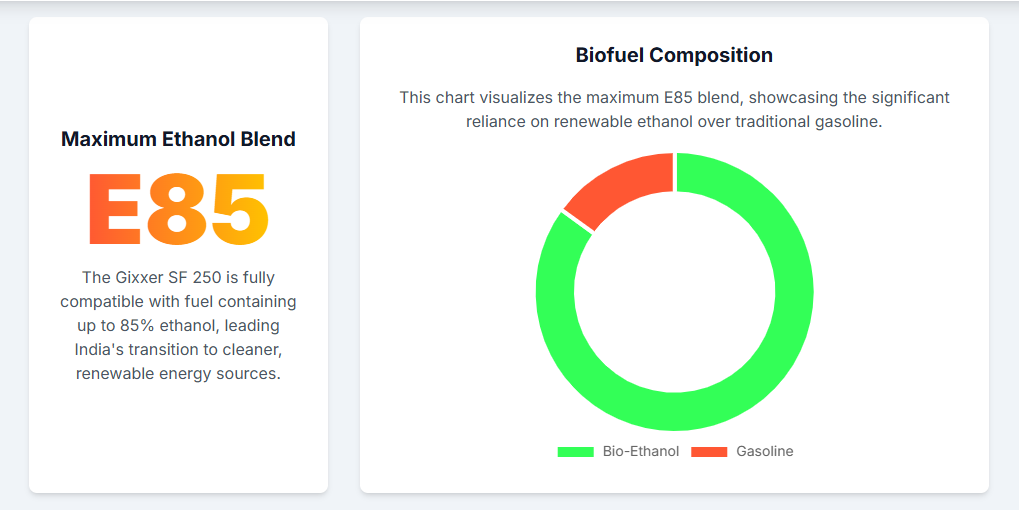
This report analyzes the introduction of the Suzuki Gixxer SF 250 Flex Fuel Variant (FFV), a key development aligning Suzuki Motor Corporation with global and regional carbon neutrality targets. The Gixxer SF 250 FFV, launched in the competitive Indian market, represents a significant engineering achievement, capable of running on ethanol blends up to E85 (85% ethanol) while maintaining performance parity with its gasoline counterpart.1
The analysis contained herein provides an exhaustive, multi-dimensional assessment of the Gixxer SF 250 FFV, detailing the technical modifications required for E85 compliance, quantifying performance metrics (power retention versus fuel economy trade-offs), outlining strategic market deployment within the context of Indian biofuel policy, and providing a competitive analysis against key rivals. The information is designed for automotive sector analysts, OEM executives, and policymakers requiring highly technical, financially relevant, and strategically actionable intelligence regarding sustainable two-wheeler mobility solutions.
II. Global Mandate and Regional Policy Drivers for FFV Adoption
A. Suzuki’s Multi-Pathway Approach to Carbon Neutrality
Suzuki Motor Corporation has publicly stated its commitment to achieving carbon neutrality, pursuing a robust multi-pathway strategy that extends beyond battery electric vehicles (EVs).3 The development and mass production of the Gixxer SF 250 FFV in India, which began in January of the current year 4, underscore that biofuels are considered a foundational and non-transitional element of the company’s mid-term sustainability goals. This approach is particularly critical in high-volume, cost-sensitive markets where immediate, wholesale EV adoption faces logistical and infrastructure barriers.
The company is actively refining its high-speed combustion and low-friction technologies, leveraging years of conventional engine development experience, and applying these innovations horizontally to create new high-efficiency engines adapted for carbon-neutral fuels.4 This proactive technological alignment ensures that internal combustion engine (ICE) products, such as the Gixxer FFV, can significantly contribute to the reduction of environmental impact through the use of sustainable materials in components like tires, oil, fairings, and brakes, alongside reduced carbon dioxide ($\text{CO}_{2}$) emissions from biofuel combustion.4
B. The Indian Biofuel Ecosystem and Regulatory Pressure
India, recognized as the world’s largest two-wheeler market 6, serves as the strategic operational hub for the Gixxer FFV debut. This deployment is driven by aggressive national blending mandates aimed at securing energy independence, reducing the crude oil import bill, and lowering atmospheric carbon emissions.7
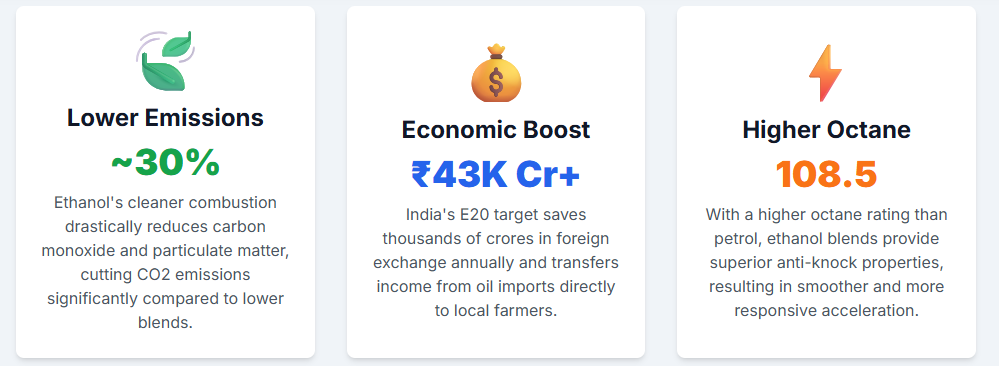
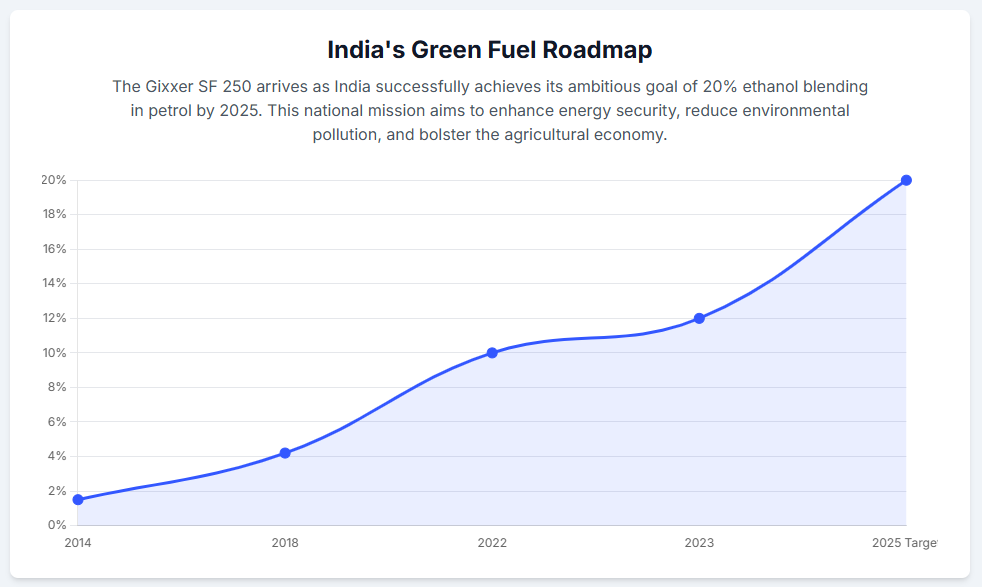
The regulatory framework is rapidly evolving. The Indian government has instituted policies to mandate E20 adoption (a blend of 20% ethanol and 80% gasoline) by the end of 2025 9 and contemplates raising blending levels further, potentially reaching 27% by 2030.7 This push is financially supported by government budget allocations of INR 10,000 crores for the biofuel sector, specifically targeting ethanol production, and complemented by incentives such as subsidies.7
By engineering the Gixxer SF 250 FFV to comply with fuels up to E85, Suzuki has made a calculated investment that significantly exceeds the minimum E20 national mandate.2 This preemptive strategy positions the platform ahead of the regulatory curve, insulating consumers and the manufacturer against anticipated long-term increases in ethanol content, potentially up to 85%.2 The depth of this commitment is evidenced by the requirement for significantly more intensive and specialized hardware modifications—including revised engine components and material compatibility solutions—necessary for E85 resilience compared to simple E20 compliance.2 This technological overshooting of the current mandate secures a long-term competitive advantage in a policy-driven market.
Furthermore, the introduction of the E85 platform reflects a necessary commitment to vehicle durability. While government policy encourages blending, high-ethanol content poses significant material degradation risks to elastomers, plastics, and fuel system components in conventional vehicles.8 Suzuki’s comprehensive replacement or adaptation of critical components (including specialized plastics, rubber, and key engine internals) 1 is not merely a compliance measure, but a strategic effort to mitigate the material incompatibility issues that plague less-modified vehicles. This ensures the FFV platform delivers long-term reliability under high ethanol exposure, thereby protecting the brand’s reputation in the highly demanding Indian market.
III. Product Profile and Market Deployment of the Gixxer SF 250 FFV
A. Launch Details and Commercial Positioning
The Gixxer SF 250 FFV is positioned as Suzuki Motorcycle India’s flagship initiative in sustainable performance. The bike was first introduced globally as the “Overseas specification model” at the Japan Mobility Show 2025 1 and officially launched in India at the Bharat Mobility Global Expo 2025.2
As the range-topping variant within the Gixxer SF 250 lineup 11, the Flex Fuel model is priced at Rs. 2,16,500 (ex-showroom Delhi).2 This price point reflects the advanced engineering and specialized componentry required for high-blend ethanol compatibility. An average ex-showroom price for the standard FFV variant is cited at ₹ 2,00,616.12
Aesthetically, the Flex Fuel version maintains the sporty, fully-faired design characteristic of the Gixxer SF series, prioritizing aerodynamics. Key features include an LED headlamp and tail light, a sporty dual muffler, dual-channel Anti-lock Braking System (ABS), and a Bluetooth-enabled all-digital instrument cluster.2 Suzuki emphasizes that there is “no discernible difference” in appearance between the Flex Fuel variant and the conventional gasoline version, ensuring that the adoption of biofuels does not compromise the bike’s visual appeal.1
B. Market Context and Platform Selection
Suzuki strategically selected the 249 cubic centimeter (cm³) Gixxer SF platform, a popular quarter-liter “big bike” in India 10, for its FFV debut. This selection allows the manufacturer to immediately demonstrate that the integration of high-level biofuel technology does not necessitate a compromise in performance, which is a crucial selling proposition in the premium sports bike segment.
The decision to showcase an “Overseas specification model” at the Japan Mobility Show suggests that while India is the initial manufacturing base and primary market (where mass production began in January 4), Suzuki anticipates potential geographic expansion. This move is a strong signal that the Japanese manufacturer is ready to enter other Southeast Asian or global markets that are increasingly instituting biofuel mandates or carbon reduction pressures.1
Gixxer SF 250 FFV Commercial Snapshot
| Metric | Data | Source |
| Engine Displacement | 249 cm³ (Oil Cooled, SOHC) | 13 |
| Fuel Compatibility Range | E20 up to E85 (Flexible Fuel Vehicle) | 2 |
| India Launch Price (Ex-Showroom) | Rs. 2,16,500 | 2 |
| Maximum Power (E85) | 27.5 bhp @ 9,300 rpm | 2 |
| ARAI Mileage Claim | 35 kmpl | 12 |
IV. Technical Deep Dive: Achieving E85 Compliance and Durability
The engineering transition to E85 flexibility required extensive modifications to the Gixxer SF 250 engine and periphery systems, addressing the fundamental chemical differences between ethanol and gasoline, including corrosivity, lubrication characteristics, and required stoichiometric ratios.
A. Comprehensive Engine and Fuel System Upgrades
Suzuki’s successful achievement of E85 reliability demanded significant modification or replacement of six critical component groups 2:
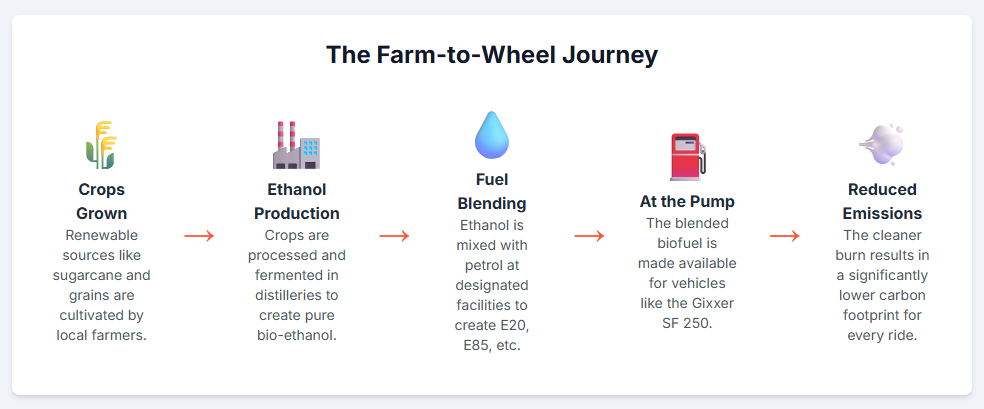
- Fuel Metering and Control: Ethanol possesses a lower energy density than gasoline, meaning a 20-30% greater volume of fuel must be delivered to achieve the same power output.15 This necessitated a modified injector and a new Engine Control Module (ECM/ECU) capable of calculating and managing the correct fuel volume across the entire flexible range (E20 to E85).1
- Fuel Delivery Components: The corrosive nature of high-concentration ethanol required a new fuel pump and specialized fuel line developed to resist chemical degradation and ensure consistent flow rates for the higher volumes required under E85 operation.1 Additionally, an additional fuel filter was integrated, a prudent step to mitigate the risk of clogging from varnish and deposits dissolved by ethanol in the fuel distribution infrastructure.2
- Engine Internal Durability: To ensure long-term mechanical reliability, the engine received new piston rings to manage changes in lubrication and temperature profiles associated with ethanol combustion. Furthermore, the intake/exhaust (IX/EX) valve and valve seat were redesigned to prevent wear and ensure structural integrity during E85 usage.2
- Material Compatibility: Across the entire fuel path, including seals, hoses, and gaskets, plastic and rubber components were specifically developed and adapted to be highly resistant to the corrosive effects of ethanol.1 Failure to utilize these ethanol-resistant materials is a primary cause of system failure in non-FFV vehicles attempting to use high ethanol blends.8
The extensive list of physical modifications—including the injector, pump, piston rings, and valve seats 1—confirms that the Gixxer SF 250 FFV is based on a full-scale engineering overhaul for biofuel use, rather than a simple software calibration applied to existing, conventional hardware. This approach is essential for mitigating the long-term reliability risks associated with high ethanol exposure and differentiates the FFV as a reliable, long-term premium solution compared to the performance-compromising retrofit kits often required for older motorcycles to achieve marginal E20 compatibility.8
B. Electronic Control Unit (ECU) Strategy and Blend Detection
For a true Flexible Fuel Vehicle, the electronic control system must instantaneously determine the precise ethanol concentration in the fuel tank to make split-second adjustments to fueling, ignition timing, and other engine parameters.17
The new ECM 2 is thus calibrated to manage the complex fueling and ignition timing curves necessary across the full E20 to E85 spectrum. To achieve this flexibility, specialized FFV systems typically rely on a dedicated fuel flex sensor.18 While official public material does not specify the sensor type utilized by Suzuki, such a component is critical. An oxygen sensor alone is inadequate because it can only detect a lean mixture, but cannot definitively quantify the ethanol content needed for precise stoichiometric compensation.17 Dedicated flex sensors operate by measuring the dielectric permittivity of the fuel—a property that shifts significantly with ethanol concentration—and transmitting this data to the ECU.18 Given the high operative range up to E85, the Gixxer FFV’s robust performance suggests the integration of a sophisticated blend-sensing mechanism located within the fuel system to ensure flow and accuracy.19
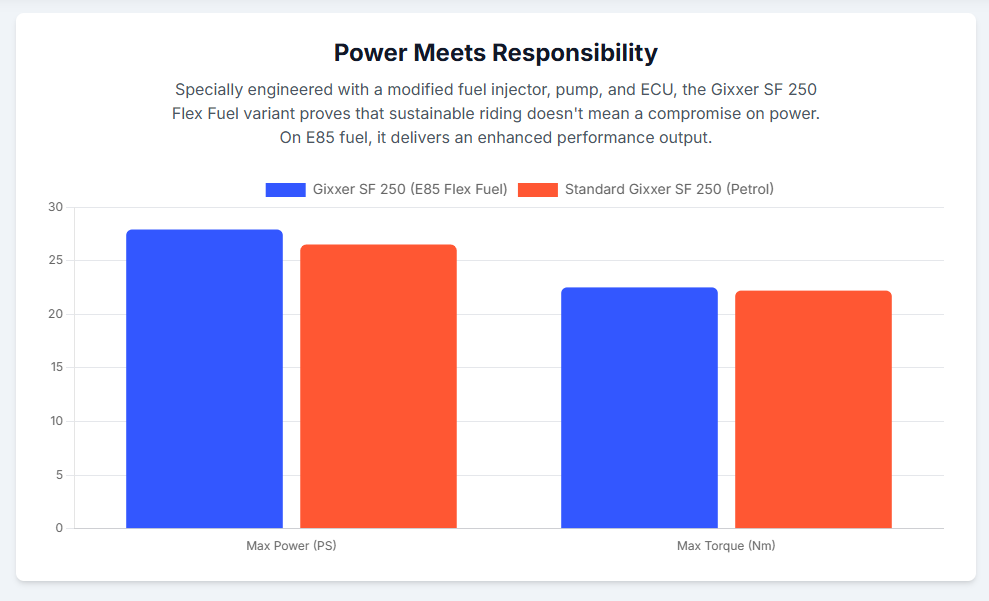
An important element of the FFV engineering strategy is the maximization of performance through biofuel utilization. Ethanol (E85) typically boasts an octane rating exceeding 100 RON, far superior to standard pump gasoline.15 This high resistance to detonation allowed Suzuki’s engineers to aggressively tune the engine, resulting in a claimed peak output of 27.5 bhp on E85.2 This power figure is notably higher than the 26 bhp output of the standard gasoline Gixxer SF 250 10, indicating that Suzuki successfully utilized ethanol’s high octane rating not merely for compliance, but as a mechanism to deliver a distinct performance marketing feature.
V. Performance Metrics and Consumer Economics
A detailed analysis of the Gixxer FFV’s performance claims reveals the engineering success in balancing high power output with the inherent challenges posed by ethanol’s energy density.
A. Power Output and Torque Analysis
Suzuki has successfully achieved performance parity—and a slight advantage—across the flexible fuel spectrum, confirming the effectiveness of the engine and fuel system modifications.
- Power Output: The Flex Fuel version delivers 27.5 bhp at 9,300 rpm when utilizing E85 fuel, and 27 bhp at the same revolutions per minute (rpm) on E20 fuel.2 This demonstrates a marginal increase in maximum output compared to the standard Gixxer SF 250, which is rated at 26 bhp.1 The retention of this strong performance across high ethanol blends is a testament to the effectiveness of the new ECM and modified fuel system components.20
- Torque: Maximum torque delivery remains robust and consistent, reported at 22.2 $\text{Nm}$ to 22.5 $\text{Nm}$ at 7,300 rpm.2
By achieving and even slightly exceeding the standard model’s performance (27.5 bhp on E85) 2, Suzuki effectively addresses and eliminates the primary reservation performance riders typically hold regarding the adoption of sustainable fuels. This de-risks the consumer choice, allowing buyers to embrace environmental compliance without sacrificing the high-performance attributes central to the Gixxer’s identity.
B. The Fuel Economy Dilemma: ARAI vs. Real World E85 Consumption
While power is retained, the trade-off inherent in using ethanol—specifically its lower energy density—presents a challenge in volumetric fuel consumption and consumer economics.
- Official Mileage Claims: The official Automotive Research Association of India (ARAI) claimed mileage for the Gixxer SF 250 FFV is 35 kmpl.12 This figure is noteworthy because it is identical to the conventional gasoline-powered Gixxer SF 250 14, suggesting that the standardized test cycle was likely conducted using a low ethanol blend (E20) or pure gasoline.
- Physical Constraints of E85: E85 fuel contains approximately 20-30% less energy per unit volume than conventional gasoline.15 Consequently, to maintain the claimed power output of 27.5 bhp, the engine must consume a proportionally higher volume of E85. Expert commentary confirms that ethanol-blended fuel requires more energy to burn, resulting in greater fuel consumption.11
- Consumer Economic Implication: For the consumer, using high-blend E85 will inevitably translate to a shorter real-world range (the advertised Riding Range is 420 km 12 is based on lower blends) and a higher volumetric fuel cost. This economic viability depends entirely on whether the price per liter of E85 is sufficiently discounted compared to gasoline to offset the 20-30% reduction in efficiency. The successful long-term market penetration of the Gixxer FFV running on high blends is critically dependent on addressing this cost-per-mile issue. If the domestic challenge of “unchanged fuel prices” persists 7, widespread E85 adoption will stall unless future government incentives or subsidies guarantee competitive consumer economics against traditional fuels.
VI. Competitive Landscape and Market Trajectory
The Gixxer SF 250 FFV enters a nascent but strategically significant segment of high-blend FFV motorcycles in India, a space currently dominated by two key Japanese manufacturers.
A. Direct Competitive Comparison: Suzuki vs. Honda
Suzuki faces direct competition from the Honda CB300F Flex-Fuel, which is also engineered to run on high ethanol blends up to E85.22
| Metric | Suzuki Gixxer SF 250 FFV | Honda CB300F Flex-Fuel | Key Implication |
| Ex-Showroom Price (Std) | Rs. 2,16,500 2 | Rs. 1,55,658 – Rs. 1,70,000 22 | Honda provides a lower entry barrier for E85 technology. |
| Engine Displacement | 249 cc (Oil Cooled) 13 | 293.52 cc 22 | Suzuki achieves high performance from a smaller displacement. |
| Max Power (E85/Flex) | 27.5 bhp @ 9,300 rpm 2 | 24.5 bhp @ 7,500 rpm 21 | Suzuki dominates the performance metric within the FFV category. |
| Claimed Mileage (ARAI/User) | 35 kmpl 12 | 30–33 kmpl 21 | Gixxer maintains a marginal efficiency lead. |
| Highest Ethanol Blend | E85 2 | E85 22 | Both are technological leaders in high-blend compatibility. |
The comparative data reveals a critical trade-off in the market: the Honda CB300F Flex-Fuel is priced substantially lower (approximately Rs. 40,000 to Rs. 60,000 difference) 21, offering accessibility to E85 technology. In contrast, Suzuki is targeting the premium segment by providing superior performance (27.5 bhp versus 24.5 bhp) while maintaining better claimed efficiency (35 kmpl versus 30–33 kmpl).21 The Gixxer SF 250 FFV is thus strategically positioned as the performance flagship of the flex-fuel market, appealing to consumers unwilling to compromise on power.
B. Broader Flex-Fuel Market Positioning
Beyond the quarter-liter category, the Indian market is witnessing FFV development across multiple displacements. TVS, for instance, has showcased the Raider 125 FFT, an E85 compatible bike in the smaller 125cc segment, expected to launch in mid-2025.25
While the immediate regulatory landscape focuses on mandatory E20 compliance, which many existing BS6 models can handle with minimal or no modification 8, the E85 offerings from Suzuki and Honda represent a clear commitment to technological innovation far beyond basic regulatory adherence.
It is necessary to acknowledge a degree of ambiguity in published Original Equipment Manufacturer (OEM) data regarding performance. Slight variations exist between reported power figures (e.g., 26.5 PS on E20 13 versus 27.5 bhp on E85 2). This variance, coupled with the highly misleading nature of the identical ARAI mileage claims for both the FFV and standard models 14, confirms the vital need for independent real-world testing. Such testing is necessary to accurately quantify the actual efficiency penalty incurred when utilizing high-blend ethanol, information crucial for consumer purchasing decisions.11
VII. Strategic Implications and Future Outlook
A. Supply Chain and Manufacturing Maturity
The technical implementation of E85 capability necessitates a mature and specialized manufacturing strategy. The specific inclusion of redesigned components such as new valve seats, specialized fuel lines, and dedicated fuel filters 2 confirms that Suzuki has established a specialized material sourcing and production framework capable of handling corrosion-resistant materials and specialized electronics. This commitment, while reflected in the higher selling price 2, ensures long-term component durability.
The engineering knowledge acquired through the development of the Gixxer FFV, including the application of high-efficiency engine refinement principles 4, is an invaluable asset. This expertise can be readily applied across Suzuki’s portfolio, facilitating the adaptation of other motorcycle and automobile platforms to meet the domestic E20 mandate and preparing them for subsequent higher-blend fuel standards.4
B. Market Penetration and Consumer Education Challenges
The success of the Gixxer SF 250 FFV in driving sustainable mobility hinges on factors external to the product itself.
- Infrastructure Dependence: Widespread consumer adoption is predicated on the rapid expansion of E85 infrastructure in India and other potential Southeast Asian markets. Without widespread E85 availability, the E85 capacity of the vehicle is functionally limited to E20 or E10, reducing its environmental efficacy and diminishing its value proposition.
- Economic Viability Communication: Suzuki must undertake transparent consumer education regarding the inherent volumetric fuel consumption increase when operating on E85, while simultaneously emphasizing the environmental benefits and superior performance retention. As discussed, the critical challenge remains the cost-per-mile calculation. Aggressive advocacy for favorable government fuel pricing subsidies will be necessary to ensure that E85 is economically compelling for daily riders, overcoming the obstacle of potentially unfavorable price structures currently observed in the biofuel transition.7
- Environmental Leadership: By launching an E85-compliant sports bike and committing to the use of sustainable materials in components 4, Suzuki reinforces a tangible commitment to reducing its environmental impact. This proactive approach supports positive environmental branding, which serves as a powerful differentiator in increasingly climate-conscious urban markets.
Conclusion
The Suzuki Gixxer SF 250 Flex Fuel Variant represents a significant engineering benchmark in sustainable two-wheeler technology, successfully integrating E85 compatibility while preserving and marginally enhancing the engine’s performance characteristics. This achievement, evidenced by the 27.5 bhp output on E85, is the direct result of a comprehensive technical overhaul encompassing critical fuel system and engine internal components designed to resist the corrosive and stoichiometric challenges of high-blend ethanol.
The FFV is strategically positioned as a premium performance offering in the Indian market, future-proofed against rising ethanol mandates. However, the long-term success of high-blend E85 utilization is critically dependent on external factors. For the Gixxer SF 250 FFV to realize its full potential as a carbon-neutral solution, government intervention—specifically in the form of fuel pricing adjustments or subsidies—is required to ensure that the environmental benefits of E85 are not economically negated for the consumer by the inherent volumetric fuel consumption penalty. Suzuki’s leadership in this segment forces competitors to accelerate their E85 development, thereby advancing the national goal of energy security and carbon reduction through multi-pathway mobility solutions.
Sources
- Suzuki Gixxer SF 250 Flex Fuel, Safe Motor Sport Consumption Etanol Up To 85 Percent, accessed on October 21, 2025, https://voi.id/en/motor/524904
- Suzuki Gixxer SF 250 Flex Fuel launched at Bharat Mobility Expo …, accessed on October 21, 2025, https://www.financialexpress.com/auto/bike-news/suzuki-gixxer-sf-250-flex-fuel-launched-at-bharat-mobility-expo-everything-you-need-to-know/3719436/
- Suzuki Motorcycle India unveils e-Access, Gixxer SF 250 Flex Fuel, accessed on October 21, 2025, https://www.motownindia.com/Bureau/Auto-Pit-Bikes/1401/Suzuki-Motorcycle-India-unveils-e-Access-Gixxer-SF-250-Flex-Fuel-Roy-P-Tharyan
- Suzuki Announces Technology Strategy 2025 for 10 Years Ahead | GLOBAL NEWS, accessed on October 21, 2025, https://www.globalsuzuki.com/globalnews/2025/0909.html
- GIXXER SF 250 Flex Fuel Variant (FFV) – Suzuki Motorcycle India, accessed on October 21, 2025, https://www.suzukimotorcycle.co.in/brochure/gixxer-250-sf-ffv-feb-25.pdf
- Suzuki Gixxer SF 250 Can Now Run on Bioethanol, Keeps Its Sport Bike Looks, accessed on October 21, 2025, https://www.autoevolution.com/news/suzuki-gixxer-sf-250-can-now-run-on-bioethanol-keeps-its-sport-bike-looks-245814.html
- Ethanol blending dilemma: India’s flex-fuel plan – Sentinel (Assam), accessed on October 21, 2025, https://www.sentinelassam.com/more-news/editorial/ethanol-blending-dilemma-indias-flex-fuel-plan
- E20 Fuel & Your Car Insurance 2025 Legal Guide for Indian Owners – eVaakil, accessed on October 21, 2025, https://evaakil.com/e20-fuel-your-car-insurance/
- India Flex Fuel Vehicle Market Outlook to 2030 – Nexdigm, accessed on October 21, 2025, https://www.nexdigm.com/market-research/report-store/india-flex-fuel-vehicle-market-research-report/
- Suzuki Gixxer SF 250 Flex Fuel Version runs on biofuel | Visordown, accessed on October 21, 2025, https://www.visordown.com/news/suzuki-gixxer-sf-250-flex-fuel-version-runs-biofuel
- Suzuki Gixxer 250 SF Flex Fuel Review – Should You Buy It In 2025? – 91Wheels, accessed on October 21, 2025, https://www.91wheels.com/expert-review/suzuki-gixxer-250-sf-flex-fuel-review-should-you-buy-it-in-2025
- Suzuki Gixxer SF 250 Flex Fuel Price – Mileage, Images, Colours | BikeWale, accessed on October 21, 2025, https://www.bikewale.com/suzuki-bikes/gixxer-sf-250-flex-fuel/
- Suzuki Gixxer SF 250 | 250cc Bike Price & Specifications, accessed on October 21, 2025, https://www.suzukimotorcycle.co.in/product-details/gixxer-sf-250
- Suzuki Gixxer Sf 250 vs Suzuki Gixxer Sf 250 Flex Fuel – Which is Better? – Bike Junction, accessed on October 21, 2025, https://thebikejunction.com/compare-bikes/suzuki-gixxer-sf-250-vs-suzuki-gixxer-sf-250-flex-fuel
- E85 vs. E10: Best Ethanol Blend for Your Engine – Fleet Rabbit, accessed on October 21, 2025, https://fleetrabbit.com/blogs/post/e85-vs-e10-best-ethanol-blend-for-your-engine
- E20 fuel & older motorcycles in India: What riders must know, accessed on October 21, 2025, https://www.bikeleague.in/motorcycle-articles/motorcycle-editorials/e20-fuel-older-motorcycles-in-india-what-riders-must-know/
- Sensors: O2, E85, Fuel Level, Pressure, AFR & More, Same Day Shipping | QFS, accessed on October 21, 2025, https://www.highflowfuel.com/catalog/accessories-specialty/sensors/
- Deep Dive into Fuel Flex Sensor Technology in Automotive Applications – Aftermarket Industries, accessed on October 21, 2025, https://aftermarketindustries.com.au/deep-dive-into-fuel-flex-sensor-technology-in-automotive-applications/
- Ethanol & Flex Fuel Tuning: Installing a Flex Fuel Sensor – HP Academy, accessed on October 21, 2025, https://www.hpacademy.com/courses/ethanol-and-flex-fuel-tuning/measuring-ethanol-content-installing-a-flex-fuel-sensor/
- Ride the future, Ride the GIXXER SF250 Flex Fuel Variant – YouTube, accessed on October 21, 2025, https://www.youtube.com/watch?v=9WcGQ1-AoUQ
- Honda CB300F Flex-Fuel vs Suzuki Gixxer SF 250 Flex Fuel – Know Which is Better, accessed on October 21, 2025, https://www.bikedekho.com/compare/cb300f-flex-fuel-vs-gixxer-sf-250-flex-fuel
- Honda CB300F Flex-Fuel launched in India: Price, engine, specs and more, accessed on October 21, 2025, https://timesofindia.indiatimes.com/auto/bikes/honda-cb300f-flex-fuel-launched-in-india-price-engine-specs-and-more/articleshow/114392364.cms
- Honda CB300F Flex-Fuel Price – Mileage, Images, Colours | BikeWale, accessed on October 21, 2025, https://www.bikewale.com/honda-bikes/cb300f-flex-fuel/
- Honda CB300F vs Suzuki Gixxer SF 250 Flex Fuel – Compare Prices, Specs, Features, accessed on October 21, 2025, https://www.zigwheels.com/bike-comparison/honda-cb300f-vs-suzuki-gixxer-sf-250-flex-fuel
- Three New Flex Fuel Bikes Launched at Auto Expo 2025: Highlights – BikeJunction, accessed on October 21, 2025, https://bikes.tractorjunction.com/en/news/bharat-mobility-global-expo-2025-three-exciting-flex-fuel-bikes-showcased
- TVS Raider 125 Flex-Fuel – BikeWale, accessed on October 21, 2025, https://www.bikewale.com/tvs-bikes/raider-125-flex-fuel/
Our Social Media Handles
- Instagram : LivingWithGravity
- Medium : Akash Dolas
- YouTube Channel : Gear and Shutter
- Facebook : LivingWithGravity