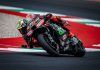
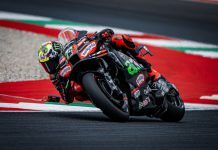






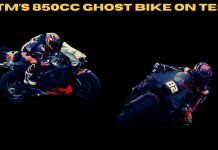






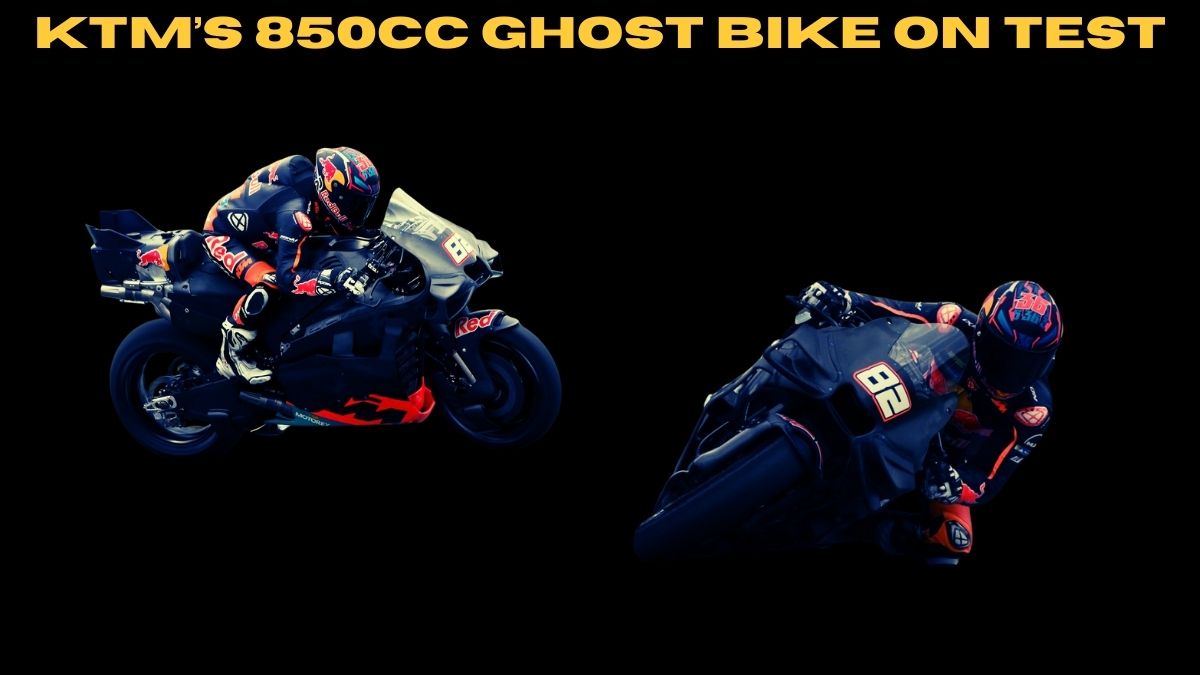
KTM is playing a very strategic long game here. By putting the 2027 “Ghost” bike on track during the Sepang Shakedown in January 2026, they are effectively bypassing a year of “dead-end” development that other manufacturers are still bogged down in.
Below breakdown of why they are moving so early and what they gain from it:
1. Mastering the “Pure” Chassis Dynamics
The 2027 regulations aren’t just about a smaller engine; they ban all ride-height and holeshot devices.
- The Problem: Current MotoGP bikes are designed to be “squatted” to manage wheelies and improve drive out of corners.
- The Advantage: By testing now, KTM is learning how to build a chassis that works without these mechanical crutches. Mika Kallio’s “spectacular wheelie” during the Shakedown highlights exactly what they are studying: how to manage geometry, mechanical grip, and anti-squat purely through frame design and electronics, rather than hydraulics.
2. Real-World Data vs. Dyno Simulation
While everyone can run an 850cc engine on a dyno, KTM is the first to get it into a real frame on a GP-level track.
- Thermal & Fuel Management: The 2027 rules mandate 100% sustainable fuel and a smaller fuel tank (20L vs 22L). Testing in the stifling heat of Sepang gives them data on how the smaller 850cc engine sheds heat and consumes “green” fuel under maximum load—data you simply can’t perfectly replicate in a lab.
- Pirelli Integration: MotoGP is shifting its philosophy around tires and aero. Getting early laps on the specific tire constructions planned for the future allows KTM to “marry” their chassis development to the rubber long before the 2027 season opener.
3. Exploiting the “Regulatory Loophole”
Until November 17, 2025, there was a gentleman’s agreement/restriction on testing 850cc units to save costs. KTM was ready the moment that window opened. By starting now, they essentially get a full extra season of track R&D. While Ducati, Aprilia, and Yamaha are spending their limited testing days trying to win the 2026 title, KTM is splitting its resources to ensure they aren’t caught off guard by the “reset” in 2027.
4. Financial & Political Stability
Following their recent financial restructuring, there were whispers about KTM’s commitment to MotoGP. Publicly testing a bike that won’t race for another two years is a massive “we are here to stay” statement to sponsors, riders (like Pedro Acosta), and the paddock.
Summary of the “Ghost” Specs
| Feature | 2026 Spec (Current) | 2027 “Ghost” Spec |
| Engine | 1000cc V4 | 850cc Prototype |
| Ride-Height | Front & Rear Active | Completely Banned |
| Top Speed | ~355+ km/h | ~20 km/h slower (initial phase) |
| Aero | Max Downforce | Reduced / Narrower Bodywork |
By the time the rest of the grid shows up with their 850cc prototypes in late 2026, KTM will already have thousands of kilometers of data on how that engine vibrates, how the chassis flexes without ride-height devices, and how to optimize the electronics for a smaller power band.
While KTM took the headlines with Mika Kallio’s “Ghost” bike in Sepang, the rest of the paddock is reacting with a mix of quiet development and massive strategic shifts. Here is how the other manufacturers are responding:
Honda: The First to Respond
Honda is actually KTM’s closest shadow right now. They debuted their 2027 prototype (the RC214V) during a private test in Sepang just weeks ago (January 15–16, 2026).
- The Takaaki Nakagami Project: Honda has tasked Nakagami almost exclusively with the 2027 project. While Aleix Espargaro focuses on fixing the current 2026 bike, Nakagami has been running the 850cc engine in dry conditions to gather the same “pure chassis” data KTM is hunting.
- Pirelli Advantage: Honda is also one of the only teams already testing the 2027 Pirelli tires (replacing Michelin). By the time the official Pirelli tests happen in June 2026, Honda and KTM will already have baseline data.
Yamaha: The Parallel Path
Yamaha is in a unique position because they are currently undergoing a “re-engineering” of their entire DNA for 2026.
- V4 Transition First: Yamaha’s priority is the all-new V4 engine for 2026. Because they are moving away from the Inline-4, their 2026 development is their 2027 preparation. The frame they are building for the V4 in 2026 will serve as the architectural foundation for their 850cc version.
- Quiet Testing: Reports indicate Yamaha has already run an 850cc prototype at their private test track in Iwata, Japan, though they haven’t brought it to a public shakedown like KTM.
Ducati & Aprilia: The “Wait and See” Approach
The European giants are surprisingly the last to hit the track with 2027 hardware.
- Ducati’s GP27: Ducati has scheduled the debut of the GP27 prototype for mid-March 2026 at Jerez. They are using WorldSBK star Nicolo Bulega for these initial 850cc tests, keeping Michele Pirro focused on maintaining their current 1000cc dominance.
- Aprilia’s Technical View: Technical Director Fabiano Sterlacchini has stated that Aprilia is well-advanced in engineering their 850, but they aren’t rushing it to the track yet. They are focusing on the 2026 “No-Ride-Height” simulations using their current bikes to understand the aero-balance shifts first.
Comparison of 2027 Readiness (as of Jan 2026)
| Manufacturer | 850cc Status | Key Development Focus |
| KTM | Active on Track | No-ride-height chassis geometry; rider feel (Kallio/Pedrosa). |
| Honda | Active on Track | Pirelli tire integration; 850cc thermal management. |
| Yamaha | Private Dyno/Track | Scaling down the new 2026 V4 architecture. |
| Ducati | March 2026 Debut | Maintaining 1000cc lead while building the “GP27”. |
| Aprilia | March 2026 Debut | Aero-efficiency and rider physical workload. |
The “Market” Reaction
The most telling reaction isn’t on the track, but in the rider market. Reports are swirling this week that Fabio Quartararo has signed with Honda for 2027 and Jorge Martin is moving to Yamaha. Both riders are seemingly jumping ship based on which manufacturer they believe has the best head start on these 2027 regulations.
This early testing from KTM and Honda has effectively turned 2026 into a “development year” before the season has even started.
Source
KTM’s “Ghost Bike” Reports
- KTM Official: KTM test engine designed for new MotoGP era – The first official confirmation of the 850cc engine fire-up at Mattighofen.
- Sepang Shakedown 2026: KTM on track with the 850cc in Malaysia – Detailed report on Mika Kallio’s laps without ride-height devices.
- Motorsport.com: Pol Espargaro breaks cover with 850cc at Jerez – Coverage of the late-2025 track debut that set the internet on fire.
Honda’s 2027 Counter-Attack
- Paddock GP: Honda to unveil 2027 prototype at Sepang – Details on the RC214V and Takaaki Nakagami’s specific role in the project.
- Mix Vale: Honda concludes dry track testing for 2027 – Analysis of Honda’s logistical push to match KTM’s pace.
Technical Regulation Deep-Dives
- Autocar India: New 2027 MotoGP Rules Explained – A great breakdown of the 850cc shift, fuel tank reductions, and the ride-height ban.
- Motorsport.com Technical: Full details of MotoGP’s 2027 overhaul – Technical specifics on minimum weight (153kg) and aero body dimensions.
Our Social Media Handles
- Instagram : LivingWithGravity
- Medium : Akash Dolas
- YouTube Channel : Gear and Shutter
- Facebook : LivingWithGravity