












1. Executive Summary
The motorcycle industry is undergoing a profound transformation, moving beyond its traditional identity rooted in mechanical engineering to embrace a new paradigm of intelligent, connected, and safer vehicles. This evolution is spearheaded by Advanced Rider Assistance Systems (ARAS), a suite of electronic technologies that actively assist riders, enhance situational awareness, and mitigate accident risks. While the conceptual framework for ARAS is drawn from the widespread adoption of Advanced Driver Assistance Systems (ADAS) in automobiles, the transition to two-wheeled vehicles is not a simple matter of miniaturization.
The fundamental kinematic and behavioral differences between cars and motorcycles necessitate a unique and purpose-built engineering approach. This report establishes that the current landscape of ARAS is defined by a strategic duality: the highly sophisticated, integrated OEM solutions found in premium models and the more accessible, warning-based aftermarket offerings that cater to a broader consumer base.

A key finding of this analysis is that the market for motorcycle safety technology is stratified by price, with a significant affordability gap limiting the penetration of full-suite ARAS to high-end motorcycles. The psychological dimension of ARAS is equally complex, revealing a deep-seated debate within the riding community about the trade-off between technological assistance and the core tenets of rider awareness and control.
Despite these challenges, the market is on a robust growth trajectory, with projections estimating a value of $2.6 billion by 2030, driven by rising consumer demand for safety and more stringent government regulations. Looking forward, the future of ARAS is poised to be shaped by the convergence of AI, advanced sensor fusion, and vehicle-to-everything (V2X) communication. These next-generation technologies promise to move ARAS from a reactive safety net to a proactive, predictive ecosystem, paving the way for a safer, more confident, and expanded riding community. The ultimate goal is a collective movement towards “Vision Zero,” a future where motorcycle-related road fatalities are eradicated entirely.
2. The Genesis of ARAS: A Paradigm Shift in Motorcycle Safety
2.1. Defining ARAS and Its Foundational Role
Advanced Rider Assistance Systems represent the next evolution in motorcycle safety technology, building upon foundational electronic aids that have become commonplace. At its core, ARAS is a suite of intelligent systems designed to enhance rider safety and comfort by providing assistance in various riding situations.1 These systems, which are increasingly seen as a differentiator in the market, operate by leveraging real-time data to help reduce human error and improve overall road safety.3 The functions of ARAS can be broadly categorized, but they typically include Adaptive Cruise Control (ACC), Blind Spot Detection (BSD), and various Collision Warning Systems.1 These technologies are not standalone innovations but are deeply integrated with existing safety platforms.
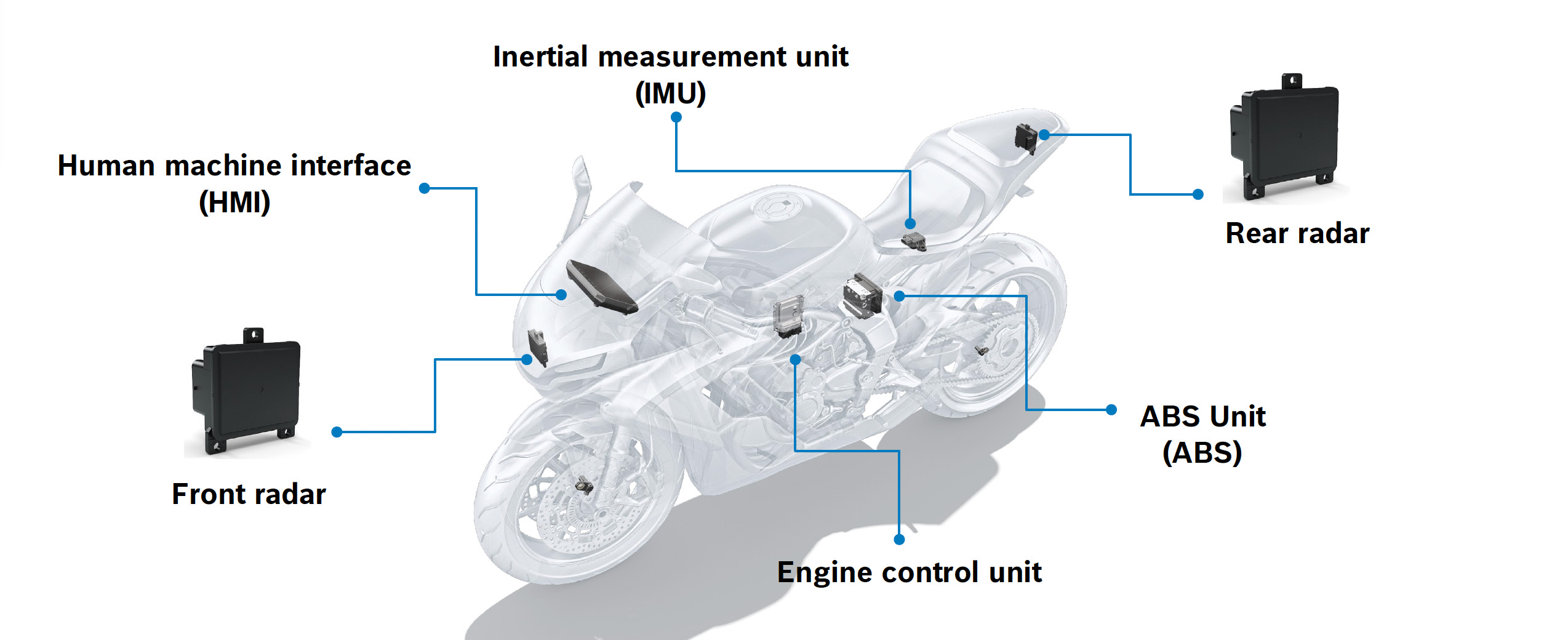
The introduction of ARAS follows a well-established precedent set by technologies like the Anti-Lock Braking System (ABS) and Traction Control System (TCS), which were once considered cutting-edge but are now standard and often mandatory features.2 For instance, Bosch’s Motorcycle Stability Control (MSC) is a core component of modern ARAS suites, using sensors to monitor parameters like lean angle, wheel speed, and inertial measurement data almost 100 times per second to electronically adjust braking and acceleration forces.4 The progression from these foundational systems to a more comprehensive suite of rider assistance functions marks a significant paradigm shift in how motorcycle safety is conceptualized and engineered. The objective has expanded from simply mitigating a loss of control to actively assisting the rider and preventing accidents before they occur.1

2.2. The ADAS vs. ARAS Conundrum: A Matter of Kinematics and Control
A common misconception is that Advanced Rider Assistance Systems are simply scaled-down versions of Advanced Driver Assistance Systems (ADAS) found in cars. This perspective fails to account for the profound differences in vehicle dynamics and rider behavior that fundamentally separate the two domains. A relevant analogy compares the distinct mechanics of a helicopter to an airplane; while both are airborne, their controls, operating environments, and physics are vastly different.7 Similarly, motorcycles and cars operate in “completely different environments and face distinct challenges”.7
The fundamental physical reality of a motorcycle presents immense obstacles for technology developers. Unlike cars, which provide a stable, level platform for sensors and computing systems, motorcycles are subject to constant vibrations, shocks, and dynamic tilting angles.7 These movements make it inherently difficult for sensors to maintain the level of accuracy required for sophisticated safety functions. Furthermore, motorcycles have a significantly more limited electrical supply and less-controlled environments for heat management compared to cars, which can impact the performance and durability of electronic components.7
This complex set of physical challenges is compounded by the unique behaviors of motorcyclists themselves. Riders often engage in actions that would confuse a car-based system, such as lane-splitting, making rapid lateral movements to avoid obstacles, and riding in close proximity to larger vehicles.7 The most critical distinction, however, lies in the human-machine dynamic. A car driver is a more passive participant, secured by a seatbelt and interacting with a stable platform, whereas a motorcyclist is an active and integral part of the vehicle’s dynamics.8 The rider maintains control and stability by gripping the handlebars and bracing their legs against the machine.8 This profound difference means that any active intervention by a safety system, such as autonomous emergency braking, could be disastrous if the rider is not prepared for it, potentially leading to a loss of control or even “unintentionally ejecting the rider from the saddle”.8
These significant technical and behavioral hurdles are the primary reasons for the slower migration of sophisticated assistance systems to two-wheelers. The slow pace is a direct consequence of the imperative to develop purpose-built technology that respects the unique nuances of motorcycle riding. For an ARAS system to be effective and safe, it must not only process external data but also account for internal variables like the bike’s lean angle and the rider’s position and intent.8 This complex interplay between the machine’s attitude and the rider’s input is a challenge that requires a more nuanced solution than a simple porting of car technology.7

3. Core ARAS Features: A Technological and Functional Deep Dive
3.1. Adaptive Cruise Control (ACC): Beyond Simple Speed Regulation
Adaptive Cruise Control (ACC) is perhaps the most prominent and widely adopted ARAS feature, offering a substantial improvement over traditional cruise control systems. ACC leverages a front-facing radar sensor to dynamically adjust the motorcycle’s speed in relation to the vehicle ahead, maintaining a preset safe following distance.10 This dynamic speed modulation reduces rider fatigue on long journeys and allows for greater concentration on the road, particularly in high-density traffic.10
The engineering of modern ACC systems goes far beyond simple speed regulation. The system is a complex interplay of various electronic components, including the radar sensor, engine management, braking system, and the Motorcycle Stability Control (MSC) unit.4 When the system detects the motorcycle is closing in on a vehicle ahead, it intelligently instructs the engine control unit and MSC to decelerate the bike, ensuring a safe distance is maintained.4 An advanced iteration of this technology is the “Stop and Go” function, which can bring the motorcycle to a controlled standstill and resume motion with the push of a button or a slight throttle input, making it highly effective in congested, stop-and-go traffic.10
Another innovation that exemplifies a deep understanding of motorcycle-specific riding behavior is “Group Ride Assist” (GRA).10 This function is a useful addition to Adaptive Cruise Control and is designed to address a common challenge for motorcyclists who ride in a staggered formation.10 Because a typical ACC system expects vehicles to be in the middle of the lane, it can be triggered by bikes in a staggered pattern.10 Using a specialized algorithm, GRA detects a group in a staggered formation and automatically maintains a consistent distance from the motorcycles in front, assisting riders in achieving a natural and stable group formation.9 This is a prime example of a design philosophy that moves beyond generic safety to provide a tool specifically tailored to the unique culture and practices of motorcycling. By building a system that accommodates and even enhances established riding patterns, manufacturers foster greater rider acceptance and trust, thereby increasing the likelihood of long-term adoption.1
3.2. Collision Warning Systems: The Extra Set of Eyes
Collision warning systems provide riders with enhanced situational awareness by acting as an “extra eye” on the road, monitoring areas that are difficult to see.4 Blind Spot Detection (BSD) and its add-on, Lane Change Assist (LCA), utilize a rear-mounted radar sensor to monitor the motorcycle’s blind spot.1 When the system detects a vehicle in a hard-to-see area, it alerts the rider via an optical signal, such as a warning light in the rear-view mirror.2 The system can operate in a static mode, which simply illuminates a light when a vehicle is in the blind spot, or a dynamic mode that factors in the relative speed of approaching vehicles.2 Lane Change Assist specifically provides a warning approximately 3.5 seconds before a target reaches the motorcycle in a high-speed scenario, helping to prevent dangerous lane changes.1
Forward Collision Warning (FCW) is a system that uses a front-facing radar to detect a critical proximity to a vehicle ahead and warns the rider via an acoustic or visual signal.1 This feature is particularly crucial given that approximately one-third of all motorcycle accidents in the EU involve motorcyclists rear-ending other vehicles.1 The system is active as soon as the vehicle is started and supports the rider in all relevant speed ranges, helping to reduce the risk of a rear-end collision or mitigate its effects.10
Rear-end Collision Warning (RCW) is another critical safety feature that addresses a vulnerability unique to motorcyclists. This system monitors rearward traffic and issues a warning if a vehicle approaches the motorcycle at a high relative speed.1 In dangerous situations, the system can even actuate the motorcycle’s hazard lights with high frequency to alert the trailing vehicle of the critical situation, thereby protecting the rider from being struck from behind.1
The high prevalence of these warning-based systems in the market is an important indicator of rider sentiment. Front radar systems have a 47% global installation rate, while rear radar systems, used primarily for blind spot detection, have a 19% installation rate.15 This suggests that riders are more accepting of passive, non-intervening alert systems that enhance their awareness without taking over control. This preference aligns with the deep-seated concerns about autonomous braking and other active interventions, which many riders view as potentially dangerous if they are caught unprepared.8
3.3. Foundational and Emerging Safety Systems
While ARAS is defined by its newer, more sophisticated features, its functionality is built upon foundational electronic safety systems that have been in development for decades. Anti-Lock Braking Systems (ABS), which Bosch first developed for cars in 1978 and motorcycles in 1995, have evolved significantly, with the latest units weighing only a tenth of their predecessors, making them accessible even for smaller motorcycles.4 Similarly, Traction Control Systems (TCS) and Motorcycle Stability Control (MSC) provide critical layers of stability and control by preventing wheel spin and electronically adjusting braking and acceleration forces based on the bike’s attitude.3 These systems are no longer optional extras but are the essential underpinnings of modern ARAS.
In addition to these foundational technologies, more active systems are beginning to emerge, such as Emergency Brake Assist (EBA). This function is triggered when the system detects a risk of collision and the rider does not brake hard enough.10 EBA actively increases wheel brake pressure to reduce the bike’s speed as quickly as possible.10 However, such active interventions remain a subject of debate within the riding community, with some riders expressing a deep-seated distrust in systems that would take over control, preferring to rely on their own skills and training.16 The table below provides a concise overview of the core ARAS features and their primary functions.
| Feature | Primary Function | Key Technologies | Rider Benefit |
| Adaptive Cruise Control (ACC) | Maintains safe following distance by dynamically adjusting speed. | Radar, Engine Management, Brake System, MSC | Reduced fatigue, improved concentration |
| Blind Spot Detection (BSD) | Monitors hard-to-see areas and alerts the rider to vehicles. | Rear Radar Sensor | Enhanced situational awareness, safer lane changes |
| Forward Collision Warning (FCW) | Warns of a critical proximity to a vehicle ahead to prevent rear-end collisions. | Front Radar Sensor | Accident prevention, increased reaction time |
| Rear-end Collision Warning (RCW) | Monitors rearward traffic and alerts the rider of an approaching vehicle. | Rear Radar Sensor | Accident prevention, increased safety in traffic |
| Emergency Brake Assist (EBA) | Actively increases braking pressure to prevent or mitigate a collision. | Radar, Brake System, MSC | Accident prevention in emergency scenarios |
| Group Ride Assist (GRA) | Automatically maintains a safe distance in a staggered group formation. | Radar, Algorithm | Consistent formation, reduced rider stress |

4. The Engineering Imperative: Uniquely Motorcycle Challenges
4.1. Physical and Environmental Constraints
The physical and environmental challenges of adapting car-based assistance systems for motorcycles are profound and present a significant barrier to widespread adoption. Unlike a car’s chassis, which provides a stable platform for electronic components, a motorcycle experiences constant vibrations, tilting, and shocks, making it difficult for sensitive sensors to maintain accuracy and reliability.7 In addition, motorcycles have a significantly lower available electrical supply compared to cars, which can support an array of power-hungry sensors and computing systems.7 The exposed nature of motorcycle components also creates heat management issues, as systems must be able to withstand the high temperatures generated by the engine.7
These physical constraints directly influence the market’s commercial landscape, creating a distinct segmentation between OEM and aftermarket solutions. Fully integrated OEM systems, such as those developed by Bosch and integrated into large motorcycles, are often too bulky and advanced to be retrofitted to older or smaller models.6 The components required, including the computer system, can be too large for most small motorcycles or scooters.6 This has resulted in a market where full-suite ARAS is predominantly available on large, modern, and expensive flagship models. The cost of these integrated systems, driven by the inclusion of radar and other sensors, can increase the overall vehicle price by up to 23%.15
In contrast, the aftermarket industry has emerged to address this gap, offering more affordable and compact solutions that can be retrofitted to a wider range of motorcycles.6 These systems, which may use cameras instead of radar, are designed to be a one-size-fits-all solution, but they come with a significant trade-off: they are generally limited to passive warnings and cannot directly control the bike’s braking or throttle.6 This market duality—OEM for deep integration at a high cost and aftermarket for accessibility with limited functionality—is a direct consequence of the immense engineering challenges inherent in adapting ADAS for motorcycles. The future of ARAS adoption hinges on the continued miniaturization and cost reduction of sensor technologies, a trajectory that mirrors the development and eventual widespread integration of ABS into all motorcycle segments.2
4.2. The Human-Machine Dynamic: A Matter of Trust and Control
The most profound and complex challenge in the development of ARAS is not technological but human. The fundamental relationship between a rider and a motorcycle is a dynamic, symbiotic one, where the rider is an active and essential component of the vehicle’s stability and dynamics.8 This stands in stark contrast to the experience of a car driver, who is secured and relatively passive.8 For this reason, an active intervention by a safety system—such as autonomous emergency braking—that changes the bike’s attitude without the rider’s preparation could be catastrophic.8 A system that suddenly and unexpectedly applies the brakes could easily cause a rider to lose their balance, an event that could lead to being “unintentionally ejected from the saddle”.8
This core issue highlights the critical importance of determining a rider’s intent and readiness. Advancing ARAS functionality requires a system to understand whether a rider is reacting to a situation and applying force to the handlebars, or if they are relaxed and unaware of a developing hazard.8 This ability to gauge a rider’s state is a monumental technical challenge, as a motorcycle’s Inertial Measurement Unit (IMU) provides vast amounts of data about the machine’s attitude but almost no data about the human operator’s status.8
This “rider-in-the-loop” dilemma explains why the development of active, intervening ARAS has been slower than its automotive counterpart. It is a behavioral problem as much as it is a technological one. Current systems are largely focused on providing passive warnings (e.g., BSD, FCW) that enhance the rider’s awareness without compromising their sense of control.15 The slower pace of innovation in active safety features for motorcycles is a direct consequence of the critical human-machine relationship, which dictates that any system must supplement, not supplant, rider input. Until rider monitoring and control systems are advanced enough to increase safety without jeopardizing it, the role of active and intervening ARAS will remain limited for the near term.8
5. Market Dynamics and Commercial Landscape
5.1. Market Segmentation by Price and Adoption Rate
The global market for Advanced Rider Assistance Systems is on a significant growth trajectory. In 2024, the market was estimated at $1.6 billion and is projected to reach $2.6 billion by 2030, representing a Compound Annual Growth Rate (CAGR) of 8.4%.5 This expansion is driven by several key factors, including increasing consumer demand for enhanced safety, a rise in urban commuting, and stringent government regulations.3 The market’s adoption rate is heavily segmented by vehicle price, creating a distinct affordability gap that influences who has access to these technologies.
The premium motorcycle segment, priced at above $30,000, leads in ARAS adoption, with over 62% of models featuring full-suite capabilities.15 Riders in this category, primarily those who purchase adventure touring and luxury sport models, prioritize safety, convenience, and innovation, making ARAS a standard offering rather than an optional add-on.15 The mid-range category, comprising motorcycles priced between $20,000 and $30,000, shows a more moderate adoption rate of approximately 45%.15 Manufacturers in this segment typically integrate partial ARAS solutions, such as a front radar or blind spot alerts, to provide a safety upgrade without the premium price tag.15 In contrast, the adoption of ARAS in the low-end segment, for motorcycles priced under $20,000, remains limited at below 18%, largely due to cost constraints and lower consumer awareness.15
The market stratification is a direct result of the high cost of integrating ARAS components. The inclusion of radar and sensor systems can contribute to a 23% increase in the overall vehicle price, which is a significant barrier for the mass market.15 However, the growing adoption of radar-based systems in the mid-range category, with a 31% increase, suggests that the cost-efficiency of ARAS modules is improving, paving the way for broader availability.15 The trajectory of ARAS appears to be following the same path as ABS, which was once a costly premium feature but is now standard and mandatory on many motorcycles. The continued miniaturization and cost reduction of sensor technology will be essential to bridging the affordability gap and driving widespread adoption across all segments of the market.2 The table below provides a detailed breakdown of ARAS market adoption by price segment.
| Price Segment | Adoption Rate | Dominant Features | Primary Motorcycle Categories |
| Above $30,000 | >62% | Full-suite capabilities, including front-rear radar, ACC, and BSD. | Adventure Touring, Luxury Sport |
| $20,000–$30,000 | 45% | Partial solutions, such as front radar or blind spot alerts. | Semi-premium models, Urban Commuters, Long-Distance Riders |
| Under $20,000 | <18% | Limited to basic rear radar and proximity alerts. | Commuter motorcycles, Developing regions |
5.2. OEM vs. Aftermarket: The Competitive Duality
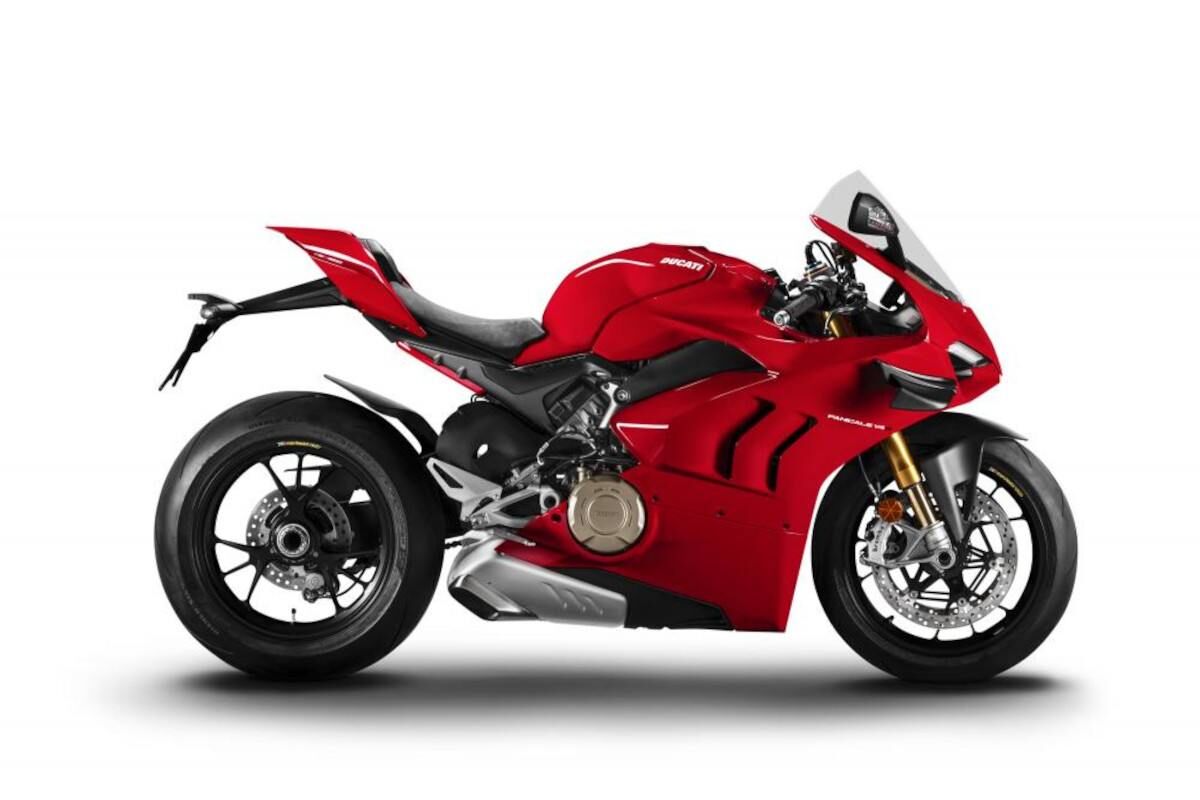
The commercial landscape for ARAS is characterized by a competitive duality between original equipment manufacturers (OEMs) and aftermarket solution providers. Major OEMs, including Ducati, KTM, BMW, and Kawasaki, are actively integrating ARAS into their flagship models, often in partnership with technology leaders like Bosch and Continental.4 These OEM systems are deeply integrated into the motorcycle’s core electronics, leveraging data from engine control units, braking systems, and inertial measurement units (IMUs) for seamless and high-performance functionality.4 This integration allows for sophisticated features like “curve control,” which limits acceleration and braking dynamics at a comfortable lean angle, enhancing stability and rider confidence.11 However, this level of seamless integration comes at a high cost, restricting these systems to premium models that are priced accordingly.14
In parallel, a vibrant aftermarket has emerged to address the gap in accessibility and affordability. Companies like INNOVV, Kiwan Motors, and Garmin offer standalone ARAS solutions that can be retrofitted to a wide range of motorcycle makes and models.6 These systems, which are often camera-based or use rear-facing radar, are typically priced significantly lower than OEM packages and are designed to be compact and easy to install.6 However, a key limitation of aftermarket systems is their inability to interface with the motorcycle’s core functions, such as braking and throttle.8 This means they are largely confined to providing passive warnings—such as visual alerts via LED lights—rather than active interventions.6
This dynamic between OEM and aftermarket players represents a classic market battle between superior integration and broader accessibility. While OEM solutions offer the most advanced and effective ARAS capabilities, they remain a luxury for a select group of consumers. Aftermarket companies, by contrast, are acting as crucial market catalysts, raising consumer awareness and demonstrating the value of ARAS to a wider audience. This increased demand at the mainstream level will eventually compel OEMs to develop more cost-effective, integrated solutions for a broader range of motorcycles, driving the technology towards a more ubiquitous future.

6. The Human Factor: Rider Psychology and Behavioral Impact
6.1. The Duality of Perception: ARAS as a Crutch vs. a Safety Net
The integration of ARAS has ignited a significant psychological debate within the motorcycling community, centered on the delicate balance between technological assistance and personal skill. The perception of ARAS is a duality, with riders viewing the technology either as a potentially dangerous crutch or a valuable safety net.
One school of thought argues that ARAS features are “inherently dangerous” and will have the overall effect of lowering a rider’s awareness.16 This perspective is rooted in the belief that high awareness is the “root to safe riding” and that relying on a machine to compensate for inattentiveness will lead to a false sense of security.16 Proponents of this view argue that it is “just human nature” for a person to lower their guard if they feel safer, which could make them less defensive and ultimately less safe.16 This perspective often leads to the conclusion that a rider is better off investing in advanced training to sharpen skills and awareness rather than spending money on technology that may lead to complacency.16
In direct contrast, a different perspective sees ARAS not as a replacement for skill but as a supplementary tool.16 From this viewpoint, these systems serve as a “safety net in rare, unpredictable situations where human reflexes alone might not be enough”.16 This analysis acknowledges that no one knows how they will react in a split-second emergency and that electronic aids can provide that crucial extra help when needed most.16 The argument is made that since motorcycles have no crumple zones, seat belts, or airbags, electronic aids can “make a poor driver/rider a better driver/rider” and help shift the odds in a rider’s favor in an emergency situation.16 This is particularly relevant for systems that provide passive warnings, such as Rear-end Collision Warning, which are viewed as beneficial without compromising a rider’s sense of control.16
6.2. The Symbiotic Role of Training
The psychological friction surrounding ARAS highlights that the technology is not just a product but a social and behavioral catalyst. The success and effectiveness of ARAS are not solely dependent on its technical sophistication but on how riders interact with it. For this reason, ARAS should not be viewed as a substitute for fundamental riding skills. Instead, the evidence suggests a symbiotic relationship, where the technology works best when paired with comprehensive rider training.16 Market research has found that riders who receive proper training on these safety systems demonstrate markedly improved confidence levels and are more likely to become long-term enthusiasts.27
This suggests that the industry must work to integrate ARAS training into licensing and safety programs to ensure that riders understand the systems’ capabilities and limitations. By fostering a culture that views ARAS as a tool to augment, rather than replace, human skill, the industry can overcome the psychological barriers to adoption. The shift in consumer attitudes, particularly among younger riders who view safety features as essential rather than optional, indicates that this psychological friction may be generational, paving the way for wider acceptance in the future.27 This changing perception of safety as a primary decision-making factor, surpassing traditional priorities like performance and aesthetics, is a significant development that will continue to drive the ARAS market forward.27
7. Future Directions: The Next Generation of Rider-Machine Communication
7.1. The Rise of AI and Sensor Fusion
The future of ARAS is moving beyond simple radar-based systems to incorporate artificial intelligence (AI) and advanced sensor fusion. While current systems may be limited by the range and line-of-sight of their radar, next-generation solutions are designed to leverage data from multiple sensors, including radar, LiDAR, and high-definition cameras, to create a more comprehensive and accurate picture of the motorcycle’s surroundings.3
AI is the key to unlocking this next level of performance. AI-driven predictive analytics can analyze vast amounts of data in real-time to identify potential hazards, enabling a system to anticipate and mitigate accidents before they happen.3 For instance, a system can predict a motorcycle’s curved path while cornering and adjust its radar focus and adaptive cruise control accordingly, thereby overcoming a major limitation of current technology.9 Start-ups like Ride Vision are already using AI-enabled, camera-based systems to provide 360-degree coverage and detect threats in real-time, all while running the complex machine vision models at the “edge” (on the device itself) to minimize latency.6 This shift from single-sensor systems to sensor fusion is a direct response to the limitations of current technology, particularly the decrease in radar detection ability at lean angles as small as 14 degrees.6 By combining multiple data streams, future ARAS can more reliably predict a motorcycle’s trajectory and rider intent, leading to more intelligent and less intrusive interventions.
7.2. The Connected Ecosystem: V2X Communication
The next logical step in the evolution of ARAS is the integration of Vehicle-to-Everything (V2X) communication. V2X technology enables a motorcycle to wirelessly communicate with other vehicles (V2V), infrastructure (V2I), and even pedestrians (V2P) in its vicinity.3 This creates a comprehensive, collaborative safety ecosystem that transcends the line-of-sight limitations of camera and radar-based systems.
V2X communication allows a motorcycle to receive real-time information about hidden risks, such as a vehicle approaching from around a blind corner, a pedestrian crossing a smart intersection, or a sudden road hazard over a hill.31 This information allows the ARAS to provide a proactive alert to the rider, fundamentally transforming the system from a reactive safety net to a predictive, forward-looking tool for accident prevention.3 The expansion of 5G networks will further strengthen the capabilities of connected ARAS, enabling real-time data exchange that will make features like smart traffic signal recognition and intersection collision warnings more prevalent.3 The development of V2X for motorcycles also addresses the specific needs of group riding, with systems being designed to communicate in a staggered formation without triggering false warnings.9 This interconnected future will not only improve rider safety but also enhance overall traffic efficiency and reduce congestion, marking a significant step forward in the broader pursuit of intelligent transportation solutions.31
8. Strategic Recommendations and Conclusion
The landscape of Advanced Rider Assistance Systems is at a pivotal moment, poised between nascent adoption and mainstream integration. The analysis presented in this report leads to several key conclusions and strategic recommendations for industry stakeholders.
For manufacturers, the primary strategic imperative is to bridge the affordability gap that currently confines ARAS to the premium market. The evidence suggests that developing modular, stripped-down, and cost-effective ARAS solutions for the mid-range motorcycle segment is the most viable path to incremental growth and wider market penetration.15 In parallel, OEMs must continue to invest heavily in advanced research and development, particularly in the areas of AI and V2X communication, to cement a competitive advantage in the long term. Crucially, the focus of this R&D must remain on rider-centric design that provides assistance without compromising the rider’s sense of control. This means prioritizing warning-based systems and transparent, predictable interventions that build trust rather than fear.8
For regulators and safety organizations, a key recommendation is to promote the development of standardized ARAS technologies and to integrate training on these systems into mandatory licensing programs. By doing so, they can help ensure that riders are prepared to use ARAS effectively, thereby improving confidence and reducing the psychological friction that currently exists within the community.27
In conclusion, ARAS is not a fleeting trend but a fundamental, technology-driven evolution of the motorcycle. The journey from a purely mechanical machine to an intelligent, connected vehicle is well underway, driven by advancements in sensor technology, AI, and V2X communication. As ARAS becomes more sophisticated and accessible, it will not only improve rider safety and help move the industry toward the goal of “Vision Zero”—the eradication of road fatalities—but also fundamentally expand the motorcycling community by attracting a new generation of riders who prioritize safety and innovation.4 The future of motorcycling is one where technology and human skill work in concert to create a safer, more confident, and ultimately more enjoyable riding experience.
Sources
- Revolutionizing Motorcycle Safety: Advanced Rider Assistance Systems (ARAS), accessed on August 29, 2025, https://conti-engineering.com/areas-of-expertise/other-industries/2and3wheeler-onroad/advanced-rider-assistance-system-aras/
- Advanced Rider Assistance Systems (ARAS) – Continental Engineering Services, accessed on August 29, 2025, https://conti-engineering.com/advanced-rider-assistance-systems-aras/
- Motorcycle Advanced Rider Assistance System Market Size and Share 2032 – Credence Research, accessed on August 29, 2025, https://www.credenceresearch.com/report/motorcycle-advanced-rider-assistance-system-market
- New motorcycle safety systems tested | Bosch Global, accessed on August 29, 2025, https://www.bosch.com/stories/motorcycle-safety-systems/
- Motorcycle Advanced Rider Assistance System (ARAS) – Global Strategic Business Report, accessed on August 29, 2025, https://www.researchandmarkets.com/report/advanced-rider-assistance
- Ride Vision: The Future of Advanced Rider Assistance Systems, accessed on August 29, 2025, https://ride.vision/blog/ride-vision-the-future-of-advanced-rider-assistance-systems/
- Motorcycle ARAS vs. Car ADAS: Why They Are Worlds Apart – Rider Dome, accessed on August 29, 2025, https://www.riderdome.com/post/motorcycle-aras-vs-car-adas-why-they-are-worlds-apart
- Motorcycles enter the ADAS age – SAE International, accessed on August 29, 2025, https://www.sae.org/news/2021/02/motorcycles-enter-the-adas-age
- Indian Working On Next-gen ARAS – Cycle World, accessed on August 29, 2025, https://www.cycleworld.com/motorcycle-news/indian-developing-next-generation-aras/
- Advanced rider assistance systems – Bosch Mobility, accessed on August 29, 2025, https://www.bosch-mobility.com/en/solutions/assistance-systems/advanced-rider-assistance-systems-2w/
- Active Cruise Control (ACC) – technology in detail | BMW Motorrad, accessed on August 29, 2025, https://www.bmwmotorcycles.com/en/engineering/detail/comfort-ergonomics/acc.html
- Motorcycle Adaptive Cruise Control Market Size & Competitors, accessed on August 29, 2025, https://www.researchandmarkets.com/report/motorcycle-adaptive-cruise-control
- Indian Motorcycle’s Next-Gen ARAS Innovation – iMotorbike News, accessed on August 29, 2025, https://news.imotorbike.com/en/2025/03/indian-motorcycle-aras-technology/
- On the radar: Blind spot detection systems for all bikes – RevZilla, accessed on August 29, 2025, https://www.revzilla.com/common-tread/on-the-radar-blind-spot-detection-systems-for-all-bikes
- Motorcycle Advanced Rider Assistance System (ARAS) Market Size, Share, Forecast, 2033, accessed on August 29, 2025, https://www.globalgrowthinsights.com/market-reports/motorcycle-advanced-rider-assistance-system-aras-market-116193
- Bosch Advanced Rider Assistance System (ARAS) test: The future of …, accessed on August 29, 2025, https://www.revzilla.com/common-tread/bosch-advanced-rider-assistance-system-aras-first-ride-review
- ARAS (Advanced Rider Assistance System) activation Multistrada V4 S and Sport Model Year 2021 (USA – nhtsa, accessed on August 29, 2025, https://static.nhtsa.gov/odi/tsbs/2021/MC-10198998-0001.pdf
- Ducati Multistrada Motorcycles | Adventure, Performance, and Versatility, accessed on August 29, 2025, https://www.ducati.com/us/en/bikes/multistrada
- KTM – READY TO RACE | United States, accessed on August 29, 2025, https://www.ktm.com/
- KTM Travel – Adventure Without Limits | KTM United States, accessed on August 29, 2025, https://www.ktm.com/en-us/models/travel.html
- kwiksure.com, accessed on August 29, 2025, https://kwiksure.com/blog/kawasaki-motorcycle/#:~:text=The%20top%2Dof%2Dthe%2D,lane%20change%20assistance%20to%20avoid
- Kawasaki Ninja H2® SX | Motorcycle | Luxury & Power, accessed on August 29, 2025, https://www.kawasaki.com/en-us/motorcycle/ninja/hypersport/ninja-h2-sx
- BMW Motorrad Configurator – all models, colors, packages and prices, accessed on August 29, 2025, https://configurator.bmwmotorcycles.com/index_en_US.html?cookie=1
- R 1300 GS | BMW Motorrad, accessed on August 29, 2025, https://www.bmwmotorcycles.com/en/models/adventure/r1300gs.html
- KTM 1290 SUPER ADVENTURE S Media Information | KTM United States, accessed on August 29, 2025, https://www.ktm.com/en-us/1290-super-adventure-s-media-information.html
- 2024 KTM 1290 SUPER ADVENTURE S – THE WORLD JUST GOT SMALLER, accessed on August 29, 2025, https://www.ktm.com/en-us/models/travel/2024-ktm-1290-superadventures.html
- Safety Innovations in motorcycles: Market Analysis and Consumer …, accessed on August 29, 2025, https://www.csm-research.com/safety-innovations-in-motorcycles-market-analysis-and-consumer-behavior/
- How the Rise of AI is Changing Motorcycle Safety – Factory Racing, accessed on August 29, 2025, https://factory.racing/blogs/factory-racing-shop-news/the-rise-of-ai-is-changing-motorcycle-safety
- Riding Smarter: How AI is Steering Motorcycle Fleet Safety – aaeon, accessed on August 29, 2025, https://www.aaeon.ai/en/applications/detail/ai-safety-for-riders
- Vehicle-to-everything – Wikipedia, accessed on August 29, 2025, https://en.wikipedia.org/wiki/Vehicle-to-everything
- The Ultimate V2X FAQ – Autotalks, accessed on August 29, 2025, https://auto-talks.com/the-ultimate-v2x-faq/
- News – Connected Motorcycle Consortium, accessed on August 29, 2025, https://www.cmc-info.net/news.html
Our Social Media Handles
- Instagram : LivingWithGravity
- Medium : Akash Dolas
- YouTube Channel : Gear and Shutter
- Facebook : LivingWithGravity