









I. Executive Summary: The Strategic Redefinition of Feeder Classes
The future of the Moto2 and Moto3 World Championships is currently under intense scrutiny as the sport prepares for a monumental technical overhaul across all Grand Prix classes in the 2027 season. Dorna Sports, the commercial rights holder, through its Chief Sporting Officer Carlos Ezpeleta, has been compelled to provide unequivocal assurance that the intermediate and lightweight classes remain an “intrinsic part of the championship” and are considered a crucial “asset” for identifying and nurturing future premier-class talent.1 This public commitment serves primarily to counter persistent, but officially denied, rumors suggesting the feeder classes would face significant diminution, such as adopting reduced schedules, being confined solely to European races, or losing their World Championship status.1
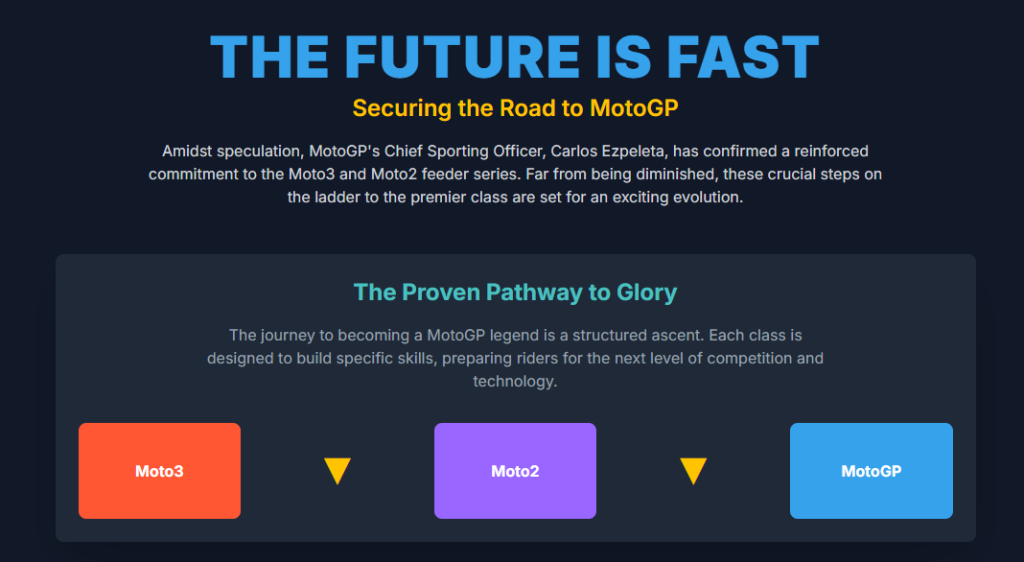
However, the assurances of continuity are paired with a proactive strategy of evolution. Ezpeleta has identified a critical technical impediment within the current talent pathway: the performance gap between Moto3 and Moto2 is currently deemed “a bit too big,” necessitating significant regulatory intervention by 2027.3 The proposed solution involves a radical technical transformation of the Moto3 platform, shifting it toward a spec-series model featuring a larger, more powerful engine configuration.
This new strategic direction aims to fulfill two primary objectives. First, it seeks to modernize the technical platform, addressing rider development requirements by ensuring a smoother, more effective transition to the Moto2 class. Second, and equally vital, the strategy emphasizes enhancing commercial viability through radical hardware cost reduction and reinforcing global accessibility via the established “Road to MotoGP” pathway.3 The report provides a deep analysis of how Dorna is attempting to manage the public perception of stability alongside planned operational and technical upheaval.
II. Governance and Strategic Commitment: Reconciling Assurances with Operational Shifts
2.1. Refutation of Diminishment Rumors (The Public Stance)
Dorna’s leadership has moved decisively to quash rumors concerning the marginalization of Moto2 and Moto3. Specific claims, such as the classes not racing at every Grand Prix event or being relegated to exclusively running on Saturdays, were dismissed by Ezpeleta as “completely unfounded”.1 The organization understands that maintaining the integrity of the feeder series is essential to the health of the overall Grand Prix ecosystem.
Crucially, the titles earned in Moto2 and Moto3 will retain their status as official FIM World Championships.2 This distinction is highly relevant to team principals and riders, separating them culturally and historically from the non-championship support series found in Formula 1 (F2 and F3).2 While Ezpeleta acknowledged that the nature of these categories has undergone a fundamental shift—they are no longer career destinations for specialist riders, but rather clear feeder series with the ultimate objective of reaching MotoGP—their official status and historical continuity remain intact in the record books.2 Dorna proudly asserts that no other motorsports property invests as extensively in its development pyramid, emphasizing the asset of being able to point out and introduce “the stars of the future” to fans quickly.2
2.2. The New Operational Reality (The Paddock Relocation Plan)
Despite these strong public assurances regarding the classes’ status and prominence in the race weekend schedule, Dorna is simultaneously implementing major operational changes that signal a physical and commercial re-prioritization within the paddock structure. The most significant shift involves relocating the Moto2 and Moto3 team paddocks away from the MotoGP pitlane and premier-class hospitality zone.2
This decision is intended to more closely mirror the logistical relationship between Formula 1 and its support series, F2 and F3.7 Moto2 and Moto3 teams will likely transition to self-contained, temporary facilities, such as the substantial shipping container garages or specialized tents currently used by series like MotoE or F2/F3.7 Ezpeleta framed this change as a physical arrangement “behind the pitboxes,” designed primarily to free up space for the expanding needs of the MotoGP premier class and its manufacturers. He committed that Dorna would “investing into better and more equal facilities for Moto2 and Moto3 on-site” to manage this transition.2
Strategic Contradiction and Commercial Implications
The operational shift introduces a strategic contradiction into Dorna’s narrative. While on-track presence and World Championship status are maintained, the physical separation represents a commercial diminution. Moving teams away from the highly visible pitlane directly impacts the interaction time and exposure between sponsors and the valuable MotoGP ecosystem.7 This move, likely driven by Liberty Media’s interest in maximizing the commercial footprint and focus on the premier class, risks concentrating media and corporate attention solely on MotoGP.
The financial consequences of this strategic choice are a significant concern for intermediate and lightweight class team principals. Many Moto2 and Moto3 teams rely heavily on sponsorship deals for funding, not high-cost pay riders.7 Team managers fear that the restricted paddock visibility and reduction in sponsor Return on Investment (ROI) will leave them with “no other choice but to start looking at riders able to bring six-figure sums” to secure seats.7 If this occurs, the financial barrier to entry at the critical step immediately preceding MotoGP will rise, directly undermining Dorna’s global mandate of promoting the most talented riders regardless of their financial background. This vulnerability is compounded by the fact that Dorna and IRTA have reportedly not guaranteed increased subsidies to offset the potential loss of sponsor revenue resulting from the move.10
III. Technical Evolution: Closing the Performance Delta via Moto3 Transformation
3.1. Quantification of the Current Performance Barrier
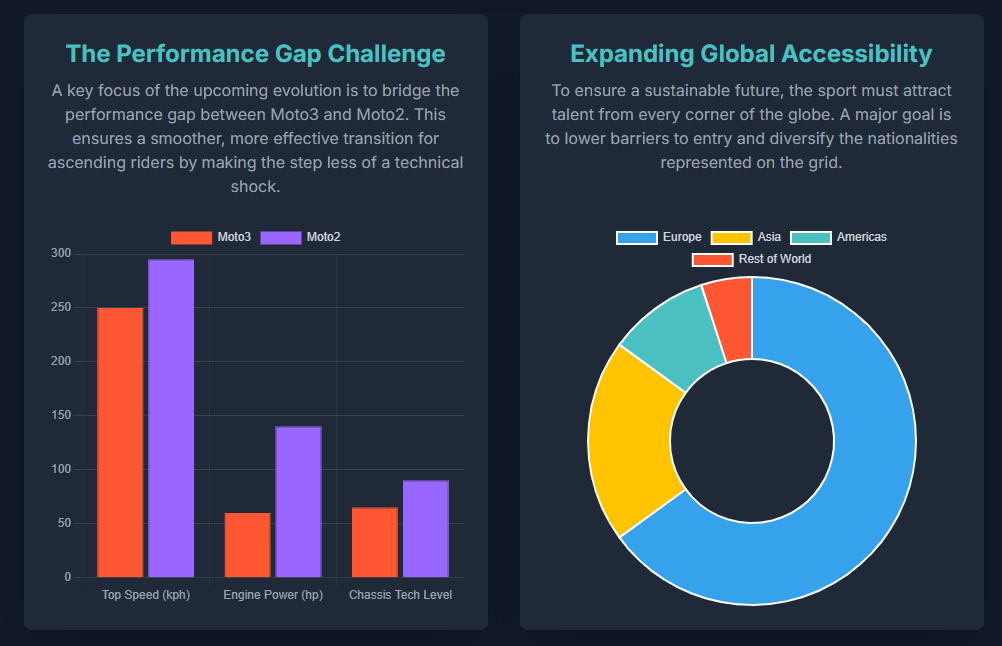
The technical restructuring of the Moto3 class is mandated by the recognition that the transition to Moto2 currently poses an excessively difficult challenge for young riders.3 The disparity is steep across multiple metrics, fundamentally altering the required riding style and technical demands.
Current Moto3 machinery consists of a lightweight (152kg combined minimum weight), low-power (approximately 60 horsepower) 250cc single-cylinder prototype.11 Success in this class hinges on precision, high corner speed, and managing the aerodynamic effect of drafting, given the limited power.11 Upon moving to Moto2, riders must immediately contend with the Triumph-supplied 765cc triple-cylinder engine, which delivers approximately 138 horsepower—a 130% increase in power.11 Furthermore, the minimum combined weight jumps to 217kg.11 This transition forces riders to adapt to:
- Significantly greater power management demands and increased movement from the rear tire.11
- The need to brake and turn a substantially heavier machine from speeds exceeding 300 km/h (the top speed of a Moto2 bike).11
This massive technical step has historically caused numerous highly-rated Moto3 graduates to struggle upon entry into Moto2, demonstrating that the current learning curve is inefficient in preparing riders for the intermediate class.4
Table 1: Performance and Technical Specifications Comparison (Current Setup)
| Class | Engine Configuration | Approx. Power (HP) | Minimum Combined Weight (kg) | Top Speed (km/h) | Primary Technical Challenge |
| MotoGP (Pre-2027) | 1000cc V4/Four-cylinder Prototype | 250 | 157 (Bike only) | 366+ | Electronic management, Aero effects, Raw power delivery |
| Moto2 | 765cc Triple (Spec Engine) | 138 | 217 (Rider + Bike) | 301+ | Power management, Tyre conservation, Heavier chassis handling |
| Moto3 (Current) | 250cc Single Prototype | 60 | 152 (Rider + Bike) | 245 | Drafting, Lightweight precision, Close pack racing |
3.2. Proposed Moto3 Technical Framework (2027)
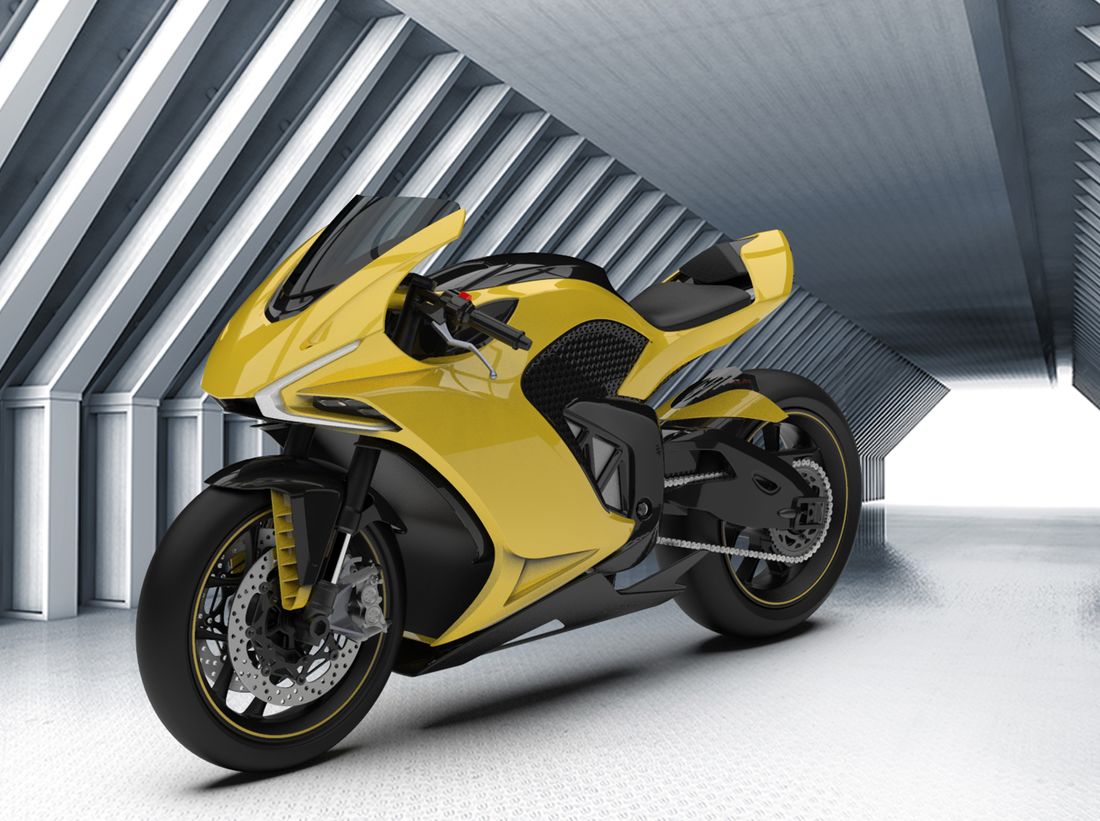
To rectify the performance gap, leaked reports indicate that Moto3 is set to undergo a radical transformation for 2027 (at the earliest). The current 250cc single-cylinder prototype formula, which has been in place since 2012, is expected to be replaced by a single-make series utilizing a 500cc two-cylinder engine.4
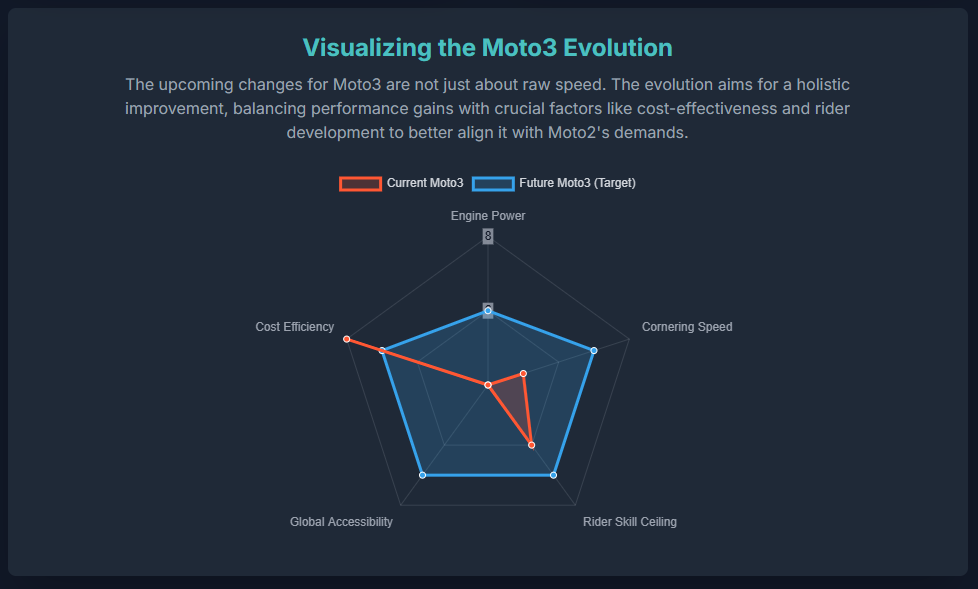
The primary performance target is to raise the power output from the current 60 horsepower to a rumored 80 horsepower.4 This power increase, combined with an inevitable increase in minimum bike weight due to the larger, two-cylinder engine, is designed to compel young riders to develop more sophisticated throttle control and manage a heavier chassis earlier in their careers.4 Furthermore, analysts anticipate that the increased power will mitigate the “ridiculous dependency on a slipstream” that defines current Moto3 races, thereby rewarding genuine individual skill over collective drafting strategy.12
The move to a single-make platform, mirroring the successful Moto2 model, is driven by a critical financial mandate: cost reduction. The current Moto3 prototype package costs approximately €170,000. Dorna is reportedly targeting a spec-series package cost of only €75,000, representing a cost reduction of over 55%.4 This fiscal restructuring is foundational to the sport’s long-term sustainability. While Honda and KTM are the current suppliers, manufacturer sourcing for the new, low-cost spec 500cc unit is proving challenging, although Yamaha has been linked to supplying the engine, possibly paired with a Kalex-designed chassis.4
3.3. Technical Synchronization with MotoGP (2027 Era)
The Moto3 evolution is concurrent with the premier class’s major technical overhaul in 2027, which includes a reduction of engine displacement from 1000cc to 850cc, tighter control over aerodynamics, and the banning of all ride-height and holeshot devices.14
The new pyramidal structure for 2027 aims to compress the technical learning curve effectively: New Moto3 (500cc) Moto2 (765cc) MotoGP (850cc). Although the difference in displacement between Moto2 (765cc) and the new MotoGP (850cc) is only 85cc, the technical differentiation remains immense. MotoGP machines remain highly complex, high-power prototypes (estimated at 255hp at 850cc) compared to Moto2’s production-based 765cc spec engine (140hp), maintaining a clear power differential of nearly double the output.16 By increasing the demands of the Moto3 machine, Dorna is strategically positioning the new lightweight class as a true “Moto2.5” 12, ensuring that the progression step from Moto3 to Moto2 is smoother, while the jump from Moto2 to the new 850cc MotoGP is maintained at an acceptable level.3
The move to a 500cc twin in Moto3 necessitates a fundamental shift in the rider skillset emphasized early in their careers. By moving away from the lightweight, drafting-centric 250cc bikes, the new regulations prioritize the rider’s ability to manage greater power and weight under braking and acceleration.12 This directly addresses the developmental gap by requiring the application of skills—such as subtle throttle control and sophisticated race strategy—that are necessary for success in Moto2 and MotoGP.4 The current chaotic, slipstream-dependent style of Moto3 racing, which some view as “unintelligible ’empty calories’ racing,” is expected to be mitigated as the more powerful bikes stretch the field slightly, rewarding genuine talent and technique more explicitly.12 This regulatory change formally abandons prototype racing in the feeder classes, confirming that the FIM World Championship structure is focused purely on developing talent and controlling costs, rather than serving as a platform for manufacturer technical innovation outside of the premier class.
IV. Financial and Operational Stability of the Pyramid
4.1. The Economic Rationale for the Moto3 Overhaul
The economic viability of the support classes is as crucial as the on-track competition. The radical proposed cost reduction in Moto3 forms the bedrock of the 2027 evolution.
Table 2: Financial and Technical Comparison of Moto3 Regulatory Models
| Metric | Current Moto3 (250cc Prototype) | Proposed Moto3 (500cc Spec Series, 2027) | Strategic Objective |
| Engine/Cylinder Count | 250cc Single-Cylinder (Prototype) | 500cc Twin-Cylinder (Spec) | Better rider preparation for Moto2 power 4 |
| Regulatory Status | Multi-Manufacturer Prototype | Single-Make Spec Series | Cost control, technical parity 4 |
| Estimated Package Cost | €170,000 | €75,000 (Reported Target) | Increase global accessibility, lower barrier to entry 4 |
| Targeted Horsepower | 60hp | 80hp (Rumored Target) | Reduce drafting dependency, enhance rider control 12 |
The targeted reduction of the cost of a complete Moto3 race package from approximately €170,000 to €75,000 stabilizes the grid by making team operation financially sustainable.4 This move is essential for increasing global accessibility, ensuring that the pool of riders who can afford to enter the World Championship is widened, aligning with Dorna’s stated meritocratic goals.17 The precedent for this spec-series model is already established and successful in Moto2, which transitioned in 2019 to a unified engine format (Triumph 765cc) after previously using Honda production engines.4
However, the ambition of this cost reduction creates a significant operational challenge. The low reported target price point of €75,000 complicates the acquisition of a major manufacturer willing to supply a specialized 500cc twin engine at high volume and controlled cost, especially if the manufacturer is constrained to deriving the engine from its existing production line, as rumored for Yamaha.4 Dorna must successfully execute this economic balancing act—maintaining strict affordability while ensuring high-quality, reliable technical supply.
4.2. Moto2 Stability and Triumph’s Long-Term Role
In contrast to the upheaval planned for Moto3 and MotoGP, the Moto2 class enjoys substantial technical and operational stability. Triumph has committed to remaining the Exclusive Engine Supplier for the 765cc triple engine platform for an extended period, signing a contract renewal that runs through the 2029 season.18
This long-term commitment provides a vital technical anchor for the entire pyramid. While both the class above (MotoGP 850cc) and the class below (Moto3 500cc) are undergoing massive technical transformation, Moto2 maintains a stable, known performance benchmark. To ensure the intermediate class remains relevant and continues to prepare riders for the premier class, Triumph has confirmed ongoing development, notably introducing a new full race gearbox for the 2025 season.19 Given the stability of the platform, Moto2 is not expected to undergo any major technical changes in 2027, focusing instead on operational adjustments like the paddock relocation.20
V. Global Accessibility and the Road to MotoGP Pathway
5.1. The Road to MotoGP (R2M) Ecosystem
Dorna places substantial emphasis on its “Road to MotoGP” (R2M) platform, which acts as the comprehensive global pipeline for nurturing emerging talent. The R2M ecosystem includes foundational series such as the FIM MiniGP World Series, and crucial intermediate steps like the Red Bull MotoGP™ Rookies Cup, the Idemitsu Asia Talent Cup (ATC), the Northern Talent Cup, and the FIM JuniorGP™ World Championship, which serves as the final springboard into Moto3.21
The core mandate of this system is to increase accessibility and achieve “global equality” in motorsports.5 Programs like the ATC are designed to provide young riders (ages 14 to 17) from Asia and Oceania with identical Honda NSF250R Moto3 machinery, coupled with extensive logistical support, including insurance, travel arrangements, and technical guidance, ensuring that talent, rather than wealth, dictates progression.22 The cost reduction targets for the World Championship Moto3 class are directly linked to maximizing the impact of the R2M pathway, ensuring that riders identified and developed globally are not barred by the expense of entering the top tier.17
5.2. Impact of Moto3 2027 Regulations on Feeder Series
The proposed technical overhaul of the World Championship Moto3 class introduces a complex synchronization challenge for the development pipeline. Foundational R2M series, including the JuniorGP, the Asia Talent Cup, and the Rookies Cup, currently operate exclusively using the Honda NSF250R Moto3 machine.23
If the World Championship Moto3 class transitions to a 500cc twin in 2027, the current 250cc machine risks becoming obsolete as a critical training tool.12 The continuity of the learning curve requires that the series immediately below Moto3—primarily JuniorGP—must adopt machinery that aligns closely with the new 500cc specification. Failing to adapt the development cups would re-introduce a new, potentially significant, technical gap below the World Championship level, defeating the purpose of the whole pyramid structure.
Implementing the 500cc rule in Moto3 is not a singular point of technical change but rather a multi-level investment trigger. To maintain a seamless progression for riders (e.g., from ATC to JuniorGP to the new Moto3), Dorna and its partners face the significant capital expenditure of phasing out the existing Honda NSF250R fleet utilized across numerous global talent cups and supplying new R2M spec bikes.12 While the regulation change dramatically cuts costs for the World Championship teams, it simultaneously imposes significant, unavoidable equipment replacement costs at the foundational levels of the development pyramid.
The political alignment of Dorna’s commitment to affordability and standardized equipment mirrors broader movements in global motorsports, such as the FIA’s emphasis on lowering entry barriers in grassroots racing through initiatives like the Global Karting Plan.24 This collective focus reinforces the structural integrity of Dorna’s development platform and strengthens the objective that high-level Grand Prix racing selects talent based on merit, not financial capacity.
VI. Conclusion and Strategic Outlook
The future of Moto2 and Moto3 is defined by a dichotomy between strategic continuity and technical revolution. Carlos Ezpeleta has successfully countered widespread rumors of class diminution, securing the long-term status of both series as intrinsic World Championships vital to the talent supply chain. However, this public commitment obscures the dramatic operational and technical restructuring planned for the coming years.
The most critical strategic opportunity lies in the proposed technical overhaul of Moto3. By mandating a transition to a more powerful, standardized 500cc twin platform by 2027, Dorna directly addresses the primary flaw in the current rider pipeline: the excessive performance gap between Moto3 (60hp 250cc) and Moto2 (138hp 765cc).3 The shift will necessitate the development of more advanced power management skills earlier in a rider’s career, smoothing the transition to the intermediate class. Furthermore, the goal of reducing hardware costs by over 55% is a strong economic stabilizer for the grid.4
The primary strategic risk resides in the commercial impact of the F1-style paddock relocation. While operational efficiency may be achieved by maximizing space for the premier class, the resultant reduction in visibility and sponsor access for Moto2 and Moto3 teams carries the high risk of commercial diminution.7 If sponsor ROI declines measurably, the structural dependence on pay riders will increase, directly conflicting with Dorna’s stated goals of global accessibility and meritocracy. The second major risk involves synchronization costs: the 500cc Moto3 rule will necessitate substantial investment to upgrade the Honda NSF250R machinery currently utilized across the entire global “Road to MotoGP” ecosystem, representing a significant capital expenditure at the foundational level.
Strategic Recommendations for Stakeholders
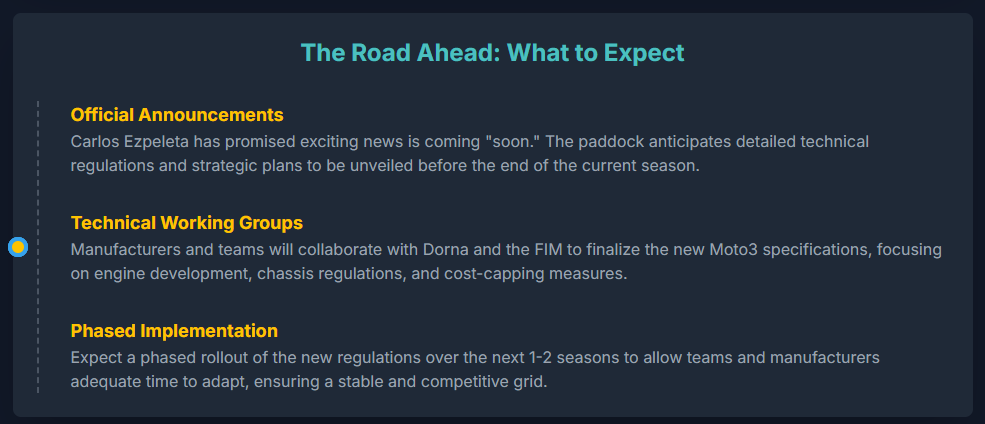
- For Dorna and the FIM: Formal confirmation of the 2027 Moto3 technical regulations is urgently required. A definitive announcement must be expedited to allow global R2M organizers (JuniorGP, ATC) sufficient time (estimated 36 months minimum) to plan, fund, and execute the transition of their foundational 250cc machinery to the new standardized platform. This prevents an unnecessary technical bottleneck in the crucial development path.
- For Moto2 and Moto3 Teams: Given the high probability of the paddock relocation proceeding, teams should immediately pivot their commercial strategies. Investment must be prioritized in securing non-trackside assets—such as digital media presence, dedicated broadcast exposure, and rider branding—to mitigate the anticipated loss of sponsor face time and exposure resulting from removal from the primary pitlane hospitality zone. Teams should model long-term financial solvency based on the anticipated €75,000 spec-package cost, preparing to operate under a tighter, cost-controlled framework.
- For Manufacturers (Current and Prospective): Manufacturers like Honda and KTM must recognize that the Moto3 class will evolve into a purely spec-driven platform focused exclusively on rider development. Investment in technical Research and Development (R&D) for Moto3 prototypes should be ceased, shifting focus to aligning with the new 500cc spec requirement or maximizing marketing and talent alignment opportunities within the stable Moto2 platform, which is secured through the Triumph engine supply contract until 2029.
Sources
- Dorna clarifies future plans for Moto2/Moto3 amid visibility concerns | Crash.net, accessed on October 7, 2025, https://www.crash.net/motogp/news/1082938/1/dorna-clarifies-future-plans-moto2moto3-amid-visibility-concerns
- MotoGP boss dismisses “completely unfounded” rumours about Moto2 and Moto3, accessed on October 7, 2025, https://ca.sports.yahoo.com/news/motogp-boss-dismisses-completely-unfounded-085251850.html
- Step between Moto3 and Moto2 ‘too big’, as Dorna teases ‘exciting announcement’, accessed on October 7, 2025, https://www.crash.net/motogp/news/1082969/1/step-between-moto3-and-moto2-too-big-dorna-teases-exciting-announcement
- Moto3 rumoured for radical technical rules shake-up for 2027 – Crash.net, accessed on October 7, 2025, https://www.crash.net/moto3/news/1062095/1/moto3-rumoured-radical-technical-rules-shake-2027
- Racing For The Future | The Official Home of MotoGP™, accessed on October 7, 2025, https://www.motogp.com/en/racing-together
- [MotoMatters] OPINION: Erasing Moto2 & Moto3 Is Erasing MotoGP History – Reddit, accessed on October 7, 2025, https://www.reddit.com/r/motogp/comments/1nmlt5i/motomatters_opinion_erasing_moto2_moto3_is/
- F1-style MotoGP shake-up means big Moto2/3 change – The Race, accessed on October 7, 2025, https://www.the-race.com/motogp/motogp-shake-up-means-big-moto2-3-change/
- F1-style MotoGP shake-up means big Moto2/3 change – Reddit, accessed on October 7, 2025, https://www.reddit.com/r/motogp/comments/1ngxy20/f1style_motogp_shakeup_means_big_moto23_change/
- MotoGP boss dismisses “completely unfounded” rumours about Moto2 and Moto3, accessed on October 7, 2025, https://www.motorsport.com/motogp/news/motogp-boss-dismisses-completely-unfounded-rumours-about-moto2-and-moto3/10763991/
- One Moto3 boss calms fears amid worrying reports on future of the class | Crash.net, accessed on October 7, 2025, https://www.crash.net/moto3/news/1082249/1/one-moto3-boss-calms-fears-amid-worrying-reports-future-class
- What is the Difference Between MotoGP™, Moto2™ and Moto3™?, accessed on October 7, 2025, https://www.motogp.com/en/news/2025/04/02/what-is-the-difference-between-motogp-moto2-and-moto3/522931
- Moto3 regulations to change from 2027 – 500cc two-cylinder engines : r/motogp – Reddit, accessed on October 7, 2025, https://www.reddit.com/r/motogp/comments/1m19fyz/moto3_regulations_to_change_from_2027_500cc/
- MotoGP Explained: What is the Difference Between Moto3, Moto2 and MotoGP Classes?, accessed on October 7, 2025, https://www.autox.com/motorsport-news/motogp-explained-what-is-the-difference-between-moto3-moto2-and-motogp-classes-114631/
- Welcome to the future of MotoGP™: new bikes in 2027, accessed on October 7, 2025, https://www.motogp.com/en/news/2024/05/06/welcome-to-the-future-of-motogp-new-bikes-in-2027/497238
- Full details of MotoGP’s 2027 technical regulation changes – Motorsport.com, accessed on October 7, 2025, https://www.motorsport.com/motogp/news/full-details-of-motogps-2027-technical-regulation-changes/10607681/
- 2027 regs : r/motogp – Reddit, accessed on October 7, 2025, https://www.reddit.com/r/motogp/comments/1gwfn7o/2027_regs/
- Dorna wants Moto3 to be a spec series from 2027, but they’re struggling to find a supplier : r/motogp – Reddit, accessed on October 7, 2025, https://www.reddit.com/r/motogp/comments/1i2qmrr/dorna_wants_moto3_to_be_a_spec_series_from_2027/
- Triumph Motorcycles Extends Partnership With Moto2 | For the Ride, accessed on October 7, 2025, https://www.triumphmotorcycles.com/for-the-ride/news/racing/moto2-partnership-extension-2023-08-03
- Moto2™ | For the Ride – Triumph Motorcycles, accessed on October 7, 2025, https://www.triumphmotorcycles.fi/for-the-ride/racing/moto2
- “Major changes” unlikely to MotoGP’s feeder classes under 2027 rules overhaul – Autosport, accessed on October 7, 2025, https://www.autosport.com/motogp/news/major-changes-unlikely-to-motogps-feeder-classes-under-2027-rules-overhaul/10612357/
- Road to MotoGP™ – Dorna Sport Management, accessed on October 7, 2025, https://dornasportmanagement.com/our-championships/road-to-motogp/
- 【Road To MotoGP】Call for participants for the 2026 Rider Selection – Honda.Racing, accessed on October 7, 2025, https://honda.racing/idemitsu-asia-talent-cup/post/road-to-moto-g-p-2026
- Idemitsu Asia Talent Cup, accessed on October 7, 2025, https://www.asiatalentcup.com/about/idemitsu-asia-talent-cup/
- Grassroots motor sport participation widens with FIA’s Global Karting Plan – FIA Karting, accessed on October 7, 2025, https://www.fiakarting.com/news/grassroots-motor-sport-participation-widens-fias-global-karting-plan
Our Social Media Handles
- Instagram : LivingWithGravity
- Medium : Akash Dolas
- YouTube Channel : Gear and Shutter
- Facebook : LivingWithGravity