








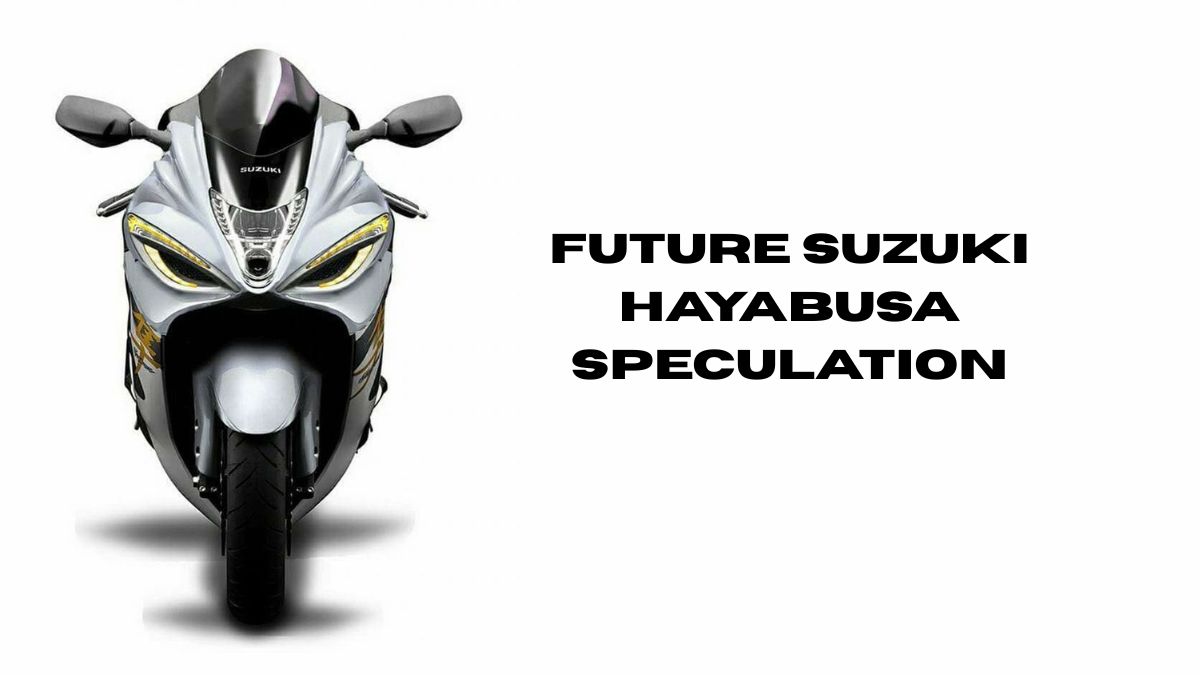
Engineering the Apex Predator
I. Executive Summary: The Strategic Mandate for Gen 4
1.1. The Current State (Gen 3): Refinement vs. Revolution
The current iteration of the Suzuki Hayabusa, the third generation (Gen 3), maintains its position as motorcycling’s Ultimate Sportbike through refinement rather than revolutionary engineering.1 The 2024 model year is based on the highly established 1,340cc inline four-cylinder engine, which utilizes Dual Overhead Camshafts (DOHC) and liquid cooling.1 This naturally aspirated (NA) architecture delivers a claimed 190 horsepower (187.4 hp) at 9,700 rpm and 15.3 mkg (150 Nm) of torque at 7,000 rpm.3 Performance remains formidable, with 0–100 km/h acceleration achieved in 3.2 seconds and an electronically limited top speed of 299 km/h (185.80 mph).3

Critically, the Gen 3 models (2021+) served as an essential update focused primarily on electronics and regulatory compliance (Euro 5), which followed the initial Gen 1 (1999–2007) and Gen 2 (2008–2020) lineage.5 This generation solidified its footing with the sophisticated Suzuki Intelligent Ride System (S.I.R.S.), integrating a comprehensive suite of electronic rider aids such as Cornering ABS, Launch Control, Cruise Control, and a Bi-directional Quick Shifter.3 By optimizing this NA engine and extending its lifespan through the 2025 and 2026 model years 2, Suzuki effectively confirmed a strategy: fully leverage the existing platform’s electronic capacity while developing a radical mechanical overhaul for the subsequent generation (Gen 4) that addresses both power deficits and impending environmental legislation.
1.2. The Dual Pressures: Competition and Compliance
The forthcoming Gen 4 Hayabusa is being engineered under intense duress from two distinct domains: competition and regulation. From a competitive standpoint, the Hayabusa’s 187 horsepower is structurally insufficient to compete with the latest wave of hyperbikes and superbikes.7 The Kawasaki Ninja H2, a supercharged competitor, delivers 240 horsepower, setting a high power benchmark.7 Furthermore, the Hayabusa’s significant wet weight of 264 kg (582 lb) makes its power-to-weight ratio vastly inferior to modern superbikes, such as the 205 horsepower BMW S 1000 RR, which weighs only 197 kg (434 lb).3 This disparity mandates a substantial increase in specific power output for the Hayabusa to reclaim market dominance.
The second pressure point is the regulatory environment. The implementation of the European Union’s Euro 7 emission standards is anticipated around 2026, coincident with the projected Gen 4 launch.8 These new standards mandate significantly greater efficiency and cleaner combustion for high-displacement engines, particularly regarding fine particulates (PN10).8 To achieve the necessary competitive power target (estimated 225–240 HP) while simultaneously meeting the strict Euro 7 limits, relying on naturally aspirated tuning alone is technically infeasible. The required engineering solution necessitates the adoption of Forced Induction (Turbocharging) paired with Variable Valve Timing (VVT). Turbocharging enhances efficiency and reduces emissions by facilitating more complete combustion, while VVT ensures maximum controllable power delivery across the entire operating range.10
1.3. Forecast Conclusion and Timeline
Based on the strategic necessity driven by market competition and regulatory compliance, the Gen 4 Hayabusa is forecast for a 2026 Model Year launch globally, with the official unveiling anticipated in late 2025.12 The motorcycle is expected to be propelled by a forced-induction version of the 1340cc engine, or potentially a marginally increased 1400cc unit, targeting a maximum power output in the range of 225–240 HP.12 This engine will be governed by an advanced 6-axis Inertial Measurement Unit (IMU) controlling the next generation of S.I.R.S., and potentially featuring semi-active electronic suspension to redefine the hyper-tourer segment.

II. The Competitive Landscape and the Power Deficit
2.1. Quantifying the Performance Gap in the Hyperbike Segment
The hyperbike segment is defined by absolute velocity, high power-to-weight ratios, and supreme comfort over distance. While the current Hayabusa excels in stability and comfort, its 187 HP output has been surpassed by multiple rivals, shifting the competitive advantage to motorcycles utilizing forced induction or extreme, race-derived naturally aspirated engines.7 The current model’s electronically limited top speed of 299 km/h is matched by convention 3, but the sheer acceleration and power density required to reach that limit quickly are inferior when compared to its primary forced-induction rival.
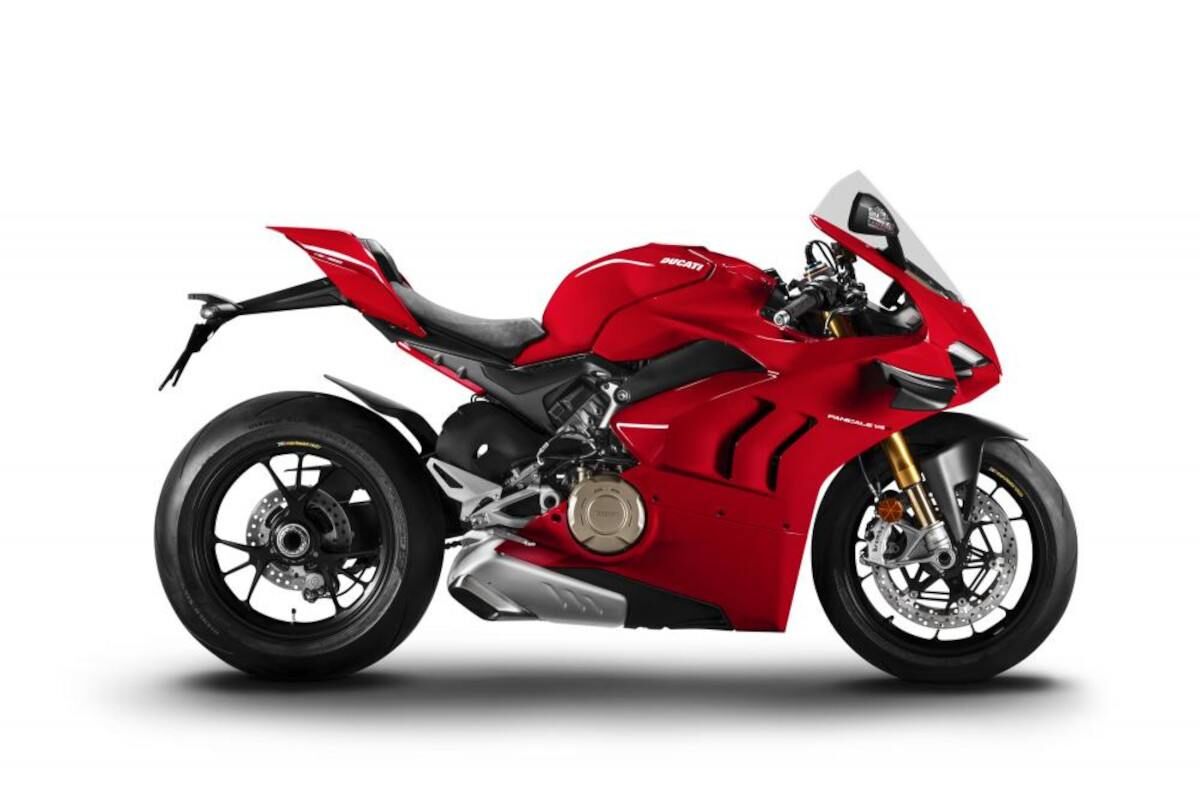
The ultimate standard in this class is set by the supercharged Kawasaki Ninja H2, which delivers up to 240 horsepower (with Ram Air) from its smaller 998cc engine.7 The difference in power density is exacerbated by the Hayabusa’s curb weight of 264 kg (582 lb).3 For instance, high-performance superbikes like the 209 HP Ducati Panigale V4 (191 kg / 421 lb) and the 205 HP BMW S 1000 RR (197 kg / 434 lb) demonstrate the superior power-to-weight ratios achieved through lightweight construction and race-specification components.7 To be truly competitive, the Gen 4 Hayabusa must address its size and weight while achieving a power increase exceeding 20% over the current model.
2.2. Defining the Gen 4 Performance Targets
The engineering effort for the Gen 4 must focus on delivering immense, accessible power while maintaining the reliability and heat management capabilities expected of a sport-touring machine. The power target reported in industry speculation, 230 HP 12, is strategically sound. This figure positions the Hayabusa clearly above the latest class of naturally aspirated superbikes, such such as the 215 HP Honda CBR1000RR-R Fireblade SP and the 220 HP Aprilia RSV4 Factory.7
Achieving 230 HP closes the performance gap significantly with the 240 HP Kawasaki Ninja H2 7, while allowing Suzuki the engineering latitude to maintain the reliability margin necessary for a durable hyper-tourer. The application of forced induction technology is not expected to chase peak RPM figures, but rather to exploit the 1340cc displacement advantage by delivering a massive, lag-free surge of torque across the mid-range (7,000–9,000 rpm). This configuration enhances real-world tractability and acceleration, cementing the Hayabusa’s identity as the definitive hyper-tourer.
Comparative Hyperbike Performance Metrics (2024/2025)
| Model | Engine Configuration | Max Power (HP) | Max Torque (Nm) | Wet Weight (kg/lbs) | Strategic Niche |
| Suzuki Hayabusa (Gen 3) | 1340cc I4 (NA) | 187 | 150 | 264 / 582 | Ultimate Sport Tourer |
| Kawasaki Ninja H2 | 998cc I4 (Supercharged) | 240 (Ram Air) | approx 140 | 238 / 525 | Pure Speed Flagship |
| BMW S 1000 RR | 999cc I4 (NA) | 205 | approx 113 | 197 / 434 | Race-Bred Superbike |
| Ducati Panigale V4 | 1103cc V4 (NA) | 209 | approx 124 | 191 / 421 | Premium Performance |
III. The Regulatory Imperative: Engineering for Euro 7 Compliance
3.1. The Critical Deadline: Euro 7 and L-Category Vehicles
The timing of the anticipated 2026 Gen 4 launch 2 is directly linked to the finalization and approaching deadline of the Euro 7 emission standards. Although motorcycles (L-category vehicles) are currently regulated under Euro 5 13, the new Euro 7 regulation, agreed upon in 2023, establishes new requirements for vehicles sold in the EU.8 This represents a significant escalation in regulatory pressure for all internal combustion engine vehicles, including high-displacement motorcycles. The current generation was an electronic update; the fourth generation must represent a fundamental shift in mechanical and thermal efficiency to ensure global market viability starting from 2026.9
3.2. The Technical Hurdle: Particulate Number Limits
One of the most challenging aspects of the Euro 7 standard is the introduction of stricter limitations on Particulate Number (PN), specifically requiring measurement and compliance for particles as small as 10 nanometers .8 High-performance, large-displacement NA engines, especially during transient operations or heavy load, often struggle with ensuring complete and clean combustion, which leads to increased particulate output.
This regulatory constraint provides the necessary technical justification for adopting forced induction. Turbocharging fundamentally improves combustion efficiency by harnessing waste heat energy from the exhaust to drive a compressor, which forces pressurized air into the cylinders.11 This richer oxygen mixture enables a more thorough and complete combustion cycle of the fuel, which inherently lowers the production of unspent hydrocarbons and fine particulates. This inherent efficiency advantage allows manufacturers to generate extremely high power output while maintaining the clean burn required to comply with Euro 7’s strict limits.11
3.3. Non-Exhaust Emissions and Weight Reduction Mandates
Euro 7 standards are unique in that they extend regulation beyond tailpipe emissions to include non-exhaust particulates, specifically those generated from brake dust and tire rubber during vehicle operation.9 This regulatory development creates a powerful, second-order incentive for motorcycle manufacturers to prioritize overall vehicle weight reduction.
A heavier motorcycle requires greater kinetic energy absorption during braking, which directly increases brake wear and the emission of brake dust particulates. To address this new compliance requirement, the Hayabusa’s current 264 kg wet weight must be aggressively reduced. Evidence of this strategy is confirmed by the 2026 model description, which highlights the incorporation of a high-capacity, lightweight lithium-ion battery.2 Additional weight saving efforts are mandated in the chassis architecture and component selection to meet the new performance and environmental requirements.

IV. Suzuki’s Engine Architecture and Technology Pipeline
4.1. VVT as the Foundational Efficiency Layer
Suzuki has strategically prepared for this engine overhaul by securing patents related to Variable Valve Timing (VVT) specifically for the Hayabusa platform.10 VVT is the foundational technology required to maximize the operational flexibility of a modern, large-displacement, high-performance engine, regardless of forced induction. The system functions by adjusting valve timing independently to satisfy two often conflicting demands.
First, during low-speed or cruising conditions (crucial for emission testing cycles), VVT can utilize retarded timing to promote highly efficient, complete combustion, directly supporting Euro 7 compliance.10 Second, VVT enables advanced timing at high RPM, maximizing overlap and volumetric efficiency to achieve peak power output.7 The ability to precisely manage intake and exhaust flow across the entire rev range is mandatory for efficiently controlling the power curve generated by a forced-induction system, ensuring the bike maintains tractability and responsiveness at low speeds while delivering explosive performance at the top end.
4.2. Forced Induction: Mitigating Lag with E-Turbo Technology
While conventional turbocharging provides the power and efficiency gains required, the introduction of a turbocharger often results in noticeable delay, or “lag,” in power delivery, particularly undesirable on a high-performance motorcycle. Suzuki’s research pipeline suggests a direct solution to this challenge through advanced integration of electrical systems.
The company has developed and showcased concepts for a high-output, turbocharged hybrid superbike that incorporates Motor-Generator Units (MGUs).15 A key feature of this concept involves bolting one MGU directly onto the turbocharger assembly itself. This functions as an electronic booster, spinning the turbo up instantaneously before the exhaust gases alone can provide sufficient drive pressure. This “e-Turbo” technology fundamentally eliminates turbo lag.15 It is highly probable that the Gen 4 Hayabusa will implement a scalable version of this anti-lag technology, potentially supported by a robust 48V electrical architecture, ensuring that the targeted 230+ HP is delivered immediately and smoothly, thereby maintaining rider control and cementing a competitive advantage over conventional boosted systems.
4.3. The Lithium-Ion Battery and Power Management
The confirmed inclusion of a high-capacity, lithium-ion battery, sourced from ELIIY Power, in the 2026 Hayabusa specification 2 is a clear signal of advanced electrical system implementation beyond standard ignition requirements. The lithium-ion unit serves multiple critical functions.
Firstly, it provides a crucial weight reduction component, contributing to the necessary reduction in overall mass required for chassis agility and Euro 7 non-exhaust emission compliance. Secondly, the Li-ion battery provides the lightweight, high-capacity power storage needed to run potential high-demand systems, such as the predicted-Turbo anti-lag mechanism (which draws significant current momentarily) and any forthcoming semi-active electronic suspension systems.15 Finally, it ensures stable and optimized power management for the expanded suite of complex electronic rider aids and displays, forming the backbone of the next-generation S.I.R.S.
V. Projected Engine and Performance Specifications (Gen 4)
5.1. Engine Block, Displacement, and Internal Upgrades
The Gen 4 engine will be derived from the existing 1340cc platform, possibly maintaining the capacity or increasing it slightly to 1400cc (hence the designation GSX-1400R) to definitively mark the generational change. Regardless of the final capacity figure, the engine internals must be significantly hardened to reliably withstand the stress and high thermal loads associated with forced induction and high boost pressure. This necessitates upgrades such as forged pistons, strengthened connecting rods, and revised cylinder head materials. This engineering requirement is consistent with rival boosted engines, such as those employing titanium connecting rods for high-rev demands.7 The Gen 4 Hayabusa must retain its reputation for “bulletproof” durability even at 230+ HP.7
5.2. Power Delivery Forecast
The Hayabusa is expected to hit the reported power target of 230 HP.12 This dramatic output leap is paired with a significant increase in peak torque, projected to fall between 165–175 Nm, substantially higher than the Gen 3’s 150 Nm.4 Due to the sophisticated combination of VVT and e-Turbo anti-lag technology, this heightened torque curve is expected to be exceptionally broad and usable across the mid-range.
From a performance metrics perspective, the enhanced torque will translate directly into superior acceleration. The current 0–100 km/h time of 3.2 seconds 3 is projected to decrease sharply, likely into the 2.8–3.0 second range, rivaling the world’s quickest production motorcycles. While the electronic top speed limit will almost certainly remain fixed at 299 km/h (186 mph) to adhere to the gentlemen’s agreement established in 2001 16, the forced-induction engine will allow the motorcycle to achieve that velocity with unprecedented rapidness.
5.3. Transmission and Exhaust Continuity
The transmission will retain the highly reliable 6-speed constant mesh structure of the current model. However, the transmission’s electronic interface will be enhanced by a more sophisticated bi-directional quickshifter, fully integrated into the S.I.R.S. 2.0 system.2 Furthermore, Suzuki is confirmed to be committed to preserving the Hayabusa’s iconic aesthetic, evidenced by patent filings focusing on retaining the signature twin, large-volume exhaust system.17 This presents an engineering challenge, as the system must integrate the turbocharger, necessary intercooler plumbing, and catalytic converters required for Euro 7 compliance, all while maintaining the historically recognizable silhouette that is “distinctly Hayabusa”.1
Projected Suzuki Hayabusa (Gen 4) Specifications
| Category | Current Gen 3 (2024) | Projected Gen 4 (GSX-1400R) | Technical Rationale |
| Engine Configuration | 1340cc DOHC I4 (NA) | 1340cc/1400cc DOHC I4 (Turbocharged + VVT) | Compliance & 230 HP Target 10 |
| Target Max Power (HP) | 187 @ 9,700 rpm | 225 – 240 HP (Reported 230 HP) | Competitive Parity (Exceeding H2 is optional, matching is vital) 7 |
| Target Wet Weight kg | 264 kg 582 lbs | 250 – 255 (551 – 562 lbs) | Improved Power-to-Weight, Euro 7 Brake/Tire compliance 3 |
| 0-100 km/h Acceleration | 3.2 seconds | 2.8 – 3.0 seconds | Enhanced torque curve from forced induction 3 |
| Key Internal Technology | Ram Air Direct (SRAD) | VVT (Suzuki Cam-Phasing) + Electronic Turbo/MGU | Efficiency, broader power delivery, lag elimination 10 |

VI. Chassis, Dynamics, and Aerodynamic Evolution
6.1. Chassis Refinement and Weight Management
The increase in engine output to 230 HP necessitates a corresponding upgrade in chassis rigidity and design efficiency. The Gen 4 Hayabusa is expected to move beyond the modernized Gen 3 design 1 by incorporating a “Superbike-caliber, twin-spar aluminum frame”.2 This terminology suggests a structure prioritizing higher torsional stiffness and optimized component geometry for improved handling and agility, capabilities essential for managing the forced-induction power delivery. The successful realization of the 250–255 kg weight target depends entirely on the efficiency of this new frame design, which must also compensate for the added weight of the turbocharger, intercooler, and associated plumbing. Weight reduction achieved through the Li-ion battery 2 and frame optimization will be crucial for neutralizing the physical mass additions.
6.2. Aerodynamic Strategy: Stability and Aesthetics
The aesthetic and functional design of the Hayabusa has always been defined by its iconic, wind-cheating aerodynamic silhouette, inspired by the peregrine falcon.1 This visual identity will be preserved in the Gen 4. To effectively manage 230 HP at high speeds, aerodynamic refinement will focus on stability enhancement. Industry speculation points to the subtle incorporation of passive winglets or redesigned air ducts into the main fairing.12 These elements are engineered to generate the downforce required to mitigate front-end lift and maintain exceptional stability at maximum velocity, ensuring the Hayabusa remains composed—a key differentiator in its sport-touring mandate—without adopting the overtly aggressive, track-only aesthetic of pure superbikes.
6.3. Suspension and Braking Escalation
The current Gen 3 model already employs high-quality braking and suspension components, including fully adjustable 43mm KYB inverted forks (with Diamond-Like Coating) and Brembo Stylema radial-mount calipers paired with 320mm discs.4 To handle the generational leap in performance and chassis dynamics, the suspension system requires escalation. The Gen 4 is highly likely to feature semi-active electronic suspension. This system, if implemented, will be integrated directly into the S.I.R.S. 2.0 electronic suite.2 This integration allows the motorcycle to instantaneously adjust damping and preload characteristics based on riding conditions and mode selection, allowing the rider to smoothly transition the hyper-tourer from compliant, comfortable long-distance travel to track-ready rigidity.
VII. Electronic Systems: S.I.R.S. 2.0 and Rider Aid Management
7.1. The Advanced 6-Axis IMU and Torque Management
The cornerstone of the Hayabusa’s electronic sophistication is the Suzuki Intelligent Ride System (S.I.R.S.), which is commanded by the 6-Axis Inertial Measurement Unit (IMU).12 For the forced-induction Gen 4, the IMU must operate at an elevated processing speed and sophistication to effectively manage the rapid and massive increase in torque delivered by the turbocharged engine.
The IMU is responsible for monitoring real-time pitch, roll, yaw, and acceleration data, which is crucial for governing advanced safety and performance features. This includes sophisticated lean-angle sensitive Cornering ABS, multi-level Traction Control, and precise Anti-Wheeling/Lift Control. These aids are paramount for ensuring rider safety and maximizing the utilization of the 230 HP output across diverse road conditions, preventing uncontrolled power delivery inherent to forced induction systems.
7.2. Advanced Features and Connectivity
The Gen 4 Hayabusa is expected to feature a significant upgrade to its Human-Machine Interface (HMI). A transition to a full, high-definition, Smartphone-Connected TFT Display is projected 12, moving away from the mixed analog and digital layout of the previous model. This level of connectivity and display quality is standard for a flagship motorcycle positioned at the predicted price point.
Furthermore, the Suzuki Drive Mode Selector Alpha 2 will be fundamentally re-engineered to manage the characteristics of the VVT-turbo platform. The selectable riding modes (e.g., Rain, Sport, Track) will likely offer customized power delivery curves that not only modulate throttle response but also adjust the boost pressure ceiling and VVT maps. This high degree of customization allows the rider to precisely tailor the motorcycle’s performance characteristics to match their personal preference and environmental conditions, maximizing the versatility of the Gen 4.

VIII. Market Positioning, Pricing, and Final Outlook
8.1. Reclaiming the Niche: The Ultimate Hyper-Tourer
The Gen 4 Hayabusa is positioned to intentionally differentiate itself from both pure track-focused superbikes and the stripped-down, speed-obsessed nature of the Kawasaki H2. By successfully integrating forced induction, VVT, and sophisticated electronic management, the new Hayabusa will reclaim its title as the definitive “Ultimate Sportbike”.1 The Gen 4 will offer superior electronic refinement, greater comfort, and proven durability—characteristics essential to the sport-touring segment—while delivering power output that rivals or exceeds all naturally aspirated superbikes and closely challenges the supercharged hyperbikes. It is poised to become the fastest, most technologically complete, and most manageable street-focused motorcycle Suzuki has ever produced.
8.2. Pricing and Launch Timeline
The projected pricing for the Gen 4 Hayabusa reflects the substantial technological investment required for VVT, forced induction, advanced electrical systems, and a new chassis design. U.S. MSRP is anticipated to fall between $19,999 and $22,999 USD, with specific projections hovering around $20,999 USD.12 This represents a necessary premium over the current generation ($19,099 USD 3).
The production timeline remains consistent: the Gen 4 Hayabusa, designated as the 2026 Model Year, is expected to commence its global launch phase in late 2025.12 Additionally, the potential for a rumored “Hayabusa Final Evolution Edition” 12, featuring exclusive carbon fiber components and performance upgrades, suggests Suzuki may leverage this launch as an opportunity to celebrate the platform’s transition into the next era of high-performance motorcycling.

8.3. Conclusion: The Turbocharged Future
The next future of the Suzuki Hayabusa is not merely an incremental update; it is an engineering mandate driven by the need to neutralize competitive threats and comply with restrictive environmental regulations. The integration of variable valve timing and forced induction—likely supported by electronic anti-lag technology—transforms the legendary 1340cc engine into a unit capable of delivering 230 HP while achieving superior combustion efficiency. Paired with a lightweight chassis and the next evolution of S.I.R.S., the 2026 Hayabusa is set to redefine the performance benchmarks for the hyper-tourer segment, ensuring the peregrine falcon remains at the apex of speed and technology for the next decade.
Sources
- 2024 Hayabusa – Suzuki Cycles, accessed October 27, 2025, https://suzukicycles.com/sportbike/2024/hayabusa
- 2025 Hayabusa – Suzuki Cycles, accessed October 27, 2025, https://suzukicycles.com/sportbike/2026/hayabusa
- Suzuki GSX 1300 R Hayabusa 2024 – Motorcycle specifications, reviews – MotoPlanete, accessed October 27, 2025, https://www.motoplanete.us/suzuki/10292/GSX-1300-R-Hayabusa-2024/contact.html
- Hayabusa Gen III | Suzuki Motorcycles Australia, accessed October 27, 2025, https://suzukimotorcycles.com.au/range/road/hayabusa-gen-iii/
- Guide to Buying a Suzuki Hayabusa — Gen 1, 2, or 3, 1999 to Today – Motofomo, accessed October 27, 2025, https://motofomo.com/suzuki-hayabusa-buyers-guide/
- 2025 Hayabusa – Suzuki Cycles, accessed October 27, 2025, https://suzukicycles.com/sportbike/2025/hayabusa
- 10 Motorcycles More Powerful Than The 2025 Suzuki Hayabusa, accessed October 27, 2025, https://www.topspeed.com/motorcycles-more-powerful-than-suzuki-hayabusa/
- Euro 7: The new emission standard for light- and heavy-duty vehicles in the European Union – International Council on Clean Transportation, accessed October 27, 2025, https://theicct.org/wp-content/uploads/2024/03/ID-116-%E2%80%93-Euro-7-standard_final.pdf
- European emission standards – Wikipedia, accessed October 27, 2025, https://en.wikipedia.org/wiki/European_emission_standards
- Suzuki Patents VVT Hayabusa | Cycle World, accessed October 27, 2025, https://www.cycleworld.com/motorcycle-news/suzuki-patents-variable-valve-timing-hayabusa/
- Do turbos really make it easier to pass emissions tests? If so, how? – Reddit, accessed October 27, 2025, https://www.reddit.com/r/EngineBuilding/comments/i8t38z/do_turbos_really_make_it_easier_to_pass_emissions/
- INSANE 2026 Hayabusa LEAKED – 230HP Turbocharged MONSTER? Full Tech Breakdown Will Blow Your Mind! – YouTube, accessed October 27, 2025, https://www.youtube.com/watch?v=0W9xlOk2Yyg
- Light Vehicles, Heavy Impacts – POLIS Network, accessed October 27, 2025, https://www.polisnetwork.eu/article/light-vehicles-heavy-impacts/
- Turbocharger vs Supercharger: Which One To Buy For Your Car – Spinny, accessed October 27, 2025, https://www.spinny.com/blog/turbocharger-vs-supercharger/
- Suzuki To Showcase 300 BHP Turbocharged Hybrid Superbike, accessed October 27, 2025, https://www.motorbeam.com/suzuki-to-showcase-300-bhp-turbocharged-hybrid-superbike/
- Suzuki Hayabusa – Wikipedia, accessed October 27, 2025, https://en.wikipedia.org/wiki/Suzuki_Hayabusa
- New patents show redesign for Suzuki Turbo Twin | BikeSocial – Bennetts Insurance, accessed October 27, 2025, https://www.bennetts.co.uk/bikesocial/news-and-views/news/2019/january/new-patents-show-redesigned-suzuki-turbo-twin
Our Social Media Handles
- Instagram : LivingWithGravity
- Medium : Akash Dolas
- YouTube Channel : Gear and Shutter
- Facebook : LivingWithGravity