


















Executive Summary
LiveWire, Harley-Davidson’s electric offshoot, currently faces a precarious financial situation marked by substantial operating losses and low sales volumes, despite its products generally receiving positive critical reception. The company’s stock performance exhibits high volatility, and recent insider stock offloading raises concerns about executive confidence. The electric vehicle (EV) motorcycle sector, while projected for significant growth, presents inherent challenges such as high price tags, nascent charging infrastructure, and a hesitant customer base.
LiveWire’s strategic initiatives, including a partnership for an electric maxi-scooter and aggressive cost-reduction measures, represent efforts to navigate these headwinds. However, the company’s long-term viability will critically depend on its ability to translate product appeal into scalable sales, achieve operational efficiency, and adapt its market strategy to overcome broad industry adoption barriers. The upcoming financial quarters are poised to be pivotal in determining LiveWire’s trajectory.
1. LiveWire’s Financial Performance and Market Position
This section examines LiveWire’s recent stock performance, key valuation metrics, and a detailed analysis of its financial results, alongside a critical examination of insider trading activities.
1.1. Recent Stock Performance and Valuation Metrics
LiveWire’s stock (LVWR) has demonstrated considerable volatility. At the start of a recent week, the stock experienced a modest pre-market increase to $4.11 from a Friday close of $3.86, but quickly receded to $3.96 on Monday, indicating that any initial optimism was short-lived . Over the past 52 weeks, the stock’s price has fluctuated widely, ranging from a low of $0.93 to a high of $9.04, with an average price of $4.42.1 Recent daily trading has seen significant price swings, including a notable 15.2% jump on July 18, 2025, contrasted by declines of 5.8% on July 14 and 7.8% on July 11.2
The company’s market capitalization has also shown considerable fluctuation, reported as $814.26 million on July 22-23, 2025 3, $1.03 billion on July 23, 2025 5, and $759.30 million on July 18, 2025.2 This inconsistency in market valuation underscores the stock’s inherent instability. From a valuation perspective, LiveWire’s Price-to-Earnings (P/E) ratio is in negative territory at -11.78 or is not applicable due to losses 5, directly reflecting its unprofitability. Conversely, its Price-to-Sales (P/S) ratio is notably high at 33.16 5 or 28.75 6, which often suggests that investors are valuing the company based on its future growth potential rather than its current revenue generation.
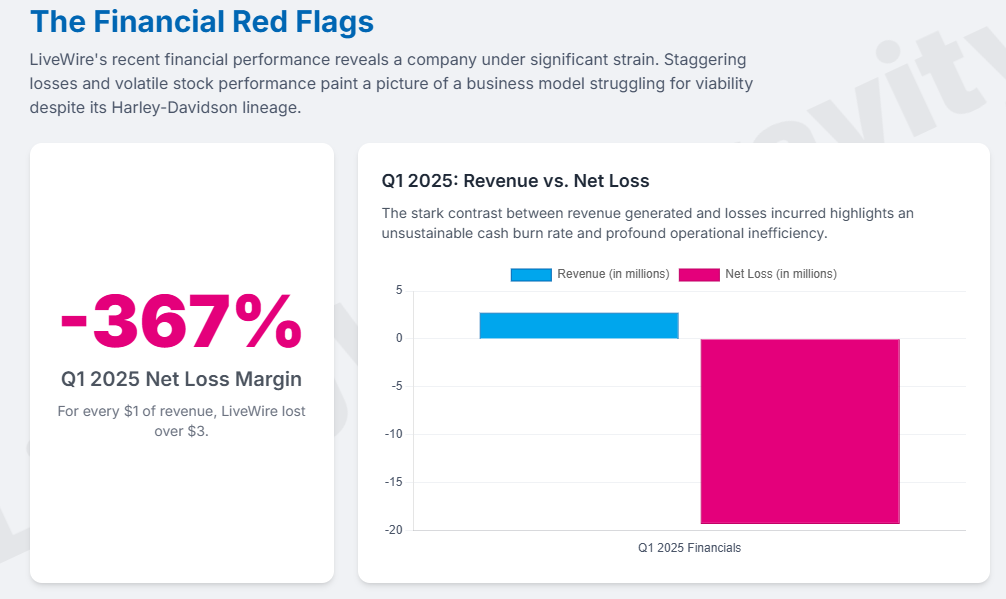
The stock’s beta of 1.71 further confirms its high volatility relative to the broader market, indicating that its price movements are significantly amplified compared to overall market trends. This combination of factors points to LiveWire being a highly speculative investment, where its valuation is largely driven by future hopes rather than present performance, making it particularly susceptible to shifts in market sentiment and news. The market appears to be assigning a premium to LiveWire, likely due to its association with Harley-Davidson and the broader narrative surrounding the EV sector, despite the underlying financial data painting a challenging picture. This creates a substantial valuation risk, as any sustained failure to meet growth expectations could lead to a sharp re-evaluation of the stock’s worth.
Table 1: LiveWire Key Stock Performance & Valuation Metrics (as of late July 2025)
| Metric | Value | Source |
| Current Price | ~$3.96 – $4.11 (varies daily) | 2 |
| Market Capitalization | ~$759.30M – $1.03B (varies daily) | 2 |
| 52-Week High | $9.04 | 1 |
| 52-Week Low | $0.93 | 1 |
| 50-Day Average | $3.89 | |
| 200-Day Average | $3.04 | |
| P/E Ratio | -11.78 or N/A (due to losses) | 5 |
| Price/Sales Ratio | 33.16 or 28.75 | 5 |
| Beta | 1.71 |
1.2. Analysis of Q1 2025 Financial Results
LiveWire’s Q1 2025 earnings report, released on May 1st, revealed a consolidated net loss of $19.3 million 7 against a modest revenue of $2.74 million.8 This translates to a net loss margin of a staggering -367% , indicating that for every dollar of revenue generated, the company lost more than three. The revenue figure itself represents a significant year-over-year decrease of 44.90%.8 The company’s return on equity (ROE) further highlights its financial distress, sitting deep in the red at -70% or -64.02% 5, signaling substantial erosion of shareholder value.
To provide context, in Q1 2024, LiveWire reported revenue of $5.0 million and an operating loss of $30.4 million, resulting in a net loss of $23.6 million.9 Interestingly, despite an increase in electric motorcycle unit sales in Q1 2024 (117 units compared to 63 in Q1 2023), revenue from this segment actually decreased. This decline was attributed primarily to a shift in product mix and a “one-time adjustment related to a change in the company’s retail partner strategy”.9
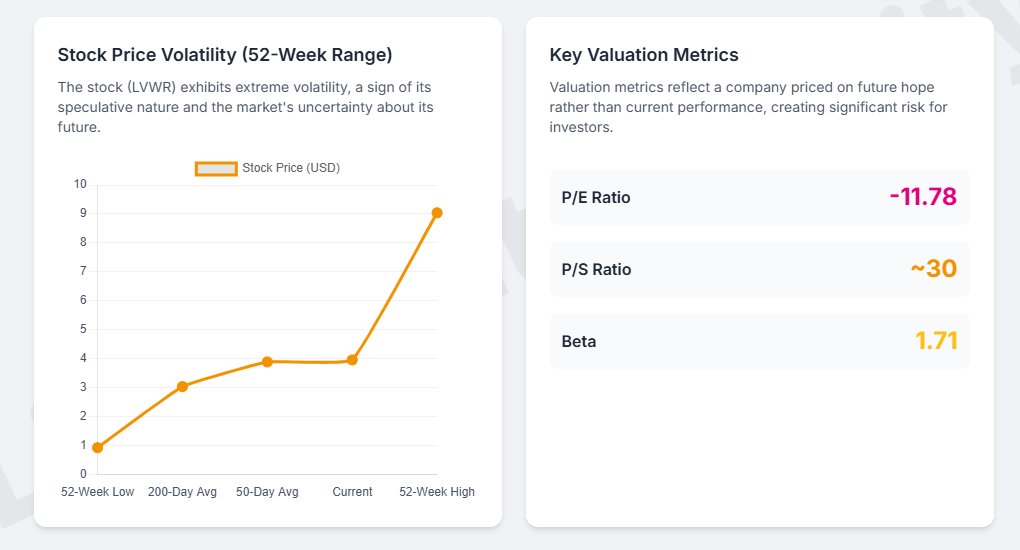
The Q1 2025 financial performance points to an unsustainable cash burn rate and significant operational inefficiency. The company is spending nearly seven times more than it earns, which suggests that its cost structure is profoundly misaligned with its current revenue generation. This implies that existing sales volumes are insufficient to cover fixed costs, leading to substantial negative operating leverage. The company’s ability to continue operations without significant external capital injections or a dramatic improvement in its financial trajectory is a serious concern. This situation is more than just “growing pains”; it points to a fundamental business model challenge where the cost of producing and selling each unit far exceeds the revenue it generates.
The observation that revenue decreased in Q1 2024 despite an increase in unit sales indicates a more complex underlying issue than simply low sales volume. This suggests problems related to product mix, pricing strategy, or the effectiveness of its retail approach. If unit sales are rising but revenue is falling, it could mean the company is shifting towards lower-priced models, engaging in aggressive discounting, or facing challenges in revenue recognition through its retail partners. The “one-time adjustment” mentioned in Q1 2024 hints at potential structural weaknesses in LiveWire’s go-to-market strategy, suggesting that merely increasing unit sales may not automatically lead to improved profitability if the underlying unit economics remain unfavorable.
Table 2: LiveWire Quarterly Financial Performance (Q1 2025 vs. Q1 2024)
| Metric | Q1 2025 | Q1 2024 | Change (Q1 2025 vs Q1 2024) | Source |
| Revenue | $2.74 million | $5.0 million | -45.2% | 8 |
| Operating Loss | N/A (Net Loss) | ($30.4 million) | N/A | 9 |
| Net Loss | ($19.3 million) | ($23.6 million) | -18.2% | 7 |
| Net Loss Margin | -367% | -472% (calc.) | N/A | 9 |
| Return on Equity (ROE) | -70% or -64.02% | N/A | N/A | 5 |
1.3. Insider Trading Activity
A significant area of concern for LiveWire is the pattern of stock offloading by its executives, which has been described as resembling “bailing out” rather than routine rebalancing . Specifically, CEO Karim Donnez sold 54,661 shares in mid-June at an average price of $5.50, a transaction that reduced his personal stake in the company by over 5%.10 Similarly, Director John L. Garcia divested 56,559 shares a few days prior at $6.47 per share, trimming his holdings by approximately 2%.10 Other notable executive sales include Kjell Gruner (18,969 shares at $6.49), Tralisa Maraj (25,000 shares at $8.60), William L Cornog (40,000 shares for $304,800), Jon Bekefy (8,088 shares for $65,836), and Ryan Ragland (6,891 shares for $49,000).10 Collectively, insiders have reportedly sold nearly 277,000 shares, valued at just under $2 million, over the past three months.2
While these individual sales are clearly documented, some aggregate data presents a conflicting picture. For instance, some sources indicate that the “Net Activity” for insider trades over three and twelve months shows more shares bought than sold (220,132 shares bought vs. 339,340 sold in 3 months; 1,308,985 shares bought vs. 484,522 sold in 12 months).10 One source even states, “Insiders are Very Positive Buying More Shares Than They Are Selling In Livewire Group, Inc.”.12 However, the detailed transaction lists consistently highlight largesales by key executives.
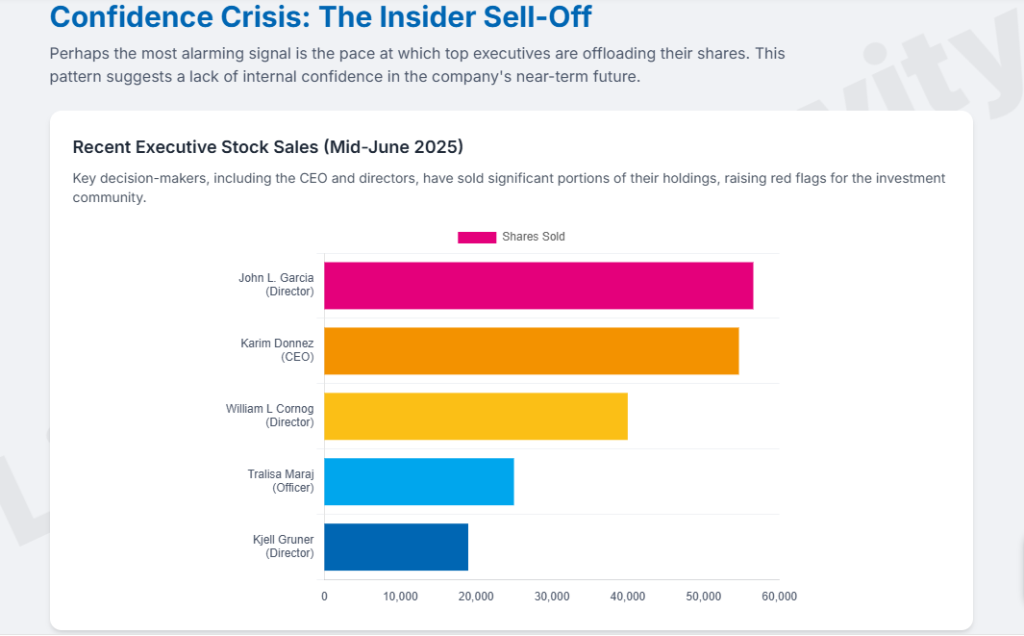
Institutional ownership in LiveWire is notably low, standing at only 0.88%.2 Furthermore, 18 institutions reportedly decreased their positions in Q1 2025.11 This low institutional backing, combined with the trend of executive selling, creates a reinforcing negative feedback loop for investor confidence. When individuals with the most intimate knowledge of a company’s operations, strategy, and challenges are divesting significant portions of their personal stake, it sends a powerful negative signal to the market. The specific, publicly reported sales by the CEO and directors are concrete actions that carry substantial weight, potentially outweighing aggregated data that might include non-open market transactions or option exercises not indicative of direct investment decisions.
This pattern of selling, particularly at prices higher than the current trading range, suggests that these executives perceive the stock’s value as potentially peaking or declining, prompting them to liquidate holdings. The limited institutional participation suggests that large investors, who typically conduct extensive due diligence, view LiveWire as either too risky or fundamentally unsound. This lack of institutional support means the stock is more susceptible to retail investor sentiment and speculative trading, contributing to its extreme volatility and making it challenging to establish a stable, long-term investor base.
Table 3: Summary of Recent LiveWire Insider Stock Sales (Mid-June 2025)
| Executive Name | Title | Date of Sale | Shares Sold | Price Per Share | Total Value of Sale (Approx.) | Source |
| Karim Donnez | Chief Executive Officer | 6/16/2025 | 54,661 | $5.50 | $300,635 | 10 |
| John L. Garcia | Director | 6/12/2025 | 56,559 | $6.47 | $366,000 | 10 |
| Kjell Gruner | Director | 6/12/2025 | 18,969 | $6.49 | $123,100 | 10 |
| Tralisa Maraj | Officer | 6/11/2025 | 25,000 | $8.60 | $215,000 | 10 |
| William L Cornog | Director | 6/10/2025 | 40,000 | $7.62 (avg) | $304,800 | 11 |
| Jon Bekefy | Head of Global Sales & Mktg. | 6/10/2025 | 8,088 | $8.14 (avg) | $65,836 | 11 |
| Ryan Ragland | Head of Product Dev. & Design | 6/10/2025 | 6,891 | $7.11 (avg) | $49,000 | 11 |
Note: Total value of sale is estimated based on reported shares sold and average price per share.
2. The Electric Motorcycle Market Landscape
This section provides a macro-level view of the electric motorcycle market, its growth potential, and the systemic challenges that hinder broader adoption.
2.1. Global Market Size, Growth Projections, and Key Drivers
The global electric motorcycle market is poised for significant growth, although projections vary across different analyses. Some forecasts suggest the market will expand from $11.26 billion in 2024 to $19.45 billion by 2034, reflecting a Compound Annual Growth Rate (CAGR) of 5.62%.13 More optimistic assessments project growth from $30.11 billion in 2022 to $121.07 billion by 2030, at a robust CAGR of 19.9%.14 When scooters are included, the broader electric two-wheeler market is estimated at $39.83 billion in 2025, with projections to reach $61.73 billion by 2034, growing at a CAGR of 4.99%.15 A more conservative estimate for the electric motorcycle market specifically places it at $0.64 billion in 2025, potentially reaching $1.13 billion by 2033 with a CAGR of 9.8%.16
Despite these numerical differences, there is a consensus on the fundamental drivers propelling this market. These include a rising demand for energy-efficient commuting solutions, increasing global awareness and concern over carbon emissions, fluctuating and often rising fossil fuel prices, and active government support through various incentives and subsidies.14 Crucially, ongoing advancements in battery technology, which lead to longer ranges and faster charging capabilities, are also vital catalysts for market expansion.14 The commercial segment, particularly for last-mile delivery services, is anticipated to be the fastest-growing application area within the electric motorcycle market.14 Geographically, the Asia Pacific region consistently leads the market in terms of both revenue and growth, driven by high production volumes, rapid urbanization, and increasing affordability of electric two-wheelers.13 Europe is also expected to experience significant growth in this sector.13
LiveWire operates within a global electric motorcycle market that is universally projected for substantial expansion, underpinned by strong environmental, economic, and technological tailwinds. This macro-level positive trend suggests that the market itself is not the primary impediment to LiveWire’s growth. If LiveWire continues to struggle with sales and profitability despite these favorable market conditions, it points to challenges that are more company-specific, such as issues related to its product-market fit, pricing strategy, distribution networks, or internal operational efficiency, rather than a lack of overall market opportunity. The market’s inherent potential serves as a protective factor, yet LiveWire is currently failing to effectively capitalize on it. This dynamic implies that while the industry tide is rising, LiveWire’s performance is not keeping pace, possibly due to internal structural issues.
Furthermore, the overwhelming dominance and rapid growth in the Asia Pacific electric motorcycle market highlights a potential strategic gap for LiveWire, which appears to have a more pronounced focus on Western markets. To truly leverage the global market’s growth, LiveWire cannot afford to overlook this region. Its current emphasis on premium models may be less suited for the price-sensitive, high-volume Asian markets, necessitating a strategic pivot or the introduction of new product lines. Similarly, the rapid expansion of electric motorcycles in commercial applications presents a lucrative segment that LiveWire could explore, potentially with more utilitarian or affordable models, to diversify its revenue streams and achieve higher unit volumes beyond its current niche consumer market. The partnership with KYMCO for an electric maxi-scooter, while targeting Europe, is a step towards product diversification, but a similar strategy might be needed for the Asia Pacific region.
Table 4: Global Electric Motorcycle Market Projections & Key Drivers
| Metric | Details | Source |
| Market Size (2024) | USD 11.26 Billion – USD 37.93 Billion | 13 |
| Projected Market Size (2030/2034) | USD 19.45 Billion (by 2034) – USD 121.07 Billion (by 2030) | 13 |
| CAGR (2025-2034) | 4.99% – 19.9% | 13 |
| Leading Regions | Asia Pacific, Europe (significant growth) | 13 |
| Key Market Drivers | Energy-efficient commuting, reduced emissions, rising fuel costs, government incentives/subsidies, battery technology advancements, commercial segment growth | 14 |
2.2. Major Challenges to Electric Motorcycle Adoption
Despite the promising growth projections, the electric motorcycle market faces several significant systemic challenges that impede broader adoption. A primary barrier is the pervasive issue of “range anxiety” among riders, directly linked to the current lack of widespread charging infrastructure.16 Unlike the ubiquitous network of traditional gas stations, fast-charging networks specifically for electric motorcycles are not yet widely available.17
Another substantial hurdle is the high initial cost of electric motorcycles compared to their internal combustion engine (ICE) counterparts.16 This elevated upfront price often acts as a major deterrent for consumers, particularly when the “perceived benefit” of an electric model does not sufficiently justify the premium.18 Beyond pricing, there is a general hesitancy among potential customers and a lagging consumer awareness and acceptance of electric motorcycles.18 Concerns about battery reliability, speed limitations, and even cargo security (for electric cargo bikes, but the underlying principles of consumer apprehension apply) further deter potential buyers.19 Additionally, the regulatory landscape for electric motorcycles is often fragmented and inconsistent across different regions, creating confusion regarding aspects such as licensing, helmet laws, and speed limits, which can discourage adoption.19
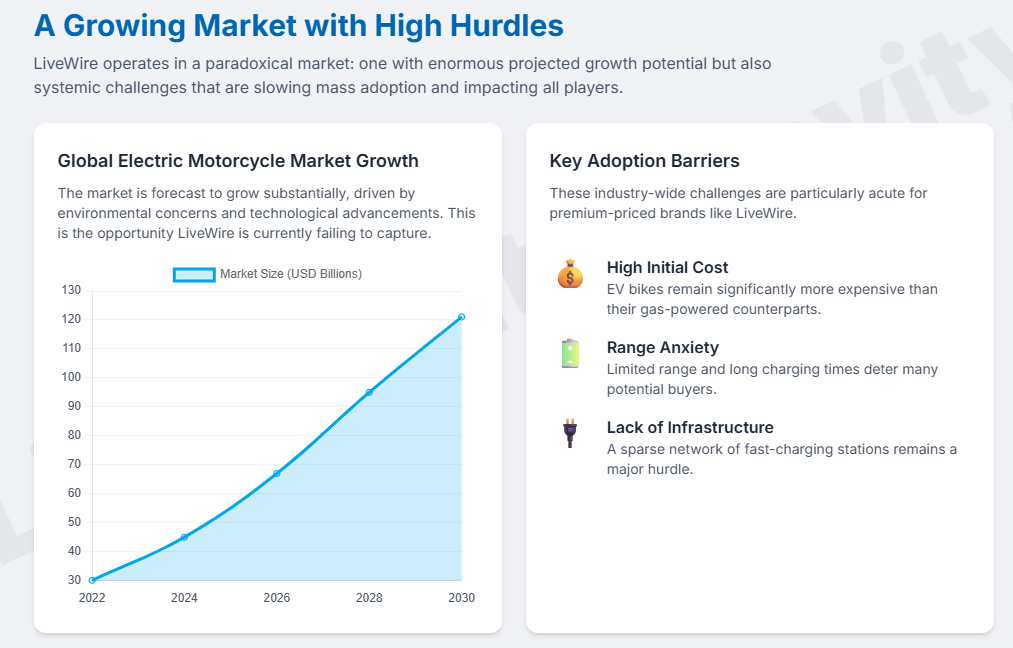
The general market challenge of high price tags for electric motorcycles is particularly acute for LiveWire. Its models are perceived as “priced too close to premium petrol models without offering enough perceived benefit”.18 This represents a critical product-market fit issue. While the entire industry grapples with a cost barrier, LiveWire’s specific pricing strategy means it is not providing a sufficiently compelling value proposition to consumers who are already hesitant to transition from traditional motorcycles.
This situation suggests that LiveWire’s premium brand positioning, largely inherited from Harley-Davidson, might be a liability in a nascent market where affordability and practicality are key drivers for mass adoption. To overcome this, LiveWire may need to either significantly enhance the “perceived benefit” of its offerings through superior performance, unique features, or lower total cost of ownership, or fundamentally re-evaluate its pricing strategy to be more competitive within the broader EV segment, potentially by introducing more accessible models.
Furthermore, LiveWire’s success is heavily dependent on the maturation of the broader EV charging infrastructure and a fundamental shift in consumer readiness, factors that are largely outside its direct control. This creates a “chicken and egg” dilemma: consumers are reluctant to adopt electric motorcycles due to the lack of charging options, while infrastructure providers are hesitant to invest without sufficient demand.
As a manufacturer, LiveWire is caught in the middle. Its ability to significantly grow sales is constrained by the pace of this external ecosystem development. To mitigate this, LiveWire might need to actively participate in or advocate for charging network expansion, or explore innovative solutions like swappable battery networks or strategic partnerships to overcome these infrastructure hurdles, rather than passively waiting for the market to mature. This highlights a strategic vulnerability where LiveWire’s internal product development and marketing efforts can only go so far without concurrent progress in the external charging ecosystem.
3. LiveWire’s Product Strategy and Competitive Environment
This section assesses LiveWire’s current product portfolio, its strategic partnerships for future development, and its standing against key competitors in the electric motorcycle space.
3.1. Overview of Current Models
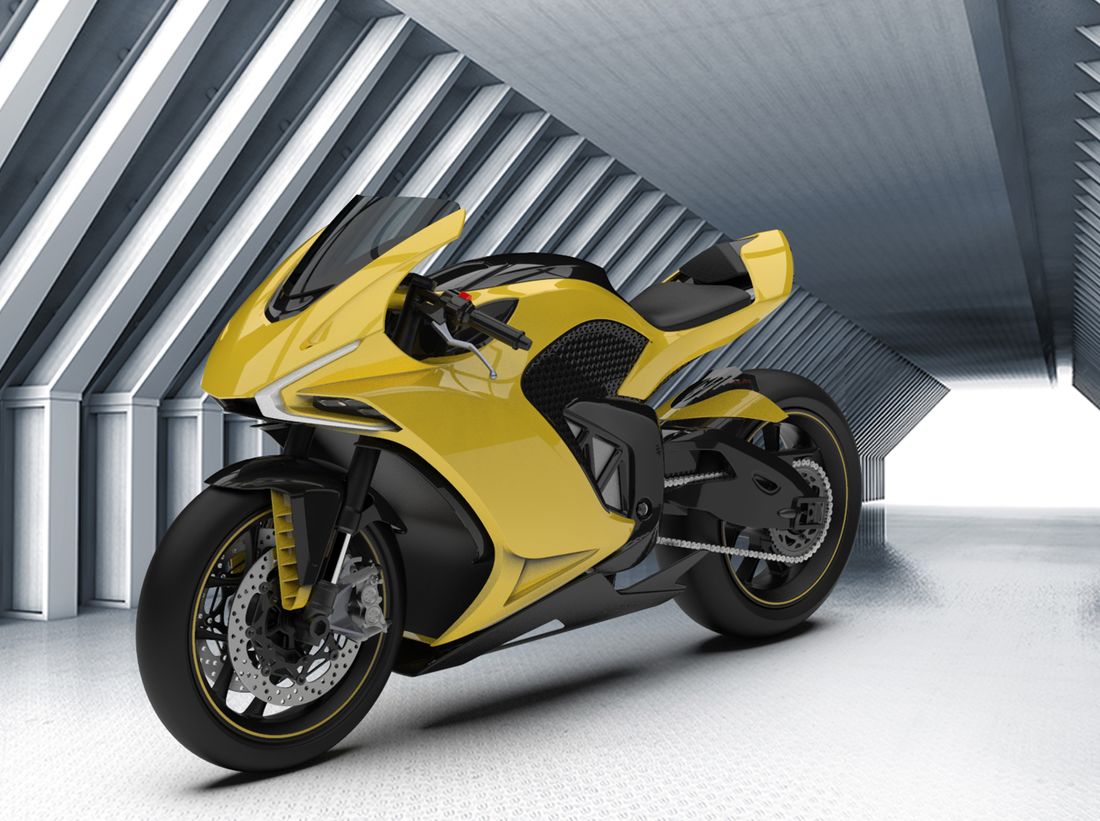
LiveWire’s current models, including the S2 Del Mar, Mulholland, and Alpinista, have generally received positive feedback for their design and performance . The S2 Del Mar, in particular, was recognized as “MCN’s Best Electric Bike of 2024”.20 Despite this positive critical reception, the company’s sales volumes remain low. LiveWire sold fewer than 660 motorcycles worldwide in 2024 18, and only 117 electric bikes in Q1 2024, although this represented an increase from 63 units sold in Q1 2023.9 The company asserts its position as the “#1 on-road electric motorcycle retailer in the U.S.”.9
The disconnect between positive product reception and persistently low sales volumes is a critical finding. This suggests that LiveWire’s challenges are not primarily rooted in the quality or design of its products, which appear to be well-regarded. Instead, the issues likely stem from broader market penetration, distribution effectiveness, pricing strategies, or the company’s ability to overcome the general adoption barriers prevalent in the electric motorcycle market.
The “best electric bike” award, while a testament to product excellence, holds limited significance if it does not translate into substantial sales figures. This situation indicates that LiveWire may need to shift its strategic focus from purely product development, which seems successful, to more aggressive sales, marketing, and potentially a re-evaluation of its target demographic or pricing strategy to convert positive reviews into meaningful revenue. Furthermore, the claim of being the “#1 on-road electric motorcycle retailer in the U.S.” must be heavily qualified by the extremely low absolute unit sales, which suggests leadership within a very small, niche segment rather than overall market dominance.
3.2. Strategic Partnerships and Future Product Development
LiveWire has initiated strategic moves to diversify its product portfolio and address its financial challenges. In November 2024, the company announced an expanded strategic partnership with KYMCO to develop an electric maxi-scooter, primarily aimed at the European market, with a planned launch in the first half of 2026.20 This collaboration leverages KYMCO’s extensive expertise in internal combustion engine (ICE) scooters and smaller electric vehicles.
From a financial management perspective, CEO Karim Donnez has articulated a goal to reduce cash burn by 40% or more in 2025 compared to 2024.20 This objective is supported by initiatives such as consolidating business operations in Milwaukee, Wisconsin, and streamlining headcount, alongside the completion of the S2 platform development.20 Additionally, LiveWire has adjusted its go-to-market strategy in Europe, transitioning to a wholesale model and expanding into the Spanish and Italian markets.20
The partnership with KYMCO for an electric maxi-scooter signifies a strategic recognition that LiveWire’s exclusive focus on premium electric motorcycles may not be sufficient for achieving sustainable growth. Maxi-scooters cater to a distinct market segment, often characterized by a greater emphasis on utilitarian and urban mobility needs, particularly in Europe where scooters are highly prevalent. This strategic move broadens LiveWire’s addressable market and diversifies its product portfolio, potentially allowing it to tap into higher-volume segments and leverage KYMCO’s established distribution and manufacturing capabilities in the scooter category. This represents a pragmatic step towards generating more significant revenue streams and reducing reliance on the slow-growing premium electric motorcycle niche, demonstrating a willingness to adapt and explore new avenues beyond its initial strategy.
Conversely, the stated goal of reducing cash burn by 40% or more in 2025, while a necessary measure given the severe net losses, suggests a defensive financial posture. In a nascent market with high growth potential like electric motorcycles, companies typically need to invest aggressively in research and development, marketing, and infrastructure development to capture market share. A primary focus on cost reduction, including headcount streamlining, risks stifling necessary innovation or market expansion efforts, potentially allowing competitors to gain ground. This strategy might stabilize the balance sheet and extend the company’s cash runway in the short term, but it does not inherently solve the underlying problems of low demand or market penetration. The success of this approach depends on whether these cost reductions can be achieved without compromising LiveWire’s long-term growth potential and product competitiveness.
3.3. Competitive Analysis
LiveWire operates within a competitive landscape that includes established electric motorcycle manufacturers such as Zero Motorcycles and Energica, along with newer entrants like Ryvid.18
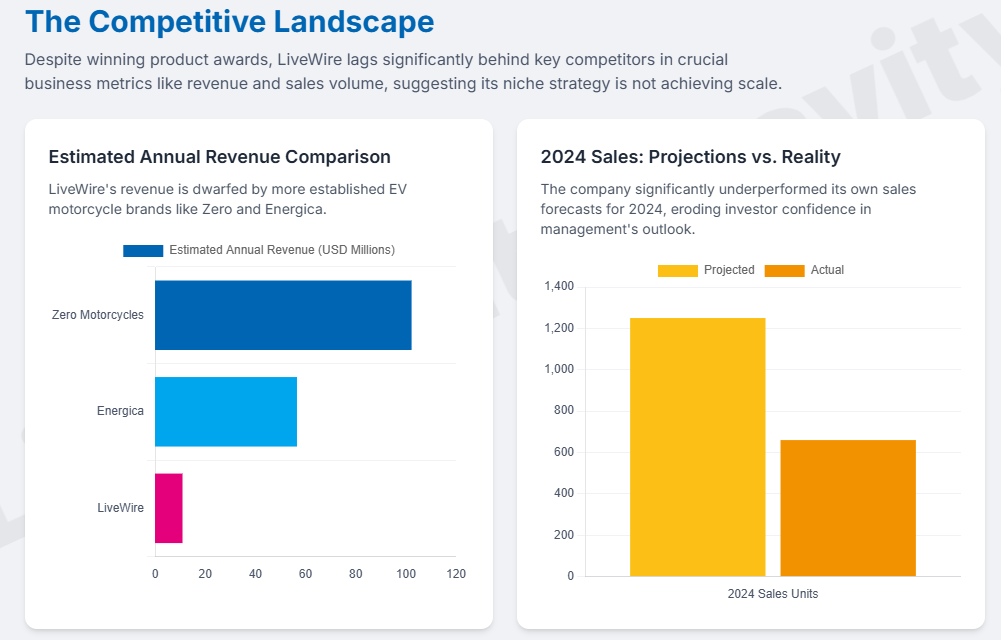
Zero Motorcycles: This competitor has an estimated annual revenue of $102.3 million 24 and has raised over $620 million in capital.25 While it sold approximately 3,500 units in 2020 and projected 4,500 in 2022, it is still described as “struggling to move up the annual volumes”.25 Zero focuses on production efficiency, boasting a 78% improvement in manufacturing time 26, and aims for 100% annual revenue growth through enhanced customer service and a scalable platform.27 Recently, Zero launched its XE and XB models, priced between $4,395 and $6,495, targeting the light EV dirt-bike segment.23
Energica Motor Company: With an estimated annual revenue of $56.6 million 28, Energica reported a substantial 67% increase in global revenue and a 52% increase in unit sales in 2022 compared to 2021.29 The company has seen strong pre-sale orders, with its Experia Green Tourer accounting for 55% of its 2022 sales volume.29 Energica has also expanded its global dealer network to 135 outlets 29 and is developing an “Energica Inside” business unit to provide e-mobility solutions to other original equipment manufacturers (OEMs).29
Ryvid: Founded in 2021, Ryvid has 41 employees 31 and focuses on developing affordable, lightweight electric motorcycles primarily for mass urban mobility, with a particular emphasis on the Far East market.32 Its competitors include Maeving, Kawasaki Motor, and Lightning Motorcycles.31
LiveWire’s claim of being the “#1 on-road electric motorcycle retailer in the U.S.” 9 appears misleading when compared to the significantly higher revenues reported by Zero Motorcycles ($102.3 million) and Energica ($56.6 million). This indicates that LiveWire’s “leadership” is confined to an extremely small, premium niche, while competitors like Zero and Energica have achieved greater scale and are pursuing broader market strategies, such as Zero’s focus on affordable dirt bikes or Energica’s global expansion and OEM solutions.
LiveWire’s premium pricing and focus on a limited range of models seem to be hindering its ability to capture significant market share against companies that are either more established in the EV motorcycle space or are actively targeting the mass market with more accessible pricing. The electric motorcycle market is still nascent, and companies that can achieve scale and diversify their offerings, like LiveWire’s KYMCO partnership, are better positioned for long-term survival and growth.
The competitive landscape is challenging for all players, with some analysts suggesting that the industry may see consolidation before widespread adoption.18 LiveWire’s current financial fragility makes it a potential candidate for further restructuring or even acquisition if it cannot achieve profitability. Furthermore, the strategic decision to spin off LiveWire from Harley-Davidson, intended to foster innovation without legacy baggage, may have inadvertently alienated traditional Harley-Davidson loyalists who might have otherwise considered an electric Harley.18 This highlights a critical brand positioning challenge: LiveWire needs to effectively appeal to a new EV customer base without losing the potential cross-over appeal from its parent company.
Table 5: Comparative Analysis of Key Electric Motorcycle Manufacturers
| Company Name | Estimated Annual Revenue | Key Product Focus/Strategy | Key Strengths | Key Challenges/Market Position | Source |
| LiveWire | $2.74M (Q1 2025 revenue) | Premium electric motorcycles (S2 Del Mar, Mulholland, Alpinista), strategic diversification into maxi-scooters (with KYMCO) | Award-winning product design, Harley-Davidson lineage, focus on S2 platform | Low sales volume, significant losses, high pricing, executive stock offloading, niche market leader | 8 |
| Zero Motorcycles | $102.3M | High-performance electric motorcycles, expanding into affordable light EV dirt-bike segment | Established market presence, significant funding, production efficiency, focus on customer experience | Struggling to scale annual volumes beyond current levels | 23 |
| Energica Motor Company | $56.6M | Premium electric motorcycles (e.g., Experia sport-tourer), OEM e-mobility solutions (Energica Inside) | Strong revenue and unit sales growth (2022), robust pre-orders, expanding global dealer network, OEM partnerships | Global business environment challenges, need for facility expansion | 28 |
| Ryvid | N/A | Affordable, lightweight electric motorcycles for urban mobility, targeting mass market | Focus on accessibility, innovative design (lightweight chassis, removable battery) | Newer entrant, relatively smaller scale, unproven market penetration for mass adoption | 23 |
4. Analyst Sentiment and Future Outlook
This section synthesizes external analyst views, internal management’s forward-looking statements, and critical milestones for LiveWire’s potential turnaround.
4.1. Consensus Analyst Ratings and Price Targets for LVWR
Analyst sentiment regarding LiveWire (LVWR) exhibits a high degree of divergence and, at times, contradictory views. While some aggregators indicate a “Hold” consensus with an average price target of $6.50, suggesting a potential 68.39% upside 33, other analyses present a “negative evaluation” with no specific stop-loss recommended.12 This conflicting outlook is further highlighted by paradoxical forecasts, such as one suggesting the stock is “expected to rise 66.01% during the next 3 months” with a high probability of reaching a price between $5.80 and $15.44, despite simultaneously offering a “negative evaluation” of the stock.12 This extreme divergence in analyst opinions underscores the speculative nature of the stock and the profound uncertainty surrounding its future.
Bullish arguments for LiveWire often point to the company’s continued appointment of seasoned financial leadership and its strong short-term liquidity.2 Conversely, bearish perspectives emphasize the ongoing decline in sales, rising cash burn, structurally weak demand, and high operating costs, leading to questions about the company’s long-term earnings power.2 The mixed signals extend to insider and institutional confidence. While blogger sentiment is largely “Bearish,” and hedge fund trends indicate “Decreased” positions with insiders selling shares worth $2.3 million 33, another source paradoxically claims that “Insiders are Very Positive Buying More Shares Than They Are Selling In Livewire Group, Inc.”.12
The stark contradictions in analyst ratings, price targets, and even reported insider activity reveal an exceptionally high level of uncertainty surrounding LiveWire’s future. This is not merely a difference of opinion; it represents a fundamental disagreement on the company’s valuation and trajectory. The presence of both extremely bullish short-term forecasts and deeply bearish fundamental analyses suggests that the stock is heavily influenced by speculative trading and technical factors rather than clear, agreed-upon fundamentals. This makes it a very high-risk, high-reward proposition, where the market has not yet formed a cohesive narrative about LiveWire’s long-term viability. Investors should approach any single analyst’s strong conviction with caution, given this pervasive disagreement.
Furthermore, while bullish arguments highlight “strong short-term liquidity,” bearish arguments correctly focus on “rising cash burn” and “structurally weak demand”.2 This highlights that while LiveWire may possess enough cash to navigate the immediate future, likely due to backing from Harley-Davidson or previous funding rounds, this liquidity is being rapidly depleted by ongoing operational losses. Liquidity is a necessary condition for survival, but it is not sufficient for long-term success without a clear and sustainable path to profitability. The core issue remains the unsustainable business model where costs far outstrip revenue. Without addressing the fundamental demand and cost structure, short-term liquidity merely delays an inevitable financial reckoning.
Table 6: LiveWire Analyst Sentiment & Outlook Summary
| Metric | Details | Source |
| Consensus Rating | Hold | 33 |
| Average Price Target | $6.50 (68.39% Upside) | 33 |
| Key Bullish Arguments | Seasoned financial leadership, strong short-term liquidity, potential for growth | 2 |
| Key Bearish Arguments | Declining sales, rising cash burn, structurally weak demand, high operating costs, questionable long-term earnings power | 2 |
| Blogger Sentiment | Bearish | 33 |
| Hedge Fund Trend | Decreased positions | 33 |
| Insider Transaction Summary | Sales worth $2.3M over past quarter (conflicting aggregate data on net activity) | 2 |
4.2. Management’s Outlook and Initiatives to Reduce Cash Burn and Drive Sales
LiveWire’s management has provided projections for the full year 2025, anticipating electric motorcycle sales of 1,000 to 1,500 revenue units and an operating loss of $70 million to $80 million.20 This projected operating loss represents an improvement compared to the prior year’s guidance of $105 million to $115 million for 2024.9 However, the company significantly underperformed its own 2024 sales projections, selling fewer than 660 bikes worldwide against a forecast of 1,000 to 1,500 units.18
A key initiative highlighted by CEO Karim Donnez is the aim to reduce cash burn by 40% or more in 2025 compared to 2024.20 This is supported by measures such as consolidating business operations in Milwaukee and streamlining headcount.20 Despite these internal efforts, Harley-Davidson’s chair, Jochen Zeitz, has publicly acknowledged that the electric motorcycle market “is not yet ready” 18, suggesting a more cautious external view than LiveWire’s internal targets might imply. The upcoming Q2 2025 earnings report, scheduled for July 30, 2025, will be a crucial update on the progress of these initiatives.34
LiveWire’s consistent pattern of setting ambitious sales targets and then significantly missing them, as evidenced by the underperformance in 2024, indicates a recurring challenge in accurately forecasting market demand or effectively executing its sales strategy. This repeated over-optimism erodes investor confidence and raises questions about management’s realistic assessment of market conditions and its own capabilities. Consequently, the 2025 sales target should be viewed with skepticism given past performance. This pattern could lead to further downward revisions and sustained stock pressure if not addressed with more realistic planning and aggressive execution.
While the stated goal of reducing cash burn by 40% is a necessary survival tactic, it suggests a defensive posture in a market that typically demands aggressive investment for growth. In a nascent, high-potential market like electric motorcycles, companies usually need to invest heavily in research and development, marketing, and infrastructure to capture market share.
A primary focus on cost-cutting, including headcount reduction, risks stifling innovation or market expansion efforts, potentially allowing competitors to gain ground. This strategy might stabilize the balance sheet in the short term, but it does not inherently solve the problem of low demand or market penetration. The success of this approach hinges on whether the cost reductions can be achieved without compromising the long-term growth potential and product competitiveness.
Table 7: LiveWire Electric Motorcycle Sales Units & Operating Loss Projections vs. Actuals
| Year | Projected Sales Units | Actual Sales Units | Projected Operating Loss | Actual Operating Loss | Source |
| 2024 | 1,000 – 1,500 | <660 | $115M – $125M | N/A (Q1 2024 Operating Loss: $30.4M) | 9 |
| 2025 | 1,000 – 1,500 | N/A (Projected) | $70M – $80M | N/A (Projected) | 20 |
4.3. Key Factors and Milestones for LiveWire’s Potential Turnaround
LiveWire’s path to a potential turnaround is contingent on several critical factors and milestones. The continued positive reception for its current models, such as the S2 Del Mar, and the successful introduction of new models like the Mulholland and Alpinista, are positive indicators of product quality.20 Future technological advancements, particularly in enhancing battery range and accelerating charging speeds, will be crucial for addressing consumer concerns and driving adoption.17
A significant strategic move towards market expansion and diversification is the partnership with KYMCO for an electric maxi-scooter, slated for a first-half 2026 launch and primarily targeting the European market.22 This initiative aims to broaden LiveWire’s appeal beyond its current niche of premium motorcycles. Beyond internal efforts, the broader expansion of charging infrastructure and sustained government incentives for EV adoption are vital external factors that will significantly influence the market’s growth and LiveWire’s ability to capitalize on it.14 The upcoming release of the Q2 2025 earnings report on July 30, 2025, represents a critical near-term milestone that will provide an update on the company’s financial health and the progress of its strategic initiatives.34
LiveWire’s turnaround is heavily reliant on the expansion of charging infrastructure and increased consumer readiness, factors largely outside its direct control.17 This creates a “chicken and egg” dilemma: consumers are hesitant to purchase electric motorcycles due to a lack of charging options, while infrastructure providers are reluctant to invest without sufficient demand. LiveWire, as a manufacturer, is caught in this predicament. Its ability to grow sales is constrained by the pace of this external ecosystem development. To accelerate its own growth, LiveWire may need to actively engage in partnerships or initiatives to build out charging solutions, rather than passively waiting for the market to mature. This implies that even perfectly designed products might not achieve widespread sales if the supporting ecosystem is not in place.
While LiveWire’s current models are well-received for their design and performance, their high price points and persistently low sales volumes suggest a fundamental need to pivot towards more accessible and higher-volume market segments. The KYMCO partnership is a step in this direction, indicating a recognition of this need. The electric motorcycle market is still nascent, and mass adoption will likely be driven by more affordable and practical models, not solely by premium offerings. LiveWire’s future success may depend on its ability to leverage its S2 platform to produce a wider range of products, including potentially lower-cost models or those specifically designed for urban commuting, to capture a larger share of the growing market. This strategic shift from a purely premium, niche brand to one that also competes on accessibility and volume will be crucial for achieving sustainable growth and profitability.
5. Conclusion and Recommendations
LiveWire currently stands at a critical juncture, facing significant financial headwinds characterized by substantial losses, declining revenue, and concerning patterns of insider stock sales. These internal challenges unfold against the backdrop of a global electric motorcycle market that, while projected for considerable growth, is still grappling with systemic issues such as inadequate charging infrastructure, high initial costs, and consumer hesitancy.
Despite producing models like the S2 Del Mar that have garnered positive critical acclaim for their design and performance, LiveWire has struggled to translate this product quality into meaningful sales volumes. This indicates a significant disconnect between the perceived value of its offerings and the actual market demand at its current price points. The high volatility of its stock, coupled with notably low institutional ownership and conflicting analyst sentiments, underscores the highly speculative nature of investing in LiveWire. While management is implementing necessary cost-reduction measures and pursuing strategic diversification through partnerships like the one with KYMCO, these actions appear largely defensive. The company’s long-term viability hinges not only on its ability to stem its cash burn but also on its capacity to significantly accelerate revenue growth in a market still maturing and fraught with adoption barriers.
Recommendations for Investors and Stakeholders:
- For Current Investors: Extreme caution is advised. The stock remains highly speculative, and its valuation is heavily influenced by future potential rather than current fundamentals. Close monitoring of the upcoming Q2 2025 earnings report is essential for any indications of improved financial performance, particularly a reduction in operating losses and a tangible increase in sales units. Attention should also be paid to any revised management guidance and further insider trading activity. A critical assessment of the long-term vision against the current cash burn rate is paramount.
- For Potential Investors: LiveWire presents a high-risk, high-reward investment opportunity. Given the stock’s inherent volatility and the company’s fundamental financial challenges, entry points should be considered with extreme prudence. It would be advisable to await clearer and more consistent signs of sustainable sales growth and a definitive, credible path to profitability before making significant investment commitments. While the electric motorcycle market is expanding, LiveWire’s ability to capture a meaningful and profitable share remains unproven.
- For LiveWire Management:
- Re-evaluate Pricing Strategy: Explore more accessible price points or innovative ownership models, such as subscription services, to drive higher unit volumes. The current premium pricing appears to be a significant barrier to broader adoption.
- Accelerate Market Penetration: Beyond continued product development, an intense focus is required on sales and marketing strategies that directly address consumer hesitancy and the perceived value gap. This includes targeted campaigns that highlight total cost of ownership benefits and practical applications.
- Proactive Infrastructure Engagement: Actively participate in or forge partnerships with initiatives aimed at expanding charging infrastructure. Alleviating range anxiety is a critical external dependency that LiveWire cannot afford to passively await.
- Enhance Communication Transparency: Provide transparent and consistent communication regarding financial performance and strategic progress to rebuild and maintain investor confidence, particularly concerning insider activity and the rationale behind executive compensation structures.
Final Assessment:
LiveWire is undeniably in an “awkward adolescence,” as the initial situation aptly suggests. Whether it successfully navigates this phase to evolve into a future success story or if its “wheels start to wobble” irrevocably will depend on its ability to rapidly adapt its strategy to the realities of the market. This includes achieving meaningful, scalable sales growth and demonstrating a clear, sustainable path to profitability, rather than relying solely on its current strengths in product design excellence or the broader market’s potential. The next few quarters will indeed be truly crucial in determining LiveWire’s long-term fate.
Sources
- LiveWire – 5 Year Stock Price History | LVWR – Macrotrends, accessed July 25, 2025, https://www.macrotrends.net/stocks/charts/LVWR/livewire/stock-price-history
- LiveWire Group, Inc. Stock Price: Quote, Forecast, Splits & News (LVWR) – Perplexity, accessed July 25, 2025, https://www.perplexity.ai/finance/LVWR
- www.kraken.com, accessed July 25, 2025, https://www.kraken.com/stocks/lvwr#:~:text=The%20LiveWire%20Group%2C%20Inc.,previous%20closing%20price%20was%20%243.97.
- LIVEWIRE GROUP INC (LVWR) Stock price today – quote & chart – Kraken, accessed July 25, 2025, https://www.kraken.com/stocks/lvwr
- LVWR Stock Price Quote – Morningstar, accessed July 25, 2025, https://www.morningstar.com/stocks/xnys/lvwr/quote
- LVWR Stock Price LiveWire Group Inc – Morningstar, accessed July 25, 2025, https://global.morningstar.com/en-gb/investments/stocks/0P0001PSS8/quote
- investor.livewire.com, accessed July 25, 2025, https://investor.livewire.com/news-events-1/news/news-details/2025/LiveWire-Group-Inc–Reports-2025-First-Quarter-Financial-Results/default.aspx#:~:text=The%20Company’s%20consolidated%20net%20loss,as%20of%20March%2031%2C%202025
- LiveWire Group (LVWR) Revenue 2019-2025 – Stock Analysis, accessed July 25, 2025, https://stockanalysis.com/stocks/lvwr/revenue/
- LiveWire reports 86% sales increase in Q1 – Powersports Business, accessed July 25, 2025, https://powersportsbusiness.com/e-bike/2024/05/01/livewire-reports-86-sales-increase-in-q1/
- LiveWire Group, Inc. Common Stock (LVWR) Insider Activity | Nasdaq, accessed July 25, 2025, https://www.nasdaq.com/market-activity/stocks/lvwr/insider-activity
- Insider Sale: Head of Global Sales & Mktg. of $LVWR Sells 8,088 Shares | Nasdaq, accessed July 25, 2025, https://www.nasdaq.com/articles/insider-sale-head-global-sales-mktg-lvwr-sells-8088-shares
- Livewire Group Stock Price Forecast. Should You Buy LVWR? – StockInvest.us, accessed July 25, 2025, https://stockinvest.us/stock/LVWR
- Electric Motorcycle Market Leads USD 19.45 Bn at 5.62% CAGR – Towards Automotive, accessed July 25, 2025, https://www.towardsautomotive.com/insights/electric-motorcycle-market-sizing
- Electric Motorcycle Market Size, Share, Growth Report, 2030 – Grand View Research, accessed July 25, 2025, https://www.grandviewresearch.com/industry-analysis/electric-motorcycle-market-report
- Electric Motorcycle and Scooters Market Size to Worth USD 61.73 Bn by 2034, accessed July 25, 2025, https://www.precedenceresearch.com/electric-motorcycle-and-scooters-market
- Electric Motorcycle Market Size | Research Report, 2025 To 2033, accessed July 25, 2025, https://www.businessresearchinsights.com/market-reports/electric-motorcycle-market-118152
- The Rise of Electric Motorcycles: What’s Next for the Industry?, accessed July 25, 2025, https://www.motorcyclesdata.com/2025/03/15/the-rise-of-electric-motorcycles-whats-next-for-the-industry/
- LiveWire struggles as Harley’s electric gamble loses charge – EVs & Beyond, accessed July 25, 2025, https://evsandbeyond.co.nz/livewire-struggles-as-harleys-electric-gamble-loses-charge/
- Challenges in Electric Cargo Bike Adoption 2025 – THE GPS Time, accessed July 25, 2025, https://www.thegpstime.com/challenges-in-electric-cargo-bike-adoption/
- LiveWire Group, Inc. Reports 2024 Fourth Quarter and Full Year Financial Results, accessed July 25, 2025, https://investor.livewire.com/news-events-1/news/news-details/2025/LiveWire-Group-Inc.-Reports-2024-Fourth-Quarter-and-Full-Year-Financial-Results/default.aspx
- LiveWire shares 2023 Q4 and full year financial results – Powersports Business, accessed July 25, 2025, https://powersportsbusiness.com/latest-news/2024/02/14/livewire-shares-2023-q4-and-full-year-financial-results/
- LiveWire® & KYMCO Strengthen Strategic Partnership with New Agreement to Expand LiveWire’s S2 Portfolio, accessed July 25, 2025, https://investor.livewire.com/news-events-1/news/news-details/2024/LiveWire–KYMCO-Strengthen-Strategic-Partnership-with-New-Agreement-to-Expand-LiveWires-S2-Portfolio/default.aspx
- Zero and LiveWire race to launch affordable electric motorcycles for the US – Electrek, accessed July 25, 2025, https://electrek.co/2025/07/17/zero-and-livewire-race-to-launch-affordable-electric-motorcycles-for-the-us/
- Zero Motorcycles: Revenue, Competitors, Alternatives – Growjo, accessed July 25, 2025, https://growjo.com/company/Zero_Motorcycles
- Zero Motorcycles Facts & Data 2024 | MotorCyclesData, accessed July 25, 2025, https://www.motorcyclesdata.com/2024/12/09/zero-motorcycles/
- FINAL PROJECT REPORT – Zero Motorcycles’ Strategic Expansion of Volume Manufacturing Capacity for Electric Motorcycle Production in California, accessed July 25, 2025, https://www.energy.ca.gov/sites/default/files/2021-12/CEC-600-2021-058.pdf
- Zero Motorcycles has a plan to grow revenue by 100% every year. – Salesforce, accessed July 25, 2025, https://www.salesforce.com/customer-success-stories/zero-motorcycle/
- Energica: Revenue, Competitors, Alternatives – Growjo, accessed July 25, 2025, https://growjo.com/company/Energica
- Energica Motor Company announces the preliminary data on year-end turnover for its electric motorcycles – Cinemax 128, accessed July 25, 2025, https://www.energica.lv/blog-posts/energica-motor-company-announces-the-preliminary-data-on-year-end-turnover-for-its-electric-motorcycles
- Energica Motor Company reports preliminary year-end turnover data for its electric motorcycles | thepack.news, accessed July 25, 2025, https://thepack.news/energica-motor-company-reports-preliminary-year-end-turnover-data-for-its-electric-motorcycles/
- Ryvid 2025 Company Profile: Valuation, Funding & Investors | PitchBook, accessed July 25, 2025, https://pitchbook.com/profiles/company/517651-48
- Ryvid Electric Motorbikes | Aim to Transform Urban Mobility, accessed July 25, 2025, https://www.emobility-engineering.com/ryvid-electric-motorbikes-aim-to-transform-urban-mobility-ryvid/
- LiveWire Group (LVWR) Stock Price, Quote, News & Analysis – TipRanks.com, accessed July 25, 2025, https://www.tipranks.com/stocks/lvwr
- LVWR Second Quarter 2025 Earnings – LiveWire | Investor Relations, accessed July 25, 2025, https://investor.livewire.com/news-events-1/events/events-page/event-details/2025/LVWR-Second-Quarter-2025-Earnings/default.aspx
- LiveWire | Investor Relations, accessed July 25, 2025, https://investor.livewire.com/overview/default.aspx
Our Social Media Handles
- Instagram : LivingWithGravity
- Medium : Akash Dolas
- YouTube Channel : Gear and Shutter