













Executive Summary
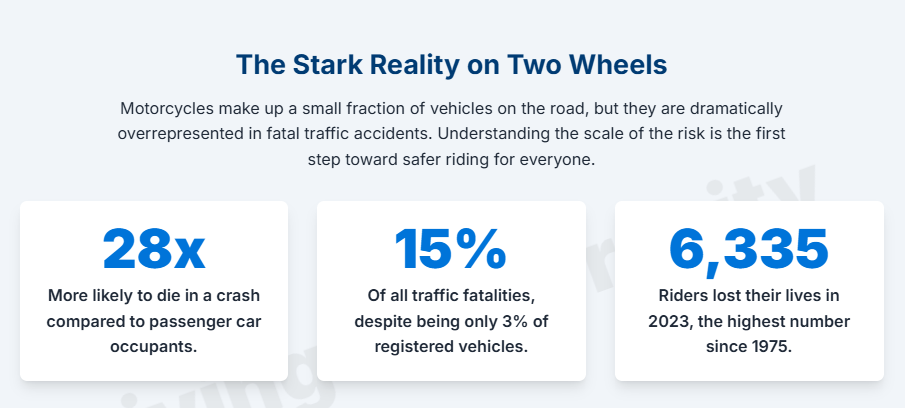
Motorcycles represent a distinct segment within the broader transportation landscape, inherently posing unique safety challenges due to their design and interaction with other vehicles. Despite comprising a mere 3% of all registered vehicles in the United States, motorcycles are disproportionately involved in traffic fatalities, accounting for 15% of all traffic deaths.1
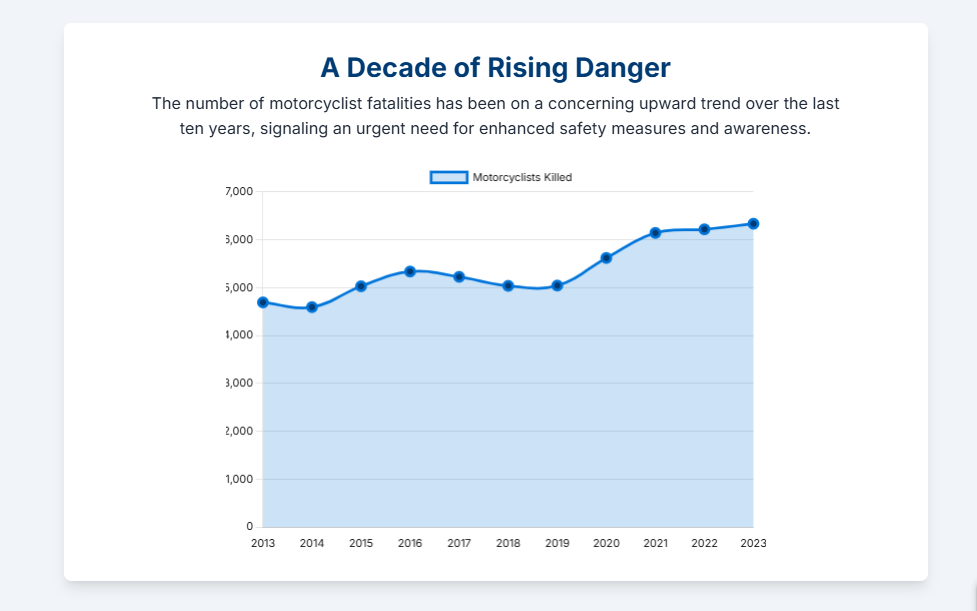
This stark overrepresentation underscores a critical public safety concern. In 2023, 6,335 motorcyclists lost their lives, marking the highest recorded number since at least 1975.2 Per vehicle mile traveled, motorcyclists face a significantly elevated risk, being approximately 28 times more likely to die and 5 times more likely to be injured in a crash compared to occupants of passenger cars.2 While fatalities are a grave outcome, injuries are even more prevalent, with a recorded injury rate of 864 per 100,000 registered vehicles in 2022, in contrast to a fatality rate of 65.1
Motorcycle accidents rarely stem from a singular cause; rather, they are the complex outcome of interacting factors. These include actions attributable to the rider, such as impairment, excessive speed, or lack of experience; behaviors of other drivers, including distraction and failure to yield right-of-way; and environmental conditions, such as hazardous road surfaces and adverse weather. Addressing this multifaceted problem necessitates a comprehensive and integrated approach. Effective prevention strategies demand enhanced rider skills through continuous training, consistent and appropriate use of protective gear, adherence to responsible riding practices, and a heightened awareness among all motorists sharing the roadway.
Introduction: The Critical Landscape of Motorcycle Safety
The inherent design of motorcycles places riders in a uniquely vulnerable position on the road. Unlike enclosed passenger vehicles, motorcycles offer no external protective shell, leaving riders directly exposed to impact forces in the event of a collision.4 This fundamental lack of physical protection means that even seemingly minor incidents can result in severe or catastrophic outcomes for the motorcyclist. Furthermore, the two-wheeled configuration of a motorcycle provides inherently less stability than a four-wheeled vehicle, increasing susceptibility to loss of control, particularly when encountering adverse conditions or road hazards.4 Motorcyclists’ safety is heavily reliant on factors such as road traction, visibility, and balance, all of which can be rapidly compromised by changes in weather or road surface conditions.5
A review of accident statistics in the U.S. reveals the persistent severity of this issue. In 2022, motorcycles were involved in 15.72% of the 39,221 fatal motor vehicle accidents nationwide, with 6,340 individuals involved in these fatal crashes.6 The fatality rate for motorcycles stood at 64.99 per 100,000 registered vehicles in 2022, alongside an injury rate of 864.1 Disturbingly, the number of motorcyclists killed has shown a concerning upward trend in recent years, escalating to 6,335 in 2023.1
The consistent finding that motorcycles, despite their small proportion of registered vehicles, account for a significantly larger share of traffic fatalities highlights that motorcycle safety is not merely a statistical anomaly but a profound public health and safety challenge. This disproportionate risk underscores that the inherent lack of physical protection and stability, combined with the complex dynamics of shared roadways, means that even minor incidents can lead to devastating consequences for motorcyclists. This reality necessitates a concentrated focus on both rider and motorist behavior, as well as ongoing improvements in road infrastructure. The observed increase in motorcyclist fatalities from 4,692 in 2013 to 6,335 in 2023, reaching levels not seen since 1975 1, is particularly alarming. This upward trajectory suggests that existing safety measures, while valuable, may not be adequately addressing evolving traffic patterns, increasing ridership, or persistent behavioral issues. This trend signals an urgent need for revitalized and potentially more assertive public awareness campaigns, stricter enforcement of traffic laws, and expanded rider education initiatives to reverse this concerning pattern.
The following table provides a detailed overview of motorcycle fatalities and injuries in the U.S. over the past decade, illustrating the scale and trends of this critical issue.
Table 1: Motorcycle Fatalities and Injuries in the U.S. (2013-2023)
| Year | Motorcyclists Killed | Motorcyclists Injured | Fatality Rate per 100,000 Registered Vehicles | Injury Rate per 100,000 Registered Vehicles | |
| 2013 | 4,692 | 88,760 | 55.83 | 1,056 | |
| 2014 | 4,594 | 91,987 | 54.58 | 1,093 | |
| 2015 | 5,029 | 88,738 | 58.47 | 1,032 | |
| 2016 | 5,337 | 104,442 | 61.49 | 1,203 | |
| 2017 | 5,226 | 88,592 | 60.32 | 1,023 | |
| 2018 | 5,038 | 81,859 | 58.18 | 945 | |
| 2019 | 5,044 | 83,814 | 58.68 | 975 | |
| 2020 | 5,620 | 80,662 | 67.33 | 966 | |
| 2021 | 6,143 | 84,898 | 62.71 | 867 | |
| 2022 | 6,218 | 82,687 | 64.99 | 864 | |
| 2023 | 6,335 | N/A | N/A | N/A | |
Major Contributing Factors to Motorcycle Accidents
Motorcycle accidents are rarely attributable to a single cause but rather a confluence of factors related to the rider, other drivers, and the environment.
Rider-Related Factors
Impaired Riding (Alcohol and Drug Influence)
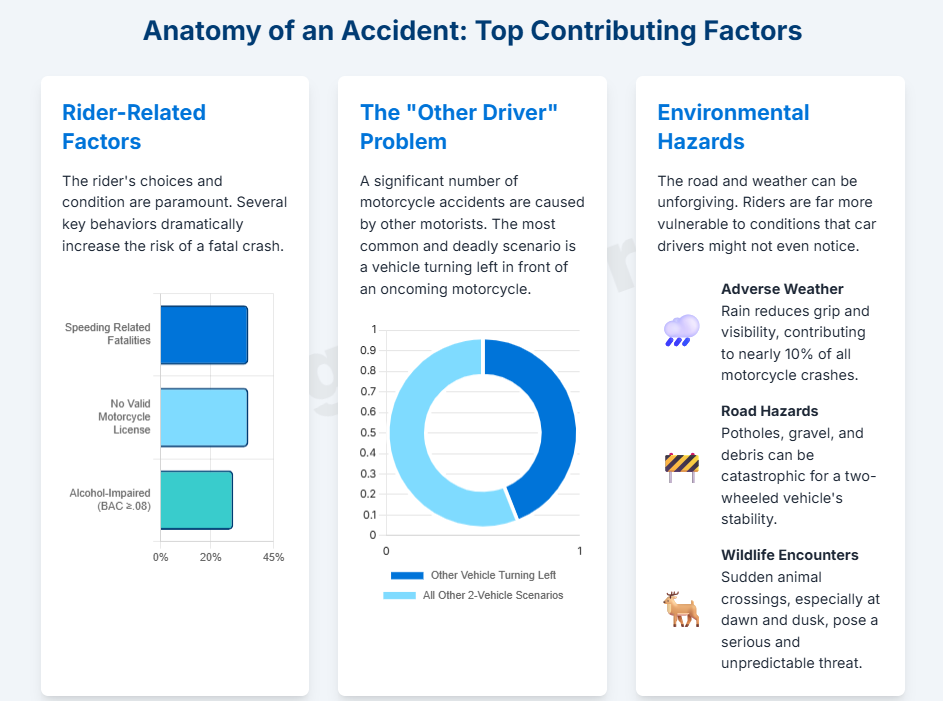
Alcohol and drug use constitute a significant and pervasive cause of motorcycle crashes globally.7 The data consistently highlights this danger: in 2023, a substantial 41% of motorcycle riders killed in single-vehicle crashes were found to be alcohol-impaired, defined as having a blood alcohol concentration (BAC) of.08 or higher.1 Similarly, in 2022, 29% of all motorcycle riders involved in fatal traffic crashes were alcohol-impaired.1
The impact of alcohol extends far beyond simple motor skill degradation. It profoundly impairs critical cognitive functions such as judgment, vision (leading to blurred or reduced night vision), reaction time, coordination, balance, and precise throttle control.2 Furthermore, alcohol has a known effect of weakening an individual’s self-control, leading to increased risk-taking behaviors that would typically be avoided when sober.4 This means that impaired riding is not merely about physical clumsiness; it is fundamentally about a compromised ability to make safe decisions, accurately assess risks, and perceive hazards in the dynamic riding environment. This cognitive impairment makes even a single drink a dangerous proposition, as it directly undermines the mental acuity essential for safe motorcycling.
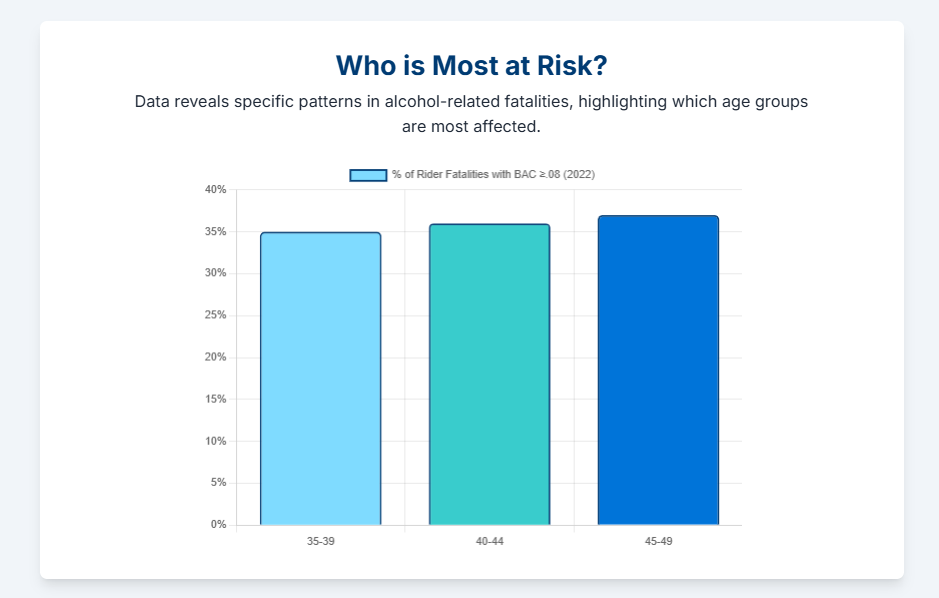
Demographic analysis reveals specific patterns: the highest percentages of alcohol-impaired motorcycle rider fatalities in 2022 were observed in the 45-49 age group (37%), followed closely by 40-44 (36%) and 35-39 (35%).1 Moreover, motorcyclists killed during nighttime hours were almost three times more frequently alcohol-impaired than those killed during the day (42% vs. 16%).1 The data also indicates that alcohol impairment is a particularly strong factor in crashes where the rider loses control without the direct involvement of another vehicle, with 42% of motorcycle riders in single-vehicle fatal crashes being alcohol-impaired, compared to 20% in multi-vehicle crashes.1 This suggests a higher likelihood of self-inflicted accidents when under the influence, potentially due to impaired judgment leading to excessive speed, misjudged turns, or a failure to react appropriately to road hazards.
Speeding and Reckless Riding Behaviors
Speeding is consistently identified as a primary contributing factor in motorcycle accidents.4 In 2022, a significant 35% of all motorcycle fatalities were linked to speeding 1, a rate notably higher than that for passenger car drivers (22%).1 Excessive speed critically reduces a rider’s reaction time and diminishes their ability to maintain control of the motorcycle, especially when confronted with sudden signals or unexpected obstacles on the road.4
It is important to understand that “speeding” extends beyond merely exceeding posted speed limits. It also encompasses riding too fast for prevailing conditions, which can include adverse weather, specific roadway features (such as gravel in corners or seams in the road), or simply exceeding one’s personal skill level.7 This broader understanding is crucial for accident prevention, as it implies that even at or below the legal speed limit, a rider can be operating unsafely if conditions or their own capabilities dictate a slower pace. This emphasizes the vital role of situational awareness and honest self-assessment in safe speed management. Aggressive cornering, for instance, is a recognized major cause of crashes.10
Younger riders, particularly those aged 21-24, exhibit the highest involvement in speeding-related fatalities, with 54% in 2023.3 Furthermore, young drivers generally face a much higher probability of death when speeding.11 In group riding scenarios, speed often emerges as a common crash factor, particularly due to the “bungee” effect, where less experienced riders at the rear of the group may attempt to catch up to faster riders, leading to dangerous acceleration.7 This highlights a social dynamic that can override individual judgment, necessitating that group leaders and participants actively manage the pace to ensure it is safe for all members, rather than allowing peer pressure or competitive instincts to dictate speed.
Inexperience, Inattention, and Skill Deficiencies
A lack of adequate experience and sound decision-making capabilities can significantly contribute to accidents, particularly for novice riders attempting complex maneuvers like lane splitting or filtering in congested traffic.4 Beyond inexperience, inattention poses a threat to both new and seasoned riders. Scientific understanding indicates that the human brain does not genuinely multitask but rather rapidly switches between tasks, inevitably sacrificing full focus on either activity.7 This cognitive burden of inattention means that any form of distraction, whether daydreaming or adjusting controls, inherently compromises a rider’s ability to respond effectively to dynamic road conditions. This reinforces the critical need for constant vigilance and the elimination of all forms of distraction while riding.
A significant contributing factor to fatal crashes is the absence of proper licensing. In 2022, 35% of motorcycle riders involved in fatal crashes were operating their vehicles without a valid motorcycle license.1 This contrasts sharply with passenger vehicle drivers, where only 16% in fatal crashes lacked valid licenses.1 While not a direct cause, lacking a valid license often correlates with a lack of formal training, a deficient understanding of traffic laws, and underdeveloped basic riding skills. This suggests a systemic issue where individuals are operating complex machinery without adequate preparation, substantially increasing their risk profile and contributing to accident severity. While older drivers have shown a higher fatality rate in some studies, the sheer number of crashes remains more common among drivers under 30, a trend potentially linked to their tendency towards more aggressive driving behaviors.11
Physical and Emotional Impairments
Motorcycle riding is a physically demanding activity that requires a strong cognitive and reflexive connection.7 Consequently, physical and emotional impairments can significantly elevate accident risk.7 Emotional distress, mental fatigue, or even extreme temperatures can directly impair a rider’s judgment and reaction time.5 For instance, riding in high temperatures can lead to dehydration and heatstroke, while cold weather can cause hypothermia and loss of dexterity, all of which compromise a rider’s ability to focus and react.5 Studies have specifically linked falling asleep to an increased likelihood of death in crashes.11
These forms of impairment, often overlooked, can have effects similar to alcohol influence. This highlights that “impairment” extends beyond substances; riders must be acutely self-aware of their physical and mental state before and during a ride. Recognizing the need to pull over and rest or regain composure after a stressful event 7 is as crucial a safety measure as abstaining from alcohol. This broadens the scope of responsible riding to encompass self-care and mental preparedness.
Mechanical Failures
Mechanical problems are recognized as a potential cause of motorcycle crashes.7 Specifically, improper maintenance or the presence of faulty parts can lead to catastrophic failures on the road.12 While detailed statistics on mechanical failures as a primary cause are less prevalent than those for human factors, the emphasis on “improper maintenance” points to their preventability.12 This underscores the critical importance of conducting regular pre-ride checks and adhering to a consistent professional maintenance schedule. A well-maintained motorcycle is inherently a safer motorcycle, and neglecting this aspect introduces unnecessary and potentially devastating risks that are entirely within the rider’s control.
Other Driver-Related Factors
Distracted Driving and Inattentional Blindness
Distracted driving, encompassing activities such as mobile phone use, eating, drinking, adjusting music, texting, and general inattention, is a pervasive cause of accidents.4 The alarming increase in driver cell phone use, estimated at approximately 1,500% since 2003, illustrates a societal trend that significantly exacerbates the risk for vulnerable road users like motorcyclists.7 Distracted driving is believed to contribute to at least 10% of all fatal roadway crashes.7
A critical psychological phenomenon at play is “inattentional blindness,” where many accidents occur because drivers of cars or trucks fail to notice motorcycles, even when looking directly at them.7 Their brains may be processing other information or simply not be primed to detect the smaller, less common profile of a motorcycle. This constitutes a fundamental cognitive barrier to motorcycle safety, implying that even otherwise “good” drivers can pose a threat. This necessitates that motorcyclists actively work to increase their conspicuity and anticipate this cognitive blind spot in others, rather than relying solely on other drivers to “see” them. This highlights the need for broader societal and policy interventions against distracted driving, as the sheer volume of distracted drivers creates a persistent and growing hazard that demands a multi-pronged approach involving education, enforcement, and technological solutions.
Failure to Yield Right-of-Way (with a focus on Left Turns)
“T-bone” collisions, frequently caused by vehicles making left turns, represent a leading cause of motorcycle collisions globally.7 In 2022, a striking 44% (1,436 out of 3,268) of fatal two-vehicle crashes involving a motorcycle occurred when the other vehicle was turning left while the motorcycle was proceeding straight, passing, or overtaking.1 This statistic powerfully demonstrates other drivers’ failure to properly yield or even notice motorcyclists.5
This data identifies left-turn scenarios as a particularly critical “collision trap” for motorcyclists. It mandates the adoption of specific defensive riding techniques focused on anticipating and mitigating this precise risk. Such techniques include observing the turning vehicle’s tires for early indications of movement, adjusting lane position to increase visibility, and being prepared to take immediate evasive action.7 This also underscores the necessity for driver education campaigns specifically addressing heightened vigilance for motorcycles in left-turn situations.
Vehicle Overshadowing and Blind Spot Issues
The smaller and narrower profile of motorcycles makes them inherently less visible to other motorists, allowing them to be easily hidden in traffic or within vehicle blind spots.7 Drivers frequently fail to check their mirrors and blind spots thoroughly before changing lanes or merging, directly contributing to collisions.12 Beyond lane changes, common traffic situations such as sudden stops, a motorcycle being “overshadowed” by larger vehicles, and the unexpected opening of car doors can all pose severe threats to motorcyclists.7
The combination of a motorcycle’s compact size, drivers’ blind spots, and prevalent inattention creates a scenario where motorcycles can effectively become “invisible” to other road users.7 This is not merely a driver error but a fundamental challenge arising from vehicle dynamics and human perception. This places a significant burden on the motorcyclist to actively manage their visibility. Strategies such as wearing bright or reflective gear, ensuring headlights are on day and night, and adopting strategic lane positioning 10 are not simply recommendations but essential survival tactics for riders.
Roadway and Environmental Factors
Hazardous Road Conditions (Potholes, Gravel, Debris, Uneven Surfaces)
Poorly maintained roads, including the presence of potholes, uneven surfaces, grooves, various forms of debris, rocks, gravel, and sand, can all cause motorcyclists to lose balance and control.4 Motorcycles are inherently more susceptible to accidents on such surfaces due to their inherent instability and the limited traction provided by their two thin tires.4 What might be a minor bump or barely noticeable hazard for an automobile, such as a small pothole or a patch of gravel, can become a “major cause for a crash with a motorcycle” 7 due to their “less stability and fewer protections”.5 This highlights a fundamental design vulnerability that riders must constantly account for. Furthermore, oil and other slippery substances tend to accumulate in the center of traffic lanes and at intersections, creating additional hazards.16
Navigating these common, often unavoidable, hazards requires motorcyclists to develop advanced scanning techniques 15 and specific handling skills. These include techniques such as rising slightly on the foot pegs to absorb shock, maintaining a straight course when crossing obstacles, and attempting to cross uneven surfaces at an angle.16 Beyond individual rider skill, this also points to the broader need for improved road maintenance and infrastructure to enhance motorcycle safety.
Adverse Weather Conditions (Rain, Wind, Fog, Ice)
Weather conditions profoundly impact motorcycle safety by compromising critical factors such as traction, visibility, and rider balance.5 Rain is the most frequently encountered hazardous weather for riders, contributing to nearly 10% of all motorcycle crashes, primarily due to reduced tire grip and diminished visibility.5 A particularly dangerous phenomenon is the “first rain,” where the initial 30 minutes of light rainfall are especially hazardous due to the mixture of accumulated oil and water on the road surface, creating an extremely slick film.5 This provides a concrete, actionable warning for riders: even a brief drizzle after a dry spell demands extreme caution, as the road will be at its slickest.
Beyond rain, snow and black ice virtually eliminate the necessary friction for two wheels to remain stable, making riding extremely perilous.5 Fog severely impairs visibility, making it difficult for riders to spot road hazards or accurately judge distances.5 Strong crosswinds or sudden gusts can destabilize a motorcycle, especially at higher speeds, potentially pushing the bike out of its lane.5
Moreover, adverse weather impacts extend beyond just road surface conditions; they directly affect the rider’s physical and cognitive state. Temperature extremes, such as intense heat or severe cold, can lead to rider fatigue, dehydration, heatstroke, hypothermia, and a loss of dexterity, all of which impair judgment and reaction time.5 This means that weather creates a compounding risk factor: riders must not only adapt their riding techniques to the road but also manage their personal well-being and account for reduced visibility for themselves and other road users. This often necessitates the prudent decision to avoid riding altogether in severe conditions.13
Wildlife Encounters
Wildlife encounters present a unique and unpredictable hazard for motorcyclists. Most wildlife is more active during specific periods, particularly during riding season, at dawn, at dusk, and occasionally after rainstorms.7 Animals unexpectedly darting across roads pose a significant risk, especially in areas adjacent to forests or open fields.15 Unlike fixed road hazards or predictable traffic patterns, wildlife movements are sudden and highly erratic. This emphasizes the critical importance of heightened situational awareness when riding in specific environments and during these peak activity times. Riders must adjust their speed and be prepared for immediate evasive action, as the “Search-Evaluate-Execute” (SEE) strategy 10 becomes paramount for mitigating this unpredictable threat.
The following table summarizes the primary contributing factors to fatal motorcycle crashes, highlighting the prevalence of each.
Table 2: Primary Contributing Factors to Fatal Motorcycle Crashes (2022-2023)
| Factor Category | Specific Factor | Percentage of Fatal Crashes Involved | Source |
| Rider-Related | Alcohol Impairment (BAC ≥.08) | 29% (2022), 41% in single-vehicle (2023) | 1 |
| Speeding | 35% (2022) | 1 | |
| No Valid Motorcycle License | 35% (2022) | 1 | |
| Other Driver-Related | Other Vehicle Turning Left | 44% of 2-vehicle fatal crashes (2022) | 1 |
| Distracted Driving (Estimated) | At least 10% of all fatal crashes | 7 | |
| Roadway/Environmental | Rain | Nearly 10% of all crashes | 5 |
Comprehensive Strategies for Accident Avoidance and Risk Mitigation
Effective motorcycle accident prevention requires a multi-layered approach, combining individual rider responsibility with broader societal awareness and infrastructure improvements.
Enhancing Rider Skills and Awareness
Mastering Defensive Riding Techniques
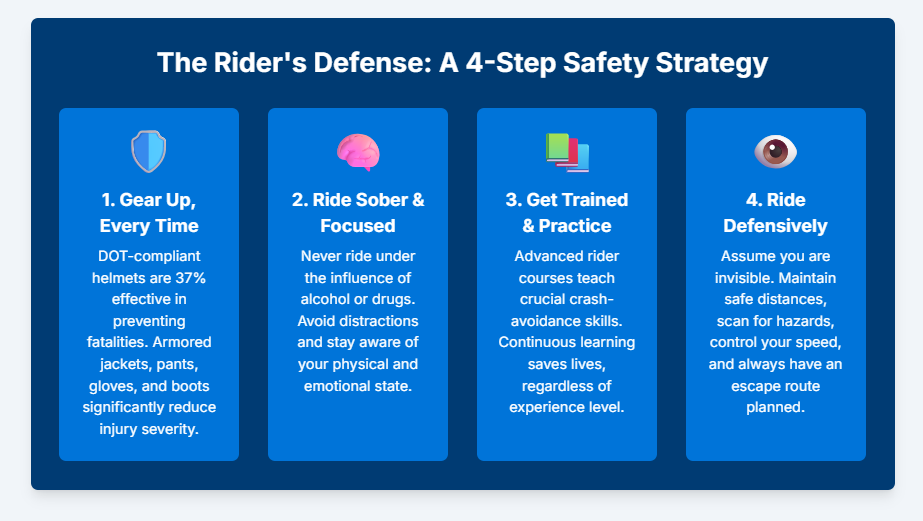
Defensive riding is not merely a set of actions but a fundamental mindset that prioritizes anticipating and proactively responding to potential hazards, emphasizing caution and heightened awareness.18 This approach is about being proactive rather than merely reactive to unfolding events.18 Key techniques include:
- Staying Visible: Motorcyclists must actively work to be seen. This involves wearing bright or reflective clothing, especially during nighttime hours, and ensuring headlights are on both day and night.10 Utilizing reflective strips or decals on clothing and the motorcycle further enhances conspicuity. It is also crucial to avoid riding in the blind spots of cars and trucks.10 To draw additional attention, riders can consider flashing their brake light when slowing down or before stopping, or even “wiggling” the bike slightly.7 While improving visibility is crucial, riders must also anticipate that other drivers might still not see them due to “inattentional blindness”.7 This leads to the essential principle of having an escape route planned.10 This highlights the dual responsibility: riders must do everything possible to be seen, but also operate under the assumption that they might not be. This proactive assumption of invisibility is a key defensive principle, compelling riders to build in safety margins and contingency plans.
- Maintaining a Safe Following Distance: Establishing and maintaining at least a two-second gap between the motorcycle and the vehicle ahead is critical.13 This distance should be increased in adverse weather conditions or heavy traffic to allow more reaction time and prevent the motorcycle from being “overshadowed” or hidden from other drivers.7
- Anticipating Hazards and Constant Vigilance (Scanning): Riders must continuously scan their surroundings—looking ahead, to the sides, in mirrors, and even over their shoulder—for potential hazards such as sudden lane changes by other vehicles, road debris, or unexpected pedestrian crossings.10 The “Search-Evaluate-Execute” (SEE) strategy is a valuable mental framework for assessing and responding to hazards before an emergency reaction is required.10 This continuous, active engagement with the riding environment, constantly assessing risks and planning escape routes, is paramount. It is about thinking several steps ahead, not just reacting to immediate threats.
- Controlling Your Speed: Adhering to posted speed limits and, more importantly, adjusting speed based on prevailing road conditions, traffic flow, and visibility, is vital.13 When navigating curves, it is advisable to slow down before entering the turn and gradually accelerate as the motorcycle exits it.13
- Using Signals and Checking Blind Spots: Always using turn signals for lane changes or turns clearly communicates intentions to other drivers.13 Even with signals, performing a quick glance over the shoulder to check blind spots before initiating any maneuver is a crucial preventative measure.13
- Staying Focused and Avoiding Distractions: Maintaining full presence and attentiveness to the riding environment is non-negotiable. Riders should actively avoid distractions such as using phones, fiddling with music controls, or daydreaming.13 Given the brain’s inability to truly multitask, any form of inattention compromises a rider’s ability to respond dynamically.
- Predicting Other Drivers’ Behavior: Observing the body language and vehicle maneuvers of other motorists can help anticipate their actions.18 For instance, watching a car’s tires can provide an early indication of an impending turn.7
The Indispensable Role of Advanced Rider Training Programs
Enrollment in motorcycle safety courses is highly recommended for all riders, regardless of their experience level, from beginners to seasoned veterans.10 Such training offers a multitude of benefits, including improved overall road safety, enhanced hazard perception skills, increased confidence, and often, lower insurance premiums.19 These courses are designed to teach fundamental motorcycle operations, advanced handling techniques, and crucial crash-avoidance skills.13
Specific modules within advanced training programs frequently cover defensive riding strategies, hazard awareness, effective speed management, safe overtaking and filtering techniques, proper cornering, slow control maneuvers, and fostering the correct rider attitude.19 A significant component of these programs involves practicing emergency maneuvers, such as quick stops and evasive swerves, in a controlled environment.10
The availability of advanced courses for “any type of street motorcycle” 20 and their suitability for newly licensed riders, those returning after a break, or individuals upgrading to more powerful motorcycles 19 underscores a philosophy of continuous skill refinement rather than a one-time certification. This perspective acknowledges that riding skills can degrade over time, road conditions evolve, and different motorcycles demand varied proficiencies, making refresher courses and advanced training critical for sustained safety. Furthermore, the inclusion of modules on “developing the correct rider attitude” and improving “perception and hazard awareness” 19 reveals that advanced training extends beyond mere physical control of the motorcycle. It cultivates a safer mindset, enhancing a rider’s ability to anticipate risks and make sound judgments, which are often more critical than pure mechanical skill in preventing accidents.
Prioritizing Personal Protective Gear
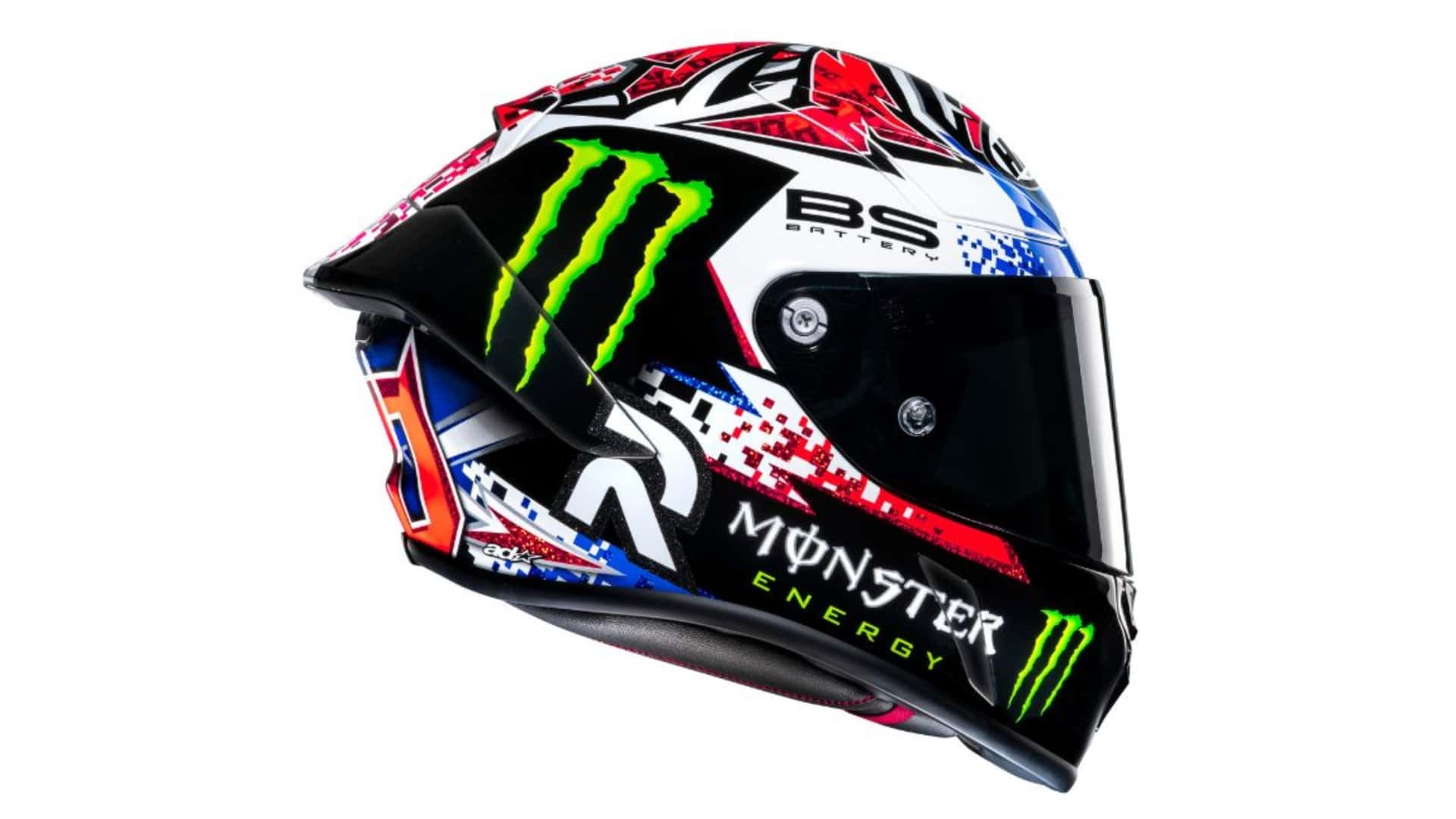
The Life-Saving Impact of DOT-Compliant Helmets
The effectiveness of helmets in mitigating severe injury and fatality in motorcycle crashes is well-documented. Helmets are estimated to be approximately 37% effective in preventing fatal injuries for motorcyclists and even slightly more effective (41%) for passengers.21 Despite these compelling statistics, in 2022, approximately four out of ten individuals killed in motorcycle crashes were not wearing helmets, while six out of ten were.1 Although 74% of motorcyclists utilized DOT-compliant helmets in 2023 2, this remaining gap in universal usage represents a significant number of preventable fatalities. Head injuries constitute the most frequently injured body region in motorcycle collisions, accounting for 44% of all injuries, and are disproportionately associated with fatal outcomes.22 Data specifically shows that children not wearing helmets were significantly more likely to sustain a head injury (54.3%) compared to those who wore helmets (44.0%).22 This reinforces the critical importance of helmets as the primary line of defense against the most common and severe motorcycle crash injuries, providing a strong anatomical and statistical basis for advocating for their consistent use.
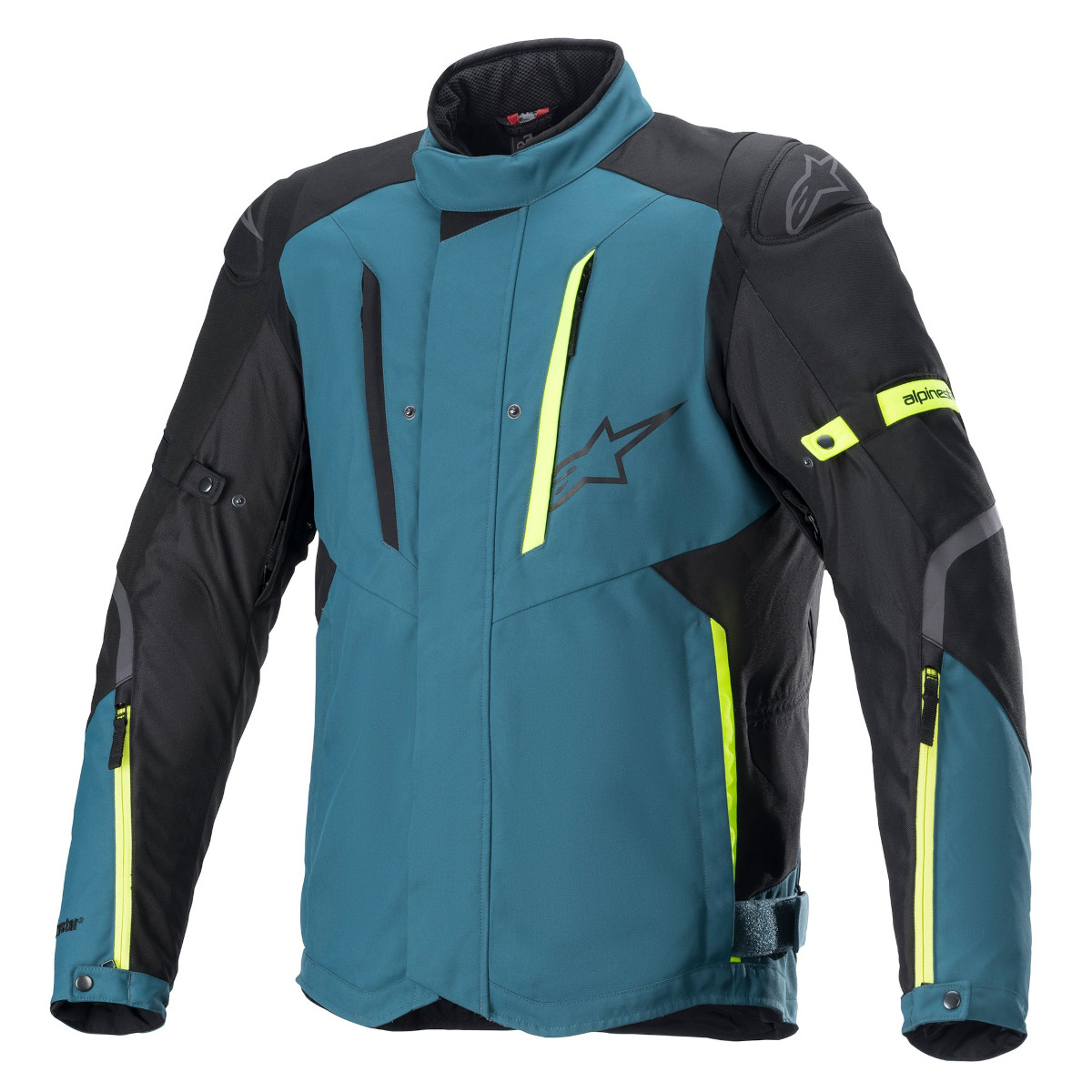
Effectiveness of Comprehensive Protective Clothing (Jackets, Pants, Gloves, Boots, and Body Armor)
Beyond helmets, comprehensive protective clothing plays a vital role in reducing the severity of injuries. Research indicates that motorcyclists are significantly less likely to require hospitalization if they crash while wearing motorcycle jackets (Relative Risk, RR=0.79), pants (RR=0.49), or gloves (RR=0.41).23 The inclusion of fitted body armor within these garments further enhances protection, leading to a significantly reduced risk of injury to the upper body (RR=0.77), hands and wrists (RR=0.55), legs (RR=0.60), and feet and ankles (RR=0.54).23 Specifically, body armor in jackets can reduce injury risk by 23%, in gloves by 45%, in pants for leg injuries by 39%, and in boots by 45%.23 Even non-motorcycle boots demonstrated a substantial reduction in foot and ankle injury risk (53%) compared to wearing shoes or joggers.23 Protective clothing has been shown to significantly reduce the incidence of soft tissue injuries and open wounds.23
This research provides robust, empirical proof of gear effectiveness, moving the discussion beyond anecdotal evidence. The specific Relative Risk values demonstrate a statistically significant reduction in hospitalization and injury severity across various body parts when protective gear, especially with body armor, is worn. This allows for a data-driven argument for investing in high-quality, armored gear, as it directly translates to a lower likelihood of severe injury and hospitalization.
However, a critical finding also highlights that a substantial proportion of motorcycle-designed gloves (25.7%), jackets (29.7%), and pants (28.1%) were assessed to have failed due to material damage during crashes.23 This suggests that merely “wearing gear” is insufficient; the
quality and integrity of the gear are paramount. It implies a need for riders to invest in reputable brands and regularly inspect their gear for wear and tear. Furthermore, it points to a potential need for improved industry standards for material durability, particularly given that many of these failures occurred at relatively low impact speeds.23
The following table synthesizes the quantitative evidence regarding the effectiveness of various motorcycle protective gear items in reducing injury risk.
Table 3: Effectiveness of Motorcycle Protective Gear on Injury Risk Reduction
| Gear Type | Impact on Hospitalization Risk (Relative Risk, RR) | Impact on Injury Risk with Body Armor (RR for specific body parts) | Key Findings/Notes | Source |
| Helmet | N/A | N/A | 37% effective in preventing fatal injuries for riders, 41% for passengers; 4 out of 10 fatally injured in 2022 did not wear helmets. Head injuries are most common and fatal. | 1 |
| Jacket | 0.79 | 0.77 (Upper body) | 23% lower risk of injury with body armor; 29.7% failed due to material damage. | 23 |
| Pants | 0.49 | 0.60 (Legs) | 39% lower risk of leg injuries with body armor; 28.1% failed due to material damage. | 23 |
| Gloves | 0.41 | 0.55 (Hands/wrists) | 45% lower risk of hand/wrist injuries with body armor; 25.7% failed due to material damage. | 23 |
| Boots | 1.04 (Not significant) | 0.54 (Feet/ankles) | 45% lower risk of foot/ankle injuries with body armor; non-motorcycle boots reduced risk by 53% compared to shoes/joggers. | 23 |
Fostering Responsible Riding Practices
Commitment to Sober Riding
The safest and most responsible decision for any motorcyclist is to never drink and ride.8 Even a single alcoholic drink can impair judgment, coordination, balance, throttle control, and reaction time, all faculties critical for safe motorcycle operation.2 Public awareness campaigns, such as NHTSA’s “Ride Sober or Get Pulled Over,” consistently emphasize this crucial message.2 These practices highlight the rider’s direct control over their risk profile. “Don’t drink and ride,” “adjust for conditions,” and “regular maintenance” are all decisions and actions taken either before or during the ride, reinforcing the concept of personal accountability.
Adhering to Safe Speeds and Adapting to Conditions
Motorcyclists should consistently maintain a reasonable pace that ensures safety for all roadway users and is appropriate for the prevailing conditions.7 This involves consciously adjusting speed based on factors such as weather, specific roadway features (e.g., gravel patches, potholes), the presence and behavior of other roadway users, and the rider’s personal skill level.7 In group riding scenarios, it is advisable to position less experienced riders at the front of the group to prevent the dangerous “bungee” effect, where riders at the rear may feel compelled to accelerate excessively to keep pace.7
Importance of Regular Motorcycle Maintenance
Consistent and thorough maintenance of the motorcycle is vital for safety. This includes performing regular pre-ride checks and adhering to a consistent maintenance schedule.10 Particular attention should be paid to the condition of tires, ensuring correct pressure and adequate tread depth for optimal grip, especially on wet surfaces.13 Brakes must be regularly inspected to ensure proper function and sufficient pad life, and all lights (headlights, taillights, turn signals) must be verified for proper operation to maximize visibility.10 After riding in rain, it is also advisable to clean and dry the motorcycle to prevent rust and corrosion, which can compromise its integrity over time.17
Promoting Motorist Awareness and Shared Road Responsibility
Campaigns to Increase Driver Vigilance for Motorcycles
Motorcycle safety is a shared responsibility among all road users. Organizations like the National Highway Traffic Safety Administration (NHTSA) actively promote campaigns such as “Motorcyclists’ Safety Is Everyone’s Safety” and “Share the Road” to foster this collective responsibility.2 It is paramount for drivers of all vehicle types to understand the unique safety challenges faced by motorcyclists, including their smaller size, reduced visibility, and specific riding practices like downshifting and weaving, to better anticipate and respond to their presence.2 Despite all efforts by riders, a significant portion of accidents are caused by other drivers’ negligence, particularly “inattentional blindness” and failure to yield.1 This explicitly states that motorcycle safety cannot be achieved by riders alone; it requires a cultural shift among all road users, emphasizing empathy, vigilance, and adherence to traffic laws. Public awareness campaigns are therefore crucial for educating drivers about the unique vulnerabilities of motorcyclists and their responsibility to actively look for and yield to them.
Addressing Distracted Driving and Promoting Yielding Behaviors
While advocating for increased driver awareness, motorcyclists must also remain highly alert and employ proactive strategies to compensate for the prevalence of distracted drivers on the road.7 Riders can take specific measures to enhance their visibility to other drivers, such as carefully observing the tires of oncoming cars for turning indications, consistently using their turn signals, anticipating potential gaps in traffic that might prompt another vehicle to turn, and even flashing their brights or “wiggling” the bike to draw more attention.7 Maintaining a proper following distance not only provides more reaction time for the motorcyclist but also makes them more visible to drivers behind them.7 Furthermore, investing in collision avoidance technology can provide additional alerts to potential hazards.7 This acknowledges the reality that riders must operate defensively in an environment where not all drivers are equally attentive or skilled. It empowers riders with tools to proactively reduce their risk, even when faced with external hazards, reinforcing the “ride as if you’re invisible” mentality.10
Conclusion: A Collective Approach to Safer Motorcycling
Motorcycle accidents continue to represent a significant and complex safety challenge on roadways. The inherent vulnerabilities of motorcycles, stemming from their design and lack of external protection, are compounded by a multifaceted array of human factors and environmental hazards. Key contributing elements include rider impairment (particularly from alcohol), excessive speed, inexperience, and inattention. Simultaneously, the behaviors of other drivers, notably distracted driving and failures to yield right-of-way (especially in left-turn scenarios), pose substantial and often unavoidable threats. Roadway conditions such as potholes, gravel, and adverse weather further exacerbate these risks.
Effectively mitigating these dangers demands a synergistic and multi-layered approach. It begins with the individual motorcyclist’s commitment to continuous skill enhancement through advanced rider training, fostering a proactive and defensive riding mindset, and consistently utilizing comprehensive personal protective gear, including DOT-compliant helmets and armored clothing. These individual actions, coupled with an unwavering commitment to sober and responsible riding practices and diligent motorcycle maintenance, form the bedrock of rider safety.
However, the responsibility for safer motorcycling extends beyond the rider. The broader community of motorists plays an equally critical role in sharing the road safely and being vigilant for motorcycles. This necessitates ongoing public awareness campaigns that educate drivers about the unique challenges motorcyclists face and promote a culture of shared responsibility and mutual respect on our roadways.
Looking forward, continued efforts in education, enforcement of traffic laws, and public awareness campaigns from organizations such as the National Highway Traffic Safety Administration (NHTSA) and the Motorcycle Safety Foundation (MSF) are vital. Ultimately, a significant reduction in motorcycle accidents and their severe consequences requires a collective commitment to safety, respect, and heightened awareness from every individual who navigates our roads.
Sources
- Motorcycle Accident Statistics 2025 – AutoInsurance.com, accessed July 24, 2025, https://www.autoinsurance.com/motorcycle-accident-statistics/
- Motorcycle Safety: Helmets, Motorists, Road Awareness | NHTSA, accessed July 24, 2025, https://www.nhtsa.gov/road-safety/motorcycles
- Motorcycle Safety, accessed July 24, 2025, https://www.trafficsafetymarketing.gov/safety-topics/motorcycle-safety
- What Are the Most Common Causes of Motorcycle Accidents – Husain Law + Associates, accessed July 24, 2025, https://hlalawfirm.com/what-are-the-most-common-causes-of-motorcycle-accidents/
- How Weather Conditions Impact Motorcycle Accident Risk, accessed July 24, 2025, https://www.malmlegal.com/blog/how-weather-impacts-motorcycle-accidents/
- www.eastonlawoffices.com, accessed July 24, 2025, https://www.eastonlawoffices.com/worst-states-for-motorcyclists-and-statistics/#:~:text=Motorcycle%20Accidents%3A%20Statistics%20and%20Facts,were%20involved%20in%20motorcycle%20accidents.
- 10 Top Motorcycle Accident Causes – Ride Vision, accessed July 24, 2025, https://ride.vision/blog/10-top-motorcycle-accident-causes/
- Section Two – Factors Affecting Rider Performance : Oregon Driver & Motor Vehicle Services, accessed July 24, 2025, https://www.oregon.gov/odot/dmv/pages/online_motorcycle_moped_manual/section_2.aspx
- Investigating the Impact of Alcohol on Motorcycle Accidents | Cannon & Dunphy S.C., accessed July 24, 2025, https://www.cannon-dunphy.com/investigating-the-impact-of-alcohol-on-motorcycle-accidents/
- QUICK TIPS: General Guidelines For Riding A Motorcycle Safely Be visible – MSF, accessed July 24, 2025, https://msf-usa.org/wp-content/uploads/2023/03/if-you-ride-a-motorcycle.pdf
- A Comparison of Contributing Factors between Young and Old Riders of Motorcycle Crash Severity on Local Roads – MDPI, accessed July 24, 2025, https://www.mdpi.com/2071-1050/15/3/2708
- Common Causes of Motorcycle Accidents – Salvi, Schostok & Pritchard P.C., accessed July 24, 2025, https://www.salvilaw.com/motorcycle-accidents/causes/
- Defensive Riding Strategies to Prevent Motorcycle Accidents, accessed July 24, 2025, https://butlerfirm.com/blog/defensive-riding-strategies-to-prevent-motorcycle-accidents/
- How can motorcyclists enhance their visibility to other drivers? – Mitchener Law Firm, accessed July 24, 2025, https://www.mitchenerlaw.com/blog/2025/02/how-can-motorcyclists-enhance-their-visibility-to-other-drivers/
- Guide to Road Hazards for Motorcyclists | Hayward, CA – East Bay Motorsports, accessed July 24, 2025, https://www.eastbaymotorsports.com/blog/understanding-common-road-hazards-for-motorcycle-riders–94129
- Motorcycle riding: Avoiding hazards on the road | Foremost Insurance Group, accessed July 24, 2025, https://www.foremost.com/learning-center/motorcycle-safety-avoiding-hazards-on-the-road.asp
- How Weather Impacts Your Motorcycle Safety and Insurance Claims, accessed July 24, 2025, https://www.insurance.harley-davidson.com/resources/weather-impacts-motorcycle-insurance-claims
- Developing Defensive Riding Skills: Crucial for Beginners – NOLA …, accessed July 24, 2025, https://nolariding.com/blogs/news/developing-defensive-riding-skills-crucial-for-beginners
- Advanced Motorcycle Training Explained: Is It Worth It? | startrescue …, accessed July 24, 2025, https://www.startrescue.co.uk/breakdown-cover/motoring-advice/motoring-costs/advanced-motorcycle-training-explained-is-it-worth-it
- Advanced RiderCourse (ARC) – Motorcycle Safety Foundation, accessed July 24, 2025, https://msf-usa.org/advance-your-ride/advanced-ridercourse-arc/
- Motorcycle Statistics Every Biker Should Know – Hog Law, accessed July 24, 2025, https://www.hoglaw1.com/motorcycle-statistics.php
- Identifying contributing factors to fatal and serious injury motorcycle collisions involving children in Malaysia – PMC, accessed July 24, 2025, https://pmc.ncbi.nlm.nih.gov/articles/PMC3861809/
- MOTORCYCLE PROTECTIVE CLOTHING:PROTECTION FROM …, accessed July 24, 2025, https://www.georgeinstitute.org/sites/default/files/documents/motorcycle-protective-clothing-protection-from-injury-or-just-the-weather-the-gear-study.pdf
Our Social Media Handles
- Instagram : LivingWithGravity
- Medium : Akash Dolas
- YouTube Channel : Gear and Shutter