











Executive Summary: BENDA’s Impact on the Global Motorcycle Market
Hangzhou Saturn Power Technology Co., Ltd., operating under the brand BENDA, has rapidly emerged as a significant contender in the global motorcycle industry since its founding in 2016. The company’s strategic establishment of an in-house engine division in 2017 and dual R&D offices in China and Austria underscores a commitment to proprietary technology and international design standards. With vehicle sales commencing in earnest after 2020, BENDA has quickly diversified its portfolio to include cruisers, naked bikes, ATVs, and side-by-sides, signaling an aggressive market entry strategy .
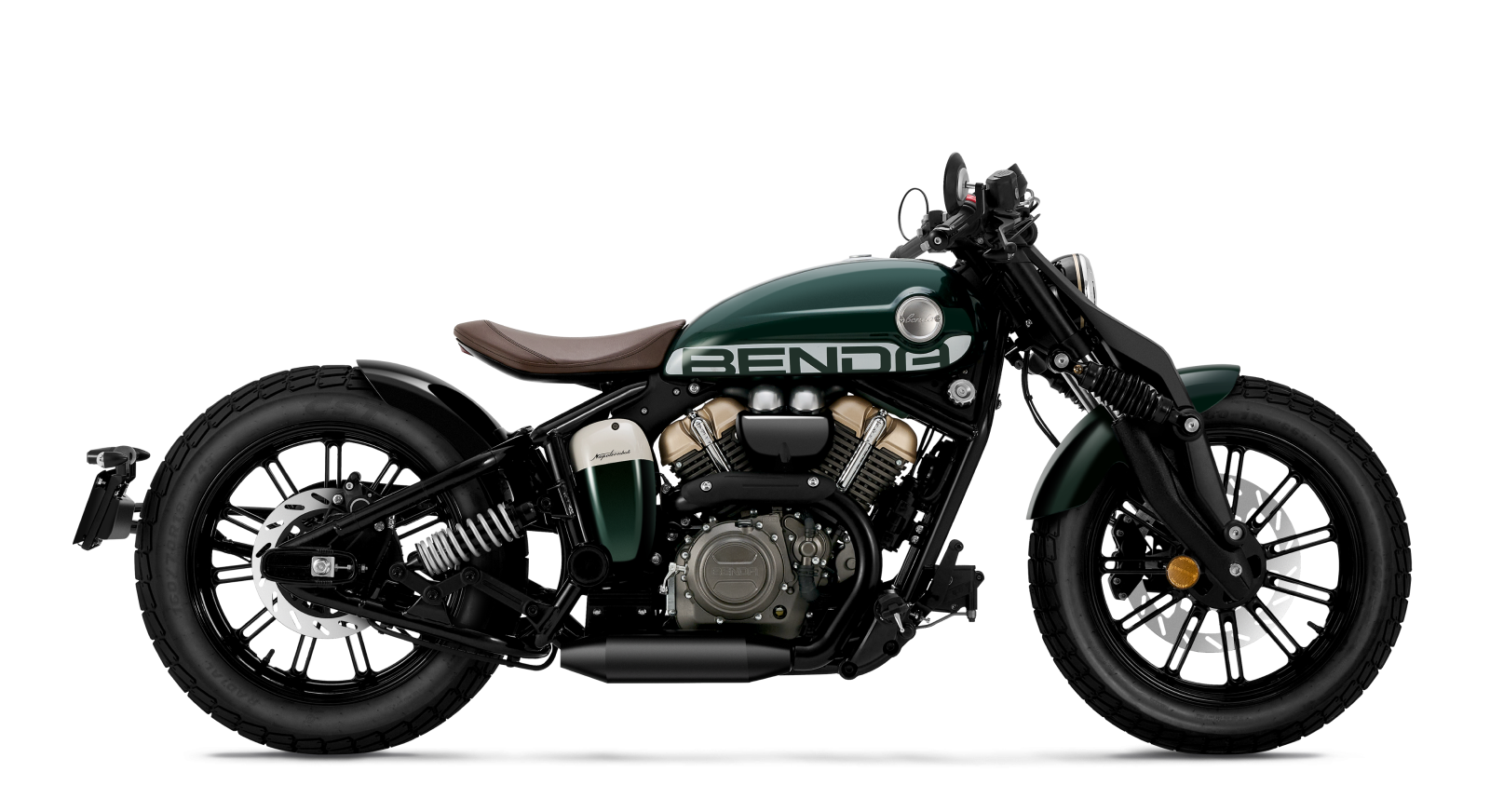
The Napoleon Bob 250, BENDA’s latest cruiser motorcycle model, epitomizes this innovative approach. Announced in spring 2024 and swiftly gaining attention for its planned introduction to Japan and its European debut at EICMA, this 250cc cruiser challenges conventional aesthetics and engineering . Its “monster cruiser” identity is a bold fusion of distinctive design and advanced functional elements, including a water-cooled V-twin engine and unique multi-link suspension systems .
Positioned as a premium, niche offering, the Napoleon Bob 250 aims to attract riders who prioritize individuality and unique design, even at an expected price point of approximately 900,000 yen in Japan. The motorcycle’s Euro 5+ compliance significantly streamlines its market entry into highly regulated regions like Japan and Europe, demonstrating BENDA’s proactive approach to global standards. Initial impressions of the engine’s refinement and the overall build quality suggest a notable advancement in Chinese manufacturing precision, potentially reshaping market perceptions.
Wingfoot’s cautious, phased strategy for the Japanese market, starting as a wholesaler, indicates a calculated approach to building brand presence and gauging market reception before broader expansion. The Napoleon Bob 250 is not merely a new model; it represents a strategic statement from BENDA, showcasing a blend of design audacity, engineering sophistication, and a clear global market vision that could redefine segments within the motorcycle industry.
BENDA: An Emerging Force in the Motorcycle Industry
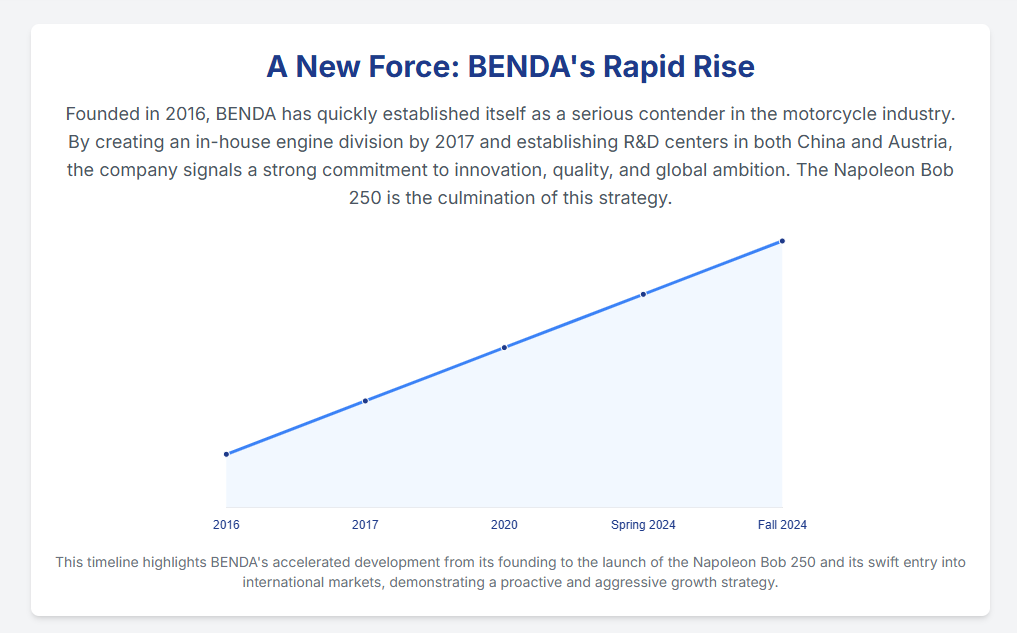
BENDA, a brand developed by Hangzhou Saturn Power Technology Co., Ltd., has demonstrated a remarkably swift trajectory from its inception to becoming a notable player in the global motorcycle landscape. Founded in 2016, the company rapidly established its dedicated engine division in 2017, a move that highlights a profound commitment to vertical integration and control over core powertrain technology . This early investment in in-house engine development, rather than solely relying on external suppliers, suggests a deliberate, long-term strategy to cultivate a globally competitive brand founded on proprietary innovation and quality assurance. This approach implies substantial capital investment and a clear vision to challenge established motorcycle manufacturers.
Further underscoring its global ambitions, BENDA has strategically set up industrial modeling design and engineering R&D offices in both China and Austria . This dual-location strategy allows the company to leverage cost-effective manufacturing capabilities in China while simultaneously accessing advanced design philosophies and engineering talent prevalent in Europe. Such an international footprint from an early stage indicates a strategic intent to develop products that meet diverse global market standards and aesthetic preferences, rather than being confined to regional tastes. This could signal a new era for Chinese motorcycle manufacturers, where the emphasis shifts towards prioritizing quality, innovation, and global market integration from the very outset, potentially disrupting the traditional hierarchy of motorcycle brands and challenging long-held perceptions of manufacturing origins.
With vehicle sales commencing in earnest after 2020, BENDA has pursued a broad product portfolio, encompassing cruisers, naked bikes, ATVs, and side-by-sides . This strategic diversification allows the company to tap into multiple revenue streams and market segments, thereby reducing its reliance on any single product category. The versatility in manufacturing and design required for such a diverse range of vehicles is substantial. BENDA’s engine offerings further exemplify this comprehensive approach, ranging from 249-475cc V-twins to a 496.4cc V-4, and even a 676cc in-line 4-cylinder engine.
This wide array of engine configurations and displacements points to a robust research and development pipeline and the ambition to compete across various motorcycle categories, from accessible entry-level models to more performance-oriented mid-range machines. This broad product and engine range provides a flexible platform for future growth and adaptation to evolving market demands. By not concentrating all its efforts on a single product type, BENDA mitigates market-specific risks and can gain market share more broadly, positioning itself for sustained growth and resilience in a highly competitive industry. This strategy also allows for the cross-pollination of technologies and design principles across different vehicle types, fostering a holistic approach to product development.
Napoleon Bob 250: Motorcycle Design and Engineering Innovation
The BENDA Napoleon Bob 250 stands as a testament to the company’s commitment to pushing the boundaries of motorcycle design and engineering. This model is a striking example of how BENDA aims to differentiate itself through bold aesthetics and innovative mechanical solutions.
Distinctive Aesthetics and “Monster Cruiser” Identity
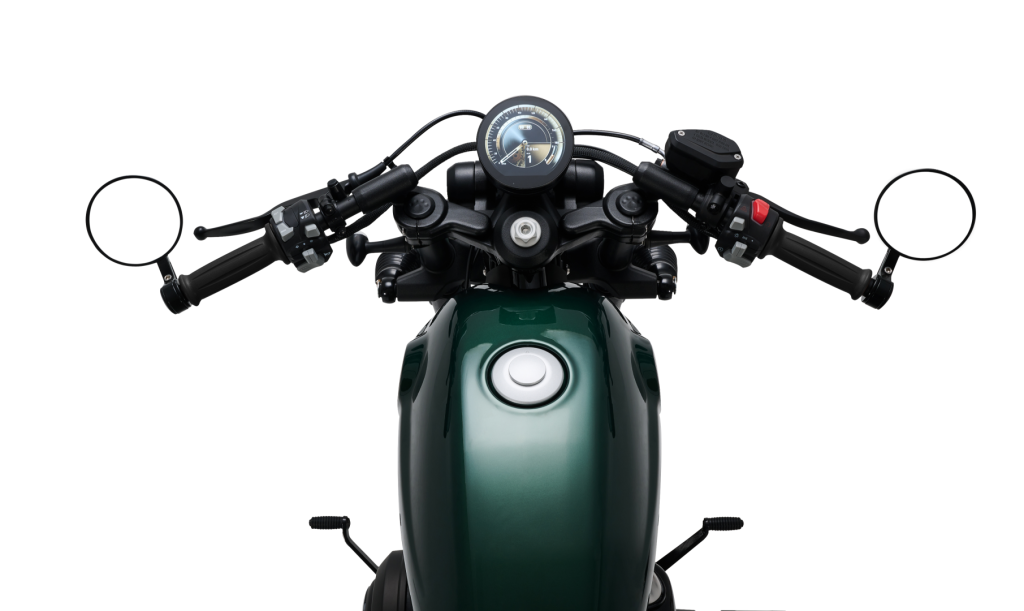
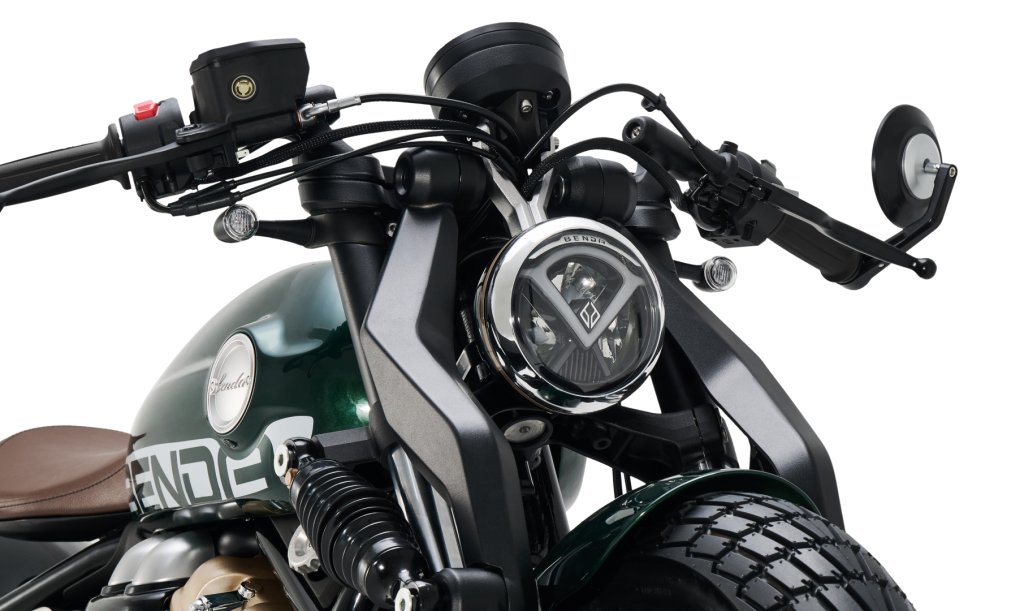
The visual presence of the Napoleon Bob 250 is so pronounced that it has been aptly described as a “monster cruiser” . This distinctive appearance is not merely superficial; it represents a deliberate “bold fusion of function and design” , engineered to create a powerful visual identity that commands attention within the cruiser segment. Key design elements contributing to this unique look include a multi-link front suspension and short fenders that leave the rear tires appearing “almost exposed” . These features are meticulously integrated, serving both stylistic and functional purposes, which collectively contribute to the motorcycle’s aggressive and substantial stance. The overall impression conveyed by the bike’s appearance makes it challenging to believe it belongs to the 250cc class, suggesting a larger, more imposing presence than its displacement might imply . This strategic design choice aims to offer the feel and visual impact of a “big bike” within a more accessible and manageable displacement category.
For BENDA, the design of the Napoleon Bob 250 transcends mere aesthetic preference; it functions as a core strategic pillar. In a motorcycle market often saturated with traditional cruiser designs, the Napoleon Bob 250’s “monster” aesthetic serves as its primary unique selling proposition. This audacious approach is designed to attract a specific, niche demographic—riders who prioritize individuality and visual impact over conventionality. This design-first strategy enables BENDA to circumvent direct competition based on price or historical legacy with established brands. Instead, it carves out its own market segment, appealing to “minorities” who “want to ride something different” . This distinct positioning allows the company to command a premium price point, such as the 900,000 yen expected in Japan, which might otherwise be considered high for a 250cc motorcycle.
Powertrain Analysis: The 250cc V-Twin Engine
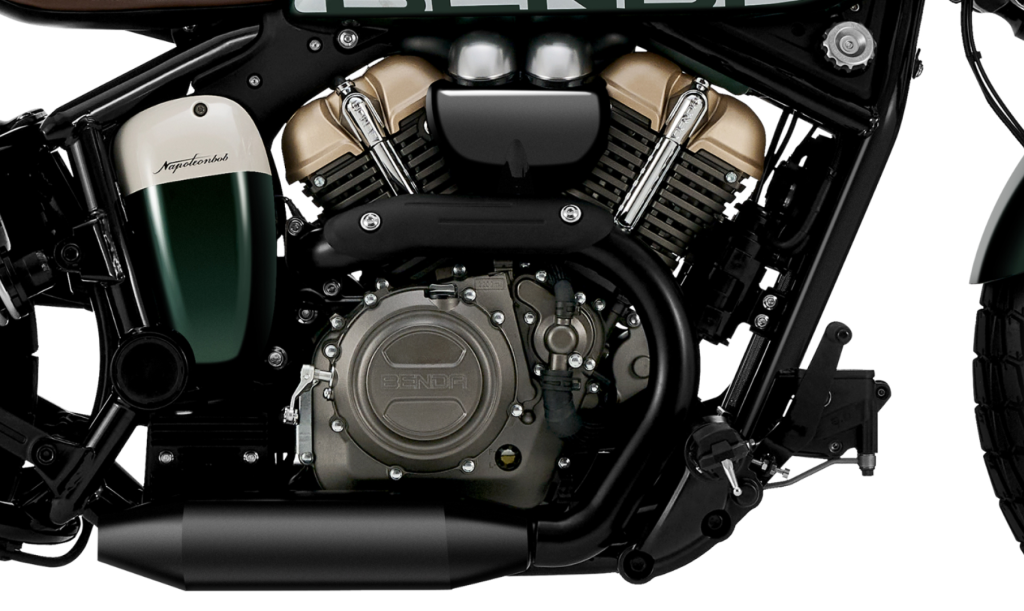
At the heart of the Napoleon Bob 250 is a water-cooled 250cc V-twin engine, characterized by an engagement angle of approximately 60 degrees . This V-twin configuration is a classic choice for cruisers, known for delivering a characteristic exhaust note and a robust torque curve. The engine features a 4-valve head and a relatively high compression ratio of 11.8:1, indicating a design focus on efficiency and performance . It boasts a maximum output of 25.8ps at 9000rpm and a maximum torque of 2.55kg-m at 5500rpm . These performance figures are competitive within the 250cc cruiser class, suggesting a capable and responsive power plant.
Initial assessments of the engine’s refinement and quality have been particularly noteworthy. Despite initial expectations of a “slightly clunky atmosphere” often associated with Chinese-made engines, the actual experience contradicted this perception . The engine impressed with an “emphasized intake sound, husky exhaust sound, and the relatively quiet mechanical noise,” leading to the impression of an “industrial product with a certain level of processing precision” . The throttle response was described as “good,” providing “good torque even at low revolutions” . A significant observation was the engine’s ability to “idle steadily immediately after starting,” a characteristic that stood out given previous impressions of Chinese-made engines .
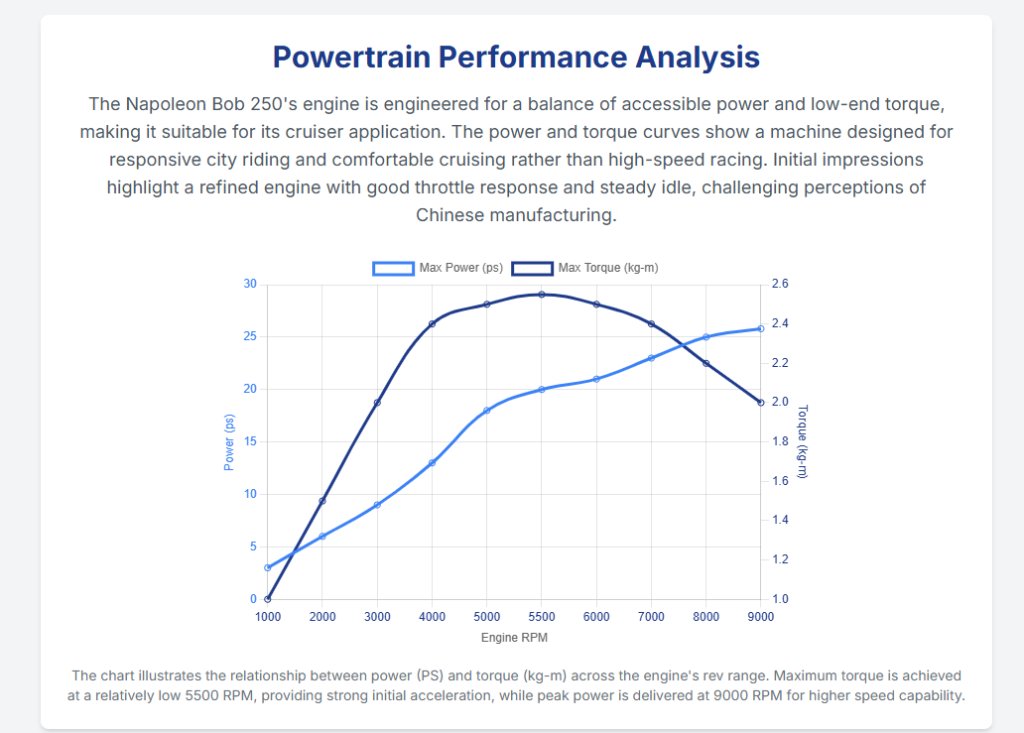
This qualitative feedback is highly valuable, as it directly addresses and challenges common stereotypes regarding the quality and refinement of Chinese-manufactured engines. It indicates that BENDA has made substantial investments in engineering, manufacturing processes, and quality control to produce an engine that not only meets performance targets but also delivers a level of refinement that builds trust and credibility for the brand in international markets. If BENDA can consistently deliver this level of refinement, it positions them as a serious contender capable of competing with established Japanese and European brands, not just on price, but on perceived quality and user experience. This could accelerate the acceptance of “Made in China” motorcycles in premium segments globally.
A critical technical achievement for the Napoleon Bob 250 is its Euro 5+ compliance . This is not merely a regulatory hurdle but a strategic asset. Euro 5+ standards are among the most stringent globally for motorcycle emissions, and meeting them demonstrates BENDA’s proactive approach to global market requirements from the initial design phase, rather than undertaking costly retrofitting for specific markets. This significantly reduces the time-to-market and development costs for entry into highly regulated markets like Europe and Japan, providing BENDA with a competitive edge over manufacturers who might need to undertake extensive re-engineering. This compliance directly facilitated Wingfoot’s rapid discussions for introduction to Japan, occurring just one week after the announcement, and the bike’s subsequent appearance at EICMA . It streamlines the homologation process, allowing BENDA to allocate resources more effectively towards marketing and distribution, thereby accelerating their global expansion strategy.
Chassis and Suspension Systems: Innovative Motorcycle Features
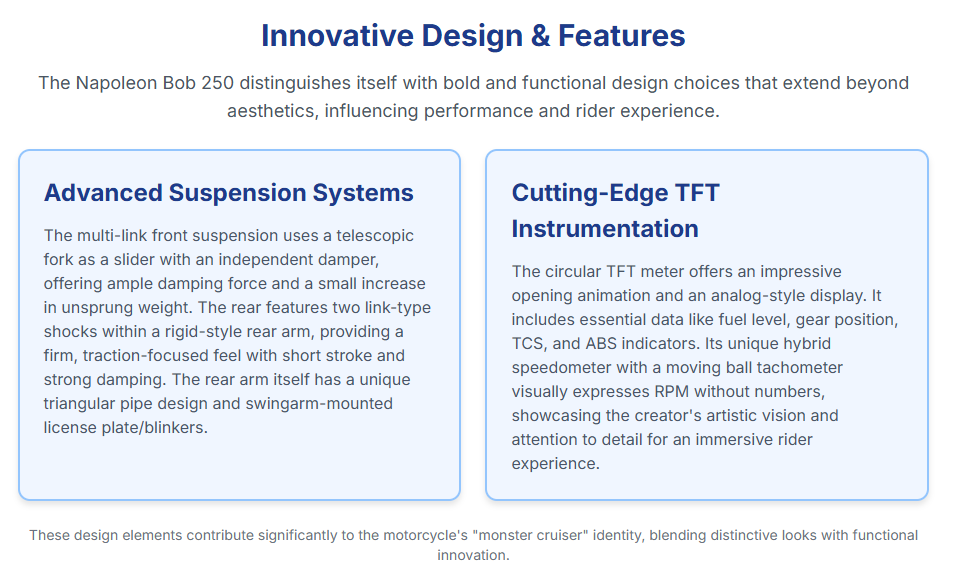
The Napoleon Bob 250 incorporates several innovative features in its chassis and suspension design. The multi-link front suspension, while details have not been fully released, appears to utilize a “telescopic fork with a spring as a slider, while a damper that extends when the bike is lowered provides damping force to the left and right forks”. Initial impressions noted “ample damping force for a light two-wheeler class,” potentially attributable to its independent damper mechanism . Structurally, the design seems to result in a “small increase in unsprung weight,” which typically contributes to better responsiveness . However, it was observed that the “moment of inertia felt a little high when the steering wheel was turned left and right” , which could suggest a slightly heavier steering feel or slower steering response compared to conventional fork designs.
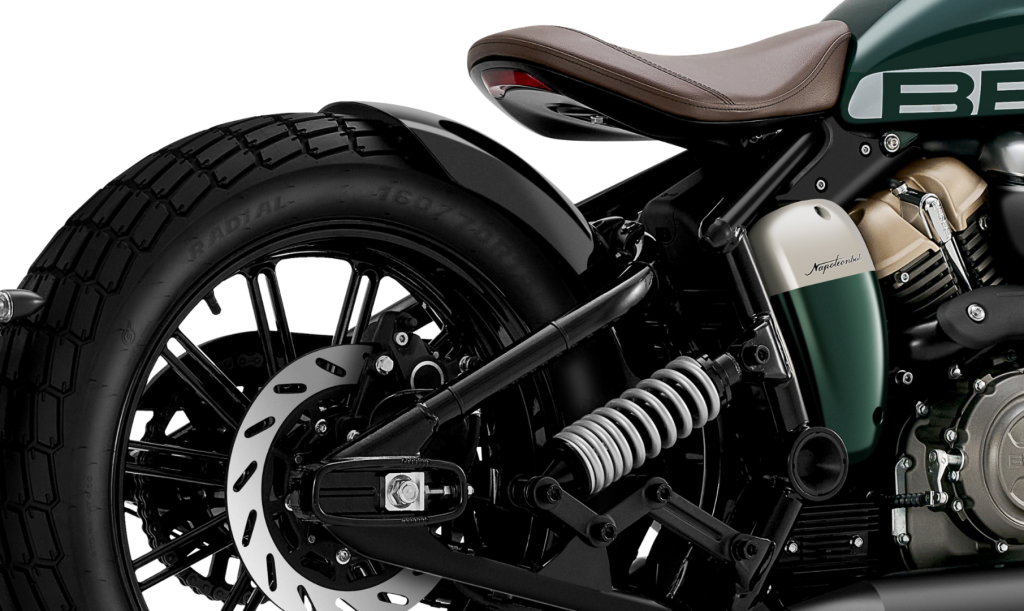
The rear suspension system is equally distinctive. It is configured to mount “two link-type shocks inside a rigid suspension-style rear arm” . This design ingeniously mimics the visual aesthetic of a rigid frame while still providing suspension functionality. When tested, it exhibited a “short stroke” and “strong damping force”. The stated design intent is “to give the rear a firm kicking sensation and traction while dissipating shocks at the front” , suggesting a setup that prioritizes dynamic feedback and grip. The rear arm itself is unique, with “no straight pipe extending from the swingarm pivot to the rear axle; instead, the upper and lower pipes form a triangle” . Additionally, the license plate and blinker holders are distinctively mounted on the swingarm .
These highly unconventional and visually striking suspension designs are not merely functional components; they are integral to the “monster cruiser” aesthetic. They represent a significant engineering investment aimed at differentiating the bike visually and conceptually. While benefits such as “ample damping force” and a “small increase in unsprung weight” were noted for the front, the observation regarding a “high moment of inertia” suggests a potential trade-off in steering agility. Similarly, the “short stroke and strong damping force” in the rear, while intended to provide “firm kicking sensation and traction,” might result in a firmer ride than traditional cruisers, potentially affecting long-distance comfort despite the seats being described as “quite absorbent” .
BENDA is deliberately choosing innovation and distinctive design over conventional, proven solutions. This strategy will strongly appeal to their target niche of riders seeking uniqueness, but it also introduces specific handling characteristics that riders may need to adapt to, which could be a point of discussion in future test ride reviews. The ultimate success of these innovations will depend on how effectively they balance aesthetic appeal with practical rideability.
Braking, Tires, and Motorcycle Safety Features
The braking system on the Napoleon Bob 250 features a “single disc + radial mount 4-piston caliper” at the front , indicating a modern and capable braking setup. Crucially, the motorcycle is “equipped with front and rear ABS” , a standard safety feature increasingly expected in developed markets. The specifications include a φ320mm disc with a 4-pot caliper at the front and a φ260mm disc with a 2-pot caliper at the rear, which are substantial disc sizes for a 250cc motorcycle .
The tires are described as “block-style,” with a somewhat unusual configuration of “bias tires in the front and radial tires in the rear” . This mixed tire type might be selected for specific handling characteristics or to contribute to the bike’s unique aesthetic. The tires are manufactured by CST (a subsidiary of Cheng Shin Rubber Industry Co., Ltd. in Taiwan), a globally recognized tire manufacturer . Tire sizes are 130/80-18 for the front and 160/70R18 for the rear, with the thick front tire contributing to the “monster” visual .
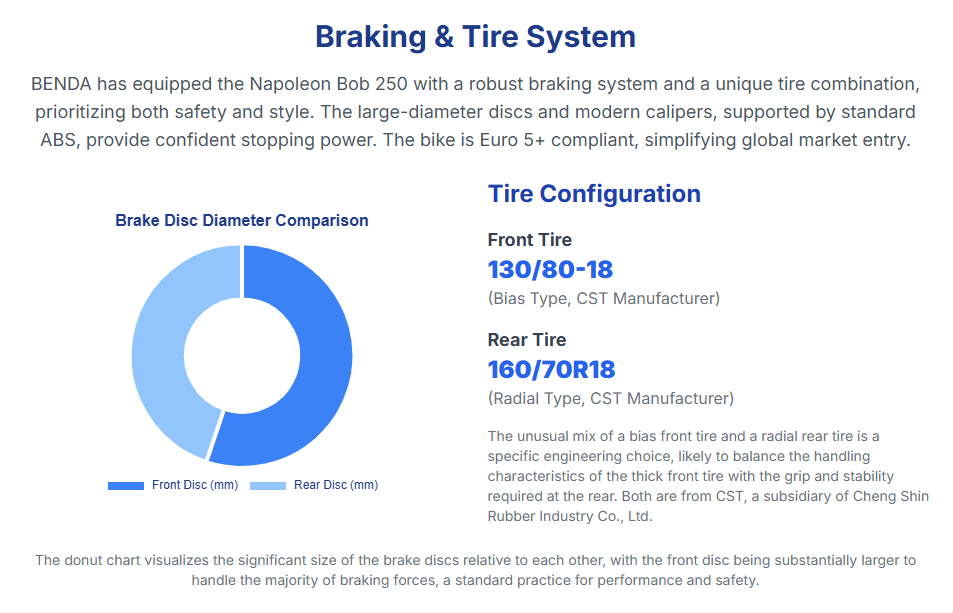
While BENDA innovates significantly on design and core engineering elements such as the engine and suspension, the company has not compromised on critical safety components or basic consumables like tires. The inclusion of ABS as standard and the use of a major tire manufacturer like CST demonstrate a commitment to meeting international safety standards and consumer expectations for reliability and performance. This approach helps build confidence in the overall product quality. This strategic choice reinforces BENDA’s intent to be perceived as a legitimate global player, not merely a budget brand. By integrating established, trusted components, they mitigate risks associated with new market entry and provide a baseline of quality that complements their innovative design, further enhancing their appeal in markets like Japan and Europe.
Ergonomics, Rideability, and TFT Meter Instrumentation
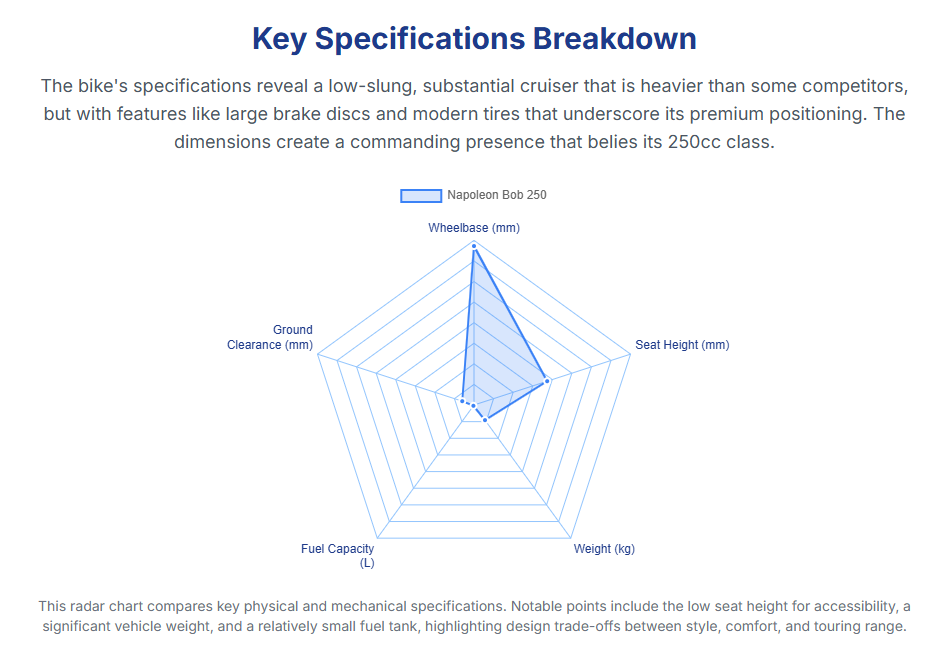
The rider ergonomics of the Napoleon Bob 250 present a relaxed, typical cruiser riding posture. The handlebar width is noted as “a little wide,” the seat height is comfortably low at 748mm, allowing for “comfortable foot placement,” and the footrests are positioned “slightly forward” . The single-seater seat, despite its seemingly thin cushioning, “seems to have a decent amount of absorbency,” suggesting an unexpected level of comfort . One observation was that the “handlebar turning angle is a little small,” which could potentially affect maneuverability in tight spaces . Attention to detail is evident in the “well-fitted” bar end mirrors, levers, and pedals .
Initial impressions of the bike’s rideability are positive. Despite its “overly unique appearance and thick front tire,” the reviewer found it “would be easy to ride” when pushing it around . This is a crucial positive impression for a motorcycle with such a radical design. This accessibility is a critical success factor for BENDA.
While a radical design attracts attention, it can also intimidate potential riders. By ensuring the bike is “easy to ride” and features comfortable ergonomics, BENDA broadens its appeal within its niche. This approach mitigates the risk that its unique aesthetics might deter riders who prioritize practicality and comfort, thereby making its niche more accessible. This balance allows BENDA to attract both design enthusiasts and riders seeking a distinctive yet manageable cruiser, positioning the Napoleon Bob 250 as a viable option for daily riding or weekend cruising for its target audience, which is essential for sustained sales and brand loyalty.
The instrumentation on the Napoleon Bob 250 features an “impressive” circular TFT meter . Upon ignition, it plays an “opening animation” before displaying a screen that “looks like an analog meter,” effectively blending modern technology with classic aesthetics . The display provides essential information including odometer, trip meter, fuel level gauge, gear position indicator, and indicators for TCS (traction control system) and ABS . The inclusion of TCS is particularly notable for a 250cc cruiser, elevating its technological perception. The display is also “bright enough to be easily visible” . A particularly interesting feature is the “hybrid design of a needle-type speedometer that displays the speed on the outer circumference, and a tachometer that displays a small ball moving inside the speed scale” . This abstract representation of RPM, where “rotations are only a guideline,” reflects the “creator’s image of wanting to accurately express the atmosphere without displaying numbers” .
The innovative TFT display, especially the artistic tachometer, is a deliberate design choice that enhances the user experience and reinforces BENDA’s brand identity as a design-forward, unconventional manufacturer. It moves beyond mere functionality to create an emotional connection with the rider, appealing to those who appreciate unique details and a sense of artistry in their vehicles. This level of attention to detail in the user interface, combined with advanced features like TCS, challenges the perception that Chinese motorcycles are purely utilitarian. It suggests a brand that understands the importance of holistic product design and the role of technology in enhancing the riding experience, further cementing its premium, niche positioning.
BENDA Napoleon Bob 250 Key Specifications
| Specification | Value |
| Overall Length | 2333 mm |
| Overall Width | 838 mm |
| Overall Height | 1038 mm |
| Wheelbase | 1545 mm |
| Ground Clearance | 120 mm |
| Seat Height | 748 mm |
| Vehicle Weight | 182 kg |
| Engine Type | Water-cooled 4-stroke V-twin DOHC 4-valve |
| Displacement | 249cc |
| Max Power | 25.8ps / 9000rpm |
| Max Torque | 2.55kg-m / 5500rpm |
| Fuel Tank Capacity | 9.5 L |
| Front Brake | φ320mm disc + 4-pot caliper |
| Rear Brake | φ260mm disc + 2-pot caliper |
| Front Tire Size | 130/80-18 |
| Rear Tire Size | 160/70R18 |
Market Positioning and Strategic Outlook: BENDA’s Motorcycle Market Entry in Japan
The market strategy for the BENDA Napoleon Bob 250 is clearly defined, targeting a specific segment of riders and employing a methodical approach to market entry, particularly in Japan and Europe.
The Napoleon Bob 250 is explicitly not designed for mass appeal, as indicated by the statement, “it is not a bike aimed at everyone”. Its “unique design and mechanism will surely appeal to those who like minorities and want to ride something different from others, even if it is expensive” . This defines a clear niche market segment: riders who prioritize individuality, distinctive aesthetics, and innovative engineering over mass-market conformity or traditional brand loyalty.
Wingfoot’s proactive engagement in discussing the Napoleon Bob 250’s introduction to Japan just “one week after the announcement” highlights a swift and decisive market entry initiative. The initial strategy for Japan may involve starting “as a wholesaler rather than having an official dealer”. This approach suggests a cautious, phased market entry, allowing Wingfoot to minimize initial capital investment while testing market reception, gauging demand, and building initial brand recognition without the immediate overhead of a full dealer network. The plan is to “expect stable brand power in Japan” before considering the introduction of “other models” . For the time being, the focus remains primarily on the 250cc class, with no immediate plans for larger displacement models .
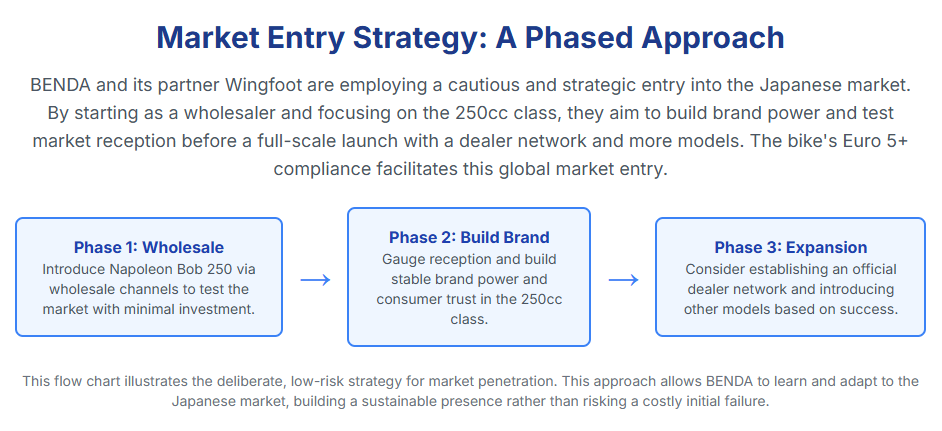
This focus on the 250cc segment is strategic, as it represents a popular and accessible class in Japan due to licensing regulations and suitability for urban environments. This allows BENDA to establish its reputation and build a foundation without immediately competing in the highly contested larger displacement segments. This phased approach allows BENDA to learn from its initial market foray, adapt its strategies, and build a foundation of trust and brand loyalty before committing to a broader product portfolio or a more extensive distribution network. It represents a pragmatic pathway to long-term success in a challenging market, aiming for sustainable growth rather than an immediate, high-risk splash.
The bike’s first appearance in Europe at EICMA in the fall of the same year further demonstrates its global ambitions . Its Euro 5+ compliance is a significant factor, as it substantially lowers “the barriers to its introduction in Japan” and Europe, streamlining regulatory approvals .
The expected price of the Napoleon Bob 250 in Japan is “around 900,000 yen” . This price point is acknowledged as “hard to say that it is a popular price range for a light cruiser motorcycle”, which reinforces its premium, niche positioning. This pricing strategy is a deliberate choice that perfectly aligns with BENDA’s positioning as a premium, design-forward brand. By pricing it at this level, BENDA is not attempting to compete on price with entry-level 250cc cruisers. Instead, the pricing signals a higher value proposition based on unique design, innovative engineering, and perceived quality, as evidenced by initial ride impressions. This strategy targets a discerning consumer who is willing to pay a premium for exclusivity and distinctiveness.
This pricing strategy, coupled with the product’s features, actively works to dismantle the “cheap Chinese product” stereotype. It positions BENDA as a brand that offers a unique, high-quality, and aspirational product, rather than just a budget alternative. This is crucial for long-term brand equity and establishing a foothold in developed markets where quality and brand perception are paramount.
BENDA’s and Wingfoot’s current focus on establishing the 250cc class in Japan, with future plans for larger displacement models not yet solidified, indicates a strategic, step-by-step market penetration approach . The anticipation of a “test drive impression article soon” and expected licensing suggest an imminent market launch, indicating readiness to engage with consumers directly .
Conclusion and Recommendations: BENDA’s Impact on the Global Motorcycle Market
The BENDA Napoleon Bob 250 represents a pivotal moment for the emerging Chinese motorcycle manufacturer, demonstrating a clear intent to disrupt established markets through innovation and distinctive design.
Strengths of the Napoleon Bob 250:
- Distinctive Design: The “monster cruiser” aesthetic, coupled with innovative chassis elements such as the multi-link front suspension and unique rear swingarm, provides a powerful visual and engineering differentiator in a crowded market.
- Engine Refinement: Initial impressions of the 250cc V-twin’s processing precision, smooth throttle response, and steady idle directly challenge traditional perceptions of Chinese manufacturing quality, signaling a significant leap forward in engineering and production standards.
- Global Compliance: The motorcycle’s Euro 5+ compliance is a critical enabler, substantially easing market entry into stringent regulatory environments like Europe and Japan and demonstrating a proactive approach to international standards.
- Advanced Features: The inclusion of modern safety features like ABS and TCS, along with a sophisticated and artistically designed TFT meter, elevates its technological appeal and enhances the user experience.
- Niche Appeal: The product is strategically positioned to appeal to a specific segment of riders who prioritize individuality and unique design, allowing for a premium pricing strategy that aligns with its distinctive value proposition.
Potential Challenges:
- Brand Recognition: As an “up-and-coming” brand, BENDA lacks the heritage and established trust of major competitors. Overcoming this will require substantial, sustained marketing investment and consistent product quality.
- Price Sensitivity: While justified by its niche positioning, the 900,000 yen price point may still be a barrier for some consumers in the 250cc segment who might expect a lower cost from a newer brand.
- Handling Characteristics: The observed “high moment of inertia” in steering and the “short stroke, strong damping” in the rear suspension might present unique handling characteristics that require rider adaptation. This could potentially limit its broader appeal beyond its target niche if not managed effectively through rider education and marketing.
- Fuel Tank Capacity: The 9.5L fuel tank is relatively small for a cruiser, which could limit its touring range and potentially diminish its appeal for riders seeking longer journeys.
Strategic Recommendations for Market Entry, Branding, and Competitive Differentiation:
- Emphasize Innovation and Quality: Marketing efforts should heavily lean into the Napoleon Bob 250’s unique design and the surprising refinement of its engine and overall build quality. This narrative is crucial for countering preconceived notions about Chinese manufacturing. Leveraging detailed technical reviews and authentic rider testimonials will be vital to building credibility.
- Targeted Marketing: Continue to focus marketing and distribution efforts precisely on the identified niche of “minorities” and individualistic riders. Digital platforms, lifestyle media, and community engagement that resonate with this audience will be more effective than broad-based campaigns.
- Leverage Compliance as a Quality Indicator: Highlight Euro 5+ compliance not just as a regulatory achievement, but as a testament to BENDA’s commitment to global engineering standards and quality, further building trust and demonstrating readiness for international markets.
- Prioritize Robust After-Sales Support: Wingfoot’s wholesaler-first approach in Japan is sound. To build customer confidence and foster positive word-of-mouth, it is imperative to ensure robust after-sales support, readily available parts, and qualified service networks from the outset. This will pave the way for a full dealer network and broader model introduction.
- Maximize Test Ride Availability: Given the positive initial impression of its rideability despite its unique looks, making the Napoleon Bob 250 widely available for test rides should be a top priority. Direct rider experience will be a key factor in converting interest into sales.
- Continuous Competitive Monitoring: Continuously analyze the 250cc cruiser segment for new entrants, evolving consumer preferences, and competitor strategies. This vigilance will enable BENDA to adapt its pricing, feature sets, and marketing messages as needed to maintain its competitive edge.
Outlook on BENDA’s Potential Impact on the Global Motorcycle Market:
BENDA, exemplified by the Napoleon Bob 250, is strategically positioned to be a significant disruptor in the global motorcycle market. By prioritizing unique design, in-house engineering, and global compliance from its inception, the company represents a new generation of Chinese manufacturers that are moving beyond mere cost-competitiveness to offer genuinely innovative and refined products.
Its success could accelerate a fundamental shift in the perception of “Made in China” motorcycles, paving the way for other high-quality, design-led brands from the region. While initially targeting a specific niche, BENDA’s diverse engine portfolio and methodical strategic approach suggest broader market penetration ambitions in the long term. The Napoleon Bob 250 is more than just a new model; it is a clear statement of intent from an emerging global player poised to reshape the competitive dynamics across various motorcycle segments.
Our Social Media Handles
- Instagram : LivingWithGravity
- Medium : Akash Dolas
- YouTube Channel : Gear and Shutter