







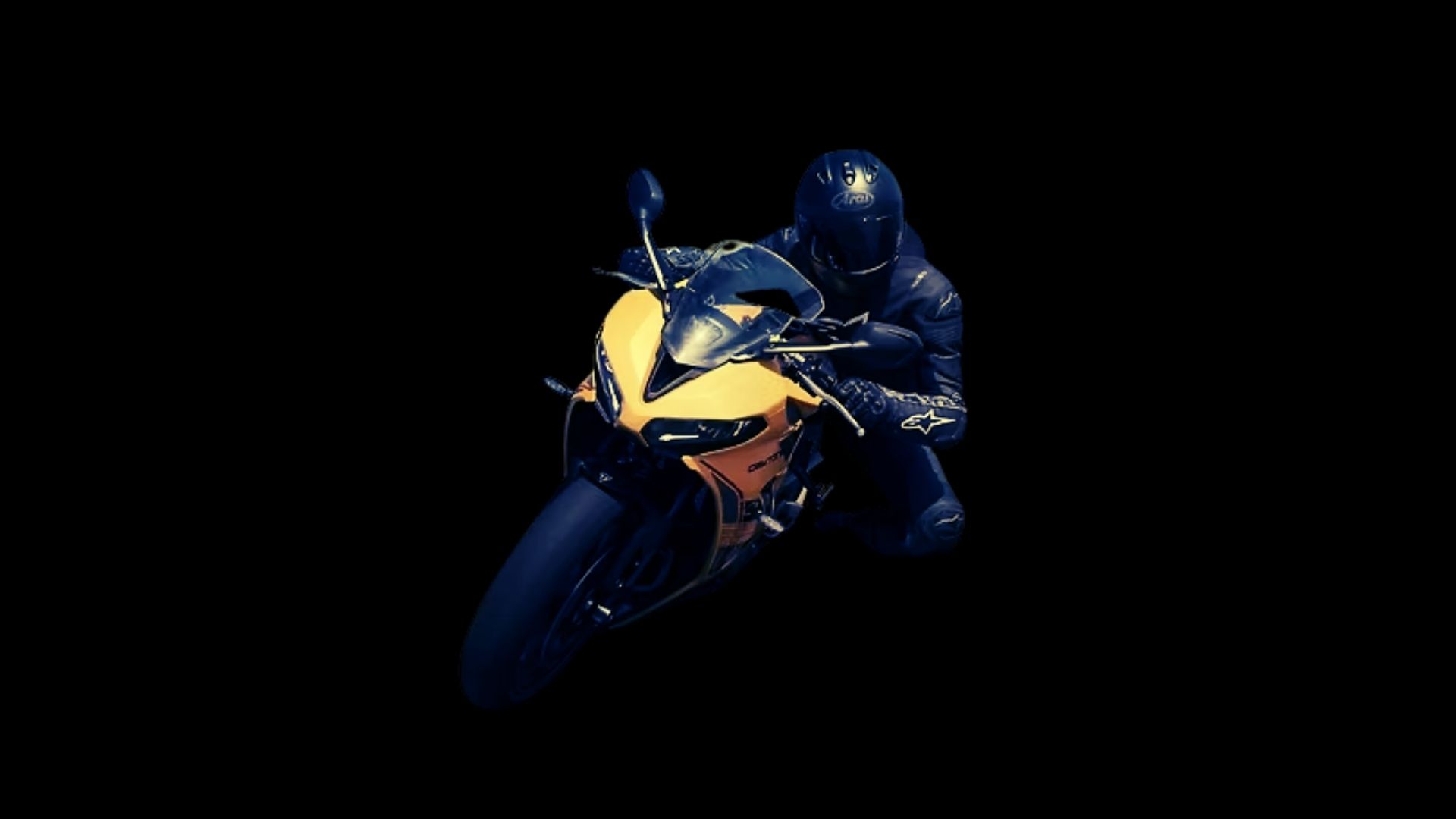
The middleweight king just got a massive shot of adrenaline. Triumph has officially pulled the silk off the 2026 Daytona 660, and while the silhouette looks familiar, the soul of this machine has been sharpened to a razor’s edge.
Here is why the 2026 update is more than just a fresh coat of paint.
The “Need-to-Know” Specs
Before we dive into the grit, here is how the 2026 model stacks up at a glance:
| Feature | 2026 Spec | The Impact |
| Price | £8,995 (~₹11.11 Lakh) | Premium tech for a premium ride. |
| Front Suspension | 41mm Showa SFF-BP (Adjustable) | Dial-in your cornering precision. |
| Quickshifter | Standard (Previously Optional) | Seamless, lightning-fast gear changes. |
| Rubber | Metzeler Sportec M9RR | Massive leap in track and street grip. |
| Output | 94bhp / 69Nm | The signature Triple-cylinder scream. |
A Visual Riot: New Warpaint
Forget the subtle tones of yesterday. The 2026 Daytona demands attention with three aggressive new liveries that finally match its racing pedigree:
- Cosmic Yellow / Sapphire Black: For those who want to be seen from orbit.
- Aluminium Silver / Sapphire Black: Sleek, industrial, and fast.
- Sapphire Black: The classic, “don’t mess with me” stealth look.
Performance Surgery: Handling the Heat
Triumph didn’t touch the engine because, frankly, that 660cc inline-three is already a masterpiece of balance. Instead, they fixed the one thing critics begged for: Control.
- Adjustable Front Forks: The new Showa SFF-BP setup now features compression and rebound adjustability. Whether you’re hitting a bumpy B-road or a glass-smooth apex at the track, you can now tune the front end to behave exactly how you want.
- The M9RR Revolution: Swapping the Michelin Power 6 for Metzeler Sportec M9RR tyres is a statement of intent. These are “supersport” tyres designed for riders who lean deep and brake late.
- No-Cost Quickshifter: No more ticking boxes on the options list. The Triumph Shift Assist is now baked into the price, allowing for clutchless up-and-down shifts that keep the Triple in its powerband constantly.
The Verdict: This isn’t just a “facelift.” By adding adjustable suspension and premium rubber, Triumph has transformed the Daytona 660 from a “sporty daily” into a legitimate track-day weapon.
The middleweight sportbike class is currently a battlefield, and with the 2026 updates, the Daytona 660 has officially stopped bringing a knife to a gunfight.
Here is how the new Triumph stacks up against the high-tech Aprilia RS 660 and the track-focused Yamaha R7.
The Triple-Threat Showdown: 2026 Edition
| Feature | Triumph Daytona 660 (2026) | Aprilia RS 660 (2025-26) | Yamaha R7 (2026) |
| Engine | 660cc Inline-Triple | 659cc Parallel-Twin | 689cc CP2 Parallel-Twin |
| Power | 94 bhp | 105 bhp | 73.4 bhp |
| Torque | 69 Nm | 70 Nm | 68 Nm |
| Weight (Wet) | 201 kg | 183 kg | 189 kg |
| Electronics | Basic IMU, 3 Modes, QS Standard | Full APRC (6-Axis IMU), Cruise, Launch Control | New 6-Axis IMU, Lean-Sensitive TC/ABS |
| Suspension | New Adj. Showa SFF-BP | Fully Adj. KYB (Ohlins on Factory) | Fully Adj. KYB |
| Price (UK) | £8,995 | ~£10,495 | £9,500 |

The Breakdown: Where the Daytona Wins (and Loses)
1. The Engine Character: The “Goldilocks” Zone
The Daytona 660 remains the only Triple in this specific comparison. It offers a smoother, more linear power delivery than the punchy Yamaha and a more soulful scream than the high-strung Aprilia. While the Aprilia wins the horsepower war (105 bhp), the Daytona’s torque is available across 80% of the rev range, making it the most effortless “real-world” fast bike.
2. Handling & Hardware: Closing the Gap
The Yamaha R7 has long been praised for its aggressive, front-end feel. By adding compression and rebound adjustability to the Showa forks, Triumph has finally given the Daytona the tools to challenge the R7 on a technical backroad. It’s no longer just a “comfortable sportbike”—it’s now a tunable precision instrument.
3. Technology: Standardizing the Fun
Previously, you had to pay extra for a quickshifter on the Triumph. Now, with the Triumph Shift Assist as standard, it matches the Aprilia and the updated 2026 Yamaha R7 (which now features a 3rd-gen quickshifter and R1-derived electronics).
4. The Value Proposition
- The Aprilia RS 660 is still the “Alpha” with its incredible power-to-weight ratio and MotoGP-style winglets, but it carries a significant price premium.
- The Yamaha R7 is the purist’s choice, now smarter for 2026 with better electronics, but it still lacks the raw horsepower of the Europeans.
- The 2026 Daytona 660 sits perfectly in the middle. It’s significantly cheaper than the Aprilia, more powerful than the Yamaha, and now has the suspension hardware to satisfy serious riders.
Final Verdict
If you want the absolute fastest, lightest machine and have the budget, the Aprilia stays on top. If you want a dedicated track tool with aggressive ergos, the Yamaha is your bike.
But for the rider who wants a musical exhaust note, premium British finish, and now, legitimate “big-bike” suspension adjustability without breaking the bank, the 2026 Daytona 660 is arguably the best all-rounder in the class.
The 2026 Triumph Daytona 660 isn’t a radical redesign, but it’s a “listening” update. Triumph essentially took the most common complaints about the 2024–2025 model and fixed them in one go.
Here is the head-to-head breakdown of the New (2026) vs. the Outgoing (2024-25) model.
Side-by-Side Comparison
| Feature | Outgoing Model (2024-25) | New 2026 Model | Why it Matters |
| Front Suspension | 41mm Showa SFF-BP (Non-adjustable) | 41mm Showa SFF-BP (Adj. Compression & Rebound) | You can finally tune the front end for track days or bumpy city roads. |
| Quickshifter | Optional Accessory (~₹40k extra) | Standard (Included) | Seamless clutchless shifts right out of the box. |
| Tyres | Michelin Power 6 | Metzeler Sportec M9RR | Massive upgrade in edge grip and cornering confidence. |
| Brake Pedal | Standard Steel | Clear-Anodized Aluminium | Better durability and a more “premium” cockpit feel. |
| Color Palette | Basic / Minimalist Graphics | Bold “Sportier” Graphics | New shades (Cosmic Yellow, Silver/Black) make it look much more aggressive. |
| Engine / Output | 94 bhp / 69 Nm | 94 bhp / 69 Nm | No change—the “Triple” character remains the star. |
| Price | ~£8,595 / ₹9.72 Lakh | £8,995 / ~₹11.11 Lakh (Est.) | A modest hike that is actually cheaper than adding these parts separately. |
The 3 Major Upgrades Explained
1. The “Track-Ready” Front End
The previous model was often criticized for being a bit “one-size-fits-all” with its suspension. For 2026, the inclusion of compression and rebound damping on the front forks is a game-changer. If you find the bike diving too much under hard braking or feeling too soft mid-corner, you can now click a dial and fix it.
2. Premium “Superbike” Rubber
The move from Michelin Power 6 to Metzeler M9RR moves the Daytona from the “Sports-Touring” category firmly into the “Supersport” world. The M9RRs are dual-compound tyres that offer incredible lean-angle grip while still being usable in the rain—perfect for a bike that wins championships in the Italian and German sportbike series.
3. Value for Money (The Quickshifter Logic)
While the price has increased by roughly £400 (~₹40,000), the Quickshifter alone used to cost that much as an add-on. When you factor in the significantly more expensive adjustable forks and premium tyres, the 2026 model actually offers better value than the outgoing bike.
What Stayed the Same?
- The Engine: You still get that addictive 660cc Triple scream with 80% of torque available from as low as 3,125 rpm.
- The Chassis: The steel perimeter frame remains, maintaining its “agile yet stable” reputation.
- The Tech: It still uses the same TFT/LCD hybrid display and the three riding modes (Sport, Road, Rain). Interestingly, it still lacks an IMU (Cornering ABS), which its siblings (the 2026 Trident and Tiger Sport) actually received.
Official & Expert Source URLs
To add authority to your LivingWithGravity coverage, you can reference or link to these primary sources:
- Official Triumph Media Portal: Triumph Daytona 660 2026 Media Kit
- Triumph Global News: TRIUMPH INTRODUCES KEY UPDATES TO DAYTONA 660
- Autocar India (Regional Context): 2026 Triumph Daytona Unveiled Overseas
- Cycle World (Technical Deep Dive): 2026 Triumph Daytona 660 First Look
Our Social Media Handles
- Instagram : LivingWithGravity
- Medium : Akash Dolas
- YouTube Channel : Gear and Shutter
- Facebook : LivingWithGravity