







1. Executive Summary
Multiple credible sources, including prominent industry publications and automotive news channels, strongly indicate Yamaha’s advanced development of a new liquid-cooled 200cc single-cylinder DOHC engine. This engine is poised to become a cornerstone of Yamaha’s future product strategy, particularly within the entry-level sport and dual-sport segments. Anticipated features for this innovative powerplant include an electronically controlled throttle, commonly known as ride-by-wire technology, which promises enhanced precision and responsiveness. Performance claims suggest this 200cc engine will deliver power output comparable to a 250cc class engine, remarkably housed within a lightweight and compact body reminiscent of a 125cc motorcycle.
This emerging 200cc platform holds profound strategic significance for Yamaha across two distinct yet crucial markets. In the ASEAN region, it aligns seamlessly with Yamaha’s stated premiumization strategy, offering a compelling upgrade path for riders currently utilizing 155cc models such as the WR155 and YZF-R15. For the Japanese domestic market, the 200cc class represents a uniquely advantageous “perfect fit.” This is primarily due to favorable regulatory conditions, specifically the exemption from the costly and stringent “shaken” (vehicle inspection) requirements that apply to motorcycles with displacements of 250cc and above. Furthermore, this new class is positioned to fill a notable void in the Japanese market, left by the long-standing disappearance of 250cc off-road vehicles.
The strategic deployment of this new engine is expected to manifest in several key models, including the highly anticipated Serow 200 (or XT200), the performance-oriented WR200R, its supermoto counterpart the WR200X, and the next-generation sportbike, the YZF-R20. Official announcements and market releases for these models are projected to occur between 2025 and 2026. This concerted strategic move is considered critical for Yamaha to bolster its competitive standing, address evolving consumer demands, and reinforce its brand image in these vital motorcycle markets.
2. Introduction: Yamaha’s Strategic Direction and the 200cc Segment
Yamaha Motor’s global corporate strategy is firmly rooted in a “premium segment strategy,” a direction clearly articulated in its Integrated Report 2024 1 and Medium-Term Management Plan.2 The company’s explicit objective is to “expand market share in the premium motorcycle segment, particularly in the ASEAN region and in emerging markets”.3 This strategic commitment extends beyond mere volume growth, focusing instead on “offering added value” and leveraging Yamaha’s “strong brand power” to establish a leadership position in this space.1 The period between 2025 and 2027 is earmarked for reinforcing core business competitiveness and acquiring new technologies.2 This includes a dedicated commitment to “evolve model platforms and develop drive units with industry-beating performance” 2, directly setting the stage for significant powertrain advancements such as the rumored 200cc engine.
The user query highlights Yamaha’s “premium strategy in the ASEAN market” and the intention to increase displacement from 155cc to 200cc for models like the WR155 and YZF-R15. Yamaha’s integrated reports consistently emphasize terms like “premium segments,” “value-added business areas,” and “strong brand power.” This is more than just marketing terminology; it signifies a deliberate shift from competing solely on price or basic utility. The current 155cc models, such as the WR155R 4 and YZF-R15 7, primarily serve a broad entry-level segment.
By upgrading to a more powerful, technologically advanced 200cc engine featuring capabilities like ride-by-wire 9, Yamaha is creating a clear differentiation in its product offerings. This allows the company to justify a higher price point, cater to riders who are “stepping up to higher grades” 10, and ultimately increase profitability per unit. This approach is particularly crucial in a market where competition in lower price ranges is intensifying.11 The 200cc platform, therefore, represents a tangible manifestation of this premiumization strategy, specifically designed to attract more discerning consumers who seek enhanced performance and features within accessible displacement categories.
The 200cc motorcycle segment is gaining increasing relevance across various global markets. In 2024, the “up to 200cc” engine capacity segment was identified as dominating the global motorcycle market.12 This dominance is largely attributed to its widespread utility for urban commuting and its inherent affordability.12 The Japanese motorcycle market, in particular, is projected to experience the fastest growth rate from 2025 to 2032.12 This anticipated growth is underpinned by a consumer base that is characterized as “technology-forward” and exhibits a strong “preference for reliable and efficient transportation”.12 In Japan, 200cc motorcycles are notably well-suited for “urban commutes and light touring,” owing to their “versatility” and “easy handling”.13 These models often incorporate essential attributes such as disc brakes and are available with both air-cooled or water-cooled engines, ensuring a balance of practicality and performance.13
The data clearly indicates that the “up to 200cc” segment is a global market leader due to its practicality and affordability. Concurrently, the Japanese market is poised for significant growth, driven by a demand for reliable, efficient, and technologically advanced vehicles. Yamaha’s decision to introduce a premium 200cc offering, rather than simply a basic one, is a strategic move designed to capitalize on this existing market dominance while simultaneously elevating its brand image and profitability within this expanding segment. This approach allows Yamaha to capture both volume, given the segment’s popularity, and value, due to the premium features and positioning. This aligns directly with the company’s broader corporate objectives of expanding market share in value-added areas. It represents a smart growth strategy within an already strong and expanding market category.
3. The New 200cc Engine Platform: Technical Specifications and Performance Profile
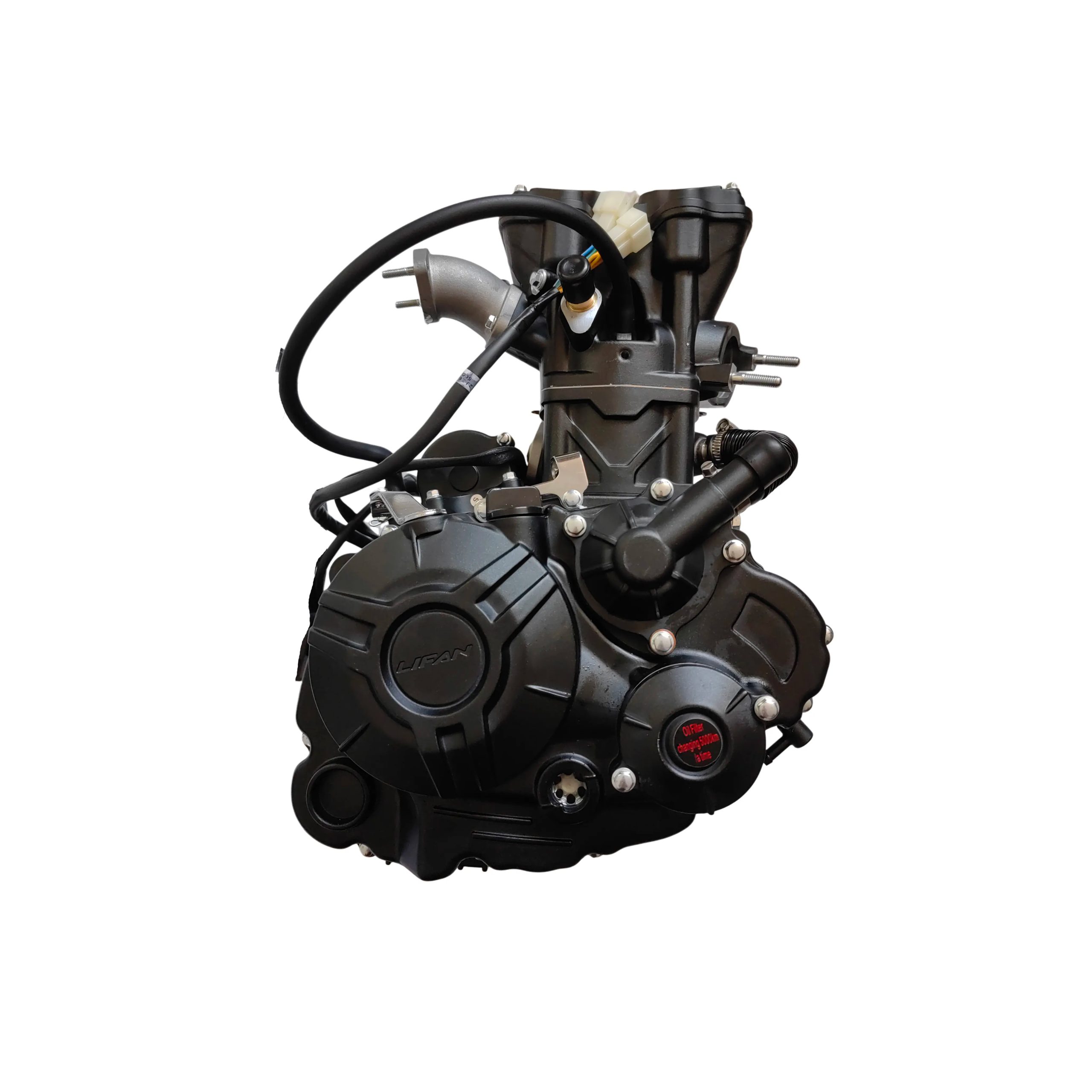
The central element of Yamaha’s rumored expansion in the 200cc segment is a newly developed liquid-cooled 200cc single-cylinder DOHC engine. This core detail is consistently corroborated across multiple research sources. Young Machine, a prominent automotive platform, explicitly predicts that a “liquid cooled single cylinder DOHC engine in the 200 cm class that Yamaha has just developed” will power new off-road motorcycles.15 This is further reinforced by reports of Yamaha “developing a new 200cc engine that will power multiple models, including street bikes and dual-sport motorcycles,” specifically noting it as a “liquid-cooled, single-cylinder DOHC engine”.9
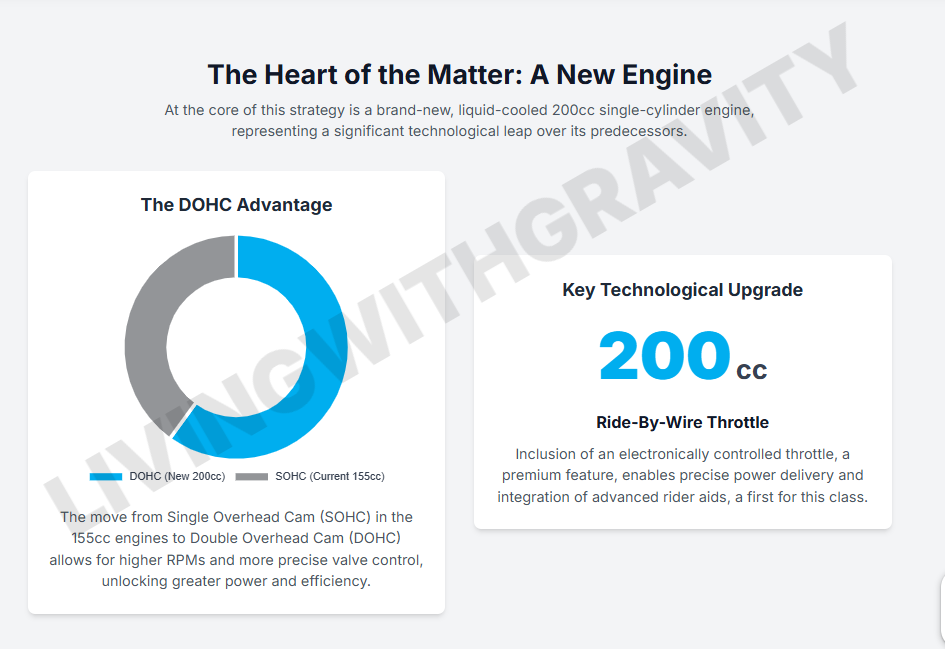
This new 200cc liquid-cooled engine represents a significant technological leap, particularly when contrasted with previous generations of models like the Serow, which historically utilized “air cooled two valves OC engine[s]”.16 The adoption of liquid cooling ensures superior temperature management, which is crucial for sustained high performance and long-term reliability. Concurrently, the DOHC (Double Overhead Camshaft) design allows for more precise valve control, leading to improved power output and greater efficiency, especially at higher engine speeds.
Yamaha’s historical product development, as evidenced by its product history 17, demonstrates a clear evolution from simpler air-cooled, 2-stroke engines to more sophisticated liquid-cooled, DOHC multi-cylinder configurations. The current 155cc engines found in the YZF-R15 and WR155R are liquid-cooled SOHC units.4 The rumored 200cc engine, however, is specifically described as
DOHC.9 This distinction is significant. A DOHC configuration enables more precise control over valve timing and lift, which facilitates higher engine speeds and greater volumetric efficiency. This directly translates to increased power output and a broader, more usable powerband. This is not merely a displacement bump; it represents a fundamental architectural upgrade that positions the new 200cc platform as a truly modern, performance-oriented powerplant. This engineering advancement aligns perfectly with Yamaha’s “premium strategy” by offering superior technical sophistication.
A key advanced feature rumored for the new 200cc engine is the incorporation of an electronically controlled throttle, often referred to as ride-by-wire technology. The user query specifically highlights this rumor, and it is consistently mentioned across the research material. Multiple sources confirm that the engine “will use an electronically controlled throttle”.15 For the YZF-R20, this is explicitly referred to as “ride by wire throttle technology,” which is expected to “improv[e] throttle response and overall rideability”.9
Similarly, the revived Serow 200/XT200 is also anticipated to feature an “electronic throttle to provide more precise throttle response and optimal performance”.16 Ride-by-wire systems replace traditional mechanical throttle cables with electronic sensors, allowing for much more precise and nuanced control of the engine’s power delivery. This technology enables the seamless integration of advanced rider aids, such as multiple riding modes, traction control, and potentially even cruise control, features typically found in higher-displacement, premium motorcycles like the YZF-R9 19 and YZF-R1.20
The inclusion of electronically controlled throttle (ride-by-wire) in a 200cc motorcycle is a significant premium feature. This technology, commonly found in Yamaha’s larger, more advanced models, allows for much finer control over engine output compared to traditional cable-actuated throttles. For riders, this translates to smoother, more predictable power delivery, improved fuel efficiency, and the potential for integrated electronic rider aids that enhance both safety and versatility.18 This advanced feature directly supports Yamaha’s “premium strategy” by offering a sophisticated riding experience in a smaller, more accessible package, making these models more appealing to a “technology-forward consumer base”.12 It also helps to align the smaller displacement models with the latest R-series design language and technological sophistication of their larger counterparts, reinforcing brand consistency.9
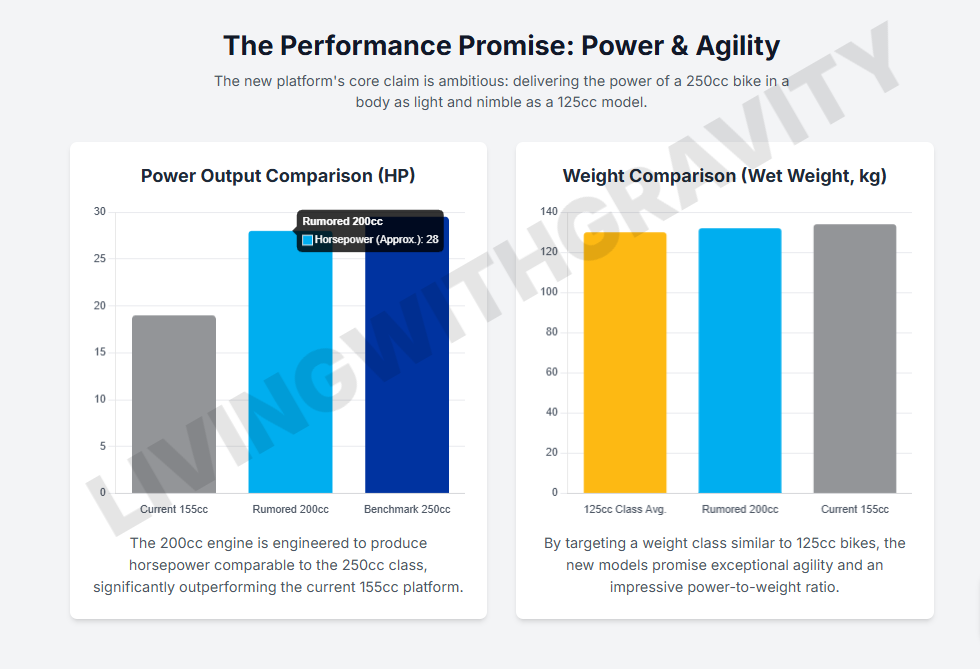
A central performance claim highlighted in the user query is that the new engine “appears to combine power on par with that of a 250cc class with a lightweight, compact body on par with that of a 125cc class.” This ambitious claim is a recurring theme throughout the research. Multiple sources reiterate this specific combination: “with the same power as the 250 cubic cm class and a lightweight and compact body like the 125 cm class”.15 Another source states the engine will “deliver performance comparable to a 250cc bike, but with a compact design similar to a 125cc motorcycle”.9
For the WR200R, this translates to a design intended to deliver “more powerful and responsive performance in a variety of terrain situations”.18 To provide context, current Yamaha 155cc models like the WR155R have a wet weight of 134 kg 5, and the YZF-R15 is approximately 136 kg.8 Achieving a “125cc class” weight for a 200cc motorcycle would mean maintaining or even slightly reducing these figures, which would represent an impressive engineering feat given the larger engine. For comparison, the discontinued 250cc dual-sport WR250R had a wet weight of 134 kg and a power output of 29.5 HP.21 If the new 200cc engine can indeed achieve power output comparable to a 250cc, it would signify a substantial leap in power density for its displacement.
The claimed fusion of 250cc-level power and 125cc-class weight is not merely a technical achievement; it is a critical strategic advantage designed to exploit specific market conditions. In Japan, motorcycles 250cc and above are subject to the costly and stringent “shaken” (vehicle inspection).23 A 200cc bike, being under the 250cc threshold, would be exempt from this, offering a significant cost and convenience benefit to owners. By delivering 250cc-level performance, it directly addresses the market gap mentioned in the user query, left by the disappearance of 250cc off-road vehicles.
This provides riders with the power they desire without the regulatory burden. This makes the 200cc class a “perfect fit” for the Japanese market, offering a highly optimized balance of performance, weight, and ownership cost. For the ASEAN market, this power-to-weight ratio offers a “stronger performance Focus” 9 for entry-level sport and dual-sport lineups, appealing to riders who are “stepping up to higher grades” 10 and seeking a lightweight yet powerful machine 9 that remains fuel-efficient and versatile.18 This positions the 200cc models as a highly optimized solution for specific market demands, rather than just a simple displacement increase.
Comparative Specifications: Current Yamaha 155cc Engines vs. Rumored 200cc Engine
| Feature | Yamaha WR155R 4 | Yamaha YZF-R15 7 | Rumored Yamaha 200cc Engine (General) 9 |
| Engine Type | Liquid-cooled, 4-Stroke, SOHC, 4 Valves, VVA, Single cylinder | Liquid-cooled, 4-Stroke, SOHC, 4 Valves, VVA, Single cylinder | Liquid-cooled, 4-Stroke, DOHC, Single-cylinder |
| Displacement (cc) | 155 | 149.8 / 155.7 | 200 |
| Max. Power (kW/hp @ rpm) | 12.3 KW (16.5 hp) @ 10,000 rpm | 14.2 kW (19.0 hp) @ 10,000 rpm | Comparable to 250cc class |
| Max. Torque (Nm @ rpm) | 14.3 Nm @ 6500 rpm | 14.7 Nm @ 8,500 rpm | Implied higher than 155cc, no specific value |
| Wet Weight (kg) | 134 | 136 | Similar to 125cc class (implying <130-140kg) |
| Fuel Tank Capacity (L) | 8.1 | 11 | No specific value |
| Key Features | Variable Valve Actuation (VVA) | Variable Valve Actuation (VVA), Assist & Slipper Clutch | Electronically controlled throttle / Ride-by-wire, DOHC |
This table provides a clear, side-by-side comparison that visually demonstrates the anticipated “step up” in displacement and the technological advancements of the new 200cc platform compared to Yamaha’s existing 155cc offerings. It quantifies the “premium” aspect of the new strategy and highlights the performance claims against current models. For an industry analyst or motorcycle enthusiast, this structured data facilitates a quick understanding of the significance of the rumored engine and its potential impact on performance and market positioning. It serves as a concise summary of the technical evolution.
4. Anticipated Model Lineup: Serow, WR, and YZF-R Series Evolution
4.1. The Serow 200 / XT200: Revival and Positioning as a Trail-Friendly Dual-Sport
The user query explicitly mentions “expectations are high for the appearance of the Serow 200,” a sentiment widely echoed by industry observers. Young Machine, a prominent automotive publication, has “long awaited the revival of the series” and has even “speculated on a new design that stays true to the SOS classic style but is equipped with the latest technology”.16 This indicates a strong market desire for a modern iteration of the beloved Serow. The new Serow/XT200 is specifically expected to feature the “new 200 cm liquid cooled engine” and an “electronic throttle,” providing “more precise throttle response and optimal performance”.16
This represents a significant modernization from the previous air-cooled, two-valve OHC engine that characterized earlier Serow models.16 Visually, the new Yamaha Serow is projected to maintain a “minimalist and friendly feel,” making it suitable for various terrains, while incorporating “modern touches” in its “aerodynamic body” and features designed to enhance riding comfort.16 This positions it as a versatile vehicle appealing to both dedicated off-road enthusiasts and everyday users. The discontinuation of the Serow 250 in 2020 16 left a notable void in Yamaha’s dual-sport lineup, particularly within the Japanese market. The continued existence of the XT250 in North America 16 suggests that the underlying concept of a capable, mid-displacement trail bike remains relevant for Yamaha globally.
The Serow series holds a special place for many riders, particularly in Japan, due to its reputation as an accessible, reliable, and highly capable trail bike.16 Its discontinuation in 2020 created a significant market void. By reviving the Serow nameplate with a modern, liquid-cooled 200cc engine and electronic throttle, Yamaha is executing a highly strategic re-entry. This move is not just about updating an old model; it is about leveraging existing brand loyalty and nostalgia while simultaneously offering a technologically superior, more efficient, and more versatile machine that aligns with current market demands for capable yet manageable dual-sports.13 The “Off-road Customization Concept” mentioned in the user query further signals Yamaha’s renewed commitment to this segment, indicating a deliberate effort to reconnect with and expand its off-road enthusiast base.
4.2. The WR200R and WR200X: Development of Competition-Oriented Dual-Sport and Supermoto Variants
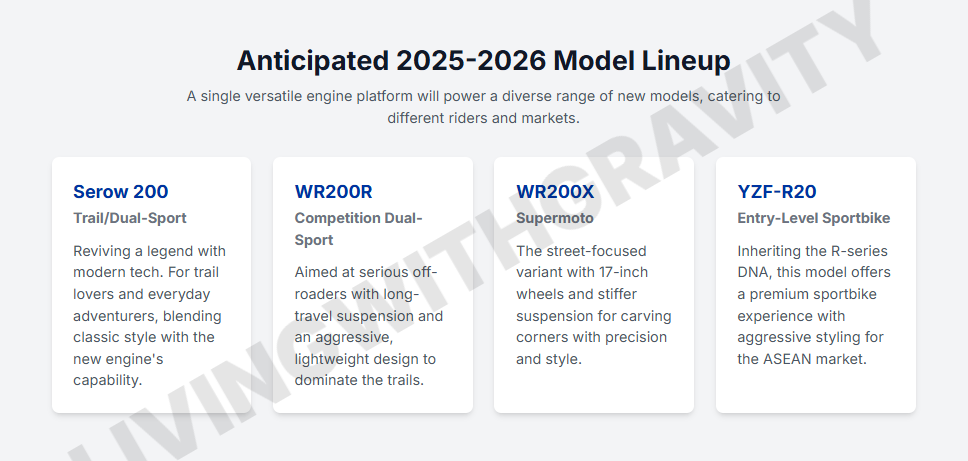
The user query specifically highlights “expectations are high for the appearance of the WR200,” and this anticipated model is indeed expected to diversify into distinct variants. The WR200R is described as a “more competition oriented dual sport bike”.9 It is expected to feature a “light frame, long travel suspension, and an aggressive design,” indicating a clear focus on serious off-road capability.9 Complementing this, the WR200X is rumored to be a “Super Moto version,” distinguished by “17-in Wheels street tires and a stiffer suspension setup for precise Road handling”.9 This variant targets riders seeking agile street performance with a dirt bike aesthetic.
Both WR models, powered by the new 200cc engine, are designed to deliver “more powerful and responsive performance in a variety of terrain situations” and are expected to improve fuel efficiency.18 This combination aims for excellent overall performance while remaining fuel-efficient and versatile.9 The discontinuation of the WR250R in 2017 21, a model described as a “legendary bike in its class,” left a significant “void in Yamaha’s 250cc off-road motorcycle segment”.25 The new WR200 series is clearly poised to fill this performance-oriented gap. The WR200R is specifically “anticipated to compete with rivals like as the Kawasaki KLX series” 18, indicating Yamaha’s direct competitive intent in the dual-sport market.
The strategic decision to introduce both the WR200R, an off-road focused dual-sport, and the WR200X, a supermoto variant, from the same 200cc engine platform demonstrates Yamaha’s intent to maximize market penetration by catering to distinct rider preferences within the performance-oriented segment. This diversification allows Yamaha to leverage the new engine’s capabilities across different riding disciplines, from serious trail riding and competition to agile urban and road performance. By offering “competition-oriented” features 9, Yamaha aims to attract performance-minded riders who previously might have considered 250cc models but are now seeking the benefits of the 200cc class, such as lighter weight and no “shaken” requirement in Japan. This also positions Yamaha to directly challenge established competitors like Kawasaki in the growing off-road and supermoto markets 18, aiming to capture market share by offering a compelling and technologically advanced alternative.
4.3. The YZF-R20: Elevating the Entry-Level Sportbike Segment with Enhanced Performance and Styling
The user query notes “moves to increase the displacement of the current… YZF-R15 to 200cc,” indicating a clear upgrade path for Yamaha’s entry-level sportbike. The YZF-R20 is expected to directly replace the current YZF-R15, moving away from its liquid-cooled 155cc SOHC engine 9 to the more powerful new 200cc single-cylinder setup. This represents a significant performance enhancement for the segment. A “big upgrade” for the YZF-R20 is the adoption of “ride by wire throttle technology,” which is anticipated to “improve throttle response and overall rideability”.9 This brings a level of electronic sophistication typically found in larger, more premium sportbikes.
In terms of styling, the YZF-R20 is expected to “follow Yamaha’s latest R-series design language,” drawing inspiration from models like the R7 and R1, featuring “a more aggressive look, aerodynamic fairings, and a sportier riding position”.9 The current YZF-R15 already “inherits the DNA of the flagship supersport YZF-R1” and boasts a “racy image” 10, making this aesthetic progression a natural evolution. The smaller displacement machines within Yamaha’s R-Series, including the YZF-R125, R15, R25, and R3, are designed to offer “Yamaha riding excitement to enthusiasts around the world” and are noted for being “well suited to daily use” despite their supersport appearance.29 The YZF-R15 Version 4.0, released in 2021, already features a liquid-cooled single with Variable Valve Actuation (VVA) and R1-inspired styling, setting a precedent for continuous evolution.29
Yamaha’s R-series philosophy, as described 29, centers on delivering “seductive exhilaration” and enhancing rider capabilities. The YZF-R15 has been successful due to its “highly-focused feel and racy image” 10, appealing to younger riders “stepping up to higher grades”.10 By introducing the YZF-R20 with a more powerful 200cc DOHC engine and the sophisticated ride-by-wire system, coupled with aggressive R-series styling, Yamaha is not simply increasing displacement; it is significantly elevating the entry-level sportbike segment. This move is crucial for the ASEAN market, where the demand for sportier models is growing.10
It allows Yamaha to offer a more compelling “stepping stone” within its R-series lineup, bridging the performance gap between the 155cc and 250/300cc models. This strategy attracts riders who desire the aesthetics and advanced features of the R-series without the full commitment, and often higher cost or regulatory hurdles, of a larger displacement, thereby reinforcing Yamaha’s brand image as a leader in performance and technology across all segments.
Expected 200cc Models and Their Target Market/Key Features
| Model Name | Target Market | Primary Use | Engine Type | Throttle Control | Suspension | Wheels | Design Language | Performance Claim |
| Serow 200 / XT200 | Japan, Global | Trail/Dual-Sport | Liquid-cooled, 200cc, Single-cylinder, DOHC | Electronically controlled throttle | General trail-oriented | General dual-sport | Classic Serow style with modern touches | Power comparable to 250cc class, lightweight/compact body like 125cc class |
| WR200R | Global | Competition Dual-Sport | Liquid-cooled, 200cc, Single-cylinder, DOHC | Electronically controlled throttle | Long travel, aggressive setup | Off-road focused | Aggressive, competition-inspired | Power comparable to 250cc class, lightweight/compact body like 125cc class |
| WR200X | Global | Supermoto | Liquid-cooled, 200cc, Single-cylinder, DOHC | Electronically controlled throttle | Stiffer for precise road handling | 17-inch street tires | Supermoto aesthetic | Power comparable to 250cc class, lightweight/compact body like 125cc class |
| YZF-R20 | ASEAN, Global | Sportbike | Liquid-cooled, 200cc, Single-cylinder, DOHC | Ride-by-wire | Sport-tuned | Sportbike standard | Latest R-series design (aggressive, aerodynamic) | Power comparable to 250cc class, lightweight/compact body like 125cc class |
This table provides a concise and organized overview of Yamaha’s anticipated 200cc model diversification. It clearly outlines how Yamaha plans to leverage a single, advanced engine platform across multiple segments, addressing different rider needs and market demands. For an analyst, this is invaluable for quickly understanding the breadth and strategic intent behind Yamaha’s upcoming product offerings, their intended use, and their distinguishing characteristics. It serves as a visual summary of the strategic deployment of the new engine.
5. Strategic Market Analysis: ASEAN and Japan
5.1. Yamaha’s Premium Strategy in ASEAN: How the 200cc platform supports market share expansion and value-added offerings
The user query explicitly states that “Yamaha is promoting a premium strategy in the ASEAN market,” which is a central tenet of Yamaha’s corporate direction. Yamaha Motor’s official documents, such as the Integrated Report 2024 1 and Medium-Term Management Plan 2, consistently highlight a focus on “premium segments of motorcycle markets where we can leverage our strong brand power and offer added value”.1 The overarching objective is to “expand market share in the premium motorcycle segment, particularly in the ASEAN region and in emerging markets”.3
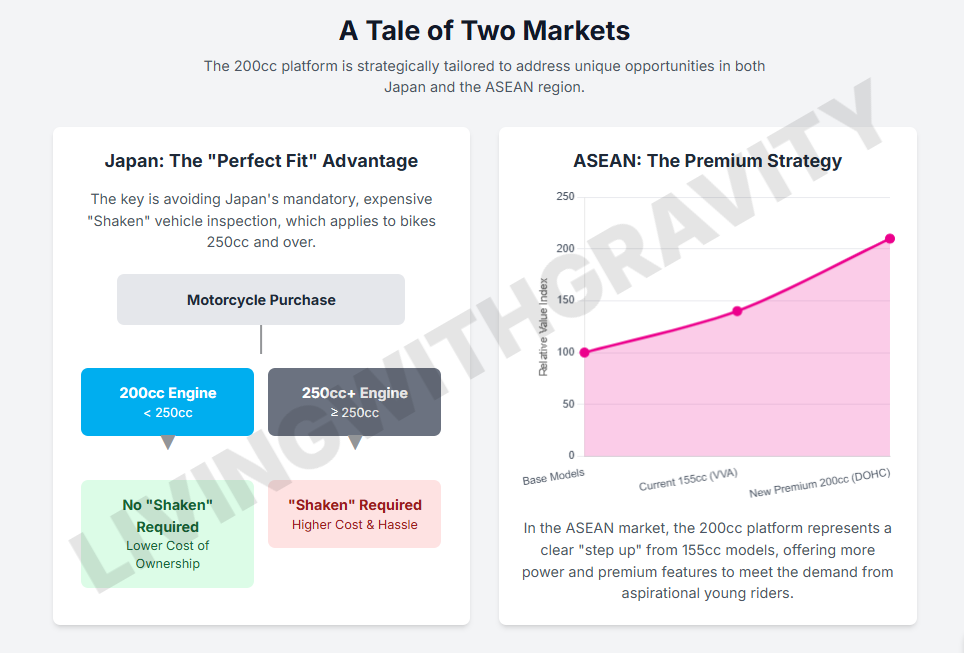
The YZF-R15, a 155cc supersport model, was initially launched in Indonesia in 2017 as a “more powerful” successor to its predecessor, with subsequent plans for sales in other ASEAN countries.10 This launch was part of an “ASEAN Sports Brand Strategy” 28, specifically targeting “younger riders stepping up to higher grades”.10 This historical context clearly demonstrates Yamaha’s existing commitment to elevating its product offerings in the region. The new 200cc engine platform, with its “stronger performance Focus” for “entry-level Sport and dual sport lineup” 9, is designed to be a “game changer for Riders looking for a lightweight yet powerful machine that remains fuele efficient and versatile”.9 This aligns perfectly with the desire to offer higher-grade, value-added products.
The ASEAN market, particularly Indonesia, has shown a significant shift in consumer demand from basic scooters to more aspirational sports models, driven by a demographic of younger riders eager to “step up to higher grades”.10 Yamaha’s existing 155cc YZF-R15 was an early strategic response to this trend. The introduction of the 200cc platform with its advanced DOHC engine and ride-by-wire technology 9 is a natural and necessary progression of this “premium strategy.” It allows Yamaha to maintain and expand its competitive edge against other brands by offering a more potent and technologically sophisticated option within an accessible displacement category. This strategy ensures long-term relevance and profitability in a dynamic market where competition, especially in lower price ranges, is intensifying.11 By providing a clear upgrade path with enhanced features, Yamaha reinforces its “racing” and “sporty image” 28, fostering brand loyalty among a growing segment of performance-oriented riders.
5.2. The Japanese Market Imperative: Why 200cc is a “Perfect Fit.”
The user query states, “For the domestic market, where 250cc off-road vehicles that can be driven on public roads have long since disappeared, this 200cc class will be the perfect fit.” This highlights a unique and significant market opportunity for Yamaha.
5.2.1. Regulatory Advantages: The “Shaken” (vehicle inspection) exemption for motorcycles under 250cc and its impact on consumer choice.
In Japan, motorcycles with an engine displacement greater than 250cc are subject to the mandatory “Shaken test” (vehicle inspection) every two years.23 This test is widely regarded as a “dreaded” and “tricky business” due to its “very strict regulations” and “high price of the whole process”.24 Crucially, vehicles with an engine displacement “under 250cc” are explicitly “exempted from the shaken test”.23 This exemption is cited as a “biggest benefit” for motorcycles in the 125cc to 250cc class.23 Furthermore, motorcycles with displacement greater than 125cc are permitted to be driven on expressways 23, offering greater utility and travel range compared to smaller bikes.
The Japanese “shaken” system 23 imposes a significant recurring financial and logistical burden on owners of motorcycles 250cc and above. This regulatory environment creates a strong incentive for consumers to choose motorcycles just below this threshold. By introducing a 200cc model, Yamaha strategically positions its new offerings to bypass this mandatory, expensive, and often inconvenient inspection. This makes the 200cc bikes significantly more attractive from a long-term ownership cost perspective compared to 250cc alternatives, while still offering the crucial benefit of expressway capability 23 that 125cc bikes lack. This regulatory advantage, combined with the claimed 250cc-level power 9, makes the 200cc class a “perfect fit” by offering a compelling balance of performance and affordability in the unique Japanese context. It represents a direct and intelligent response to a specific market constraint that heavily influences consumer purchasing decisions and overall market demand.
5.2.2. Market Gap: The historical disappearance of 250cc off-road vehicles and the opportunity for a 200cc replacement.
The user query highlights that “250cc off-road vehicles that can be driven on public roads have long since disappeared” from the Japanese domestic market. This observation is strongly supported by the discontinuation of key Yamaha models: the WR250R, described as a “legendary bike,” was officially discontinued in 2017 21, and the Serow 250 ended its production journey in 2020.16 These departures left a clear “void in Yamaha’s 250cc off-road motorcycle segment”.25 Industry predictions, particularly from Young Machine, suggest that the new 200cc off-road motorcycle will explicitly fill this void, offering “power comparable to the 250cc class” 9 while benefiting from the regulatory advantages of the smaller displacement.
The disappearance of popular 250cc off-road motorcycles in Japan, as noted in the user query, created an unfulfilled demand for capable, road-legal dirt bikes. This vacuum was likely due to a combination of factors, including potentially stringent emissions regulations, manufacturing priorities shifting to other segments, or the “shaken” burden making 250cc bikes less attractive. By introducing a 200cc model that performs like a 250cc 9 but crucially avoids the “shaken” requirement 23, Yamaha directly addresses this unfulfilled demand. This represents a strategic re-entry into a segment where Yamaha previously had strong, popular models like the WR250R and Serow 250. It leverages existing brand loyalty and nostalgia while offering a modern, optimized solution that circumvents previous market barriers, positioning Yamaha to reclaim a significant portion of this niche.
5.2.3. Consumer Trends: Japanese rider preferences for reliable, efficient, and appropriately sized motorcycles.
Japan is characterized by a “technology-forward consumer base” and a strong “preference for reliable and efficient transportation”.12 These preferences heavily influence motorcycle purchasing decisions. Historically, Japanese manufacturers gained dominance by focusing on “smaller, more affordable motorcycles that were easy to ride” and appealed to a broad audience, rather than solely competing with large-displacement bikes.26 This approach cultivated a market that values practicality and usability. Small-displacement motorcycles in Japan are renowned for their “excellent performance, reliability and innovative design,” making them “ideal for both daily transportation and weekend trips”.14 The 200cc class, in particular, is highlighted as suitable for “urban commutes and light touring” due to its “nimble handling and fuel efficiency”.13
Beyond the regulatory advantages, Japanese riders exhibit distinct preferences shaped by their urban environments, infrastructure, and a cultural emphasis on efficiency and reliability.12 A 200cc motorcycle that is lightweight, like a 125cc 9, fuel-efficient 18, and easy to handle 13 fits perfectly into this paradigm. It offers sufficient power for enjoyable riding and expressway use without being overly bulky, heavy, or difficult to maneuver in congested urban settings. This demonstrates Yamaha’s deep understanding of its domestic market’s specific needs and a strategic move to cater to them with a highly optimized product. This tailored approach enhances market acceptance and ensures the new models resonate strongly with the target demographic.
6. Insights from Motorcycle Shows: The “Off-road Customization Concept”
Review of Yamaha’s presence and key exhibits at the March 2025 Motorcycle Show (specifically the Osaka Motorcycle Show).
The user query specifically mentions a “glimpse of the ‘Off-road Customization Concept’ was shown” at the “Motorcycle Show held in March 2025.” The Osaka Motorcycle Show 2025 was indeed held from March 21 to 23, 2025, at INTEX Osaka.30 This event serves as a key platform for motorcycle enthusiasts in Japan.30 While the provided information detailing the Osaka show 20 does not explicitly name a “Yamaha Off-road Customization Concept,” it confirms Yamaha’s significant presence and the exhibition of new 2025 models.
For instance, the Tokyo Auto Salon, another major Japanese motor show held in January 2025, featured new 2025 Yamaha models such as the YZF-R3 and Tracer 9GT. Notably, it also showcased a “touring concept custom MT-03” equipped with “block tires” 34, which hints at off-road styling and a focus on customization. A crucial piece of information comes from Young Machine, which states it “created a CG rendering of what this latest Yamaha WR will look like considering the contents of this exhibition”.15 This implies that some form of exhibition content, even if not formally titled “Off-road Customization Concept,” provided strong indications or design cues for new WR models.
The slight ambiguity regarding the explicit naming of an “Off-road Customization Concept” at the Osaka show, despite the user query’s direct reference, does not diminish the overall significance. Yamaha’s consistent participation in major Japanese motorcycle shows like Osaka and Tokyo Auto Salon 30 demonstrates its commitment to showcasing future products. The fact that Young Machine, a leading automotive platform, based its detailed predictions and CG renderings of the new WR models on “the contents of this exhibition” 15 is highly indicative. This suggests that Yamaha employed a strategic “teasing” approach, perhaps through subtle design studies, conceptual displays, or direct hints to industry insiders, to gauge public interest and build anticipation for its upcoming off-road lineup. This serves as a powerful form of market validation, confirming that the rumors are not baseless but are rooted in Yamaha’s actual exhibition activities, signaling their intent to move forward with these models.
Analysis of the “Off-road Customization Concept” and its potential foreshadowing of the Serow 200 and WR200.
The user query directly links the glimpse of this concept to “expectations [being] high for the appearance of the Serow 200 and WR200.” The connection is strongly supported by Young Machine’s reporting. Their prediction of a new 200cc off-road motorcycle, featuring a liquid-cooled single-cylinder DOHC engine, electronically controlled throttle, and performance comparable to the 250cc class with 125cc-class weight, is explicitly stated to be “considering the contents of this exhibition”.15
This directly ties the show’s content to the specifics of the rumored models. Furthermore, the design of the new WR200 is noted to have a “similar look to the Yamaha Serow” 15, suggesting a cohesive design language or shared heritage between the anticipated off-road models. The Serow 200/XT200 is specifically anticipated to be a “lightweight dual-sport bike staying true to its trail-friendly heritage” 9, while the WR200R is described as a “competition-oriented dual sport bike”.9 The concept likely showcased elements that would be incorporated into both these distinct yet related models.
The “Off-road Customization Concept,” or its equivalent display, at the March 2025 Motorcycle Show serves as a critical confirmation of Yamaha’s strategic intent regarding the 200cc off-road segment. The direct correlation between the exhibition content and Young Machine’s detailed, credible predictions for the WR200 and Serow 200 15 indicates that the concept was not a mere speculative design exercise. Instead, it was a deliberate and calculated preview of upcoming production models.
This provides crucial insight into Yamaha’s likely design language, technological direction, and target performance characteristics for these future bikes. For the Japanese market, where 250cc off-roaders have disappeared, as noted in the user query, this public display effectively manages expectations and generates excitement among the target demographic, signaling Yamaha’s commitment to re-entering and revitalizing this important segment with highly anticipated models.
7. Outlook, Competitive Landscape, and Recommendations
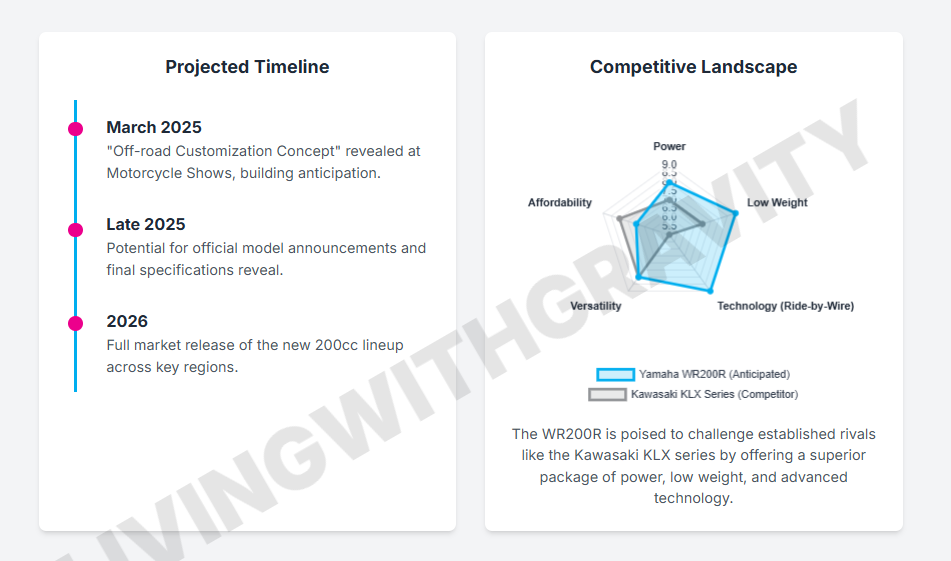
The projected announcement and market release timelines for the new 200cc models are clearly outlined in the user query as “sometime between 2025 and 2026.” This timeline is consistently supported by various sources referring to “2025 Yamaha WR200R Rumors” 18 and explicitly mentioning a “2025 ALL-NEW YAMAHA 200CC LINEUP”.9 The specific models, including the XT200 (Serow), WR200R, WR200X, and YZF-R20, are all listed as “New Yamaha 200cc Models for 2025-2026”.9
While major motorcycle shows like the Osaka Motorcycle Show 2025 (March 21-23, 2025 30) and the Tokyo Auto Salon 2025 (January 10-12, 2025 35) featured new 2025 Yamaha models (e.g., YZF-R3, Tracer 9GT), the 200cc off-road models were primarily “rumored” or “predicted” based on exhibition content.15 This suggests that a formal, comprehensive announcement might follow later in 2025 or throughout 2026, rather than being unveiled as fully production-ready models at these early-year shows. Indeed, one snippet explicitly states that “it seems that it will take some time for this new model to appear” after the Osaka Motorcycle Show 15, reinforcing the idea of a later formal launch within the 2025-2026 window.
The consistent mention of “2025-2026” for the new 200cc lineup, coupled with the observation that it “will take some time for this new model to appear” after the March 2025 shows 15, suggests a deliberate, phased rollout strategy. Yamaha likely utilized the early 2025 motorcycle shows for soft launches, concept displays, or strategic hints to gauge public interest and build anticipation, rather than for immediate market release. This approach allows Yamaha crucial time to fine-tune production processes, finalize marketing strategies, and optimize distribution channels based on initial market feedback. Such strategic timing is essential for ensuring a successful and impactful launch for these highly anticipated models, which are critical to Yamaha’s long-term premium and market share expansion goals.
The competitive environment for the new 200cc lineup is notably dynamic. The new WR200R is “anticipated to compete with rivals like as the Kawasaki KLX series”.18 This direct mention signifies a clear competitive target for Yamaha’s new off-road offering. The broader off-road motorcycle market is characterized by “rising demand for recreational and adventure sports vehicles” and, consequently, “increased competition among well-established manufacturers”.27 This indicates a vibrant and growing segment where innovation and differentiation are key to success. Within this market, the “Less Than 500cc” segment is explicitly expected to “dominate the market during the forecast period” 27, reinforcing the strategic importance of Yamaha’s focus on the 200cc class.
Yamaha’s explicit targeting of the Kawasaki KLX series 18 is a strong indicator of its aggressive competitive strategy in the growing “less than 500cc” off-road segment.27 By developing a 200cc bike that promises 250cc-class performance in a 125cc-class lightweight body, coupled with advanced features like ride-by-wire, Yamaha aims to differentiate itself significantly. This approach seeks to offer a superior power-to-weight ratio and a more technologically advanced package that may not be standard on competitors’ models within this specific displacement. This move is not merely about filling a market void left by its own discontinued models; it is about actively aiming to capture market share from established rivals by presenting a more compelling and modern alternative, thereby solidifying Yamaha’s position in this competitive and expanding segment.
Strategic Recommendations for Yamaha to Maximize the Success of its New 200cc Platform in Target Markets
To maximize the success of its emerging 200cc platform, Yamaha should consider the following strategic recommendations:
- Emphasize “Shaken” Exemption in Japanese Marketing: The “shaken” (vehicle inspection) requirement for motorcycles 250cc and above in Japan represents a significant and recurring financial and logistical burden for owners.23 By explicitly and prominently highlighting that the new 200cc models are exempt from this mandatory inspection, Yamaha can position them as a highly cost-effective and hassle-free alternative to 250cc bikes that offer comparable performance. This direct appeal to the practical and financial considerations of Japanese consumers will serve as a powerful differentiator and a compelling unique selling proposition, directly addressing a pain point in the market.
- Showcase Performance-to-Weight Ratio and Advanced Technology: The core value proposition of the new 200cc engine is its remarkable ability to deliver “power on par with that of a 250cc class with a lightweight, compact body on par with that of a 125cc class”.9 This, combined with the inclusion of advanced features like “electronically controlled throttle” and “ride-by-wire” 9, should be the central focus of all marketing and communication efforts in both ASEAN and Japanese markets. Yamaha should actively demonstrate this performance advantage through compelling test ride opportunities, detailed technical comparisons, and engaging video content. This will appeal to the “technology-forward consumer base” 12 and riders seeking a “game changer” 9 in the entry-level sport and dual-sport segments, validating the premium positioning.
- Leverage Brand Heritage (Serow) and Racing DNA (WR, YZF-R): Each of the anticipated 200cc models benefits from a strong existing brand identity. The Serow has a “classic style” and a loyal following with “many fans in Japan”.15 The WR series is inherently “competition oriented” 9, and the YZF-R series proudly inherits the “DNA of the flagship supersport YZF-R1”.10 Yamaha should strategically lean into these established brand identities. For the Serow 200, marketing should emphasize its renewed capability for trail riding, blending classic appeal with modern technological advancements. For the WR200 and YZF-R20, the focus should be on their “stronger performance focus” 9 and their direct connection to Yamaha’s storied racing success and supersport pedigree, appealing to performance-minded riders who value sportiness, agility, and cutting-edge capability. This dual approach of leveraging heritage and performance will resonate deeply with target demographics.
- Proactive Communication and Comprehensive Dealer Training: Given that much of the information surrounding the new 200cc lineup is currently in the realm of “rumors” and industry predictions 9, Yamaha needs to implement a clear, timely, and authoritative communication strategy for official announcements. Equally critical is providing comprehensive training for dealership staff. These frontline representatives must be fully equipped to articulate the unique benefits, technical specifications, and strategic market positioning of the new 200cc platform. Effective training will enable them to confidently address customer queries, highlight the advantages over competitors, and convert interest into sales, ensuring a consistent and positive brand message across all touchpoints.
Conclusion
Yamaha’s strategic development of a new liquid-cooled 200cc single-cylinder DOHC engine represents a pivotal move towards establishing an “optimized middleweight” segment within its motorcycle lineup. This emerging category is meticulously engineered to synergistically combine the most desirable attributes of 125cc motorcycles, such as lightweight construction, compact dimensions, and nimble handling, with the performance capabilities typically associated with 250cc models, including robust power output and expressway capability.
Crucially, this optimization is designed to strategically circumvent the regulatory and cost drawbacks often associated with larger displacement motorcycles, particularly in the Japanese market where the “shaken” vehicle inspection imposes significant burdens on bikes 250cc and above.
By offering 250cc-level performance without the accompanying regulatory hurdles, Yamaha directly addresses a significant market gap and provides a compelling value proposition. For the ASEAN market, this platform aligns with Yamaha’s premiumization strategy, offering a sophisticated upgrade path for riders. The anticipated Serow 200, WR200R, WR200X, and YZF-R20 models, expected between 2025 and 2026, are poised to redefine their respective segments by delivering a superior balance of performance, agility, and cost-efficiency. This strategic direction positions Yamaha to strengthen its competitive standing and cater to evolving consumer demands in key global markets.
Sources
- Yamaha Motor Co., Ltd. Integrated-report 2024(fiscal year ended …, accessed July 24, 2025, https://global.yamaha-motor.com/ir/integrated-report/integrated2024/pdf/YMC_IR2024_Eng.pdf
- PowerPoint プレゼンテーション – Yamaha Motor Global, accessed July 24, 2025, https://global.yamaha-motor.com/about/mtp/pdf/2025/2025medium-plan-e.pdf
- Hello, everyone. Today, we’ll be introducing our new Medium-Term Management Plan for 2025 through 2027. – Yamaha Motor Global, accessed July 24, 2025, https://global.yamaha-motor.com/about/mtp/pdf/2025/2025medium-plan_script-e.pdf
- YAMAHA WR155R – Revology Bikes, accessed July 24, 2025, https://revologybikes.com/brand-new-bikes/yamaha-wr155r/
- Yamaha WR 155 R 2025, Philippines Price, Specs & Promos – MotoDeal, accessed July 24, 2025, https://www.motodeal.com.ph/motorcycles/yamaha/wr-155/r
- Yamaha WR 155r review test ride English, Français, Bahasa Indonesia – YouTube, accessed July 24, 2025, https://m.youtube.com/watch?v=NQ2b5qyTQag&pp=ygUMI3dyMTU1eWFtYWhh
- Yamaha YZF R15 Specifications, Features, Mileage, Weight, Tyre Size – BikeDekho, accessed July 24, 2025, https://www.bikedekho.com/yamaha/yzf-r15/specifications
- Yamaha YZF-R15 – Wikipedia, accessed July 24, 2025, https://en.wikipedia.org/wiki/Yamaha_YZF-R15
- 2025 Yamaha 200cc Lineup | XT200, WR200R & YZF-R20 Revealed! – YouTube, accessed July 24, 2025, https://www.youtube.com/watch?v=VjKQZT0RdVI
- Yamaha Motor to Launch More Powerful YZF-R15 in Indonesia — Boasts Nearly 20% Greater Output; Sales in Other ASEAN Countries Planned — – News releases, accessed July 24, 2025, https://global.yamaha-motor.com/news/2017/0331/yzf-r15.html
- Motorcycle Business Medium-Term Management Plan (2025–2027) – Yamaha Motor Global, accessed July 24, 2025, https://global.yamaha-motor.com/ir/library/report/pdf/2025/mc_en_02.pdf
- Global Motorcycles Market Size, Share, and Analysis Report 2032, accessed July 24, 2025, https://www.databridgemarketresearch.com/reports/global-motorcycles-market
- Cheap 200cc Japan Motorcycles – High Performance & Quality – Alibaba.com, accessed July 24, 2025, https://www.alibaba.com/showroom/200cc-japan-motorcycle.html
- Top 10 small displacement motorcycle in Japan 2025 – Battery Swap Cabinet, accessed July 24, 2025, https://batteryswapcabinet.com/top-10-small-displacement-motorcycle-in-japan/
- 2025 NEW YAMAHA WR200R OFFICIALLY ANNOUNCED – OSAKA …, accessed July 24, 2025, https://www.youtube.com/watch?v=FttYtJTQ-DA
- 2026 NEW YAMAHA XT200 SEROW OFFICIALLY REVEALED! – YouTube, accessed July 24, 2025, https://www.youtube.com/watch?v=yrKHJa1qsYg
- Products History – Yamaha Motor Global, accessed July 24, 2025, https://global.yamaha-motor.com/stories/history/products/
- 2025 YAMAHA WR200 & WR200RX SUPERMOTO INTRODUCED!! – YouTube, accessed July 24, 2025, https://www.youtube.com/watch?v=cwrXEU95RI0
- First Ride: 2025 Yamaha R9 – Road Dirt, accessed July 24, 2025, https://roaddirt.tv/first-ride-2025-yamaha-r9/
- [Osaka MC Show News] Exploring the Hype Around the YZF-R1M ABS Motorcycle, accessed July 24, 2025, https://japan.webike.net/moto_news/latest-news/20250328-osaka-mc-show-news-exploring-the-hype-around-the-yzf-r1m-abs-motorcycle/
- Yamaha WR250R – Wikipedia, accessed July 24, 2025, https://en.wikipedia.org/wiki/Yamaha_WR250R
- Yamaha WR250R Review – Mad or Nomad, accessed July 24, 2025, https://www.madornomad.com/yamaha-wr250r-review/
- Buying a motorbike and CC implications : r/japanlife – Reddit, accessed July 24, 2025, https://www.reddit.com/r/japanlife/comments/1j1fhqq/buying_a_motorbike_and_cc_implications/
- KTM Introduces 250 Duke and RC250 at the Tokyo Motor Show – autoevolution, accessed July 24, 2025, https://www.autoevolution.com/news/ktm-introduces-250-duke-and-rc250-at-the-tokyo-motor-show-93868.html
- 2025 NEW YAMAHA WR200R & WR200X UNVEILED!! – YouTube, accessed July 24, 2025, https://www.youtube.com/watch?v=AFpoLt9H3kA
- Here’s How Japan Dominated the Motorcycle Industry – Riders Share, accessed July 24, 2025, https://www.riders-share.com/blog/article/how-japan-dominated-the-motorcycle-industry
- Off Road Motorcycles Market – Global Industry Analysis 2030, accessed July 24, 2025, https://www.maximizemarketresearch.com/market-report/global-off-road-motorcycles-market/26774/
- Yamaha Motor: ASEAN Sports Brand Strategy, Indonesia to Manufacture and Sell YZF-R15, accessed July 24, 2025, https://global.yamaha-motor.com/news/2014/0416/yzf-r15.html
- The R-Series Pedigree – Motorcycle | Yamaha Motor Co., Ltd., accessed July 24, 2025, https://global.yamaha-motor.com/business/mc/lineup/yzf-r/
- CHIGEE Shines at the Osaka Motorcycle Show 2025, accessed July 24, 2025, https://www.chigee.com/blogs/news/chigee-shines-at-the-osaka-motorcycle-show-2025
- Osaka Motorcycle Show 2025 March 21-23 – RIDEZ, accessed July 24, 2025, https://ridez.jp/en/blogs/event/%E5%A4%A7%E9%98%AA%E3%83%A2%E3%83%BC%E3%82%BF%E3%83%BC%E3%82%B5%E3%82%A4%E3%82%AF%E3%83%AB%E3%82%B7%E3%83%A7%E3%83%BC-2025-3-21-23
- Wheels & Waves 2025 | Royal Enfield Australia | News, accessed July 24, 2025, https://royalenfield.com.au/product-news/wheels-waves-2025/
- 2025 Osaka Japan Motorcycle Show! – YouTube, accessed July 24, 2025, https://www.youtube.com/watch?v=gly1gXH_7uo
- [Scoop] Yamaha WR125R: A Game Changer in the Motorcycle Market | Webike News, accessed July 24, 2025, https://japan.webike.net/moto_news/latest-news/20250127-scoop-yamaha-wr125r-a-game-changer-in-the-motorcycle-market/
- Yamaha Unveils New Models at Tokyo Auto Salon 2025 | Webike News, accessed July 24, 2025, https://japan.webike.net/moto_news/latest-news/20250107-yamaha-unveils-new-models-at-tokyo-auto-salon-2025/
- FINALLY!! 2025 NEW YAMAHA WR200R AND WR200RX …, accessed July 24, 2025, https://www.youtube.com/watch?v=mB-0lu4-q3w
Our Social Media Handles
- Instagram : LivingWithGravity
- Medium : Akash Dolas
- YouTube Channel : Gear and Shutter