

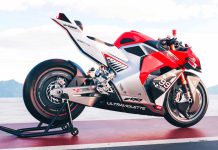




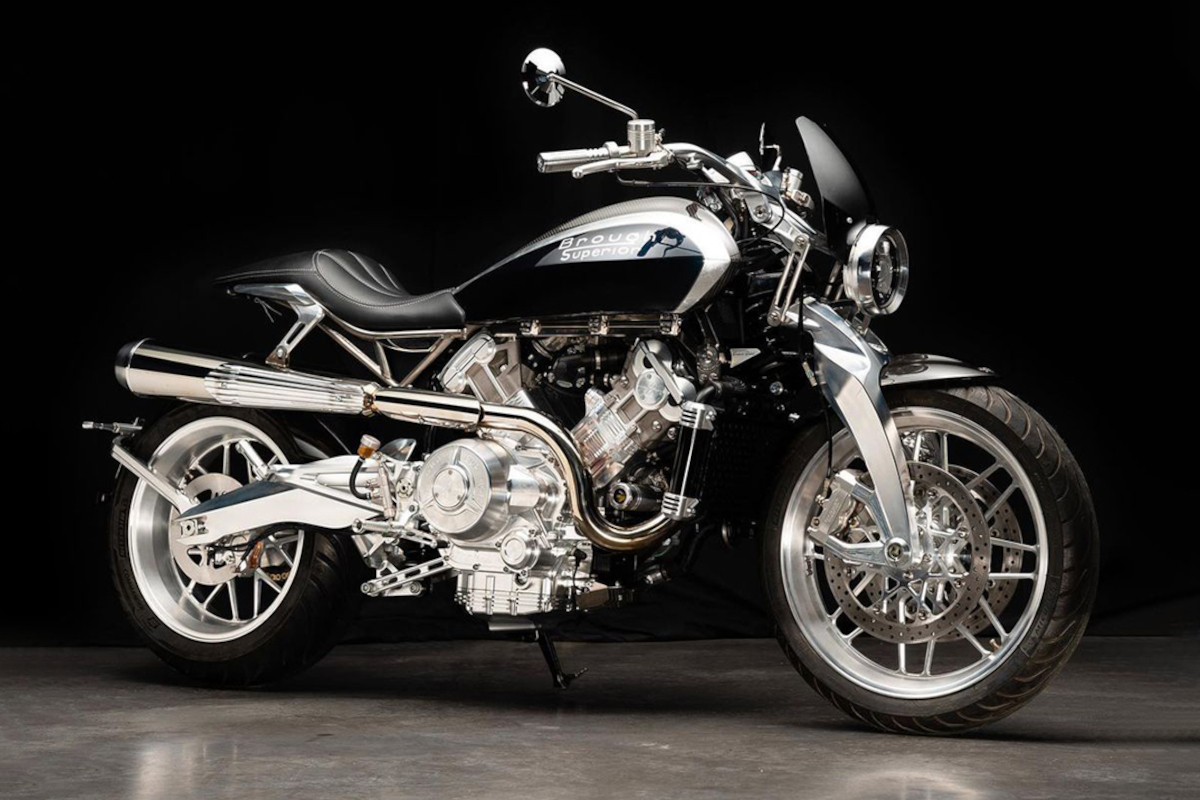
Boutique motorcycle brands represent a special niche in the automotive world, crafting machines that are as much works of art as they are modes of transportation. Brands like Brough Superior, which made waves with its Aston Martin collaboration, and Abington, a French manufacturer that uses Harley-Davidson engines, certainly have a unique appeal. However, the American-born manufacturer, Confederate, now known as Curtiss Motorcycles, stands out with its distinct style and engineering philosophy. Let’s delve into the fascinating history and mechanical marvels of this company, which created what many call “the fastest works of art.”
The Brand’s Origins and Evolution
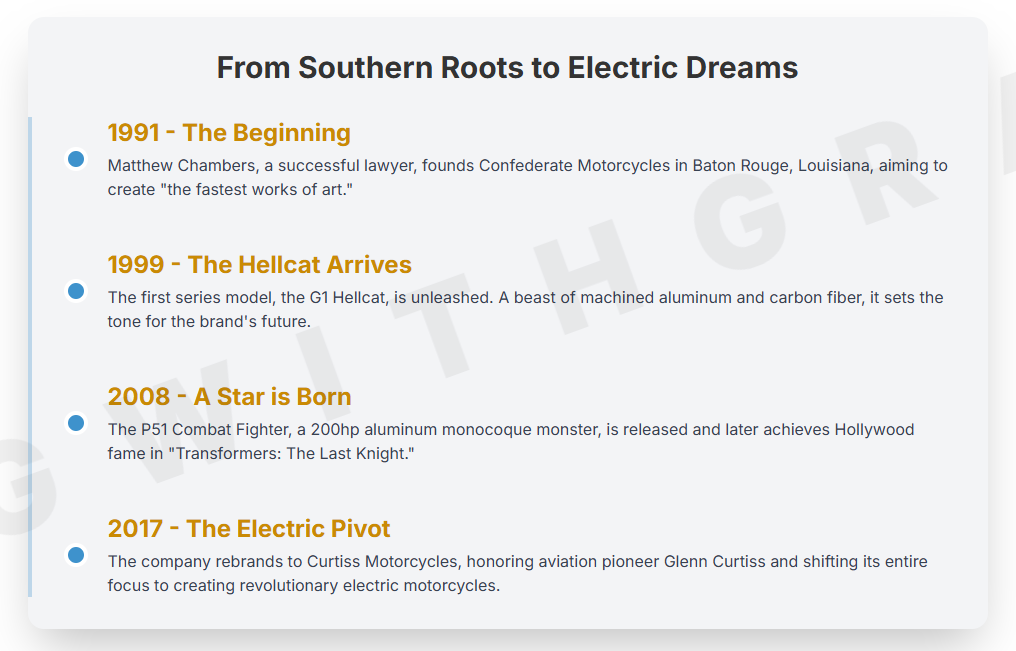
Confederate was founded in 1991 by successful lawyer Matthew Chambers in Baton Rouge, Louisiana. The company name was a reference to the region’s history during the Civil War, a choice that has since been a subject of discussion. Chambers, however, stated that the name was not a political or racial statement, and the company’s client list, which included Hollywood actors such as Brad Pitt and Tom Cruise, lends support to the idea that the brand’s appeal transcended any potential negative connotations. In 2017, the company made a significant pivot, rebranding as Curtiss Motorcycles and dedicating itself to the production of high-performance electric motorcycles.
A Look at the Legendary Models
G1 Hellcat: The First Series Model
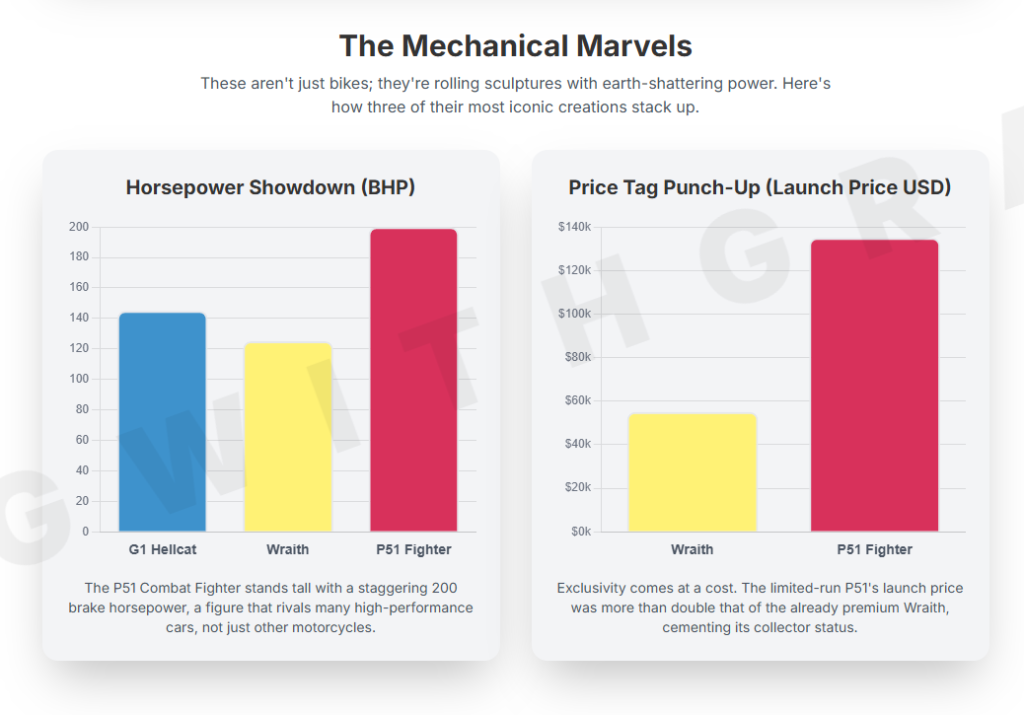
The G1 Hellcat, introduced in 1999, was the company’s first series production model. This machine was a testament to uncompromising design and quality. It featured a 45-degree V-twin engine, co-developed with S&S, with a displacement of 131 cubic inches (2147 cc). This engine produced a potent 145 bhp. The bike’s construction was meticulous, featuring a 7-inch diameter frame that also housed the approximately 15-liter fuel tank. Top-tier components were used throughout, including Marzocchi front forks, Penske rear shocks, and ISR 6-pot calipers. Confederate also produced a second-generation Hellcat with a more aggressive, chopped rear end, with prices starting at around 6 million yen.
Wraith: The “Ghostly” Radical
The Wraith, unveiled in 1999 and released in 2003, was an even more radical machine. Its sinister, “ghostly” styling was matched by its lightweight construction and superior handling characteristics. The Wraith featured a 1967cc engine with a two-axis balancer, producing 125 bhp at the rear wheel. The design was revolutionary, featuring a Telelever-style front suspension with carbon arms for weight reduction. A surprising engineering detail was the fuel tank, which was suspended below the engine to lower the center of gravity, while the spine-like frame served as the oil tank. At just 186 kg, this 2-liter class machine was incredibly light. The Wraith was priced between $50,000 and $60,000, and it quickly sold out after being featured on the cover of Robb Report.
P51: A Transformer of a Motorcycle
In 2008, Confederate introduced the P51, a machine with a truly striking appearance and construction. Its most defining feature was a monocoque frame machined from a single block of aerospace-grade 6061-T6 aluminum using a 5-axis machining machine. This unique approach resulted in an incredibly strong, yet heavy, bike, weighing 226.7 kg. The P51’s 57-degree V-twin S&S engine was a beast, with a displacement of 2163cc producing 200 bhp and 23.5 kg-m of torque. The bike’s performance was so significant that the company often used it to challenge speed records in Salt Lake City. The P51 also gained widespread recognition for its appearance in the movie “Transformers: The Last Knight.” With a price tag of $135,000, the P51 was a true limited-edition item, with only 66 units ever produced, selling out well before its big screen debut.
Marketing and Market Performance
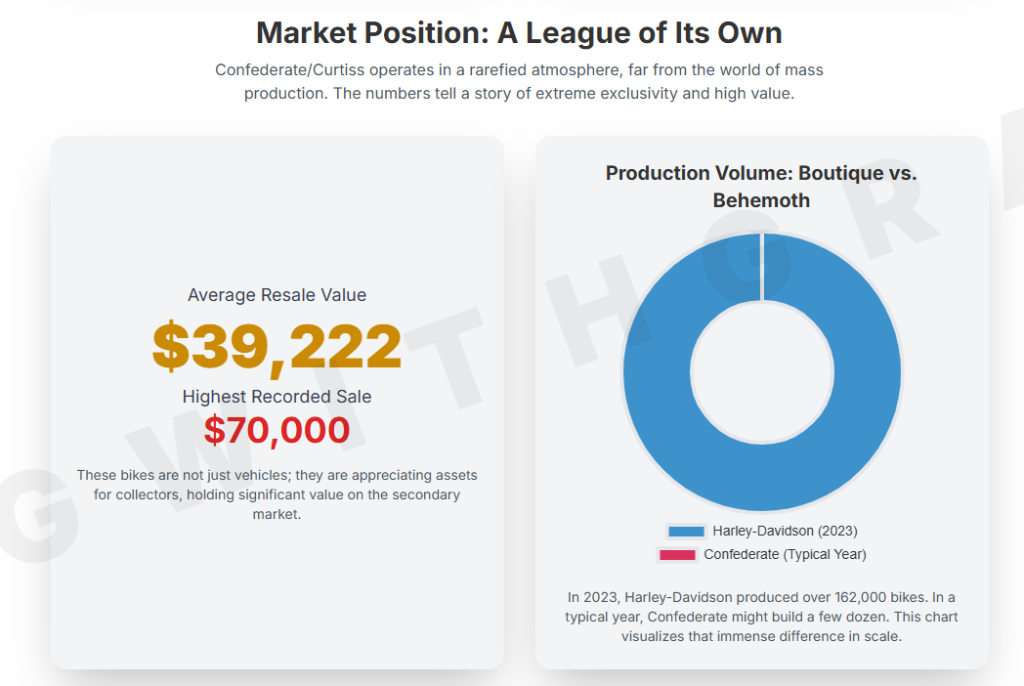
Confederate’s marketing strategy relied heavily on its brand image as an exclusive, high-art, and high-performance manufacturer. The company’s limited production runs and sky-high prices targeted a very specific, affluent demographic. In a time when the broader motorcycle market saw significant sales fluctuations, Confederate’s numbers were a different story. In 2008, the company sold 37 bikes, and even during the recession, it projected sales of 30 units in 2009. The average sale price for a Confederate motorcycle on the secondary market is around $39,222, with some models fetching much higher prices. For example, a 2015 Confederate X132 Hellcat Speedster once sold for $70,000.
Competitors and the Industry Landscape
In the boutique motorcycle space, Confederate (now Curtiss) competes with other high-end manufacturers. One notable example is Brough Superior, which gained significant attention through its collaboration with Aston Martin on the AMB 001 and AMB 001 Pro. The AMB 001 Pro is a track-only superbike with a 997cc engine producing 225 hp. The original AMB 001 was a limited run of just 100 units, while the Pro model was limited to 88. Another example is Abington, a French manufacturer that utilizes Harley-Davidson engines, showcasing its own unique take on bespoke motorcycling.
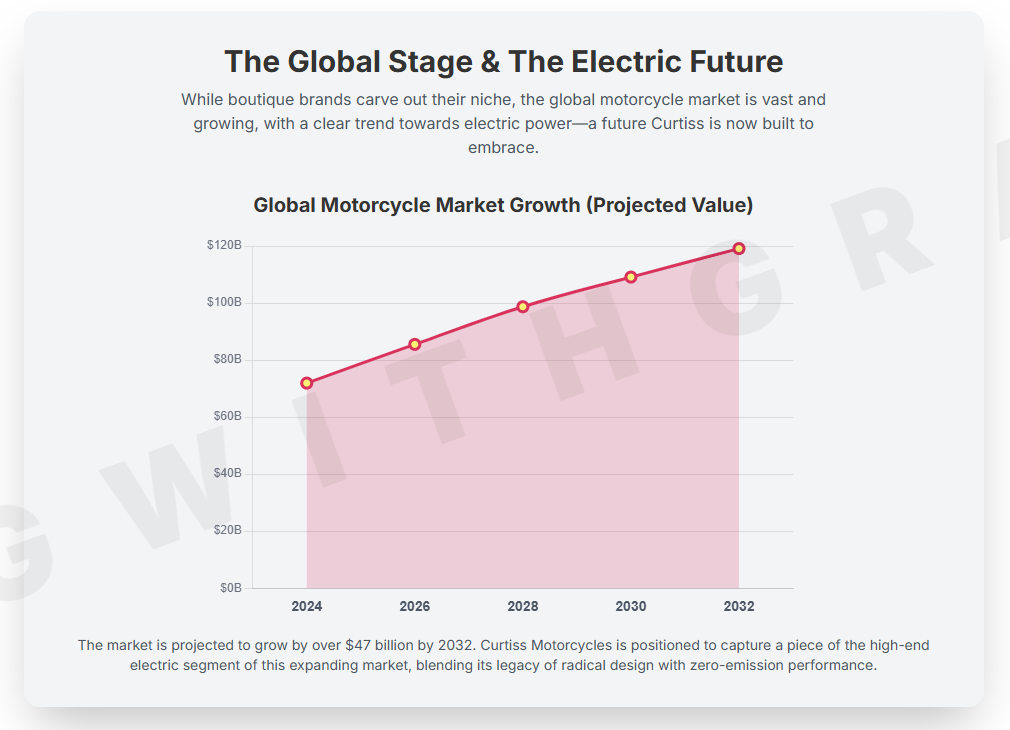
The overall motorcycle market, however, is a different beast entirely. The global motorcycle market was valued at $71.92 billion in 2024 and is projected to grow to $119.09 billion by 2032. This growth is largely driven by regions like Asia-Pacific, which held a 61.61% market share in 2024. Mass-market manufacturers like Harley-Davidson, which produced 162,771 units in 2023, dominate the industry with a focus on volume and a wide range of models, a stark contrast to Curtiss Motorcycles’ artisan approach.

Reviews and Customer Perception
Reviews of Confederate motorcycles often highlight the bikes’ exceptional performance and unique design. Testers frequently comment on the surprising handling and agility for such large-displacement machines. One reviewer of the Curtiss P40 Warhawk, a successor to the Confederate models, noted its “improbably good handling” and “super-stable” feel. However, some comments also point to the impracticality of these machines for everyday use, with one review on a Curtiss model calling it a “piece of motorcycle art” that may be “completely unrideable ergonomically” for the average person. The high price point and limited availability also mean that ownership is more about collecting a piece of history and art than it is about daily commuting.
Sources
- https://www.classic.com/m/confederate/
- https://www.cycletrader.com/Confederate-S/motorcycles-for-sale?make=Confederate%20Motorcycles|2316006
- https://www.tracxn.com/d/companies/combat-motors/__loOa1785VHMm4xy6n1Q-2RIguM_lir-aFozr4vyCubM
- https://www.astonmartin.com/en/our-world/partnerships/brough-superior-pro
- https://www.fortunebusinessinsights.com/motorcycle-market-105164
Our Social Media Handles
- Instagram : LivingWithGravity
- Medium : Akash Dolas
- YouTube Channel : Gear and Shutter