



Executive Summary: The R1’s Strategic Pivot
The speculation surrounding the 2025 Yamaha YZF-R1 as the “final” road-legal iteration is a complex issue, simultaneously containing elements of truth and misconception. This analysis confirms that the R1 is indeed at a pivotal juncture in its history, but it is not facing a simple discontinuation. Instead, Yamaha has made a strategic decision to segment the model’s market. For Europe, the R1 will transition to a track-only machine starting in 2025, a move driven by the prohibitive costs of adapting its inline-four engine to meet the stringent durability and monitoring requirements of the new Euro 5+ emissions standards. Conversely, in key markets such as North America, the R1 will continue to be sold as a road-legal motorcycle, featuring significant, performance-focused updates for the 2025 model year.
These updates are not a full redesign but a series of targeted refinements, most notably the adoption of a premium Brembo braking system and MotoGP-derived aerodynamic winglets. This dual-path strategy allows Yamaha to preserve the R1’s racing legacy and flagship status with a specialized track model in Europe while continuing to serve its enthusiast base in regions with more accommodating regulations. The situation with the R1 serves as a microcosm of the broader challenges facing the high-performance internal combustion engine (ICE) motorcycle segment, prompting a critical examination of its long-term viability and the industry’s forward-looking strategies, including the collaborative exploration of alternative power sources like hydrogen.

The 2025 Yamaha YZF-R1: A Refined Final Chapter for Europe
The release of the 2025 Yamaha R1 and R1M has brought into sharp focus the divergent fates of the iconic superbike across global markets. For the European continent, the legendary R1 is being strategically repositioned. As of 2025, it will be offered exclusively as a track-only model, following a precedent set by the YZF-R6.1 This decision marks the end of its street-legal life in a highly regulated market. In stark contrast, Yamaha’s North American division has announced the 2025 R1 and R1M will be available for street use with a series of meaningful upgrades, demonstrating a commitment to the model’s road-going presence in less restrictive regions.3 This market segmentation allows the company to continue catering to its loyal fanbase while avoiding the immense financial burden of re-engineering the engine to meet a specific set of regulations in a single market.
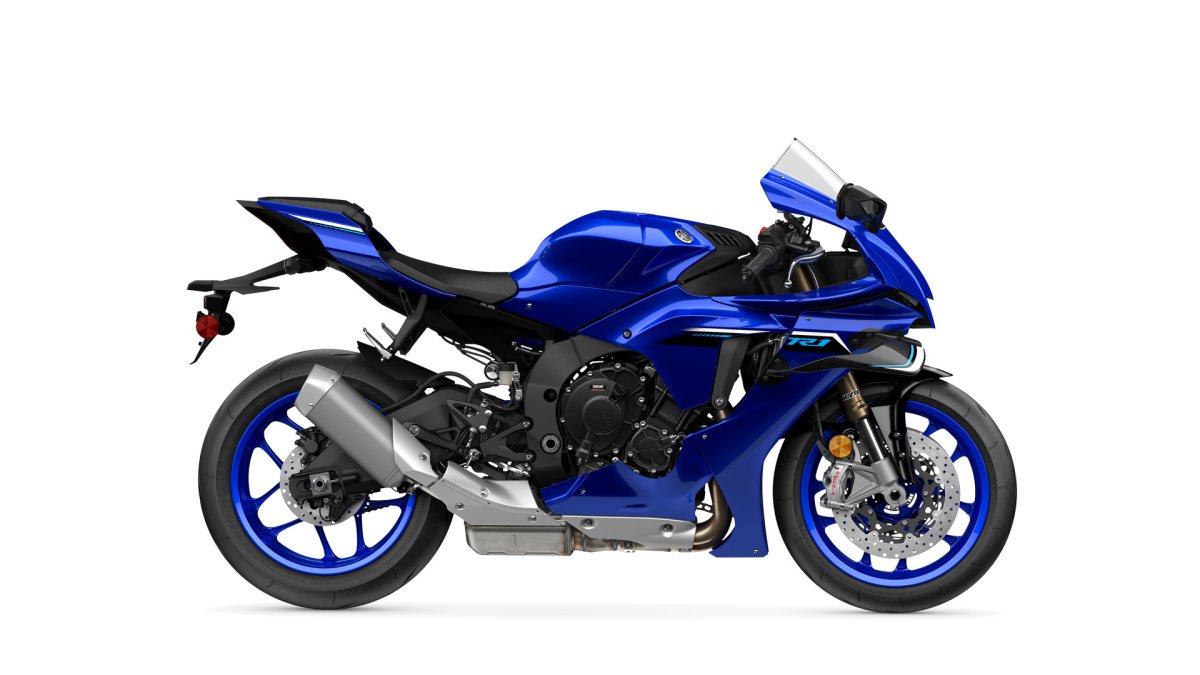
The updates for the 2025 model year are not a comprehensive overhaul but rather a focused refinement of key areas that enhance performance, particularly on the track. The most significant of these is a long-anticipated upgrade to the braking system. Both the standard R1 and the premium R1M will now feature new radial-mounted Brembo Stylema monobloc front calipers paired with a new Brembo master cylinder.3 This change is a direct response to a major point of criticism from riders and analysts, who have noted the previous generation’s braking components lagged behind the competition.7 The Brembo Stylema units, with their lightweight construction and optimized airflow, promise enhanced stopping power and a more precise feel, helping to mitigate brake fade during intense use and bringing the R1’s hardware on par with its elite European and Japanese rivals.1

Another prominent upgrade is the addition of new, MotoGP-inspired carbon fiber winglets on both models.3 These are not mere stylistic accents but a functional addition developed through extensive simulator and on-track testing.3 Their purpose is to generate additional downforce, which in turn improves chassis stability and enhances front-end feel under hard braking and while cornering.1 This technological trickle-down from Yamaha’s factory racing program reflects a broader trend in the superbike category, where aerodynamic performance is increasingly critical for gaining a competitive edge.
The suspension systems have also received attention. The base R1 model is equipped with a redesigned and fully adjustable 43mm KYB inverted front fork, which is claimed to offer improved response and road feel.4 The R1M, meanwhile, retains its sophisticated Öhlins Electronic Racing Suspension (ERS), which utilizes data from the motorcycle’s 6-axis Inertial Measurement Unit (IMU) to dynamically adjust damping in real time, with rider-selectable modes for both street and track use.4 The heart of the machine, the 998cc CP4 inline-four engine with its unique crossplane crankshaft technology, remains unchanged for 2025. This powerplant, with its linear torque delivery and direct connection to the throttle, continues to serve as the technological and visceral core of the R1, supported by a comprehensive suite of IMU-powered electronic rider aids.3
The Regulatory Imperative: Decoding the Euro 5+ Challenge
The narrative that the R1’s engine is fundamentally incapable of meeting modern emissions standards is an oversimplification. A more detailed examination of the new Euro 5+ regulations reveals a complex set of requirements that extend far beyond simply reducing tailpipe pollutants. The core of the Euro 5+ standard is not a reduction in the measured pollutant limits—which remain the same as the outgoing Euro 5 rules—but a new focus on the long-term durability and performance of a motorcycle’s emissions-control systems.12
This regulatory evolution is best understood as a “durability wall” rather than a simple “emissions wall.” Under Euro 5+, manufacturers are no longer permitted to apply a deterioration factor to their test results. Instead, they must prove the long-term effectiveness of the catalytic converter and other components through real-world durability testing over a distance of 35,000km (approximately 21,700 miles).13 This process is immensely expensive and time-consuming. In addition, the new standards mandate a more sophisticated On-Board Diagnostic (OBD) system that constantly monitors the health of the catalytic converter using two oxygen sensors—one before and one after the unit. If the system detects a decline in efficiency beyond a 20 percent threshold of the homologation limit, a Malfunction Indicator Lamp is triggered, compelling the rider to seek service and potentially restricting the bike’s power output.12
This new regulatory landscape presents a specific and expensive challenge for a high-performance engine like the R1’s inline-four. The engine’s high-revving nature and aggressive tune rely on precise valve overlap to maximize power output. However, this valve overlap, while crucial for performance, can allow unburned hydrocarbons (UHC) to escape into the exhaust, which is a key area targeted by emissions regulations.14 This inherent conflict between high performance and emissions control has been addressed by other manufacturers through the integration of sophisticated and costly technologies, such as variable valve timing.14 Yamaha’s decision not to re-engineer the R1’s engine with such a system for the low-volume European market is a calculated business move, prioritizing commercial viability over a costly and complex adaptation. The transition to a track-only platform allows Yamaha to sidestep these new regulations entirely, preserving the R1’s performance-oriented identity without the financial burden of re-homologation.2

The Superbike Arena: R1’s Position in a Shifting Market
The R1’s strategic shift in Europe is a poignant indicator of the immense pressure facing the superbike class. A comparative analysis with its key rivals—the BMW S 1000 RR, Kawasaki ZX-10R, and Aprilia RSV4 Factory—highlights the diverse approaches manufacturers are taking to navigate these challenges. The following competitive matrix provides a technical overview of these apex predators for the 2025 model year.
| Yamaha YZF-R1 | BMW S 1000 RR | Kawasaki ZX-10R | Aprilia RSV4 Factory | |
| Engine Type | Inline-Four, Crossplane | Inline-Four, ShiftCam | Inline-Four | V4 |
| Displacement | 998cc | 999cc | 998cc | 1,099cc |
| Claimed HP (approx.) | N/A (Est. ~200 hp) | 205 hp @ 13,000 rpm | 196 hp @ 11,500 rpm | 220 hp @ 13,000 rpm |
| Claimed Torque (approx.) | N/A (Est. ~83 lb-ft) | 83 lb-ft @ 11,000 rpm | 83.9 lb-ft @ 11,300 rpm | 94 lb-ft @ 10,800 rpm |
| Emission Tech | N/A (Euro 5) | Euro 5+ Compliant | Euro 5+ Compliant | Euro 5+ Compliant |
| Front Suspension | 43mm KYB Fork | 45mm Inverted Fork | 43mm Showa BFF | Öhlins Smart EC 2.0 |
| Front Brakes | Dual Brembo Stylema | Dual 320mm Discs | Dual Brembo 330mm Discs | Brembo Hypure |
| Wet Weight (claimed) | 448 lb | 435 lb | 456.4 lb | N/A |
| MSRP (US) | $18,999 | $TBA | $18,399 | $26,299 |
Note: Data for the Yamaha YZF-R1 is based on a combination of official sources, industry reports, and direct comparisons. Power and torque figures for the R1 are not officially released for 2025 models; estimates are based on previous-generation specifications.
The data in this matrix highlights both the R1’s strengths and its strategic divergence. With the new Brembo braking components and aero winglets, the R1 has addressed its most notable shortcomings and is now equipped with hardware that rivals the best in the class.7 However, the key distinction lies in the engineering philosophy regarding emissions. The BMW S 1000 RR, for example, achieves Euro 5+ compliance while retaining its high-performance inline-four engine by employing its sophisticated ShiftCam variable valve timing technology.16 This system allows the engine to optimize its valve timing for both low-rpm efficiency and high-rpm power, effectively managing the emissions challenge. Similarly, the Aprilia RSV4 Factory, with its 1099cc V4 engine and a comprehensive electronics suite, has also achieved Euro 5+ compliance.18

This contrast demonstrates that meeting the new regulations is technically feasible for high-performance ICE engines, but it requires substantial research and development investment.14 The decision by Yamaha not to pursue this for the R1 in Europe is likely tied to the broader trend of declining superbike sales and the increasing popularity of more practical, mid-range motorcycles.20 The high cost of re-engineering an engine for a niche market simply did not justify the commercial return. The company has instead chosen to invest in other areas, including the exploration of next-generation power sources, a strategy that speaks to its long-term vision.
The Future of High-Performance ICE Motorcycles
The R1’s evolving status is not an isolated event but a clear symptom of the fundamental challenges facing the internal combustion engine in a world moving toward decarbonization. While electric vehicles are often presented as the sole solution, the motorcycle industry is taking a more nuanced, multi-pathway approach. For high-performance motorcycles, the transition to electric power is not as straightforward as it is for cars. The crucial element of a motorcycle’s performance and handling is its power-to-weight ratio and dynamic balance, which are fundamentally altered by the immense weight of batteries required for a viable range.22 This physical limitation has prompted leading manufacturers to look beyond electrification to preserve the essence of the ICE.
A compelling example of this is the formation of the HySE (Hydrogen Small mobility & Engine technology) consortium. This unprecedented alliance brings together the four major Japanese motorcycle manufacturers—Honda, Yamaha, Kawasaki, and Suzuki—with support from Toyota and Kawasaki Heavy Industries.23 Officially approved by Japan’s Ministry of Economy, Trade and Industry, this collaboration is dedicated to the development of hydrogen-powered engines for small mobility, including motorcycles.24 The consortium’s mission is explicit: to overcome the technical challenges of hydrogen combustion, such as unstable flame speeds and limited fuel tank capacity on small vehicles.26
Yamaha’s role within HySE is well-defined and critical. It is tasked with leading the hands-on research of hydrogen-powered engines to study their functionality and reliability, as well as investigating the requirements for hydrogen refueling systems and tanks.24 This initiative demonstrates that the industry is not simply accepting the end of the ICE; it is actively working to preserve it. The chairman nominee of HySE, Kenji Komatsu, an executive from Yamaha, has stated the group’s “sense of mission to preserve the use of internal combustion engines, which epitomize the long-time efforts that our predecessors have invested”.24 This is a powerful declaration that the sound, feel, and character of an ICE is a cultural and emotional asset worth fighting for, even if the fuel source must change.

Conclusion: The R1’s Enduring Legacy and Yamaha’s Forward Vision
The query regarding the “final” Yamaha R1 leads to a much richer and more complex conclusion than a simple yes or no. The R1 is not facing an unceremonious end, but a strategic evolution. Its transition to a track-only machine in Europe is a calculated, commercially sound decision to bypass a specific and costly regulatory hurdle without compromising the bike’s core performance identity. Simultaneously, its continued presence in North America with targeted, high-value upgrades demonstrates Yamaha’s enduring commitment to the superbike class. The 2025 R1, in its various forms, is a physical manifestation of a changing industry—a machine refined for the track and sustained on the street, embodying the challenges of the present while bridging the gap to a future of technological adaptation.
Ultimately, the future of the internal combustion engine in the motorcycle world is not a foregone conclusion. While current regulations are forcing a re-evaluation of business models for certain products, the industry is already investing in a multi-pathway approach to sustainable power. The formation of the HySE consortium stands as a testament to this, proving that the major Japanese manufacturers are not simply reacting to a changing world, but are collaboratively working to shape it. The cultural and emotional connection to the ICE remains a potent force, and the industry is banking on the fact that this legacy can be preserved through innovation in alternative fuels. The 2025 Yamaha YZF-R1, therefore, is not the last breath of a dying breed, but a powerful symbol of a legend’s enduring legacy in a new era of performance and sustainability.
Sources
- R1 RACE | Supersport Motorcycle | 1000cc | 2025 | Yamaha Motor, accessed on August 27, 2025, https://www.yamaha-motor.eu/gb/en/motorcycles/supersport/pdp/r1-race-2025/
- UPDATE: Yamaha R1 And R1M To Be Track-Only In Europe From 2025 – RideApart.com, accessed on August 27, 2025, https://www.rideapart.com/news/709594/yamaha-r1-r1m-discontinued-europe/
- 2025 YZF-R1 Yamaha Motorsports, USA, accessed on August 27, 2025, https://yamahamotorsports.com/models/yzf-r1
- 2025 Yamaha YZF-R1 and YZF-R1M Preview | Rider Magazine, accessed on August 27, 2025, https://ridermagazine.com/2024/09/19/2025-yamaha-yzf-r1-and-yzf-r1m-preview/
- Yamaha Unveils 2025 YZF-R1 and YZF-R1M Models – Cycle News, accessed on August 27, 2025, https://www.cyclenews.com/2024/09/article/yamaha-unveils-2025-yzf-r1-and-yzf-r1m-models/
- 2025 Yamaha YZF-R1 Base – RideNow Austin, accessed on August 27, 2025, https://www.ridenowaustin.com/inventory/v1/Current/Yamaha/Motorcycle/Supersport/YZF-R1/Base–Austin-Texas—23419081
- 2025 R1 vs 2025 BMW S1000rr : r/Trackdays – Reddit, accessed on August 27, 2025, https://www.reddit.com/r/Trackdays/comments/1kucu49/2025_r1_vs_2025_bmw_s1000rr/
- 2025 Yamaha YZF-R1 and YZF-R1M First Look [Specs, 31 Photos] – Ultimate Motorcycling, accessed on August 27, 2025, https://ultimatemotorcycling.com/2024/09/28/2025-yamaha-yzf-r1-and-yzf-r1m-first-look-specs-31-photos/
- New 2025 Yamaha YZF-R1 | Motorcycles in Mio MI, accessed on August 27, 2025, https://www.northernpowersportsofmio.com/Motorcycles-Yamaha-YZF-R1-2025-Mio-MI-260b1891-aead-4cfb-8cd5-b1f10027133d
- 2025 YZF-R1 – Key Features | Yamaha Motorsports, USA, accessed on August 27, 2025, https://yamahamotorsports.com/models/yzf-r1/features
- 2025 YZF-R1 – Yamaha Motor Canada, accessed on August 27, 2025, https://www.yamaha-motor.ca/en/road/motorcycle/supersport/2025-yzf-r1/2025-YZFR1AS
- What is Euro5+, and Will it Kill Our Favourite Bikes? – Visordown, accessed on August 27, 2025, https://www.visordown.com/features/guides/what-euro-5-and-will-it-kill-our-favourite-bikes
- New Euro 5+ emissions standard – Orwell Motorcycles, accessed on August 27, 2025, https://orwell.co.uk/news/new-euro-5-emissions-standard
- What does the Euro 5 emissions law mean to motorcycles – Bennetts Insurance, accessed on August 27, 2025, https://www.bennetts.co.uk/bikesocial/news-and-views/features/bikes/euro-5-emissions-what-they-mean-to-motorcycles
- R1 vs ZX10: Ultimate 2025 Motorcycle Comparison – BytePlus, accessed on August 27, 2025, https://www.byteplus.com/en/topic/407349
- 2025 BMW S 1000 RR First Look and Specs – Cycle News, accessed on August 27, 2025, https://www.cyclenews.com/2024/10/article/2025-bmw-s-1000-rr-first-look-and-specs/
- 2025 BMW S 1000 RR – First Look | Motorcycle.com, accessed on August 27, 2025, https://www.motorcycle.com/bikes/new-model-preview/2025-bmw-s-1000-rr-first-look-44610763
- Aprilia RSV4 Factory 1100: price, colors, consumption, accessed on August 27, 2025, https://www.aprilia.com/us_EN/models/rsv4/rsv4-factory-1100-4s4v-2025/
- RSV4 Factory 1100: price, colours, specs | Aprilia EN, accessed on August 27, 2025, https://www.aprilia.com/en_EN/models/rsv4/rsv4-factory-1100-4s4v-2025/
- Yamaha YZF-R1, R1M likely to be discontinued! – BikeWale, accessed on August 27, 2025, https://www.bikewale.com/news/yamaha-yzf-r1-r1m-likely-to-be-discontinued/
- Will Gas-Powered Motorcycles Be Banned? – Law Tigers, accessed on August 27, 2025, https://lawtigers.com/will-gas-powered-motorcycles-be-banned/
- Will combustion motorcycles ever die? – Reddit, accessed on August 27, 2025, https://www.reddit.com/r/motorcycles/comments/1909mrj/will_combustion_motorcycles_ever_die/
- Industry Insider: HySE is Born – The Big Four Unite for Hydrogen – webBikeWorld, accessed on August 27, 2025, https://www.webbikeworld.com/industry-insider-hyse-is-born-the-big-four-unite-for-hydrogen/
- Big Four Join Forces for Hydrogen Future – Yamaha Motor Australia, accessed on August 27, 2025, https://www.yamaha-motor.com.au/discover/news-and-events/news/corporate/2023/may/hydrogen-hyse
- Japanese Motorcycle Giants Unite to Create Water-Emitting Hydrogen Bikes, accessed on August 27, 2025, https://impactful.ninja/japanese-motorcycle-giants-unite-to-create-water-emitting-hydrogen-bikes/
- Ministerial Approval Granted to Form Research Body “HySE” for Development of Hydrogen Small Mobility Engines to Help Build Decarbonized Society – News releases | Yamaha Motor Co., Ltd., accessed on August 27, 2025, https://global.yamaha-motor.com/news/2023/0517/corporate.html
Our Social Media Handles
- Instagram : LivingWithGravity
- Medium : Akash Dolas
- YouTube Channel : Gear and Shutter