



Executive Summary
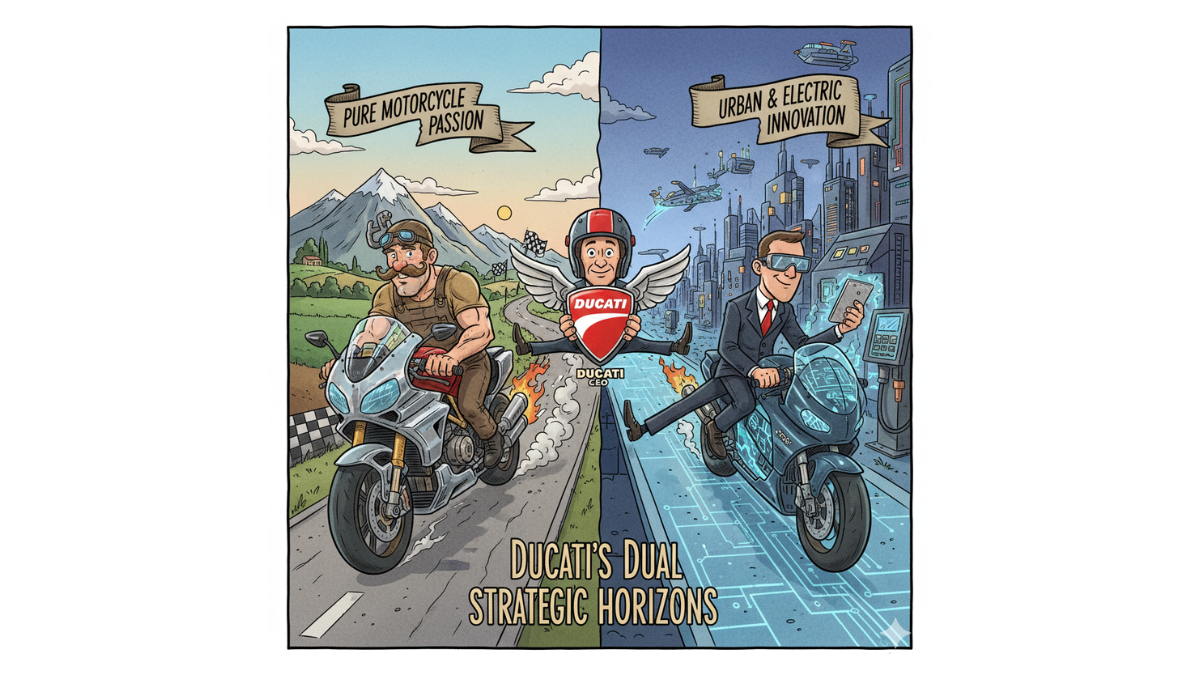
This report provides a comprehensive analysis of Ducati’s “Dual Strategic Horizon,” a synergistic corporate strategy that leverages the company’s historic success and brand legacy to fund and validate its future in electric mobility. The first strategic pillar, the monetization of motorsport dominance, has proven to be an exceptionally effective financial engine.
Unprecedented championship victories in MotoGP and WorldSBK from 2021 to 2024 have directly correlated with record-breaking revenues and operating profits, providing a robust financial foundation for high-risk, long-term investments. This is accomplished through lucrative sponsorship deals, a sophisticated fan community program, and the strategic release of high-margin, limited-edition motorcycles.
The second pillar, the electrification frontier, is embodied by Ducati’s involvement as the sole supplier for the FIM Enel MotoE™ World Cup. The V21L prototype serves as a crucial technological laboratory, where racing-derived engineering expertise is being applied to overcome significant challenges in electric vehicle (EV) development, most notably battery weight, range, and charging time. The recent integration of a cutting-edge solid-state battery, a partnership with the Volkswagen Group, marks a pivotal breakthrough that directly addresses these issues.
This strategic venture is not merely a compliance measure; it is a calculated effort to lend the brand’s high-performance credibility to electric technology, bridging the gap between its traditional, passionate heritage and a new, quiet, zero-emission future. The analysis concludes that the two strategic horizons are not independent but are in a state of positive feedback, with the success of one reinforcing the viability of the other.

1. Introduction: Ducati’s Strategic Compass
Ducati’s identity is meticulously crafted around a core set of values: passion, performance, and a distinctive “Made in Italy” design ethos.1 Since its founding in 1926, the company has operated on a credo of innovative technologies and powerful engines, shaping a brand image that is synonymous with sophisticated engineering and a relentless racing spirit.1 This deep-seated commitment to its heritage is exemplified by the brand’s iconic engine designs, such as the “L-twin,” which serves as a key product differentiator from competing V-twin motorcycles.4 The brand’s journey has extended far beyond its Borgo Panigale factory, building a global presence across over 90 countries with a wide-reaching sales and customer support network.1
The central premise of this report is that Ducati’s strategic success is the result of a deliberate, symbiotic relationship between two seemingly disparate objectives. The first is a mastery of its traditional business, a highly effective model for monetizing its racing legacy in internal combustion engine (ICE) championships. The second is a forward-looking commitment to pioneering a new era of mobility through electric propulsion, a high-risk venture that the company is approaching with careful, measured steps. This dual horizon functions as a feedback loop: the commercial success and brand prestige generated by its ICE racing activities provide the critical financial and cultural capital required to self-finance and lend credibility to its high-stakes electric vehicle (EV) research and development (R&D) efforts. The MotoE program, therefore, is not a standalone initiative but a deliberate “technological laboratory” 3 and a strategic brand-building exercise, directly supported by the powerful engine of its racing-fueled legacy.
2. The Engine of Legacy: Monetizing Motorsport Dominance
Financial Performance as a Bellwether
Ducati’s financial results from 2021 to 2024 offer compelling evidence of a direct and powerful correlation between on-track racing success and commercial performance. The year 2022 marked a historic milestone for the company, as its revenue exceeded 1 billion euros for the first time, reaching €1.089 billion.6 This achievement, which represented a 24% increase over the previous year, coincided with an unprecedented series of victories. Ducati won all titles in both the MotoGP and WorldSBK championships, an extraordinary accomplishment that the company explicitly linked to its financial success.1 This surge in brand prestige translated into a record 61,562 motorcycles delivered to enthusiasts worldwide, marking a 3.6% growth over 2021.6
The financial impact of this racing dominance was profound. The attractive product portfolio, validated by the company’s racing prowess, resulted in a significant increase in sales volume, which in turn drove operating profit to a record €109 million, a remarkable 77% growth compared to 2021.6 This resulted in a double-digit profitability margin of 10%.6 This robust financial standing allowed Ducati to continue its “self-financed investments plan in R&D, infrastructures and digitalization”.6 The company’s financial results for 2024, while showing a slight decline in revenue to €1.003 billion and a drop in deliveries to 54,495 units, were framed by CEO Claudio Domenicali as a deliberate move to “preserve the exclusivity and value of its products” and prioritize long-term brand sustainability over sheer sales volume.8 This approach confirms that a solid financial base, built on the back of racing success, allows Ducati the flexibility to strategically manage its market presence without compromising its ability to invest in the future.9
| Year | Key Racing Achievements | Motorcycle Deliveries | Revenue (€) | Operating Profit (€) |
| 2021 | MotoGP Constructors’ World Champion 10 | 59,447 (Best year ever at the time) 10 | 878 million 6 | 61 million 6 |
| 2022 | MotoGP and WorldSBK Triple Crown 6 | 61,562 (Historic record) 6 | 1.089 billion 6 | 109 million (Historic record) 6 |
| 2023 | World Champion in MotoGP, WorldSBK, and WorldSSP 11 | 58,224 11 | 1.065 billion 8 | 102 million 8 |
| 2024 | World Champion in MotoGP (3rd consecutive) 1 | 54,495 8 | 1.003 billion 8 | 91 million 8 |

The Business of Winning
Beyond direct sales, Ducati’s motorsport dominance is a powerful mechanism for generating commercial value through a multifaceted ecosystem of partnerships and brand extensions. The success of the official teams attracts major corporate partners, with the Ducati Lenovo Team serving as a prime example.13 These agreements are comprehensive, often extending beyond simple logo placement to include hospitality packages, digital content integration, and exclusive marketing rights.14 The MotoGP business model itself is largely fueled by media rights and sponsorships, with manufacturers like Ducati investing heavily to demonstrate their technological prowess and boost brand visibility.14 This investment creates a virtuous cycle: the financial stability provided by sponsors and merchandising revenue allows for continuous and significant investments in R&D 9, which in turn leads to superior racing performance, further enhancing brand value and attracting more partnerships. This is a critical feedback loop that ensures the financial engine of the company remains well-fueled for its future initiatives.
The Cult of the “Ducatisti”
A cornerstone of Ducati’s business model is its sophisticated community engagement strategy. The Ducati Official Club (D.O.C.) program is an officially recognized, global network of enthusiasts united by their passion for the brand.4 This initiative goes far beyond a simple fan club, offering members a sense of belonging to a “big family”.15 D.O.C. members receive an array of exclusive benefits, including access to restricted factory areas like Ducati Corse, private dinners in the race paddock, and free tours of the factory and museum.15 They also enjoy discounted rates on Ducati Riding Experience (DRE) courses and special access to events like World Ducati Week.15 This community-building approach transforms customers into passionate brand advocates, or “Ducatisti,” who are not just purchasing a product but are becoming emotional stakeholders in the brand’s success.4 This deep-seated loyalty translates directly into sales, as these enthusiasts confirm their appreciation for high-end, technologically advanced models that benefit from racing know-how.11
Special Editions as Strategic Assets
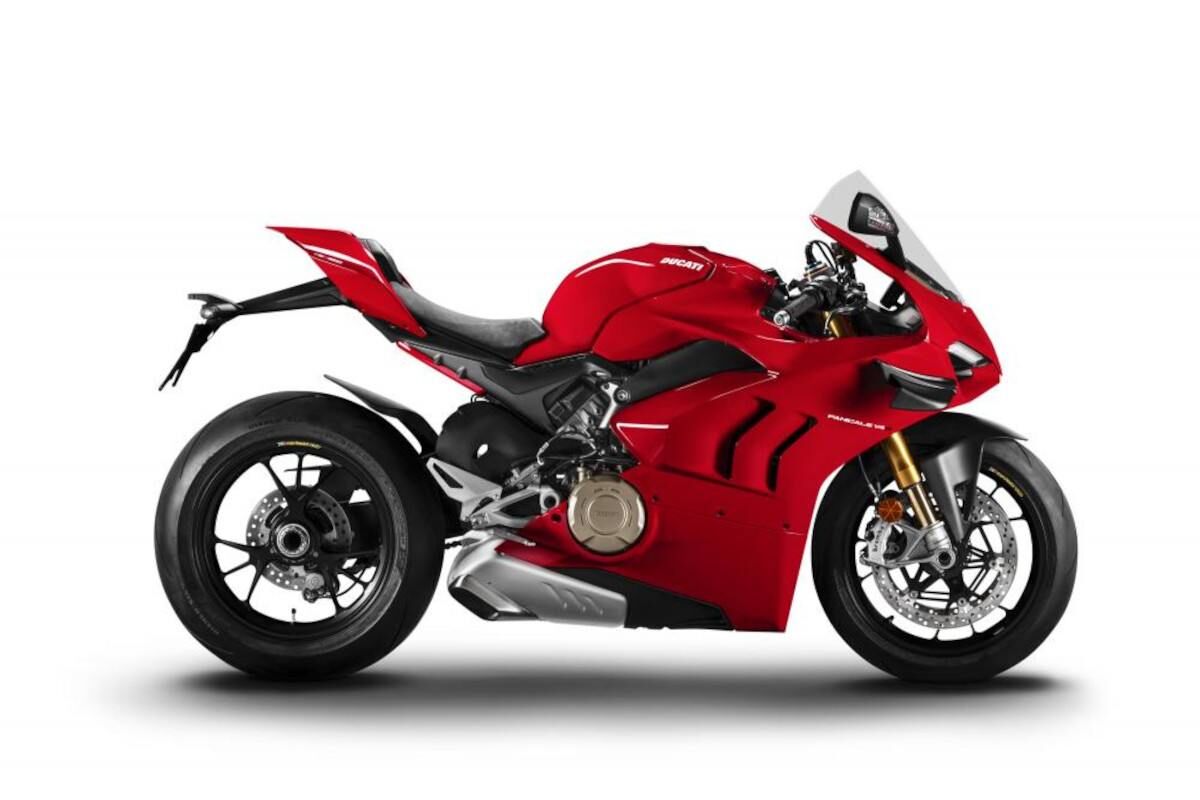
One of the most effective and direct methods of monetizing racing prestige is through the strategic release of high-margin, limited-edition motorcycles. These models are marketed as “collector’s items” and “unique works of art” that celebrate historical moments and iconic achievements.17 A prime example is the line of Panigale V4 replicas, which commemorate championship victories with liveries inspired by the official race bikes and feature original autographs from world champion riders.17 The exclusivity is underscored by specific, limited production numbers that often correspond to a rider’s race number or other significant figures, such as the 260 Panigale V4 replicas for the 2022 season champions or the 263 units for the 2023 Francesco Bagnaia replica.17 Collaborations with high-end brands like Lamborghini and Poltrona Frau further elevate Ducati’s premium status, allowing it to produce highly sought-after motorcycles that sell out in a very short time, establishing themselves as “true collector items of great value”.11 This strategy allows Ducati to capitalize on its brand equity and racing success in a direct and highly profitable manner.

3. The Electrification Frontier: Pioneering the Future
The Strategic Imperative for a New Mobility
Ducati’s approach to the future of mobility is not confined to a single path but is a multi-pronged exploration of new propulsion technologies. While the company’s parent, the Volkswagen Group, has a clear “Roadmap E” mandate to introduce electrified vehicles across all its brands 19, Ducati’s strategy is more nuanced. CEO Claudio Domenicali has articulated a vision that includes electric motorcycles, e-fuels, and hydrogen as viable options for a zero-emission future.3 This multifaceted approach demonstrates a calculated effort to be at the forefront of technological change while acknowledging the challenges inherent in each path. E-fuels, for instance, offer the advantage of high energy density and compatibility with existing ICE infrastructure, a major consideration given that MotoGP is transitioning to 100% non-fossil fuels by 2027.3 Hydrogen, another area of exploration, is noted for its high-rpm combustion potential, making it particularly interesting for high-performance engines.3 This portfolio of options signals that Ducati is not simply reacting to regulatory pressure but is actively shaping its future, with a clear understanding of the need to protect its brand identity in a world of new energy sources.
The MotoE Laboratory
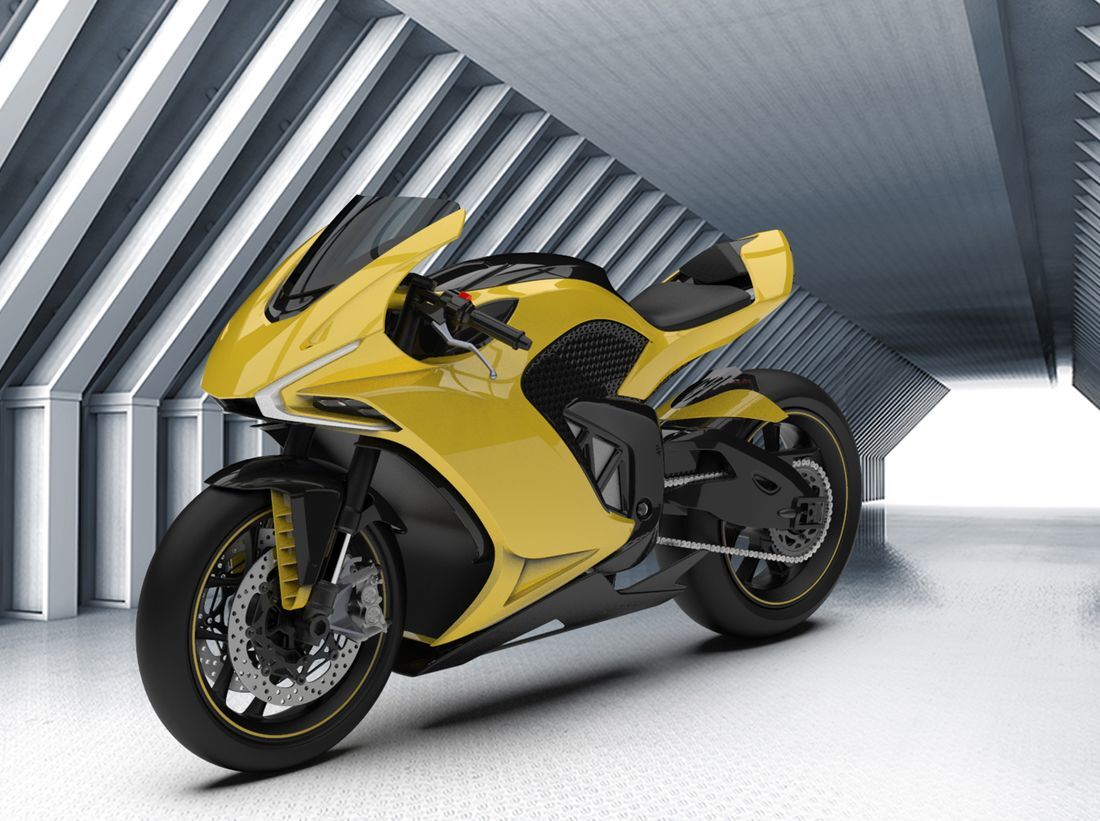
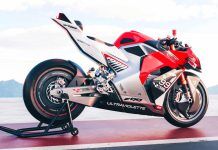
The Ducati V21L, the prototype created for the FIM Enel MotoE™ World Cup, is the physical embodiment of the company’s commitment to electric R&D. Since 2023, Ducati has been the sole supplier for the championship, with 18 bikes on the track.1 This venture is explicitly referred to as a “technological laboratory” 3, where Ducati is building a fundamental “heritage of know-how” 23 to be ready for the eventual creation of an electric road bike. The V21L is described as a “true MotoGP of electric motorcycles” 23, and its development has been a synergistic effort between Ducati and Ducati Corse engineers, applying the same methodologies used for their championship-winning MotoGP bikes.21
A pivotal technical breakthrough was the V21L’s debut of a new solid-state lithium-metal battery at the 2025 IAA Mobility event in Munich.25 This technology, developed in partnership with QuantumScape and PowerCo (the Volkswagen Group’s battery company), offers a significant advantage over traditional liquid electrolyte batteries.25 The solid-state battery boasts a high energy density of

844 Wh/L and the ability to charge from 10% to 80% in just over 12 minutes, directly addressing a primary consumer concern about EVs: long charging times.25 The continuous R&D on the prototype has already yielded tangible results; for the 2025 MotoE season, Ducati reduced the number of battery cells to achieve a weight saving of 8.2 kg, bringing the bike’s total weight down to 216.2 kg.23 This iterative development process, where improvements in one area (battery technology) lead to gains in another (lap times), is a direct reflection of Ducati’s racing-derived approach.
| Component | 2023-2024 V21L Specification | 2025 V21L Specification | Implication |
| Total Weight | 225 kg 28 | 216.2 kg 23 | Significant reduction in unsprung mass, leading to improved handling. |
| Battery Weight | 110 kg 28 | 101.8 kg (estimated) 23 | Lighter battery pack improves weight distribution and overall performance. |
| Battery Cells | 1,152 cylindrical “21700” type 21 | 960 with more advanced chemistry 23 | Fewer cells for the same power and autonomy, indicating higher energy density. |
| Charging | 80 minutes to 45% 28 | 10-80% in just over 12 minutes (Solid-State) 25 | Drastically reduced charging time, a major breakthrough for consumer adoption. |
| Power | 110 kW (150 hp) 28 | 110 kW (150 hp) 29 | Power maintained while reducing weight, improving power-to-weight ratio. |
| Top Speed | 275 km/h at Mugello 28 | 282 km/h (record) 30 | Demonstrates competitive performance and racing-driven improvements. |
| Key Innovation | Liquid-cooled battery pack, chassis as stressed member 28 | World’s first live-demonstrated solid-state battery in a two-wheeler 25 | Positions Ducati as a leader in next-generation battery technology. |
Navigating the Risks
The development of electric motorcycles faces a number of significant challenges, from technical hurdles to market perception.31 The high initial cost, driven largely by expensive battery technology, and consumer concerns about limited range (“range anxiety”) and the lack of charging infrastructure are prominent risks.31 Ducati is strategically addressing these challenges through its R&D and market positioning. The partnership with the Volkswagen Group, which chose Ducati to showcase its groundbreaking solid-state battery 26, is a pivotal move that mitigates the risk of high R&D costs and provides access to a large, well-funded supply chain.
On the market perception front, the dissonance between Ducati’s heritage of loud, visceral ICE bikes and a quiet, electric future is a key concern.3 Ducati is mitigating this by reframing its electric narrative. Instead of marketing quiet, urban mobility, the company is using its MotoE program to position its future EVs as high-performance machines that offer a “pure technology” riding experience.21 This is designed to appeal to the passionate “Ducatisti” by proving that electric power can deliver the same, if not superior, performance on the track.27 The strategy appears to be working; a surge in online search interest for “Ducati electric motorcycle” was observed in July 2025, which may be correlated with product announcements or racing successes.12
| Key Risk | Risk Level | Ducati’s Mitigation Strategy |
| High Initial Cost 31 | High | Leveraging the financial surpluses from its highly profitable ICE business to self-finance R&D and infrastructure investments.6 |
| Battery Technology 31 | High | Collaboration with Volkswagen Group’s PowerCo and QuantumScape to develop and test groundbreaking solid-state batteries with higher energy density and fast charging.25 |
| Limited Range 31 | High | Continuous weight reduction on the V21L prototype and R&D into more energy-dense batteries to improve range and performance.23 |
| Charging Infrastructure 31 | High | Focusing on fast-charging technology through its solid-state battery to minimize downtime and mitigate the lack of widespread charging stations.25 |
| Market/Consumer Perception 31 | Low | Using the MotoE program to showcase electric technology as high-performance and credible, leveraging racing success to overcome consumer skepticism.12 |
| Technical Challenges 31 | High | Applying established MotoGP R&D methodologies and engineering talent to the MotoE project to ensure reliability and performance of high-voltage components.21 |
4. Strategic Synthesis: Legacy Fuels Innovation
The interdependent nature of Ducati’s dual strategic horizon is the most significant element of its business model. The company’s record-breaking financial performance from 2021 to 2022, directly tied to its on-track supremacy, did more than just generate profit; it provided the critical financial runway for long-term strategic plans. This robust, self-financed capital allows Ducati to absorb the substantial R&D costs associated with electric vehicle development, a high-risk venture where immediate returns are not guaranteed.6 This financial solidity ensures that the company can continue to invest significantly in its electric future without needing to compromise on its core brand values or market position.9
Furthermore, Ducati is masterfully leveraging its brand heritage to serve as a technological catalyst for its electric ventures. The company’s brand equity, built on a promise of “refined engineering” and performance 1, provides a powerful foundation for building trust with consumers. By developing the V21L prototype with the same engineers and applying the same high-performance standards used on its MotoGP bikes, Ducati is deliberately transferring the credibility of its racing legacy to its electric technology.21 This approach helps to overcome key consumer perception challenges by reframing electric motorcycles not as a compromise, but as a superior, high-performance evolution of the brand’s core product. The “pure technology” narrative for the MotoE bike simplifies the complex engineering and connects the new products directly to the brand’s long history of innovation and racing.21 This strategy ensures that the “Ducatista” community, a crucial and loyal customer base, remains engaged and receptive to the brand’s future-focused initiatives.

5. Conclusion & Forward Outlook
Ducati’s dual strategic horizon is a sophisticated and highly effective model for navigating the automotive industry’s transformative shift toward electrification. The analysis confirms that the company’s ICE racing dominance is far more than a marketing exercise; it is the financial and cultural engine that powers its future. The record-breaking revenues and profits generated by motorsport success provide the self-financed capital necessary to invest in high-risk R&D, while the brand prestige cultivated on the racetrack serves as a powerful tool to lend credibility to its electric ventures. This strategic interdependence creates a flywheel effect where success in one area strengthens the other, ensuring long-term brand relevance and market leadership.
Strategic Recommendations
- Prioritize Solid-State Battery R&D: The V21L’s solid-state battery is a game-changing innovation that addresses the most significant consumer hurdles for EV adoption. Ducati should continue to prioritize its R&D partnership with QuantumScape and PowerCo, focusing on scalability and commercial viability for road bikes.
- Maintain Premium Market Positioning: Ducati must resist the temptation to enter the mass-market EV space. Its electric offerings should be positioned as high-performance, exclusive alternatives, directly leveraging the “MotoGP of electrics” narrative. This will reinforce brand exclusivity and command a premium price point, which is necessary to recoup high R&D costs.
- Strengthen the Synergistic Narrative: All marketing and brand communications should explicitly highlight the technological transfer from the racetrack to the road. The company should use its racing success as a compelling and emotional story that explains why its electric motorcycles will be true high-performance machines, not simply a new form of transportation.
Predictive Outlook
Based on its current trajectory, Ducati is well-positioned to become a leading force in the high-performance electric motorcycle market. The ongoing development of the V21L prototype, combined with the brand’s unique ability to leverage its racing legacy, is poised to drive a tangible increase in consumer electric sales. It is predicted that as solid-state battery technology matures and the MotoE program continues to showcase its performance, Ducati will see a significant expansion of its customer base by 2026, successfully bridging the gap between its celebrated ICE heritage and a future defined by clean, exhilarating electric power.
Sources
- Who we are | Ducati, accessed on September 11, 2025, https://www.ducati.com/ww/en/company/who-we-are
- Ducati logo history: Exploring the Ducati emblem and brand – Fabrik Brands, accessed on September 11, 2025, https://fabrikbrands.com/branding-matters/logofile/ducati-logo-history-ducati-motorcycle-logo/
- The future of Ducati between E-Fules, Hydrogen and Electric …, accessed on September 11, 2025, https://www.epaddock.it/en/ducati%27s-strategy-for-the-future-of-mobility-motoe-and-fuels-and-hydrogen/
- Ducati – Wikipedia, accessed on September 11, 2025, https://en.wikipedia.org/wiki/Ducati
- Ducati at a glance | Ducati Company, accessed on September 11, 2025, https://www.ducati.com/ww/en/company/ducati-at-a-glance
- Ducati overcomes 1 billion euros revenue for the first time in its history, accessed on September 11, 2025, https://www.ducati.com/ww/en/news/ducati-overcomes-1-billion-euros-revenue-for-the-first-time-in-its-history
- Ducati Announces A Record Sales Year In 2022 – MotoAmerica, accessed on September 11, 2025, https://www.motoamerica.com/ducati-announces-a-record-sales-year-in-2022/
- Ducati ends 2024 with a revenue of over one billion euros combined …, accessed on September 11, 2025, https://www.ducati.com/gb/en/news/ducati-ends-2024-with-a-revenue-of-over-one-billion-euros-combined-with-a-benchmark-profitability
- Ducati ends 2024 with a revenue of over one billion euros combined with a benchmark profitability, accessed on September 11, 2025, https://www.ducati.com/se/sv/news/ducati-ends-2024-with-a-revenue-of-over-one-billion-euros-combined-with-a-benchmark-profitability
- The passion for Ducati has never been greater. With 59,447 motorcycles sold worldwide, 2021 is the best year ever, accessed on September 11, 2025, https://www.ducati.com/ww/en/news/the-passion-for-ducati-has-never-been-greater-with-59447-motorcycles-sold-worldwide-2021-is-the-best-year-ever
- 2023 is the third-best year in the company’s history in terms of sales results – Ducati, accessed on September 11, 2025, https://www.ducati.com/ww/en/news/ducati-2023-is-the-third-best-year-in-the-company-s-history-in-terms-of-sales-results
- 2025 Ducati Electric Motorcycle Trends: Market Growth & Tech Upgrades – Accio, accessed on September 11, 2025, https://www.accio.com/business/trend-of-ducati-electric-2025
- Ducati Lenovo Team Partners and Sponsors, accessed on September 11, 2025, https://www.ducati.com/ww/en/racing/motogp/ducati-lenovo-team-partners-sponsors
- How MotoGP Business Model Generates Over $1.2 Billion in Annual Revenue – AMW Group, accessed on September 11, 2025, https://www.amworldgroup.com/blog/motogp-business-model
- Ducati Official Club – The Ducati Clubs, accessed on September 11, 2025, https://www.ducati.com/ww/en/ducati-official-club
- DOC: The Heartbeat of the Ducati Motorcycles Community, accessed on September 11, 2025, https://www.ducati.com/us/en/stories/ducati-people/doc
- Ducati Speciale: special models in limited and numbered editions, accessed on September 11, 2025, https://www.ducati.com/ww/en/bikes/ducati-speciale
- Ducati Speciale: Exclusive High-Performance Motorcycles, accessed on September 11, 2025, https://www.ducati.com/us/en/bikes/ducati-speciale
- An electric Ducati bike by 2030? – BikesRepublic.com, accessed on September 11, 2025, https://www.bikesrepublic.com/english/archive/electric-ducati-bike-2030/
- Racing For The Future | The Official Home of MotoGP™, accessed on September 11, 2025, https://www.motogp.com/en/racing-for-the-future
- Ducati Motorcycles MotoE Prototype | The Future of Electric Racing, accessed on September 11, 2025, https://www.ducati.com/us/en/company/product-innovation/moto-e/prototype
- Ducati Motorcycles MotoE | Electric Power, Ducati Thrill, accessed on September 11, 2025, https://www.ducati.com/us/en/company/product-innovation/moto-e
- The Ducati V21L to start the 2025 MotoE Championship with new technical updates, accessed on September 11, 2025, https://www.ducati.com/ww/en/news/the-ducati-v21l-to-start-the-2025-motoe-championship-with-new-technical-updates
- MotoE Ducati – Electric Bike – The future is here, accessed on September 11, 2025, https://www.ducati.com/ww/en/company/innovation/moto-e
- This All-Electric Ducati Has a Solid-State Battery, a Volkswagen …, accessed on September 11, 2025, https://www.rideapart.com/news/771717/ducati-v21l-electric-motorcycle-solid-state-battery/
- Ducati V21L debuts solid-state battery at IAA Mobility | Visordown, accessed on September 11, 2025, https://www.visordown.com/news/ducati-v21l-debuts-solid-state-battery-iaa-mobility
- Ducati Unveils World-First Solid-State Electric Motorcycle with Volkswagen, accessed on September 11, 2025, https://www.brm.co.nz/ducati-unveils-world-first-solid-state-electric-motorcycle-with-volkswagen/
- The Overview of the Ducati MotoE – Epaddock, accessed on September 11, 2025, https://www.epaddock.it/en/motoe-technical-data/the-ducati-motoe/
- Ducati MotoE: the prototype, code-name: V21L, accessed on September 11, 2025, https://www.ducati.com/ww/en/company/innovation/moto-e/prototype
- Ducati concludes its first season as sole supplier of the FIM Enel MotoE World Championship with great satisfaction: statistics, accessed on September 11, 2025, https://www.ducati.com/ww/en/news/ducati-concludes-its-first-season-as-sole-supplier-of-the-fim-enel-motoe-world-championship-with-great-satisfaction-statistics
- Risk Assessment and Mitigation in the Development of … – IRJET, accessed on September 11, 2025, https://www.irjet.net/archives/V10/i10/IRJET-V10I1095.pdf
- It’s time to accelerate: why electric motorcycle brands must invest in visibility. Now., accessed on September 11, 2025, https://thepack.news/its-time-to-accelerate-why-electric-motorcycle-brands-must-invest-in-visibility-now/
- Ducati motorcycle powered by revolutionary solid-state batteries makes world debut at Munich Auto Show – Electric & Hybrid Vehicle Technology International, accessed on September 11, 2025, https://www.electrichybridvehicletechnology.com/news/ducati-motorcycle-powered-by-revolutionary-solid-state-batteries-makes-world-debut-at-munich-auto-show.html
- What is the actual cost of a MotoGP bike? – Reddit, accessed on September 11, 2025, https://www.reddit.com/r/motogp/comments/1lo9vt6/what_is_the_actual_cost_of_a_motogp_bike/
Our Social Media Handles
- Instagram : LivingWithGravity
- Medium : Akash Dolas
- YouTube Channel : Gear and Shutter
- Facebook : LivingWithGravity