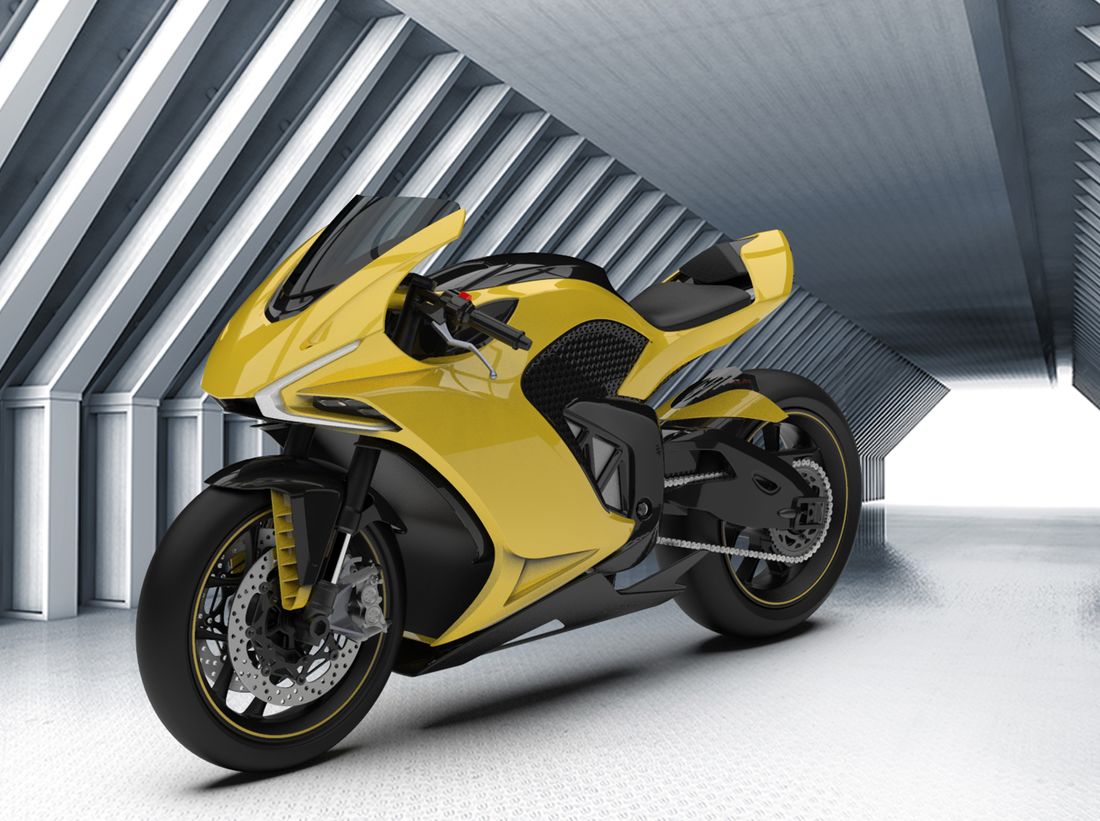
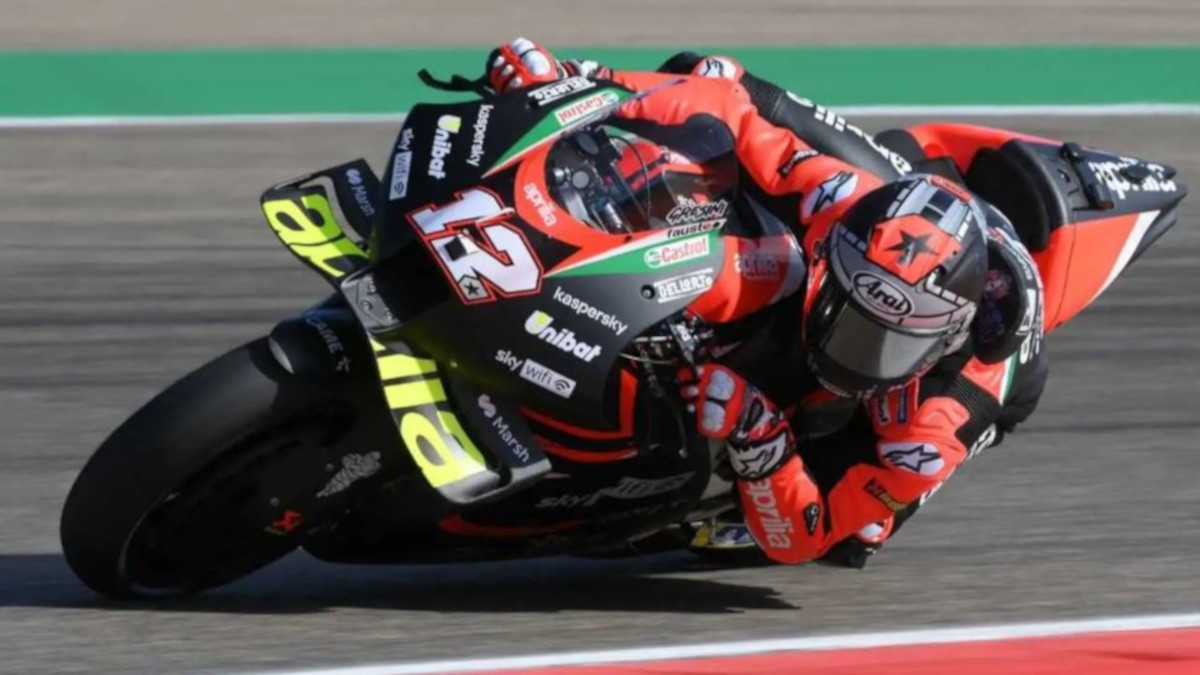







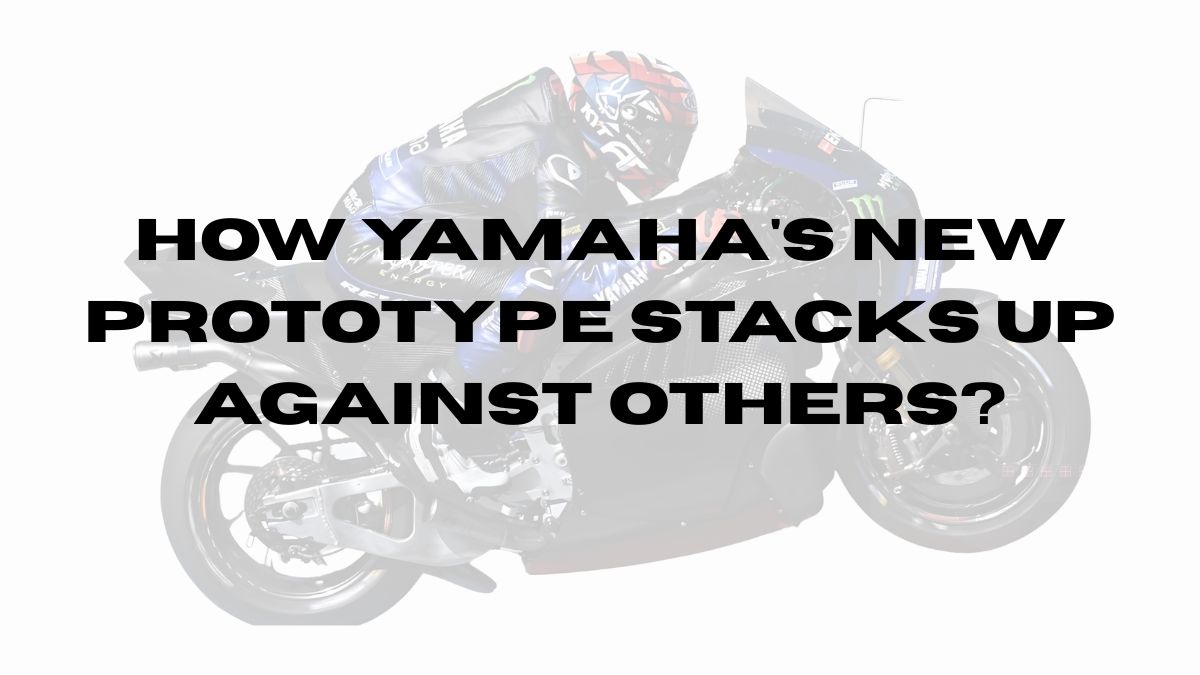
The development of a V4-powered prototype by Yamaha is a major shift from their traditional inline-four (I4) configuration, making the comparison primarily about the characteristics of these two distinct engine layouts in the current MotoGP landscape.
Comparison of Yamaha’s V4 prototype with other current MotoGP bikes, which are predominantly V4s, and its own I4 predecessor:
1. Engine Configuration Comparison
| Feature | Yamaha’s Former Inline-Four (I4) M1 | Yamaha’s V4 Prototype & Other MotoGP Bikes (Ducati, KTM, Honda, Aprilia) |
| Engine Layout | Four cylinders in a straight line. | Four cylinders arranged in a ‘V’ shape. |
| Packaging/Width | Inherently wider, impacting aerodynamics. | Inherently narrower, allowing for a slimmer bike profile and more space for aerodynamic development. |
| Chassis/Handling | Traditionally offers greater stability due to a longer crankshaft and a higher moment of inertia, leading to better corner speed and smoother characteristics. | Shorter crankshaft generally leads to a lower moment of inertia, resulting in quicker turning, greater agility, and easier change of direction (sometimes described as more “twitchy”). |
| Power/Speed | Historically, the I4 has struggled to match the top-end power and acceleration of the V4s on the straights. | Tends to be superior for outright top speed and acceleration, which is a major reason for the switch. |
| Grip & Electronics | Has faced challenges with rear-tire grip and getting the power down effectively. | Better packaging flexibility (weight distribution) and engine characteristics can aid in finding better rear grip and traction. Electronics are a major re-development area for Yamaha with the new engine. |
Export to Sheets
2. Performance Comparison (As per early testing)
- Current Deficit: Early testing results (e.g., Misano test data) showed the Yamaha V4 prototype was initially slower than the current I4 M1, with lap time differences ranging from approximately 0.5 to 1.0 second between riders.
- Context: This initial deficit is expected, as the V4 prototype is an entirely new concept (new engine, new chassis, new electronics mapping) that needs extensive development. For a completely new bike, being within a second of a machine developed over years is seen by some as a promising start.
- Rider Feedback: Test riders have noted that the braking performance was already feeling better on the V4 compared to the I4 M1, which was a known weakness. However, improvements are still needed in overall power delivery and handling.
3. Strategic Rationale for the V4 Switch
The move to the V4 configuration aligns Yamaha with the rest of the MotoGP grid (Ducati, KTM, Aprilia, and Honda all use V4s) and is driven by two main factors:
- Aerodynamics: The compact nature of the V4 engine is crucial in modern MotoGP, as it provides more space for advanced aerodynamics, a key performance differentiator. With a wider I4, the aero is compromised.
- 2027 Regulations: The upcoming regulations in 2027 will reduce the maximum engine capacity to 850cc and impose stricter aero limits. The V4 is widely considered the superior base platform for these new rules, and Yamaha is getting a head start on V4 development with the current 1000cc formula to be ready for the change.
Key Performance Comparison: V4 Prototype vs. Current M1 vs. Rivals
The crucial distinction lies in the change of engine configuration, which affects the entire bike’s design—from the chassis to the fairings.
4. On-Track Lap Time Data (Misano Test, September 2025)
The most concrete comparison comes from the one-day Misano post-GP test where the V4 prototype ran alongside the current I4 M1.
| Rider | Bike Tested | Best Lap Time | Difference to Current M1 (I4) | Difference to Fastest Rider (Acosta – KTM) |
| Alex Rins | Current M1 (I4) | 1′31.571s | N/A | −0.857s |
| Alex Rins | V4 Prototype | 1′32.101s | +0.530s (Slower) | −1.727s |
| Fabio Quartararo | V4 Prototype | 1′31.598s | N/A | −1.224s |
| Jack Miller (Pramac) | V4 Prototype | 1′32.635s | N/A | −1.921s |
Export to Sheets
- Crucial Number: The V4 prototype’s initial pace deficit to the current I4 M1 is around 0.5s to 1.0s per lap, though this is a significant improvement from earlier private tests where Rins suggested a gap of ∼2.0s per lap.
- Context: This is a completely new machine concept for Yamaha (engine, chassis, and electronics). The immediate goal is not speed, but establishing a reliable base for the 2026 season.
5. Technical and Aerodynamic Comparison
| Technical Aspect | Yamaha Current M1 (Inline-Four) | Yamaha V4 Prototype & V4 Rivals (Ducati, KTM, Honda, Aprilia) | Implication of V4 Switch |
| Engine Layout | I4 (Crossplane Crankshaft) | V4 (Various bank angles/firing orders) | Adopts the current dominant architecture. |
| Bike Width | Wider engine block necessitates wider fairings. | Narrower engine allows for a much slimmer profile. | CRUCIAL: Enables better aerodynamics, less drag, and more space for aero devices (wings, ducts) which are critical for cornering and straight-line performance. |
| Crankshaft | Longer, heavier crankshaft. | Shorter, lighter crankshaft. | Shorter crank reduces gyroscopic effect/moment of inertia, making the bike turn faster and change direction more easily. |
| Weight Distribution | Limited flexibility due to engine width. | V-shape is better for moving mass forward/backward for optimal weight distribution and anti-wheelie performance. | Key to managing the ∼300hp (estimated) and getting power to the rear tire. |
| Top Speed Deficit | Historically trails V4 rivals. Example: ∼8km/h slower than Ducati at speed traps in recent seasons. | Aims to eliminate this deficit, bringing Yamaha in line with the top-speed benchmark set by Ducati/KTM. | The main motivation for the V4. |
| Bore Size | ≤81mm (Current Regulation) | ≤81mm (Current Regulation) | 2027 Rule Change: The bore will drop to ≤75mm, which is why Yamaha is prioritizing V4 development now, as the new engine will be scaled down for 2027. |
Export to Sheets
6. Rider Assessment and Future Outlook
- Rider Verdict (Fabio Quartararo): “At the moment, it’s worse [than the I4 M1].” However, he added he had “zero problems adapting to the V4 engine.”
- Braking Improvement: Alex Rins reported a positive change: “I feel like braking was a little bit better compared to the Inline-4.”
- Electronics Challenge: The V4 requires a completely new electronics package and throttle mapping, as the entire power delivery and engine braking characteristics are different. This development is complex and takes significant time.
The comparison shows that the Yamaha V4 prototype has already delivered the anticipated dynamic change (quicker turning, potentially better braking) but has a long way to go to match the sheer lap speed of its I4 predecessor or, more importantly, the proven performance of the dominant V4 bikes from Ducati and KTM.
In summary, the Yamaha V4 is being developed to address the inherent aerodynamic and top speed limitations of their I4 engine compared to the current dominant V4 bikes on the grid, mainly Ducati. While still in its early stages of development and not yet competitive with the established bikes, the V4 represents Yamaha’s commitment to adopting the configuration that is believed to be the optimal layout for future MotoGP success.
Note: Official engine specifications (like horsepower) are strictly confidential in MotoGP. The comparison relies on publicly available technical data and on-track performance metrics from recent tests.
Sources
Yamaha Factory Racing Official News:
- Monster Energy Yamaha MotoGP Explore V4-Powered Prototype Potential at Misano Test (For official lap times and team quotes from Rins and Quartararo): https://www.yamaha-racing.com/news/motogp/monster-energy-yamaha-motogp-explore-v4-powered-prototype-potential-at-misano-test/
Crash.net / The Race (Detailed Analysis):
- Yamaha V4 vs Inline: Lap time difference for Rins, Miller at Misano MotoGP Test (For the detailed breakdown and gap-time comparison of Rins and Miller switching between the I4 and V4): https://www.crash.net/motogp/feature/1081909/1/yamaha-v4-vs-inline-time-difference-revealed-alex-rins-jack-miller-misano
- 2025 Official Misano MotoGP Test – Results (FINAL) (For the overall combined session times): https://www.crash.net/motogp/results/1081834/1/2025-official-misano-motogp-test-results
Our Social Media Handles
- Instagram : LivingWithGravity
- Medium : Akash Dolas
- YouTube Channel : Gear and Shutter
- Facebook : LivingWithGravity