





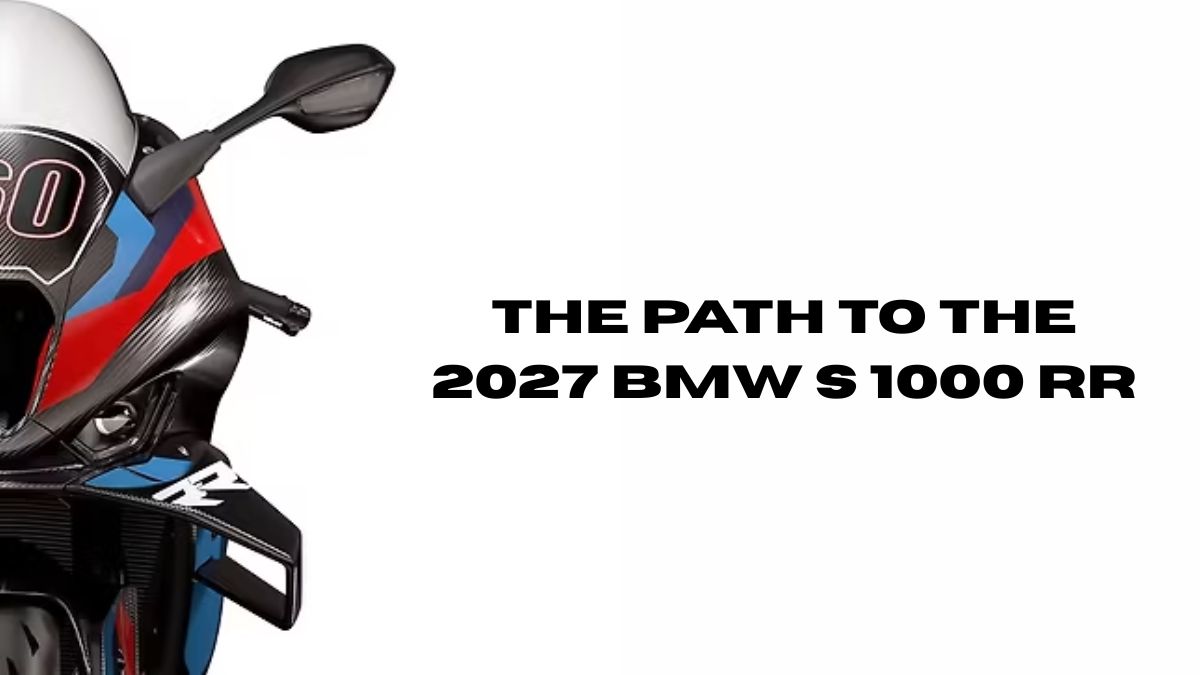
Projected Specifications and Technological Blueprint for the 2027 BMW S 1000 RR
I. Executive Summary: Defining the Next-Generation Superbike Benchmark
The projected specifications for the 2027 BMW S 1000 RR indicate a comprehensive, full-generation overhaul driven by a competitive imperative derived from the FIM Superbike World Championship (WSBK) program. The next S 1000 RR is positioned not merely as an evolution, but as a direct counterpart to a factory race machine, with its blueprint clearly established by the BMW Motorrad Concept RR unveiled at Concorso d’Eleganza Villa d’Este. This aggressive approach is designed to re-establish technological leadership in the highly contested superbike segment.

The analysis projects four critical areas of advancement that collectively define the 2027 model’s identity:
Performance Quantum Leap
The 999 cc water/oil-cooled in-line four-cylinder engine is forecasted to achieve a maximum power output significantly higher than current models. The current EU 5+ compliant S 1000 RR delivers 210 hp (154 kW) at 13,750 rpm.1 Building upon the 2025 M 1000 RR’s 218 hp output 2, the 2027 S 1000 RR street model is projected to reach the range of 225–230 hp (168–171 kW). This projection is highly validated by the Concept RR, which explicitly runs the WSBK-specification engine already delivering “more than 230 hp (169 kW)”.3
Mass Reduction and Structural Integrity
To manage this extreme power output dynamically, the motorcycle will feature an extensively revised chassis. A full model refresh is necessary due to rigidity limitations identified during WSBK competition.5 The structure will utilize advanced materials, including a newly engineered aluminum frame and extensive carbon fiber components, leading to new benchmarks in lightweight construction.6 The targeted wet weight is approximately 190–195 kg, achieving a power-to-weight ratio that elevates the model above most series production competitors.
Aerodynamic Sophistication
Aerodynamics move beyond the bolt-on wings of the prior generation. The 2027 design adopts the Concept RR’s streamlined, integrated passive winglets.8 These elements are designed to deliver competitive aerodynamic downforce, expected to match or exceed the M 1000 RR’s 30 kg at 300 km/h.2 This integration is critical for maintaining stability and maximizing cornering speed while adhering to the design principle of a compact, reduced package.7
Electronics Integration
Perhaps the most significant performance advantage will be the direct porting of electronic control and regulation systems from the WSBK M 1000 RR.3 This includes engine management, traction control, and engine braking software, offering a level of electronic precision and dynamic chassis control calibration previously reserved only for professional racing superbikes.
The strategic timing of the Concept RR reveal, explicitly referencing the victorious WSBK campaign 3, suggests an unprecedented commitment to rapid homologation and market supremacy. The detailed disclosure of the Concept RR’s specific WSBK power figures and direct electronics transfer 3 elevates the concept from a typical design study to a high-confidence specification preview. This transparency signals that the research and development cycle has been compressed, directly incorporating championship-winning race insights into the production specifications to secure technological advantage over key rivals in the power-to-weight and chassis performance categories.

II. Conceptual Foundation: From Race Paddock to Production Line
The development of the 2027 S 1000 RR is fundamentally guided by competition, establishing the BMW Motorrad Concept RR as the definitive architectural blueprint. The motorcycle’s identity is intrinsically linked to the highest levels of racing performance, marking a new era of engineering transfer.
II. A. The Concept RR: A Direct Homologation Preview
The BMW Motorrad Concept RR serves as the “ultimate performance statement” and a visionary glimpse into the next-generation RR models.3 Leadership within BMW Motorrad affirmed that the technology transfer from racing to road has “never been shown more clearly,” underscoring the production model’s competitive intent.3
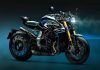
The Concept RR’s philosophy is described as “radical, reduced, racing-inspired,” emphasizing technological leadership and the desire to continuously set new benchmarks in the superbike segment.9 This aesthetic minimizes external connections and maximizes airflow precision.7 The engineering marvel successfully fuses sleek lines with cutting-edge aerodynamics, capturing the spirit of future superbikes while adhering to BMW’s core values of precision, speed, and style.10 This comprehensive preview, debuting at the Concorso d’Eleganza Villa d’Este and showcased at events like the Goodwood Festival of Speed 2025 11, establishes the Concept RR as a two-year working prototype ahead of the anticipated 2027 production cycle.5
II. B. The Mandate for a New Chassis Architecture
A defining feature of the 2027 S 1000 RR will be its entirely new chassis. This overhaul is not simply proactive development, but a reactive necessity dictated by the unforgiving demands of the WSBK circuit. Factory rider feedback, particularly from the 2024 championship winner, confirmed deficiencies in the road-going S 1000 RR frame when utilized in extreme race conditions.5
The WSBK team temporarily employed a prototype and unhomologated chassis to achieve championship success. However, regulatory requirements mandated a reversion to the standard road-going S 1000 RR frame, leading to subsequent performance compromises and rider dissatisfaction.5 This performance deficiency forced a critical reassessment of the current K67 platform, confirming it had reached its engineering limit in managing the extreme tire loads and stability requirements of hyper-performance superbikes.
Consequently, the 2027 S 1000 RR is mandated to incorporate a clean-sheet structural solution. The Concept RR highlights the strategic integration of an aluminum frame and tail section paired with extensive carbon fiber bodywork.4 The engineering focus is on optimizing every detail for lightweight construction and performance.7 It is highly probable that the new aluminum frame will feature significantly revised engine mounting points and swingarm pivot locations. This optimization is crucial for achieving controlled longitudinal and lateral flex, which improves front-end feel and optimizes traction delivery during corner entry and high-load corner exit—a performance metric where the Concept RR’s aerodynamic and chassis goals converge.7 The inclusion of carbon fiber in the tail section, potentially in a structural monocoque design (with weight savings of up to 60% seen in aftermarket applications 12), further supports the strategy of mass centralization, improving agility and lowering rotational inertia.
III. Powertrain Evolution: Achieving the 230+ HP Target
The heart of the 2027 S 1000 RR will remain the proven in-line four-cylinder engine, but with performance enhancements necessary to maintain segment leadership. The engineering challenge is achieving a significant power increase while adhering to stringent global emission standards.
III. A. Performance Specification and Output Projection
The current 999 cc engine retains the established bore and stroke dimensions of 80 mm times 49.7 mm.1 For the 2027 generation, the Concept RR’s use of the WSBK engine confirms the power target: the race unit “already delivers more than 230 hp (169 kW)”.3
Based on this blueprint, the 2027 S 1000 RR street model is projected to produce a maximum output of 225–230 hp (168–171 kW). This represents a 15–20 hp increase over the current S 1000 RR 1 and comfortably surpasses the 2025 M 1000 RR’s 218 hp figure.2 This power will likely be achieved at an elevated redline, potentially exceeding 14,500 rpm. Maximum torque is expected to see a moderate increase, rising above the current 113 Nm at 11,000 rpm 1 to over 115 Nm at a similar engine speed.

III. B. Technical Engine Refinements
Achieving a specific output of 230+ hp per liter in a 999 cc street-legal engine requires substantial internal and electronic optimization.
- Compression and Internals: The compression ratio must be significantly increased to achieve the desired high volumetric efficiency, likely rising from the current 13.3 : 1 1 to an estimated range of 13.5 : 1 to 14.0 : 1. This necessitates the use of high-strength components and lighter, upgraded titanium valve components, supporting the Concept RR’s lightweight directive.1
- ShiftCam System: The BMW Shiftcam variable intake camshaft control system 1 will be retained but refined to reliably operate under the higher mechanical stresses associated with the 230 hp tune and elevated RPM ceiling. New camshaft profiles will be optimized for the extreme high-revving performance range.
- Fueling and Management: The high compression ratio and high-octane fuel required for maximum power necessitate extremely sophisticated anti-knock regulation and electronic fuel injection systems. The 2027 model will integrate the advanced electronic control systems directly from the WSBK M 1000 RR 4 to ensure precise mixture control and reliability on standard premium pump fuel. The 2025 revision, which included a quick-action throttle with a shorter rotation angle (58 degrees) 14, will be standardized and potentially refined further.
- Emissions: To remain compliant in key global markets, the 2027 model must anticipate and meet upcoming regulatory standards, likely necessitating preparation for EU 6 compliance, a factor that complicates achieving the ambitious 230 hp target.
The table below summarizes the powertrain evolution, highlighting the projected shift in performance metrics:
Table 1: Superbike Powertrain Evolution (Current vs. Projected 2027)
| Metric | Current S 1000 RR (2025) | 2025 M 1000 RR | Projected 2027 S 1000 RR |
| Engine Type | Water/oil-cooled Inline-Four 1 | WSBK Development | Next-Gen Inline-Four |
| Capacity | 999 cc | 999 cc | 999 cc |
| Compression Ratio | 13.3 : 1 1 | Higher | 13.5 : 1 – 14.0 : 1(Estimated) |
| Rated Output (HP) | 210 hp @ 13,750 rpm 1 | 218 hp @ 14,500 rpm 2 | 225-230 hp @ 14,500+ \text{ rpm} |
| Max Torque (Nm) | 113 Nm @ 11,000 rpm 1 | 113 Nm @ 11,000 rpm | 115+ Nm @ 11,500 rpm |
| Emission Standard | EU 5+ 1 | EU 5+ | EU 6 Compliance (Mandatory) |
IV. Chassis and Structural Engineering: The Lightweight Imperative
The structural architecture of the 2027 S 1000 RR is driven by the need to resolve the dynamic deficiencies identified by the WSBK team. This mandates a redesigned aluminum main frame coupled with aggressive lightweight construction techniques.
IV. A. Frame Rigidity and Geometry Refinement
The frame redesign is paramount.5 The new aluminum frame will focus on optimizing lateral and torsional stiffness, specifically to improve front-end feedback and manage the immense traction demands generated by 230 hp at high lean angles. The frame geometry will be refined to allow controlled flex, maximizing the tire contact patch under load. The design language associated with the Concept RR emphasizes a “minimalist frame” 10 and continuous optimization for lightweight construction and performance across every component, from the frame to the smallest detail.6
IV. B. High-Tech Material Integration and Mass Reduction
The Concept RR is a statement on material science, utilizing structural carbon fiber and specialized aluminum alloys.4 The production S 1000 RR will standardize or offer as an essential option components that set “new benchmarks in lightweight construction”.7
- Subframe: The base S 1000 RR is likely to adopt a structural carbon fiber rear subframe, at least in the race-focused monoposto configuration, following the trend set by the M 1000 RR and high-end aftermarket parts.12 This dramatically reduces mass farthest from the center of gravity (up to 60% lighter than standard components 12), which critically improves the bike’s transient handling characteristics and rapid directional change capability (flickability). The Concept RR’s “minimalist tail section” supports this engineering focus on mass centralization.15
- Wheels and Components: M carbon wheels, a lighter swingarm, and M-type brake calipers are expected to be incorporated or offered as part of the standard S 1000 RR package, following the integration of these features in the immediate predecessor models.16
- Target Weight: The cumulative effect of these material advancements aims for a substantial reduction from the current model’s wet weight of approximately 204 kg (450 lbs).17 The projected wet weight for the 2027 S 1000 RR is in the narrow band of 190–195 kg (419–430 lbs). This targeted mass reduction, coupled with the 230 hp engine, ensures a power-to-weight ratio exceeding 1.18 hp/kg .
Table 2: Projected 2027 S 1000 RR Mass and Structural Specs
| Metric | Current S 1000 RR (Wet) | Concept RR / Structural Focus | Projected 2027 S 1000 RR (Wet) |
| Dry Weight | ~185 kg (407.8 lbs) 13 | Carbon/Aluminum Optimization 4 | ~175-180 kg |
| Wet Weight (Full Fuel) | ~204 kg (450 lbs) 17 | Significant Mass Reduction | 190–195 kg (419-430 lbs) |
| Frame Architecture | Aluminum Flex-Frame | All-New Frame Geometry | High-Stiffness Aluminum Perimeter Frame |
| Subframe Material | Aluminum/Steel | Structural Carbon Fiber (Monoposto) 12 | Carbon/Lightweight Aluminum Hybrid |
V. Aerodynamics: Passive Integration vs. Active Systems
The 2027 model elevates aerodynamic management from an added component to a fully integrated structural element, optimizing high-speed stability and cornering grip.
V. A. Passive Aero Refinement
The visible change in the Concept RR is the transition from the distinct, externally mounted winglets of the current generation (sometimes referred to as the “mustache” look) to a more “streamlined” and “integrated” design.8 These new winglets wrap around the headlight and stretch upward into the fairing, creating a compact and aggressive profile that appears narrower and more track-focused than its predecessors.8
The primary engineering goal is to maintain the necessary high downforce while minimizing parasitic drag, a balance the Concept RR claims to achieve.8 The 2025 M 1000 RR already achieved 30 kg of aerodynamic load at 300 km/h 2, and the 2027 S 1000 RR must match or exceed this figure to provide superior front-wheel load, counteract wheelie inclination, and allow the traction control system to intervene less frequently.18 This streamlined approach, supported by refined venting between components 8, is a necessary solution to the conflicting goals of maximizing downforce and top speed, leveraging sophisticated Computational Fluid Dynamics (CFD) optimization across the entire body surface.
V. B. Active Aerodynamic Control Systems (AACS)
BMW holds patents for active aerodynamic systems that could represent the next paradigm shift in motorcycle control. These “blow aero” systems utilize internal fans and high-pressure ducts to dynamically alter airflow direction in real-time, providing continuous aerodynamic support independent of speed or lean angle.19
The patented mechanism suggests an internal fan that directs high-pressure air bursts to various points on the chassis, theoretically allowing for enhanced downforce, assisted braking, or stability corrections during cornering.21 If implemented, this technology would transition aerodynamics from a static factor into a dynamic control input, profoundly affecting the physical limits of cornering speed. While the Concept RR previews “future technologies” 19, the complexity, weight, and regulatory hurdles associated with AACS make its full production debut on the base 2027 S 1000 RR highly improbable. However, the technology is likely under intensive development for a future high-performance variant, such as an updated M 1000 RR homologation model.
VI. Electronics and Digital Rider Management
The electronics package for the 2027 S 1000 RR represents the clearest instance of racing technology transfer, directly integrating the systems responsible for managing championship-winning performance.
VI. A. WSBK Electronics Transplant
The Concept RR explicitly promises the integration of electronic control and regulation systems taken directly from the WSBK M 1000 RR.3 This encompasses crucial systems such as engine management, traction control, and engine braking. This direct transfer provides a significant calibration advantage: the production motorcycle benefits from algorithms perfected by factory teams, granting the rider exceptional fidelity over the 230 hp engine’s output and dynamic chassis behavior.
The implication of using WSBK engine management software is the provision of highly flexible, potentially user-programmable engine maps. The advanced “Race Pro” modes 14 will likely incorporate sophisticated, pre-validated curves for torque delivery, throttle sensitivity, and engine braking, curves that are far more nuanced than current street mapping permits. This technical depth is essential for expert riders seeking to exploit the substantial performance increase with confidence and safety.
VI. B. Enhanced IMU and Rider Aids
The core of the dynamic control system remains the highly sophisticated six-axis Inertial Measurement Unit (IMU).16 The 2027 model will feature the most refined iteration of M-specific electronic aids, including:
- Slide Control: Enhanced control over rear-wheel slip to optimize drive during corner exit.16
- ABS Brake Slide Control: Integrated with cornering ABS to allow for controlled rear-wheel lift or drift under extreme braking, a feature crucial for shaving tenths of a second on the track.16
- Suspension Control: Refined Dynamic Damping Control (DDC), which utilizes IMU input on pitch and lean angle to adjust suspension damping automatically.22
- Data Logging: Features such as launch control, pit limiter, and easier access to data logging capabilities, including the recess for an M data logger GPS mouse 14, will be standard or readily available.
VI. C. Future Sensor Technology (Speculative)
While the S 1000 RR maintains a reduced, track-focused aesthetic 9, the general industry trend toward situational awareness systems is noted. BMW Motorrad’s significant patent activity in advanced sensor technology 23 and the existing integration of the IMU 22 suggest ongoing research. However, the introduction of systems such as Adaptive Cruise Control, which relies on frontal radar, is unlikely for the base S 1000 RR in 2027, as it would conflict with the motorcycle’s pure performance mandate and minimalist design.10
VII. Competitive Landscape and Segment Threat Assessment
The 2027 BMW S 1000 RR is engineered to directly challenge the dominance of the Ducati Panigale V4 series, focusing on a superior power-to-weight ratio and technological precision.
VII. A. Head-to-Head Power Projection
The current S 1000 RR (206.51 bhp) 24 is already a competitive machine but falls short of the current standard Panigale V4 (213 bhp).24 The projected 225–230 hp for the 2027 S 1000 RR places it in direct power parity with or slightly superior to the most powerful standard V4 variants, despite maintaining the smaller 999 cc displacement (compared to the V4’s 1103 cc capacity).24 This strategy minimizes the gap to the highly specialized V4 R homologation machines while offering a more balanced platform for street use, characterized by superior engine durability and manageable heat output.
VII. B. The Power-to-Weight Advantage
The combination of a 225–230 hp engine and a projected wet weight of 190–195 kg is designed to create a definitive power-to-weight advantage. This ratio, calculated to be between 1.15 and 1.21 hp/kg , strategically aims to surpass the ratio of standard Ducati V4 variants.
This efficiency is BMW’s primary engineering focus. The high-revving nature of the inline-four, maximizing specific output at peak RPM, emphasizes linear power delivery and top-end speed. When integrated with the new rigidity-optimized chassis and advanced WSBK electronics, this combination aims to create a superior precision tool for professional riders. This design reinforces the perception of BMW’s “precision engineering” as the smarter acquisition over the “raw passion” often associated with Italian superbikes.25
VII. C. Cost and Value Proposition
Historically, the S 1000 RR has been recognized for offering exceptional performance value compared to the premium pricing of the Panigale V4.24 While the 2027 model, with its advanced materials and race-derived electronics, will necessitate a higher price point than its predecessor, it is strategically positioned to offer a package of superior technology and performance metrics (230 hp, high rigidity) at an entry cost that will likely undercut the most extreme homologation specials from competitors.
Table 3: Competitive Superbike Performance Projection (2027 Estimate)
| Model | Projected Output (HP) | Displacement (cc) | Estimated Wet Weight (kg) | Power-to-Weight Ratio (hp/kg) |
| 2027 BMW S 1000 RR | 225-230 | 999 | 190-195 | 1.15 – 1.21 |
| Ducati Panigale V4 S (2025 Est.) | ~215-220 | 1103 | ~195-200 | 1.08 – 1.13 |
| Ducati Panigale V4 R (Homologation) | 237-240 (Race Trim) | 998 | ~185-190 | 1.25 – 1.29 |
| Current M 1000 RR (2025) | 218 | 999 | 192 | 1.13 |

VIII. Concluding Projections and Investment Outlook
The projected specifications for the 2027 BMW S 1000 RR define a motorcycle that has fundamentally shifted its competitive focus. It is designed to be the production superbike closest to a current WSBK race prototype, validating the extensive investment in the motorsports program.
VIII. A. Technological and Engineering Summary
The 2027 S 1000 RR will be defined by four non-negotiable enhancements:
- Engine: A sustained maximum power output of 225–230 hp from the 999 cc inline-four.
- Chassis: A completely re-engineered aluminum frame designed to optimize rigidity and resolve handling deficiencies identified at the WSBK level.5
- Mass Management: A significant reduction in overall wet weight, targeting below 195 kg, achieved through extensive use of high-tech materials like structural carbon fiber.6
- Control Systems: Direct transfer and standardization of WSBK-level electronic control units and sophisticated calibration software.3
The entire specification package—engine power, chassis rigidity, and aerodynamic efficiency—is aimed at shifting the competitive paradigm. By explicitly linking the production specifications to the WSBK winning machine 3 and incorporating race-mandated changes (such as frame optimization), the 2027 S 1000 RR is positioned as an engineering statement that validates the entire BMW Motorrad racing division. This focus on performance credibility is essential for maintaining premium pricing and asserting market dominance.
VIII. B. Risks and Contingencies
Two primary risks accompany this aggressive development timeline:
- Emissions Compliance: Achieving the target output of 230 hp while navigating increasingly strict global emissions regulations, particularly preparation for forthcoming EU 6 standards, presents a substantial technical challenge. Successfully integrating the requisite catalytic systems and engine mapping without resorting to highly specialized (and expensive) engine re-engineering is crucial for the standard model’s commercial viability.
- Active Aerodynamics Delay: The full production implementation of highly complex systems, such as the patented, fan-assisted Active Aerodynamic Control System (AACS) 20, is technically challenging and potentially subject to delays. Should BMW’s competitors introduce similarly innovative dynamic systems by 2027, the S 1000 RR’s overall technological differentiation will be limited if AACS remains confined to patent illustrations. The success of the 2027 model relies heavily on the refined passive aero and chassis being sufficiently transformative on their own.
Sources
- Data and equipment | S 1000 RR – BMW Motorrad UK, accessed October 27, 2025, https://www.bmw-motorrad.co.uk/en/models/sport/s1000rr/technicaldata.html
- NEW M 1000 RR UNVEILED: BMW take wraps off the 2025 model – WorldSBK, accessed October 27, 2025, https://www.worldsbk.com/en/news/2025/NEW+M+1000+RR+UNVEILED+BMW+take+wraps+off+the+2025+model
- BMW Motorrad presents the „BMW Motorrad Concept RR“ at the Concorso d’Eleganza Villa d’Este. – BMW Press, accessed October 27, 2025, https://www.press.bmwgroup.com/usa/article/detail/T0450268EN_US/bmw-motorrad-presents-the-%E2%80%9Ebmw-motorrad-concept-rr%E2%80%9C-at-the-concorso-d-eleganza-villa-d-este?language=en_US
- BMW’s Concept RR Is a 230-HP Glimpse into the Future of Superbikes | HiConsumption, accessed October 27, 2025, https://hiconsumption.com/motors/bmw-motorrad-concept-rr/
- 2027 BMW S 1000 RR to Debut on 24 May – BikesRepublic.com, accessed October 27, 2025, https://www.bikesrepublic.com/english/2027-bmw-s-1000-rr-to-debut-on-23-may/
- BMW Motorrad presents the „BMW Motorrad Concept RR“ at the Concorso d’Eleganza Villa d’Este. – BMW Press, accessed October 27, 2025, https://www.press.bmwgroup.com/global/article/detail/T0450088EN/bmw-motorrad-presents-the-%E2%80%9Ebmw-motorrad-concept-rr%E2%80%9C-at-the-concorso-d-eleganza-villa-d-este?language=en
- BMW’s Latest Creation for the Superbike Segment | 230 Hp | BMW Motorrad Concept RR, accessed October 27, 2025, https://www.youtube.com/watch?v=z9PcQ_FI–E
- Future of Speed: BMW Concept RR Breaks Cover at Villa d’Este – YouTube, accessed October 27, 2025, https://www.youtube.com/watch?v=zd9VUGAWM00
- BMW Motorrad Concept RR, accessed October 27, 2025, https://www.bmw-motorrad.com/en/articles/concept-rr.html
- Concept RR by BMW Motorrad: A Vision of Tomorrow’s Motorcycle, accessed October 27, 2025, https://www.bmwmotorcyclesoftemecula.com/2025/07/17/concept-rr-by-bmw-motorrad-preview/
- BMW Motorrad Concept RR Debuts in Motion at Goodwood 2025 – YouTube, accessed October 27, 2025, https://www.youtube.com/watch?v=zaUOGw2KIw4
- Fullsix Carbon Monocoque Subframe S1000RR M1000RR 2023-2025 – Motomillion, accessed October 27, 2025, https://www.motomillion.com/products/fullsix-carbon-monocoque-subframe-s1000rr-m1000rr-2023-2024
- Data and equipment | S 1000 RR | BMW Motorrad, accessed October 27, 2025, https://www.bmwmotorcycles.com/en/models/sport/s1000rr/technicaldata.html
- Brand New 2025 BMW S1000 RR | Procycles Motorbike Shop, accessed October 27, 2025, https://www.procycles.com.au/blogs/news/the-brand-new-2025-bmw-s1000-rr
- BMW Motorrad Presents Visionary Concept RR at Concorso d’Eleganza, accessed October 27, 2025, https://www.bmwmotorcyclesofriverside.com/2025/07/30/bmw-motorrad-presents-visionary-concept-rr-at-concorso-deleganza/
- BMW S1000RR & M1000RR: A complete superbike evolution guide (2009–2024) – BeMoto, accessed October 27, 2025, https://www.bemoto.uk/the-pit-stop/rider-community/iconic-bikes-unpacked/bmw-s1000rr-m1000rr-a-complete-superbike-evolution-guide-2009-2024/
- BMW S1000RR – Wikipedia, accessed October 27, 2025, https://en.wikipedia.org/wiki/BMW_S1000RR
- The new BMW M 1000 RR., accessed October 27, 2025, https://www.press.bmwgroup.com/france/article/attachment/T0317568FR/461305
- BMW Working on New Fan-Assisted Aerodynamics for Motorcycles – Bike Rider Magazine, accessed October 27, 2025, https://www.brm.co.nz/bmw-working-on-new-fan-assisted-aerodynamics-for-motorcycles/
- BMW Working on Blow Aero for Better Cornering Performance – Cycle World, accessed October 27, 2025, https://www.cycleworld.com/motorcycle-news/bmw-blow-aerodynamics-better-cornering-performance/
- Patents Reveal BMW Wants To Make A Superbike With Aerospace Technology – Top Speed, accessed October 27, 2025, https://www.topspeed.com/patents-reveal-bmw-wants-to-make-a-superbike-with-aerospace-technology/
- BMW S 1000 RR Buyers Guide — Speed and Sensibility (Updated 2023) – Motofomo, accessed October 27, 2025, https://motofomo.com/bmw-s-1000-rr-buyers-guide/
- The BMW Motorrad Concept RR, accessed October 27, 2025, https://www.bmwmotorcycles.com/en/experience/stories/sport/concept-rr.html
- BMW S1000RR vs Ducati Panigale V4 – Know Which Is Better! – BikeWale, accessed October 27, 2025, https://www.bikewale.com/compare-bikes/bmw-s1000rr-vs-ducati-panigale-v4/
- 2025 Ducati Panigale V4 vs BMW S1000RR Ultimate Superbike Street Showdown!, accessed October 27, 2025, https://www.youtube.com/watch?v=DTjwobF7xIQ
Our Social Media Handles
- Instagram : LivingWithGravity
- Medium : Akash Dolas
- YouTube Channel : Gear and Shutter
- Facebook : LivingWithGravity