







I. Executive Summary
Honda is poised to unveil its first large-capacity electric motorcycle on September 2nd, a strategic move that signals a significant shift from its previous conservative approach focused on small-capacity e-scooters. This new model is teased to deliver performance akin to a 500cc internal combustion engine (ICE) motorcycle, implying approximately 50bhp and notably higher torque. A key technical highlight is the integration of CCS2 fast charging, aligning it with global electric vehicle (EV) standards .
This announcement represents a pivotal moment for Honda in the electric two-wheeler market. Historically, Honda’s engagement in this sector has been characterized by a cautious strategy, primarily focusing on smaller, commuter-oriented electric scooters such as the Active e: and QC1 in India, and the CUV e: and ICON e: in Southeast Asia.1 The introduction of a “first large-capacity electric motorcycle” indicates a deliberate and significant strategic pivot. This is not merely the addition of a new product to its lineup; it reflects Honda’s intent to actively compete in the higher-performance, premium segment of the electric motorcycle market.
This strategic alignment mirrors a broader trend observed in the traditional ICE motorcycle market, where premium segments are demonstrating resilience and growth, even as economy segments face downturns.2 This strategic shift by a global automotive powerhouse like Honda is likely to have a ripple effect across the industry, potentially accelerating the overall development and adoption of performance electric motorcycles and compelling other major original equipment manufacturers (OEMs) to intensify their efforts in this space. Such a move could also validate the segment for a wider consumer base, fostering greater confidence in the viability and appeal of high-performance electric two-wheelers.
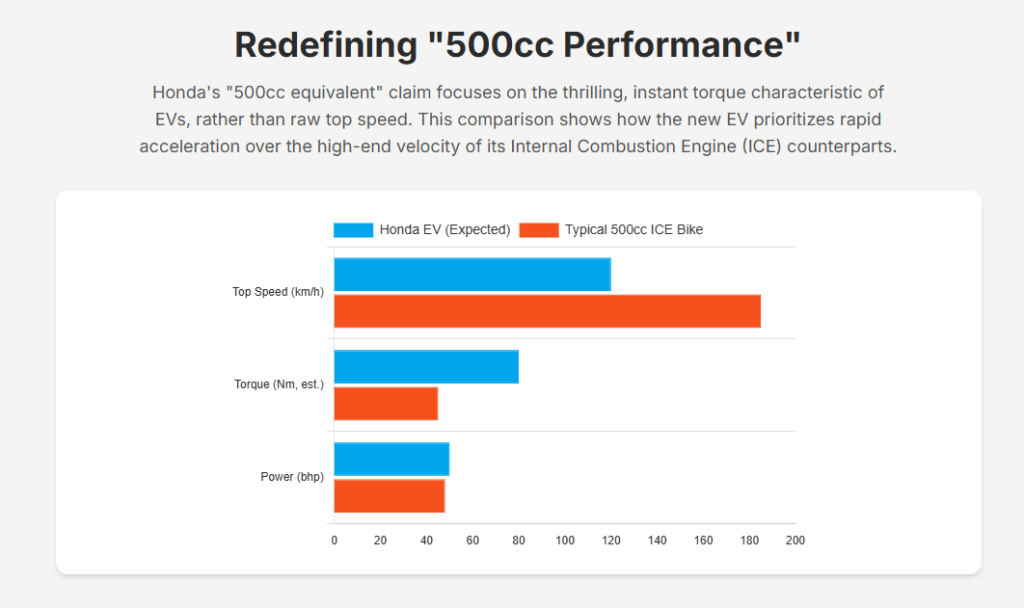
While the new EV is touted for “500cc equivalent” performance, preliminary specifications for the EV Fun concept (on which the new model is based) indicate a top speed of 110-120 km/h.4 This contrasts sharply with typical 500cc ICE motorcycles that achieve 180-190 km/h.5 This suggests Honda may be prioritizing instant torque and rapid acceleration, a hallmark of EVs 6, over outright top speed. This distinction is critical for Honda’s marketing and consumer expectations. To manage this potential performance perception gap, Honda will likely emphasize the EV’s strengths—such as instant torque and quick acceleration—thereby redefining what “performance” means for electric motorcycles in the consumer’s mind. This strategic emphasis suggests the primary target market for this EV might be urban or suburban riders who prioritize responsive power and maneuverability over absolute top-end speed, aligning with the concept’s stated cruising range of over 100 km.7
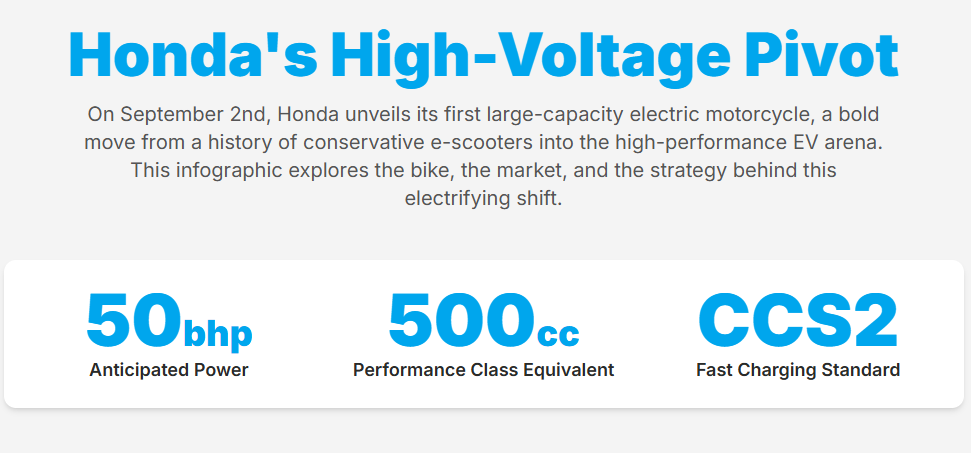
The adoption of CCS2 fast charging 9 is a forward-thinking decision. It enables rapid charging (up to 350 kW typically, with higher capacities demonstrated) 10 and allows the motorcycle to leverage the expanding global automotive EV charging infrastructure, which is crucial for mitigating range anxiety. This decision reflects a mature and pragmatic approach to electric vehicle development. It demonstrates Honda’s understanding that a robust and accessible charging ecosystem is as critical to mass adoption as the vehicle itself. By aligning with a universal standard, Honda positions its new EV as an integrated component of the wider EV landscape, potentially accelerating its acceptance and adoption in markets with strong CCS infrastructure.
An immediate launch in India is deemed “unlikely”, primarily due to the nascent market for large-capacity EVs and the prevailing price sensitivity among Indian consumers. Currently, Ultraviolette is the only significant player in India’s large EV segment , though the e-motorcycle segment is projected for substantial future growth.11 Honda’s long-term strategy for India includes establishing a dedicated EV motorcycle production plant by 2028.1 This plant aims to produce more affordable electric motorcycle models and secure a leading market share, indicating a phased and localized approach to the Indian market. This approach acknowledges that the Indian market is not yet ready for premium EVs due to price and infrastructure, necessitating a phased approach that prioritizes cost-effectiveness and local needs, contrasting with the global premium offering.
II. Honda’s New Electric Motorcycle: Unveiling and Specifications
The September 2nd Unveiling: What to Expect
Honda is set to conduct a global unveiling of its new electric performance motorcycle on September 2nd.12 This event is highly anticipated, marking a pivotal moment as Honda makes a definitive entry into the large-capacity electric motorcycle segment, moving beyond its current emphasis on smaller electric scooters . This precise timing, coupled with the emphasis on a “large-capacity” model after a period of “playing safe with e-scooters” , signifies Honda’s deliberate intent to capture significant market attention and establish a strong presence in the premium EV motorcycle space. This is more than just a product launch; it is a strategic declaration to the entire automotive industry and consumers about Honda’s committed future direction in electrification.
While the teaser indicates the bike is in its testing phase 12, it remains unclear if the September 2nd reveal will be for a full production model or a more advanced prototype. Honda had previously indicated a production model would arrive sometime in 2025 7, suggesting that the unveiling will showcase a near-production or production-ready vehicle. The EV Fun concept, on which this new model is based, already appeared “production-ready” at EICMA 2024.8 The fact that the underlying EV Fun concept was already visually “production-ready” further reinforces the notion of an imminent market entry. This unveiling is poised to serve as a new benchmark for both established legacy manufacturers and emerging EV startups. It will likely set new expectations for performance, features, and market readiness within the large-capacity electric motorcycle segment, potentially triggering an accelerated phase of competitive product development across the industry.
Design Evolution: From EV Fun Concept to Production Teaser
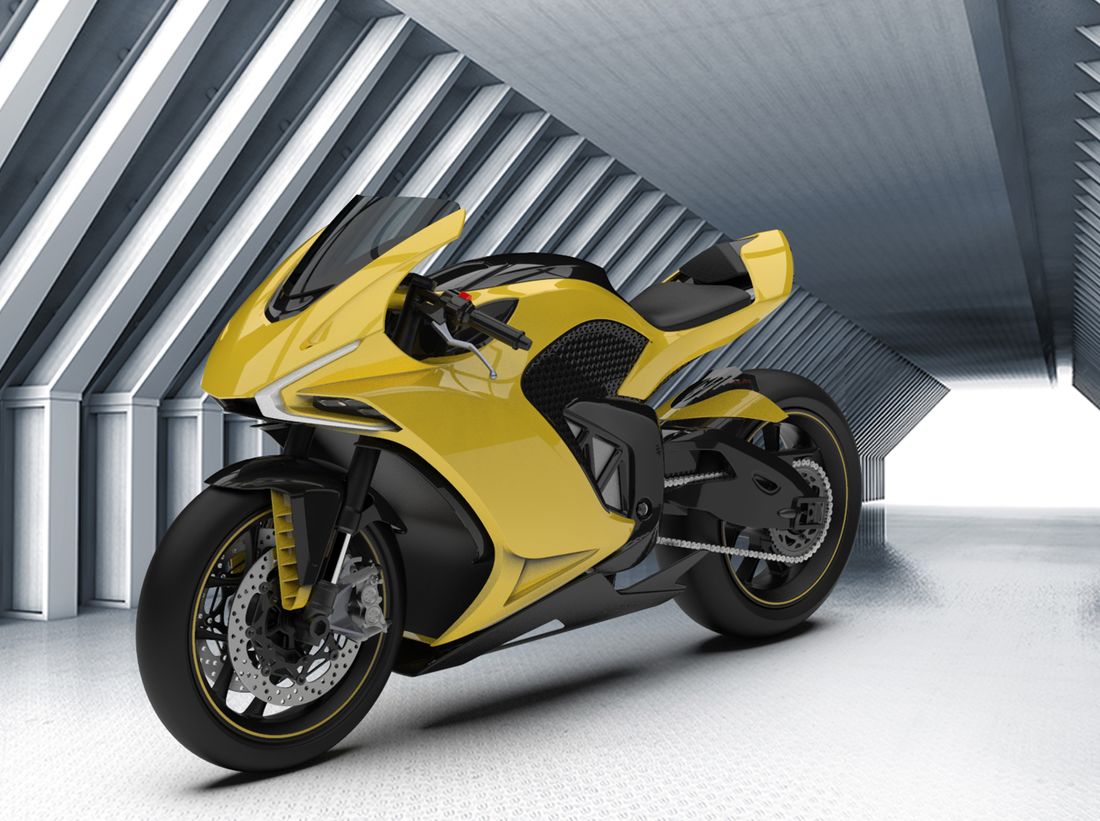
The upcoming electric motorcycle is confirmed to be based on the EV Fun Concept, which first debuted at EICMA late last year.7 The EV Fun concept was characterized by its stylish, compact, streetfighter-style naked bike design, featuring aggressive, hyper-naked-inspired aesthetics.4 Its sporty appearance, coupled with Honda’s renowned fit, finish, and build quality, was highlighted, along with wheels and tires resembling those found on high-performance sports bikes.8
Teaser images, though heavily camouflaged, confirm the new EV’s strong connection to the EV Fun concept, showcasing elements such as an LED headlight, distinctive bodywork, a single-sided swingarm, and similar wheel designs.7 The overall seating triangle is described as marginally sporty .
However, a closer examination of the teased model reveals several notable changes from the original concept. A rectangular TFT display replaces the circular screen, the triple tree design is different with bolts positioned in front of the fork tubes (unlike the concept), and the rear tire is a Pirelli Diablo Rosso III (instead of a IV).7 Additionally, the left switchgear appears noticeably bulkier than the simpler design on the concept.7 These observed changes are indicative of a design evolution driven by considerations for practicality, enhanced ergonomics, and the integration of more production-ready features. While circular displays often prioritize aesthetic appeal, rectangular screens typically offer superior functionality for displaying comprehensive rider information.
The change in tire model could suggest fine-tuning of performance characteristics or optimization for mass production costs. These subtle yet significant design deviations underscore that Honda is not merely translating a showpiece concept into production but is meticulously developing a functional, mass-producible vehicle. The design successfully preserves the aggressive “hyper-naked” aesthetic 4 while incorporating elements that improve the rider interface and potentially streamline manufacturing processes or reduce costs, thereby striking a balance between desirability and feasibility.
Anticipated Performance Metrics: The “500cc Equivalent” Deep Dive
Honda has stated that the EV Fun concept, and by extension the new EV, will offer performance comparable to a “mid-sized internal combustion engine” motorcycle, specifically translating to the “performance of a 500cc motorcycle”.7 This implies a power output of approximately 50bhp, with a crucial note that the torque output is expected to be significantly higher .
For context, typical 500cc ICE motorcycles like the Honda CB500R produce around 46.9 hp and 31.8 lb-ft of torque, achieving a top speed of 185 km/h (114 mph). The Kawasaki Ninja 500, with 50 hp and 34 lb-ft of torque, can reach 190 km/h (118 mph).5
A notable discrepancy arises when considering the EV Fun concept’s approved versions, which are reported to have a top speed of 110 km/h (68 mph) for the lighter 143 kg variant and 120 km/h (75 mph) for the heavier 157 kg variant.4 These figures are considerably lower than those of typical 500cc ICE counterparts. The striking difference between the “500cc performance” claim and the EV Fun’s relatively modest top speed compared to ICE 500cc bikes indicates a deliberate strategy by Honda. This suggests that the “500cc equivalent” is a marketing benchmark for the
experience of performance, particularly emphasizing the immediate and robust acceleration and torque that are inherent strengths of electric motors.6 For practical urban and spirited riding, rapid acceleration from a standstill or strong mid-range punch is often more impactful and relevant to the rider than extreme top speed. This strategy aims to subtly shift consumer perception of “performance” in the electric motorcycle segment. Instead of focusing on traditional ICE metrics like high top speeds, Honda is likely to highlight EV-specific advantages such as instantaneous torque delivery and a smooth, vibration-free powerband. This approach could resonate strongly with riders seeking a dynamic and responsive ride for daily commutes or recreational use, rather than those prioritizing track-focused, high-speed capabilities.
In the broader high-performance electric motorcycle market, EVs are renowned for their instant torque delivery, often outperforming gas-powered bikes in acceleration, with some models capable of 0-60 mph in just 2 seconds.6 While production EVs can achieve top speeds exceeding 215 mph 6, more common premium models like the Zero SR/S typically reach around 124 mph.14 The EV Fun concept is also stated to offer a cruising range of more than 100 km (62 miles) from its fixed battery.7 The fixed battery and 100km+ range further reinforce a focus on urban and short-to-mid-range utility, where the fast-charging capability becomes a critical enabler.
Table 1: Comparative Performance of 500cc ICE Motorcycles vs. Expected Honda EV Performance
| Model | Engine/Motor Type | Horsepower (hp) | Torque (lb-ft / Nm) | Top Speed (km/h | mph) | 0-60 mph (seconds) | Weight (kg | lbs) | Claimed Range (km | miles) |
| :—————————– | :—————————– | :————– | :—————— | :——————- | :—————– | :—————– | :——————— |
| Honda CB500R (ICE) | 471cc parallel-twin, DOHC | 46.9 | 31.8 lb-ft | 185 km/h | 114 mph | ~4.7 | 192 kg | 423 lbs | N/A |
| Kawasaki Ninja 500 (ICE) | 498cc parallel-twin, DOHC | 50 | 34 lb-ft | 190 km/h | 118 mph | ~4.5 | 176 kg | 388 lbs | N/A |
| Honda EV Fun Concept (Expected)| Electric Permanent Magnet AC Motor | ~50 | Much higher than ICE (~70-90 Nm est.) | 110-120 km/h | 68-75 mph | Likely faster (~3-4 est.) | 143-157 kg | 315-345 lbs | >100 km | 62 miles |
Note: Torque and 0-60 mph for Honda EV are estimated based on typical EV characteristics and similar performance electric motorcycles, as specific figures are not yet released.
Advanced Charging: The CCS2 Standard and its Benefits for Motorcycles
Honda has confirmed that its new electric motorcycle will utilize CCS2 charging.12 This is a fast-charging standard widely adopted by electric cars and is the prevalent standard in Europe and other global regions.10 By adopting CCS2, Honda is making a strategic decision to leverage a globally recognized and rapidly expanding standard for EV charging, particularly dominant in key markets like Europe.10
CCS chargers are capable of delivering substantial power, up to 500 kW (with a maximum of 1000V and 500A), and 400 kW chargers are already deployed, with demonstrations of up to 990 kW.9 Typically, CCS chargers offer power outputs ranging from 50 kW to 350 kW, enabling electric vehicles to be charged in under 30 minutes, depending on the vehicle’s battery capacity and the charger’s output.10 This significantly enhances convenience for riders, alleviates range anxiety, and broadens the usability of the vehicle. The high power output capabilities of CCS also inherently future-proof the motorcycle, allowing it to benefit from even faster charging speeds as battery technology and grid infrastructure continue to advance.
A key advantage of CCS is its integrated connector design, which combines both AC and DC charging capabilities into a single port, thereby simplifying the charging process for users.10 Furthermore, the CCS system is intelligent, communicating with the vehicle to ensure safe and efficient power delivery.10 This decision reflects a mature and pragmatic approach to electric vehicle development. It demonstrates Honda’s understanding that a robust and accessible charging ecosystem is as critical to mass adoption as the vehicle itself. By aligning with a universal standard, Honda positions its new EV as an integrated component of the wider EV landscape, potentially accelerating its acceptance and adoption in markets with strong CCS infrastructure. This also sets a strong precedent for other large-capacity electric motorcycle manufacturers to embrace similar universal charging standards, fostering greater interoperability and consumer confidence.
III. Global Electric Motorcycle Market Landscape
Current Market Size and Growth Projections
The overall Electric Scooter and Motorcycle Market is projected to grow from USD 1.10 billion in 2025 to USD 1.51 billion by 2030, reflecting a compound annual growth rate (CAGR) of 6.43%.15 A broader “Global Electric Motorcycle Market” (which may include a wider range of electric two-wheelers in its scope) is estimated at USD 30.11 billion in 2022 and is projected to reach USD 121.07 billion by 2030, demonstrating a significantly higher CAGR of 19.9% from 2023 to 2030.16 This discrepancy in reported market sizes and CAGRs across different sources highlights varying methodologies and inclusion criteria in market research.
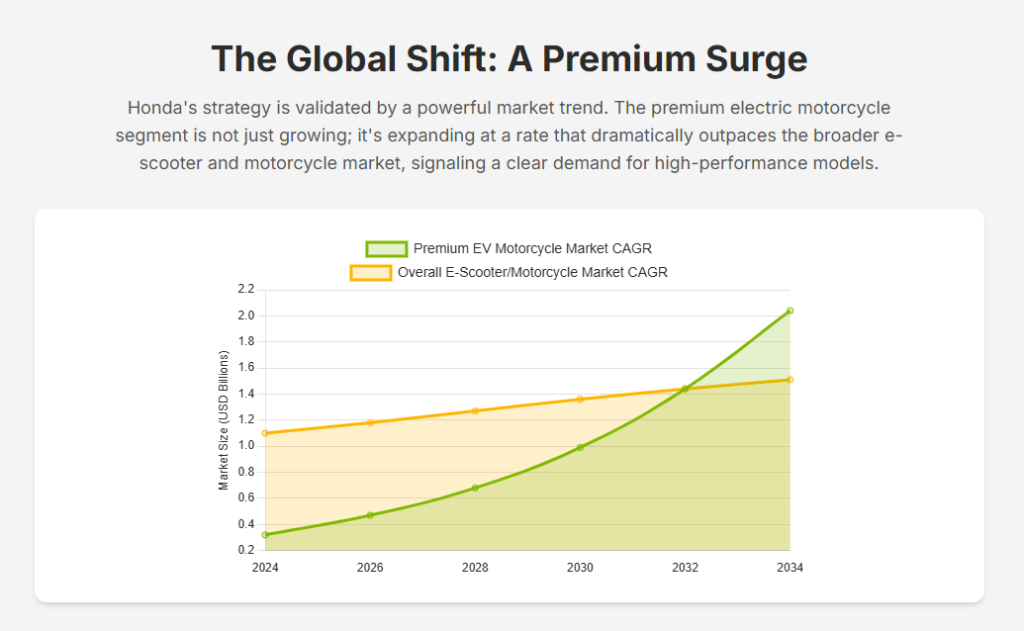
Despite the varying overall market figures, a consistent and critical trend emerges: the electric motorcycle sub-segment, particularly the above 10 kW power tier and the premium category, consistently exhibits significantly higher growth rates compared to the broader electric two-wheeler market. The electric motorcycle sub-segment specifically is projected to expand at a robust 18.43% CAGR through 2030.15 The “above 10 kW” power output tier, which directly encompasses large-capacity electric motorcycles, shows the fastest growth trajectory at a 19.15% CAGR.15 Furthermore, the premium electric motorcycle market, a specific niche, is forecasted to grow from $0.32 billion in 2024 to $2.04 billion by 2034, with an impressive CAGR of 20.46%.17
This indicates that while lower-cost scooters may drive overall volume, the high-performance and premium electric motorcycle segments are experiencing disproportionately rapid expansion and attracting substantial investment. This trend strongly validates Honda’s strategic move into the “large-capacity” electric motorcycle segment. By targeting this niche, Honda is aligning itself with the fastest-growing and potentially most profitable segment within the broader electric two-wheeler market. This suggests a strategic focus on value and performance over sheer volume in its initial global EV motorcycle offerings.
Key Drivers and Restraints for Adoption
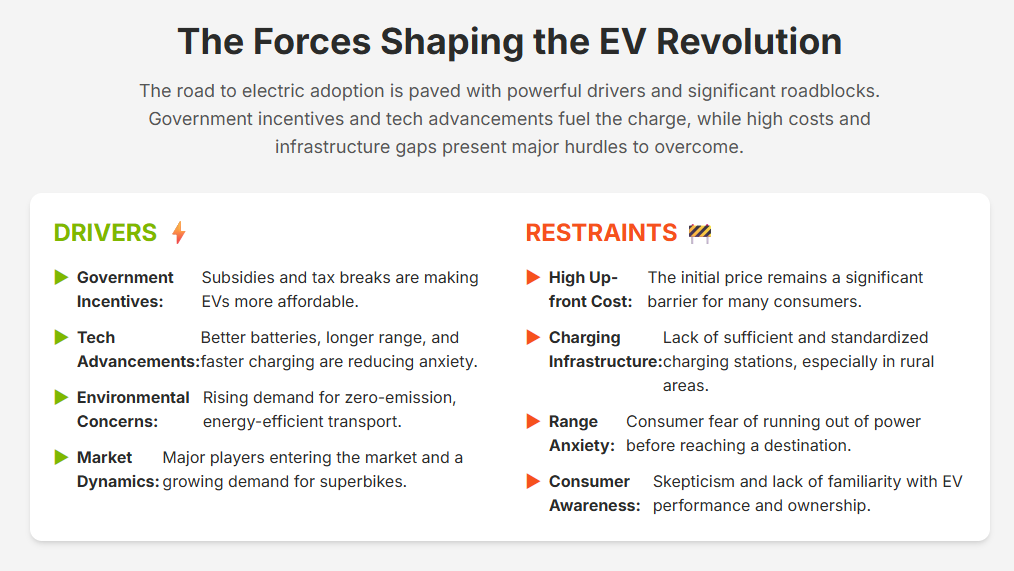
The electric motorcycle market, including the large-capacity segment, is shaped by a complex interplay of drivers and restraints.
Drivers for Adoption:
- Government Policies & Incentives: State EV subsidy policies, such such as India’s Electric Mobility Promotion Scheme, EU measures, and various US state initiatives, are accelerating adoption by providing purchase rebates and infrastructure grants. These policies are expected to lead to price parity with ICE vehicles within five years.15 Governments worldwide are actively advocating for and introducing incentives for both purchasing and manufacturing electric motorcycles.16
- Environmental Concerns & Fossil Fuel Prices: Increasing demand for energy-efficient commuting options, rising global concern for carbon emissions from ICE two-wheelers, and escalating fossil fuel prices are significant drivers.16 There is a growing awareness among consumers regarding the benefits of reducing vehicular emissions.19
- Technological Advancements: Continuous improvements in battery technology, including declining battery costs, enhanced energy density, and extended vehicle range, are crucial.16 The integration of fast charging solutions 19 and the development of advanced battery management systems (BMS) are vital. Furthermore, the inclusion of smart features like telematics, cellular connectivity, GPS, and remote vehicle monitoring enhances user experience.16
- Market Dynamics: Increasing interest from established two-wheeler market players entering the EV space, coupled with the emergence of innovative electric motorcycle startups, is stimulating market growth.16 There is also a growing demand for powerful superbikes among younger demographics.19
- Commercial Use Expansion: Rapid urbanization is fueling demand for last-mile delivery services, leading to partnerships between delivery apps and manufacturers that spur commercial fleet electrification.15 The commercial segment is projected to experience the fastest growth, with a CAGR of 22.1%.16
Restraints to Adoption:
- Up-front Price Gap: A significant barrier globally, particularly in price-sensitive markets.15 High initial costs remain a primary obstacle to EV adoption.20
- Charging Infrastructure: Limited harmonization of high-power charging standards and interoperability gaps create capital risk for operators.15 The absence of adequate charging infrastructure, especially in emerging nations, is a major impediment.16
- Range Anxiety: A key concern for consumers, particularly in hilly or rural terrains where charging density is low.15 Reservations about limited battery range deter potential buyers.20
- Battery Technology Maturity: The relatively nascent state of battery technology, coupled with concerns over battery lifespan and recycling, restricts widespread adoption.17
- Consumer Awareness & Perception: A general lack of consumer awareness and market penetration in some regions contributes to challenges.17 Performance skepticism 15 and psychological barriers, such as negative attitudes towards innovation and uncertainty about new technology, also play a role.20
The identified drivers and restraints are not isolated factors but rather form a complex, interconnected system. Government policies, through subsidies and incentives 15, directly aim to mitigate the “up-front price gap,” which is a primary barrier. Concurrently, advancements in battery technology 16 and the proliferation of fast-charging solutions 19 directly address critical consumer anxieties like “range anxiety” and “charging times”.20 The broader societal push for “100% Zero-Emission 2-Wheelers” 15 and increasing “environmental awareness” 20 are long-term drivers that shape consumer attitudes and perceived behavioral control.18 However, a crucial observation is that “infrastructure leads demand, not the reverse” 15, and “infrastructure remains inadequate to influence attitudes directly” 18, highlighting a significant bottleneck where infrastructure development lags behind policy and product innovation.
For the electric motorcycle market, particularly the large-capacity segment, to achieve widespread adoption, a truly holistic and coordinated approach is indispensable. This means that policy incentives, continuous technological advancements (especially in battery and charging solutions), and robust infrastructure development must progress in tandem. Simply introducing a compelling high-performance EV like Honda’s is insufficient; the entire ecosystem must be ready to support it and overcome ingrained consumer psychological barriers. The accelerated growth of the “above 10 kW” segment 15 indicates that performance-oriented consumers may be less deterred by some of these barriers, suggesting a valuable niche for early adoption.
Emerging Trends: Fast Charging, Battery Technology, Government Initiatives
Several key trends are shaping the trajectory of the electric motorcycle market, particularly for high-performance and large-capacity models.
Fast Charging Technologies: This is a major and accelerating trend, with market players actively integrating advanced fast charging solutions into electric motorcycles to enhance drivability and effectively reduce range anxiety.19 Honda’s adoption of CCS2 is a prime example of this trend, leveraging a standard capable of delivering up to 500 kW, with typical outputs ranging from 50 kW to 350 kW.9 This capability allows for substantial battery recharges (e.g., 80% in 60-80 minutes for some models) 14, significantly minimizing downtime and making electric motorcycles more practical for longer rides and daily use. The emphasis on fast charging is a direct response to consumer concerns about charging times, which is a significant barrier to EV adoption.20
Advancements in Battery Technology: The market is heavily reliant on and driven by continuous improvements in battery technology. Lithium-ion batteries currently dominate the market, holding over 90% of the market share in 2022, and are projected to continue their growth due to their high energy density, longer cycle life, and fast-charging capabilities.16 Innovations are leading to increased battery capacities, with some premium models offering over 21 kWh of energy, extending vehicle range significantly.16 Beyond lithium-ion, emerging chemistries like sodium-ion, showcased by manufacturers like Yadea and TAILG, offer potential benefits such as rapid charging and cold-temperature resilience, utilizing more abundant raw materials.15 These advancements are critical for improving performance, extending range, and reducing the overall weight of electric motorcycles.
Government Initiatives and Policy Support: Governments worldwide are playing a crucial role in accelerating electric motorcycle adoption through various initiatives. These include purchase price subsidies, tax reductions, and charging rate discounts, which directly motivate consumer purchase intentions.18 Programs like India’s FAME II scheme, which increased subsidies for electric two-wheelers, and Indonesia’s plans to subsidize electric motorcycle purchases, exemplify this support.16 Furthermore, governments are investing heavily in strengthening EV charging infrastructure, recognizing its importance for market expansion.17 The push for 100% zero-emission two-wheelers, particularly in regions like the EU, further underscores the regulatory impetus behind electrification.15
These trends collectively contribute to the development of a robust ecosystem necessary for widespread electric motorcycle adoption. The focus on fast charging directly addresses range anxiety, while advancements in battery technology enhance vehicle performance and practicality. Simultaneously, government policies create a favorable market environment by reducing the financial burden on consumers and fostering infrastructure development. This comprehensive approach is gradually shifting electric motorcycles from a niche product to a more mainstream mobility solution. The commitment of major players like Honda, with their investment in advanced technology and alignment with global charging standards, is expected to significantly accelerate this transition, setting higher benchmarks for the industry.
IV. The Indian Market Context and Competitive Landscape
Unlikelihood of Immediate India Launch and Underlying Factors
Honda’s new large-capacity electric motorcycle is deemed “unlikely” to launch in India anytime soon . This assessment is rooted in several key factors that characterize the current Indian electric two-wheeler market, particularly for premium and large-capacity segments.
The primary reason for this unlikelihood is the nascent stage of the market for large-capacity EVs in India, coupled with significant price sensitivity among Indian consumers . While the electric two-wheeler market is growing, the demand is predominantly for affordable, small-capacity electric scooters and mopeds, which accounted for 65.23% of the revenue share in 2024.15 Large-capacity electric motorcycles, by their nature, command a higher price point, which currently limits their addressable market in India.
Furthermore, the existing charging infrastructure in India, while expanding, is still considered inadequate to directly influence consumer attitudes towards large-capacity electric motorcycles.18 This contributes to “range anxiety,” a significant psychological barrier for potential buyers, especially in rural areas where charging density is particularly low.15 User surveys in rural North India confirm that performance skepticism often outweighs familiarity, and infrastructure development must precede, rather than follow, demand for such products.15 The high cost of manufacturing due to raw material imports and insufficient legislative support around incentives for customers also pose major barriers.20 This indicates that the Indian market is not yet fully prepared for the widespread adoption of premium EVs due to prevailing price sensitivity and infrastructure limitations, necessitating a more phased and localized approach.
Honda’s Long-Term India Strategy
Despite the unlikelihood of an immediate launch for its new large-capacity EV, Honda has a clear and ambitious long-term strategy for the Indian electric two-wheeler market. This strategy acknowledges the unique challenges and opportunities present in India.
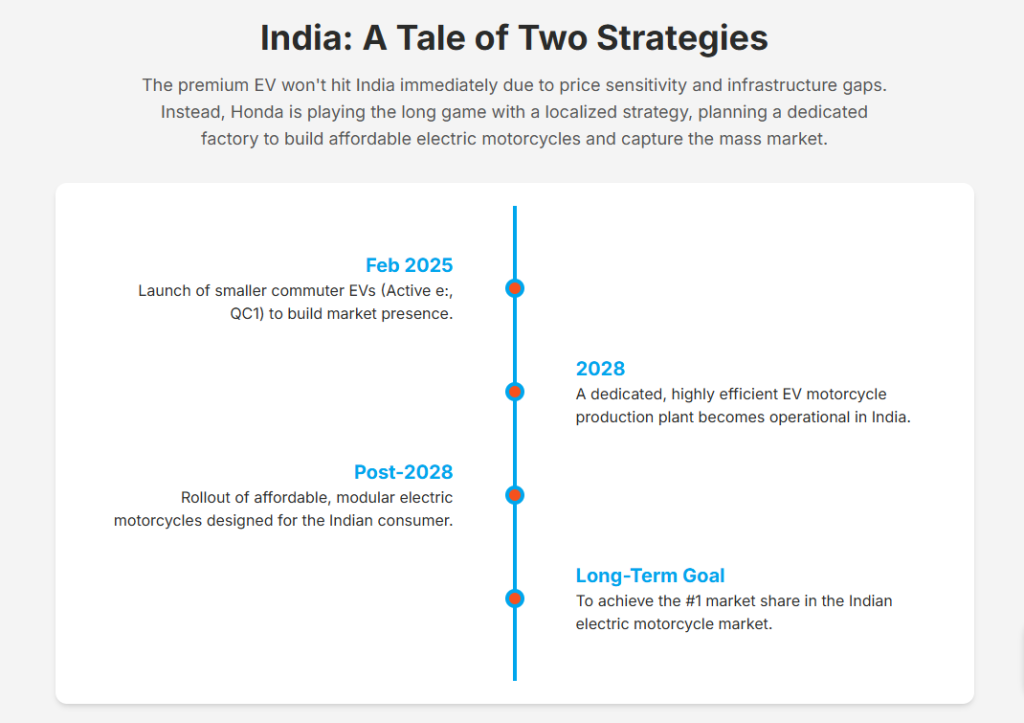
Honda plans to modularize models developed exclusively as electric motorcycles and will begin production at a highly efficient, dedicated electric motorcycle production plant in India. This plant is scheduled to become operational in 2028.1 The primary objectives of this localized production are to strengthen Honda’s electric motorcycle business structure and, crucially, to offer more affordable electric motorcycle models to a wider range of customers.1 Honda’s long-term goal is to capture the No. 1 market share in the electric motorcycle market in India.1
This strategy reflects a deep understanding of the Indian market’s price sensitivity and the need for cost-effective solutions to achieve mass market penetration. By establishing local production and focusing on affordability, Honda aims to overcome the current financial barriers that deter consumers from purchasing premium electric motorcycles. This contrasts sharply with the global premium offering of its newly unveiled large-capacity EV, indicating a dual-pronged approach: a global premium push and a localized, affordable strategy for high-volume markets like India. Honda has already initiated sales of smaller electric commuter models like Active e: and QC1 in India in February 2025, demonstrating its incremental approach to market entry and building a foundation before introducing larger, more complex models.1 This phased strategy, focusing on localized production and affordability, is designed to address the unique Indian market challenges and pave the way for future market leadership.
Competitive Analysis: Ultraviolette in India
In the context of large-capacity electric motorcycles in India, Ultraviolette is currently the only significant player doing business . This Bengaluru-based e-bike maker, backed by TVS, has a clear strategy to dominate the nascent electric motorcycle segment.
Ultraviolette believes that the share of e-motorcycles, which is currently less than 1% of electric two-wheelers, will “explode” in the coming years, aiming to grab 50% of the market from e-scooters by March 2028.11 This projection is based on the fact that in the ICE segment, motorcycles comprise 65% of sales, indicating a strong underlying demand for motorcycles over scooters.11
Ultraviolette currently offers performance e-bikes, including the F77 Mach 2 and F77 SuperStreet, both priced at ₹ 2,99,000 (Avg. Ex-Showroom).21 The F77 Mach 2 boasts a top speed of 155 kmph and a range of 211 km with a 27 kW power output.21 The company is also set to introduce an e-scooter, Tesseract (₹ 1,45,000), and a streetbike, Shockwave (₹ 1,75,000).11 Ultraviolette is expanding its retail presence significantly, aiming for 50 outlets by October and 100 by March 2026, including five in Bengal.11
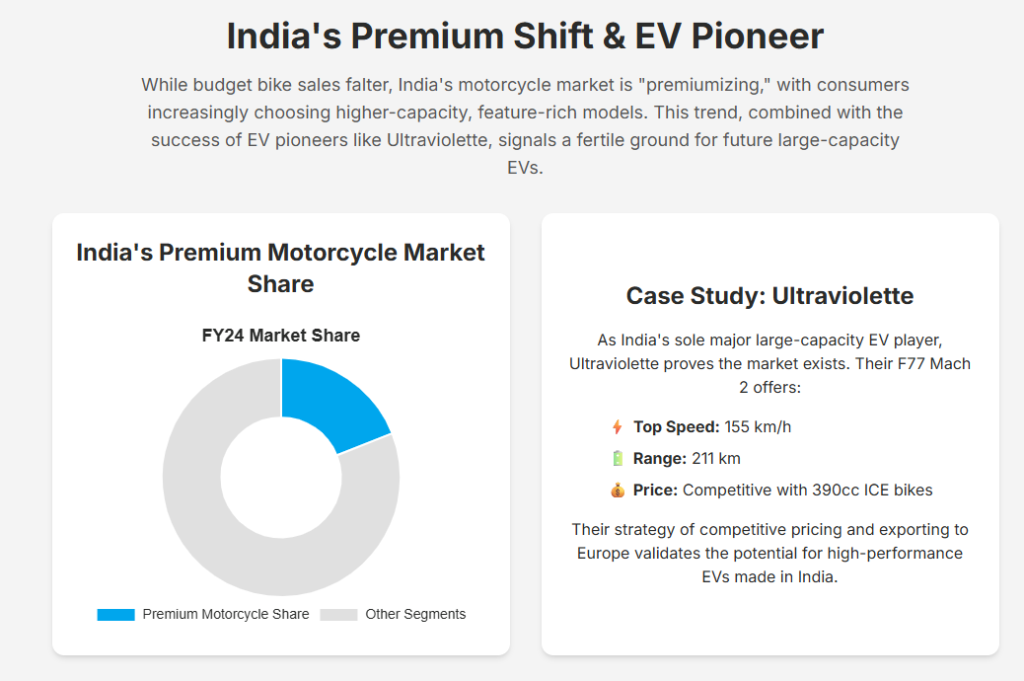
A key aspect of Ultraviolette’s strategy is its pricing and export focus. The company claims to be the first to offer high-performance e-bikes at the price of ICE motorcycles.11 For instance, the F77 Mach 2 is priced competitively against ICE counterparts like the KTM RC 390 (₹ 3,23,022) and BMW G310 RR (₹ 3,05,000).21 Furthermore, Ultraviolette has begun exporting its F77 motorcycles to European markets (Germany, France, Netherlands), where they retail at approximately 9,000 euros, significantly lower than the average e-bike price of 17,000-18,000 euros in Europe.11 The company targets 35% of its revenue from export markets by March 2028.11
Ultraviolette’s success demonstrates the potential for high-performance EVs in India despite the prevailing market challenges. Their aggressive expansion and export-driven growth strategy leverages a more mature European market while simultaneously building a domestic presence. This pioneering effort in the premium segment provides a valuable case study for Honda as it plans its long-term entry into the Indian electric motorcycle market.
Indian Premium Motorcycle Market Trends and Challenges
The Indian two-wheeler market is undergoing a significant transformation, with a notable shift towards premium motorcycles, despite broader challenges in the economy segment. This trend creates a complex landscape for the entry of large-capacity electric motorcycles.
The market share of premium motorcycles (engine capacity greater than 150cc) has steadily increased, rising to 19% in the last fiscal year from 14% in fiscal 2019, and is projected to reach 22% by 2030.3 Sales volumes for premium motorcycles have even surpassed pre-COVID levels by 22%.3 This contrasts sharply with the economy motorcycle segment (75-125cc), which experienced significant declines due to weak rural demand and price increases.2 For example, dispatches in the 75-100cc category fell by 13%, and the 125-150cc category saw a steep contraction of 37%.2
Higher-capacity segments, however, have shown resilience and growth:
- The 150-200cc segment dipped only 2%.2
- The 200-250cc category registered 8% growth.2
- The 250-350cc category posted the highest growth of 13%, dominated by Royal Enfield.2
These trends suggest that while price-sensitive buyers are pulling back, premium motorcycle segments remain resilient, fueled by aspirational buying and brand loyalty.2 This indicates a gradual consumer shift toward aspirational, feature-rich bikes.2
Despite this premiumization trend, the Indian motorcycle industry faces challenges, including inventory correction and weakening rural demand.2 Seven out of ten major manufacturers reported lower sales in Q1 FY26.2 However, there is cautious optimism for future quarters, with expectations of rural income recovery due to a strong monsoon and more affordable two-wheeler loans following Reserve Bank of India rate cuts.2 The industry is looking to the festive season (July-September quarter) for a sales boost.2
This dual-market dynamic presents both challenges and opportunities for large-capacity electric motorcycles. While the overall Indian market faces headwinds for budget bikes, the growing premium segment demonstrates a willingness among a segment of consumers to invest in higher-value products. This creates a long-term opportunity for large-capacity EVs, provided manufacturers can navigate the initial price barriers and develop a supportive charging ecosystem. The success of players like Ultraviolette in this nascent premium EV space further underscores this potential.
V. Conclusion
Honda’s impending unveiling of its first large-capacity electric motorcycle marks a significant strategic pivot for the company, moving beyond its conservative approach to electric scooters and signaling a serious intent to compete in the premium EV motorcycle segment globally. This move is aligned with the fastest-growing niches within the broader electric two-wheeler market, particularly the “above 10 kW” and “premium” categories, which exhibit robust CAGRs exceeding 18%.
The new EV’s “500cc equivalent” performance claim appears to emphasize instant torque and rapid acceleration—inherent strengths of electric powertrains—rather than outright top speed, which may be lower than traditional ICE 500cc counterparts. This approach suggests a strategic redefinition of “performance” for the electric era, focusing on the rider experience in urban and spirited riding conditions where immediate power delivery is paramount. The adoption of CCS2 fast charging is a forward-thinking decision, leveraging existing global automotive charging infrastructure to enhance convenience and mitigate range anxiety, thereby future-proofing the motorcycle and setting a precedent for industry-wide standardization.
For the Indian market, an immediate launch of this premium EV is improbable due to prevailing price sensitivity, a nascent market for large-capacity electric vehicles, and an evolving charging infrastructure. However, Honda’s long-term strategy for India is clear: a dedicated EV motorcycle production plant by 2028 focused on modular, affordable models to capture significant market share. This phased, localized approach is designed to address India’s unique market dynamics. Ultraviolette’s current success as the dominant player in India’s large EV segment, with its competitive pricing and export strategy, demonstrates the potential for high-performance electric motorcycles in the country, despite the existing challenges. The broader Indian motorcycle market is also exhibiting a “premiumization” trend, with higher-capacity ICE segments showing resilience and growth even as economy segments decline. This indicates a growing appetite for aspirational, feature-rich motorcycles, which could eventually benefit the large-capacity electric motorcycle segment as affordability and infrastructure improve.
In conclusion, Honda’s entry into the large-capacity electric motorcycle segment is a strategic commitment to the future of electric mobility. While its initial global offering targets premium markets with developed EV ecosystems, its long-term vision includes a tailored, affordable strategy for high-volume markets like India. The success of this global push and localized adaptation will depend on the continued evolution of battery technology, the expansion of robust charging infrastructure, and the effectiveness of government incentives in overcoming the persistent barriers of upfront cost and range anxiety. The electric motorcycle market is poised for transformative growth, and Honda’s calculated moves will undoubtedly play a significant role in shaping its trajectory.
Sources
- Summary of 2025 Honda Business Briefing | Honda Global …, accessed August 2, 2025, https://global.honda/en/newsroom/news/2025/c250520eng.html
- Indian Motorcycle Industry Faces Challenging Start to FY2026 – ACKO Drive, accessed August 2, 2025, https://ackodrive.com/news/indian-motorcycle-industry-faces-challenging-start-to-fy-2026/
- Premium bikes likely to account for 22% of two-wheeler market by 2030: Crisil, accessed August 2, 2025, https://m.economictimes.com/industry/auto/two-wheelers-three-wheelers/premium-bikes-likely-to-account-for-22-of-two-wheeler-market-by-2030-crisil/articleshow/122371602.cms
- Honda Keeps Making EV Motorcycle Concepts, But When Will They Actually Launch?, accessed August 2, 2025, https://www.rideapart.com/news/754898/honda-wh8000d-evo-electric-motorcycle-details/
- 500cc Motorcycle Speed: Performance & Beginner Suitability – hyper gogo, accessed August 2, 2025, https://www.hypergogo.com/blogs/news/500cc-motorcycle-fast
- How Fast Can High-Speed Electric Motorcycles Actually Go? – HappyRun, accessed August 2, 2025, https://happyrunsports.com/blogs/electric-motorcycle/how-fast-can-high-speed-electric-motorcycles-actually-go
- Honda To Reveal Electric Motorcycle Sept. 2, accessed August 2, 2025, https://www.motorcycle.com/bikes/new-model-preview/honda-to-reveal-electric-motorcycle-sept-2-44645476
- Honda Revealed the EV Fun and EV Urban Concepts at EICMA 2024 – VikingBags, accessed August 2, 2025, https://www.vikingbags.com/blogs/news/honda-revealed-the-ev-fun-and-ev-urban-concepts-at-eicma-2024
- Combined Charging System – Wikipedia, accessed August 2, 2025, https://en.wikipedia.org/wiki/Combined_Charging_System
- What Is CCS Charging? 6 Things You Should Know About CCS Charging – EVniculus, accessed August 2, 2025, https://evniculus.eu/blogs/journal/what-is-ccs-charging-6-things-you-should-know-about-ccs-charging
- E-bikes to grab 50% of electric 2-wheeler market by March ’28: Ultraviolette, accessed August 2, 2025, https://timesofindia.indiatimes.com/city/kolkata/e-bikes-to-grab-50-of-electric-2-wheeler-market-by-mar-28-ultraviolette/articleshow/122995197.cms
- Honda To Unveil New Electric Performance Motorcycle On Sept 2: Details – NDTV, accessed August 2, 2025, https://www.ndtv.com/auto/honda-to-unveil-new-electric-performance-motorcycle-on-sept-2-details-8991726
- Honda Unveils Electric Motorcycle Concept Models “EV Fun Concept” and “EV Urban Concept” at EICMA 2024 | Honda Global Corporate Website, accessed August 2, 2025, https://global.honda/en/newsroom/news/2024/c241105deng.html
- Which Electric Motorcycle for Adults Offers the Best Performance and Value in 2025?, accessed August 2, 2025, https://www.hovsco.com/blogs/e-motorcycles/which-electric-motorcycle-for-adults-offers-the-best-performance-and-value-in-2025
- Electric Scooter and Motorcycle Market Size, Growth & Share Report …, accessed August 2, 2025, https://www.mordorintelligence.com/industry-reports/electric-scooter-and-motorcycles-market
- Electric Motorcycle Market Size, Share, Growth Report, 2030 – Grand View Research, accessed August 2, 2025, https://www.grandviewresearch.com/industry-analysis/electric-motorcycle-market-report
- Premium Electric Motorcycle Market to Elevate 20.46% CAGR by 2034, accessed August 2, 2025, https://www.towardsautomotive.com/insights/premium-electric-motorcycle-market-sizing
- Factors Influencing Electric Motorcycle Adoption in Indonesia: Comprehensive Psychological, Situational, and Contextual Perspectives – MDPI, accessed August 2, 2025, https://www.mdpi.com/2032-6653/16/2/106
- Electric Motorcycle Market Leads USD 19.45 Bn at 5.62% CAGR – Towards Automotive, accessed August 2, 2025, https://www.towardsautomotive.com/insights/electric-motorcycle-market-sizing
- Factors affecting adoption of Battery Electric Vehicles in India: An exploratory study, accessed August 2, 2025, https://www.researchgate.net/publication/355183756_Factors_affecting_adoption_of_Battery_Electric_Vehicles_in_India_An_exploratory_study
- Ultraviolette Bikes Price in India – New Ultraviolette Models 2025 …, accessed August 2, 2025, https://www.bikewale.com/ultraviolette-bikes/
Our Social Media Handles
- Instagram : LivingWithGravity
- Medium : Akash Dolas
- YouTube Channel : Gear and Shutter