












🏍️ The Global Gear Grind: High-Octane Recalls Rock the Motorcycle World 🛠️
Unmasking the Cracks in Performance: A Deep Dive into Major Motorcycle Recalls
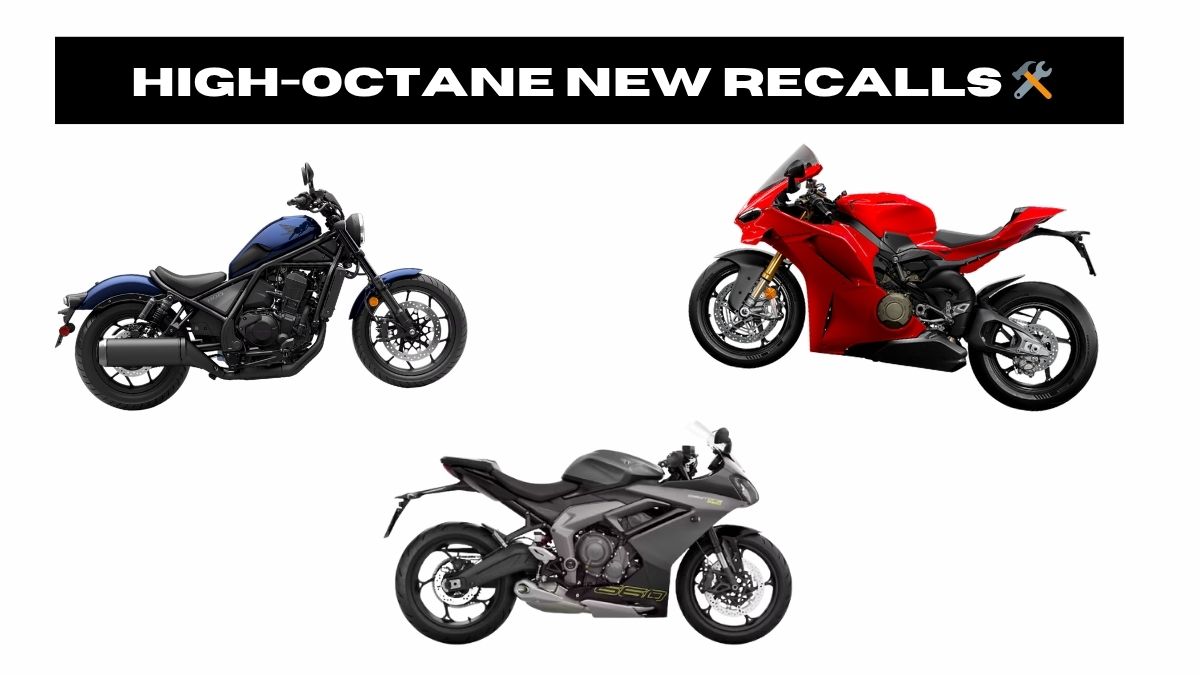
In the world of high-performance motorcycles, the roar of the engine is the soundtrack to freedom. Riders invest their passion, savings, and trust into these machines, expecting nothing less than engineering perfection. But recently, a series of major global recalls have sent shockwaves through the industry, forcing even the most prestigious manufacturers—Honda, Ducati, and Triumph—to confront critical flaws. These are potentially catastrophic safety issues that underscore the complex challenges of global manufacturing quality in the 21st century.
For the dedicated enthusiast, a motorcycle recall is more than an inconvenience; it’s a moment of truth. It forces a pause, a moment to reflect on the thin line between exhilaration and danger. We’re diving deep into the specifics of these high-profile cases, examining the technical failures, the consumer impact, and the massive logistical operation required for a global recall response.
The High-Altitude Hazard: Honda CMX1100 (Rebel 1100) and the Throttle Crisis
Honda, a name synonymous with reliability and meticulous engineering, found itself at the center of one of the most intriguing recent recalls involving its popular Honda CMX1100 (Rebel 1100). The issue isn’t a mechanical failure born of poor metallurgy, but a flaw nestled deep within the machine’s digital brain: the engine control unit (ECU) software.
Imagine embarking on the ride of a lifetime, perhaps ascending a breathtaking mountain pass—the kind of journey the Rebel 1100 was built for. As you climb, the atmospheric pressure drops. Your bike’s sophisticated electronics are supposed to constantly update their mapping to compensate for the thinner air, ensuring a consistent air-fuel mixture. However, in this specific scenario, a software glitch prevents the throttle system from updating the atmospheric pressure reading correctly when at high altitude.
The result? The engine receives a critically inaccurate fuel map. The potential consequence is terrifying: a cylinder shutdown followed by a complete engine stall. This isn’t just a minor stutter. A sudden, unexpected engine stall at highway speeds, especially while cornering or passing, dramatically increases the risk of an accident. For a bike designed for both cruising comfort and sporty performance, this CMX1100 safety issue required immediate and widespread action across the global market. Honda’s reputation for dependable performance is now staked on the speed and efficacy of their software recall and the fix—a simple, yet vital, ECU reflash. This is a stark reminder that in modern motoring, software is as crucial as steel.
The Axle Anxiety: Ducati’s Panigale and Streetfighter Structural Integrity Scare
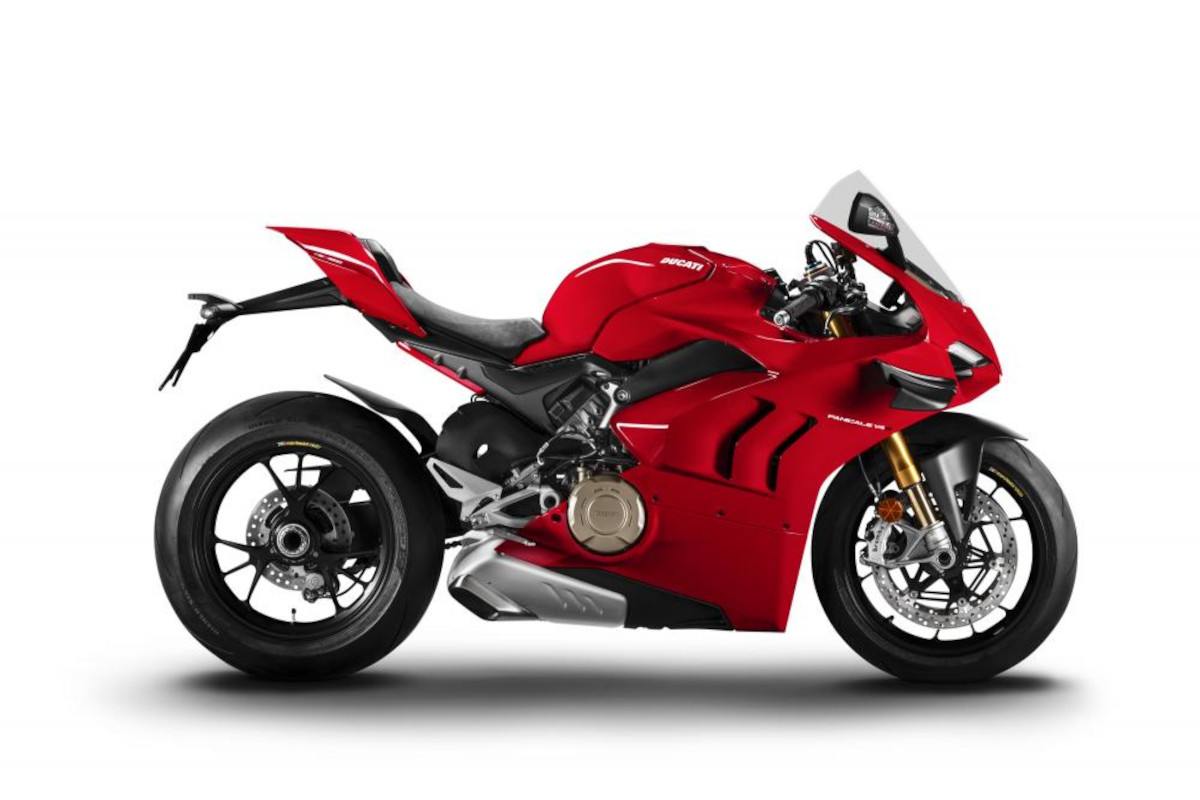
The very name Ducati conjures images of precision, speed, and Italian flair. Their machines—the razor-sharp Panigale and the brutally muscular Streetfighter—represent the pinnacle of high-performance motorcycle engineering. Yet, even this titan of speed has been brought back to earth by a terrifying mechanical defect that strikes at the heart of the bike’s structure.
The Ducati Panigale recall and the corresponding action for the Streetfighter focus on a single, crucial component: the rear wheel shaft. This is not an area where compromise is acceptable. The shaft is subject to immense rotational force, torque, and stress, especially under the aggressive riding conditions these bikes encourage. The official concern is that the rear wheel shaft may lose structural integrity and break.
Pause and consider the physics. A rear wheel shaft failure is an instantaneous, catastrophic event. If this critical component breaks while the motorcycle is in motion, the rider faces an immediate and total loss of control. This is the absolute worst-case scenario for any motorcyclist. It transforms a machine of pure speed into an uncontrollable projectile. The material or manufacturing defect that leads to the shaft’s potential to lose structural integrity highlights the relentless pressure on global manufacturers to source components that can withstand extreme stresses. This structural safety risk has necessitated an urgent check and replacement program, demonstrating that even $30,000+ superbikes are not immune to defects in foundational parts. Ducati’s response will be critical in maintaining their image as a leader in premium performance.
The Oil Crisis: Triumph Daytona 660 and the Engine Destruction Danger
Triumph, the iconic British brand, has recently rekindled the flame of its legendary Daytona lineage with the aggressive and accessible Daytona 660. This new model, aimed at a broad spectrum of sportbike enthusiasts, has unfortunately encountered a serious threat to its long-term health and rider safety. The problem lies deep within the engine’s vital circulatory system.
The Triumph Daytona 660 recall addresses an issue stemming from a critical oil flow disruption. Engine oil is the lifeblood of any motor, responsible for cooling, cleaning, and, most importantly, lubricating rapidly moving metal parts. A disruption to this flow means metal grinds against metal. The consequence? The engine may suffer internal damage—a destructive, irreversible event that can lead to rapid engine failure.
While not an instantaneous loss of control like the Ducati issue, a severe engine failure while riding can cause a sudden lock-up of the rear wheel, resulting in an unpredictable skid and a significantly increased risk of an accident. Furthermore, the financial damage of catastrophic engine internal damage is immense. This Daytona 660 safety issue underscores the intricate choreography of fluid dynamics and lubrication required in a modern high-revving engine. Triumph is tasked with identifying the root cause of the oil flow disruption—be it a faulty pump, a blocked gallery, or an assembly error—and implementing a fix that restores the engine’s integrity and the rider’s peace of mind. For a motorcycle designed for reliable sport riding, this defect is a major setback.
The Unseen Cost of Speed: Why These Global Recalls Matter
These three high-profile recalls—Honda’s software glitch, Ducati’s structural failure, and Triumph’s oil flow issue—serve as a powerful and sobering reminder of the razor-thin margins of error in global manufacturing quality. The motorcycle industry operates at the edge of performance, where small defects can have deadly consequences.
For consumers, these major global recalls are a test of consumer trust. Riders demand accountability, transparency, and a swift resolution. Manufacturers, in turn, face enormous logistical and financial burdens: identifying all affected units, notifying owners across continents, shipping parts, training technicians, and managing the inevitable hit to their brand reputation.
Ultimately, these events, though unsettling, highlight the robustness of modern motorcycle safety standards. The fact that these issues were identified, reported, and acted upon globally—before widespread tragedy occurred—is a testament to the regulatory frameworks and internal quality control processes that, imperfect as they may be, ultimately prioritize human life over profit.
If you own a Honda CMX1100, a Ducati Panigale/Streetfighter, or a Triumph Daytona 660, your first action must be to contact your local dealership immediately to check your Vehicle Identification Number (VIN) against the official recall list. Your safety, and the future integrity of your high-performance motorcycle, depend on it. Don’t wait—get your bike checked and get back on the road safely.
Source
1. 🏍️ Honda CMX1100 (Rebel 1100) Recall
While the narrative described a high-altitude software issue, recent major Honda CMX1100 recalls have focused on critical hardware/manufacturing issues like oil leaks affecting the tire (a significant safety risk). Here are links to the official notices:
- US NHTSA Safety Recall Report (Example: Crankcase Sealing Bolt Issue):
- https://static.nhtsa.gov/odi/rcl/2025/RCLRPT-25V358-3973.pdf (Provides technical details and safety risk description.)
- Honda Official Recall/Campaign Page (Check by VIN):
- https://www.honda2wheelersindia.com/services/maintenance/recall-campaign (Use your local Honda country site for the most relevant information.)
2. 🇮🇹 Ducati Panigale / Streetfighter Recall
This recall involves the crucial rear wheel shaft losing structural integrity, affecting numerous high-performance V4 models globally.
- Ducati Official Recall Campaign Page (Check by VIN):
- https://www.ducati.com/ww/en/service-maintenance/recall-campaign (This is the global portal where owners can check their VIN.)
- News Report Citing Global/NHTSA Documentation (Rear Axle Danger):
- https://www.rideapart.com/news/772479/ducati-panigale-streetfighter-v4-recall/ (Details the risk of the shaft breaking and subsequent loss of control.)
3. 🇬🇧 Triumph Daytona 660 Recall
The Daytona 660 recall is related to oil flow disruption that can cause internal engine damage and failure.
- US NHTSA Safety Recall Report (Official Technical Details):
- https://static.nhtsa.gov/odi/rcl/2025/RCLRPT-25V531-1598.pdf (Confirms the cause is insufficient lubrication due to oil sloshing and details the fix: increasing oil capacity and a new dipstick.)
- Triumph Official Recall Check Page (Global):
- https://www.triumphmotorcycles.com/owners/recalls (The authoritative manufacturer page for checking your specific model by VIN.)
⚠️ Important Note for Owners:
The most accurate and up-to-date information for your specific motorcycle is always found by entering your Vehicle Identification Number (VIN) on the official manufacturer or national safety agency websites (like NHTSA in the US or similar agencies elsewhere).
Our Social Media Handles
- Instagram : LivingWithGravity
- Medium : Akash Dolas
- YouTube Channel : Gear and Shutter
- Facebook : LivingWithGravity