





Executive Summary
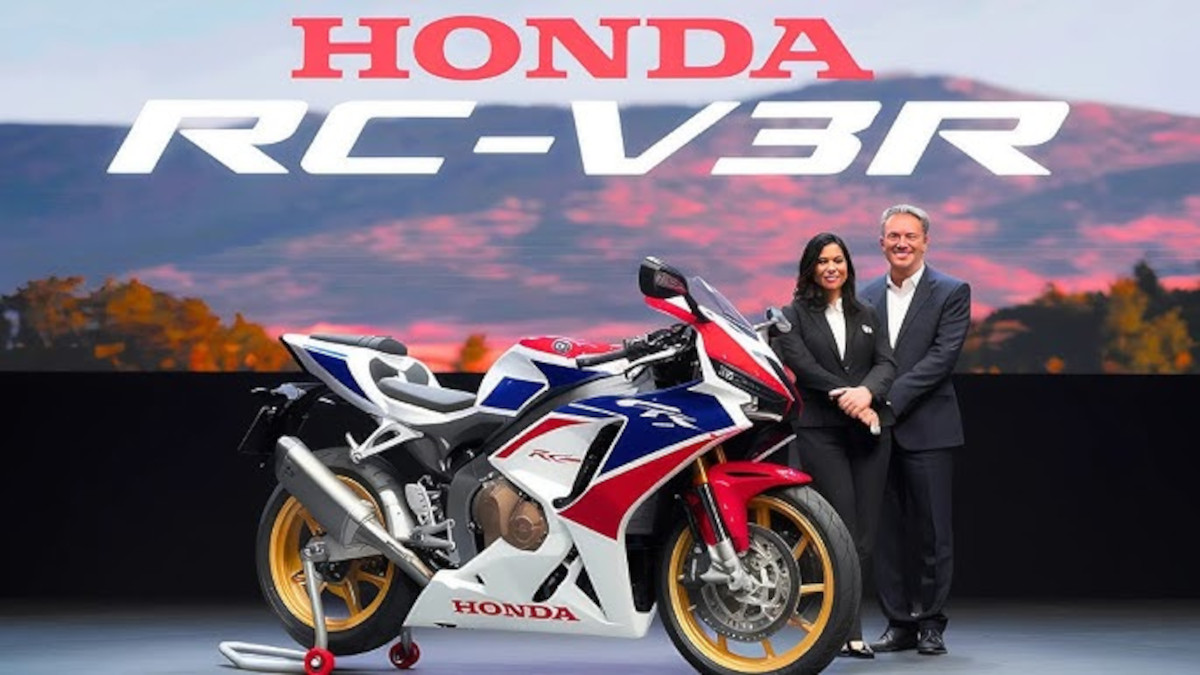
Honda is on the cusp of introducing a groundbreaking new powertrain to the motorcycle world: the V3 engine equipped with an electrically driven supercharger, a concept that first captivated audiences at EICMA 2024. This innovative V-type three-cylinder engine, now strongly associated with the “V3R” and “V3R E-Compressor” trademarks, has received enthusiastic validation from Honda’s motorcycle business division head, who has test-ridden the prototype and lauded its compact and powerful characteristics.
This development signifies a pivotal moment for Honda, as it strategically pursues advanced internal combustion engine (ICE) innovation in parallel with its ambitious electrification goals. The potential for this revolutionary machine to compete in the Suzuka 8 Hours experimental class further underscores Honda’s commitment to pushing performance boundaries and validating new technologies under extreme conditions, setting the stage for a new era of high-performance, compact, and efficient motorcycles.
Introduction: Honda’s Bold Leap into the Future of Motorcycling
Honda has long been synonymous with pioneering innovation in the motorcycle industry, consistently pushing the boundaries of engineering and design. From the genre-defining CB750 and the iconic CBR900 Fireblade to the technologically advanced VFR1200 DCT, the company has a rich history of introducing motorcycles that reshape market expectations and create new categories.1 It is within this legacy of relentless advancement that the emergence of Honda’s V3 engine, featuring an electrically driven supercharger, takes on profound significance. This development, particularly the anticipation surrounding a model potentially dubbed “RC-V3R,” represents not just an incremental improvement but a bold leap into the future of motorcycle powertrain technology.
The initial revelation occurred at EICMA 2024, where Honda sent “shockwaves worldwide” by showcasing a three-cylinder supercharged motorcycle engine concept.1 This concept, initially referred to simply as “V3,” was immediately recognized as Honda’s “most controversial concept motorcycle to date”.1 Its immediate impact stemmed from its “world’s first motorcycle, forced induction, electric compressor” system.1 Crucially, this was no mere static display; the engine was presented as a “fully working (and undergoing testing at the time) prototype machine” that had already been “successfully bench-run”.1 This level of development underscored the seriousness of Honda’s commitment to the technology.
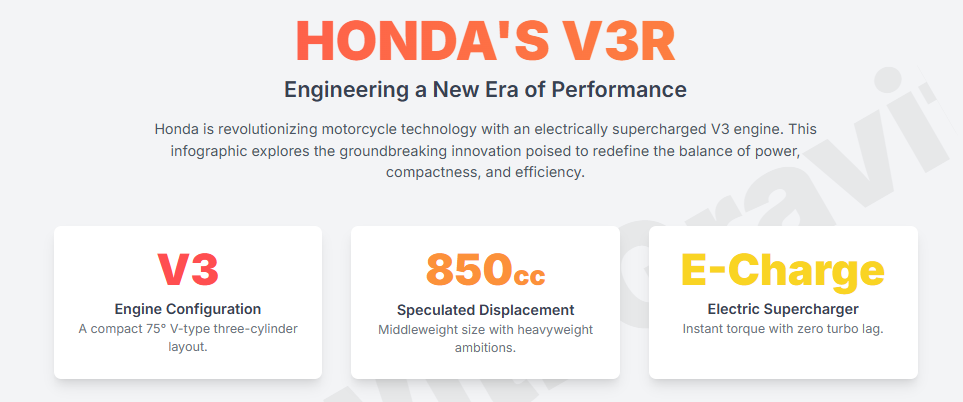
At its core, the V3 engine concept features a unique “75-degree V configuration, three-cylinder unit” with “two cylinders face forward with the third facing back”.1 This unconventional layout is engineered to be “extremely compact and slim” 2, a critical attribute for motorcycle design. This inherent compactness is not merely about fitting the engine into a frame; it is a fundamental design choice that allows for a “high degree of latitude” in the motorcycle’s overall layout, enabling engineers to “focus on creating a more centralised mass”.1 A centralized mass is a major factor in achieving exceptional handling qualities, which are paramount for any high-performance motorcycle. The flexible placement of the electric compressor, which does not require an intercooler, further supports this compact and mass-centralized design.1
Honda’s decision to unveil such a technologically advanced and “controversial” concept at EICMA, a global stage renowned for introducing iconic motorcycles, speaks volumes about its strategic intent. The simultaneous presentation of new electric concept vehicles 1 alongside the V3 engine signals a deliberate dual-path strategy. This approach indicates that Honda is not abandoning internal combustion engines but is instead committed to radically innovating them, while simultaneously pushing forward with electrification. This comprehensive strategy allows Honda to mitigate risks associated with a singular focus on electric vehicles and enables the company to cater to diverse market segments, recognizing that demand for high-performance ICE motorcycles remains robust.
The emphasis on compactness and slimness in the V3 engine’s design is a testament to Honda’s holistic approach to motorcycle engineering. This is not simply about creating a powerful engine; it is about developing a powertrain that inherently contributes to the motorcycle’s dynamic performance. By minimizing the engine’s physical footprint and enabling optimal mass centralization, Honda aims to deliver a motorcycle with superior handling and agility. This integrated design philosophy, where the engine’s form factor is inextricably linked to the bike’s overall rideability, is a hallmark of Honda’s engineering prowess and crucial for a sports-oriented model.
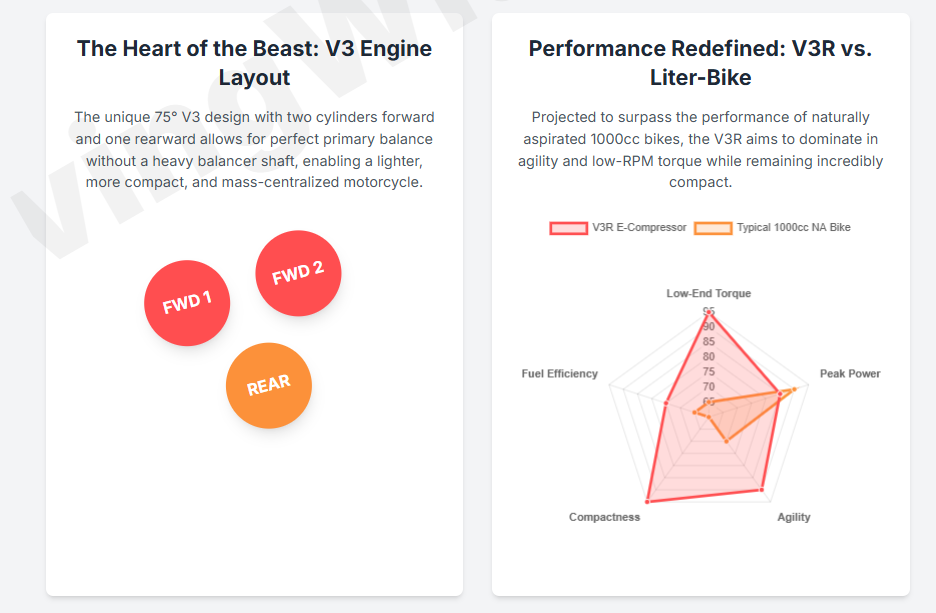
Table 1: Key Features of Honda’s V3 Engine with Electric Supercharger
| Feature | Description |
| Engine Type | V-type three-cylinder (V3) |
The Electrically Supercharged V3 Engine: A Technical Masterpiece
The V3 engine, as showcased at EICMA 2024, represents a significant engineering achievement, combining an unconventional cylinder configuration with a novel forced induction system. The initial “half-baked” concept bike already featured suspension, Tokico braking hardware, and a swingarm that appeared to be sourced from the current-gen Honda CB1000R Black Edition.2 This suggests that the chassis and associated hardware were already being developed in concert with the new engine, indicating a well-advanced prototype stage.
The core of this innovation lies in its unique V3 configuration. The engine employs a “75-degree V configuration, three-cylinder unit” with “two cylinders face forward with the third facing back”.1 This arrangement offers a distinct advantage in terms of engine balance. The design allows the rear piston to be at its bottom dead center (BDC) when the two front pistons are at their top dead center (TDC), enabling opposing inertia forces to effectively cancel each other out. This achieves “excellent balance all without the need for a balancer shaft,” a feat not possible in a conventional inline-three engine.10 While this design inherently leads to “uneven firing intervals,” this characteristic is not a drawback; rather, it “contributes to a unique and appealing engine sound,” imbuing the motorcycle with a “distinct personality on the road”.10 Industry sources widely speculate the engine’s displacement to be “around the 800cc mark” or 850cc.2
The most revolutionary aspect of this powertrain is its forced induction system. While often colloquially referred to as an “e-turbo,” the system is technically an “electric compressor” or “electric supercharger”.3 The distinction is critical: a traditional turbocharger relies on exhaust gas to spin a turbine, whereas Honda’s system uses an electric motor to drive the compressor.14 Even Honda’s Chief Officer of Motorcycle and Power Products Division, Minoru Kato, used the term “dendou tabo” (electric turbo) 12, highlighting the common linguistic shorthand despite the technical difference.
This electrically driven system offers profound advantages over conventional forced induction. Firstly, it provides “high levels of instantly responsive torque… even from low rpm” by controlling “air intake regardless of engine speed”.1 This directly addresses the notorious “turbo lag” associated with exhaust-driven systems, allowing the compressor to build boost pressure instantly and create an “extremely flat torque curve” from near-idle.4 Secondly, the electric compressor offers unparalleled packaging flexibility. Unlike turbos that demand proximity to exhaust ports or mechanical superchargers requiring complex drive systems, the electric unit “doesn’t require an intercooler” 1 and can be placed virtually anywhere on the motorcycle, connected by simple wires and a boost pipe.1 Honda’s concept strategically positioned it “just behind the steering head, in front of the airbox,” occupying minimal space.4
Thirdly, this system enhances efficiency and emissions control. It enables “variable compression ratios” and a “cleaner running engine” 15, potentially extending the lifespan of internal combustion engines and contributing to reduced emissions and better fuel economy.9 In terms of raw power, adding approximately 5 psi of boost can increase engine output by roughly one-third.4 The electric motor can achieve 90% of its maximum rotational speed in “0.3 second or less,” drawing up to 5kW.4 This combination of features promises “lighter weight, optimized power delivery”.10
The engineering ingenuity behind Honda’s electric compressor system represents a significant step forward in motorcycle powertrain development. The historical challenges of forced induction in motorcycles, particularly turbo lag and complex packaging, largely led to their abandonment in the mid-1980s.9 Honda’s electric compressor fundamentally addresses these issues by providing instant torque from low RPM and offering flexible placement, making forced induction a viable and desirable option for mass production motorcycles. This innovation could establish a new industry standard for performance and rideability.
Furthermore, the V3 engine’s inherent design offers distinct advantages for motorcycle dynamics and rider experience. The ability to achieve “excellent balance all without the need for a balancer shaft” 10 is a testament to sophisticated engineering, as balancer shafts add weight and complexity. Eliminating this component contributes directly to a lighter and more compact engine, which in turn enhances the motorcycle’s overall handling, agility, and mass centralization. Beyond the technical benefits, the unique and appealing engine sound resulting from the V3’s uneven firing intervals 10 is a crucial factor in the emotional connection riders form with their machines. This integrated approach to design, which considers both mechanical efficiency and sensory appeal, is a hallmark of Honda’s engineering philosophy.
The performance projections for this new engine suggest a redefinition of traditional motorcycle performance tiers. The expectation that an 800cc supercharged V3 engine “should pack enough muscle to surpass a naturally-aspirated liter-class four-cylinder’s performance” 2 is a bold statement. This implies Honda is aiming to deliver power output typically found in higher displacement categories, but within a lighter, more compact, and potentially more agile package. This strategy could create a new “middleweight-plus” performance segment, appealing to riders who desire liter-bike performance without the associated weight, bulk, or potentially, the higher cost. It has the potential to significantly impact both the middleweight and liter-class segments by offering a compelling new value proposition.
“V3R”: Decoding the Trademark and Production Intent
The formal steps taken by Honda in securing trademarks provide compelling evidence of the V3 engine’s progression towards production and offer crucial insights into the company’s strategic product planning. The initial filing for “V3R” in the UK 2 was subsequently bolstered by additional trademark applications in the US for both “V3R” and “V3R E-Compressor”.11 These filings unequivocally confirm that the innovative electric supercharger system, showcased on the EICMA concept, “is set to reach production alongside the V3 engine” and is considered a “core element of the design”.13 The broad nature of these trademark applications, covering “Vehicles; parts and fittings for vehicles; automobiles;… tricycles;… three-wheeled vehicles” 9, indicates a wide potential scope for the V3 platform.
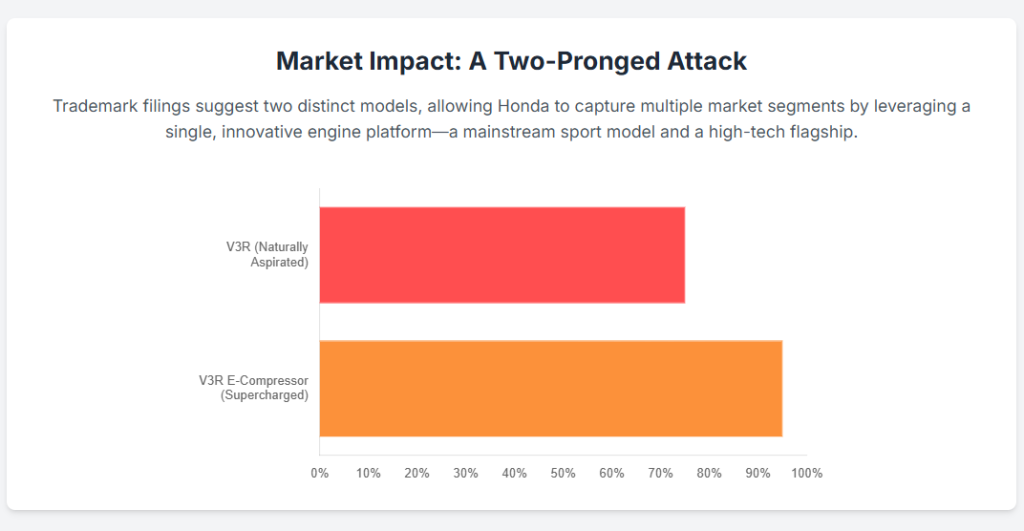
The existence of two distinct trademarks—”V3R” and “V3R E-Compressor”—strongly suggests a potential dual-variant product strategy. It is plausible that the “V3R” (without the “E-Compressor” suffix) could denote a “normally aspirated (fuel-injected) version of the concept,” while the “V3R E-Compressor” would be the technologically advanced, electrically supercharged variant.7 This approach allows Honda to maximize the return on its significant V3 engine development investment by catering to different market segments or price points. By offering both versions, Honda can provide a more accessible entry into the V3 platform while simultaneously showcasing its cutting-edge forced induction technology. This strategic flexibility enables Honda to efficiently dilute development costs by leveraging the core engine platform across “multiple machines”.13
The “R” designation in “V3R” is a strong indicator of a sport-oriented model, as the letter “R” in Honda’s nomenclature typically signifies a sports bike.2 While Honda often uses “RR” for its fully-faired sports bikes and “R” for its naked models, some fully-faired sports bikes also carry the “R” suffix.2 The EICMA 2024 concept bike’s design, featuring suspension, Tokico braking hardware, and a swingarm visibly similar to the current-gen Honda CB1000R Black Edition, along with a comparable rake angle, further points towards a naked sports bike or a sport-tourer.2 The choice of a “steel-trellis chassis instead of an aluminum frame” for the concept also hints that the V3R is not intended to be an “ultraexpensive piece of exotica” but rather a “relatively mainstream machine” 9, emphasizing broader market accessibility without compromising performance.
The consistent rumor of an 800cc displacement for the V3 engine 4, coupled with the expectation that its supercharged form “should pack enough muscle to surpass a naturally-aspirated liter-class four-cylinder’s performance” 2, points to a strategic positioning in the “performance middleweight” segment. This implies Honda is aiming to deliver performance levels traditionally associated with larger, liter-class engines, but within a more compact, potentially lighter, and more agile package. This strategic move aims to redefine performance expectations within the 800-900cc class. The V3 engine is specifically targeted at “mid-size and upwards, displacement motorcycles” and is considered “ideal for several various platforms across the range”.1 This versatility suggests that Honda will likely offer this engine in “multiple variants from sport bikes to touring motorcycles” 10, further broadening its market appeal.
Table 2: Honda V3R Trademark Filings and Interpretations
| Trademark Name | Filing Locations | Suggested Engine Variant | Implied Model Type | Production Intent |
| V3R | UK, US, Europe | Potentially normally aspirated (fuel-injected) V3 | Sporty, Naked, Sport-Tourer | Confirmed for production |
| V3R E-Compressor | US, Europe | V3 with electric supercharger | Sporty, Naked, Sport-Tourer | Confirmed for production, electric supercharger is a core element |
From Prototype to Production: Executive Endorsement and Development Timeline
The journey from a groundbreaking concept to a mass-produced motorcycle is a complex one, but Honda’s V3 engine appears to be on a clear and accelerated path, strongly supported by high-level executive endorsement. Minoru Kato, the Chief Officer of Honda Motor Company’s Motorcycle and Power Products Division, provided a significant vote of confidence by revealing that he has personally “test-ridden the model, and gave it his stamp of approval, calling it a compact and powerful finish”
. Kato further elaborated on his “firsthand experience of riding the test prototype in Kumamoto, Japan,” stating unequivocally, “It’s great. Please look forward to it”.9 His remarks specifically highlighted the prototype’s “compact and lightweight design, electronically controlled turbocharging across all speed ranges, and exceptional power delivery”.9 Such direct, positive feedback from a high-ranking executive who has experienced the product firsthand is a powerful indicator of the project’s maturity and strategic importance within the company.
This executive backing reinforces the public statements that “development of the V3 engine continues towards mass production”.1 Honda has articulated plans to “adopt it to future FUN models” 6, signaling its role in the company’s performance-oriented and enthusiast-focused lineup. The V3 engine is seen as “highly relevant for the future of the motorcycle industry” 10, reflecting its potential to set new benchmarks and influence future powertrain trends.
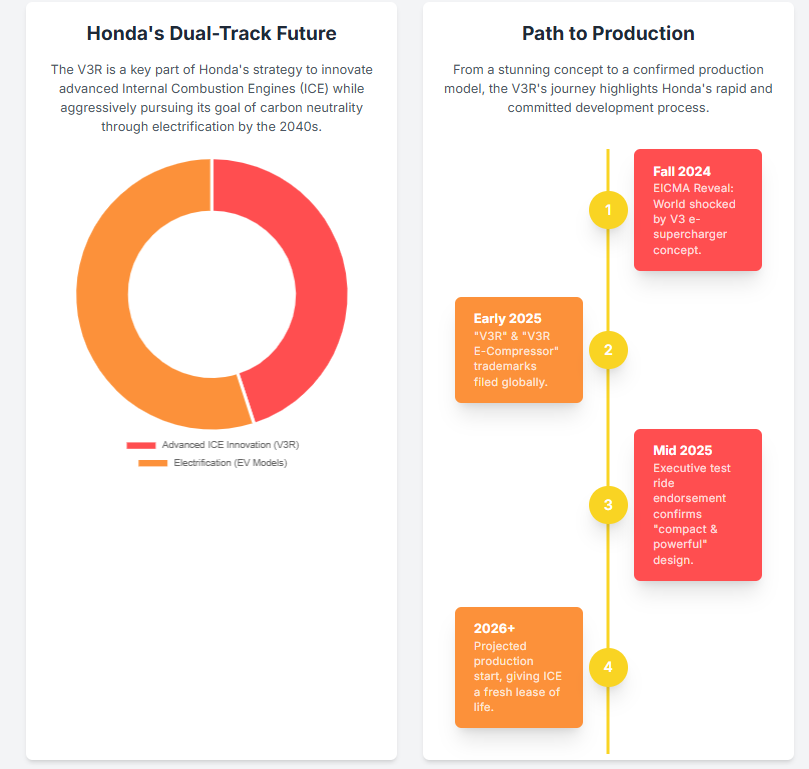
Regarding a production timeline, industry speculation suggests a full unveiling of the complete motorcycle could occur later in 2025, with production potentially commencing by early 2026.11 The high anticipation is evident in some reports prematurely announcing a “2025 Honda RC-V3R”.18 This timeline aligns with Honda’s broader vision that the electric compressor-fed V3 “will also give the internal combustion engine a fresh lease of life in 2026 and beyond”.1
Honda’s strategy for the V3 engine is not an isolated endeavor but an integral part of its overarching corporate direction. The company is firmly committed to achieving “carbon neutrality for all of its motorcycle products during the 2040s”.1 This commitment involves an aggressive acceleration of electrification, with ambitious plans to introduce “30 electric models globally by 2030” and achieve “4 million units” in annual electric motorcycle sales by the same year.1 However, critically, Honda is explicitly “also continuing to advance ICE (internal combustion engines)”.1 This dual-track approach demonstrates a pragmatic and robust long-term strategy, acknowledging that while electrification is the ultimate future, there remains a significant and passionate demand for high-performance, engaging ICE motorcycles. The V3 engine is a key component of this balanced strategy, ensuring Honda’s leadership in both evolving domains.
The high-level confidence expressed by Minoru Kato, derived from his personal test ride of the V3 prototype, is a strong signal of the project’s internal validation and strategic importance. Such direct endorsement from a top executive, combined with explicit plans for mass production, indicates a significant allocation of internal resources and a firm belief in the V3’s market viability. This level of commitment reassures the market and competitors that the V3 engine is a cornerstone of Honda’s future ICE strategy, not merely an experimental concept.
Furthermore, Honda’s simultaneous pursuit of aggressive electric vehicle expansion and advanced ICE development with the V3 engine reveals a sophisticated and resilient long-term strategy. This approach is not contradictory; rather, it represents a pragmatic recognition of diverse global market needs and evolving regulatory landscapes. By investing heavily in both technologies, Honda positions itself to thrive in a transitional period where both ICE and EV powertrains will coexist. The V3 ensures that Honda remains a formidable leader in high-performance, emotionally engaging ICE motorcycles, appealing to traditional enthusiasts, while simultaneously building its electric portfolio for future sustainability and urban mobility. This dual investment provides substantial market resilience and allows Honda to adapt to the varied pace of global electrification.
Racing Prowess: The Suzuka 8 Hours Experimental Class Opportunity
The prospect of the Honda V3R competing in the Suzuka 8 Hours Endurance Race adds an exhilarating dimension to its development, highlighting the “romance” of this innovative machine on the track. This prestigious event offers a unique platform for technological validation and public showcase through its “Experimental Class” (EXP class), which is specifically designed to “allow extensive modifications” to participating motorcycles.7
The utility of the Experimental Class as a crucible for new technologies is well-demonstrated by other manufacturers. Suzuki, for instance, has actively participated in this class, entering an “alternative fuel-powered GSX-R1000 in 2024” 7 and committing to using “100% sustainable fuel” for the 2025 event.19 Suzuki’s stated objective for this participation is to “achieve both environmental load reduction and performance at a higher level to accelerate the development of environmental performance technologies through actual riding under severe conditions in endurance races”.19 This aligns with broader industry trends, particularly in professional racing, as MotoGP itself will mandate 100% sustainable fuel by 2027.20
For Honda, an entry of the V3R in the Suzuka 8 Hours Experimental Class would serve multiple strategic purposes. Industry observers, including “Young Machine,” a publication renowned for its accurate predictions, “thinks that Honda is looking to do the same thing in the future, thanks to its new V3 platform”.7 Such a move would transform the race into a “perfect testing ground for Honda’s latest innovation”.9 It would provide an unparalleled opportunity to “showcase the V3 turbo’s capabilities” under the most extreme and demanding racing conditions, subjecting the engine and its electric supercharger to an intense test of durability, performance, and reliability over eight grueling hours.9 This real-world, high-stress environment yields invaluable data that is difficult, if not impossible, to fully replicate in laboratory settings, thereby accelerating the development cycle.
Beyond the technical validation, a V3R entry in a prestigious event like Suzuka 8 Hours would generate immense public interest and reinforce Honda’s image as an innovation leader. This strategic move would send a powerful message to the global motorcycle community, demonstrating Honda’s unwavering commitment to pushing the boundaries of internal combustion engine technology, even amidst a significant industry shift towards electrification. By showcasing cutting-edge ICE performance in a high-profile race, Honda can effectively maintain its performance credentials and appeal to traditional motorcycle enthusiasts, while simultaneously pursuing its long-term electric vehicle goals. This dual approach ensures brand relevance across all segments of the evolving motorcycle market.
Strategic Implications and Industry Outlook
The introduction of Honda’s V3 engine with its electric supercharger, and the anticipated “V3R” production model, carries significant strategic implications for Honda and the broader motorcycle industry. This development must be viewed within the context of Honda’s comprehensive long-term corporate strategy, which balances ambitious environmental goals with continued technological leadership across all powertrain types.
Honda has publicly committed to achieving “carbon neutrality for all of its motorcycle products during the 2040s”.1 To this end, the company is aggressively accelerating its electrification efforts, with plans to introduce “30 electric models globally by 2030” and targeting “4 million units” in annual electric motorcycle sales by the same year.1 However, critically, Honda is explicitly “also continuing to advance ICE (internal combustion engines)”.1 The V3 engine, with its electric compressor, is a prime example of this commitment, positioned as a technology that “will also give the internal combustion engine a fresh lease of life in 2026 and beyond”.1 This is not a contradictory approach; rather, it represents a comprehensive and adaptive strategy that acknowledges the diverse global market needs and the varied pace of regulatory and consumer adoption of electric vehicles. The V3, with its potential for “variable compression ratios” and “cleaner running” 15, represents an effort to make ICEs more efficient and environmentally responsible, thereby extending their market viability. This positions Honda as a pragmatic leader navigating a complex global transition, capable of meeting diverse demands and maintaining its competitive edge regardless of the pace of electrification.
In terms of the competitive landscape, the V3 engine with its electric supercharger presents a distinct advantage. It offers an “elevated level of practicality that Kawasaki hasn’t achieved with its four-pot mill on the H2, H2R, and Z H2”.2 This direct comparison highlights Honda’s perceived superiority in addressing the inherent challenges of forced induction, such as turbo lag and complex packaging. By offering instant torque, flexible packaging, and potentially improved efficiency in a compact V3 format, Honda could establish a new performance benchmark. This could give them a significant competitive edge in the performance segment, particularly in the middleweight-plus and sport-touring categories, attracting riders who seek cutting-edge technology and a refined, powerful ride. The V3 engine is poised to become a “new milestone in motorcycle engine development” 10, and its successful implementation could lead to a “comeback of the V3 engine configuration across various Honda production models in the near future”.10 The compact engine design inherently facilitates the creation of “lighter, more compact motorcycles that maneuver quickly and easily” 4, aligning with a growing market demand for agile and responsive machines.
The V3 engine’s design, emphasizing “large amounts of power without relying on increased cubic capacity” and its “slim frontal profile,” makes it “ideal for several various platforms across the range”.1 This inherent versatility is a key strategic advantage. Honda’s established practice of utilizing “each of its engines and platforms across multiple machines to help dilute development costs” 13 underscores a shrewd business strategy. By developing a highly adaptable and scalable engine platform, Honda can efficiently introduce a wide array of V3-powered models—spanning sport, touring, and naked segments—without incurring prohibitive development costs for each new model. This approach maximizes the return on their significant investment in the V3 technology, allowing them to cater to broader market segments and achieve greater economies of scale in production, a fundamental aspect of a major manufacturer’s long-term profitability and market dominance.
Conclusion: A New Era for Honda Performance
Honda’s V3 engine with its innovative electric supercharger represents a pivotal moment in the evolution of motorcycle powertrains. Unveiled as a working prototype at EICMA 2024, this compact, powerful, and technologically advanced V-type three-cylinder engine is poised for mass production, strongly indicated by the “V3R” and “V3R E-Compressor” trademark filings and enthusiastic endorsement from Honda’s leadership. The engine’s ability to deliver instant, flat torque, coupled with its flexible packaging and inherent balance, addresses long-standing challenges in forced induction for motorcycles, setting a new benchmark for performance and rideability.
This development is a clear manifestation of Honda’s sophisticated dual-track strategy: a steadfast commitment to advancing internal combustion engine technology alongside aggressive electrification goals. The V3 engine is designed not only to offer exhilarating performance comparable to larger displacement engines but also to contribute to improved efficiency and emissions, thereby extending the viability and appeal of ICE motorcycles in a rapidly evolving market. The potential for the V3R to compete in the Suzuka 8 Hours experimental class further highlights Honda’s dedication to real-world validation and serves as a powerful testament to its engineering prowess and innovative spirit.
By investing in both cutting-edge ICE and electric powertrains, Honda is strategically positioning itself to lead across the entire spectrum of the motorcycle market. The V3 engine platform, with its inherent versatility, promises a range of new models that will cater to diverse rider preferences while optimizing development costs. This holistic approach ensures Honda’s continued relevance and leadership, ushering in a new era where performance, practicality, and environmental responsibility converge to redefine the future of motorcycling.
Sources
- MCL 2024 – EICMA | Honda Engine Room, accessed July 25, 2025, https://www.honda.co.uk/engineroom/mcl2024/eicma/
- A Supercharged Honda Naked Bike Could Become A Reality – Top Speed, accessed July 25, 2025, https://www.topspeed.com/honda-supercharged-naked-bike-soon/
- EICMA 2024 (Updated With Video) – Cycle News, accessed July 25, 2025, https://www.cyclenews.com/2024/11/article/eicma-2024/
- Why did Honda Electric-Supercharge its V3 Concept? | Cycle World, accessed July 25, 2025, https://www.cycleworld.com/blogs/ask-kevin/honda-electric-supercharger-v3-concept-explained/
- Honda Unveils World’s First and New V3 Engine with Electrical- Compressor at EICMA 2024, accessed July 25, 2025, https://global.honda/en/newsroom/news/2024/c241105ceng.html
- Summary of Briefing on Honda Motorcycle Business | Honda Global …, accessed July 25, 2025, https://global.honda/en/newsroom/news/2025/2250128eng.html
- Honda Secures V3R and V3R E-Compressor Trademarks | Visordown, accessed July 25, 2025, https://www.visordown.com/news/honda-secures-v3r-and-v3r-e-compressor-trademarks
- Honda’s New V3 Forced-Induction Engine Unveiled…Just WOW! – Twisted Road, accessed July 25, 2025, https://www.twistedroad.com/blog/posts/hondas-new-v3-forced-induction-engine-unveiled-just-wow
- Honda V3R E-Compressor Update | Cycle World, accessed July 25, 2025, https://www.cycleworld.com/motorcycle-news/honda-trademarks-v3r/
- READY FOR MASS PRODUCTION!!! – Honda’s New V3 Engine with Electric Supercharger is Finally Here! – YouTube, accessed July 25, 2025, https://www.youtube.com/watch?v=AxobOQK-yS8&pp=0gcJCfwAo7VqN5tD
- Honda’s V3 Mystery Bike is Confirmed for the US, Damon’s CEO Sits With Us to Talk Changes – webBikeWorld, accessed July 25, 2025, https://www.webbikeworld.com/hondas-v3-mystery-bike-is-confirmed-for-the-us-damons-ceo-sits-with-us-to-talk-changes/
- There’s a Ridable Prototype Of Honda’s Electric Turbocharged V3 Motorcycle Concept, accessed July 25, 2025, https://www.rideapart.com/news/749008/honda-v3-turbo-concept-update/
- Electric Supercharger Confirmed For Honda V3R – Australian Motorcycle News, accessed July 25, 2025, https://amcn.com.au/editorial/electric-supercharger-confirmed-for-honda-v3r/
- Honda’s New V3 Electrical Compressor Engine Explained – YouTube, accessed July 25, 2025, https://www.youtube.com/watch?v=KD0l3dOD18U&pp=0gcJCfwAo7VqN5tD
- Honda’s new V3 ‘compressor’ engine explained – revtothelimit – motorbike forum, accessed July 25, 2025, https://revtothelimit.co.uk/viewtopic.php?t=10211
- Search for a trade mark – GOV.UK, accessed July 25, 2025, https://www.gov.uk/search-for-trademark
- 2025 NEW HONDA V3 TURBO RIDING TEST!! – YouTube, accessed July 25, 2025, https://www.youtube.com/watch?v=ARPRxfS-pxI
- 2025 ALL NEW HONDA RC-V3R OFFICIALLY ANNOUNCED! – V3 ENGINE COMBINATION WITH E-TURBO? – YouTube, accessed July 25, 2025, https://www.youtube.com/watch?v=FbUoRJ1do4E
- Suzuki Announces the Team Structure of Suzuka 8 Hour Endurance Race | GLOBAL NEWS, accessed July 25, 2025, https://www.globalsuzuki.com/globalnews/2025/0606.html
- Suzuki’s green revolution hits the track with bio-fueled superbike – New Atlas, accessed July 25, 2025, https://newatlas.com/motorcycles/suzuki-100-percent-sustainable-fuel/
Our Social Media Handles
- Instagram : LivingWithGravity
- Medium : Akash Dolas
- YouTube Channel : Gear and Shutter