







Executive Summary
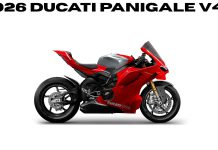
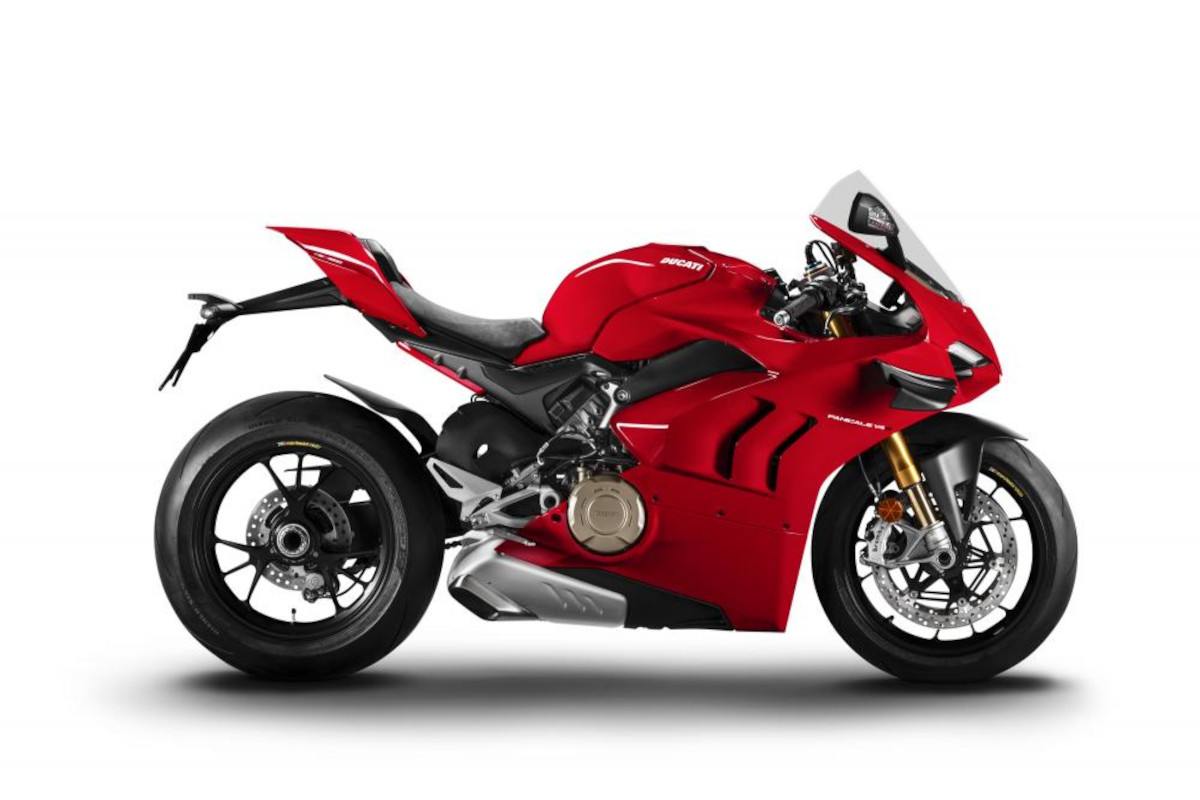
The latest evolution of the Ducati Panigale V4 signals a significant reorientation in superbike design philosophy. Rather than a singular focus on increasing raw power, this update represents a holistic, integrated approach to performance, leveraging direct data and technological transfer from Ducati’s dominant MotoGP and WorldSBK racing programs.1 The core objective of this engineering effort is to make the immense performance of the Desmosedici Stradale engine more accessible and less physically demanding for a diverse spectrum of riders, from seasoned professionals to enthusiastic amateurs.1
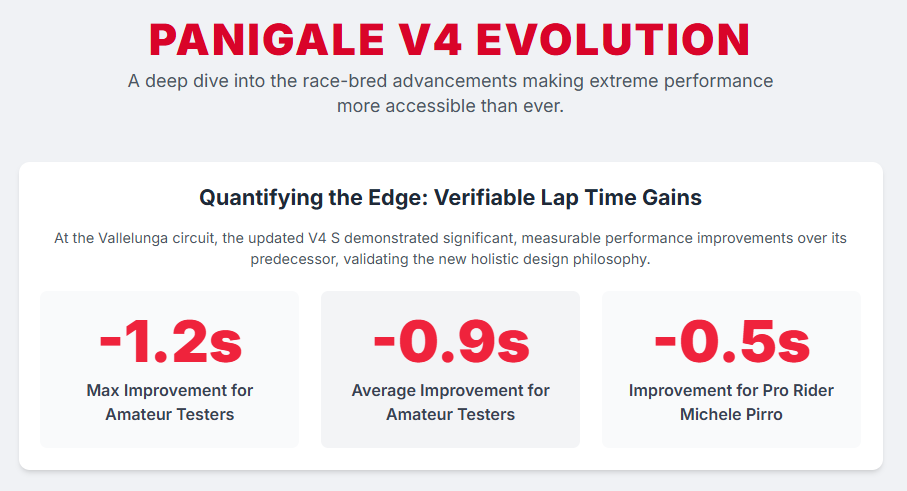
The most profound advancements are found in three key areas: a shift from reactive to predictive rider aids with the introduction of the Ducati Vehicle Observer (DVO) 4, a fundamental change in chassis design with the implementation of a new double-sided swingarm for enhanced stability 5, and a meticulous ergonomic redesign. These changes, while individually significant, are designed to work in synergy, resulting in a substantial and verifiable performance gain. For instance, testing at the Vallelunga circuit demonstrated lap time improvements of up to 1.2 seconds for testers and half a second for a professional rider.1 This data validates the update’s success in creating a motorcycle that is not only faster but also more intuitive and forgiving, setting a new benchmark for what a modern superbike can be.
Chapter 1: The Evolution of a Superbike: From Desmosedici to the Panigale V4
The Panigale V4 is not a static machine but a product of Ducati’s “continuous evolution” philosophy, where its development is intrinsically linked to the technological breakthroughs of its factory racing efforts.1 This report establishes the context for the latest updates by first exploring the direct lineage between the road-going Panigale and its competition counterparts, the Desmosedici GP and WorldSBK machines. This constant feedback loop from the racetrack to the production line is a hallmark of Ducati engineering and is central to understanding the new model’s character.2
The V4’s foundational engineering, including its 90° V4 Desmodromic timing and MotoGP-derived counter-rotating crankshaft, are prime examples of this racing DNA.2 The counter-rotating crankshaft, in particular, is a direct transplant from MotoGP, and its function is to counteract the gyroscopic effect of the wheels, making the bike more agile and precise during quick changes of direction.8 The latest updates, which touch on every major area of the motorcycle—aerodynamics, ergonomics, engine, chassis, and electronics—are the culmination of this continuous, data-driven development cycle.1 The guiding principle behind these refinements is to produce a bike that is “even faster on the racetrack and at the same time more intuitive and less tiring for a wide range of riders,” a goal that underpins all the specific technical changes.1
Chapter 2: The Art of Air Management: Aerodynamic Enhancements
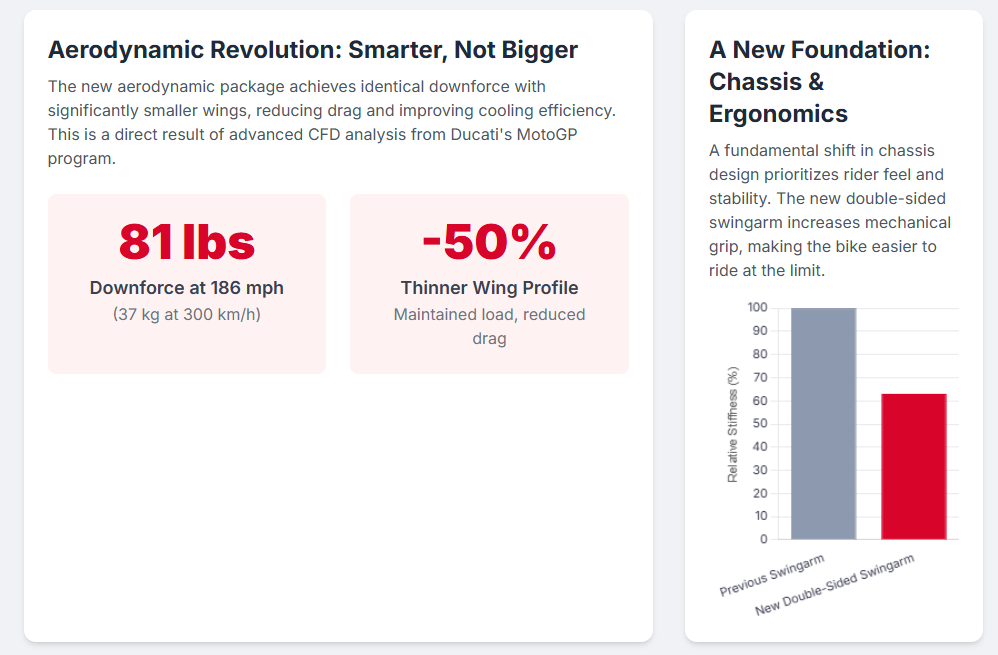
The aerodynamic package on the updated Panigale V4 represents a sophisticated refinement of its predecessor, with a focus on efficiency and rider support. The new design incorporates “more compact and efficient double-profile-design wings”.1 These wings are notably “thinner (respectively by 40% and 50%)” than the previous iteration but are engineered to generate the “same aerodynamic load, up to 81 lbs at 186 mph (37 kg at 300 km/h)”.3 This is a critical engineering achievement that speaks to a more advanced airfoil design, likely resulting from extensive computational fluid dynamics (CFD) analysis and real-world track testing. The fact that Ducati can maintain the same crucial downforce while reducing the size and frontal area of the wings indicates a significant reduction in aerodynamic drag, which translates directly to higher top speeds and improved acceleration.10
Beyond the wings, the fairing has also been redesigned with its leading edge set “further back,” a change inspired by the Desmosedici GP.10 This technical solution has a substantial aerodynamic effect, improving the bike’s handling in crosswinds and during high-speed direction changes. The lower section of the fairing now features “redesigned extraction sockets” and an aerodynamically shaped front mudguard that work in tandem to “improve the cooling system”.1 This enhanced airflow to the oil cooler and radiators is crucial for a high-performance V4 engine, as it allows the bike to maintain optimal performance for longer, combating the heat buildup that is common during intense track sessions.9
Perhaps the most rider-centric aerodynamic improvement is the creation of a “bubble of calm air” for the rider.10 By carefully studying air penetration, Ducati has engineered the new fairing to reduce turbulence, particularly around the hands and shoulders.10 This strategic air management significantly reduces the physical effort required for the rider to maintain position on long straights, allowing for greater concentration and endurance during a race or track day.1 This subtle but profound change in philosophy moves beyond the singular pursuit of speed to actively enhance the rider’s ability to perform, underscoring a more mature and holistic approach to superbike design.
Chapter 3: The Digital Brain: The New Electronic Suite
The electronic package on the updated Panigale V4 is far more than a set of reactive safety nets; it is an integrated digital brain designed to elevate rider performance. At the heart of this system is the revolutionary “Ducati Vehicle Observer (DVO)” algorithm.4 Developed by Ducati Corse, this algorithm operates in concert with the bike’s 6-axis Inertial Measurement Unit (IMU), simulating the input of seventy different sensors to provide a precise, predictive estimate of the necessary intervention levels for rider aids such as Traction Control (DTC) and Wheelie Control (DWC).4
This technology marks a significant shift from traditional reactive systems that only correct a slide or wheelie after it has begun. Instead, the DVO anticipates the bike’s behavior and the rider’s input, allowing for smoother, more precise, and more continuous control.4 This proactive approach builds a new level of rider confidence, as the system works seamlessly in the background to prevent loss of grip, thereby transforming the electronics from a safety feature into a powerful performance tool. This is a direct application of professional racing telemetry to a production motorcycle, making cutting-edge technology accessible to a wider audience.1
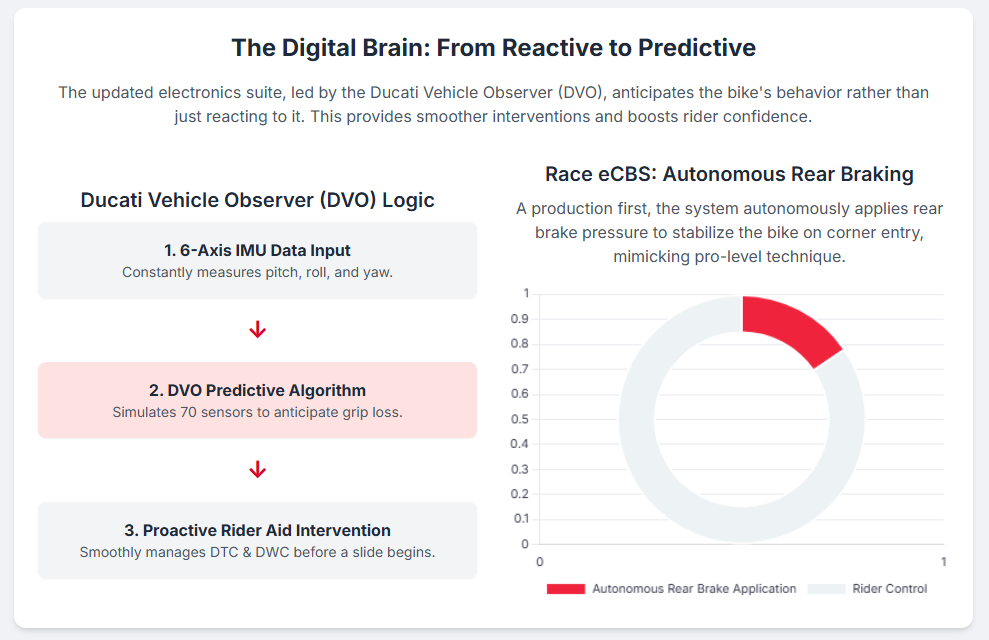
Further refinements include a new Power Mode logic with four distinct configurations: Full, High, Medium, and Low.1 The Full mode is the most aggressive, delivering the engine’s entire potential with torque curves that are free of electronic filters in all gears except first.8 For the High and Medium modes, a new ride-by-wire mapping system has been developed, with a unique calibration for each of the six gears. This gear-specific mapping, a direct result of racing experience, ensures optimal thrust and a predictable throttle response out of every corner, regardless of the gear selected.8
A groundbreaking new feature is the “Race eCBS” (electronic Combined Braking System), a collaboration between Bosch and Ducati.4 This system, a first for a production sports bike, can autonomously apply up to 15.5 percent of rear brake pressure based on the intensity of the rider’s front brake application.4 By automating this complex task, the eCBS frees the rider to focus solely on managing the front brake and corner entry, a technique that mimics the braking style of professional racers who use both brakes to settle the chassis.4 This “skill-boosting” feature enhances stability under heavy braking, making the bike more stable and forgiving at the critical moment of turn-in.4 The new 6.9-inch TFT dashboard with its “Track Evo” display and Optical Bonding technology serves as the central interface for these systems, providing a race-focused layout with a clear gear indicator and a compressed rev counter for enhanced readability at high speeds.4
Chapter 4: Synergy of Design: Chassis, Ergonomics, and Suspension
The physical updates to the Panigale V4’s chassis, ergonomics, and suspension are designed to function in concert with the electronic and aerodynamic advancements, creating a cohesive and highly effective performance package. A significant departure from tradition is the move on the V4 and V4 S models to a new double-sided shell-cast aluminum swingarm.5 This change, a break from Ducati’s iconic single-sided swingarm design, was made to achieve a claimed 37 percent reduction in lateral stiffness.5 This increased flex provides better tire feel and mechanical grip, giving the bike a rear-end feel similar to that of many of its Japanese competitors and ultimately making it easier to ride for longer periods.5 The front frame on the V4 S also has a claimed 40 percent reduction in lateral stiffness, and the swingarm pivot has been raised by 4 mm to increase “anti-squat” action.3 These changes ensure that the rear of the bike remains stable under acceleration, translating the engine’s immense power more effectively to the pavement.
Ergonomic refinements are also key to making the V4’s performance more accessible. The seat and tank have been redesigned to “maximize the rider’s performance and minimize the physical effort required” for track riding.1 The flatter seat shape and the tank’s new profile provide improved support for the rider’s arms and legs during braking and cornering, effectively “anchoring” them to the motorcycle.3 The footpegs have been moved 10 mm inward, further improving aerodynamic penetration and enabling a more tucked riding position.13 These seemingly minor changes provide the rider with enhanced leverage and stability, which are crucial for maintaining control during extreme maneuvers.
The V4 S model features the new Öhlins NPX 25/30 electronically controlled pressurized fork and an Öhlins TTX 36 shock absorber, both managed by the third-generation Smart EC 3.0 system.1 The pressurized fork, a technology derived from racing, minimizes the risk of oil cavitation, resulting in improved braking support and better absorption of bumps.3 The Smart EC 3.0 system is event-based, meaning it dynamically adjusts damping in real-time based on the rider’s actions, such as braking, cornering, and acceleration, providing next-level dynamic control and reducing track lap times.4
Chapter 5: Lineage and Specialization: A Model-by-Model Comparison
The Panigale V4 lineup is composed of distinct models, each tailored for a specific rider profile and application. A clear understanding of these specializations is essential for prospective buyers.
V4 vs. V4 S
The primary difference between the base Panigale V4 and the V4 S lies in their suspension and wheels. The standard V4 is equipped with fully adjustable Showa BPF forks and a Sachs shock, while the V4 S comes with the premium, electronically controlled Öhlins Smart EC 3.0 suspension system.12 Additionally, the V4 S features lighter Marchesini forged aluminum rims and a lithium-ion battery.12 For most riders, the V4 S represents a significant performance and convenience upgrade due to its semi-active suspension, which can be fine-tuned for different riding conditions, and its lighter wheels, which reduce unsprung weight and rotational inertia for enhanced agility.5 The base V4, conversely, is often preferred by those planning to build a dedicated track bike, as the money saved can be reinvested in high-end aftermarket suspension components and wheels.16
V4 S vs. V4 R
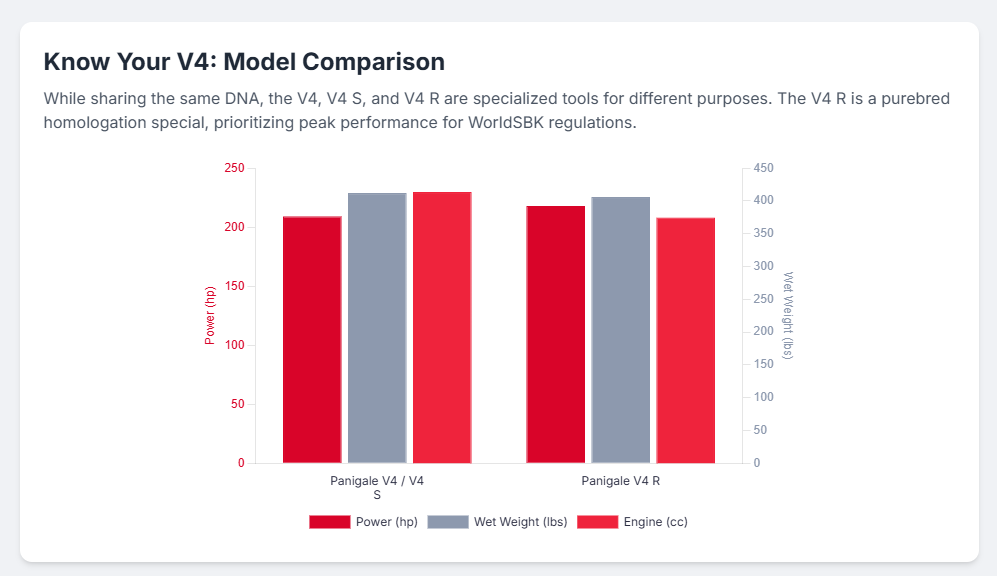
The Panigale V4 R is a homologation special, designed specifically to meet WorldSBK racing regulations. It is fundamentally different from the V4 and V4 S, most notably in its engine. The V4 R uses a 998 cc engine, a requirement for Superbike racing, which revs to a higher peak than the 1103 cc motor of the other models.9 It is also equipped with a dry clutch and fully manual Öhlins suspension, forgoing the electronic components of the V4 S in favor of a pure racing setup.14 While lighter and capable of greater performance in the hands of a professional on a racetrack, the V4 R is considered a less forgiving and more demanding machine for road use due to its peaky power delivery, dry clutch noise, and higher maintenance costs.14 Its purpose is not street comfort but pure, uncompromised track performance.14
Collector’s Editions: The Tricolore and Lamborghini
Ducati also releases ultra-exclusive, limited-edition models that are more than just performance variants; they are collector’s items. The Panigale V4 Tricolore, limited to 1,000 units, is based on the V4 S and features a unique livery inspired by the Italian flag, carbon fiber wheels, and Brembo T-Drive finned discs.18 The Panigale V4 Lamborghini, a collaboration with the Italian supercar manufacturer, is limited to 630 plus 63 units and features a design inspired by the Lamborghini Revuelto, along with unique styling, forged wheels, and extensive use of carbon fiber.19 While these models incorporate top-tier components, their primary value proposition is their exclusivity and unique design. The pricing, starting at $78,400 for the V4 Lamborghini compared to the $33,895 MSRP of the V4 S, reflects that these are special-purpose machines for a high-net-worth demographic and not simply a performance upgrade.21
Chapter 6: Quantifying the Edge: Performance and Real-World Impact
The efficacy of the Panigale V4’s updates is not merely a matter of marketing; it is substantiated by tangible performance gains. During a special testing session at the Vallelunga circuit in Italy, a new V4 S was pitted against its 2021 counterpart.1 The results were significant: one tester improved their best lap time by 0.9 seconds, another by 1.2 seconds, and professional rider Michele Pirro was faster by half a second.1 These seemingly small margins are a testament to the cumulative effect of the myriad engineering changes, demonstrating that the holistic design approach successfully translates into measurable on-track performance.1
The subjective experience of riding the updated Panigale V4 has been the subject of numerous reviews. Many journalists describe the motorcycle as a “skill-boosting” machine that is “more accessible and rider friendly” than its predecessors.5 This is attributed to the electronic systems that “look after you in a way no other superbike has ever done” and a chassis that is “easier to ride for longer”.5 However, it is crucial to recognize that this increased accessibility is relative to the bike’s core identity as a “precision built racing machine”.24 One review noted the engine’s “snatchiness” at low speeds and the bike’s overall stiffness on public roads.24 This is not a contradiction but a reflection of the bike’s singular purpose. The throttle maps and suspension settings, optimized for high-speed track performance, may feel overly aggressive in stop-and-go city traffic.24 The Panigale V4 has not been transformed into a comfortable sport-tourer; instead, Ducati has simply made the extreme more manageable for a wider range of talent, a key distinction for potential buyers to consider.
Chapter 7: Comprehensive Technical Specifications and Key Comparisons
To provide a clear and definitive reference, a detailed technical comparison of the Panigale V4, V4 S, and V4 R models is presented in the following table. This side-by-side analysis highlights the engineering-level differences that define each model’s character and intended use.
Table 1: Panigale V4, V4 S, and V4 R Technical Comparison
| Feature | Panigale V4 | Panigale V4 S | Panigale V4 R |
| Engine | Desmosedici Stradale, 1,103 cc | Desmosedici Stradale, 1,103 cc | Desmosedici Stradale, 998 cc |
| Power | 209 hp @ 12,750 rpm (US/CAN/MEX) 7 | 209 hp @ 12,750 rpm (US/CAN/MEX) 7 | 218 hp @ 15,500 rpm 17 |
| Torque | 89.5 lb-ft @ 11,250 rpm (US/CAN/MEX) 7 | 89.5 lb-ft @ 11,250 rpm (US/CAN/MEX) 7 | 82 lb-ft @ 12,000 rpm 17 |
| Clutch Type | Wet multiplate 14 | Wet multiplate 14 | Dry 14 |
| Front Suspension | Showa BPF fork 15 | Öhlins NPX 25/30 electronic fork 1 | Öhlins NPX 25/30 manual fork 14 |
| Rear Suspension | Sachs unit 15 | Öhlins TTX 36 electronic shock 12 | Öhlins TTX 36 manual shock 14 |
| Wheels | Light alloy 7 | Forged aluminum 7 | Forged aluminum 14 |
| Wet Weight | 421 lbs (191 kg) 7 | 412 lbs (187 kg) 7 | 406 lbs (184 kg) 17 |
| Rake | 24∘ 7 | 24∘ 7 | 24.5∘ 17 |
| Trail | 98 mm 7 | 98 mm 7 | 100 mm 17 |
Note: All specifications are based on the latest available public data and may be subject to regional variation.7
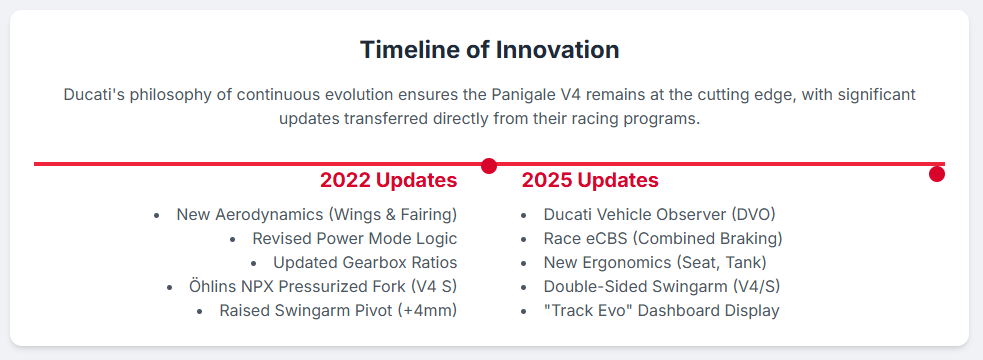
Table 2: Timeline of Panigale V4 Updates (2022 to Present)
| Model Year | Key Updates |
| 2022 | Aerodynamic improvements (wings, fairing).3 New Power Modes logic.3 Updated gearbox with lengthened first, second, and sixth gears.3 New Öhlins NPX 25/30 pressurized fork.3 Raised swingarm pivot for increased anti-squat.3 |
| 2025 | New Ducati Vehicle Observer (DVO) predictive algorithm.4 Race eCBS (electronic combined braking system).12 Ergonomic redesign of seat, tank, and footpegs.1 New double-sided swingarm for V4/V4S models.5 New “Track Evo” dashboard display.4 |
Conclusion: Ducati’s Vision for the Future of Superbikes
The latest iteration of the Ducati Panigale V4 demonstrates a refined and sophisticated vision for the modern superbike. The updates are not a series of isolated changes but a cohesive, integrated platform designed to bridge the gap between raw, uncompromising performance and rider accessibility. The central theme of this evolution is the application of technologies and data from the highest levels of racing to create a machine that flatters the rider, making it easier to extract maximum performance with less physical and mental effort.5
The Panigale V4 is a masterpiece of engineering that successfully balances blistering speed with newfound accessibility. The shift to predictive electronics and a more flexible chassis represents a fundamental tactical decision by Ducati to prioritize tire feel and rider confidence, even if it means a departure from traditional design elements like the single-sided swingarm. The objective data from track testing, showing measurable lap time gains, validates this approach.1 By democratizing technologies once reserved for factory riders, Ducati is not only defining the future of superbike technology but also the future of the superbike riding experience itself. The Panigale V4 stands as a testament to its direct lineage from the world’s most competitive racing environments, a machine that is both a brutal instrument of speed and a remarkably intuitive partner for the rider.
Soures
- Ducati Panigale V4 Price & Specs | 2024 & 2025 Superbike, accessed on August 23, 2025, https://www.ducati.com/us/en/bikes/panigale/panigale-v4-2024
- New Ducati Panigale V4 Released | Design and Development Today, accessed on August 23, 2025, https://www.designdevelopmenttoday.com/industries/automotive/news/22916427/new-ducati-panigale-v4-released
- The Evolution of Ducati Never Stops: New Panigale V4, accessed on August 23, 2025, https://www.ducati.com/us/en/news/the-evolution-of-ducati-never-stops-new-panigale-v4
- Electronics Ducati Panigale V4, accessed on August 23, 2025, https://www.ducati.com/ww/en/bikes/panigale/panigale-v4/electronics
- 2025 Ducati Panigale V4 S Review – Cycle News, accessed on August 23, 2025, https://www.cyclenews.com/2024/09/article/2025-ducati-panigale-v4-s-review/
- New Panigale V4 – Wonder. Engineered. – Ducati, accessed on August 23, 2025, https://www.ducati.com/ww/en/bikes/panigale/panigale-v4
- Engine Ducati Panigale V4, accessed on August 23, 2025, https://www.ducati.com/ww/en/bikes/panigale/panigale-v4/engine
- 2023 Ducati Panigale V4 S – New Haven Powersports, accessed on August 23, 2025, https://www.nhpowersports.com/Motorcycles-Ducati-Panigale-V4-S-2023-New-Haven-CT-c5aefeb4-090d-4626-8e64-aeee00460155
- New Ducati Panigale V4 R | Official Ducati USA Superbike, accessed on August 23, 2025, https://www.ducati.com/us/en/bikes/panigale/panigale-v4-r
- Aerodynamics Ducati Panigale V4 – Faster than emotions, accessed on August 23, 2025, https://www.ducati.com/ww/en/bikes/panigale/panigale-v4/aerodynamics
- 2024 Panigale V4 Electronics | Advanced Tech by Ducati Motorcycles USA, accessed on August 23, 2025, https://www.ducati.com/us/en/bikes/panigale/panigale-v4-2024/electronics
- 2025 Ducati Panigale V4 and V4 S First Look and Specs – Cycle News, accessed on August 23, 2025, https://www.cyclenews.com/2024/07/article/2025-ducati-panigale-v4-and-v4-s-first-look-and-specs/
- 2024 vs New 2025 Ducati Panigale V4 Faster but Uglier? – YouTube, accessed on August 23, 2025, https://www.youtube.com/watch?v=Mu1TpQUCWTQ
- Panigale V4R VS V4S : r/Ducati – Reddit, accessed on August 23, 2025, https://www.reddit.com/r/Ducati/comments/1ik66y0/panigale_v4r_vs_v4s/
- Ducati Panigale V4 vs Ducati Panigale V4 R – Know Which Is Better! – BikeWale, accessed on August 23, 2025, https://www.bikewale.com/compare-bikes/ducati-panigale-v4-vs-ducati-panigale-v4-r/
- Panigale V4(S) vs V4R on track? : r/Ducati – Reddit, accessed on August 23, 2025, https://www.reddit.com/r/Ducati/comments/17qwr4w/panigale_v4s_vs_v4r_on_track/
- New Panigale V4 R Ducati – This is Racing, accessed on August 23, 2025, https://www.ducati.com/in/en/bikes/panigale/panigale-v4-r
- 2025 Panigale V4 Tricolore | Italian Spirit by Ducati Motorcycles USA, accessed on August 23, 2025, https://www.ducati.com/us/en/bikes/panigale/panigale-v4-tricolore
- 2026 Panigale V4 Lamborghini | Luxury Meets Speed | Ducati Motorcycles USA, accessed on August 23, 2025, https://www.ducati.com/us/en/bikes/panigale/panigale-v4-lamborghini
- 2026 Ducati Panigale V4 Lamborghini First Look – Cycle World, accessed on August 23, 2025, https://www.cycleworld.com/bikes/ducati-panigale-v4-lamborghini-first-look/
- 2026 Ducati Panigale V4 Lamborghini first look: The $100,000 superbike – RevZilla, accessed on August 23, 2025, https://www.revzilla.com/common-tread/2026-ducati-panigale-v4-lamborghini-first-look-the-100000-superbike
- www.revzilla.com, accessed on August 23, 2025, https://www.revzilla.com/common-tread/2025-ducati-panigale-v4-first-ride-motorcycle-review
- Ducati Panigale V4 S Press Reviews: Unmatched Power & Precision, accessed on August 23, 2025, https://www.ducati.com/gb/en/press-reviews/panigale-v4-s-press-reviews
- Disappointing 2025 Ducati V4S test ride : r/motorcycles – Reddit, accessed on August 23, 2025, https://www.reddit.com/r/motorcycles/comments/1krsjmk/disappointing_2025_ducati_v4s_test_ride/
- Panigale V4 & V4 S | Ducati Montreal, Ducati Motorcycle Dealership – Ducati Montréal, accessed on August 23, 2025, https://ducatimontreal.com/en/ducati/panigale-v4-v4-s/
Our Social Media Handles
- Instagram : LivingWithGravity
- Medium : Akash Dolas
- YouTube Channel : Gear and Shutter