
















Executive Summary
The recent expansion of Section 232 tariffs, which now imposes a 50% duty on imported “steel and aluminum derivative products,” has created a complex and profound disruption within the motorcycle industry. This policy’s impact extends far beyond simple price increases for imported models, introducing widespread systemic uncertainty due to its ambiguous implementation and selective application to specific product codes. The ripple effect is being felt across the entire value chain, from manufacturers and dealers to consumers.
For manufacturers, the tariffs have prompted a variety of responses. Companies like KTM, Ducati, and Yamaha are directly passing on the costs to consumers through new surcharges, while even domestic brands like Harley-Davidson are not immune due to their reliance on imported components. The tariffs are forcing these companies to undertake costly and time-consuming strategic re-evaluations, including the diversification of their global supply chains and the potential relocation of production facilities.

At the consumer level, new motorcycle prices have risen by hundreds to thousands of dollars, a phenomenon that has contributed to a reported year-on-year sales decline of approximately 10 percent.1 This price sensitivity is actively shifting a significant portion of the market toward the robust second-hand and used bike sectors, which are exempt from these new duties.1 For dealers, the situation is precarious as they absorb some costs, leverage promotional financing to move excess inventory, and grapple with increased prices for parts and supply chain unpredictability.
Ultimately, the tariffs are not the sole cause of the industry’s struggles but function as a powerful catalyst, accelerating pre-existing market headwinds such as declining sales and a shifting consumer base. They have also fostered a climate of consumer skepticism and a crisis of trust. The policy’s stated goal of revitalizing American steel and aluminum industries appears to be undermined by its complex, self-defeating nature and its direct negative consequences for major American companies and their intricate supply chains.
1. The New Tariff Landscape: A Technical and Regulatory Overview
1.1 The Mechanics of “Derivative” Tariffs
The most recent development in U.S. trade policy has been the expansion of existing Section 232 tariffs to include 407 new product categories.2 These items are now designated as “steel or aluminum derivative products” and are subject to a 50% tariff.2 The directive applies to a wide range of goods, from common household items to complex products like motorcycles.2 A critical and highly confusing aspect of this new policy is that the 50% tax is not a flat duty on the entire imported motorcycle’s value.2 Instead, the tariff applies only to the value of the “steel and aluminum content” within the imported product.2
The immediate implementation of this policy, announced on a Friday and effective the following Monday, has created significant logistical and financial chaos for the industry.3 The new rules apply to goods already in transit, leaving distributors, wholesalers, and customs officials scrambling to calculate the exact tax owed.2 Further adding to the ambiguity is the lack of clarity on whether these new derivative duties are applied in addition to, or in place of, previously imposed country-based “reciprocal tariffs”.3 This layer of unpredictability is a systemic stressor that forces companies to operate in an “unsettling environment”.6 Without a clear and predictable cost basis for imports, companies are suspending growth plans and adopting a cautious, reactive stance, a far more damaging outcome than a known, fixed-rate tariff. This uncertainty functions as a non-monetary tax on a company’s ability to plan and invest, directly inhibiting business growth.

1.2 Specific Product Codes and Exclusions
The new tariff policy explicitly targets the motorcycle industry by including four specific Harmonized Tariff Schedule (HTS) codes. This report has identified and broken down the affected codes as follows:
- Code 8711.30: Motorcycles and mopeds with an engine displacement between 250 cc and 500 cc.2
- Code 8711.50: Motorcycles and mopeds with an engine displacement between 800 cc and 970 cc.2
- Code 8711.60: Electric cycles with an output below 250 watts.2
- Code 8714.10: Motorcycle parts, a broad category that effectively and unfortunately impacts “all bikes”.2
Despite this targeted approach, the policy contains a curious and illogical set of exemptions. An analysis of the HTS codes reveals “holes in this tariff strategy that are big enough to ride a midsize motorcycle through”.2 The policy inexplicably excludes two popular and significant segments of the market: bikes between 500 cc and 800 cc (HTS code 8711.40) and liter-class motorcycles (bikes exceeding 970 cc).2
Below is a tabular representation of the specific HTS codes for motorcycles, their engine displacement/type, and what models they apply to.
| HTS Code | Displacement/Type | Scope of Application |
| 8711.30 | 250 cc – 500 cc | Targeted |
| 8711.50 | 800 cc – 970 cc | Targeted |
| 8711.60 | Electric below 250W | Targeted |
| 8714.10 | Parts & Accessories | Targeted (affects all bikes) |
| 8711.40 | 500 cc – 800 cc | Excluded |
| 8711.10 | Under 50 cc | Excluded |
| 8711.20 | 50 cc – 250 cc | Excluded |
| N/A | Over 970 cc | Excluded |
1.3 Historical Context and Escalation
The current tariff policy is the latest step in a protracted trade conflict that began with the initial Section 232 duties in 2018. That year, the Trump administration established a 25% tariff on steel imports and a 10% tariff on aluminum imports.3 This initial action later expanded to include specific derivative products in 2020, and the tariff rates surged to 50% by June of the current year.3
This history of escalating U.S. policy prompted retaliatory measures from key trading partners. The European Union, in particular, responded by raising its tariff on U.S.-made motorcycle exports to Europe from 6% to 31%.7 This cycle of tariffs and retaliation directly influenced the strategic decisions of major American manufacturers and set the stage for the current market disruption.
2. Direct Financial and Operational Impacts on Manufacturers
2.1 Case Studies in Pricing Strategy and Profitability
The tariffs have had a swift and measurable impact on the pricing strategies of several major motorcycle manufacturers. The most common response from international brands has been to pass the additional costs directly to consumers through price surcharges.
- KTM: The popular 390 series has been hit with surcharges ranging from $550 to $700.5 This represents a significant increase, with the 390 Adventure R, for example, receiving a $700 add-on fee that amounts to a roughly 10% “Import Duty Surcharge” on its price.9
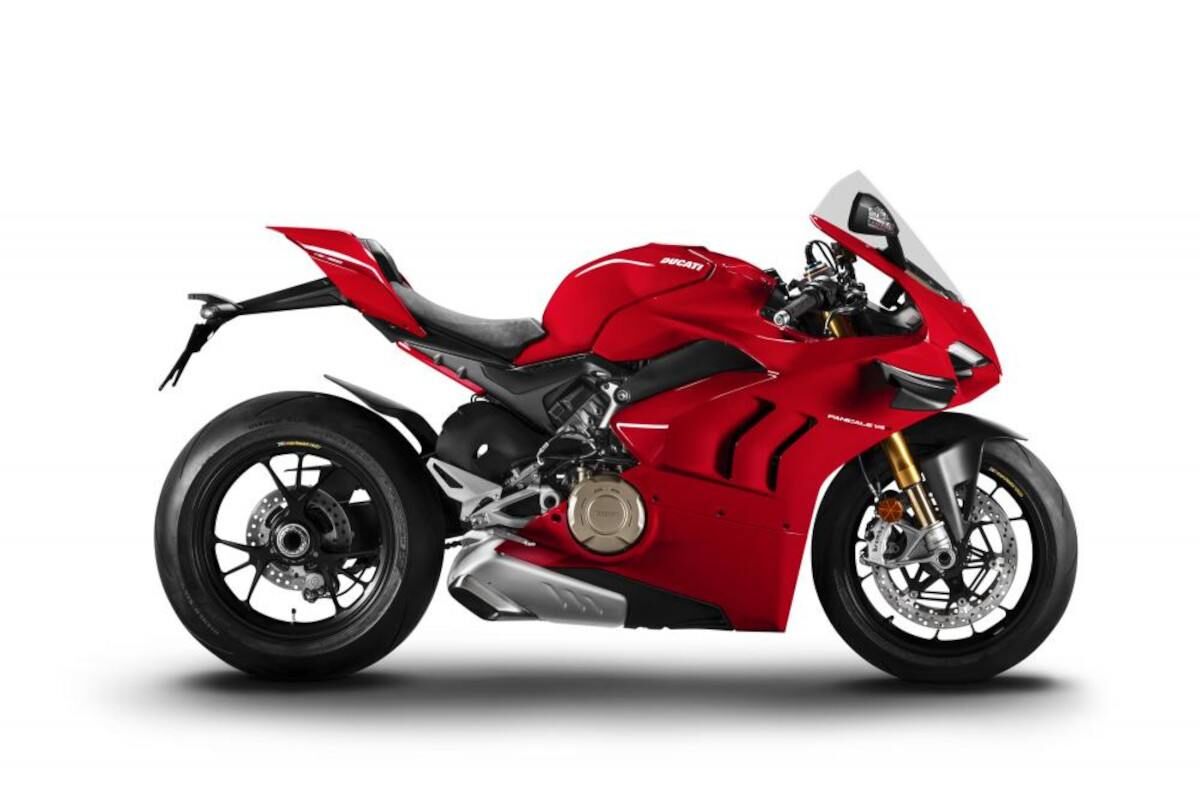
- Ducati: Ducati has implemented surcharges ranging from $100 to $1,000 across its lineup.5 High-end models such as the DesertX, Panigale V4, and Multistrada V4 Pikes Peak have been subject to a $1,000 price bump.5
- Yamaha: Yamaha has also introduced surcharges, particularly for its sports bike lineup. The R1 has seen a price increase of $1,500, while the entry-level R3 has incurred a $350 increase.5
Below is a table summarizing the specific price increases for select models from these manufacturers.
| Manufacturer | Model | Surcharge/Increase |
| KTM | 390 Enduro R, 390 SMC R | $550 |
| KTM | 390 Adventure X, 390 Duke | $600 |
| KTM | 390 Adventure R | $700 |
| Ducati | DesertX, Panigale V4, Multistrada V4 Pikes Peak | $1,000 |
| Ducati | Rest of line-up | $100 – $800 |
| Yamaha | R1 | $1,500 |
| Yamaha | R1M | $1,250 |
| Yamaha | R3 | $350 |

Even American-based manufacturers are not shielded from the effects. Harley-Davidson, for instance, has a history of adapting to trade conflicts, including its 2018 decision to move production of European-bound motorcycles to its Thailand plant to avoid EU retaliatory tariffs.7 However, the current tariff structure remains a significant challenge. Many of Harley-Davidson’s U.S.-made models, such as the Softails and Grand American Touring bikes, are still affected by the tariffs on imported parts and accessories.4 The company has withdrawn its sales and profit forecasts for 2025, expecting a cost headwind of $130 million to $175 million.10 This financial strain on a flagship American brand directly contradicts the stated goal of the tariff policy. Similarly, while a majority of Honda’s vehicles sold in the U.S. are assembled domestically, the company’s Q1 net profit was still negatively impacted by a significant $844.1 million tariff charge, primarily from its larger automotive operations.12 This demonstrates the vulnerability of a global supply chain, even with a strong domestic manufacturing base.
2.2 Supply Chain Disruptions and Adaptation
The tariff policy has created significant supply chain disruptions, making it more challenging and expensive for manufacturers to acquire essential components.13 The complex nature of a motorcycle’s construction, with over 200 component parts often sourced from abroad, means that brands find it difficult to avoid tariffs without major overhauls.15 This unpredictability has led to shipping delays, rerouted logistics, and dealers resorting to stockpiling critical components to maintain inventory.14
In response to these pressures, companies are pursuing long-term mitigation strategies that require substantial time and financial investment.14
- Production Relocation: Some companies, such as BMW, are exploring increased U.S. assembly of popular models to bypass tariffs and reduce exposure to duties.16 BMW’s strategic increase in production at its Spartanburg, South Carolina plant is an example of this approach, as it not only lowers costs but also aligns with consumer demand for “Made in America” products.18
- Supply Chain Diversification: A key strategy being explored is assessing alternative sources of supply to reduce dependence on tariff-affected countries.17 The administration’s policy encourages this by allowing importers to avoid derivative product duties by utilizing steel or aluminum “melted and poured in the United States”.4 However, the willingness and ability of European and Japanese original equipment manufacturers (OEMs) to make such costly and time-consuming shifts remains an open question.3
- Strategic Hedging: Companies like BMW have also adopted an approach of absorbing some tariff costs and offering “price protection” to dealers and customers for a limited time.20 This strategy leverages existing inventory buffers to provide a period of market stability and maintain consumer confidence before potential price adjustments are made.
3. Macro-Market and Consumer-Level Effects
3.1 Impact on Market Dynamics and Sales
The tariffs have had a palpable negative effect on the overall U.S. motorcycle market. Year-on-year sales have reportedly dropped by approximately 10 percent, a decline attributed to a combination of increased costs and a “wait-and-see” approach from potential buyers.1 This market contraction is not an isolated event caused solely by the tariffs; rather, the tariffs are a powerful accelerator of pre-existing market trends.
The industry was already facing headwinds before the latest tariff expansion, including declining consumer confidence and projected decreases in sales.15 The tariffs arrived at a time when the market was already fragile, with an oversupply of inventory resulting from a temporary pandemic-era sales boom.1 The existence of a robust second-hand market and excess dealer stock provides a perfect avenue for consumers to avoid the tariff-related price increases.1 This availability of non-tariffed, recent-vintage models creates a powerful incentive for buyers to shift their purchasing habits away from new motorcycles.
The policy also includes a unique exemption for motorcycles 25 years and older, which remain subject to the original 2.5% duty.16 This has created a new niche market, with a surge in vintage imports and a rapid appreciation in their value.16 These market shifts—from new to used and from modern to vintage—are amplified by the tariff policy and threaten to permanently alter the industry’s landscape by eroding brand loyalty and changing the center of gravity for consumer interest and spending.

3.2 The Consumer-Level Paradox
The implementation of tariffs has created a consumer-level paradox. On one hand, manufacturers are facing legitimate and significant cost increases that must be passed on to the buyer. On the other, there is widespread consumer skepticism that some brands are using tariffs as an excuse for broader price hikes, a phenomenon sometimes referred to as “greedflation”.9 Publicly available documents have reportedly revealed a “scarcity strategy” and an intentional limitation of production to artificially inflate demand.21
This dual reality has created a crisis of trust between manufacturers and their customer base. While some companies, like BMW and Ends Cuoio, have attempted to offer transparent communication and absorb costs to maintain market stability 20, the general public is increasingly wary of official justifications for price increases.9 This environment makes it difficult for brands to build and maintain the loyalty of a new generation of riders who are already being priced out of the market.21
4. Strategic Recommendations and Long-Term Outlook
4.1 Recommendations for Manufacturers
To navigate this turbulent environment, manufacturers must adopt proactive, long-term strategies. First, accelerating supply chain diversification is paramount. Companies should explore alternative sourcing options in regions with more favorable trade agreements or invest in domestic suppliers to reduce their dependence on tariff-affected countries.17 While a significant capital investment, expanding or leveraging U.S.-based manufacturing can provide a crucial pricing and supply advantage, as demonstrated by the strategies of Harley-Davidson and Honda.16 Lastly, transparent communication with both dealers and consumers is essential. Rather than simply raising the Manufacturer’s Suggested Retail Price (MSRP), brands should use clear surcharges with detailed explanations to help combat the perception of “greedflation” and maintain consumer trust.9
4.2 Recommendations for Dealers
Dealers, as the primary point of contact with consumers, must also adapt. Given the current market trends, they should actively promote their excess stock of new bikes and their robust used inventory, highlighting the fact that these vehicles are not subject to the new tariff surcharges.1 To maintain demand for new bikes and offset the impact of higher prices, dealers should also consider creative financing deals and promotional offers to make purchases more accessible for price-sensitive buyers.14
4.3 Future Projections
The long-term outlook for the industry suggests a potential for significant market consolidation. Domestic manufacturers may gain a competitive edge over international brands, which will be forced to make costly and disruptive investments in production relocation or supply chain diversification.17 In the face of these challenges, a renewed focus on innovation may emerge as a crucial long-term strategy. Manufacturers could invest in new technologies or alternative materials to reduce their reliance on imported, tariff-affected components, which could lead to a renewed focus on research and development to outmaneuver trade policies and meet market demands.17

5. Conclusion
The new “derivative” tariffs represent a complex and significant disruption to the motorcycle industry. While the policy’s stated intention is to protect domestic manufacturing, its ambiguous nature and self-defeating outcomes are causing more harm than good. The evidence suggests that instead of fostering growth, the tariffs are amplifying existing market vulnerabilities, suppressing demand, and actively encouraging a shift away from new vehicle purchases. The very companies the policy was meant to protect are now grappling with internal financial strain and logistical chaos.
The future of the motorcycle industry hinges on the ability of its stakeholders to adapt to this turbulent environment. Strategic diversification, investment in domestic production, and a commitment to transparent communication will be crucial for navigating the challenges ahead. The continued viability of the industry and the accessibility of motorcycling for a new generation of enthusiasts depend on proactive and agile responses to a volatile economic landscape.
Sources
- The Impact of New Tariffs on the Motorcycle Industry – Law Tigers, accessed on August 23, 2025, https://lawtigers.com/the-impact-of-new-tariffs-on-the-motorcycle-industry/
- 50% Steel And Aluminum Tariff Expands To Motorcycles And More – Jalopnik, accessed on August 23, 2025, https://www.jalopnik.com/1945903/steel-aluminum-tariff-expands-to-motorcycles/
- Motorcycles targeted by new “derivative” steel and aluminum tariffs …, accessed on August 23, 2025, https://www.jpcycles.com/common-tread/motorcycles-targeted-by-derivative-steel-and-aluminum-tariffs
- Motorcycles targeted by new “derivative” steel and aluminum tariffs – RevZilla, accessed on August 23, 2025, https://www.revzilla.com/common-tread/motorcycles-targeted-by-derivative-steel-and-aluminum-tariffs
- Trump’s New Tariffs Might Dearly Hurt New Motorcycle Owners, accessed on August 23, 2025, https://www.topspeed.com/trump-tariffs-new-motorcycles-expensive/
- Honda exec: ‘Tariffs are going to hurt the whole supply chain’, accessed on August 23, 2025, https://www.supplychaindive.com/news/honda-tariffs-harm-auto-supply-chain-steel/533310/
- Harley Is a Tariff Trend Setter—But Not in a Good Way | PIIE, accessed on August 23, 2025, https://www.piie.com/blogs/trade-and-investment-policy-watch/2018/harley-tariff-trend-setter-not-good-way
- Harley-Davidson, stung by tariffs, shifts some production overseas | PBS News, accessed on August 23, 2025, https://www.pbs.org/newshour/politics/harley-davidson-stung-by-tariffs-shifts-some-production-overseas
- Navigating the Tariff Turbulence: How the Motorcycle Industry and Riders Are Responding to 2025 Trade Shifts – KiWAV motors, accessed on August 23, 2025, https://kiwavmotors.com/en/blog/navigating-the-tariff-turbulence-how-the-motorcycle-industry-and-riders-are-responding-to-2025-trade-shifts
- Harley-Davidson, Hershey, Adidas and Mercedes warn of profit woes and tariff costs after US-EU 15% deal | The Independent, accessed on August 23, 2025, https://www.independent.co.uk/news/world/americas/us-politics/trump-tariff-harley-hershey-mercedes-b2799083.html
- Harley-Davidson warns of tariff hit, pulls 2025 outlook – Global Banking | Finance | Review, accessed on August 23, 2025, https://www.globalbankingandfinance.com/US-HARLEY-DAVIDSON-RESULTS-1a097415-d811-4da3-a98f-86e9267398a4
- Honda Motor Profit Dented by Tariffs, but Outlook Brightens — Update – Morningstar, accessed on August 23, 2025, https://www.morningstar.com/news/dow-jones/202508067484/honda-motor-profit-dented-by-tariffs-but-outlook-brightens-update
- How Do Trump’s Tariffs Affect Motorcycles And Sailboats – Bitchin Attitude, accessed on August 23, 2025, https://bitchinattitude.com/how-do-trumps-tariffs-affect-motorcycles-and-sailboats/
- The Impact of Trump Tariffs on the Powersports Industry | Broward Motorsports Fort Lauderdale, accessed on August 23, 2025, https://www.browardmotorsportsftlauderdale.com/blog/the-impact-of-trump-tariffs-on-the-powersports-industry–94498
- Trump’s tariffs will be ‘devastating’ for US bike industry, according to open letter to President, accessed on August 23, 2025, https://www.bikeradar.com/news/trumps-tariffs-will-be-devastating-for-us-bike-industry
- Motorcycle Tariff Impact: How 25% Duties Reshape US Import Market – West Coast Shipping, accessed on August 23, 2025, https://www.wcshipping.com/blog/motorcycle-tariff-impact-how-25-duties-reshape-us-import-market
- Coffey’s Corner: Tariffs the new roadblocks to growth | Powersports Business, accessed on August 23, 2025, https://powersportsbusiness.com/top-stories/2025/03/27/coffeys-corner-tariffs-the-new-roadblocks-to-growth/
- BMW’s Resilience Amid Global Automotive Headwinds: Strategic EV Growth and Tariff Mitigation as Key Investment Levers – AInvest, accessed on August 23, 2025, https://www.ainvest.com/news/bmw-resilience-global-automotive-headwinds-strategic-ev-growth-tariff-mitigation-key-investment-levers-2507/
- Global Implications of the US Administration’s Tariff Strategy – Morgan Lewis, accessed on August 23, 2025, https://www.morganlewis.com/pubs/2025/03/global-implications-of-the-us-administrations-tariff-strategy
- Latest Tariff Update: What We Know Know As Of April | Schomp BMW Blog, accessed on August 23, 2025, https://schompbmw.com/blog/latest-tariff-update-what-we-know-know-as-of-april-
- SHOCKING INVESTIGATION: The Motorcycle Industry’s 43% Price Explosion EXPOSED!, accessed on August 23, 2025, https://www.youtube.com/watch?v=n79KbtrsQ7E
- The Impact of Tariffs on the U.S. Motorcycle Market – Ends Cuoio, accessed on August 23, 2025, https://www.endscuoio.com/impact-of-tariffs-us-motorcycle-market/
- How the 2025 Auto Tariffs May Affect Honda Buyers, accessed on August 23, 2025, https://brownhonda.com/honda-pricing-2025-tariffs/
Our Social Media Handles
- Instagram : LivingWithGravity
- Medium : Akash Dolas
- YouTube Channel : Gear and Shutter