








Executive Summary
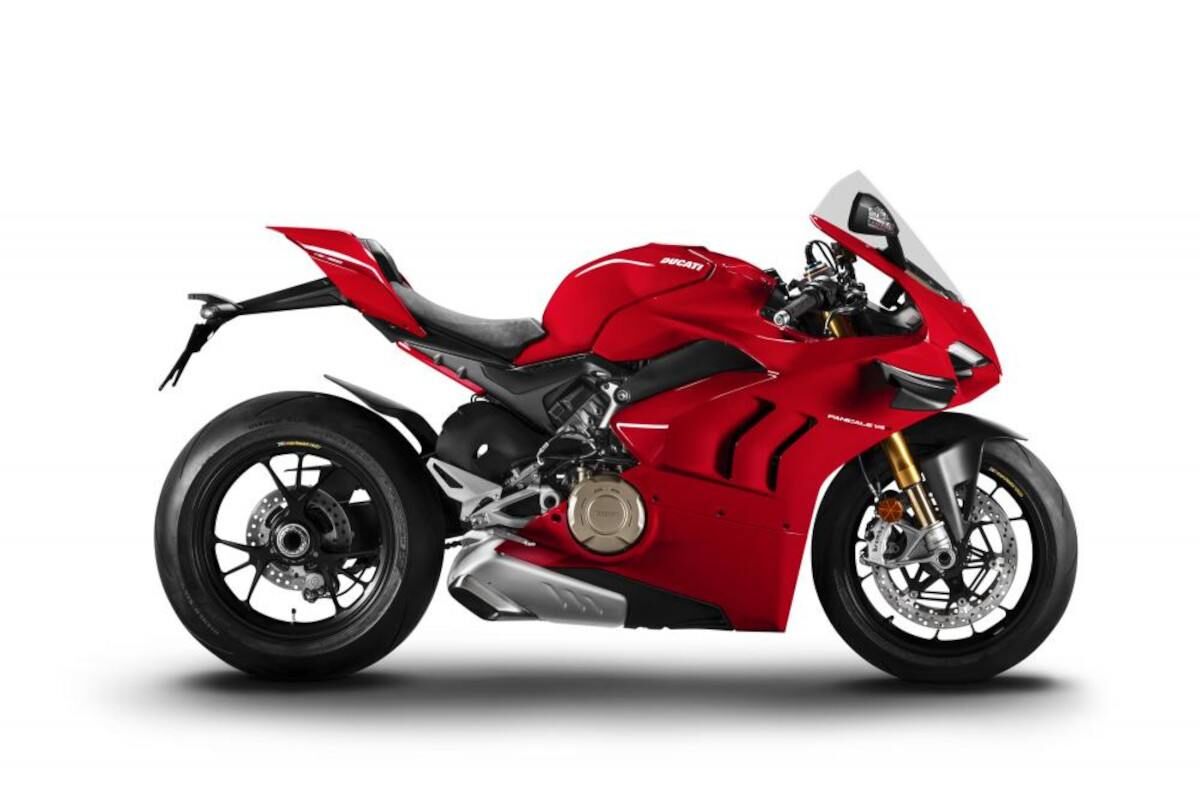
The Ducati Panigale V4 has garnered significant international acclaim, securing both the iF Design Award 1 and the prestigious Red Dot Design Award.3 These accolades stand as a powerful affirmation of its exceptional design and engineering prowess. The Red Dot jury specifically commended the Panigale V4 for its “precise design language that successfully combines aerodynamic functionality and stylistic clarity”.3
For Ducati, these distinctions serve as a profound validation of a core philosophy: the pursuit of crafting machines that embody “sensual beauty” and are destined to become “true style icons,” extending beyond mere track dominance . This ambition aligns seamlessly with Ducati’s foundational design principles, particularly those emphasizing “Sensual” and “Sporty” attributes, which aim to ignite passion and embed racing heritage within every curve and component.4
The design evolution of the Panigale V4 is deeply rooted in the legacy of the iconic Ducati 916, reimagined and infused with contemporary MotoGP influences to achieve a fully integrated aerodynamic approach.6 Distinctive features such as aerodynamically sculpted surfaces, seamlessly integrated winglets, and strategically placed functional air outlets contribute not only to unparalleled performance but also to a uniquely sporty and aggressive aesthetic.3 This meticulous design ensures superior rider protection from turbulence, creating a “bubble of calm air” akin to MotoGP machines, all while maintaining the bike’s signature compact form.7
This dual recognition of design and performance represents a strategic validation of Ducati’s evolving brand identity. Historically celebrated for raw power, the emphasis on “sensual beauty” and “style icon” status, objectively reinforced by these independent design awards 9, signals a deliberate expansion of market appeal. This allows Ducati to attract a broader demographic, including collectors and design connoisseurs, solidifying its position as a premium, aspirational brand where design is an integral component of its engineering and legacy. Furthermore, in the high-performance superbike segment, where technical specifications often converge due to racing homologation and advanced engineering 11, design awards become a critical competitive differentiator. The Panigale V4’s success across comprehensive evaluation criteria, including innovation, functionality, and ergonomics 9, positions Ducati as a leader in holistic product development, appealing to both the rational desire for performance and the emotional allure of artistry.
1. Introduction: The Panigale V4 – A Design Icon Recognized Globally
The Ducati Panigale V4’s recent triumph, securing both the iF Design Award and the Red Dot Design Award, marks a significant milestone in the realm of motorcycle design. These accolades are not merely decorative; they represent a definitive confirmation of design excellence on a global stage, offering widespread recognition and invaluable feedback from internationally renowned design experts.9 The iF Design Award, for instance, rigorously evaluates products based on five clear criteria: Idea, Form, Function, Differentiation, and Sustainability.9 Similarly, the Red Dot Design Award, established in the 1950s by the Design Zentrum Nordrhein Westfalen in Germany, stands as one of the world’s largest and most prestigious design competitions, recognizing excellent design in products based on nine comprehensive criteria, including innovation, functionality, ergonomics, ecological compatibility, and durability.10
Winning these awards confers substantial benefits, ranging from enhanced international visibility and an increased online presence to valuable networking opportunities and heightened marketability. Crucially, they serve as tangible proof of quality for customers, reinforcing trust and perception of excellence.9 It is important to note the specific distinction: while the Panigale V4 received the Red Dot Design Award 3, the “Red Dot: Best of the Best” is the highest distinction, reserved for pioneering and perfected designs, an honor recently bestowed upon the Diavel V4.15 Nevertheless, the Panigale V4’s Red Dot signifies “high design quality” and “excellent product design”.14
Ducati explicitly articulates its core ambition: to craft machines of “sensual beauty, destined to become true style icons,” rather than solely focusing on track dominance . This commitment is deeply interwoven into Ducati’s overarching design philosophy, which fundamentally aims to “create feelings” and ensures that every design detail serves a distinct purpose, contributing to a holistic product approach.4 The dual validation from these prestigious design awards, which encompass both aesthetic and functional criteria, underscores that the Panigale V4 is not merely a visually appealing motorcycle but also a triumph of integrated engineering and user-centric design. This comprehensive evaluation validates Ducati’s holistic approach, where the principle of “form meets function” 16 is paramount, demonstrating that design decisions are intricately linked with performance and usability. This broad recognition elevates Ducati’s standing as a leader in industrial design, beyond its identity as solely a motorcycle manufacturer.
The aspiration for the Panigale V4 to become a “true style icon” is a significant strategic claim. The motorcycle’s styling explicitly “imagined transporting the design icon that is the Ducati 916 into the present”.6 The Ducati 916 holds a revered place in motorcycle history as a design benchmark. By deliberately linking the Panigale V4 to this iconic predecessor and subsequently receiving prestigious design awards, Ducati is intentionally constructing a narrative of design lineage and future iconic status. This is not an accidental outcome but a calculated brand strategy to leverage its rich heritage for contemporary brand equity and future desirability. This strategic approach imbues the Panigale V4 with a timeless quality, enhancing its long-term appeal and potential collector value, much like classic Ducatis. It positions the motorcycle as more than a high-performance machine; it is presented as an evolving piece of automotive art, allowing Ducati to tap into the emotional and cultural value of its brand, fostering a deeper connection with enthusiasts and solidifying its premium market position.
2. Ducati’s Design Philosophy: Engineering Emotion
Ducati’s design philosophy is profoundly centered on “creating feelings,” a comprehensive approach that meticulously guides every aspect of their product development.4 This philosophy is manifested through six core pillars that define the essence of a Ducati motorcycle:
- Authentic: Ducati pursues an “honest design,” striving for materials and features that inspire belief and trust in their genuine quality and purpose.4 This commitment ensures that the bike’s components are not just visually appealing but also intrinsically trustworthy and purposeful.4
- Essential: Every detail incorporated into a Ducati motorcycle serves a specific function, resulting in a sleek design where nothing superfluous is permitted.4 This emphasis on efficiency and a minimalist approach ensures that every component justifies its presence, contributing to a clean and purposeful aesthetic.5
- Compact: Ducati holds the conviction that “compact design is the best design,” aiming to create motorcycles that possess all necessary elements while occupying the smallest possible space.4 Andrea Ferraresi, Ducati’s Design Director, specifically highlighted the challenge of maintaining this compactness with the larger V4 engine, proudly noting that their 4-cylinder engine remains the most compact in its segment.8
- Sensual: The designs are meticulously crafted to ignite passion and engage all the rider’s senses, evoking an instinctive desire to “touch it”.4 This pillar aims to forge a powerful emotional connection between the rider and the machine, transforming it into an object of profound desire.6
- Sporty: Every line drawn in Ducati’s design process is deliberately intended to embody a sporty aesthetic, reflecting their deep-rooted racing DNA and unwavering commitment to competitive excellence.4 This ensures that the bike’s visual language communicates its high-performance capabilities.
- Recognisable: Ducati’s “golden rule” is to maintain a unique and immediately recognizable design by staying true to its core principles, thereby ensuring a distinct brand identity that is unmistakable at first sight.4

The design journey at Centro Stile Ducati is a meticulous, integrated process, seamlessly linking the design center in Bologna 1 with the Product Development team. This fusion of design and engineering, often described as “heart and logic,” underpins every stage of creation.4 This comprehensive process typically spans an average of three years, extending up to five years if a new engine is involved, underscoring the depth and rigor of development.4
The stages involved in this intricate process include:
- Brief/Concept: The journey begins with a “kick-off document” or Brief, compiled by the Product Marketing area. This document synthesizes diverse inputs, including insights from product divisions, customer suggestions, and emerging market opportunities, to establish the general design guidelines.4
- Sketches: Designers then translate these initial ideas onto paper, commencing with hundreds of freehand drawings. These are subsequently refined digitally using sophisticated software. This stage adheres strictly to Ducati’s “golden rules” for style—ensuring it is unmistakable and original—dimensions, which must be compact and racing-inspired, and shapes, which should be sensual and captivating. Lines are crafted to express a sporty, aggressive nature without compromising aerodynamics.4
- Proportion Model: Sketches evolve into 3D digital models, from which initial small-scale physical models are created for preliminary selection. The most promising proposal is then meticulously realized as a 1:1 scale three-dimensional Proportion model, crafted from ureol, a wood-like polyurethane resin. This model is precisely milled, finished, and painted after approval by a dedicated team.4
- Clay Model: The Proportion model is then 3D scanned and digitally reproduced for fine-tuning. A 1:1 scale prototype, known as the Clay model, is subsequently created. This model integrates style, design, technical, and layout requirements, starting with a polyurethane foam body shaped by a 3D milling machine. A layer of synthetic clay, specific for automotive design, is then applied and hand-modeled, refined by the designer. Testers simulate riding movements to verify ergonomics. Once approved, the style is definitively set.4
- Master and Clinic Model: The finished Clay model undergoes a “Point Cloud” scanning technique for reverse engineering, capturing precise digital data. This process corrects symmetries, plans component industrialization, and generates the final mathematical data for the new motorcycle. This leads to the creation of the Master model, a high-density ureol prototype in sparkling silver that highlights lines and surfaces for final adjustments. Subsequently, the Clinic model is produced, a maquette that represents the most faithful rendition of the final product, including paintwork, just prior to production.4
- Prototype: The final phase involves creating a fully functional machine for rigorous track and road testing. This Prototype, composed of accurately designed but temporary components, validates the motorcycle’s unique geometries and defines settings for optimal performance, ergonomics, and thermal comfort, ensuring it is ready for real-world application.4
Key designers play pivotal roles in shaping the Panigale V4’s identity. Andrea Ferraresi holds the critical position of Design Director at Ducati.2 Julien Clement is recognized as the Senior Designer at Ducati Design Center and the “mastermind” behind the Panigale V4’s distinctive lines, building on his prior success with the Ducati Supersport and the highly popular Scrambler.19 Uniquely, Ducati initiated the Panigale V4 project with an internal competition among five designers, a first for the company. This approach involved designers proposing not only different designs but also varying engineering package solutions, necessitating close collaboration with the engineering department.18
Andrea Amato, identified as Ducati Chief Designer, eloquently encapsulated the Panigale V4’s essence by stating, “It’s incredible how an extremely rational bike can spark such irrational emotions”.6 The design team’s overarching goal was to ensure continuity with previous iconic Panigale models, such as the 916 and 1098, ensuring the V4 remained nimble, beautiful, red, elegant, essential, and track-devoted, despite the inherent challenges of integrating a larger V4 engine.8
Ducati’s stated philosophy of “creating feelings” 4 and Andrea Amato’s observation that an “extremely rational bike can spark such irrational emotions” 6 reveal a core aspect of their design strategy. High-performance superbikes are inherently products of rigorous rationality, governed by precise physics and engineering. Yet, Ducati deliberately engineers an emotional response in the rider and observer. This is achieved through the “Sensual” design pillar, where the meticulous crafting of shapes and lines aims to evoke an instinctive desire to “touch it.” This extends beyond mere functional optimization; it represents a higher-order design objective that integrates the intangible, making the motorcycle an object of passion and desire. This “engineering emotion” approach serves as a significant differentiator for Ducati, positioning the brand as a creator of experiences and art, not just vehicles.
Andrea Ferraresi’s explicit desire to “reassure Ducatisti by showing them that the bike to be born to light was a Panigale all the same” 8 highlights a deliberate strategy of design evolution rather than radical revolution. This was particularly crucial during the significant technical transition from a V-twin to a V4 engine.8 This continuity ensures immediate brand recognition 4 and strategically leverages the powerful legacy of iconic models like the 916.6 By maintaining a recognizable “Panigale shape” 19 and core DNA, Ducati mitigates the risk of alienating its deeply loyal customer base while simultaneously introducing groundbreaking technical advancements. This approach reinforces a consistent brand identity across generations, contributing significantly to the “style icon” status by suggesting timelessness and enduring appeal.
The revelation that Ducati assigned five designers to an internal competition for the Panigale V4, a company first 18, provides insight into their innovation process. This competitive yet collaborative environment, where designers were encouraged to propose “not only a different design, but also different engineering package solutions” 18, indicates a highly dynamic and rigorous development methodology. This approach mandates a deeper integration between design and engineering from the earliest conceptual stages, ensuring that aesthetic aspirations are always grounded in technical feasibility and performance optimization. This unique internal process likely fostered more radical and optimized solutions than a more linear, singular design path would have. It suggests that Ducati is willing to invest significantly in the initial design phase to explore diverse possibilities and push creative boundaries, ultimately leading to a more refined, comprehensive, and award-winning product that excels in both form and function.

3. Aerodynamic Artistry: Form Meets Function
The Red Dot jury’s commendation for the Panigale V4’s “precise design language that successfully combines aerodynamic functionality and stylistic clarity” 3 underscores the central achievement of its design. The motorcycle’s form meticulously translates racing technology into a consistent, aerodynamically optimized language. This is evident in its newly balanced proportions and a horizontal flyline, which directly reference current MotoGP role models.3 Aerodynamics was not an afterthought but a primary design driver throughout the development process. Designers collaborated extensively with Ducati Corse technicians, who specialize in MotoGP aerodynamics, integrating these considerations from the very first drafts through detailed clay modeling and rigorous wind tunnel testing.6 The new fairings are engineered to reduce aerodynamic resistance while simultaneously maintaining crucial downforce and increasing the efficiency of airflow to the radiators.7 This comprehensive effort has resulted in a measurable 4% reduction in rolling resistance.7
The Panigale V4 incorporates several key elements for integrated aerodynamics and airflow management:
- Integrated Winglets: The motorcycle features highly efficient double-profile wings seamlessly integrated into the front end. These appendages contribute significant downforce, maintaining the same level as previous models (up to 81 lbs at 186 mph or 37 kg at 300 km/h), which is crucial for high-speed stability.3 These winglets also serve as functional air outlets, further aiding aerodynamic efficiency.3 However, it is noteworthy that while their functionality is praised by the jury and Ducati, some user reviews express aesthetic reservations, describing them as “ugly” and questioning their practical benefit at speeds below MotoGP levels.22 This highlights an inherent tension between pure, track-focused performance design and broader street aesthetics or traditional preferences.
- Fairing Design: The side fairing is characterized by its clean and elegant lines.6 A clever design element is the lower area, which appears as a single fairing, reminiscent of the iconic Ducati 916, but ingeniously conceals the oil cooler’s vertical hot air outlet.6 Furthermore, the leading edge of the fairing is set further back, a technical solution that significantly improves bike handling in side winds and during high-speed changes of direction.7
- Airflow Management: The aerodynamically shaped front mudguard, in conjunction with the intake positioned in line with the radiators, is designed to maximize overall aerodynamic efficiency. This integrated approach significantly boosts the effectiveness of the cooling system, particularly for the oil cooler, which is vital for sustained high performance.7
A significant aspect of the Panigale V4’s aerodynamic design is the “bubble of calm air” concept, which profoundly impacts the rider experience. Extensive air penetration studies were conducted with the explicit goal of providing the rider with a feeling as close as possible to that experienced on a MotoGP bike. This effort resulted in significantly greater aerodynamic protection, particularly for the rider’s hands and shoulders.7 The new fairing effectively shields the rider along straights, reducing physical effort by minimizing exposure to turbulence, thereby creating almost a “bubble of calm air” around the rider.7
Complementing this, the footpegs have been repositioned to be more internal, facilitating a more tucked riding position. This ergonomic adjustment further enhances aerodynamic efficiency and rider integration with the machine.7 Ergonomics was a core focus of in-depth development, aiming to improve rider control during track sessions. A flatter seat shape with a different coating and a reshaped fuel tank allow for better rider anchoring during braking and easier body movement, enabling the rider to fully exploit the Panigale V4’s performance over single laps and extended sessions.21
The Panigale V4’s direct inheritance of technical solutions and design DNA from MotoGP is a consistent theme.6 The aerodynamic approach is explicitly stated as being “revolutionised” through collaboration with Ducati Corse technicians.6 Features like the “bubble of calm air” 7 and the very high front wheel arch 6 are direct translations of racing needs into a road-legal superbike. This deep integration of cutting-edge racing technology into consumer models serves as a core differentiator for Ducati. It allows them to credibly claim superior performance and handling directly derived from the pinnacle of motorcycle racing, appealing strongly to enthusiasts who seek the closest possible experience to a professional racer. This also positions Ducati as a relentless innovator, consistently pushing the boundaries of what is possible by transferring advancements from the track directly to the street, thereby enhancing their brand reputation for performance and technological leadership.
While the integrated winglets are functionally effective and praised by the jury 3, some user reviews reveal aesthetic criticisms and questions about their utility at non-MotoGP speeds.22 Similarly, the controversial shift from the aesthetically iconic single-sided swingarm (a Ducati hallmark) to a dual-sided swingarm was a deliberate performance choice, offering increased rigidity and a more balanced layout for better cornering performance.24
These instances highlight a clear tension between traditional aesthetic preferences and Ducati’s relentless pursuit of absolute performance. The choice to prioritize the latter, even at the cost of some traditional visual elements, underscores a strategic decision. Ducati, in its pursuit of ultimate track performance and dominance, demonstrates a willingness to make design choices that might be polarizing among some enthusiasts. The design awards validate this performance-driven aesthetic, suggesting that the industry and expert juries increasingly value integrated functionality and optimized performance, even if it means evolving away from certain classic visual elements. This indicates a maturing of superbike design where performance requirements explicitly dictate form, pushing the boundaries of what is considered beautiful in a high-performance context.
Table 1: Aerodynamic Design Elements and Functional Benefits
| Design Element | Functional Benefit |
| Integrated Double-Profile Winglets | Provides significant downforce (e.g., up to 81 lbs at 186 mph), aids high-speed stability 7 |
| Fairing Design (Leading Edge Set Back) | Reduces aerodynamic resistance, improves handling in side winds and high-speed direction changes 7 |
| Front Mudguard & Radiator Intake | Maximizes overall aerodynamic efficiency, boosts cooling system effectiveness (especially for oil cooler) 7 |
| Repositioned Footpegs, Reshaped Tank & Flatter Seat | Optimizes rider control and ergonomics, allows for better anchoring during braking, easier body movement, and reduced fatigue, contributing to a “bubble of calm air” effect 21 |
4. Stylistic Clarity and Sensual Beauty: The Visual Narrative
The Panigale V4’s aesthetic appeal is a deliberate outcome of a design philosophy that sought to transport the iconic Ducati 916 into the present. Designers meticulously merged the 916’s distinctive DNA with that of the modern Desmosedici GP, aiming to create a model that simultaneously pays homage to Ducati’s rich history and offers peak performance.6 This lineage is clearly visible in the Panigale V4’s overall proportions, featuring a higher front end combined with a slightly lower tail. This design choice creates a balanced body with a more horizontal, dynamic stance, a characteristic visual signature of classic Ducati sports bikes.6
The side fairing is described as notably “clean and elegant”.6 An eye-catching hot air extractor is prominently located on the upper section, drawing attention to its functional integration. The lower area of the fairing, while appearing as a single piece reminiscent of the 916 style, ingeniously conceals the oil cooler’s vertical hot air outlet, showcasing a clever integration of form and function.6 The striking LED signature further contributes significantly to the bike’s overall sporty and aggressive look.3 Compared to its immediate predecessor, the Panigale V4 is characterized as “sharper, sleeker, and compact,” with its large winglets, distinct side fairing cuts, and sleek rear further emphasizing this refined aggression.28 Andrea Amato, Ducati Chief Designer, eloquently captured the bike’s essence, noting how an “extremely rational bike can spark such irrational emotions”.6 The overall aesthetic is consistently described as possessing “striking looks” 21 and “sensual beauty” 6, reinforcing its profound emotional appeal.
Ducati’s “golden rules” for its designers are paramount in crafting this “sensual beauty.” The style must be “unmistakable and original,” dimensions “compact and racing-inspired,” and shapes “sensual and captivating.” Lines are drawn to express a “sporty, aggressive nature without altering the aerodynamics,” with the ultimate goal of creating a design that makes one “want to touch it”.4 The design meticulously crafts proportions that immediately convey the bike as a “racing animal,” effectively materializing the abstract idea of power into a tangible form.8
The “smooth curvaceous body” of the new V4 is a direct result of its focus on optimizing aerodynamics, demonstrating how aesthetic choices are intrinsically linked to performance goals.23 The Panigale V4’s design elements exhibit remarkable consistency throughout, from its angular fairing to its pointy front fender, aggressive winglets, and cropped tail, creating a cohesive visual language.29 The bike’s inherent stance visually communicates its intended purpose: a sleek, hunched-over sportbike that appears to be moving fast even when stationary.29
The consistent use of the term “sensual” 4 and the explicit design goal, “Looking at a Ducati must make you want to touch it” 4, points to a distinctly Italian design philosophy. This approach prioritizes emotional connection, tactile appeal, and an almost visceral response, extending beyond mere visual beauty. This deeply embedded characteristic is rooted in “Italian Heritage to create longlasting emotions and to turn them into art” 5, signifying a profound cultural influence on industrial design. This emphasis on “sensual beauty” serves as a powerful differentiator in the highly competitive superbike market.
While many competitors focus predominantly on clinical performance or aggressive, angular styling, Ducati positions itself as a purveyor of passion, art, and an immersive riding experience. This appeals to a discerning segment of the market that values emotional engagement and exquisite craftsmanship as much as, if not more than, raw speed, thereby reinforcing Ducati’s luxury brand status.
The Panigale V4 is described with seemingly contradictory attributes: “aggressive yet elegant” 23, possessing “muscular clothing, even though maintaining the previous models’ appeal” 8, and being “sharper, sleeker, and compact”.28 This confluence of descriptors indicates a sophisticated design balance. Achieving both the necessary aggression for a high-performance superbike and the elegance required for iconic status is a complex design challenge. The seamless integration of highly functional elements, such as the winglets, into a “smooth curvaceous body” 23 is key to successfully navigating this dichotomy, ensuring performance without sacrificing aesthetic refinement.
This nuanced approach to styling allows the Panigale V4 to appeal to a broader aesthetic sensibility beyond just hardcore track enthusiasts. It signifies that the bike is not merely a brute force machine but possesses a refined, artistic beauty that elevates it beyond pure utility. This balance contributes significantly to its “style icon” potential and enhances its broader market acceptance, attracting customers who seek both exhilarating performance and a visually captivating machine.
The strategic blend of historical heritage (the DNA of the 916) and cutting-edge MotoGP technology (influenced by the Desmosedici GP) creates a unique and compelling visual narrative that resonates deeply with enthusiasts.6 The receipt of prestigious design awards, such as the iF Design Award and Red Dot Design Award, provides independent validation of its exceptional design quality, formally recognizing its potential to achieve iconic status.9 This “magical combination of sophisticated technology and sensual beauty” 16 positions the Panigale V4 as more than just a motorcycle; it is presented as a genuine piece of “engineering art” 30, elevating its status and desirability in the market.
Table 2: Key Aesthetic Elements and Their Contribution to Iconic Status
| Aesthetic Element | Contribution to Iconic Status |
| :— | :— | | Overall Proportions (916 influence) | Homage to Ducati’s rich heritage, creation of a balanced and dynamic visual flow 6 |
| Side Fairing (Clean & Elegant) | Demonstration of purposeful and integrated detailing, contributes to sleekness 6 |
| Hot Air Extractor (Upper Section) | Highlights functional integration, adds visual dynamism 6 |
| Lower Fairing (916-style, concealing outlet) | Showcases clever design that blends historical cues with modern functionality 6 |
| Striking LED Signature | Establishes an aggressive yet elegant sporty look, enhances recognizability 3 |
| Integrated Winglets (Visual Aspect) | Direct reference to modern MotoGP aesthetics, reinforces performance credentials 3 |
| Horizontal Flyline | Creates a sense of speed and dynamism, characteristic of high-performance sportbikes 3 |
| Distinctive Ducati Red Color | Reinforces strong brand recognition, cultivates profound emotional appeal 16 |
5. Beyond the Awards: Performance Integration and Rider Experience
The Panigale V4 embodies a profound “synthesis of design and technology,” where “Form meets function” in a harmonious and highly effective manner.16 It directly inherits a multitude of technical solutions from MotoGP, meticulously engineered to offer riders the same exhilarating sensations as professional racers.16
At its core, the Panigale V4 is powered by the 1,103cc Desmosedici Stradale V4 engine, a direct descendant of MotoGP technology, producing around 214 horsepower (209 hp for the 2024 model) and 124 Nm of torque.32 Its design incorporates a counter-rotating crankshaft, a feature that significantly improves handling and reduces wheelies by counteracting gyroscopic effects. It also includes a slipper clutch to manage aggressive downshifts.32 The engine is specifically tuned for high-revving performance, delivering a smooth and linear powerband across the rev range.32
The chassis and suspension represent a pinnacle of advanced engineering. The Panigale V4 utilizes an aluminum alloy front frame, with the engine itself acting as a stressed member, contributing to reduced weight and increased rigidity. Its dry weight is impressively under 176 kg (388 lbs).32 The 2025 model further refines this with a lighter, flexier frame and a new Ducati Hollow Symmetrical Swingarm (DHSS), which features reduced lateral stiffness for enhanced feel and grip, and contributes to a 3.8kg weight reduction.24 Premium Öhlins suspension units, including the NIX30 fork, TTX36 shock, and the Öhlins NPX 25/30 electronically controlled pressurized fork for the S version, provide exceptional feedback and precise adjustability for diverse riding conditions.24
A sophisticated and advanced electronics suite is a hallmark of the Panigale V4. This includes Ducati Traction Control, Slide Control, Wheelie Control, and multiple riding modes (Race, Sport, Street) that intelligently adjust engine response, ABS, and traction settings to suit rider preferences and conditions.21 The bike features a cutting-edge 6.9” color TFT display with Optical Bonding technology, ensuring superior readability and offering distinct Road and Track info modes.24 A revolutionary Race eCBS system applies braking force to the rear wheel when the front brake is activated, and even continues after release in sportiest settings, replicating professional rider techniques for enhanced cornering.24 The stopping power matches its explosive acceleration, equipped with Brembo Stylema monobloc calipers (upgraded to Hypure for the 2025 model) and dual 320mm discs upfront, complemented by Cornering ABS as standard for safe braking at lean angles. The bike rolls on lightweight forged aluminum or carbon fiber rims, which significantly reduce inertia for improved agility.24
The Panigale V4 is meticulously designed to be “even faster on the racetrack and at the same time a more intuitive and less tiring bike for a wide range of riders”.21 Expert reviewers note that it is “more stable, planted, and significantly easier to ride than any Panigale V4 that came before it,” effectively flattering the rider and contributing to improved lap times.2 While optimized for the track, it is also described as “insanely fun” on the road, though the ergonomics for extended touring might be a point of debate for some riders.37 The 2025 version is characterized as “friendlier still” due to numerous detailed changes, including tweaks for Euro5+ compliance, lighter components, and refined rider aids, making its immense power more manageable.24 However, some reviews still highlight its demanding nature for everyday street use, describing it as “not a road bike” or “pretty shit road bike” for city riding/daily commute, and emphasizing that it remains a “wildly capable” motorcycle that demands “respect and a decent amount of skill and experience.” The engine can also be perceived as “snatchy” in normal road mode by some.22
Claudio Domenicali, Ducati CEO, stated, “We have engineered wonder. We are all in love with this bike”.16 This “wonder” is not merely aesthetic; it is achieved through the direct translation of MotoGP technology into a road-legal machine.16 The inclusion of a counter-rotating crankshaft for handling 32, the sophisticated electronics package 32, and the integrated aerodynamic solutions 7 are all performance-driven features that simultaneously contribute to the bike’s “sensual beauty” by creating a highly refined, capable, and cohesive machine. This demonstrates that for Ducati, beauty is not a superficial layer but an inherent quality derived from optimized engineering and performance. This deep integration of racing technology into the design narrative reinforces the Panigale V4’s authenticity and high-performance credentials. It suggests that the “sensual beauty” is not just skin deep but a direct outcome of engineering excellence, making the bike appealing to both performance purists and design aficionados. This synergy strengthens Ducati’s brand narrative, positioning them as innovators who seamlessly blend cutting-edge racing capabilities with road-going artistry.
There is a clear and consistent trend indicating that the Panigale V4 has become “more tolerable and rideable” 22, “easier to ride consistently and safely” 2, and effectively “flatter[ing] the rider”.2 This enhanced accessibility is a direct result of significant design and engineering changes, including chassis modifications (flexier frame, double-sided swingarm), improved ergonomics (flatter seat, reshaped tank, repositioned footpegs), and refined electronic rider aids.21 However, it is crucial to note that some user opinions still highlight its demanding nature for general street use.22
This indicates a strategic shift in what “friendlier” means for a superbike: it primarily refers to making peak performance more accessible and manageable on the track, rather than transforming it into a comfortable commuter. Ducati is actively broadening the accessibility of its extreme performance superbikes, making them less intimidating for a wider range of skilled riders, particularly in track environments. This strategic evolution aims to increase market appeal without compromising its core identity as a race-bred machine. The design plays a pivotal role in this by optimizing rider-bike interaction for high-performance scenarios, subtly redefining what “user-friendly” means within the elite superbike segment. This approach ensures that the bike remains aspirational while becoming more attainable for a larger pool of enthusiasts.

6. Competitive Landscape and Brand Impact
Motorcycle design, as a branch of industrial design, fundamentally defines the appearance, function, and engineering of motorcycles.38 It is often constrained by conventions that dictate public acceptance, largely influenced by the industry’s and media’s portrayal of competition motorcycles.38 Key design principles across the industry include establishing strong bone lines and flow, achieving balanced proportions, and maintaining consistency in design language.29
The Ducati Panigale V4 stands out with a design philosophy defined by “Engineering Emotion,” blending “sensual beauty” with track dominance. Its core pillars emphasize compactness, authenticity, essentialism, sportiness, and recognizability.4 It draws direct MotoGP inspiration for its aerodynamics and technical solutions, aiming for a “bubble of calm air” for the rider.7 Aesthetically, it is frequently described as “gorgeous” 29, “sharper, sleeker, and compact” 28, consciously incorporating “traces of the Ducati 916” 6 and featuring prominently integrated winglets and aerodynamically modeled surfaces.3 However, there is some debate among enthusiasts regarding the aesthetics of the new V4 compared to older models, particularly concerning the shift from the single-sided swingarm and the use of plastic fairings in some areas.23 In terms of performance and rideability, it is characterized by a “raw feeling” and an engine that “wants to go flat out”.41 While offering improved rideability for track use, it remains a demanding machine for everyday street riding.2
In comparison, the BMW S1000RR / M1000RR is often described as leaning towards a “luxury” sport bike 42 and considered “the best of the normal I4’s”.41 Its design philosophy emphasizes comfort for street riding and overall “all-around” excellence.11 Aesthetically, it is generally well-regarded, but some recent models have faced criticism for “ugly” colors or a “pinnochio nose” front design.23 Performance-wise, it is known for a “screaming top end, decent midrange tq, top spec electronics”.41 It is often cited as the “most comfy… for street riding” and “easiest to ride,” though some critics find it “stale” or lacking the “character” of Italian bikes.11 It is notably the lightest of the comparison group at 403 lbs empty of fuel, with an extremely nimble chassis.12
The Aprilia RSV4 is frequently lauded by enthusiasts with declarations like, “Can’t beat the V4!” 11, indicating a strong performance focus akin to Ducati.44 Aesthetically, it is often described as “the coolest” among its peers, possessing a distinct visual appeal.11 Performance-wise, it is noted for pulling “a bit harder at the low end due to the extra ccs”.11 Like the Panigale, it is also considered demanding for street use.43
The Yamaha R1 is designed as a “purpose built track bike,” with its performance and exterior design heavily influenced by the YZR-M1 MotoGP machine.45 Aesthetically, the “new R1’s ‘Speed Racer’ character and orientation [are] apparent at a glance,” with an aerodynamic form and central air intake directly mirroring the M1.45 Its design evolution includes features like underseat mufflers and a focus on improving aerodynamic performance through sculpted surfaces.45 The R1 is known for its smooth crossplane engine, delivering linear power, and its fantastic electronics.41 While excellent on track, it has a more aggressive riding position compared to some competitors.41
The Panigale V4’s design achievements, particularly the Red Dot and iF Design Awards, significantly enhance Ducati’s brand impact. These awards validate Ducati’s strategic positioning as a manufacturer that excels not only in raw performance but also in the art of industrial design. This dual excellence allows Ducati to capture a broader market segment, appealing to both performance purists and those who value the aesthetic and emotional dimensions of a motorcycle. The recognition reinforces the brand’s premium status and justifies its pricing, fostering deeper customer loyalty and aspirational appeal. By consistently delivering motorcycles that are both technologically advanced and visually captivating, Ducati strengthens its reputation as a leader in creating “engineering art” that transcends mere transportation.
Conclusion
The Ducati Panigale V4 stands as a testament to Ducati’s profound commitment to blending cutting-edge performance with exquisite design, a philosophy encapsulated in its aim to “engineer wonder” and craft machines of “sensual beauty” destined to become “true style icons.” The receipt of both the iF Design Award and the Red Dot Design Award unequivocally validates this strategic approach, highlighting the Panigale V4’s success in achieving both aerodynamic functionality and stylistic clarity.
The report’s analysis reveals that Ducati’s design process, rooted in its “Authentic, Essential, Compact, Sensual, Sporty, and Recognisable” pillars, is a meticulous journey from concept to prototype, driven by an internal competitive environment that fosters deep integration between design and engineering. This rigorous methodology, overseen by key figures like Andrea Ferraresi and Julien Clement, ensures that every aesthetic choice serves a functional purpose, directly translating MotoGP-derived technology into a cohesive and visually striking form. The deliberate continuity with design icons like the Ducati 916, while embracing modern aerodynamic advancements, strategically preserves brand heritage and reinforces the Panigale V4’s aspirational status.
While the Panigale V4 is undeniably a track-focused machine, its design evolution has also aimed to enhance rideability, making its extreme performance more accessible and less fatiguing for a wider range of skilled riders, particularly in track environments. This strategic balancing act, though sometimes leading to aesthetic debates (e.g., winglets, dual-sided swingarm), underscores Ducati’s unwavering pursuit of absolute performance, even if it means evolving traditional visual elements.
In the competitive superbike landscape, where performance metrics often converge, the Panigale V4’s design excellence serves as a critical differentiator. Its ability to evoke “irrational emotions” through its “sensual” form, combined with its validated engineering prowess, positions Ducati as a purveyor of art and experience, appealing to a discerning market segment that values both exhilarating performance and enduring aesthetic significance. The awards are not just accolades; they are powerful affirmations of Ducati’s ability to consistently deliver products that are both technologically superior and emotionally resonant, solidifying its premium brand image and setting a high benchmark for the future of motorcycle design.


Sources
- Ducati Panigale V4 – iF Design Award, accessed July 30, 2025, https://ifdesign.com/en/winner-ranking/project/ducati-panigale-v4/701213
- Ducati Panigale V4 Wins Prestigious Award – Visordown, accessed July 30, 2025, https://www.visordown.com/news/new-ducati-panigale-v4-wins-prestigious-award
- Panigale V4 – Red Dot Design Award, accessed July 30, 2025, https://www.red-dot.org/project/panigale-v4-81415
- Ducati Design: character has taken shape, accessed July 30, 2025, https://www.ducati.com/ww/en/company/design
- The Ducati Design Manifesto | Reduce to the Max – YouTube, accessed July 30, 2025, https://www.youtube.com/watch?v=5kQkypFmBs0
- Design Ducati Panigale V4 – Sensual beauty, accessed July 30, 2025, https://www.ducati.com/ww/en/bikes/panigale/panigale-v4/design
- 2025 Panigale V4 Aerodynamics | Cutting-Edge Performance by Ducati Motorcycles USA, accessed July 30, 2025, https://www.ducati.com/us/en/bikes/panigale/panigale-v4/aerodynamics
- Ducati Motorcycles Panigale V4 Design | The Art of Performance and Innovation, accessed July 30, 2025, https://www.ducati.com/us/en/editorial/interview-design-panigale-v4
- FAQ – iF Design Award, accessed July 30, 2025, https://ifdesign.com/en/faqs
- Red Dot Design Award – Olympus, accessed July 30, 2025, https://www.olympus-global.com/technology/design/award/reddot_design/?page=technology_design
- S1000RR vs YZF R1 vs RSV4 1100 Which one is better for who? – Reddit, accessed July 30, 2025, https://www.reddit.com/r/SuggestAMotorcycle/comments/1lc2unf/s1000rr_vs_yzf_r1_vs_rsv4_1100_which_one_is/
- Superbike Shootout: Aprilia RSV4 Factory vs. BMW M 1000 RR vs. Ducati Panigale V4 SP2, accessed July 30, 2025, https://www.cycleworld.com/story/motorcycle-reviews/aprilia-rsv4-factory-vs-bmw-m-1000-rr-vs-ducati-panigale-v4-sp2-comparison-test/
- Benefits for Winners – iF Design Award, accessed July 30, 2025, https://ifdesign.com/en/if-design-award-benefits
- The distinctions in the Red Dot Award: Your recognition of excellent design, accessed July 30, 2025, https://www.red-dot.org/pd/distinctions
- Diavel V4, Ducati styling wins in the world, accessed July 30, 2025, https://www.ducati.com/gb/en/news/diavel-v4-ducati-styling-wins-in-the-world
- Discover the 2025 Panigale V4 | Ducati Motorcycles USA, accessed July 30, 2025, https://www.ducati.com/us/en/bikes/panigale/panigale-v4
- Ducati Motorcycles Design | Where Innovation Meets Iconic Style, accessed July 30, 2025, https://www.ducati.com/us/en/company/design
- The design of the new Panigale V4 – Ducati, accessed July 30, 2025, https://www.ducati.com/be/nl/editorial/interview-design-panigale-v4
- Five Questions With Ducati Designer Julien Clement – Cycle News, accessed July 30, 2025, https://www.cyclenews.com/2017/12/article/five-questions-ducati-designer-julien-clement/
- Ducati Panigale V4 S | The most beautiful bike of the EICMA 2017, accessed July 30, 2025, https://www.arminonbike.com/en/ducati-panigale-v4-s-the-most-beautiful-bike-of-the-eicma-2017/
- The Evolution of Ducati Never Stops: New Panigale V4, accessed July 30, 2025, https://www.ducati.com/us/en/news/the-evolution-of-ducati-never-stops-new-panigale-v4
- Disappointing 2025 Ducati V4S test ride : r/motorcycles – Reddit, accessed July 30, 2025, https://www.reddit.com/r/motorcycles/comments/1krsjmk/disappointing_2025_ducati_v4s_test_ride/
- My unwanted opinion on new panigale v4 looks. : r/Ducati – Reddit, accessed July 30, 2025, https://www.reddit.com/r/Ducati/comments/1ky0pgv/my_unwanted_opinion_on_new_panigale_v4_looks/
- 2025 Ducati Panigale V4S review | Fast, friendly superbike – Motorcycle News, accessed July 30, 2025, https://www.motorcyclenews.com/bike-reviews/ducati/panigale-v4s/2025/
- 2025 Ducati Panigale V4 S track review: Top of the game – Introduction | Autocar India, accessed July 30, 2025, https://www.autocarindia.com/bike-reviews/2025-ducati-panigale-v4-s-track-review-top-of-the-game-436188
- New Panigale V4 – Wonder. Engineered. – Ducati, accessed July 30, 2025, https://www.ducati.com/ww/en/bikes/panigale/panigale-v4
- 2025 Ducati Panigale V4 S (modded) versus 2024 Panigale V4R is newer really better?, accessed July 30, 2025, https://www.youtube.com/watch?v=1C1NBg8NLcY
- Ducati Panigale V4 S – Track review I An absolute treat to ride I BikeWale test – YouTube, accessed July 30, 2025, https://www.youtube.com/watch?v=hN4sZip-5xA
- The art of motorcycle design: What makes a motorcycle beautiful? – Ridebuy, accessed July 30, 2025, https://ridebuy.ph/garage/posts/6137
- “The $30K Superbike That Dominates All Roads 🏍️ Ducati Panigale V4 | AZ Automotive Review” – YouTube, accessed July 30, 2025, https://www.youtube.com/watch?v=JKVJ_vxPcl0
- This NEW Ducati Panigale V4 Will Blow Your Mind! ” – YouTube, accessed July 30, 2025, https://www.youtube.com/watch?v=4iICsf1RWAw
- Ducati Panigale V4: Specs, Performance, And Buying Guide | Ducati NYC | New York, accessed July 30, 2025, https://www.ducatinyc.com/blog/ducati-panigale-v4-specs-performance-and-buying-guide–96592
- Panigale V4 SP2 – The Ultimate Racetrack Machine – Ducati, accessed July 30, 2025, https://www.ducati.com/ww/en/bikes/panigale/panigale-v4-sp2
- The New 2025 Panigale V4 | The Evolution of Speed | Ducati Motorcycles USA, accessed July 30, 2025, https://www.ducati.com/us/en/bikes/panigale/panigale-v4-2024
- Ducati Panigale V4 – Wikipedia, accessed July 30, 2025, https://en.wikipedia.org/wiki/Ducati_Panigale_V4
- 2025 Panigale V4 Electronics | Smart Power by Ducati Motorcycles USA, accessed July 30, 2025, https://www.ducati.com/us/en/bikes/panigale/panigale-v4/electronics
- Review Ducati Panigale V4S 2025: The ultimate in-depth test on road and racetrack, accessed July 30, 2025, https://www.youtube.com/watch?v=O2pnMzkOGro
- Motorcycle design – Wikipedia, accessed July 30, 2025, https://en.wikipedia.org/wiki/Motorcycle_design
- Crafting The Vision: How Do We Create Motorcycle Concept Design – Renfrew Group, accessed July 30, 2025, https://renfrewgroup.com/portfolio/motorcycle-concept-design/
- What is the overall design philosophy behind the Ducati Panigale V4? – carandbike, accessed July 30, 2025, https://www.carandbike.com/ducati-bikes/panigale-v4/faqs/what-is-the-overall-design-philosophy-behind-the-ducati-panigale-v4-16202
- R1 vs Zx10R vs panigale V2 : r/motorcycles – Reddit, accessed July 30, 2025, https://www.reddit.com/r/motorcycles/comments/1dzxho8/r1_vs_zx10r_vs_panigale_v2/
- Ultimate Comparison: BMW S1000rr vs. Ducati Panigale V4 | TikTok, accessed July 30, 2025, https://www.tiktok.com/@_apeflex/video/7505086133395590430
- 2025 S1000RR First Ride | Better Than My RSV4 or Panigale V4? – YouTube, accessed July 30, 2025, https://www.youtube.com/watch?v=CJaKPPIWl4k
- Three Ultimate Euro Superbikes Compared: One Is a Clear Winner – YouTube, accessed July 30, 2025, https://www.youtube.com/watch?v=SnDpKKuz9Xo
- The R-Series Pedigree – Motorcycle | Yamaha Motor Co., Ltd., accessed July 30, 2025, https://global.yamaha-motor.com/business/mc/lineup/yzf-r/
Our Social Media Handles
- Instagram : LivingWithGravity
- Medium : Akash Dolas
- YouTube Channel : Gear and Shutter