











Strategic Analysis of the TVS Orbiter: Redefining the Entry-Level Electric Two-Wheeler Segment for Urban Mobility
The transition of the Indian automotive landscape toward electrification has reached a critical juncture where mass-market adoption is no longer a peripheral goal but a central pillar of industrial strategy. The TVS Orbiter, a seminal launch from the Hosur-based TVS Motor Company on August 28, 2025, represents a sophisticated strategic response to this shift.1 Positioned as the most affordable electric vehicle in the TVS portfolio, the Orbiter is engineered to occupy the high-volume space below the established iQube range, targeting first-time electric vehicle (EV) buyers, Gen-Z urbanites, and the burgeoning gig-economy workforce.1 This report provides an exhaustive technical and market-based evaluation of the TVS Orbiter, analyzing its architectural innovations, performance characteristics, and socio-economic implications within the broader urban mobility framework.

Market Positioning and Strategic Intent
TVS Motor Company’s entry into the entry-level electric scooter segment with the Orbiter signals a move away from the conservative, family-oriented design language of the iQube toward a more aggressive, utility-driven aesthetic.3 The Orbiter is priced at approximately ₹1.05 Lakh (ex-showroom Delhi), a strategic figure that places it in direct competition with the Ola S1 Air, Ather Rizta, and Hero Vida V2X.1 By pricing the Orbiter roughly ₹2,618 less than the base iQube while offering a larger 3.1 kWh battery and superior range, TVS has created a high-value entry point for consumers who were previously deterred by the premium pricing of high-performance EVs.1
The vehicle’s positioning is deliberately dual-faceted. On one hand, it appeals to the youth demographic through its “funky and futuristic” styling and vibrant color schemes.5 On the other hand, its robust build, flat floorboard, and significant under-seat storage target the functional requirements of delivery professionals and daily office commuters who prioritize low operating costs and range reliability over top-end speed.3
Competitive Landscape and Pricing Structure
The Orbiter enters a market where pricing is often the primary driver of adoption. The following table provides a granular comparison of the Orbiter’s pricing relative to its primary competitors in major Indian metropolitan areas.
| City | TVS Orbiter (STD) | Ola S1 Air (STD) | Ather Rizta (Base) | Hero Vida V2X (Base) |
| New Delhi | ₹1,04,900 1 | ₹89,999 6 | ₹1,08,000 7 | ₹97,800 7 |
| Mumbai | ₹1,05,000 1 | ₹94,071 10 | ₹1,12,000 11 | ₹1,05,589 12 |
| Pune | ₹1,03,050 13 | ₹89,999 14 | ₹1,11,916 15 | ₹99,490 11 |
| Bangalore | ₹1,04,900 1 | ₹94,071 10 | ₹1,11,251 12 | ₹1,11,251 12 |
In Pune, the on-road price of the TVS Orbiter starts at approximately ₹1.07 Lakh, which reflects the inclusion of the ₹5,000 PM E-Drive subsidy and local RTO and insurance charges.13 The vehicle’s accessibility is further enhanced by a widespread dealer network, with Pune alone hosting approximately 3748 authorized touchpoints to facilitate sales and service.11

Aesthetic Design and Styling Philosophy
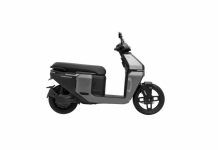
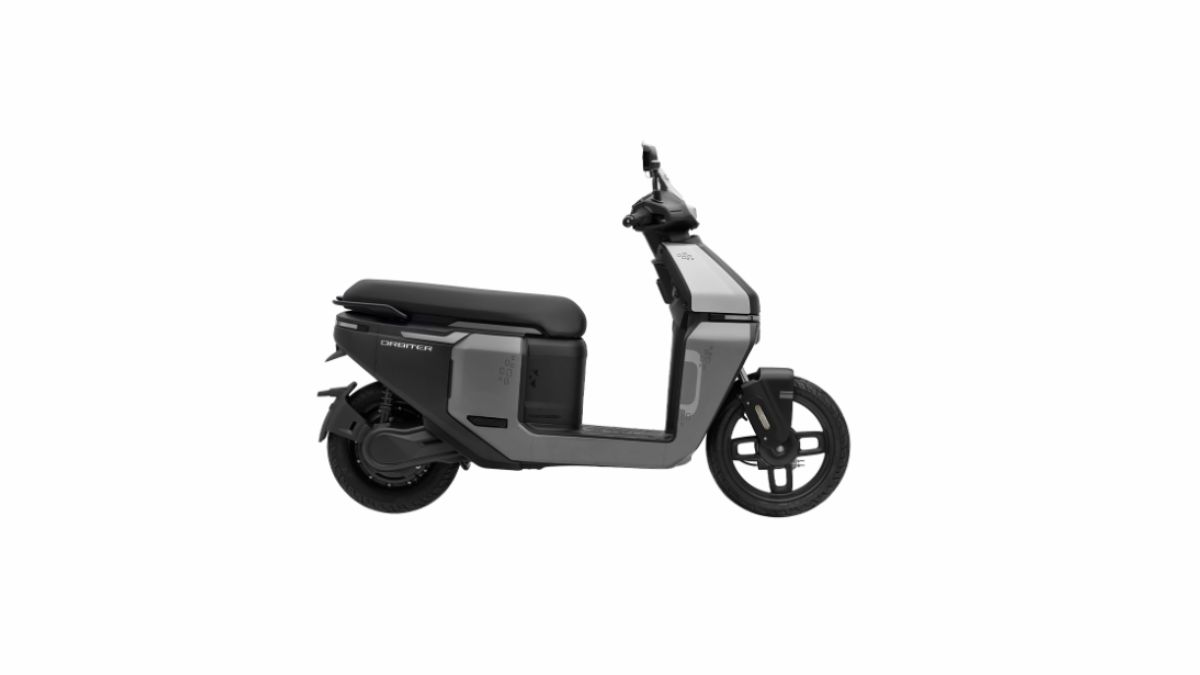
The TVS Orbiter’s design philosophy represents what designers describe as an “industrial, boxy, and almost segmented” aesthetic.16 This is a departure from the soft, flowing curves of the iQube and signals a move toward a more utilitarian “new-age” look.17 The vehicle’s visual signature is defined by its square panels and a minimalistic profile that aims to provide a strong road presence without the bulkiness of traditional maxi-scooters.5
Lighting and Visibility Components
The front fascia is anchored by a large, centralized LED headlamp featuring “Crystal LED Tech”.9 This technology is engineered for intense illumination, offering a wider and longer beam throw than traditional halogen or standard LED units found in this price bracket.9 A slim, continuous LED DRL (Daytime Running Light) strip runs across the apron, integrating the turn indicators into a sleek, futuristic line.17
The rear design echoes this minimalistic theme with a wrap-around LED tail lamp and clean integrated indicators.3 These elements combined contribute to a “sporty and quirky” persona that contrasts sharply with the conservative styling of competitors like the Bajaj Chetak.3
Color Palette and Visual Personalization
TVS offers the Orbiter in six primary dual-tone and tri-tone color options, allowing for a high degree of personalization. The “Neon Sunburst” color scheme, featuring a vibrant fluorescent yellow contrasted against a dark blue background, has been identified by reviewers as a particularly striking combination that enhances the vehicle’s youthful vibe.5
| Color Variant | Aesthetic Theme | Target Demographic |
| Neon Sunburst | High-visibility yellow/dark blue | Gen-Z, Youth 5 |
| Stratos Blue | Deep metallic blue | Modern Professional 12 |
| Martian Copper | Warm industrial bronze | Mature Urbanite 12 |
| Lunar Grey | Subtle monochrome | Conservative/Minimalist 12 |
| Cosmic Titanium | Dark metallic grey | Technical/Futuristic 12 |
| Stellar Silver | Bright metallic silver | Universal/Traditional 12 |
Build Quality and Manufacturing Standards
The build quality of the TVS Orbiter is generally commended for its price point, with the use of sturdy body panels and durable plastics.4 The paint finish is described as premium, lacking the orange-peel effect sometimes seen on budget-oriented mass-market vehicles.8 However, a closer technical inspection reveals certain areas where cost-optimization measures are apparent.

Observations on Fit, Finish, and Material Quality
Despite the overall positive reception, some evaluations have pointed out inconsistent panel gaps and rough edges in less visible areas of the bodywork.4 A specific point of criticism involves the exposure of nuts and bolts on the front windscreen and floorboard; industry experts have noted that covering these with plastic caps would have significantly enhanced the perceived quality and sophistication of the machine.19
Furthermore, while the switchgear is tactually satisfactory and functional, the plastics used for some of the smaller components have been described as thin and somewhat flimsy, particularly the front apron bag hook.8 These observations suggest that while the primary structural elements of the Orbiter are robust, the refinement of auxiliary components is where the vehicle reveals its budget-conscious origin.8
Windscreen Design and Aerodynamic Safety
The Orbiter features an unusually tall, upright, and tinted windscreen.5 TVS asserts that this design is intended to reduce air resistance and improve aerodynamic efficiency, thereby extending the range of the vehicle.17 However, practical testing suggests that the screen provides negligible wind protection for the rider, as its vertical orientation does not effectively deflect air over the helmet.5
More critically, safety experts have raised concerns regarding the windscreen’s height and placement. In scenarios involving sudden hard braking or hitting deep road imperfections, there is a perceived risk that the rider’s face could strike the sharp upper edge of the screen.5 While some technical comparisons suggest the windscreen may be adjustable, primary user reviews focus on its role as an aesthetic “flyscreen” that enhances the scooter’s road presence rather than providing functional wind-buffeting relief.19
Mechanical Architecture and Chassis Engineering
The TVS Orbiter is built upon a high-tensile steel tubular frame, a chassis choice that provides a balance between the structural rigidity required for Indian road conditions and the lightweight characteristics necessary for EV efficiency.1
The Unconventional 14/12-Inch Wheel Setup
A significant technical highlight of the Orbiter is its unique wheel and tire configuration. It utilizes a 14-inch alloy wheel at the front and a 12-inch wheel at the rear.1 This architectural choice is driven by a desire to optimize two conflicting objectives:
- Handling Stability: The larger 14-inch front wheel significantly improves the scooter’s ability to roll over potholes, expansion joints, and obstacles with minimal disturbance to the rider’s geometry.9 This larger diameter provides greater gyroscopic stability, making the front end feel planted and confidence-inspiring.16
- Storage Efficiency: The smaller 12-inch rear wheel allows for a lower floor height at the rear, which in turn facilitates the massive 34-liter under-seat storage compartment.5
Both wheels are shod with 90-section tubeless tires (90/80-14 front and 90/90-12 rear).1 These tires are optimized for low rolling resistance to maximize range, though they are narrower than the tires found on sportier competitors like the Ola S1 Air.6
Suspension Tuning and Dynamics
The suspension system comprises traditional telescopic forks at the front and twin shock absorbers at the rear.1 The tuning is described as being relatively soft, aimed at providing a plush ride over small bumps.20 While the large front wheel aids in tracking straighter over broken surfaces, user feedback indicates that the rear suspension can feel overly stiff when carrying a pillion or heavy loads.17
In terms of maneuverability, the Orbiter’s 112 kg kerb weight makes it exceptionally light and agile.1 It is described as being “delightfully flickable” in dense city traffic, allowing for quick direction changes without the heft associated with larger, mid-drive electric scooters.20
Powertrain and Performance Analysis
The TVS Orbiter is powered by a Brushless DC (BLDC) hub-mounted motor with a peak output of 2.5 kW (approximately 3.35 bhp).16 The choice of a hub motor over a mid-drive belt system is a strategic decision to reduce mechanical complexity, eliminate power loss through belts, and lower the overall retail price.5
Real-World Acceleration and Top Speed Limits
The performance profile of the Orbiter is characterized as “linear, smooth, and predictable,” but distinctly lacking the high-torque “zing” typically associated with performance-oriented EVs.3 It is designed as a “no-frills, no-nonsense” commuter rather than a performance machine.5
The vehicle’s speed and acceleration capabilities are capped to prioritize range:
- Top Speed: 68 km/h in City mode; approximately 46 km/h in Eco mode.1
- Acceleration (0-40 km/h): 6.8 seconds.1
Compared to the base iQube, which is roughly 2.5 seconds faster in the 0-40 km/h sprint, the Orbiter feels subdued.3 This makes it more suitable for filtering through arterial city roads than for high-speed highway travel.3 However, the throttle calibration is lauded for its precision, providing a smooth transition that mimics the feel of a traditional internal combustion engine (ICE) scooter, thereby reducing the “jerkiness” often found in budget electric controllers.3
Ride Modes and Control Strategies
The Orbiter offers two distinct ride modes to balance performance and energy conservation:
- Eco Mode: Limits top speed to 45-46 km/h and softens the acceleration curve.19 This mode is ideal for congested, stop-and-go traffic where high speed is impossible.19
- City Mode: Increases the top speed to 68 km/h and offers enough torque for standard overtakes in urban environments.2
An underlying insight from automotive reviewers is that this performance envelope is specifically tuned for first-time riders. The “sedate” power delivery ensures that novice riders or teenagers with learners’ permits are unlikely to lose control due to sudden power surges, making it a “safer” choice for households transitioning to electric mobility.16
Battery Technology and Range Validation
The TVS Orbiter features a 3.1 kWh Lithium-ion battery pack, which is IP67-rated for protection against water ingress and dust.1 This capacity is significant for the budget segment and is the primary driver behind the vehicle’s impressive range claims.
Range Testing: IDC vs. Real-World Results
TVS claims a range of 158 km under the Indian Driving Cycle (IDC).1 However, real-world evaluations conducted by independent testing agencies reveal a different picture. In a controlled range test through the streets of Mumbai, the Orbiter achieved a total riding range of 112.6 km when ridden exclusively in City mode until the battery was completely drained.30
The following table details the battery degradation and range performance during this real-world test.
| Battery Percentage | Cumulative Kilometers Covered |
| 100% to 80% | 27.5 km |
| 80% to 60% | 51.4 km |
| 60% to 40% | 71.4 km |
| 40% to 20% | 91.7 km |
| 20% to 10% | 102.6 km |
| 10% to 0% | 112.6 km |
The test indicates that the vehicle provides a very consistent and predictable range, with the final 10% of charge yielding exactly 10 km of distance.19 For an average urban user with a daily commute of 30-40 km, the Orbiter can comfortably last three days on a single charge.9
Charging Infrastructure and Efficiency
The Orbiter is supplied with a 650W portable charger included in the vehicle price.9
- Charging Time (0-80%): 4 hours and 10 minutes.2
- Charging Time (Full Charge): Approximately 6 hours.2
One significant limitation is the lack of a fast-charging option, which some competitors like the Hero Vida provide.3 Total electricity consumption for a full charge is approximately 3.1 units, resulting in a running cost of roughly ₹0.15 to ₹0.20 per km, assuming an average electricity tariff of ₹8 per unit.5
Ergonomics, Comfort, and Storage Solutions
The ergonomics of the TVS Orbiter are specifically designed for accessibility and daily utility, making it a “workhorse” for the urban environment.4
Seating Geometry and Accessibility
The Orbiter features an 845mm long flat seat, which is both comfortable for two adults and aesthetically aligned with the boxy design of the scooter.1 With a seat height of only 763mm, the vehicle is approachable for riders of varying heights; individuals at 5’6″ or 5’7″ can easily “flat-foot” the scooter, providing confidence at traffic signals.4
The riding posture is upright, with a long handlebar that falls comfortably to the hands.1 Even taller riders (up to 5’10”) have reported ample knee room and elbow space, without the handlebar fouling with the knees during tight U-turns.5
Storage Capacity and Practical Limitations
The vehicle’s storage solutions are a mix of class-leading volume and specific practical constraints:
- Under-Seat Storage: At 34 liters, the Orbiter offers one of the largest storage bins in its class.9 It can comfortably accommodate two half-face helmets or several kilograms of groceries.8 However, the bin is not deep enough to hold a full-face helmet, which may be a significant drawback for safety-conscious users.8
- Floorboard Space: The 290mm long flat floorboard is exceptionally spacious, designed to carry suitcases, delivery boxes, or heavy shopping bags with ease.8
- Auxiliary Storage: A small cubby hole in the front apron allows for the storage of knick-knacks like wallets or smartphones, complemented by a USB charging port for on-the-go charging.4
Connectivity and the SmartXonnect Suite
The TVS Orbiter incorporates the “SmartXonnect” technology, a connected platform that differentiates it from more basic “white-label” electric scooters.9
Console Interface and Display
The instrument cluster is a 5.5-inch colored reverse LCD display.1 While it lacks the high-resolution touch functionality of the premium TVS X or the iQube ST, it provides a crisp layout of essential data:
- Speedometer and odometer.5
- Distance-to-Empty (DTE) and real-time battery charge status.5
- Riding mode indications and service reminders.5
App-Based Features and Telematics
Through the TVS Connect mobile app, which pairs with the console via Bluetooth, riders can access an extensive list of smart features 5:
- Turn-by-Turn Navigation: Directions are mirrored on the digital console for seamless navigation.9
- Communication Alerts: Incoming call and SMS notifications are displayed on the screen.5
- Security and Tracking: Built-in e-SIM allows for live vehicle tracking, geofencing, and “last parked location” functionality.9
- Proactive Safety: Features include crash and fall alerts (which notify emergency contacts with the vehicle’s location), anti-theft alarms, and towing alerts.9
One of the standout, yet controversial, features is the inclusion of cruise control, which functions between 20 km/h and 60 km/h.9 While technically advanced for this price bracket, its utility is limited in congested urban traffic where maintaining a constant speed is difficult.3
Safety and Control Systems
The safety architecture of the TVS Orbiter is a combination of advanced electronic assistance and cost-optimized mechanical components.
Braking Performance and Hardware
The Orbiter relies on drum brakes at both ends, supported by a Synchronized Braking System (SBS) or Combined Braking System (CBS).1 This is perhaps the vehicle’s most significant compromise.
- Stopping Power: While adequate for standard city speeds, the braking hardware is described as “wooden” and lacking in feedback.3
- Lock-up Tendency: During hard braking, the rear wheel is prone to locking up too easily, leading to unwanted skids.3
- Industry Consensus: Reviewers have consistently noted that the lack of a front disc brake is a major safety miss, as it reduces the “bite” and confidence-inspiring stopping power required for emergency situations in urban traffic.3
Electronic Control Assists
To enhance safety for novice riders, TVS has integrated several high-value electronic features:
- Hill Hold Assist: This system automatically holds the vehicle on an incline or decline for a short period after the brakes are released, preventing the scooter from rolling back.9
- Reverse Parking Assist: Provides a low-speed reverse mode to assist in maneuvering the scooter out of tight parking spaces.9
- Regenerative Braking: Automatically recharges the battery during deceleration, which not only extends range but also provides a predictable “engine-braking” feel.2
- Motor Cut-off: Engages during falls to prevent the vehicle from accelerating further, a critical safety feature for a “fly-by-wire” electric powertrain.19
Economic Analysis: Ownership and Operating Costs
The value proposition of the TVS Orbiter is fundamentally rooted in its low running costs relative to traditional petrol-powered internal combustion engine (ICE) scooters.
Operating Cost Comparisons
The daily running cost of the TVS Orbiter is estimated at ₹0.20 per kilometer, compared to ₹1.80–₹2.00 per kilometer for a petrol scooter.9 This leads to substantial savings over the lifecycle of the vehicle.
| Time Period | TVS Orbiter Running Cost | Petrol Scooter Running Cost (ICE) |
| Daily (30-40km) | ₹6 – ₹8 | ₹60 – ₹80 9 |
| Monthly | ₹110 – ₹240 | ₹1,100 – ₹2,400 9 |
| Annual | ₹1,320 – ₹2,880 | ₹13,000 – ₹28,000 9 |
| 5-Year Total | ₹6,600 – ₹14,400 | ₹65,000 – ₹140,000 9 |
Potential financial savings over four years of ownership are estimated at approximately ₹26,107, assuming petrol at ₹100/liter and a fuel efficiency of 50 kmpl.18 When combined with lower annual maintenance costs (₹1,000 for the Orbiter vs. ₹4,000 for ICE), the Orbiter presents a compelling economic argument for budget-conscious commuters.9
Comparison with Market Alternatives
The TVS Orbiter competes in a highly crowded entry-level EV space. Its primary rivals each offer a slightly different interpretation of the “perfect” urban commuter.
- Ola S1 Air: This is the Orbiter’s most aggressive competitor. It offers higher peak power (6 kW vs 2.5 kW) and a higher top speed (90 km/h), but has faced criticism for “jerky” throttle response and significant build quality issues.6 The Orbiter, by contrast, offers a more predictable “ICE-like” ride experience and better stability due to its 14-inch front wheel.3
- Ather Rizta: The Rizta is positioned more as a premium “family” scooter. It offers better ride quality and a more polished software experience but carries a higher price tag and a shorter IDC range (123 km vs 158 km).7
- Bajaj Chetak: The Chetak focuses on “metal-build” durability and premium fit and finish. However, the base variants often lack the extensive connected features (like geofencing and fall alerts) that the Orbiter provides as standard.12
| Feature | TVS Orbiter (STD) | Ola S1 Air | Ather Rizta (Base) |
| Claimed Range | 158 km 1 | 151 km 6 | 123 km 36 |
| Top Speed | 68 km/h 1 | 90 km/h 6 | 80 km/h 36 |
| Motor Power | 2.5 kW BLDC 1 | 6.0 kW Hub 6 | 4.3 kW PMSM 36 |
| Charging Time | 4h 10m (80%) 19 | 5h (Full) 6 | 8h 18m (Full) 36 |
| Wheels | 14″ Front / 12″ Rear 1 | 12″ Front / 12″ Rear 6 | 12″ Front / 12″ Rear 37 |
| Storage | 34L 19 | 34L 27 | 34L+ 37 |

Conclusions and Strategic Recommendations
The TVS Orbiter represents a calculated “middle-ground” strategy by TVS Motor Company. It is neither a high-performance enthusiast machine nor a bare-bones, low-range moped.22 Instead, it is a purpose-built urban tool that prioritizes range, practicality, and cost-efficiency.
Key Strengths
- Reliable Real-World Range: With a validated real-world range of over 112 km, the Orbiter effectively eliminates range anxiety for the typical city commuter whose daily usage is under 40 km.9
- Architectural Stability: The 14-inch front wheel is a genuine competitive advantage on Indian roads, providing a level of stability and pothole handling that most rivals cannot match.9
- Advanced Telematics: The inclusion of crash alerts, geofencing, and hill hold as standard features makes the Orbiter feel more sophisticated than its price tag suggests.9
- Operational Efficiency: The transition from petrol to the Orbiter can save a user upwards of ₹15,000–₹25,000 annually, paying back the upfront cost of the vehicle in roughly four to five years.9
Primary Deficiencies
- Mechanical Braking Hardware: The reliance on drum brakes at both ends is the vehicle’s greatest weakness. The lack of a front disc option is a safety compromise that may deter experienced riders.3
- Lack of Fast Charging: The ~6-hour charging time for a full cycle is high. The omission of a fast-charging port limits the vehicle’s utility for users who may need an afternoon “top-up” for extended delivery shifts.3
- Storage Depth: While the 34-liter volume is impressive, the shallow design prevents the storage of full-face helmets, forcing safety-conscious riders to carry their helmets or rely on external top-boxes.8

Final Outlook
The TVS Orbiter is a “compelling value proposition” in the entry-level EV segment.9 It is ideally suited for college students, first-time EV buyers, and urban delivery workers who value range and reliability over high-speed performance.3 While enthusiasts may find the performance underwhelming and the braking spongy, the Orbiter’s combination of funky styling, massive storage, and low running costs makes it one of the most practical and future-ready scooters in the sub-₹1.1 Lakh category.9 For TVS, the Orbiter serves as a strategic “volume driver” that lowers the barrier to entry for electric mobility, potentially becoming the “workhorse” that accelerates India’s urban EV transition.4
Sources
- TVS Orbiter Electric Scooter Price – Range, Images, Specs & Reviews, accessed January 28, 2026, https://thebikejunction.com/electric-scooters/tvs/orbiter
- TVS Orbiter EV 2026 Price, Image, Range, Battery & Specs – HT Auto, accessed January 28, 2026, https://auto.hindustantimes.com/new-bikes/tvs/orbiter
- TVS Orbiter First Ride Review – Impressive Range, Looks Great, But.., accessed January 28, 2026, https://ackodrive.com/reviews/tvs-orbiter-first-ride-review-impressive-range-looks-great-but/
- TVS Orbiter First Ride Review: Orbit Commuter – Car and Bike, accessed January 28, 2026, https://www.carandbike.com/reviews/tvs-orbiter-first-ride-review-orbit-commuter-3218395
- TVS Orbiter Price – Range, Images, Colours – BikeWale, accessed January 28, 2026, https://www.bikewale.com/tvs-bikes/orbiter/
- Ola S1 Air vs TVS Orbiter – Compare Prices, Specs, Features – ZigWheels.com, accessed January 28, 2026, https://www.zigwheels.com/bike-comparison/ola-electric-s1-air-vs-tvs-orbiter
- TVS Orbiter vs Ather Rizta vs Ola S1X vs Vida V2X: Price and specifications compared, accessed January 28, 2026, https://www.hindustantimes.com/car-bike/tvs-orbiter-vs-ather-rizta-vs-ola-s1x-vs-vida-v2x-price-and-specifications-compared-101756374613544.html
- TVS Orbiter Review: Real-World Performance and Range Tested, accessed January 28, 2026, https://www.carandbike.com/news/tvs-orbiter-review-performance-range-tested-in-real-world-3219224
- TVS Orbiter: Smart Features & Cost-Efficient Ownership for Riders, accessed January 28, 2026, https://www.tvsmotor.com/media/blog/tvs-orbiter-smart-features-and-cost-efficient-ownership-for-riders
- TVS iQube vs Ola Electric S1 Air – Know Which is Better – BikeDekho, accessed January 28, 2026, https://www.bikedekho.com/compare/iqube-electric-vs-s1-air
- TVS Orbiter Price in Pune – On Road Price January 2026 – Carbike360, accessed January 28, 2026, https://www.carbike360.com/scooters/tvs/orbiter/price-in-pune
- TVS Orbiter Price, Mileage, Speed, Colours, Images & Specs – Bikes, accessed January 28, 2026, https://auto.shriramfinance.in/tvs/orbiter
- TVS Orbiter On Road Price in Pune – 91Wheels, accessed January 28, 2026, https://www.91wheels.com/scooters/tvs/orbiter/price-in-pune
- TVS Orbiter Price in Pune (On Road) – BikeDekho, accessed January 28, 2026, https://www.bikedekho.com/tvs/orbiter/price-in-pune
- TVS Orbiter price in Pune – January 2026 on road price of Orbiter in Pune – BikeWale, accessed January 28, 2026, https://www.bikewale.com/tvs-bikes/orbiter/price-in-pune/
- TVS Orbiter first ride review: Is this what a first time EV buyer wants? – EVO India, accessed January 28, 2026, https://www.evoindia.com/bikes/bike-reviews/tvs-orbiter-first-ride-review-is-this-what-a-first-time-ev-buyer-wants-587156
- 2025 TVS Orbiter Review – Team-BHP, accessed January 28, 2026, https://www.team-bhp.com/forum/motorbikes/299470-2025-tvs-orbiter-review.html
- New TVS Orbiter Electric Scooter 2025: Price, Range, Images …, accessed January 28, 2026, https://www.tvsmotor.com/electric-scooters/tvs-orbiter
- TVS Orbiter Price – Range, Charging Time, Speed, Images & Specs – BikeDekho, accessed January 28, 2026, https://www.bikedekho.com/tvs/orbiter
- TVS Orbiter Review | Future of Urban Mobility? – xBhp.com, accessed January 28, 2026, https://www.xbhp.com/machines/tvs-orbiter-review/
- TVS Orbiter First Ride Review: The Perfect Electric City Commuter – DriveSpark, accessed January 28, 2026, https://www.drivespark.com/bike-reviews/tvs-orbiter-first-ride-review-riding-impressions-specs-features-range-images-011-076193.html
- TVS Orbiter First Ride Review: Does It Have The Go To Match The Show? – autoX, accessed January 28, 2026, https://www.autox.com/reviews/bike-reviews/tvs-orbiter-first-ride-review-does-it-have-the-show-to-match-the-go-121794/
- OWNER’S MANUAL – TVS Motor, accessed January 28, 2026, https://www.tvsmotor.com/-/media/Feature/Owners/08-09-25/TVS-Orbiter.pdf
- TVS Orbiter vs Lectrix EV SX25 – Know Which is Better – BikeDekho, accessed January 28, 2026, https://www.bikedekho.com/compare/orbiter-vs-sx25
- TVS Orbiter vs Vida VX2 – Know Which is Better – BikeDekho, accessed January 28, 2026, https://www.bikedekho.com/compare/orbiter-vs-vx2
- TVS Orbiter Electric Scooter – Price, Features, Range & Review (2025) – Selfspin, accessed January 28, 2026, https://www.selfspin.com/blog/tvs-orbiter-electric-scooter-price-features-range-review-2025
- Ola Electric S1 Air vs TVS Orbiter Comparison – Know Which is Better? – HT Auto, accessed January 28, 2026, https://auto.hindustantimes.com/compare-bikes/olaelectric-s1-air-vs-tvs-orbiter
- TVS Orbiter User Reviews & Ratings – HT Auto, accessed January 28, 2026, https://auto.hindustantimes.com/new-bikes/tvs/orbiter/user-reviews
- TVS Orbiter Review by Beria Lakshya – Long Term Ownership Review – HT Auto, accessed January 28, 2026, https://auto.hindustantimes.com/new-bikes/tvs/orbiter/user-reviews/long-term-ownership-review-68cbfb4c9e73f69abf3c4144
- TVS Orbiter Real World Range Tested and Explained – Introduction …, accessed January 28, 2026, https://www.autocarindia.com/auto-features/tvs-orbiter-real-world-range-tested-and-explained-440102
- TVS Orbiter Walkaround | Cruise Control, TFT & Surprising Features! | autoX, accessed January 28, 2026, https://www.autox.com/videos/tvs-orbiter-walkaround-cruise-control-tft-surprising-features-autox-121800/
- TVS Orbiter Price, Mileage, Review, Specs, Features, Models – DriveSpark, accessed January 28, 2026, https://www.drivespark.com/bikes/tvs/orbiter/
- TVS Orbiter Review: Real-World Performance and Range Tested – Car and Bike, accessed January 28, 2026, https://www.carandbike.com/reviews/tvs-orbiter-review-performance-range-tested-in-real-world-3219224
- TVS Connect – App Store – Apple, accessed January 28, 2026, https://apps.apple.com/in/app/tvs-connect/id1453965748
- TVS Orbiter vs Ola Electric S1 Air – Know Which is Better – BikeDekho, accessed January 28, 2026, https://www.bikedekho.com/compare/orbiter-vs-s1-air
- TVS Orbiter vs Ather Rizta – Know Which is Better – BikeDekho, accessed January 28, 2026, https://www.bikedekho.com/compare/orbiter-vs-rizta
- Ather Rizta vs Ola S1 Air – Which is Better? – Bike Junction, accessed January 28, 2026, https://thebikejunction.com/compare-bikes/ather-rizta-vs-ola-s1-air
- Bajaj Chetak Specifications, Features, Mileage, Weight, Tyre Size – BikeDekho, accessed January 28, 2026, https://www.bikedekho.com/bajaj/chetak/specifications
Our Social Media Handles
- Instagram : LivingWithGravity
- Medium : Akash Dolas
- YouTube Channel : Gear and Shutter
- Facebook : LivingWithGravity