






Executive Summary
Harley-Davidson is embarking on a pivotal strategy with the introduction of the $6,000 Sprint motorcycle, aimed at revitalizing its brand by attracting a new generation of younger and first-time riders. This move, announced during the Q2 2025 investor call, is a direct response to an aging customer base and declining global sales. The company recognizes that its traditional premium offerings alone are insufficient to secure long-term market relevance.
Unlike its previous attempt with the Street 750, the Sprint is explicitly engineered for profitability from its inception, leveraging a new motorcycle architecture and potential Asian manufacturing partnerships to achieve its aggressive price point. This strategy is not merely a product launch but a comprehensive effort to redefine Harley’s brand image, foster long-term loyalty through a “ladder” approach to premium models, and stabilize its financial performance amidst market challenges.
The recent strategic partnership for Harley-Davidson Financial Services (HDFS) provides significant capital, further underpinning this growth initiative and demonstrating a holistic financial restructuring designed to enable and de-risk strategic growth initiatives. The success of the Sprint hinges on its ability to deliver a compelling Harley experience that resonates with a new demographic while navigating the delicate balance of brand authenticity and cost efficiency.
1. Introduction: Harley-Davidson’s Strategic Imperative
Harley-Davidson, an iconic American motorcycle manufacturer, faces a critical juncture in its long history. The company’s traditional customer base, largely comprising riders over 40 years of age, is aging, necessitating an urgent strategic shift to attract newer, younger enthusiasts and ensure the brand’s long-term viability [User Query]. This demographic challenge is compounded by significant financial pressures, with the company reporting a 19% decline in consolidated revenue in Q2 2025 and a 7% drop in global motorcycle sales in 2024 compared to 2023.1 These figures underscore the pressing need for a transformative strategic intervention.
The small-displacement motorcycle category currently represents the primary area of growth within the broader motorcycle market, a phenomenon largely driven by increasing affordability concerns among consumers.6 This trend presents a compelling opportunity for Harley-Davidson to expand its market presence beyond its traditional large-engine cruiser segment, where it has historically struggled to capture the interest of younger demographics. The company aims to specifically engage Gen Z and millennial consumers, who increasingly prioritize value, versatility, and urban-friendly motorcycles.1
The introduction of the Sprint motorcycle is positioned as Harley-Davidson’s “boldest attempt yet” and “most strategic move to date” to maintain brand relevance with this new generation of riders.1 This initiative is a core element of Harley’s “Hardwire” strategic plan (2021-2025), which focuses on extending and strengthening the brand, delivering stakeholder value, and selectively expanding into new, profitable market segments.10 The strategic intent behind the Sprint extends beyond merely boosting unit sales in a new segment; it represents a fundamental redefinition of Harley’s brand identity for future relevance.
The explicit language describing this as a “cultural shift” and “rebranding effort” 1 indicates Harley-Davidson’s recognition that its traditional brand image, while cherished by its existing demographic, has become a barrier to attracting younger, more value-conscious, and urban-oriented consumers. The strategic goal is to broaden the brand’s appeal by associating it with concepts like “accessibility, freedom, and individuality,” moving beyond its historical focus on “chrome and horsepower.” This implies a long-term investment in evolving brand perception and market positioning to ensure sustained growth and survival in a dynamically changing motorcycle market.
2. The Sprint: A New Approach to Entry-Level
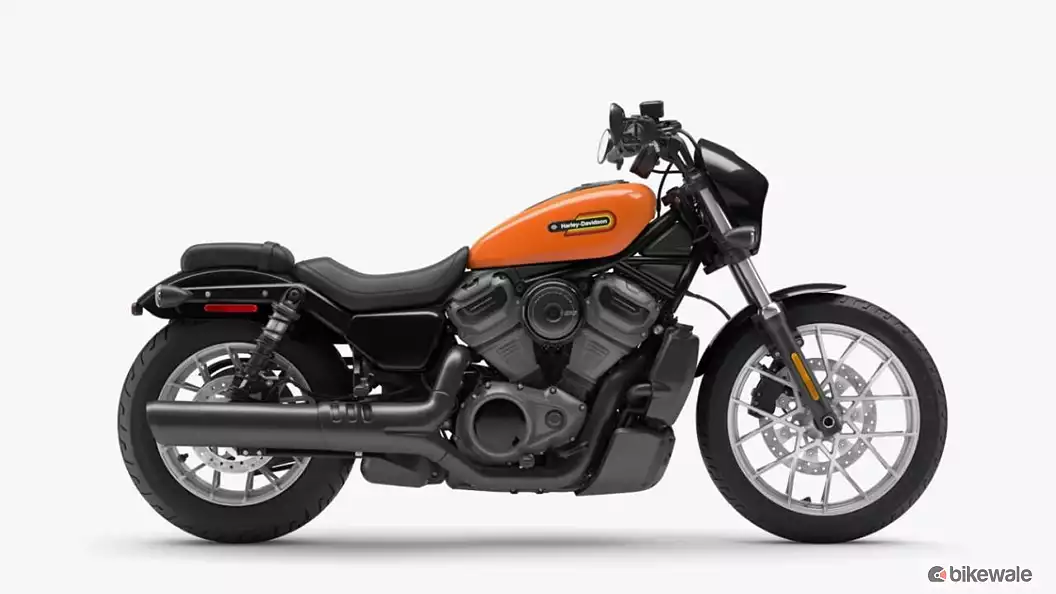
Harley-Davidson’s new entry-level offering, the Sprint, marks a significant strategic pivot towards affordability and accessibility. This motorcycle is confirmed for a 2026 launch with an aggressive entry price tag below $6,000, positioning it as the most affordable Harley-Davidson model in recent history.1 The Sprint is specifically designed to attract and onboard younger and first-time riders, including Gen Z and millennial consumers, who are increasingly prioritizing value and versatility in their purchasing decisions.1
The design philosophy of the Sprint emphasizes approachability and modern appeal. It is characterized as a compact, lightweight model featuring contemporary styling and a user-friendly design.1 Harley executives have highlighted “approachability, performance, and street appeal” as core selling points. The bike incorporates a lower seat height, manageable weight, and digital technology integrations, optimizing it for urban commuting and weekend excursions.1 A notable aspect of its design is its “heritage-inspired” aesthetic, drawing from Harley-Davidson’s 1960s Aermacchi-era Sprint. This approach aims to evoke the brand’s rebellious spirit while simultaneously appealing to cost-conscious riders with a contemporary look.2
Regarding its powertrain, the Sprint is anticipated to be equipped with a mid-sized engine, likely falling within the 400cc–500cc range. This displacement positions it directly against popular competitors in the segment, such as the Honda Rebel 500 and Hero Mavrick 440.1 Specific technical details regarding the engine, beyond its expected displacement range, have been kept “tight-lipped” by Harley-Davidson, indicating a strategic withholding of proprietary information ahead of its full unveiling.12
To achieve the aggressive price point and ensure profitability, a critical departure from previous low-cost models, the Sprint will be produced in partnership with a leading Asian motorcycle manufacturer.1 While the precise manufacturing locations remain undisclosed, Harley-Davidson currently operates production facilities in Asia, such as in Thailand (where the Pan America is built), and maintains existing partnerships with companies like Qianjiang in China (for X350/X500 models) and Hero MotoCorp in India (for the X440).2 Industry speculation suggests the Sprint could potentially be a reworked version of a Qianjiang-made X500.17 The explicit statement that the Sprint “will not be a loss leader” and that “previous low-cost models have not been profitable, but this one will be” 6 signifies a fundamental shift in Harley’s approach to entry-level motorcycles.
This suggests that the “new motorcycle architecture” mentioned in the query is not solely about engine or chassis design but encompasses a complete re-engineering of the business model for this product line. This likely includes rigorous cost-benefit analysis from the initial design phase, optimized supply chain management, and a lean operational structure to ensure that the $6,000 price point translates into a healthy margin, a stark contrast to past failures.
The Sprint project has been under development since 2021, indicating a long-term, deliberate strategic effort.2 The official market release is slated for 2026.1 Harley-Davidson plans to present the Sprint to its global dealer network in October 2025, with a broader public reveal anticipated at the 2025 EICMA show in November, followed by a global debut a few weeks later.2
While the Sprint is an Internal Combustion Engine (ICE) motorcycle, the development of LiveWire’s “Arrow” architecture and its partnership with Kymco 23 illustrate Harley-Davidson’s broader strategic commitment to scalable, cost-effective platforms across both ICE and electric segments to address affordability challenges. The “Arrow” platform is a “scalable architecture” designed for electric motorcycles to “rapidly create electric motorcycles of varying styles and sizes while using fewer, less complex parts.” This reveals a consistent, company-wide strategic direction towards modularity and platform-based development. The lessons learned from LiveWire’s efforts to produce “cheaper, more accessible” electric bikes are likely transferable and being applied to the Sprint’s ICE architecture, suggesting a sophisticated, integrated approach to product development aimed at achieving cost efficiencies and expanding market reach across Harley’s entire product portfolio.
However, the strategy of leveraging Asian manufacturing for cost-effectiveness 1 directly conflicts with the potential backlash from “the Harley faithful” who strongly associate the brand with “American-made” products.17 This presents a significant and delicate brand perception management challenge. The deep roots of Harley-Davidson’s brand identity in its American heritage and manufacturing tradition are well-established. The statement that “it’s hard to imagine the Harley faithful taking kindly to such a thing. Especially a China-made Harley” 17 highlights a fundamental tension between the strategic imperative for cost reduction to compete in the affordable segment and the risk of alienating a deeply loyal, traditional customer base. The success of the Sprint will depend not only on attracting new riders but also on how effectively Harley-Davidson manages this perception. This will require a carefully crafted communication strategy that emphasizes consistent quality, design integrity, and the enduring “spirit” of Harley-Davidson, regardless of the specific manufacturing origin, to mitigate potential brand dilution.
3. Learning from the Past: The Street 750’s Legacy
Harley-Davidson’s previous attempt to penetrate the entry-level market involved the Street 750 and its smaller sibling, the Street 500, launched in 2014 and discontinued in 2021.2 The discontinuation of the Street lineup was primarily driven by its unprofitability, a point explicitly acknowledged by CEO Jochen Zeitz.2
Beyond financial performance, the Street 750 faced significant criticism regarding its design and overall quality. It was often described as “ugly” and “aesthetically lazy,” with perceived poor fit and finish.26 Notably, its brakes were a particular point of contention, with reports of them being mediocre at best and even failing completely in emergency stop tests.26 Furthermore, the Street 750 was considered underpowered compared to similarly priced competitors, producing only 56 horsepower, and lacked standard features common in its class, such as ABS (initially), a gear position indicator, a fuel gauge, and a clock.24
The rider experience with the Street 750 also contributed to its limited success. Many riders found they quickly “outgrew” the bike, deeming it inadequate for sustained highway speeds or longer rides.27 Ergonomic issues, particularly for taller riders, led to discomfort and contributed to short-term ownership, preventing the model from truly “capturing the hearts and minds” of the broader Harley community.27 Despite its use in Harley’s Riding Academy programs, the Street 750 struggled to gain significant traction in the U.S. market and did not achieve the sales volumes Harley had anticipated.2 The failure of the Street 750 was not solely attributable to its price or profitability, but rather a fundamental mismatch in “style,” “fit and finish,” “performance,” and overall “rider experience” compared to its competitors.
This suggests that for the Sprint to succeed, it must address these qualitative aspects comprehensively, not just the quantitative price point. The detailed post-mortem of the Street 750, with descriptions such as “aesthetically lazy,” “objectively worse in almost every measurable way,” and its failure to “capture the hearts and minds” of riders 24, indicates a critical deficiency in delivering a compelling Harley experience at the entry level. This implies that the Sprint’s success hinges on more than just affordability; it must deliver on the aspirational values associated with the Harley brand, provide a genuinely satisfying and engaging riding experience, and possess a design and perceived quality that resonates with the target demographic’s modern aesthetic preferences to ensure long-term retention and brand advocacy.
The Sprint aims to avoid these past pitfalls through several key differentiators. Crucially, it has been meticulously developed since 2021 with a core objective of achieving a profitable margin from the outset, a point consistently emphasized by CEO Zeitz.2 This contrasts sharply with the Street’s financial shortcomings. In terms of design, the Sprint is described with “modern styling,” a “user-friendly design,” and “digital tech integrations,” aiming for a “sharp look that resonates with today’s minimalist aesthetic”.1 This represents a conscious effort to overcome the aesthetic criticisms leveled against the Street. Furthermore, the Sprint is strategically positioned as an “entry ticket” and a “fresh invitation into the Harley lifestyle,” explicitly designed to attract new riders who are expected to eventually “trade up to premium models”.1 This long-term customer cultivation strategy is more defined and emphasized than with the Street.
The new Sprint deliberately draws inspiration from the 1960s Aermacchi-era Sprint, aiming to evoke a sense of “boldness, irreverence, and fun”.2 This historical connection provides a stronger brand narrative and authenticity for a smaller displacement Harley, potentially resonating more effectively than the Street. The consistent emphasis on the “trade up” or “climb the ladder” objective across multiple sources 2 highlights a crucial strategic shift. It acknowledges that the primary value of the Sprint might not be its direct, per-unit profit margin (though it aims for profitability this time) but its ability to serve as a feeder mechanism for Harley’s core, high-margin business. This strategy requires a seamless and compelling brand experience across different product tiers, effective customer journey mapping, and potentially tailored incentives to encourage progression to higher-priced models, ensuring a sustainable pipeline of loyal, profitable customers for the future.
Table 1: Harley-Davidson Entry-Level Strategy Comparison: Street 750 vs. Sprint
| Feature | Street 750 (Past) | Sprint (Expected) |
| Price Point | ~$6,899 24 | <$6,000 1 |
| Target Demographic | Emerging markets/young adults 25 | Younger/First-time riders, Gen Z/millennials 1 |
| Engine Displacement (Expected) | 749cc 25 | 400-500cc 1 |
| Key Design Philosophy | “Aesthetically lazy,” basic features, uncomfortable for some 26 | Modern styling, user-friendly, urban-focused, heritage-inspired, digital tech integrations 1 |
| Manufacturing Approach | India/US 25 | Asian partnership 1 |
| Profitability Goal | Unprofitable 2 | Engineered for profitability 6 |
| Market Outcome / Anticipated Outcome | Discontinued due to low volumes, poor market reception, outgrown quickly 2 | Expected to attract new generation, diversify portfolio, cultivate brand loyalty 1 |
| Key Strengths / Weaknesses | Low initial price, used in training; Poor aesthetics, underpowered, lacked features, short-term appeal 24 | Aggressive price, modern appeal, heritage connection; Potential brand image clash, intense competition 1 |
4. Market Landscape and Competitive Positioning
The small-displacement motorcycle segment is currently the only area experiencing growth in the motorcycle market, primarily driven by affordability concerns among consumers.6 This indicates a significant macro-economic trend impacting consumer behavior. The growth in this segment is not merely a niche interest but a direct response to broader economic pressures, such as inflation and higher interest rates 7, which are making higher-priced discretionary products less accessible to a wider demographic. This implies that the Sprint’s success is deeply intertwined with Harley’s ability to effectively tap into this broader, economically driven demand for accessible motorcycling.
The broader cruiser bike market is projected for significant growth, from $61.99 billion in 2020 to an estimated $101.98 billion by 2030, representing a 5.5% Compound Annual Growth Rate (CAGR). This growth is attributed to factors like technological advancements and enhanced safety features.29 Google Trends data indicates a surge in interest for “touring cruiser motorcycles” peaking in December 2024 and a smaller spike in July 2025. Conversely, search queries for “new cruiser motorcycles for beginners” remained stagnant, suggesting a more subtle, underlying demand for accessible models not always captured by explicit “beginner” searches.29 Despite these overall market growth projections, U.S. motorcycle sales experienced a decline of 9.2% year-to-date through June 2025, with Harley-Davidson’s sales specifically dropping by 21.1%. This highlights a challenging immediate market environment that the Sprint must navigate.7
The Sprint’s $6,000 price point positions it directly within a highly competitive segment dominated by established affordable cruisers.2 Key competitors and their positioning include:
- Honda Rebel 300 ($4,849) & Rebel 500 ($6,799): These models are consistently popular among beginner riders due to their low seat height, easy handling, proven reliability, and broad accessibility.30
- Royal Enfield Classic 350 ($5,299) & Meteor 350 ($4,699): Royal Enfield offers distinctive retro British-bike styling at an accessible price point. These models have demonstrated strong sales growth, particularly in the Indian market.2 The success of Harley’s X440 in India 2, developed through a partnership with Hero MotoCorp and priced significantly lower ($2,400), provides a tangible blueprint for localized, cost-effective production and successful market penetration in emerging markets. The X440’s performance offers a crucial proof-of-concept for Harley-Davidson’s ability to execute a profitable, small-displacement strategy through strategic partnerships and localized manufacturing, directly informing the Sprint’s underlying business model, particularly its reliance on an Asian manufacturing partner.1
- Triumph Speed 400 (approx. $4,999): A relatively new entrant that has achieved significant sales growth, especially in India, benefiting from a strategic partnership with Bajaj Auto.2
- CFMoto 450CL-C ($5,799): This model stands out by offering advanced features such as traction control, ABS, and a TFT display at a highly competitive price point for the entry-level cruiser class.30
- Kawasaki Eliminator ABS ($6,799): Characterized by its low, lightweight, and easy-to-manage design, making it a suitable option for new riders seeking an accessible cruiser.30
The Sprint’s competitive advantages include Harley-Davidson’s unparalleled iconic brand legacy, the inherent “spirit of motorcycling” associated with the brand 1, and the explicit “ladder” strategy designed to transition new riders to higher-margin premium models. Its heritage-inspired design 2 could uniquely appeal to those seeking a classic aesthetic with modern accessibility. However, significant disadvantages exist. The potential for Harley’s long-standing premium brand image to clash with budget-conscious markets is a concern.2 Furthermore, the lingering perception from past failures in the entry-level segment, particularly the Street 750, may create skepticism among consumers and analysts. The Sprint faces intense competition from established manufacturers with proven, well-regarded, and often feature-rich affordable models.2
Table 2: Competitive Landscape: Key Entry-Level Cruisers (2025-2026)
| Motorcycle Model | Brand | Estimated Price (USD) | Engine Displacement (approx. cc) | Key Features/Selling Points (brief) |
| Harley-Davidson Sprint | Harley-Davidson | <$6,000 1 | 400-500 1 | Urban-friendly, modern styling, digital tech, heritage-inspired |
| Rebel 300 | Honda | $4,849 30 | 286 31 | Low seat height, easy handling, reliability |
| Rebel 500 | Honda | $6,799 30 | 471 31 | More power, highway capable, accessible |
| Classic 350 | Royal Enfield | $5,299 30 | 349 31 | Retro Brit-bike style, accessible price |
| Meteor 350 | Royal Enfield | $4,699 30 | 349 31 | Classic cruiser style, dual seat, lower price |
| Speed 400 | Triumph | ~$4,999 2 | 398 37 | Modern roadster, single-cylinder platform, strong sales growth |
| 450CL-C | CFMoto | $5,799 30 | 449 31 | Traction control, ABS, TFT display, competitive features |
| Eliminator ABS | Kawasaki | $6,799 30 | 451 31 | Low, lightweight, easy to manage, good for new riders |
5. Financial Implications and Investor Confidence
Harley-Davidson’s financial performance in Q2 2025 presented a mixed picture, with a 19% decline in consolidated revenue and a 15% decline in global motorcycle retail sales.1 Despite these challenges, the Sprint initiative is explicitly stated to be engineered for profitability, a critical departure from previous low-cost models. This focus is essential for improving overall corporate margins and financial health.6 The company anticipates positive retail sales in the second half of 2025, with the Sprint launch positioned to contribute significantly to future revenue growth and market share expansion.4
The stock market reacted significantly to the simultaneous announcement of the Sprint and a strategic partnership for Harley-Davidson Financial Services (HDFS). Harley-Davidson’s stock jumped over 20% after the Q2 2025 earnings call.1 Wall Street analysts exhibit “cautious optimism,” viewing the Sprint as a potential turning point if Harley successfully converts first-time buyers into loyal, long-term customers.1 Analyst forecasts present a mixed outlook: while overall revenue is projected to decline at 5% per annum, annual earnings per share (EPS) are expected to grow at 7.9% per year, with a 12.4% EPS growth rate.38 The average price target for Harley-Davidson stock is $29.14, indicating a potential 26.97% upside from its current trading price of $22.95.39
A crucial element underpinning the Sprint strategy is the recent long-term strategic partnership between Harley-Davidson Financial Services (HDFS) and leading investment firms KKR and PIMCO.6 These partners will collectively acquire 4.9% equity in HDFS and commit to purchasing one-third of all new retail loan originations for at least the next five years.6 This landmark deal immediately unlocks approximately $1.25 billion in cash for Harley-Davidson.41 The substantial proceeds will be strategically allocated: to reduce approximately $4 billion of HDFS debt, to invest $300 million into future growth opportunities (including critical new product launches like the Sprint), and to fund $500 million in share buybacks.5 This partnership fundamentally transforms HDFS into a “capital-light” financing business, significantly de-risking Harley-Davidson’s exposure to credit risk and projecting an improved return on equity (ROE) for HDFS into the high 20s.5 The simultaneous announcement of the HDFS deal and the Sprint’s details during the Q2 2025 earnings call 4 demonstrates a deliberate strategic alignment.
The capital infusion provides the necessary financial stability and liquidity for Harley-Davidson to aggressively pursue the Sprint strategy, including its research and development, optimized manufacturing setup, and extensive marketing efforts, all while mitigating financial risk associated with launching a new, affordable product line in a challenging market. This indicates a sophisticated financial maneuver designed to provide a robust foundation for future growth. The seemingly contradictory forecast of declining revenue but growing EPS 38 suggests a strategic focus on cost control, operational efficiency, and financial engineering, such as the HDFS deal, to improve profitability per unit, rather than relying solely on volume growth. This signifies a disciplined approach to financial management aimed at enhancing shareholder value in a challenging market.
6. Conclusion
Harley-Davidson’s re-entry into the affordable motorcycle segment with the Sprint represents a critical, multi-faceted strategic initiative aimed at addressing its aging customer base and declining sales. This endeavor is more than a mere product launch; it signifies a fundamental redefinition of the Harley-Davidson brand for long-term relevance, shifting towards accessibility and individuality while retaining its heritage.
The Sprint’s aggressive $6,000 price point, coupled with its modern, user-friendly design and anticipated 400-500cc engine, positions it to directly compete in the growing small-displacement market. A key differentiator from the ill-fated Street 750 is the explicit engineering for profitability from inception, leveraging strategic Asian manufacturing partnerships to control costs. This focus on sustainable profitability, rather than just market entry, reflects lessons learned from past failures.
The success of the Sprint is intrinsically linked to Harley-Davidson’s ability to navigate complex challenges. The company must carefully manage brand perception, particularly concerning the use of foreign manufacturing, to avoid alienating its loyal, traditional customer base. Concurrently, it must effectively communicate the Sprint’s value proposition to a new generation of riders, ensuring the motorcycle delivers a compelling “Harley experience” that fosters long-term loyalty and encourages progression to higher-margin premium models.
The recent HDFS strategic partnership provides a vital financial foundation, injecting capital and de-risking growth initiatives, thereby enabling the aggressive pursuit of the Sprint strategy. While analyst forecasts present a mixed outlook of declining revenue but growing EPS, this indicates a disciplined financial approach focused on efficiency and profitability per unit. The Sprint is therefore not just a new motorcycle, but a strategic cornerstone in Harley-Davidson’s broader effort to evolve its brand, diversify its portfolio, and secure its financial future in a dynamically changing global motorcycle market.
Sources
- Harley Sprint Bike: A $6K Game Changer for Riders – Industry Leaders Magazine, accessed August 2, 2025, https://www.industryleadersmagazine.com/harley-sprint-bike-a-6k-game-changer-for-riders/
- Harley-Davidson Sprint Motorcycle’s Surprisingly Low Price Shocks Fans: Game-Changer or Brand Risk? | IBTimes UK, accessed August 2, 2025, https://www.ibtimes.co.uk/harley-davidson-sprint-motorcycles-surprisingly-low-price-shocks-fans-game-changer-brand-risk-1739822
- Harley-Davidson Confirms Entry-Level $6000 ‘Sprint’ Motorcycle To Launch In 2026, Targeting New Riders – Benzinga, accessed August 2, 2025, https://www.benzinga.com/markets/tech/25/07/46750947/harley-davidson-confirms-entry-level-6000-sprint-motorcycle-to-launch-in-2026-targeting-new-riders
- Earnings call transcript: Harley-Davidson sees revenue surge, stock soars Q2 2025, accessed August 2, 2025, https://www.investing.com/news/transcripts/earnings-call-transcript-harleydavidson-sees-revenue-surge-stock-soars-q2-2025-93CH-4160745
- Earnings call transcript: Harley-Davidson sees 19% revenue drop in Q2 2025, accessed August 2, 2025, https://www.investing.com/news/transcripts/earnings-call-transcript-harleydavidson-sees-19-revenue-drop-in-q2-2025-93CH-4160744
- Next year you can buy a new Harley-Davidson for $6,000 – RevZilla, accessed August 2, 2025, https://www.revzilla.com/common-tread/next-year-you-can-buy-a-new-harley-davidson-for-6000
- 2025 Affordable Motorcycles Trend in Cranks: Market Insights & Forecast – Accio, accessed August 2, 2025, https://www.accio.com/business/trend-of-affordable-motorcycles-in-cranks
- Harley-Davidson Sprint launches in 2026; can this $6K bike win over Gen Z?, accessed August 2, 2025, https://m.economictimes.com/news/international/us/harley-davidson-sprint-launches-in-2026-can-this-6k-bike-win-over-gen-z/articleshow/123009059.cms
- Harley-Davidson Sprint launches in 2026; can this $6K bike win over Gen Z? – AI, accessed August 2, 2025, https://ai.economictimes.com/news/international/us/harley-davidson-sprint-launches-in-2026-can-this-6k-bike-win-over-gen-z/articleshow/123009059.cms
- Our Strategy – Harley-Davidson – Investor Relations, accessed August 2, 2025, https://investor.harley-davidson.com/our-strategy/default.aspx
- Harley-Davidson Has a Cheap, Entry-Level Motorcycle Coming Soon – RideApart.com, accessed August 2, 2025, https://www.rideapart.com/news/767610/2026-harley-davidson-sprint-entry-level-motorcycle/
- Harley Davidson Sprint Aims to Capture Young Riders with Affordable 2026 Launch, accessed August 2, 2025, https://www.ainvest.com/news/harley-davidson-sprint-aims-capture-young-riders-affordable-2026-launch-2507/
- Harley’s most affordable bike to launch at $6,000 in 2026 – Inshorts, accessed August 2, 2025, https://inshorts.com/en/news/harley-s-most-affordable-bike-to-launch-at–6-000-in-2026-1753968110132
- Harley-Davidson Is Going To Make A Cheap $6,000 Motorcycle Next Year – The Autopian, accessed August 2, 2025, https://www.theautopian.com/harley-davidson-is-going-to-make-a-cheap-6000-motorcycle-next-year/
- Harley-Davidson Unveils Affordable 2026 Sprint Motorcycle: A Strategic Leap into the Entry-Level Market – Azat TV, accessed August 2, 2025, https://azat.tv/en/harley-davidson-2026-sprint-motorcycle/
- Harley-Davidson to launch sub-$6K small displacement Springer in 2026 – The Manual, accessed August 2, 2025, https://www.themanual.com/auto/harley-davidson-to-launch-sub-6k-small-displacement-springer-in-2026/
- Harley-Davidson CEO teases name, price of upcoming affordable models | Visordown, accessed August 2, 2025, https://www.visordown.com/features/harley-davidson-ceo-teases-name-price-upcoming-affordable-models
- Locations | Harley-Davidson USA, accessed August 2, 2025, https://www.harley-davidson.com/us/en/about-us/careers/locations.html
- Entry-Level Harley-Davidson Sprint Confirmed for 2026 – Motorcycle.com, accessed August 2, 2025, https://www.motorcycle.com/bikes/new-model-preview/entry-level-harley-davidson-sprint-confirmed-for-2026-44645536
- Harley Davidson Sprint A Comprehensive Guide To This Classic Motorcycle – InfoSphere, accessed August 2, 2025, https://admin.michaelhyatt.com/56951/harley-davidson-sprint-a-comprehensive
- New Harley-Davidson ‘Sprint’ motorcycle reportedly set for 2026 debut, inspired by Aermacchi era | Mint, accessed August 2, 2025, https://www.livemint.com/auto-news/new-harley-davidson-sprint-motorcycle-reportedly-set-for-2026-debut-inspired-by-aermacchi-era-11753973567981.html
- Harley-Davidson to Launch Entry-Level Sprint Motorcycle – BikeWale, accessed August 2, 2025, https://www.bikewale.com/news/harley-davidson-to-launch-entry-level-sprint-motorcycle/
- Harley-Davidson’s Spinoff Just Unveiled Two Small Electric Motorcycles You Might Be Able To Afford – The Autopian, accessed August 2, 2025, https://www.theautopian.com/harley-davidsons-spinoff-just-unveiled-two-small-electric-motorcycles-you-might-be-able-to-afford/
- Harley’s New $6,000 Entry-Level Bike is Another Shot at Attracting …, accessed August 2, 2025, https://www.mensjournal.com/news/harleys-new-6000-entry-level-bike-is-another-shot-at-attracting-new-riders-where-did-the-last-attempts-land
- Harley-Davidson Street – Wikipedia, accessed August 2, 2025, https://en.wikipedia.org/wiki/Harley-Davidson_Street
- The week that showed just how badly Harley-Davidson have failed with the Street 750, accessed August 2, 2025, https://dancingthepolka.com/2015/10/30/the-week-that-showed-just-how-badly-harley-davidson-have-failed-with-the-street-750/
- 2015-2021 Harley-Davidson Street 750 review: Full specs – Motorcycle News, accessed August 2, 2025, https://www.motorcyclenews.com/bike-reviews/harley-davidson/street-750/2015/
- Why The Harley-Davidson Street 750 Couldn’t Be Saved By The Bar And Shield, accessed August 2, 2025, https://www.topspeed.com/why-the-harley-davidson-street-750-couldnt-be-saved-by-the-bar-and-shield/
- What’s Driving the Trend of New Cruiser Motorcycles in 2025? – Accio, accessed August 2, 2025, https://www.accio.com/business/trend-of-new-cruiser-motorcycles
- Top Cruisers of 2025 for Beginner Riders | Cycle World, accessed August 2, 2025, https://www.cycleworld.com/bikes/top-cruisers-for-beginner-riders/
- 10 Cheapest New Cruisers In 2025 – Top Speed, accessed August 2, 2025, https://www.topspeed.com/10-cheapest-new-cruisers-in-2025/
- Royal Enfield Sales Breakup May 2025 – Classic, Bullet, Hunter, Meteor, Himalayan, Guerrilla – RushLane, accessed August 2, 2025, https://www.rushlane.com/royal-enfield-sales-breakup-may-2025-classic-bullet-hunter-12524878.html
- Royal Enfield Sales Report July 2025: Sales Increased By 31% YOY – BikeJunction, accessed August 2, 2025, https://bikes.tractorjunction.com/en/news/royal-enfield-sales-report-july-2025
- Harley’s X440 Is A Smash Hit In India—Could It Be The Brand’s Saving Grace?, accessed August 2, 2025, https://www.rideapart.com/features/749160/harley-x440-saving-grace-or-one-hit-wonder/
- Hero MotoCorp and Harley-Davidson Extends Strategic Partnership – Angel One, accessed August 2, 2025, https://www.angelone.in/news/hero-motocorp-and-harley-davidson-extends-strategic-partnership
- Triumph Motorcycles sell 134,635 bikes across 2024, accessed August 2, 2025, https://www.motorcyclenews.com/news/2025/february/triumph-motorcycles-record-sales-figures/
- Triumph reaches global sales record in 2024 | Powersports Business, accessed August 2, 2025, https://powersportsbusiness.com/news/triumph/2025/02/26/triumph-reaches-global-sales-record-in-2024/
- Harley-Davidson (NYSE:HOG) Stock Forecast & Analyst Predictions – Simply Wall St, accessed August 2, 2025, https://simplywall.st/stocks/us/automobiles/nyse-hog/harley-davidson/future
- Harley-Davidson (HOG) Stock Forecast, Price Targets and Analysts Predictions – TipRanks, accessed August 2, 2025, https://www.tipranks.com/stocks/hog/forecast
- Harley-Davidson Announces Strategic Partnership with KKR and PIMCO, accessed August 2, 2025, https://investor.harley-davidson.com/news/news-details/2025/Harley-Davidson-Announces-Strategic-Partnership-with-KKR-and-PIMCO/default.aspx
- Harley-Davidson Announces Strategic Partnership For HDFS – Motorcycle.com, accessed August 2, 2025, https://www.motorcycle.com/bikes/news/harley-davidson-announces-strategic-partnership-for-hdfs-44645548
Our Social Media Handles
- Instagram : LivingWithGravity
- Medium : Akash Dolas
- YouTube Channel : Gear and Shutter