








Executive Summary
This report provides a detailed analysis of Aprilia’s recent patent filing (EP4604512A1), which introduces a dynamic, MotoGP-derived aerodynamic system intended for street-legal motorcycles.1 This innovation, authored by former Formula 1 aerodynamicist Marco De Luca, represents a significant evolution from the fixed winglets currently common in top-tier racing, proposing instead a system that actively manipulates airflow for enhanced cornering stability and grip.2 The specific technical features, including cornering-assist swingarm panels, ground-effect winglets, and a rear diffuser, are direct applications of car racing principles to the complex, dynamic platform of a motorcycle.2

The patent is not merely a technical exercise but a deliberate commercial and strategic maneuver. By protecting the technology for commercial use, Aprilia is leveraging a critical regulatory pathway—World Superbike (WSBK) homologation—to transfer this race-bred technology to a rumored high-performance customer model, the Aprilia XGP.2 This places Aprilia in direct competition with pioneers like the Bimota KB998 Rimini, which has already debuted a WSBK-homologated superbike with similar electronically controlled aero.6
While this technology promises a paradigm shift in motorcycle handling, its viability is challenged by several factors. The immense engineering complexity, high manufacturing costs, and stringent regulatory hurdles for road use suggest that this technology will initially be reserved for ultra-exclusive, limited-production “hyper-homologation specials”.8 This report concludes that Aprilia’s patent serves as a blueprint for a new frontier in performance superbikes, where dynamic, situation-specific aerodynamic control becomes the defining feature of elite, track-oriented machines.
1. The Dawn of Dynamic Aerodynamics: Context and Rationale
1.1. The Aerodynamic Arms Race in MotoGP
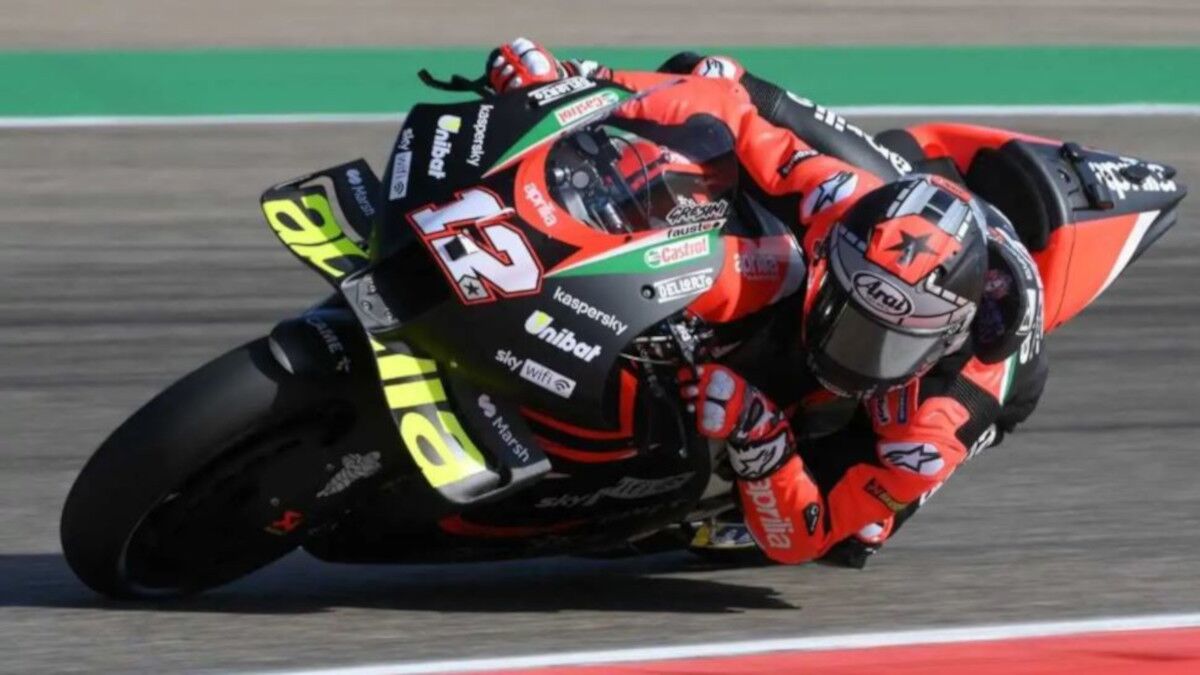
The modern era of motorcycle aerodynamics in the MotoGP World Championship began with a pivotal shift from a focus on minimizing drag to actively generating downforce. This transformation was largely instigated by Ducati in 2015, with the introduction of fixed winglets on their Desmosedici GP15 motorcycle.10 These components were initially designed to counteract wheelies under hard acceleration, but their benefits in enhancing front-end stability and mid-corner grip were quickly realized.10 This innovation spurred an unprecedented aerodynamic arms race among manufacturers, with fixed wings and fairing shapes becoming increasingly complex. In this competitive landscape, Aprilia has emerged as one of the most innovative manufacturers, consistently pushing the boundaries of aerodynamic design and cementing its place at the forefront of the aero battle, second only to Ducati.2
However, the current philosophy of using static fairings and fixed wings has approached a point of diminishing returns. The trade-off is clear: while fixed wings provide downforce, they also create a drag penalty on straights, slowing the bike down.11 Furthermore, when a motorcycle leans into a corner, the downward force from fixed winglets can be partially converted into an undesirable sideways force that pushes the nose of the bike wide.11 Aprilia’s patent suggests a fundamental departure from these limitations, proposing a dynamic system that can change its shape and function based on the bike’s speed, lean angle, or rider input, thereby moving beyond the constraints of static solutions.1
1.2. The Patent as a Strategic Commercial Play
The filing of the patent, identified as document EP4604512A1, is a highly unusual action within the secretive world of racing.2 Patenting this technology makes Aprilia’s previously undisclosed technical knowledge public, which is rare for a competitive race team.2 This move is not an accidental disclosure but a deliberate, dual-purpose strategy. The documents state that the primary function of the patent is to protect the “commercial use” of this technology, particularly on “production motorcycles”.2 This action serves as a preemptive measure to block other manufacturers from using similar designs on their own road bikes should the technology make it to market.3
The patent’s existence is a clear signal that the technology is not a mere theoretical concept but a viable solution for a future product. This aligns with persistent rumors and trademark filings for a new high-performance model from Aprilia, known as the XGP.2 This new bike is described as an “even more extreme version of the RSV4,” a limited-edition model that will incorporate technology directly from the brand’s factory racing project.12 The explicit link between the patent and the XGP suggests that Aprilia has a specific, pre-planned product launch in mind, with the patent serving as a crucial foundational step in that process.2 The strategic move to patent this technology shows a clear intention to commercialize it and establish a new market segment for ultra-premium, track-focused motorcycles.
1.3. The Architectural Vision of Marco De Luca
The strategic direction of Aprilia’s aerodynamic development can be traced directly to the influence of Marco De Luca, a former Formula 1 aerodynamicist who now heads the Italian manufacturer’s technical department.2 The fact that Aprilia hired an F1 specialist, rather than a traditional motorcycle aerodynamicist, is highly telling. The patent’s core concepts—such as ground effect, diffuser-like air ducts, and the manipulation of airflow beneath the vehicle—are foundational to modern Formula 1 design.2 Unlike motorcycles, F1 cars operate on a static, flat platform, which simplifies the aerodynamic problem considerably. The challenge of applying these principles to a motorcycle—a dynamic platform that tilts and a rider who shifts their body position—is far more complex.10
This cross-disciplinary hiring decision and the resulting patent demonstrate a strategic injection of a more mature, car-based aerodynamic philosophy into motorcycle design. It signifies a long-term plan to move beyond the current state of fixed-wing aero and fundamentally redefine how a motorcycle interacts with the air around it. The simultaneous patenting of rider-suit aerodynamics, which includes add-on panels to optimize airflow behind the rider, further highlights this comprehensive, F1-inspired approach to the entire rider-bike system.10
2. Deconstructing the Patent: A Technical Deep Dive into Aprilia’s Aero Innovations
Aprilia’s patent describes a suite of interconnected aerodynamic solutions that work in concert to enhance a motorcycle’s performance, particularly in cornering. These features represent a holistic approach to generating downforce and improving stability by manipulating airflow in novel ways.
2.1. The Cornering-Assist Swingarm Panels
One of the most visually striking elements of the patent is the design of the swingarm panels, which are described as “wing-like extensions that extend like walls over the upper part of the rear wheel”.2 While they serve a secondary purpose of reducing drag by smoothing airflow and minimizing turbulence caused by the rotating rear wheel, their primary function is to actively assist cornering performance.2 The panels have an airfoil profile and are angled downward when viewed from behind.2 This unique design means that at maximum lean angle, the panel closer to the asphalt generates not only downforce, pushing the tire harder into the ground, but also a horizontal impulse that literally “pushes” the motorcycle toward the inside of the corner.2 This force directly counteracts the centrifugal forces that would otherwise carry the bike wide, a significant advancement over fixed winglets that can produce a detrimental sideways push.11
2.2. The Ground-Effect Winglet
Another key innovation is a smaller, angled wing element positioned just in front of the rear wheel axle.2 This wing is mounted at a specific angle so that it runs parallel to the track surface when the bike is at an extreme lean angle.2 When the bike is leaned over, this component creates a venturi effect by accelerating the air trapped between the wing and the asphalt.2 This acceleration generates a negative pressure, effectively “sucking” the motorcycle more strongly to the ground for enhanced stability and grip in corners.2
The application of ground effect is a complex solution to a difficult problem, and Aprilia’s patent itself acknowledges a critical risk: the possibility of the winglets scraping the ground. This friction could potentially lift the wheels off the surface, leading to a loss of control and a crash.14 This highlights the immense engineering challenge of designing an aero system that is both effective and fail-safe across the full range of a motorcycle’s dynamic motion.
2.3. The Rear Diffuser System
The final piece of the patented system is a rear diffuser, a “tunnel-like duct” located above the rear wheel and below the seat.2 This duct is designed to function like a diffuser on a Formula 1 car, drawing air up from the underside of the motorcycle.2 Supported by two spoon-like inlets in front of the rear tire, this system is designed to accelerate airflow, thereby further increasing the ground effect and improving overall driving stability.2 The patent also notes that the rear tail unit, which combines a raised spoiler and side wings, is designed to dissipate this air more effectively and that it creates space for housing additional components, potentially including a mass damper or electronic hardware.2 This multi-component, synergistic design demonstrates a comprehensive approach to manipulating airflow for performance.

3. The Path from Prototype to Production: WSBK Homologation as a Vehicle
3.1. MotoGP vs. WSBK: A Tale of Two Rulebooks
The path for transferring Aprilia’s patented technology from its RS-GP prototype to a production motorcycle is dictated by the regulations of motorcycle racing’s top-tier classes. Critically, movable or “active” aerodynamic elements are explicitly prohibited in all three classes of MotoGP.6 This rulebook effectively prevents the direct, race-day testing and use of systems like the one Aprilia has patented.
In contrast, the World Superbike (WSBK) regulations are much more lenient and provide a crucial regulatory loophole for this type of innovation.6 WSBK rules permit the use of active or dynamic aerodynamic components, but with a strict condition: they must also be present on the homologated, road-legal version of the motorcycle.6 Furthermore, the race version is only allowed to use the same mechanism and range of movement as the production bike, reinforcing the link between the two.6 This regulatory framework transforms WSBK into the de facto proving ground and commercial vehicle for the transfer of active aero technology from the racetrack to the consumer market. It is the sole viable path for a manufacturer to race a dynamic aero system and then sell a version of it to the public.
3.2. Bimota KB998 Rimini: The Pioneer of the New Frontier
The theoretical pathway provided by WSBK regulations is not without a real-world precedent. The Bimota KB998 Rimini has already emerged as a direct competitor in this emerging market segment. As a WSBK homologation special, the KB998 features an “adaptive, electronically controlled wing concept” with winglets that automatically adjust their angle of attack based on speed and braking.6 This bike’s existence validates the WSBK regulatory path and proves that a viable product with active aero can be brought to market.6
The Bimota’s presence puts Aprilia in a reactive position, as a rival has already established a new market segment for ultra-exclusive, technology-driven superbikes.6 The Bimota is priced at approximately $48,600, which sets a clear benchmark for the high-end market that Aprilia’s rumored XGP would enter.8 This competition underscores the significance of Aprilia’s patent as a strategic move to join and compete in this new class. The Bimota has demonstrated that active aero is no longer a concept but a commercially realized feature, solidifying this as the next frontier in superbike performance.
4. Commercial and Engineering Viability: The Real-World Challenges
The transition of Aprilia’s dynamic aero technology from a racing prototype to a production model, even a limited-run special, faces significant commercial and engineering hurdles.
4.1. The Cost-Benefit Calculus
The hardware required for an active aero system—including an ECU, sensors, and servo motors—is substantially more complex and expensive than the fixed wings used by current production superbikes.6 This is reflected in the high price point of the Bimota KB998 Rimini, which is nearly $50,000.8 The cost of this technology makes it commercially viable only for high-priced, limited-run halo models, not for a mass-market audience. The return on investment for a consumer is difficult to quantify; while the technology could provide a marginal performance advantage on a track, it is unlikely to provide a meaningful benefit for a street rider.16 The primary value proposition for Aprilia will be to create a “halo effect” of track-proven performance and exclusivity, which justifies the steep price increase to a small, dedicated consumer base.

4.2. The Complexity and Maintenance Burden
The introduction of movable aerodynamic components creates new points of potential mechanical and electronic failure. This is not a trivial concern, as the failure of a winglet to deploy or retract correctly could have serious consequences for a rider.11 The Bimota KB998, for instance, relies on a dedicated ECU and servo motors to control its winglets, adding a layer of electronic complexity not found on most superbikes.6 The history of manufacturers attempting this transition is instructive: a previous Aprilia concept, the RS 660, featured movable aero in its patent drawings, but the production version ultimately did not include it.11 This prior decision by Aprilia suggests that the technology was deemed too complex or costly for mass production, reinforcing the idea that the XGP will be an exclusive product where such compromises are acceptable.11
Furthermore, the rigorous maintenance schedule for a MotoGP bike—which includes checks after almost every session—underscores the high-maintenance nature of this cutting-edge technology.18 While a road bike’s maintenance needs would not be as frequent, a complex active aero system would certainly increase the overall burden and cost for the consumer.18
4.3. Safety, Durability, and Regulatory Hurdles
The introduction of a dynamic aero system raises significant safety and durability questions. The patent itself notes a critical risk of the ground-effect elements scraping the asphalt, which could cause a crash.14 Aprilia must prove the system is fail-safe and durable under a wide range of conditions, from high-speed track use to navigating road hazards.14
From a regulatory standpoint, this complexity presents a major barrier to mass adoption. In the European Union, road-legal components require an E-mark certification, which attests to their compliance with safety and performance standards.21 The process for certifying a dynamic system, which must function reliably under all conditions, is far more complex and expensive than for a fixed fairing.21 Similarly, in the United States, manufacturers must certify that their vehicles comply with all applicable Federal Motor Vehicle Safety Standards (FMVSS).23 A dynamic system introduces a host of new variables that must be proven compliant, making the regulatory pathway a significant hurdle for widespread production.
5. Competitive Landscape: Aprilia’s Place in the Aero Race
Aprilia’s patented technology will enter a competitive market dominated by manufacturers with their own distinct aerodynamic philosophies.
5.1. The Ducati Benchmark
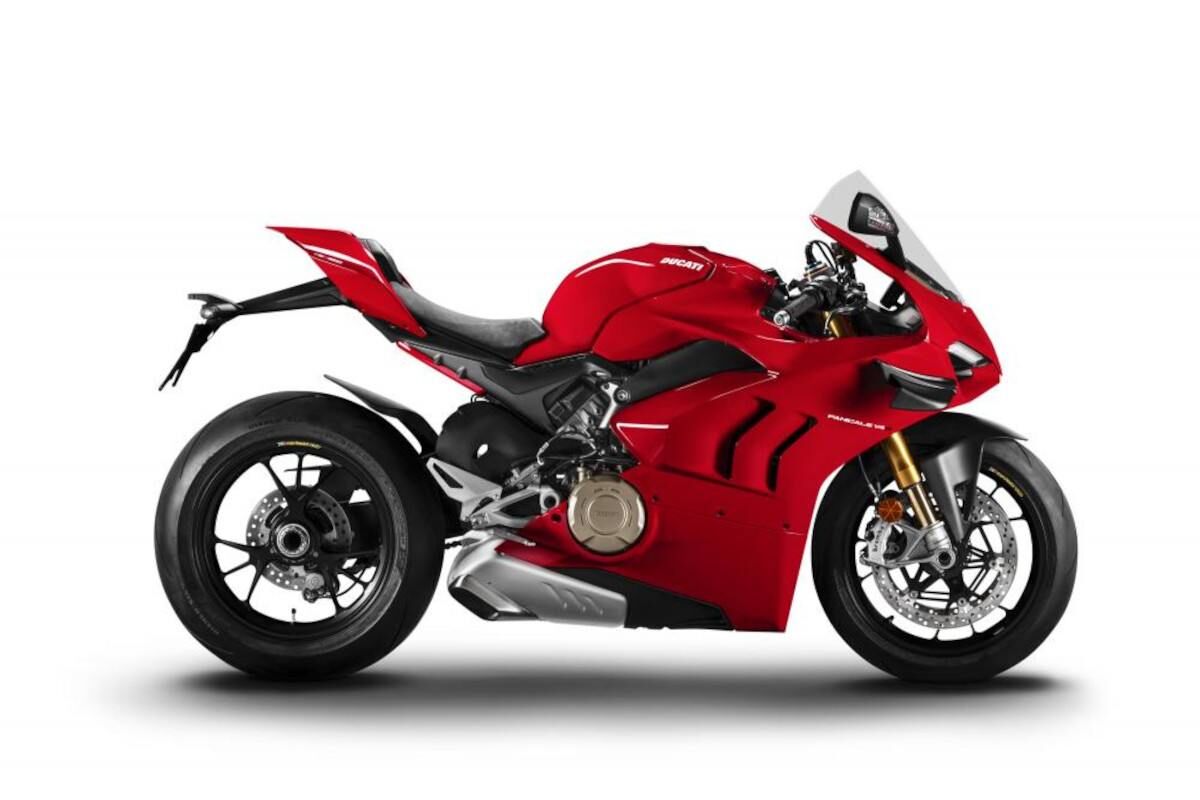
Ducati, a pioneer in modern motorcycle aerodynamics, has taken a refined and proven approach with its Panigale V4. The bike features fixed, integrated double-profile wings and a fairing designed to create a “bubble of calm air” for the rider.24 Ducati’s system prioritizes a balance of downforce, drag reduction, and enhanced rider protection, which reduces physical effort at high speeds.24 Ducati’s approach represents the established standard for production superbikes, and Aprilia’s active aero is a direct attempt to surpass it.
5.2. Kawasaki’s Hypersport Legacy
The Kawasaki Ninja H2R, a hypersport motorcycle, features a fixed aero package that is a result of collaboration with Kawasaki Heavy Industries’ Aerospace Company.26 The bike is equipped with fixed carbon-fiber “vortex down control wings” designed to reduce drag and create downforce for unbridled top speed.26 Kawasaki’s focus is on brute force and high-speed stability, but its system lacks the dynamic, situation-specific functionality that Aprilia’s patent promises, which is aimed at improving cornering and handling.26
5.3. Bimota’s First-Mover Advantage
The most direct and immediate competition for Aprilia is the Bimota KB998 Rimini. As a WSBK-homologated superbike, the Bimota has already brought an electronically controlled movable aero system to market.6 This provides Bimota with a first-mover advantage, establishing the market and proving the concept to both consumers and other manufacturers. The existence of the Bimota sets a high bar for what Aprilia must deliver with its rumored XGP in terms of technology, performance, and market positioning. The following table provides a clear comparison of the different approaches:
| Model | Aero Type | Primary Function | Key Features | Homologation Tie-in |
| Aprilia XGP (Speculative) | Active (Movable) | Cornering Downforce/Stability | Swingarm Panels, Ground Effect Winglet, Rear Diffuser | WSBK |
| Bimota KB998 Rimini | Active (Movable) | Downforce/Drag Reduction | Electronically controlled front winglets | WSBK |
| Ducati Panigale V4R | Fixed | Downforce/Rider Comfort | Integrated double-profile wings, “Bubble of calm air” fairing | MotoGP/WSBK |
| Kawasaki Ninja H2R | Fixed | Drag Reduction/Top Speed | Carbon-fiber vortex wings | N/A (Hypersport) |
6. Conclusion: The Future of Superbikes
Aprilia’s patent filing is a strategic and well-calculated move that signals a new direction for the brand and the high-performance motorcycle market as a whole. The document is not just a technical curiosity but a clear blueprint for the next generation of superbikes. By leveraging the more permissive WSBK regulations, Aprilia is creating a viable path to commercialize its F1-inspired, dynamic aero technology in a way that is not possible through MotoGP.

The anticipated Aprilia XGP will serve as a halo model, a technical showcase designed to push the boundaries of performance and engineering, rather than a mass-market product. While the immense complexity, high cost, and increased maintenance burden will limit this technology to an exclusive audience, its introduction is a critical step. If the technology proves reliable and durable on a limited-production scale, it could eventually trickle down to future RSV4 models, fundamentally altering the superbikes of the next decade. The perennial debate between form and function will be challenged, as the focus on ground effect and stability will produce a design dictated purely by engineering and performance.16 Aprilia’s patent, therefore, represents a bold statement of intent: to lead the next aerodynamic revolution by creating motorcycles that are not just fast, but dynamically connected to their environment in ways previously reserved for the world’s most advanced racing cars.
Sources
- Aprilia’s Bringing MotoGP Aero to the Street with This Wild Patent – RideApart.com, accessed on September 4, 2025, https://www.rideapart.com/news/770505/aprilia-motogp-aerodynamic-wings-street-motorcycles-patent/
- Aprilia MotoGP patents reveal secret aerodynamic concepts of the …, accessed on September 4, 2025, https://motorcycles.news/en/aprilia-motogp-aero-patent/
- Aprilia patents MotoGP aero; likely to feature on new XGP – Bike Rider Magazine, accessed on September 4, 2025, https://www.brm.co.nz/aprilia-patents-motogp-aero-likely-to-feature-on-new-xgp/
- Aprilia Patent Reveals MotoGP Secrets | Cycle World, accessed on September 4, 2025, https://www.cycleworld.com/motorcycle-news/aprilia-patent-reveals-motogp-secrets/
- Aprilia RS-GP MotoGP patents reveal advanced aerodynamics – Visordown, accessed on September 4, 2025, https://www.visordown.com/news/aprilia-rs-gp-motogp-patents-reveal-advanced-aerodynamics
- Bimota KB998 Rimini: Adaptive aerodynamics for the future of superbikes?, accessed on September 4, 2025, https://motorcycles.news/en/bimota-kb998-rimini-adaptive-aerodynamics-for-the-future-of-superbikes/
- Bimota KB998 : ” This can allow us to have the best setting for every corner and at any speed. The wings are electronically adjustable; the rider cannot make any changes, but everything is automatic. They function for braking, for cornering, and for high speed.” : r/wsbk – Reddit, accessed on September 4, 2025, https://www.reddit.com/r/wsbk/comments/1gp6gq6/bimota_kb998_this_can_allow_us_to_have_the_best/
- [New Model] BIMOTA KB998 Rimini: The Ultimate Road-Legal Sportbike – Webike Japan, accessed on September 4, 2025, https://japan.webike.net/moto_news/latest-news/20250526-new-model-bimota-kb998-rimini-the-ultimate-road-legal-sportbike/
- 2025 Bimota KB998 Rimini: WSBK Homologation Masterpiece Unveiled! – YouTube, accessed on September 4, 2025, https://www.youtube.com/watch?v=QyTGuXWVMyA
- Aprilia files patent for race suit aerodynamics, could use them in MotoGP? – Visordown, accessed on September 4, 2025, https://www.visordown.com/news/racing/motogp/aprilia-files-patent-race-suit-aerodynamics-could-use-them-motogp
- Active aerodynamics: the next big thing for superbikes – Bennetts Insurance, accessed on September 4, 2025, https://www.bennetts.co.uk/bikesocial/news-and-views/news/2019/december/active-aerodynamics-next-big-thing-for-superbikes
- A new Aprilia X GP model could be on the way | Visordown, accessed on September 4, 2025, https://www.visordown.com/news/new-aprilia-x-gp-model-could-be-way
- Aprilia Trademarks “X GP,” Could Be Its Most Badass Superbike Yet – RideApart.com, accessed on September 4, 2025, https://www.rideapart.com/news/765988/aprilia-xgp-trademark-badass-superbike/
- More Aprilia Aero Secrets Explained – Cycle World, accessed on September 4, 2025, https://www.cycleworld.com/motorcycle-news/aprilia-aerodynamics-secrets-explained/
- 2024 MotoAmerica AMA FIM North America Technical Regulations – American Motorcyclist Association, accessed on September 4, 2025, https://americanmotorcyclist.com/wp-content/uploads/2024/07/2024-MotoAmerica-Technical-Regulations-v7-08-2024-Final.pdf
- Thread: Aerodynamics- Fashion Vs. Function – ApriliaForum, accessed on September 4, 2025, https://www.apriliaforum.com/forums/showthread.php?p=2797582
- The Aprilia RS 660 Concept Is a Premium Supersport with Active Aerodynamics, accessed on September 4, 2025, https://www.asphaltandrubber.com/bikes/aprilia-rs-660-concept-premium-supersport-active-aerodynamics/
- MotoGP maintenance: Would you be up to the task? – Box Repsol, accessed on September 4, 2025, https://www.boxrepsol.com/en/motogp-en/motogp-maintenance-would-you-be-up-to-the-task/
- Motorcycle Maintenance 101: Keep Your Ride Smooth, Safe, and Street-Ready, accessed on September 4, 2025, https://www.kamaxgroup.com/news/motorcycle-maintenance-101-keep-your-ride-smooth-safe-and-street-ready
- 8 Safety Check & Motorcycle Maintenance Steps to Get Your Bike Spring Ride Ready, accessed on September 4, 2025, https://www.goldeagle.com/tips-tools/8-safety-check-motorcycle-maintenance-steps-get-your-bike-spring-ride-ready/
- IS E-APPROVED ALWAYS LEGAL? – bobber.center, accessed on September 4, 2025, https://www.bobber.center/post/is-e-approved-always-legal
- E-mark / E-approval mark – TRALERT, accessed on September 4, 2025, https://www.tralert.com/en/lighting-terms/e-mark/
- Motorcycles and Scooters – Importation and Certification FAQs | NHTSA, accessed on September 4, 2025, https://www.nhtsa.gov/importing-vehicle/importation-and-certification-faqs-0
- Aerodynamics Ducati Panigale V4 – Faster than emotions, accessed on September 4, 2025, https://www.ducati.com/ww/en/bikes/panigale/panigale-v4/aerodynamics
- Aerodynamics Ducati Panigale V4 – Fast as the wind, accessed on September 4, 2025, https://www.ducati.com/in/en/bikes/panigale/panigale-v4/aerodynamics
- Kawasaki Ninja H2®R | Closed-Course Hypersport Motorcycle, accessed on September 4, 2025, https://www.kawasaki.com/en-us/motorcycle/ninja/hypersport/ninja-h2r
Our Social Media Handles
- Instagram : LivingWithGravity
- Medium : Akash Dolas
- YouTube Channel : Gear and Shutter
- Facebook : LivingWithGravity