








1. Executive Summary: The Synthesis of Past and Present
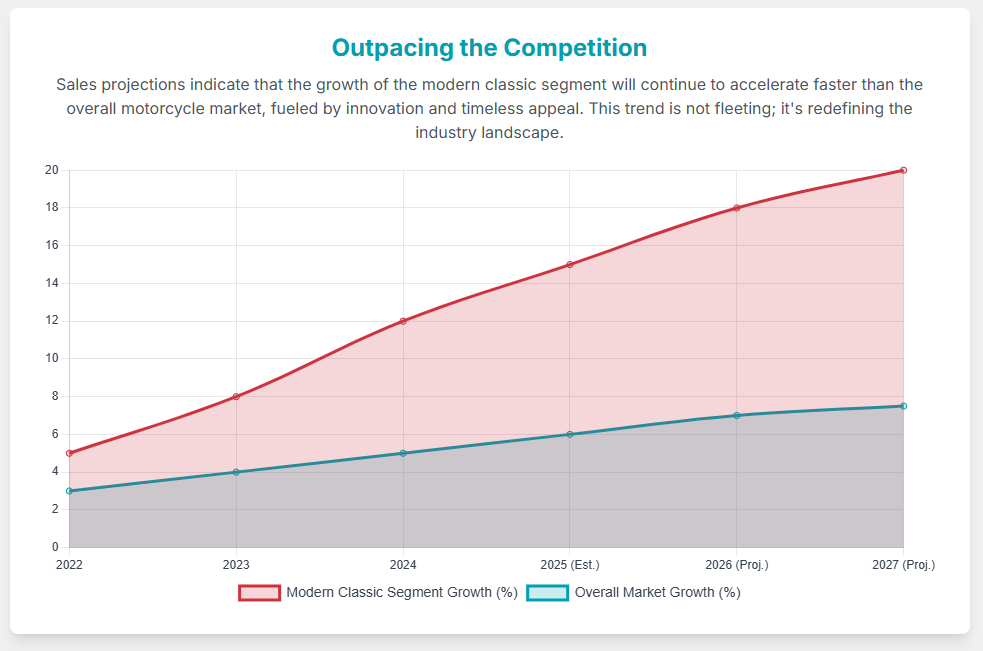
This report provides a strategic overview of the burgeoning modern classic motorcycle market, a segment defined by its unique fusion of vintage aesthetics and contemporary engineering. Driven by a powerful combination of consumer nostalgia, the desire for authentic self-expression, and a pragmatic demand for reliability, this market is projected to experience steady growth. The small displacement retro motorcycle segment, a key part of this trend, was valued at 298 million dollars in 2025 and is projected to grow at a Compound Annual Growth Rate (CAGR) of 3.5% through 2033.1 The analysis indicates that this trend is not merely a fleeting fashion but a significant, long-term shift in consumer preference, appealing to a broad demographic spectrum from price-sensitive Millennials and Gen Z to established veteran riders.1
Manufacturers have successfully navigated the inherent tension between classic simplicity and modern complexity, employing a design philosophy that prioritizes iconic forms while seamlessly integrating advanced technology. Key innovations include Electronic Fuel Injection (EFI), Anti-lock Braking Systems (ABS), and discreet digital displays, which enhance performance and safety without compromising visual integrity.3 The future trajectory of this segment points towards the increasing influence of electric powertrains and digital customisation tools, offering new avenues for market growth and brand differentiation.

2. Introduction: The Allure of the Modern Classic
The resurgence of vintage-inspired motorcycles is a significant phenomenon in the global market, appealing to a diverse range of riders. This movement is not monolithic; it comprises two distinct categories: vintage and retro. A clear understanding of this differentiation is crucial for a comprehensive analysis of the trend. Vintage motorcycles are original machines manufactured decades ago that have been preserved or restored to their former glory.5 While they possess historical value and unique craftsmanship, they often require extensive maintenance and can be challenging to keep on the road due to the scarcity of spare parts.5
In contrast, retro, or “modern classic,” motorcycles are a modern interpretation of classic designs.5 These bikes retain the old-school aesthetic while incorporating contemporary technology for improved reliability and performance. They are newly manufactured and are chosen by riders who love the look of a classic machine but desire the convenience and dependability of a new bike.3 This report will analyze the core drivers behind the neo-retro trend, deconstruct the technical and aesthetic principles that make it possible, examine the current market landscape with a focus on key players, and offer strategic insights into the future of the segment. The analysis is grounded in a robust review of industry reports, manufacturer data, and consumer psychology studies to provide a complete picture of this dynamic market.
3. The Drivers of Demand: A Study in Rider Psychology and Market Evolution
The popularity of modern classic motorcycles is not a simple matter of style. It is driven by a complex interplay of psychological, social, and economic factors that reflect deeper shifts in consumer values.
The Desire for Authenticity and a Purer Riding Experience
A fundamental force behind the retro trend is a deep-seated nostalgia, which resonates with riders of all ages. For older enthusiasts, these bikes evoke memories of a bygone era and the simplicity that once defined motorcycling.5 Younger generations, in turn, are drawn to the timeless charm and aesthetics of these machines, often seeing them as symbols of freedom and individuality, an image amplified by their frequent appearance in movies, TV shows, and on social media.5
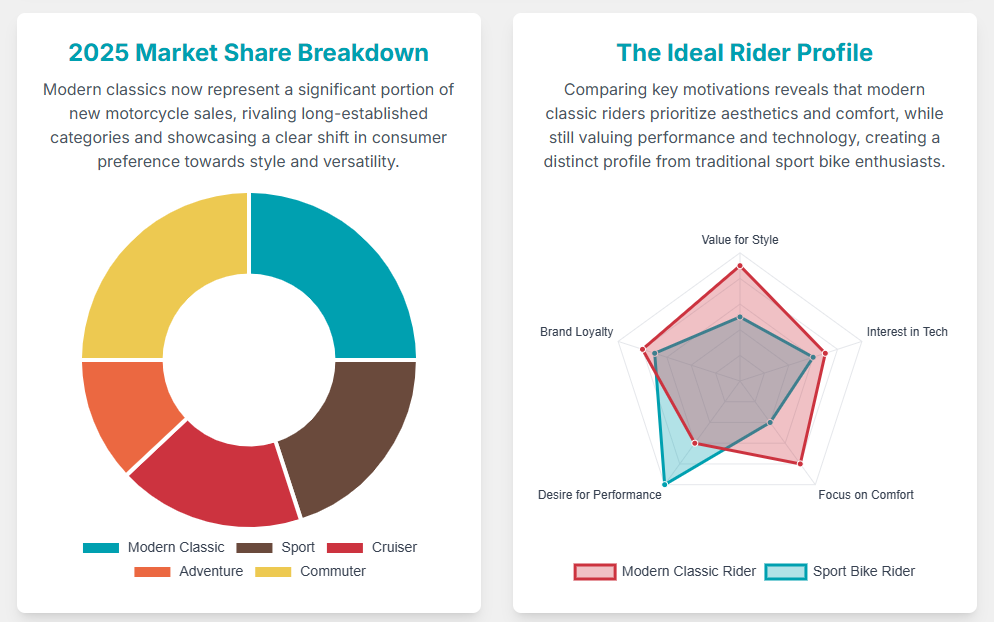
This appeal extends beyond mere aesthetics. A core motivation is a yearning for a more visceral and authentic connection to the road, a direct response to the perceived over-complication of modern, tech-laden motorcycles. The industry has observed a shift in consumer preferences away from high-performance sportbikes and adventure models and towards bikes that prioritize a “purer riding experience”.5 Modern machines are often described as being “overloaded with electronics,” which can create a disconnect between the rider and the machine’s mechanical operation.5 This has strategically positioned the modern classic segment to offer a more analog and engaging relationship, fulfilling a philosophical need for simplicity in an increasingly digital world. This is not simply about acquiring a product; it is about embracing a way of riding that is less filtered and more tactile.
Aesthetic Appeal as a Canvas for Individuality
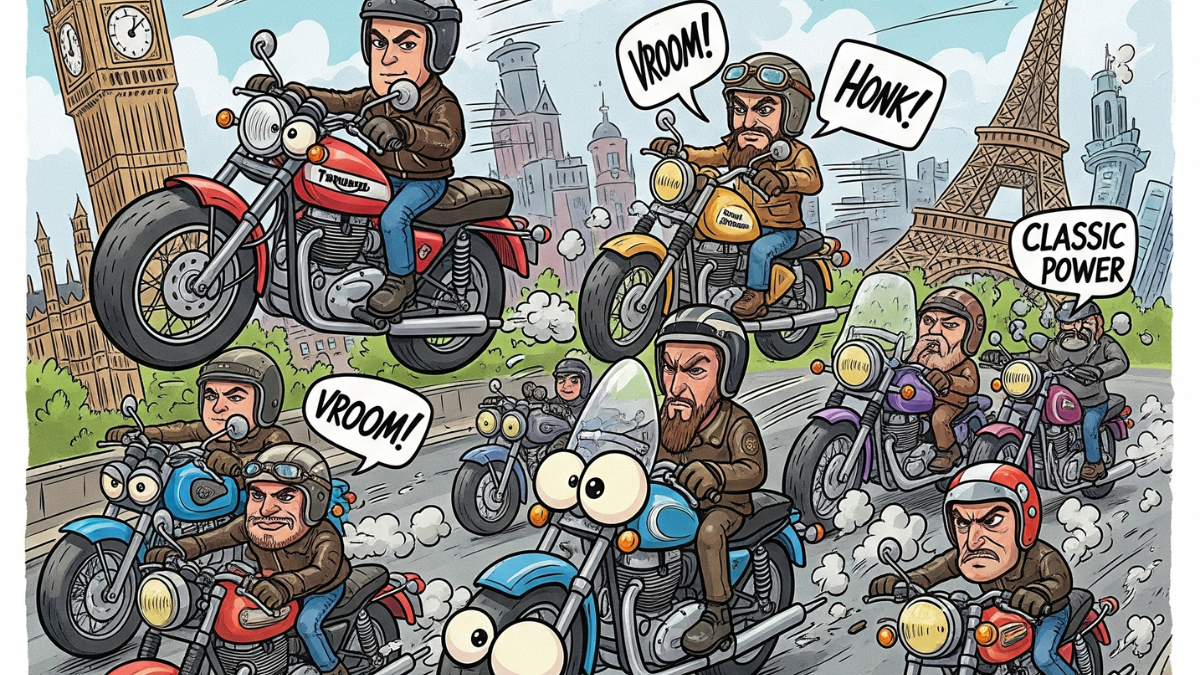
The visual design of retro motorcycles is a primary driver of their popularity. Celebrated as “mechanical art,” these bikes are characterized by iconic design cues from the 1950s to the 1970s, which prioritize craftsmanship and timeless style over purely function-driven aerodynamics.3 They feature classic elements such as round headlights, minimalist bodywork, and a heavy use of polished metal, chrome, and leather, which contribute to an elegant and rugged presence.3
This aesthetic appeal is inextricably linked to the culture of personalization. The retro bike is viewed as a “blank canvas” for a rider’s creativity and individuality.5 This ethos has given rise to popular sub-genres like café racers, bobbers, and scramblers, which strip bikes down to their bare essentials, emphasizing a raw, aggressive, or minimalist look.5 The focus on customization has led manufacturers to offer a range of personalization options, from factory-produced kits to digital platforms that allow customers to virtually design their bikes to their preferences.10 The value proposition has shifted from the bike as a static product to the bike as a vehicle for a dynamic lifestyle. Brands are not just selling a machine; they are providing the means for a rider to express their unique identity, thereby fostering deeper client engagement and driving sales by catering to the demand for bespoke experiences. This strategic alignment of product with consumer identity transforms the transaction into a collaboration, reinforcing the very spirit of hands-on engagement that defines the retro movement.
Demographic Shifts and Economic Factors
The market is driven by a confluence of demographics and economic trends. Millennials and Gen Z are a key consumer base, drawn to the affordability and style of small displacement retro motorcycles.1 Market analysis indicates that these younger riders show a distinct preference for 1970s Japanese bikes, like the Kawasaki Z1/Z900RS, over older British models, a purchasing decision largely influenced by their relative affordability and mechanical reliability.2 The median value of a motorcycle added by a Millennial or Gen Z buyer is 31% to 35% lower than those of older generations, and they are more likely to purchase a bike in a less-than-perfect condition.2 This is not simply a matter of a tighter budget; it reflects a different set of values where the hands-on project and the journey of restoration are part of the machine’s appeal. This emphasis on accessibility and the “do-it-yourself” spirit has democratized the collector market.
Furthermore, the market’s growth is being fueled by an expanding middle class in developing economies, particularly in the Asia-Pacific region. In countries like India and throughout Southeast Asia, retro motorcycles offer a desirable blend of style and practicality for urban commuting, with brands like Royal Enfield holding significant market dominance.1 While older collectors still value and invest in high-end classic machines as “rolling art” 13, younger generations are pushing up the value of more attainable models, revealing a generational and geographical divide in collector preferences and market drivers.2
4. The Art and Science of Blending Eras: Design and Technology Unpacked
The modern classic motorcycle represents a complex and subtle act of synthesis, fusing two seemingly contradictory design philosophies. The challenge for manufacturers is to successfully blend the clean, analog aesthetic of the past with the advanced, and sometimes visually intrusive, components of the present.
Aesthetic Principles of the Modern Classic
The visual identity of a retro bike is meticulously crafted to evoke a sense of heritage. The design principles are based on iconic forms from the mid-20th century. These include:
- Form: A reliance on rounded shapes, such as circular headlights, teardrop-shaped fuel tanks, and minimalist bodywork.3
- Materials: Extensive use of chrome, polished metal, and leather, which not only enhances the vintage appeal but also suggests a level of durability and craftsmanship often absent in modern bikes.3
- Ergonomics: An upright and relaxed riding posture, often with a flat, bench-style seat, is a hallmark of the genre. This configuration is conducive to comfortable, long-distance cruising and reduces rider fatigue.3
A critical design challenge for manufacturers is the integration of components that are essential for modern reliability but can disrupt the clean retro aesthetic. The BSA Scrambler and Kawasaki Z650RS, for example, have faced criticism for the size and placement of their radiators, which do not align with the vintage look of the rest of the bike.16 This demonstrates that the visual continuity of design is a critical success factor for this segment. The presence of a large, modern radiator can betray the illusion of a classic machine, a strategic failure in a market where visual authenticity is paramount. The very technology that makes these bikes reliable, such as liquid cooling, can become a potential aesthetic liability, a problem that engineers and designers must solve through clever component placement or by using alternative designs, such as the air-cooled engine on the Ducati Scrambler.17
Seamless Technological Integration
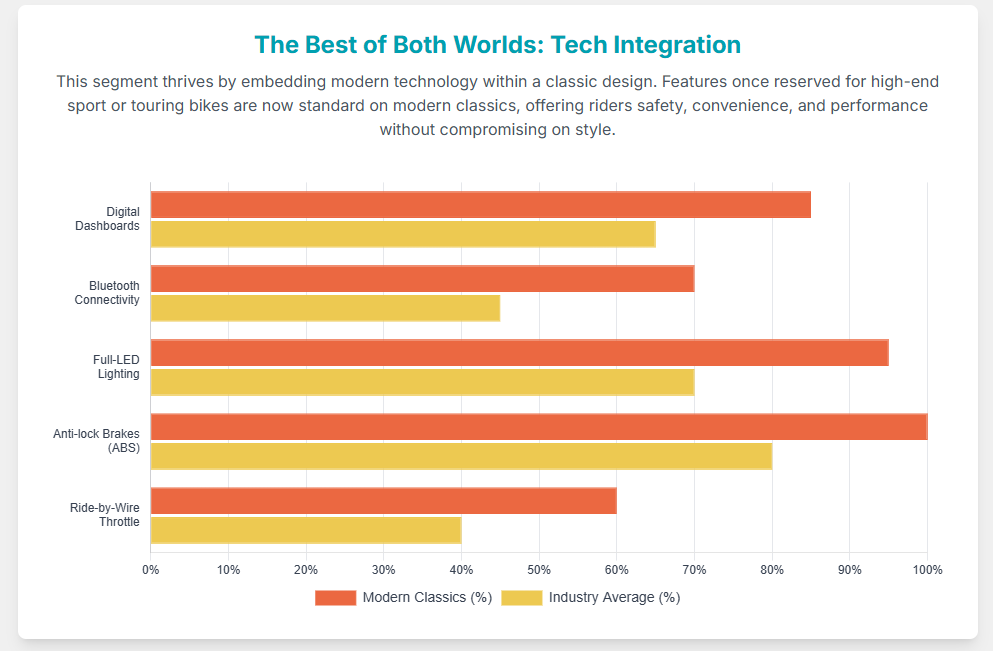
The defining characteristic of a modern classic is its ability to fuse vintage looks with contemporary performance. This is achieved through the discreet integration of technology that enhances reliability and safety without being visually obtrusive. The most common technological updates include Electronic Fuel Injection (EFI), which has replaced “fiddly” carburetors for cleaner emissions and more reliable starting.3 Anti-lock Braking Systems (ABS) are now standard on most models, significantly enhancing rider safety by preventing wheel lockup.3
A key area of innovation is the dashboard. Modern classics often feature a hybrid design that combines the classic look of an analogue speedometer or tachometer with a discreetly integrated LCD or TFT screen. This allows the bike to present essential information like mileage, fuel level, or gear position in a modern, easy-to-read format without abandoning the vintage aesthetic.3 More premium models incorporate advanced rider aids, such as traction control, ride-by-wire throttles, and multiple ride modes.4 Bluetooth connectivity is also becoming a standard feature, allowing for seamless integration with a smartphone for GPS navigation and music playback.4
The proliferation of these features, however, presents a new tension between safety and distraction. While systems like ABS demonstrably improve safety 18, the increasing complexity of TFT displays, which can show non-essential data like G-force meters, and the sheer number of buttons on the switchgear can be a dangerous distraction for a rider.20 A rider’s focus can be drawn away from the road at a time that requires full concentration, an unintended consequence of technological advancement.20 This forces a critical question for the industry: how much technology can be added before the core value proposition of a “simple” and “pure” riding experience is lost? The neo-retro segment is at a critical juncture where the benefits of modern technology must be carefully balanced against its potential to detract from the fundamental appeal of the motorcycle.
5. Market Landscape: Brands, Models, and Economic Trends
The modern classic motorcycle market is populated by a diverse range of manufacturers, each with a unique strategic approach to the retro trend.
Comparative Analysis of Key Players
- Royal Enfield: This brand is an archetype of authentic heritage and affordability, particularly in the small displacement segment.1 With models like the Classic 350 and Interceptor 650, Royal Enfield dominates the market in the Asia-Pacific region, offering a blend of vintage styling and reliable modern engineering at an accessible price point.1
- Triumph: A symbol of a successfully revived legacy, Triumph is widely credited with popularizing the modern classic movement at the beginning of the 21st century.5 Its lineup, including the Bonneville, Thruxton, and Speed Twin, offers a range of engine sizes and performance levels while maintaining a strong, iconic brand identity.25
- Ducati: Ducati has mastered the fusion of heritage and high performance. Its Scrambler lineup, which was revived in 2015, is a prime example of a lifestyle-focused bike that successfully marries a classic design with modern mechanics and a high degree of customisation.3
- Kawasaki: The manufacturer pays homage to its iconic past with neo-retro bikes like the Z900RS, a tribute to the legendary Z1 from the 1970s.3 The Z900RS delivers vintage aesthetics with modern engineering, including a retuned inline-four engine that prioritizes a smooth, usable torque curve over sheer horsepower.17
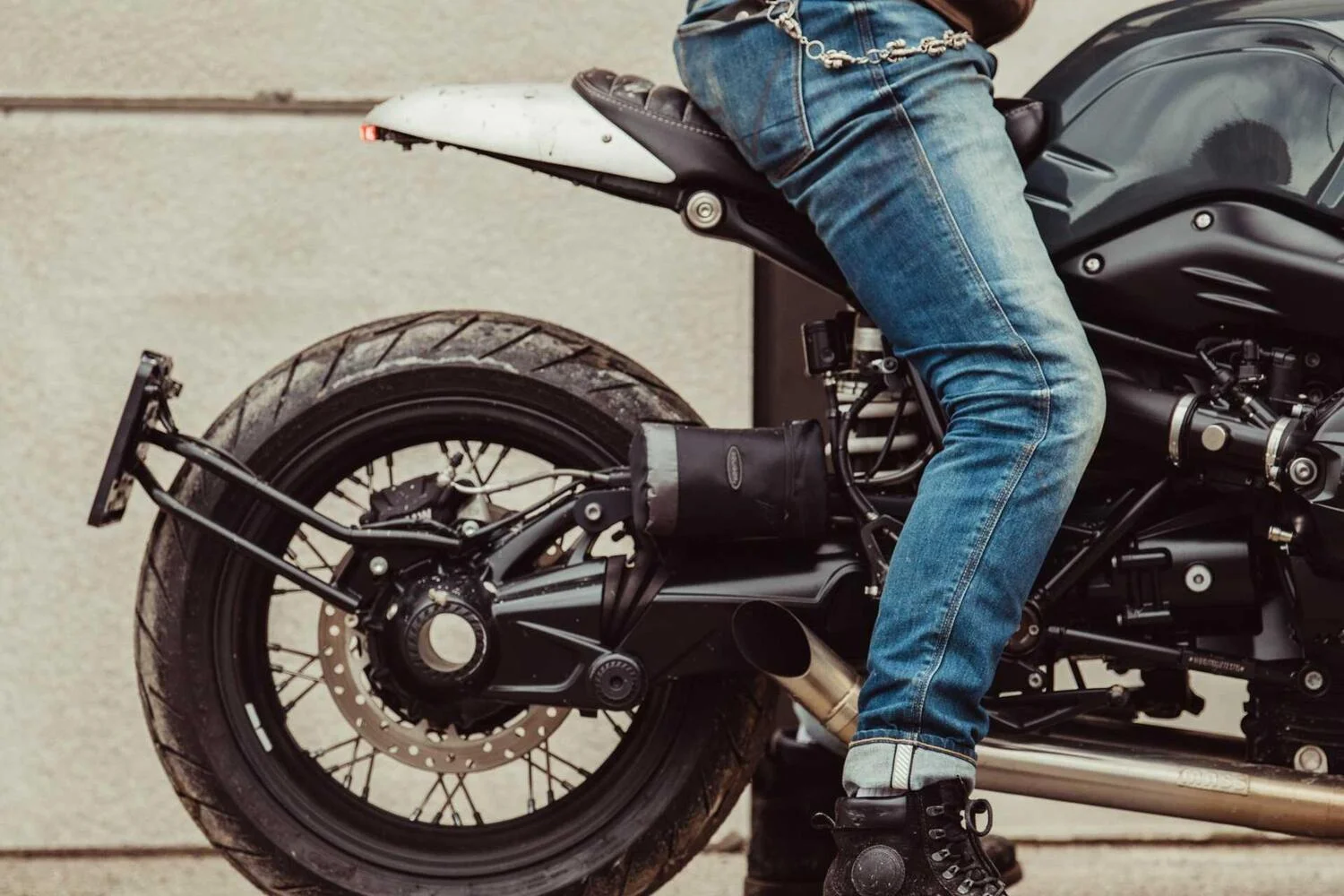
- BMW: Models like the R nineT and the new R 12 S represent the premium, high-end side of the retro segment. They offer a unique blend of heritage, with the iconic Boxer engine, and modular customizability, appealing to a niche audience that values bespoke, high-quality machines.21
Market Data and Economic Factors
The global small displacement retro motorcycle market is valued at 298 million dollars in 2025 and is projected to experience steady growth with a CAGR of 3.5% through 2033.1 The market is segmented by engine displacement, with the 126cc–250cc and 251cc–500cc segments holding the largest share and a high growth rate. This is because these bikes offer an optimal balance of performance, affordability, and accessibility for younger riders.1
The market’s dominance is regional, with the Asia-Pacific region leading due to its large population and rising middle class. Europe also represents a significant market, focusing on higher-priced, premium models.1
| Engine Capacity | Market Share | |
| 125cc and Below | 38% | |
| 126cc–250cc | 42% | |
| 251cc–500cc | 20% | |
| Source: 12 |
The economic viability of the modern classic segment is rooted in its ability to defy a broader market downturn. While new motorcycle sales experienced declines in the first half of 2025 across many categories, including street, sport, and dual-sport bikes 29, the retro segment’s growth, especially in the affordable small-displacement range, has positioned it as a resilient niche. The appeal to price-sensitive young buyers and its focus on affordability allows it to remain a compelling choice despite broader consumer reluctance to spend on discretionary items.1 The primary challenges for manufacturers include increasing competition, fluctuating raw material prices, and stringent emission regulations, which necessitate continuous innovation to balance classic aesthetics with modern environmental compliance.1
6. The Future Trajectory of the Modern Classic
The future of the modern classic motorcycle is poised for a significant transformation, driven by emerging technologies and evolving consumer demands.
The Electrification of Retro
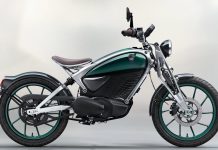
A major trend on the horizon is the move towards electric vintage bikes.11 As the broader automotive sector transitions to electric powertrains, the motorcycle industry is following suit, with manufacturers blending historical designs with cutting-edge electric technology.11 Brands like Maeving and Vintage Electric Bikes have already demonstrated the viability of this approach, successfully marrying classic aesthetics with zero-emission, high-performance powertrains.30
This development is not a mere coincidence; the retro aesthetic provides an ideal framework for electric vehicle technology. The simplicity of vintage design, with its round, enclosed forms, is perfect for concealing the battery packs and electric motors that can often look jarring on a conventional bike. The absence of a traditional exhaust, a key visual component of a combustion engine, is a non-issue in the retro space, where a minimalist look is celebrated. This makes the neo-retro segment a natural and organic vanguard for the broader electrification of the motorcycle market, as it allows manufacturers to participate in the EV revolution without abandoning the core design philosophy that defines the segment. The quiet, smooth power delivery of an electric motor is a logical complement to the uncluttered and serene design of a classic-styled machine.
Evolving Rider Aids and Customization
Looking forward, the integration of technology will become more thoughtful and nuanced. Predictions suggest that advanced rider aids, such as adaptive cruise control and AI-assisted systems, will appear in retro packages, further bridging the gap between past and present.4 This will require brands to carefully balance the benefits of safety and convenience with the need to preserve the analog, low-distraction riding experience that defines the genre. Concurrently, the rise of digital customization tools and the continued focus on limited-edition throwback bikes will enhance client engagement and appeal to the collector’s desire for exclusivity and individuality.11
7. Conclusion: The Enduring Legacy of Timeless Design
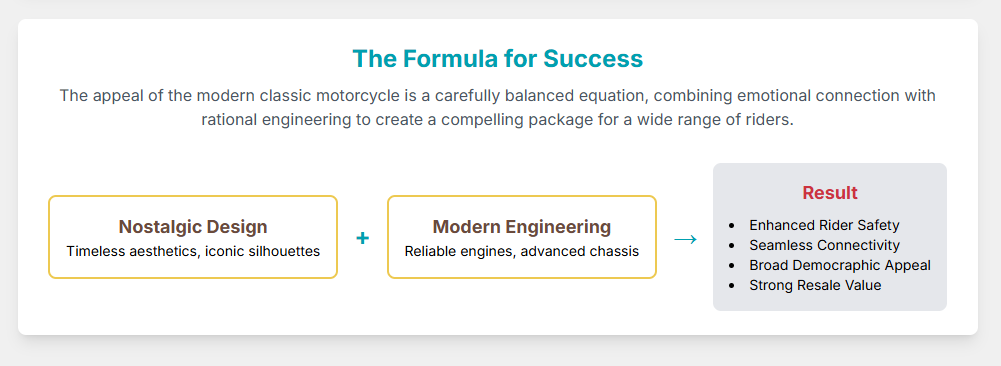
The modern classic motorcycle is more than a product; it is a cultural and psychological phenomenon that reflects a deeper shift in consumer values. By offering a powerful antidote to a world of increasing complexity and homogeneity, this segment has created a potent synthesis of heritage and innovation. Manufacturers have successfully blended the emotional resonance and aesthetic purity of the past with the reliability, safety, and performance of the present. The result is a market segment that is not only robust and resilient, but also holds immense potential for future growth. The neo-retro renaissance is a testament to the enduring power of timeless design and the human desire for authenticity and a profound connection to the machines we ride.
Sources
- Consumer Trends in Small Displacement Retro Motorcycle Market 2025-2033, accessed on September 8, 2025, https://www.datainsightsmarket.com/reports/small-displacement-retro-motorcycle-153859
- Young collectors are taking the motorcycle market by storm …, accessed on September 8, 2025, https://www.hagerty.com/media/market-trends/hagerty-insider/young-collectors-are-taking-the-motorcycle-market-by-storm/
- What is a Retro Motorcycle? Understanding Vintage-Inspired Bikes …, accessed on September 8, 2025, https://www.ironhorseunion.com/motorcycles/types/standard/retro/
- The Retro Motorcycle Revival: Blending 80s and 90s Nostalgia with Cutting-Edge Technology, accessed on September 8, 2025, https://www.aapefi.com/post/the-retro-motorcycle-revival-blending-80s-and-90s-nostalgia-with-cutting-edge-technology
- The Resurgence of Vintage and Retro Bikes – 2Wheels Hero, accessed on September 8, 2025, https://2wheelshero.com/blogs/2wheels-hero-shop-news/the-resurgence-of-vintage-and-retro-bikes
- What Is A Vintage Bike? | Bobbin Blog, accessed on September 8, 2025, https://bobbinbikes.com/blogs/blog/what-is-a-vintage-bike
- Classic vs Modern Motorcycles: A Detailed Review – I-5 Motors Blog, accessed on September 8, 2025, https://www.i-5motors.com/classic-vs-modern-motorcycles-a-detailed-review/
- www.ironhorseunion.com, accessed on September 8, 2025, https://www.ironhorseunion.com/motorcycles/types/standard/retro/#:~:text=Materials%3A%20Many%20retro%20motorcycles%20use,appreciate%20craftsmanship%20and%20classic%20design.
- The rise of vintage and classic motorycles – Purpose Built Moto, accessed on September 8, 2025, https://purposebuiltmoto.com/blogs/technical-and-educational-articles/rise-vintage-classic-motorycles
- Royal Enfield Classic 350 Technical Specifications, accessed on September 8, 2025, https://www.royalenfield.com/content/dam/re-platform-images/home/motorcycles/specifications/royal-enfield-classic-350-technical-specifications.pdf
- Retro Motorcycle Industry Growing High for Next Decade Return – HTF Market Intelligence, accessed on September 8, 2025, https://www.htfmarketintelligence.com/press-release/global-retro-motorcycle-market
- Best Selling Small Retro Motorcycles: 2025 Market Trends & Top Picks – Accio, accessed on September 8, 2025, https://www.accio.com/business/best-selling-small-retro-motorcycles
- Return On Investment – The Motorcycle Broker, accessed on September 8, 2025, https://themotorcyclebroker.co.uk/classic-motorcycle-investment/return-on-investment-classic-motorcycles/
- Classic 350 Price, Colours & Mileage in USA | Royal Enfield, accessed on September 8, 2025, https://www.royalenfield.com/us/en/motorcycles/classic-350/
- 11 Best Retro 125 Motorcycles 2025 – Renchlist, accessed on September 8, 2025, https://renchlist.com/best-retro-125cc-motorcycles-2018/
- Top 10 Retro Motorcycles for 2025 – Lexham Insurance, accessed on September 8, 2025, https://www.lexhaminsurance.co.uk/blog/top-retro-motorcycles/
- 10 Best Retro Motorcycles On The Market – Top Speed, accessed on September 8, 2025, https://www.topspeed.com/best-retro-motorcycles-on-the-market/
- Anti-lock braking system – Wikipedia, accessed on September 8, 2025, https://en.wikipedia.org/wiki/Anti-lock_braking_system
- Ducati Scrambler Icon – Ducati Montreal, accessed on September 8, 2025, https://ducatimontreal.com/en/ducati/scrambler-icon/
- Information overload: Are motorcycle electronics a dangerous …, accessed on September 8, 2025, https://www.revzilla.com/common-tread/information-overload-are-motorcycle-electronics-a-dangerous-distraction
- 10 Retro Bikes That Marry Old-School Looks With Modern Reliability, accessed on September 8, 2025, https://www.topspeed.com/retro-bikes-that-marry-old-school-looks-with-modern-reliability/
- DIY Modern Dashboard Ideas for Vintage Bikes, accessed on September 8, 2025, https://www.vintagehondatwins.com/forums/threads/diy-modern-dashboard-ideas-for-vintage-bikes.9998/
- The 10 Best Retro Motorcycles You Can Buy In 2024 – HotCars, accessed on September 8, 2025, https://www.hotcars.com/best-retro-motorcycles-to-buy/
- Royal Enfield vs Triumph Philadelphia PA | Quaker City Motor Sport, accessed on September 8, 2025, https://www.quakercitymotorsport.com/Royal-Enfield-vs-Triumph
- Modern Classics | For the Ride – Triumph Motorcycles, accessed on September 8, 2025, https://www.triumphmotorcycles.com/motorcycles/classic
- Ducati Scrambler Icon | Historical Models | Ducati Heritage, accessed on September 8, 2025, https://www.ducati.com/ww/en/heritage/bikes/scrambler-icon
- 10 Retro Motorcycles That Combine Old-School Charm With New-School Handling, accessed on September 8, 2025, https://www.topspeed.com/retro-motorcycles-combine-old-school-charm-with-new-school-handling/
- 15 Best New & Updated Retro Motorcycles For 2025! – YouTube, accessed on September 8, 2025, https://www.youtube.com/watch?v=F8QM550WSbg
- Seasonal trend in used motorcycle prices differs from the norm in 2025 – RevZilla, accessed on September 8, 2025, https://www.revzilla.com/common-tread/signs-of-weakness-in-used-motorcycle-sales
- Roadster Premium Electric Bike | Vintage electric bikes, accessed on September 8, 2025, https://www.vintageelectricbikes.com/products/roadster
- Maeving® | Award-Winning Electric Motorcycles | Built in Britain., accessed on September 8, 2025, https://maeving.com/
Our Social Media Handles
- Instagram : LivingWithGravity
- Medium : Akash Dolas
- YouTube Channel : Gear and Shutter
- Facebook : LivingWithGravity