




Executive Summary
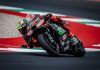
The recent private testing of Yamaha’s new V4 engine prototype by Fabio Quartararo at Barcelona, ahead of its scheduled public debut at Misano, marks a pivotal moment for the Japanese manufacturer. After years of staunch commitment to the inline-four (I4) engine configuration, Yamaha has embarked on a radical strategic and engineering shift to align with the dominant V4 platform in MotoGP. This report provides a comprehensive analysis of this paradigm change, examining the competitive motivations, the initial performance data from the Barcelona test, the strategic objectives for the upcoming Misano debut, and the profound technical and long-term implications of this monumental undertaking.

The unofficial lap times from the Barcelona test, while not directly comparable to race weekend results due to variable conditions, offer promising indicators of the prototype’s potential. More importantly, the V4 project is a proactive response to the undeniable competitive disadvantage of the current I4-powered YZR-M1 and a calculated move to secure the future of the factory by demonstrating a clear commitment to its top-tier talent. The Misano wild-card debut, to be piloted by test rider Augusto Fernandez, is revealed to be a critical data-gathering exercise, not a quest for immediate results. Ultimately, this report concludes that the V4 project is not a short-term gamble but a foundational R&D effort, positioning Yamaha to build a fully competitive machine for the 2026 season and beyond, with a clear eye toward the forthcoming 2027 technical regulations.
1. The Strategic Imperative: Yamaha’s Paradigm Shift from I4 to V4
1.1 The End of an Era: The YZR-M1’s Inline-Four Limitations
For decades, Yamaha’s racing philosophy was anchored by the success of its inline-four (I4) engine configuration. The YZR-M1, with its 1000cc liquid-cooled I4 engine and distinctive cross-plane crankshaft, has been a cornerstone of MotoGP competition, yielding multiple world championships, including the 2021 title with Fabio Quartararo.1 The I4 was celebrated for its “sublime handling” and cornering stability, a direct consequence of its longer crankshaft which provides a higher moment of inertia, making the bike more stable and predictable through corners.2 This characteristic allowed Yamaha to compensate for its historic horsepower deficit to rival manufacturers, and riders could leverage this agility to maintain corner speed and make up for losses on the straights.
However, the competitive landscape of modern MotoGP has evolved, and the I4’s long-standing advantages have been critically compromised. The development of advanced aerodynamic packages and ride-height devices has fundamentally altered the balance of performance, rendering the I4’s superior handling less of a defining advantage.2 The I4’s primary technical limitation is its physical width. This wider engine layout occupies a larger volume beneath the bike’s fairing, creating a significant aerodynamic disadvantage compared to the narrower V4 configuration.2 Every attempt to increase the I4’s top-end power to match rivals has come at the expense of its legendary handling, creating a cycle of development that has reached a point of diminishing returns. The I4’s limitations can no longer be “ridden around” by the rider, as the bike’s core design compromises its ability to compete in the aero- and power-driven environment of modern racing.3 The decision to pivot to a V4 is a clear admission that the I4 platform, despite a legacy of continuous improvement, has reached a technical dead end and can no longer serve as a viable foundation for a championship-contending machine.
1.2 The V4 Hegemony: A Response to Grid Dominance
The technical consensus of the MotoGP paddock has decisively shifted toward the V4 platform. With Suzuki’s withdrawal at the end of 2022, Yamaha stands alone as the only manufacturer utilizing an inline-four engine.4 The entire remainder of the grid—Ducati, Aprilia, KTM, and Honda—all campaign V4-configured machines.4 The competitive results are unambiguous: an inline-four engine has not won a single Grand Prix race since 2022.4 This period of V4 dominance is not a matter of chance but a reflection of the platform’s inherent advantages in the contemporary technical regulations.
The V4 engine is physically narrower than the I4, which provides a cascade of benefits.2 This compact design allows for superior packaging and, most critically, frees up valuable space for the intricate aerodynamic appendages that are now indispensable for generating downforce and managing airflow in modern racing.2 A V4 also has a shorter crankshaft and a lower moment of inertia, which makes the bike more agile and easier to lean over, a characteristic that is vital for aggressive cornering and rapid changes of direction.2 The strategic shift to a V4 is therefore not just an engine change; it is a holistic redesign of the entire racing machine from the ground up.2 It is an acknowledgment that the V4 provides a superior foundation for a high-performance MotoGP motorcycle, allowing for a better integration of the engine, chassis, and aerodynamics to create a package that can contend for victories and championships in the current era. This monumental undertaking is Yamaha’s bold response to the prevailing technical tide, signaling a complete abandonment of its legacy philosophy in favor of a proven and dominant platform.
1.3 A Commitment to Top-Tier Talent: The Fabio Quartararo Factor
The V4 engine project is as much a strategic move to retain top-tier talent as it is a technical imperative. Fabio Quartararo, the 2021 World Champion, has been a vocal critic of the YZR-M1’s performance shortcomings, openly expressing his frustration and concern that he is “wasting valuable years of his career without a realistic shot at a championship”.3 His comments highlight a clear demand for a “fighting bike” with sufficient top power to prepare overtakes and contend for race wins.7
The fast-tracking of the V4 project and its public debut can be viewed as a calculated effort to placate Quartararo and secure his long-term future with the factory.3 By allowing him to test the V4 in a private setting and making the project a central part of their public narrative, Yamaha is providing a tangible sign of its commitment to building a winning machine. Quartararo’s public comments, which acknowledge the prototype’s slow unofficial lap times while simultaneously calling it “the future bike of ’26,” serve a dual purpose.9 He is applying pressure to the engineering team for accelerated development while also demonstrating his faith in the project. The decision to make the project public and involve the factory rider is a direct communication strategy. It transforms a potential crisis—the risk of losing a star rider—into a powerful narrative of renewal and ambition. The V4 project is the physical manifestation of a promise to Quartararo that his concerns have been heard and are being addressed with the most significant development in the factory’s modern history.

2. The Barcelona Private Test: Initial Data and Early Insights
2.1 Contextualizing Unofficial Performance Metrics
The private Barcelona test offered the first glimpse into the potential of Yamaha’s new V4 prototype, with Fabio Quartararo reportedly setting a best unofficial lap time of 1m 39.4s 9, with other sources citing 1m 39.3s.11 On the surface, this lap time appears to be a significant deficit compared to Quartararo’s performance on the current I4 M1 during the 2025 Catalan Grand Prix weekend, where he set a scorching 1m 37.8s qualifying lap.9
However, a direct comparison is misleading and fails to account for several critical variables. The test was held under challenging conditions, with rain limiting track action in the morning.9 The V4 bike is also a nascent prototype, likely not running at its full potential as confirmed by test riders.7 A more meaningful comparison can be made against Quartararo’s fastest race laps from the same circuit. During the Catalan Grand Prix Sprint, his best lap was 1m 38.9s on a soft rear tire, while his fastest Grand Prix lap was a 1m 40.4s on a medium rear tire.9
The V4 prototype’s unofficial lap time of 1m 39.4s is therefore already faster than the current M1’s best Grand Prix lap time at the same circuit. This suggests that while the V4 may not yet possess the outright one-lap pace for pole position, it is already demonstrating a superior baseline for race-distance performance. The development of a race machine is a process of optimization that often begins by focusing on consistency and durability before chasing peak speed. The ability of the V4 to surpass the I4’s fastest race lap at such an early stage of its development is a strong indicator that its inherent characteristics—such as improved traction, better tire management, and superior aerodynamics—are already bearing fruit. This data suggests that the V4 has the potential to be a more consistent and more competitive machine over a full race distance, a crucial area of weakness for the current M1.
Table 1: Comparative Barcelona Lap Times
| Event | Rider | Bike Configuration | Lap Time |
| V4 Barcelona Test | Fabio Quartararo | V4 Prototype | 1m 39.4s (unofficial) |
| 2025 Catalan GP Weekend | |||
| Qualifying | Fabio Quartararo | Inline-4 M1 | 1m 37.8s |
| Sprint Race | Fabio Quartararo | Inline-4 M1 | 1m 38.9s (fastest lap) |
| Grand Prix | Fabio Quartararo | Inline-4 M1 | 1m 40.4s (fastest lap) |
2.2 The Protagonist’s Perspective: Quartararo’s Measured Enthusiasm
Fabio Quartararo’s commentary on the V4 project reveals a careful balance of expectation management and determined ambition. Prior to the Barcelona test, he set a pragmatic benchmark for the upcoming Misano test, stating that a lap time “less than half a second off” his current bike’s pace would be considered a “good step”.8 This is not a demand for instant victory, but a clear, quantifiable goal for the engineering team. His public acknowledgment that the V4’s “lap times are super slow” provides a realistic counterpoint to any premature hype.10
Quartararo’s behavior demonstrates his role as a key stakeholder in the project’s success. He has publicly aired his frustration with the I4’s limitations and his desire to have a bike with “top power” to be able to fight and overtake during a race.7 By doing so, he has created a narrative that pressures the factory to deliver on its promises. His endorsement of the V4 as “the future bike of ’26” is a show of faith in the project and a signal of his commitment to the factory.9 This dynamic is one of mutual dependency: Yamaha needs its star rider to champion the new bike and provide critical development feedback, while Quartararo needs Yamaha to deliver a machine capable of winning a championship. His half-second target for Misano is a tangible metric for measuring progress and a sign that he is actively engaged in the project’s success.

3. The Public Debut: A Strategic Wild-Card at Misano
3.1 The Aims of the Wild-Card: Data over Results
Yamaha’s decision to give the V4 prototype its public race debut at the San Marino Grand Prix at Misano is a highly calculated strategic move.6 Test rider Augusto Fernandez will pilot the new machine as a wild-card entry, a decision that Yamaha Racing Managing Director Paolo Pavesio has called an “excellent preview and a concrete sign of our commitment to the future”.12 This is not a bid for immediate podiums or a direct challenge to the front-runners. Instead, it is a highly controlled public test designed to gather invaluable data under real-world race conditions.
A private test, even one conducted with factory riders, cannot replicate the unique stresses of a full Grand Prix weekend. The wild-card appearance will allow Yamaha engineers to collect data on the engine’s durability, fuel consumption, and performance under a variety of conditions, including low-fuel qualifying runs, the high-intensity of a Sprint race, and the sustained demands of a full Grand Prix.14 The strategy is a lesson in risk management. By entrusting the debut to a test rider, Yamaha avoids the significant reputational damage and championship point losses that would come from a factory rider struggling with an unproven machine. This approach also helps to manage public and media expectations, which journalists have noted should be “measured” given the prototype’s nascent stage.6 This deliberate strategy mirrors how other manufacturers, such as KTM, handled their prototype debuts, prioritizing the long-term goal of logging critical data over the short-term goal of an impressive result.16
3.2 The Pilot: Augusto Fernandez’s Crucial Role
The selection of Augusto Fernandez for the wild-card debut is a testament to his pivotal role in the V4 project. As a former Moto2 champion and an experienced MotoGP rider, Fernandez has been centrally involved in the V4’s development since he joined Yamaha as a test rider.6 His feedback has been critical in the early stages of the project, including the V4’s very first ride at Valencia.17
Fernandez’s public commentary provides a vital, pragmatic perspective on the project. His statement that the team is “far from having a racing package” and that he “didn’t want to become the first rider to crash the Yamaha V4” humanizes the monumental challenge and inherent risk of the project.17 These comments serve as a coordinated message from the team to temper the excitement and set realistic expectations for the Misano debut. By conveying that the V4 is still in its infancy and a developmental vehicle, Fernandez helps the team manage the public narrative and ensures that any initial performance deficit is seen as a natural part of the process, not a failure. His role is to bridge the gap between a functioning prototype and a competitive race machine, and his performance at Misano will provide the first public, objective data on the project’s progress.
4. Technical and Performance Analysis: Engineering the New Era
4.1 V4 vs. I4: A Detailed Engineering Breakdown
The core of Yamaha’s strategic shift lies in the fundamental engineering differences between the inline-four (I4) and V4 engine configurations. The V4 layout is inherently narrower, a characteristic that provides a significant advantage in engine packaging.5 This compactness allows for a slimmer overall motorcycle design, which in turn provides more freedom for the design of the bike’s aerodynamic package, a crucial element for generating downforce and managing airflow in high-speed corners and braking zones.2 A narrower engine also offers reduced roll inertia, making the bike more agile and easier for the rider to lean over.2 The I4, in contrast, is physically wider, which restricts aerodynamic development and compromises the bike’s agility, a limitation that can no longer be simply “ridden around” in the current era.2
Furthermore, the V4’s shorter crankshaft results in a lower moment of inertia, allowing the bike to “rotate more easily” and making it more responsive to changes in lean angle.2 The I4’s longer crankshaft, while providing greater stability and a “smoother” ride, also makes the bike less agile.2 The V4’s design is superior not because it necessarily produces more raw horsepower—the current M1 already produces over 270 horsepower 1—but because it provides a better platform for a modern MotoGP package.3 The true goal of the project is not to find more power, but to unlock the superior aerodynamic and handling potential that the V4 configuration provides.3 This shift represents a move from a focus on brute power to a focus on holistic efficiency and agility, which is where Yamaha has been lacking in recent years.
Table 2: Technical Comparison: Inline-4 vs. V4
| Characteristic | Yamaha Inline-4 (I4) | Yamaha V4 (Prototype) |
| Engine Width | Wider | Narrower |
| Crankshaft Length | Longer | Shorter |
| Moment of Inertia | Higher | Lower |
| Handling | More stable, smoother | More agile, more responsive |
| Aerodynamics | Compromised due to engine width | Superior packaging potential |
| Packaging | Simpler, but wider footprint | More complex, but narrower footprint |
4.2 Engineering a New Machine from the Ground Up
The scale of the V4 project is a testament to Yamaha’s commitment. The development of this new engine is not a simple swap; it is a “whole new creation” that requires a complete redesign of the motorcycle.2 The V4’s different dimensions and weight distribution necessitate the development of a fresh chassis, swingarm, geometry, and a completely new electronics package.2 As a result, almost all of the “super important stuff” from the current M1 is incompatible, with only bolt-on components like suspension units likely being carried over.2 This is a “monumental undertaking” that highlights the depth of Yamaha’s commitment to the project.2
The initial performance deficit of the V4, which was reportedly two seconds a lap slower than the I4 during early tests at Brno in July 2, should not be misinterpreted as a failure. This initial performance gap is a predictable starting point for a brand-new prototype. The significant progress demonstrated at the Barcelona test, where Quartararo’s unofficial V4 lap time was already faster than his best I4 race lap at the same circuit, shows a rapid and steep learning curve.9 This trajectory indicates that the factory is quickly gaining a new understanding of the V4 platform and is making substantial progress in a compressed timeframe. The development path for a prototype is not linear; it begins with a significant deficit and, with dedicated effort and data collection, improves exponentially.
5. Long-Term Strategic Outlook and Implications
5.1 A Stepping Stone to the 2027 Regulations
Yamaha’s V4 project is not a short-term solution but a calculated, multi-year strategy to ensure the factory’s competitiveness under the forthcoming 2027 MotoGP regulations. While the current prototype is a 1000cc machine, the lessons and data collected from its development are directly “transferable to the 850” cc engine formula that will be introduced in 2027.2 By building and racing a V4 now, Yamaha is gaining a critical head start on its rivals, positioning itself to have a well-developed V4 engine concept to work from when the new rules come into effect.18
Yamaha’s racing management has candidly described this development path as “complex,” as it involves two parallel projects: continuing to refine the current I4 for short-term gains while simultaneously building and testing the V4 platform for 2026 and 2027.18 This forward-thinking approach demonstrates a clear prioritization of long-term success over short-term results. By using the current regulations to gain a deep understanding of the V4’s characteristics, Yamaha is proactively mitigating the risks associated with the major technical reset in 2027. The project is an investment in future competitiveness, ensuring that when the new rules arrive, the factory will not be starting from scratch but will have a solid foundation to build from.
5.2 The 2026 Season and the Path Forward
The 2026 season represents a critical bridge in Yamaha’s V4 development plan. The factory has stated that the new V4 prototype will only replace the current I4 machine if it “proves fast enough”.12 This conditional timeline is a direct result of a rational, data-driven decision-making process. The factory is not bound by a rigid, self-imposed deadline but will base its choice on objective performance metrics collected from tests and the Misano wild-card debut. Paolo Pavesio has expressed that the factory is “still not sure” if the V4 will be ready for a full-season campaign in 2026, which highlights the caution and realism that are guiding the project.18
The Misano debut and subsequent post-race test, where Quartararo and Alex Rins will ride the prototype, are crucial for collecting the necessary data to make a final decision. The strategy is to gather enough evidence to determine whether the V4 is a truly competitive machine that can form the basis of a 2026 challenger. The factory’s public caution is a strategic move to manage expectations and ensure that a commitment is not made until the bike is ready to deliver results, thereby protecting its reputation and the confidence of its riders.
5.3 Impact on Rider Contracts and Team Dynamics
The V4 project has significant implications for Yamaha’s rider lineup and long-term talent strategy. A major challenge for the factory is that its two main riders, Fabio Quartararo and Alex Rins, have only limited or no experience on a V4 machine in the premier class.3 Quartararo has spent his entire MotoGP career on the I4-powered YZR-M1.3 This lack of familiarity with the different dynamics of a V4—including its power delivery, handling, and braking characteristics—is a significant hurdle.
Yamaha has begun to address this by building a team with a mix of experience. The decision to retain a rider like Jack Miller, who has extensive V4 experience from his time with other manufacturers, is a proactive measure to mitigate this risk.20 The wild-card use of test rider Augusto Fernandez also provides a conduit for critical feedback from a rider who has been developing the new machine from its inception.6 This deliberate approach to team composition is a subtle but crucial element of Yamaha’s long-term strategy, ensuring that they have the right personnel to aid in the successful development and transition to the new V4 platform. The project itself is a demonstration of the factory’s commitment to its riders, serving as a powerful tool for retaining existing talent while also making the team an attractive destination for new riders with the necessary V4 experience.

Conclusion and Recommendations
The public debut of Yamaha’s V4 prototype at Misano is far more than a simple race weekend; it is a watershed moment that signifies a fundamental and necessary strategic shift. The analysis indicates that Yamaha has been forced to abandon its long-standing inline-four philosophy due to the I4’s undeniable competitive disadvantages in the modern, aero-driven era of MotoGP. The pivot to a V4 is a data-driven, long-term response to the dominance of European manufacturers and a critical effort to secure the future of the factory by demonstrating an unwavering commitment to its top-tier talent.
The unofficial lap times from the Barcelona test, when viewed contextually, offer a promising signal that the V4 prototype, even in its infancy, possesses the potential for a superior race pace. The Misano wild-card debut, piloted by test rider Augusto Fernandez, should be understood as a vital data-gathering exercise, not a quest for immediate results. This patient, methodical approach to development, which mirrors the strategies of successful rivals, is a strong indicator of Yamaha’s resolve. The project is a monumental undertaking, requiring a complete redesign of the motorcycle from the ground up, but it is also a critical investment that will provide a vital head start for the 2027 engine regulations.
Based on this analysis, the following recommendations are put forth for Yamaha’s continued development path:
- Prioritize Long-Term Development: The factory must continue its complex, two-track development plan, prioritizing the V4 as the foundation for the 2027 850cc engine. Short-term results on the I4 should be secondary to ensuring the V4 project is mature and competitive for the long-term.
- Continue Strategic Wild-Card Entries: The use of wild-card entries with a dedicated test rider is a sound strategy for gathering race-specific data without the pressure of factory team results. Yamaha should continue to use this method to collect critical information and accelerate development.
- Manage Expectations and Maintain Communication: The factory must continue its transparent communication with its riders and the public. By setting clear, pragmatic goals—such as Quartararo’s half-second target—Yamaha can build and maintain confidence in the project while avoiding the pitfalls of overpromising.
- Leverage V4 Experience: The factory should continue to leverage the V4 experience of its test riders and new team members to ensure a smooth transition and rapid development. The learning curve for a rider transitioning from an I4 to a V4 is significant, and having experienced talent is a crucial component of success.
In conclusion, Yamaha’s new V4 project is not a leap of faith but a rational and necessary step. The Misano debut is a small, but crucial, part of a much larger journey, and its true success will be measured not in the results from a single weekend, but in the factory’s ability to build a championship-contending machine for the seasons to come.
Sources
- Yamaha MotoGP YZR-M1, accessed on September 11, 2025, https://www.yamaha-racing.com/series/grand-prix/motogp/bike/
- Yamaha’s V4 is two seconds a lap slower than current MotoGP bike …, accessed on September 11, 2025, https://www.reddit.com/r/motogp/comments/1lwizma/yamahas_v4_is_two_seconds_a_lap_slower_than/
- Yamaha V4 vs inline-4, what’s everyone thought? : r/motogp – Reddit, accessed on September 11, 2025, https://www.reddit.com/r/motogp/comments/1kcavth/yamaha_v4_vs_inline4_whats_everyone_thought/
- Why THIS Engine is DOMINATING in MotoGP – YouTube, accessed on September 11, 2025, https://www.youtube.com/watch?v=diQZIV8U0OI
- Moto GP engines vs their street counterparts : r/motogp – Reddit, accessed on September 11, 2025, https://www.reddit.com/r/motogp/comments/m2z0pm/moto_gp_engines_vs_their_street_counterparts/
- Yamaha to finally debut new MotoGP V4 at Misano!, accessed on September 11, 2025, https://www.brm.co.nz/yamaha-to-finally-debut-new-motogp-v4-at-misano/
- Yamaha to Debut V4 at Misano GP – Australian Motorcycle News, accessed on September 11, 2025, https://amcn.com.au/editorial/yamaha-to-debut-v4-at-misano-gp/
- Fabio Quartararo sets lap time target for Yamaha V4 – Crash.net, accessed on September 11, 2025, https://www.crash.net/motogp/news/1080078/1/fabio-quartararo-sets-lap-time-target-yamaha-v4-motogp-debut-misano-test
- Fabio Quartararo’s lap time from Barcelona V4 test | Crash.net, accessed on September 11, 2025, https://www.crash.net/motogp/news/1081508/1/fabio-quartararos-v4-lap-time-barcelona-motogp-test
- Fabio Quartararo admits ‘tensions’ within Yamaha over recent V4 comments, accessed on September 11, 2025, https://www.motorsport.com/motogp/news/quartararo-admits-its-getting-a-little-tense-at-yamaha-over-recent-v4-comments/10741850/
- Unofficial Yamaha V4 Test at Barcelona Results #yamahav4test #yamahav4 #yamahatest #motogptest #m1v4 – YouTube, accessed on September 11, 2025, https://www.youtube.com/watch?v=_ZkhB2sG67s
- Yamaha confirms MotoGP race debut for V4 prototype – Crash.net, accessed on September 11, 2025, https://www.crash.net/motogp/news/1080061/1/yamaha-confirms-motogp-race-debut-v4-prototypet
- New Yamaha V4 will race at MotoGP San Marino GP – Autosport, accessed on September 11, 2025, https://www.autosport.com/motogp/news/new-yamaha-v4-will-race-at-motogp-san-marino-gp/10753422/
- Yamaha plan to debut V4 engine in Misano – MotoGP, accessed on September 11, 2025, https://www.motogp.com/en/news/2025/08/25/yamaha-planea-debutar-con-el-motor-v4-en-misano/757481
- Yamaha to present their V4 MotoGP bike at a press conference on Thursday at Misano, accessed on September 11, 2025, https://www.reddit.com/r/motogp/comments/1ndfcsf/yamaha_to_present_their_v4_motogp_bike_at_a_press/
- Yamaha’s MotoGP V4 engine debut CONFIRMED! – YouTube, accessed on September 11, 2025, https://www.youtube.com/watch?v=zqX9zNwG9ro
- MotoGP, Augusto Fernandez talks about his test with the V4: “I didn’t want to become the first rider to crash the Yamaha V4!” – Paddock GP, accessed on September 11, 2025, https://www.paddock-gp.com/en/MotoGP%3A-Augusto-Fernandez-talks-about-his-test-with-the-V4.-I-didn%27t-want-to-become-the-first-rider-to-crash-the-Yamaha-V4./
- Yamaha’s “complex” MotoGP development plan “needed” to get back to the top | Crash.net, accessed on September 11, 2025, https://www.crash.net/motogp/news/1078448/1/yamahas-complex-motogp-development-plan-needed-get-back-top
- MotoGP: Yamaha prepares for three engine configurations for the next three seasons, accessed on September 11, 2025, https://www.paddock-gp.com/en/motogp-yamaha-prepares-for-three-engine-configurations-for-the-next-three-seasons/
- Yamaha finally completes its 2026 MotoGP line-up – The Race, accessed on September 11, 2025, https://www.the-race.com/motogp/yamaha-makes-the-right-call-as-it-finally-commits-to-miller-for-motogp-2026/
Our Social Media Handles
- Instagram : LivingWithGravity
- Medium : Akash Dolas
- YouTube Channel : Gear and Shutter
- Facebook : LivingWithGravity