







Honda CB1000 GT: Analysis of the 2026 Sport-Touring Leak and Strategic Platform Deployment
1. Executive Summary: Strategic Market Entry and Platform Leverage
The imminent introduction of the Honda CB1000 GT, prematurely revealed through regulatory filings, signifies a calculated and strategic deployment by the manufacturer to solidify its presence in the high-performance, value-oriented, liter-class sport-touring sector. This model represents a direct application of Honda’s platform-sharing philosophy, leveraging the foundation of the CB1000 Hornet naked bike to minimize development costs and maximize market reach.1
The core mission of the CB1000 GT is to offer a premium, high-displacement, inline-four touring experience at a highly competitive price point. The architecture’s reliance on shared components, including the frame and engine, enables Honda to deliver a compelling product with substantial power and versatile ergonomics.1

1.1. Key Findings of the Leak
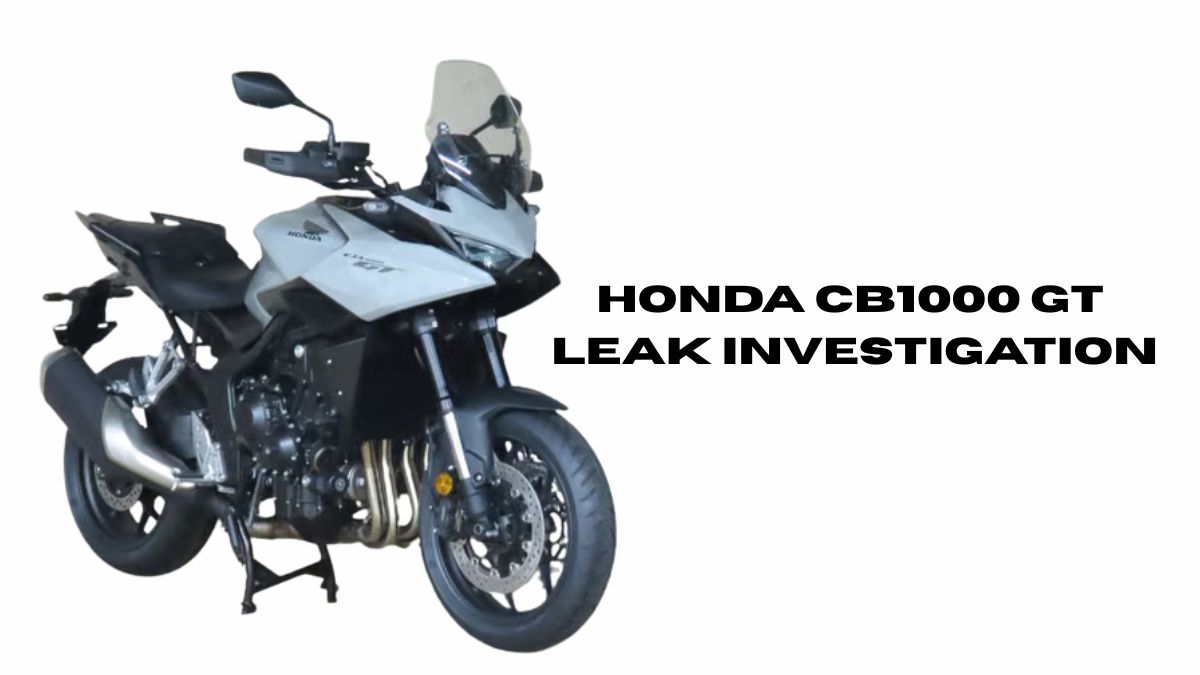
Confirmation of the model’s existence and core features arrived via homologation documents filed in Australia, confirming the “CB1000GT” name, key partial specifications, and detailed visual representations of the motorcycle.1 These documents establish the bike as a 2026 model year vehicle, indicating production readiness and an imminent global rollout.2
Critical design changes transforming the base naked model into the GT sport-tourer include the addition of a partial fairing, a taller windscreen, handguards, a longer-travel suspension system, and dedicated mounting points for hard panniers.3
1.2. Competitive Advantage Through Efficiency
A highly significant finding from the regulatory data is the remarkably efficient integration of touring components. The CB1000 GT’s certified curb weight is 213 kg, registering a marginal increase of only 2 kg over the CB1000 Hornet’s wet weight (211–212 kg, depending on specification).2 This minimal weight gain, despite the integration of a fairing, longer suspension components, and utility hardware, suggests highly optimized, lightweight component selection and bodywork design. This efficiency maximizes the machine’s inherent agility, ensuring the model functions as a true sport tourer by minimizing the negative dynamic impact typically associated with added touring bulk. This design choice sets the stage for the GT to directly challenge Japanese rivals such as the Yamaha Tracer 9 and Suzuki GSX-S1000GX by offering superior displacement and horsepower (in European specification) while maintaining a favorable power-to-weight ratio.1
2. Foundations of Intelligence: Homologation Data and EICMA Confirmation
2.1. Source Verification: The Australian Type-Approval Filing
The definitive confirmation of the CB1000 GT originated from Australian type-approval documents. These filings are mandatory for regulatory compliance and often necessitate submission well in advance of a public unveiling, securing the model’s production status as a concrete 2026 offering.1 The Australian filing not only verified the model designation but also included detailed schematics and images, providing the first comprehensive look at the machine’s design and technical modifications.1
This premature disclosure of robust technical data, derived from legally binding type-approval applications, elevates the information beyond mere rumor, solidifying the model’s immediate market relevance upon official announcement.
2.2. Model Year Designation and Global Launch Context
The newly leaked motorcycle is officially designated as a 2026 model year vehicle, indicating that the primary international market rollout is scheduled to commence in late 2025 or early 2026.1 The process of obtaining type approval in major markets like Australia confirms that the CB1000 GT is a fully developed product and not a conceptual model.
2.3. EICMA 2025 Timeline: Anticipated Announcement Schedule
The official public unveiling is universally anticipated to take place at the EICMA motorcycle show in Milan.3 The EICMA 2025 event schedule confirms that the days reserved exclusively for press and industry operators are Tuesday, November 4th, and Wednesday, November 5th.6 Given that Honda has a confirmed presentation slot on the first press day, Tuesday, November 4th, at 10 AM, for other significant models such as the V3R 8, this timing represents the highest probability window for the formal announcement of the CB1000 GT.
The timing of this detailed leak, occurring just prior to the key EICMA press days, suggests that although the exposure came through regulatory documents, the organization may be utilizing the early information to maximize pre-show anticipation. A disclosure of this robustness, coupled with immediate production readiness, effectively controls the initial media narrative, ensuring significant visibility before the chaos of competing manufacturers’ EICMA debuts.

3. Honda’s Modular Strategy: The CB1000 Platform Architecture
The introduction of the CB1000 GT demonstrates Honda’s ongoing strategy of aggressive platform sharing to achieve cost efficiency and rapidly diversify its liter-class offerings. By building multiple models—the CB1000 Hornet (naked), the CB1000F (retro), and the CB1000 GT (sport-tourer)—from the same foundational components, Honda amortizes development and tooling costs across a broader range of markets, ultimately delivering competitive pricing.1
3.1. Analysis of Component Amortization: Hornet to GT
The GT maintains critical shared components with its naked sibling, the CB1000 Hornet. This includes the identical steel diamond frame, the complete exhaust system, and the street-oriented 17-inch wheels.1 This degree of component continuity substantially streamlines the manufacturing supply chain and assembly process.
Furthermore, cost efficiencies are achieved through the braking system selection. The CB1000 GT utilizes Nissin four-piston radial-mount calipers.1 This differs from the higher-specification CB1000 Hornet SP model sold in certain markets, which features premium Brembo Stylema calipers.10 By adopting the high-quality but less costly Nissin components, the manufacturer maintains excellent braking performance for touring and general sport riding while drastically reducing the bill of materials for the GT. This deliberate decision supports a pricing strategy intended to position the CB1000 GT closer to value-focused rivals, such as the triple-cylinder Yamaha Tracer 9 GT, rather than the more electronically advanced, premium four-cylinder competitors like the Suzuki GSX-S1000GX.
3.2. Powertrain Continuity: The Fireblade-Derived Inline-Four
The GT is powered by the familiar 1,000cc, liquid-cooled, DOHC inline-four engine.5 This engine configuration is derived from the 2017 CBR1000RR Fireblade engine 11, although it is revised and tuned specifically for the CB platform to prioritize enhanced midrange torque and smoothness, characteristics essential for effective touring.12 Key engine specifications, such as the 76.0 mm by 55.1 mm bore and stroke and the 11.7:1 compression ratio, are shared across the CB1000 platform.5
3.3. Technical Review of Dual Power Specifications and Performance Implications
Analysis of engine output reveals a strategic tuning variance depending on the target market:
- European and Australian Specification: Documents confirm a peak power output of approximately 110 kW (or 147.5 horsepower) delivered at 11,000 rpm.2 While this is slightly less than the 155 horsepower output of the high-spec Hornet SP, it remains highly potent and competitive within the performance touring segment.14
- US Specification (Speculative but Highly Probable): Based on regulatory EPA approvals for the CB1000 Hornet in the US market, the naked model is detuned to approximately 129 hp.1 Should the CB1000 GT reach North American shores, it is highly likely that it will utilize this same detuned engine specification.
This lower US horsepower figure is not accidental; it is a critical element of internal segmentation. By maintaining the GT’s power delivery below the performance ceiling of the CB1000 Hornet SP, the manufacturer ensures that the dedicated naked sportbike retains its performance flagship status. The GT, conversely, emphasizes usable power delivery and utility, preventing internal cannibalization and appropriately catering to the touring market segment that values accessibility over maximum peak output.
4. Engineering and Ergonomics: The GT Transformation
The transition from a naked streetfighter platform to a viable sport-tourer necessitated significant modifications to the chassis geometry, suspension setup, and ergonomic configuration.
4.1. Chassis and Dynamics: Stability Enhancements
To accommodate luggage and two-up riding stability required for grand touring, the CB1000 GT features a fractionally extended wheelbase, increasing from the Hornet’s 1,455 mm (57.3 inches) to 1,465 mm (57.7 inches).2 This small increase in length improves high-speed stability under load. Furthermore, the maximum width increases substantially to 930 mm (36.6 inches) compared to the naked Hornet’s 790 mm (31.1 inches), a direct consequence of the new fairing and handguard fitment.2 Despite these additions, the minimal wet kerb weight of 213 kg ensures the bike retains sporty agility.2
4.2. Suspension Geometry: Crossover DNA
The CB1000 GT is differentiated by its “taller, longer-travel suspension” compared to the standard Hornet.1 This provides superior comfort across diverse road conditions and elevates the bike’s stance, lending it “adventure-bike overtones”.1
The front suspension is expected to utilize Showa SFF-BP units, which include adjustability for preload, compression, and rebound damping, mirroring the setup of the base CB1000 Hornet.1 This shift in geometry and travel places the GT firmly in the Adventure-Sport Crossover segment, moving it away from the low-slung profile of traditional sport-tourers and aligning it visually and functionally with market leaders like the BMW S 1000 XR and the Suzuki GSX-S1000GX.
4.3. Touring Hardware Deep Dive: Aerodynamics and Utility
The new bodywork is the most visible change. A partial fairing wraps around the existing CB1000 Hornet’s twin-pod LED headlight assembly, flowing back towards the fuel tank and covering the radiator with a specialized cowl. This provides essential protection against wind and road debris.3 The fitment includes a tall windscreen, likely adjustable, and standard knuckle guards (handguards).3
Ergonomically, the GT prioritizes rider and pillion comfort. The footpegs utilized are the lower versions borrowed from the retro-styled CB1000F, creating a more relaxed and upright riding position compared to the aggressive stance of the naked Hornet.2 This adjustment in the ergonomic triangle is crucial for alleviating rider fatigue on extended journeys, validating the “GT” designation. The seating configuration is further enhanced by thicker rider and pillion seats, and the tail section includes dedicated mounting points specifically engineered to accommodate hard luggage (panniers), a requirement for serious long-distance travel.3
Table 1. Comparative Technical Specifications: Honda CB1000 GT (Leaked) vs. CB1000 Hornet (Base Euro Spec)
| Parameter | CB1000 Hornet (Base, EU) | CB1000 GT (Leaked, AU/EU) | Analysis of Modification |
| Engine Displacement | 1,000 cc 5 | 1,000 cc | Core platform sharing 11 |
| Max Power Output | 115.6 kW (155 hp) @ 11,000 rpm 15 | ~110 kW (147.5 hp) @ 11,000 rpm | Slight detuning for touring focus/mid-range torque 2 |
| Kerb Weight (Wet) | 211 – 212 kg 5 | 213 kg (469 lbs) | Minimal weight increase despite fairing/suspension 2 |
| Wheelbase | 1,455 mm (57.3 in) 13 | 1,465 mm (57.7 in) | Increased by 10mm for enhanced stability 2 |
| Width (Max) | 790 mm (31.1 in) 5 | 930 mm (36.6 in) | Substantial increase due to fairing and handguards 2 |
| Front Brakes | Nissin 4-piston radial | Nissin 4-piston radial | Component standardization for cost control 1 |

5. Rider Electronics and Safety Systems
Modern sport-touring machines are defined as much by their electronic packages as by their mechanical components. The CB1000 GT, leveraging the Hornet platform, incorporates several standard high-tech features while potentially exhibiting a notable technology gap in core safety systems.
5.1. Instrumentation and Connectivity
The rider interface is managed through the platform’s standard 5-inch TFT color display, which functions as a multi-information display.5 Connectivity is handled by Honda RoadSync, allowing for smartphone integration, and the bike includes a USB charging socket.5
5.2. Performance Aids: Quickshifter and Riding Modes
A key performance component confirmed in the leaked images is the presence of a quickshifter, which is expected to be standard equipment, likely offering both upshift and downshift blipper functions.1 The motorcycle also utilizes a Throttle-by-Wire system, facilitating configurable engine performance via five defined riding modes: Standard, Sport, Rain, and two User-programmable options.16 These modes allow the rider to adjust three core parameters: Power delivery level, Engine Brake level, and Honda Selectable Torque Control (HSTC) level.17
5.3. Braking System and IMU Status: Critical Feature Gap Analysis
As noted, the braking system employs Nissin four-piston radial-mount calipers.1 A critical factor for competitive positioning in the 2026 market is the presence of an Inertial Measurement Unit (IMU). The IMU is essential for providing advanced safety features such as cornering-optimized Anti-lock Braking System (ABS) and lean-sensitive traction control (TC).18
The published information regarding the CB1000 GT’s features does not explicitly confirm the inclusion of an IMU. While some related models (like the CB1000F) are expected to feature an IMU 9, the choice of using the base-level Nissin brakes (rather than the premium Brembo Stylema calipers typically bundled with Honda’s advanced IMU/Super Sport-type ABS) strongly suggests that advanced, IMU-based cornering safety aids may be omitted.
The potential absence of Cornering ABS represents the single most significant risk factor regarding the CB1000 GT’s competitive viability. If the system is not included, the GT would immediately lag behind highly refined rivals such as the Yamaha Tracer 9 GT+ and the Suzuki GSX-S1000GX in fundamental safety and electronic sophistication.19 Only a substantially lower price point could fully mitigate the market perception of this technology gap.
6. Competitive Landscape Analysis: Benchmarking the Liter-Class Sport-Tourer Segment
The CB1000 GT is positioned in a volatile and increasingly competitive segment. Its design is strategically engineered to occupy a distinct niche among high-displacement touring machines.
6.1. Internal Segmentation: CB1000 GT vs. NT1100 DCT
Within Honda’s own portfolio, the GT avoids conflict with the established NT1100 DCT sport-tourer. The NT1100 employs the 1,084cc parallel-twin engine derived from the Africa Twin, and its focus is on practical, long-haul comfort, exemplified by the availability of the Dual Clutch Transmission (DCT) option and a hefty 547 lbs wet curb weight.20 The CB1000 GT, by contrast, is a high-revving, inline-four machine, inherently offering a sportier ride quality, higher peak performance, and a lighter structure. The two bikes successfully segment the touring market: the NT1100 addresses the practical, relaxed parallel-twin touring niche, while the CB1000 GT targets the enthusiast seeking high-performance, four-cylinder engine character and a crossover aesthetic.
6.2. Japanese Titans: Direct Competition Analysis
The primary targets for the CB1000 GT are the leading Japanese sport-touring crossovers:
- Suzuki GSX-S1000GX: This is the GT’s most direct technological rival, also utilizing a 999cc inline-four engine capable of 150 hp.19 However, the Suzuki commands a high price premium (MSRP around $18,500) due to its standard inclusion of highly sophisticated Electronic Semi-Active Suspension (SAES) and a full IMU-based electronics package.22
- Yamaha Tracer 9 GT/GT+: This machine is the volume leader in the sector, leveraging Yamaha’s 890cc CP3 triple-cylinder engine (around 117 hp). While the power output is lower, the Tracer 9 GT+ offers advanced touring technology, including semi-active suspension and optional radar-linked cruise control, positioned at a mid-range MSRP of approximately $15,300.23
By prioritizing the smooth, high-revving nature of the inline-four engine, Honda caters to a specific demographic that values the classic performance and sound characteristics of the Japanese “screamer” engine.25 This decision aims to differentiate the GT from the character-driven triple-cylinder architecture of the Tracer 9.
6.3. European Premium Tier: Assessing the Threat
The aspirational benchmark remains the European premium segment, specifically the BMW S 1000 XR, which offers class-leading performance (upwards of 170 hp) and comprehensive dynamic suspension and electronic packages. Base S 1000 XR models start around $18,000.22
The CB1000 GT’s strategy is to capture the best aspects of this premium tier—high performance and a distinctive crossover aesthetic—while strategically positioning its price point closer to the Tracer 9 GT. This establishes the CB1000 GT as the value proposition for riders demanding a powerful inline-four engine without the associated electronic premium of the European and high-spec Japanese competitors.
Table 2. Competitive Positioning: CB1000 GT vs. Primary Sport-Touring Rivals (4-Cylinder Segment)
| Competitor Model | Engine Configuration | Approx. Max Output (EU) | Key Tech Differentiator | Estimated US MSRP (Target) |
| Honda CB1000 GT (Est.) | 1000cc Inline-Four | 147.5 hp (129 hp US Est.) | Platform Value, Quickshifter | TBD (Likely $13,000 – $15,000) |
| Suzuki GSX-S1000GX | 999cc Inline-Four | 150 hp | Electronic Semi-Active Suspension (SAES) | $18,500 22 |
| Yamaha Tracer 9 GT+ | 890cc CP3 Triple | 117 hp | Semi-Active Suspension, Radar Cruise | $15,300 24 |
| BMW S 1000 XR | 999cc Inline-Four | 170 hp | Dynamic ESA, Comprehensive IMU | $18,000+ (Base) 22 |
7. Market Opportunity, Pricing Projection, and Future Variants
7.1. Market Forecast and Segmentation Clarity
The simultaneous introduction of the Hornet, the retro CB1000F, and the GT, all utilizing the same foundational architecture, is a robust strategy designed to capture market share across three distinct, highly profitable liter-class niches—naked performance, retro nostalgia, and adventure-sport utility—in a compressed timeframe. This rapid diversification maximizes the utility of a single engine and frame design, efficiently countering the specialized lineups of competing manufacturers.
The CB1000 GT directly addresses the market space between the accessible NT1100 parallel-twin tourer and the high-output naked CB1000 Hornet, fulfilling the need for a comfortable, versatile, long-distance machine powered by a high-revving four-cylinder engine.
7.2. Projected Pricing Strategy: Leveraging the Hornet’s Value
The CB1000 Hornet SP, the highest-spec naked model offered in the US, is priced at $11,000.22 Given the additional bodywork, longer-travel suspension, and mandated touring equipment (luggage mounts, fairing), the CB1000 GT must necessarily command a premium over the naked offering.
To successfully execute its value proposition and remain competitive with the volume leader (Tracer 9 GT at $15,300), the CB1000 GT must be priced aggressively. The analysis suggests a target MSRP for the US market should fall between $13,000 and $15,000. A price point near the $14,000 threshold would provide superior inline-four power and engine refinement compared to the Tracer 9, while substantially undercutting the premium positioning of the Suzuki GSX-S1000GX and the BMW S 1000 XR.
7.3. Speculative Analysis: Potential for SP and DCT Variants
The component choices observed in the initial leaked images—namely, the use of Nissin brakes and standard Showa suspension units—strongly suggest that the leaked CB1000 GT is the base model variant. This approach leaves open substantial opportunity for a future, higher-specification model.
- CB1000 GT SP (Performance Variant): It is highly probable that Honda will introduce a CB1000 GT SP version. Such a model would logically incorporate the higher-end components already available within the platform, including Brembo Stylema calipers, the fully adjustable electronic Öhlins rear shock (TTX36 Pro-Link), and potentially the full 155 hp engine tune (for non-US markets).10
- DCT/E-Clutch Availability: The ultimate success of the GT in long-distance touring markets, particularly North America, hinges on the introduction of a semi-automatic transmission option. Honda has extensive expertise in Dual Clutch Transmission (DCT), which is standard on the NT1100 sold in the US.20 Furthermore, the company is actively integrating its new E-Clutch technology into related models.10 Integrating either DCT or E-Clutch into the CB1000 GT platform would provide a unique technological advantage and significant market differentiation over nearly all its four-cylinder sport-touring rivals, addressing a growing demographic seeking sophisticated transmission convenience for long journeys.
8. Strategic Conclusions and Recommendations for Market Stakeholders
The leaked Honda CB1000 GT confirms a robust and strategically calculated entry into the adventure-sport crossover segment for the 2026 model year. Honda is leveraging its core liter-class engine and chassis architecture to deliver a machine designed to be highly competitive on the basis of performance-to-dollar ratio.
The CB1000 GT’s value proposition is centered on combining the coveted smooth performance and sound of a high-displacement inline-four engine with necessary touring amenities (luggage capacity, wind protection, comfort ergonomics) at a projected price point that aggressively challenges both the volume leaders and the premium segment entry models.
The primary risk factor identified in this analysis is the lack of confirmed IMU-based safety electronics. If the official specifications omit Cornering ABS and lean-sensitive Traction Control, competitors should immediately highlight this deficiency, positioning their own products as superior in rider safety and electronic refinement.
Competitors should prepare for an aggressive market campaign focused on the bike’s engine heritage (Fireblade) and its versatile “crossover” styling. It is recommended that rivals anticipate Honda targeting a price point between $13,000 and $15,000. Furthermore, based on Honda’s modular strategy, competitive responses must account for the high likelihood of a quick follow-up release of a higher-spec CB1000 GT SP model, which will attempt to close the technology gap in braking and suspension, and potentially an automatic transmission variant (DCT/E-Clutch) designed to dominate the long-distance convenience market.
Sources
- Honda CB1000GT Details Leaked – Cycle World, accessed October 28, 2025, https://www.cycleworld.com/motorcycle-news/honda-cb1000gt-details-leaked/
- Honda CB1000GT Leaked – Australian Motorcycle News, accessed October 28, 2025, https://amcn.com.au/editorial/honda-cb1000gt-leaked/
- 2026 Honda CB1000GT Confirmed – Motorcycle.com, accessed October 28, 2025, https://www.motorcycle.com/bikes/new-model-preview/2026-honda-cb1000gt-confirmed-44652298
- Honda CB1000 GT Leaked before EICMA Unveil – BikeWale, accessed October 28, 2025, https://www.bikewale.com/news/honda-cb1000-gt-leaked-before-eicma-unveil/
- Specifications & Price – Honda UK, accessed October 28, 2025, https://www.honda.co.uk/motorcycles/range/street/cb1000-hornet/specifications-and-price.html
- Trade Visitors – EICMA, accessed October 28, 2025, https://www.eicma.it/en/visit/trade-visitor/
- General Info – EICMA, accessed October 28, 2025, https://www.eicma.it/en/visit/general-info/
- Honda V3R 2025 EICMA Debut Likely – World’s 1st Bike With Electric Compressor, accessed October 28, 2025, https://www.rushlane.com/honda-v3r-2025-eicma-debut-likely-worlds-1st-bike-with-electric-compressor-12532696.html
- Honda CB1000F (2026) – Technical Review – Bennetts Insurance, accessed October 28, 2025, https://www.bennetts.co.uk/bikesocial/reviews/bikes/honda/cb1000f-2026-review
- Honda | CB1000 Hornet | Street | High Performance Four-Cylinder Motorcycle, accessed October 28, 2025, https://www.honda.co.uk/motorcycles/range/street/cb1000-hornet/overview.html
- Honda CB1000 Hornet more details emerge – BikeWale, accessed October 28, 2025, https://www.bikewale.com/news/honda-cb1000-hornet-more-details-emerge/
- Honda CB1000F, inspired by icons of Motorsport – EICMA, accessed October 28, 2025, https://www.eicma.it/en/honda-cb1000f-inspired-by-icons-of-motorsport/
- 2025 CB1000 Hornet SP – Naked Streetbike – Honda Powersports, accessed October 28, 2025, https://powersports.honda.com/motorcycle/standard/cb1000-hornet-sp/cb1000-hornet-sp
- 2026 NEW HONDA CB1000GT FIRST LOOK!! – YouTube, accessed October 28, 2025, https://www.youtube.com/watch?v=1LZ2i8ehcGM
- Honda CB1000 Hornet, Tokyo’s new maxi naked is also available in SP version – EICMA, accessed October 28, 2025, https://www.eicma.it/en/honda-cb1000-hornet-tokyos-new-maxi-naked-is-also-available-in-sp-version/
- CB1000 Hornet SP – Naked Streetbike – Honda Powersports, accessed October 28, 2025, https://powersports.honda.com/motorcycle/standard/cb1000-hornet-sp/features
- 2025 Honda CB1000 Hornet SP Features & Benefits, accessed October 28, 2025, https://hondanews.com/en-US/powersports/releases/release-0fe7cf05a3e4aa5bf7992876bd020d37-2025-honda-cb1000-hornet-sp-features-benefits
- Overview of Super Sport-type ABS – Honda Global, accessed October 28, 2025, https://global.honda/en/tech/Super_Sport-type_ABS/
- Honda CB1000R vs Suzuki GSX-S1000GT Comparison – Zigwheels, accessed October 28, 2025, https://www.zigwheels.my/compare-motorcycles/honda-cb1000r-vs-suzuki-gsx-s1000-gt
- 2025 Honda CB750 Hornet, CB1000 Hornet SP, and NT1100 DCT Preview, accessed October 28, 2025, https://ridermagazine.com/2025/03/14/2025-honda-cb750-hornet-cb1000-hornet-sp-and-nt1100-dct-preview/
- CB750 Hornet, CB1000 Hornet SP, NT1100 DCT Headline Honda New-Model Announcement, accessed October 28, 2025, https://hondanews.com/en-US/powersports/releases/release-219200caec99384eab6b5fad760deb7b-cb750-hornet-cb1000-hornet-sp-nt1100-dct-headline-honda-new-model-announcement
- 2026 Honda CB1000GT will be released next year : r/motorcycles – Reddit, accessed October 28, 2025, https://www.reddit.com/r/motorcycles/comments/1oceq5m/2026_honda_cb1000gt_will_be_released_next_year/
- Honda CB1000R Black Edition 2024 vs Yamaha Tracer 9 GT+ 2024 – 1000PS.com, accessed October 28, 2025, https://www.1000ps.com/en-us/comparison/371984/honda-cb1000r-black-edition-2024-vs-yamaha-tracer-9-gt-2024
- Yamaha Tracer 9 GT+ 2024 vs Honda CB1000 Hornet 2025 – 1000PS.com, accessed October 28, 2025, https://www.1000ps.com/en-gb/comparison/427914/yamaha-tracer-9-gt-2024-vs-honda-cb1000-hornet-2025
- 2025 Honda CB1000 Hornet SP vs 2025 Suzuki GSX-S1000 – Cycle News – YouTube, accessed October 28, 2025, https://www.youtube.com/watch?v=NfUute-G0WM
Our Social Media Handles
- Instagram : LivingWithGravity
- Medium : Akash Dolas
- YouTube Channel : Gear and Shutter
- Facebook : LivingWithGravity