




By Adam Child
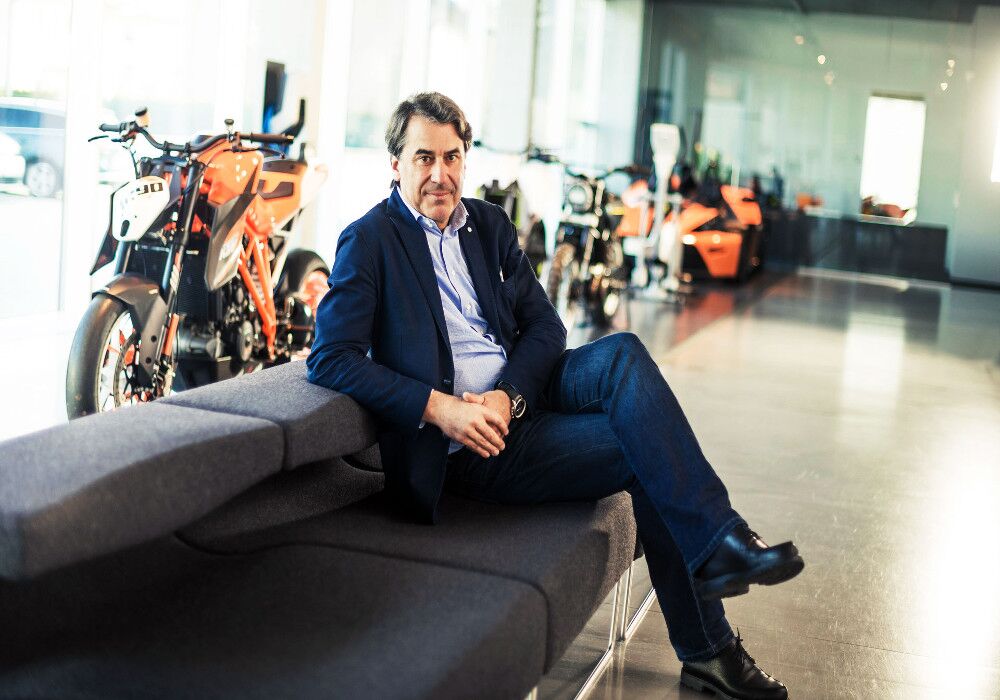
In an exclusive interview, KTM AG CEO Gottfried Neumeister sits down to discuss the company’s strategic vision, recent financial performance, and future direction. With a background as a former CFO and an engineering degree, Neumeister offers unique insights into KTM’s pivot towards profitability, innovation, and global expansion.
Adam Child: Mr. Neumeister, thank you for taking the time. KTM AG recently concluded fiscal year 2023 with impressive financial results—record sales, revenue, and EBIT. What does this strong performance signify for KTM’s strategic direction?
Gottfried Neumeister: It underscores a deliberate strategic shift. We’re moving beyond sheer volume growth to prioritize profitability and healthy margins. My background as a former Chief Financial Officer and having an engineering degree has certainly influenced this. We’ve instilled a culture emphasizing operational excellence, stringent cost management, and enhanced supply chain resilience as foundational elements of our strategy. Our outlook for 2024 remains positive, supported by a strong order book and a continued commitment to these pillars.

Adam Child: So, the focus is clearly on profitability and operational excellence. Can you elaborate on how this translates into your market positioning?
Gottfried Neumeister: Absolutely. We are firmly committed to profitability over sales volume, actively avoiding price wars, and concentrating our efforts on high-margin products and premium segments. This reinforces KTM’s identity as a manufacturer of performance-oriented, high-quality vehicles. Operational excellence, stringent cost control, and supply chain optimization are critical drivers for maintaining this financial performance. It’s about continuous internal process improvements, efficiency gains, and disciplined resource allocation.
Adam Child: Let’s talk about innovation. How is KTM balancing the development of e-mobility solutions with its strong heritage in internal combustion engines (ICE)?
Gottfried Neumeister: Our e-mobility strategy is cautious yet strategic. We’re focusing specifically on off-road and small-displacement segments. This acknowledges current technological limitations like battery weight and range, and the nascent charging infrastructure, which currently restrict widespread adoption in larger motorcycle segments. Our partnership with Vitesco for e-drives also highlights our reliance on external expertise for specialized components, allowing us to strategically allocate our resources.

Adam Child: Does this mean ICE technology will take a backseat?
Gottfried Neumeister: Not at all. I have a strong conviction that ICE will remain the dominant powertrain for the foreseeable future, especially for larger displacement motorcycles. Consequently, we continue to invest significantly in R&D for ICE technology, specifically to meet future Euro 5+ and Euro 6 emission standards. We’re also actively exploring synthetic fuels as a long-term solution to ensure the viability and environmental compatibility of ICE technology.
Adam Child: Speaking of regulations, what are your thoughts on the proposed Euro 7 emission standards?
Gottfried Neumeister: We’ve voiced strong criticism of the proposed Euro 7 emission standards, deeming them excessively strict and costly. My concern is that such regulations could disproportionately impact smaller manufacturers and potentially lead to the cessation of certain model lines. We are taking a proactive stance to influence regulatory outcomes and protect product diversity. Despite these challenges, we plan to introduce new models across various segments in 2024, signaling our continued commitment to product pipeline development.

Adam Child: Moving to global markets, how is KTM balancing its presence in established markets with expansion into emerging regions?
Gottfried Neumeister: We have a balanced approach. We’ve shown robust performance in our core markets, achieving a 20% market share in Europe and an 11% share in North America. Beyond these, we’ve identified North America, India, and Southeast Asia as key strategic growth markets. India, in particular, holds a critical role due to our pivotal partnership with Bajaj Auto. This collaboration enables local production, which is crucial for significant market share growth in a high-potential, cost-sensitive market. India is increasingly seen not just as a sales territory but as a potential future manufacturing and R&D hub.
Adam Child: And what about the Chinese market?
Gottfried Neumeister: The Chinese market presents a more complex dynamic. While acknowledging the current challenges, particularly the economic slowdown impacting demand, we maintain a patient, long-term strategic view on China’s potential. This approach recognizes the inherent volatility of emerging markets but also their substantial long-term rewards, necessitating strategic endurance rather than short-term reactions.

Adam Child: How does KTM approach sustainability, beyond just powertrain solutions?
Gottfried Neumeister: We approach sustainability with a holistic perspective, encompassing the entire product lifecycle and resource efficiency. This broader ESG viewpoint informs our strategic decisions. Our e-mobility strategy, as mentioned, is pragmatic and segmented, focusing on off-road and small-displacement segments due to current technological limitations. Crucially, our strong belief in the continued dominance of ICE, especially for larger motorcycles, underpins a significant part of our long-term sustainability vision.
Synthetic fuels are highlighted as a potential carbon-neutral solution for ICE technology, offering a pathway to extend the lifespan of our core product while addressing environmental concerns without requiring full electrification. Our vocal concerns about Euro 7 are also integral, as we advocate for realistic and economically viable environmental standards that do not jeopardize the industry’s viability or consumer choice.
Adam Child: KTM has faced significant operational challenges, particularly with supply chain disruptions. How have you addressed these?
Gottfried Neumeister: Global supply chain disruptions, especially shortages of semiconductors and wiring harnesses, directly impacted our production volumes. In response, we’ve implemented proactive measures to enhance our supply chain resilience. Key strategies include multi-sourcing, diversifying suppliers to reduce dependence on single points of failure.
We’ve also strategically increased inventory levels of critical components to buffer against future supply interruptions, moving towards a “just-in-case” approach for essential parts. Securing long-term contracts with key suppliers also plays a crucial role. These measures are directly linked to our focus on operational excellence and cost control. For 2024, maintaining supply chain stability and continued cost control remain paramount operational priorities.

Adam Child: Finally, looking at the financial performance, can you summarize the highlights from 2023 and your outlook for 2024?
Gottfried Neumeister: Fiscal year 2023 was strong, with record sales, revenue, and EBIT. We achieved an impressive EBIT margin of 9.2%, coupled with robust net profit, which truly underscores the success of our profitability-focused strategy. Despite our emphasis on cost control, we allocated a significant 6% of our revenue to R&D.
This demonstrates our commitment to future technologies and product innovation, ensuring we maintain a competitive edge. Looking ahead, I’m optimistic for 2024, supported by a strong order book. Our strategic focus remains consistent: maintaining profitability, stringent cost control, and ensuring supply chain stability.
Adam Child: Mr. Neumeister, thank you for these comprehensive insights. It’s clear KTM is on a well-defined path for sustainable growth.
via Cycleworld
Our Social Media Handles
- Instagram : LivingWithGravity
- Medium : Akash Dolas
- YouTube Channel : Gear and Shutter