










Executive Summary: The Definitive Verdict at a Glance
The entry of the new KTM 160 Duke has fundamentally altered the landscape for college students and young professionals seeking a premium, sporty motorcycle. This analysis finds that the KTM 160 Duke and the KTM 200 Duke do not, in fact, offer the same level of excitement. The 160 Duke delivers a refined, tractable thrill, characterized by a more approachable engine and nimble handling, making it an excellent starting point for new riders. In contrast, the 200 Duke provides a raw, high-strung, and unadulterated performance rush that defines the traditional KTM experience.

The central dilemma—whether to spend approximately ₹23,000 more for the 200 Duke—is not a simple matter of cost versus benefit. This financial premium signifies a fundamental upgrade in engine character, a more advanced feature set, and a commitment to a more aggressive riding philosophy. For the right buyer, this additional expense is not just a justifiable purchase but a necessary one to achieve their desired performance.
Ultimately, the choice hinges on a rider’s priorities. The KTM 160 Duke is a compelling, well-balanced package for the spirited beginner. The Yamaha MT-15 V2 is a superior choice for the value-conscious commuter, offering remarkable fuel efficiency and modern technology. However, for the rider who seeks the pure, uncompromising “Ready to Race” ethos of KTM, the 200 Duke remains the definitive choice and a worthy investment.


Chapter 1: Market Entry & Strategic Positioning
The Indian motorcycle market, particularly the premium 160cc segment, is a highly competitive arena dominated by models that blend sporty aesthetics with everyday usability. Historically, this space has been ruled by a handful of key players, including the Yamaha MT-15 Version 2.0, TVS Apache RTR 160 4V, and Bajaj Pulsar NS160.1 These motorcycles appeal to a demographic that values brand image and a high feature-to-price ratio.
KTM’s strategic move with the launch of the 160 Duke is a direct response to the dynamics of this market. The 160 Duke is positioned as the new entry-level offering, effectively replacing the now-discontinued 125 Duke.5 The 125 Duke, despite its premium price point and high-quality components, was perceived by many as lacking in power for its price.5 This created a discrepancy in its “power-to-price ratio” that made it a difficult sell to a performance-oriented audience.
By introducing the 160 Duke, KTM has recalibrated its entry-level strategy. The new motorcycle brings a more appropriately sized and powerful engine to a price bracket where it can directly compete with established rivals like the Yamaha MT-15 V2. This is a clear acknowledgment by KTM that a more powerful engine is a prerequisite to effectively compete in this segment. The 160 Duke is the result of this market analysis, designed to capture customers who were previously drawn to the competition by offering a bike that is both premium in its components and substantial in its performance.7
Chapter 2: Design and Aesthetics: The Visual Language of Streetfighters
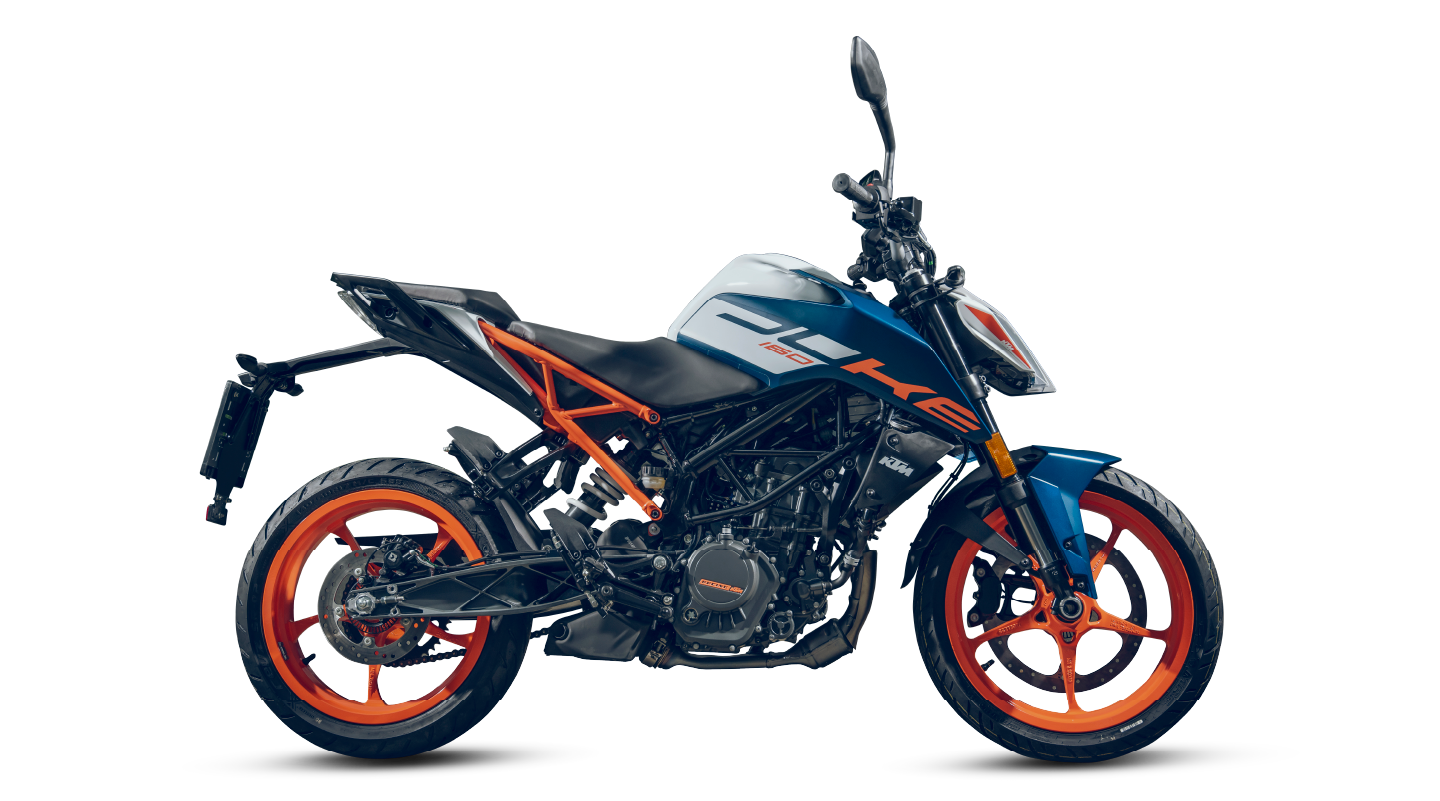
In terms of visual design, the KTM 160 Duke and 200 Duke are nearly identical, bearing a “striking resemblance” with the same “sharp tank extensions, edgy headlamp design, and overall streetfighter stance”.8 The primary differences lie in the paint schemes and graphics, which KTM has intentionally differentiated to set the 160 apart.8 This shared design language is a calculated and effective branding strategy. It allows a rider to acquire the most accessible Duke model while still projecting the image of a more powerful, expensive machine. This leverages KTM’s strong brand equity and visual status, which is a major motivator for the target demographic.9
The build quality on the 160 Duke is described as “typical of what you have seen on KTM bikes” with the switchgear feeling “tactile to operate”.8 However, some sources note that the finish on the handlebar and the quality of the gear and brake levers are “not up to the mark,” suggesting that cost-saving measures have been implemented in component quality to hit the bike’s price point.8
In contrast, the Yamaha MT-15 V2 has a design language that is distinct from its rivals. It is described by users as a “beast” with a “muscular body” and “khatarnak look”.10 While its aesthetic is aggressive and modern, it lacks the family resemblance to larger, more expensive models in the same way the KTM does. The MT-15’s design is more of a standalone statement, whereas the 160 Duke’s is part of a cohesive and aspirational product line.
Chapter 3: The Technical Arsenal: A Breakdown of Components and Features
A detailed examination of the features reveals a clear hierarchy and strategic choices by both manufacturers. The KTM 160 Duke comes equipped with premium components rarely seen in its class.
- Suspension: Both the 160 Duke and the Yamaha MT-15 V2 feature USD (Upside Down) front forks, which are typically found on more expensive motorcycles and contribute to superior handling and ride quality.8 The 160 Duke uses 37mm WP USD forks, while the 200 Duke is equipped with slightly larger 43mm WP Apex USD forks, both suspended by a monoshock at the rear.8
- Wheels: The 160 Duke benefits from lightweight “bionic alloy wheels” that are a direct carryover from the 250 Duke, noted for their contribution to reduced unsprung mass and enhanced handling.5
- Clutch: The 160 Duke is equipped with a slipper and assist clutch, a feature shared with the MT-15 V2, that aids in smooth, quick downshifts and prevents wheel hop.11
When it comes to the instrument cluster, a key differentiator emerges. The 160 Duke features an LCD display that is “well laid-out” and intuitive to use but is criticized for its “poor readability”.15 In a strategic move to upsell, KTM has reserved the more modern and premium TFT display for the 200 Duke.12 The Yamaha MT-15 V2 also features a TFT display in its higher variants, which allows it to directly compete on technology.2 This choice to withhold a key feature from the 160 Duke helps justify the ₹23,000 price premium for the 200 Duke.
Bluetooth connectivity is another point of divergence. While the KTM 160 Duke offers it, it comes at an additional cost of approximately ₹5,000.8 In contrast, the MT-15 V2’s top-end DLX variant offers a complete suite of Bluetooth features, including turn-by-turn navigation, call alerts, and SMS notifications as a standard inclusion, making it a stronger value proposition for tech-savvy riders.11

The feature set on these bikes reveals a calculated product-marketing approach. The omission of certain features from the 160 Duke, such as the TFT display, creates a deliberate feature hierarchy that encourages potential buyers to consider the more expensive 200 Duke. Yamaha’s aggressive inclusion of premium features like a TFT display and Traction Control at a lower price point is designed to disrupt this market and attract customers who prioritize a rich technology package.
| Feature/Spec | KTM 160 Duke | KTM 200 Duke | Yamaha MT-15 V2 |
| Engine Type | SOHC | DOHC | SOHC with VVA |
| Displacement | 164.2 cc | 199.5 cc | 155 cc |
| Max Power | 18.74 bhp / 19 PS | 24.67 bhp / 25 PS | 18.14 bhp / 18.4 PS |
| Max Torque | 15.5 Nm | 19.3 Nm | 14.1 Nm |
| Kerb Weight | 147 kg | 159 kg | 141 kg |
| Seat Height | 815 mm | 822 mm | 810 mm |
| Display Type | LCD | TFT | TFT (on DLX) |
| ABS | Dual-channel, switchable | Dual-channel, switchable | Dual-channel |
| Traction Control | No | No | Yes |
| Slipper Clutch | Yes | Yes | Yes |
| USD Forks | Yes | Yes | Yes |
| Ex-showroom Price | ₹ 1.85 Lakh | ₹ 2.07 Lakh | ₹ 1.70 – ₹ 1.80 Lakh |
Chapter 4: Powertrain Performance: The “Excitement” Factor Deconstructed
The “excitement” factor is arguably the most crucial element for this audience, and it is here that the three motorcycles diverge most significantly. This difference stems from their distinct engine architectures.

- KTM 160 Duke: Powered by a 164.2cc, Single Overhead Camshaft (SOHC) engine.18 In a SOHC configuration, a single camshaft manages both the intake and exhaust valves. This design is inherently simpler and lighter, which often translates to a power delivery that favors low-to-mid range torque.19 This is reflected in reviews that praise the 160 Duke for its “good low-end and mid-range grunt”.8 The engine’s character is described as “refined” and “very non-KTM-like,” which is a deliberate tuning choice to make it more approachable for daily commuting and new riders.8 The shorter gearing further enhances its tractability in city traffic but comes at the expense of top speed.8
- KTM 200 Duke: This motorcycle features a larger 199.5cc, Dual Overhead Camshaft (DOHC) engine.12 A DOHC setup uses two dedicated camshafts, one for intake and one for exhaust. This adds complexity and weight but allows for better airflow at high RPMs, which results in superior top-end power.19 The 200 Duke’s engine is known for its raw, buzzy, and aggressive nature, which demands to be revved hard to extract its full potential.8 The excitement it offers is a visceral, high-revving rush that is both exhilarating and, for a novice, potentially intimidating.
- Yamaha MT-15 V2: The MT-15 V2’s 155cc SOHC engine is a marvel of modern engineering, equipped with Variable Valve Actuation (VVA).17 VVA technology uses two separate cam lobes—one for low RPMs and one for high RPMs—to adjust valve timing, allowing the engine to offer a dual personality. This results in strong, usable torque in the low-end for city riding and a powerful, linear pull in the top-end that rivals DOHC engines.17 This technology allows the MT-15 to deliver a blend of performance that is both city-friendly and exciting on the open road.

The data presented in the table below clearly illustrates the performance disparity and the different approaches taken by each manufacturer.
| Metric | KTM 160 Duke | KTM 200 Duke | Yamaha MT-15 V2 |
| Engine Type | SOHC | DOHC | SOHC with VVA |
| Max Power | 18.74 bhp @ 9500 rpm | 24.67 bhp @ 10,000 rpm | 18.14 bhp @ 10,000 rpm |
| Max Torque | 15.5 Nm @ 7500 rpm | 19.3 Nm @ 8000 rpm | 14.1 Nm @ 7500 rpm |
| Power-to-Weight Ratio | 0.127 bhp/kg | 0.155 bhp/kg | 0.128 bhp/kg |
| Kerb Weight | 147 kg | 159 kg | 141 kg |
| Claimed Mileage | 36.5 kmpl | 35 kmpl | 56.87 kmpl |
| Fuel Tank Capacity | 10.1 L | 13.4 L | 10 L |
| Top Speed | 80−90 kmph (comfortable cruise) 8 | 135 kmph (claimed) 24 | 122 kmph (claimed) 25 |
Chapter 5: Ride and Handling: The Soul of the Streetfighter
The ride and handling characteristics of a motorcycle are fundamentally shaped by its chassis and suspension components. This is another area where the three motorcycles demonstrate distinct engineering philosophies.
- KTM’s Trellis Frame: Both the KTM 160 Duke and 200 Duke are built on a steel trellis frame, a design that utilizes a lattice of triangulated tubes to create a strong yet lightweight structure.8 This chassis philosophy is a cornerstone of KTM’s “Ready to Race” DNA, prioritizing agility and a sharp, responsive feel. The 160 Duke takes this a step further with a 0.5-degree sharper rake and a reduced metal thickness in its frame, making it lighter and “even more nimble than the 200 Duke”.8 The result is a bike that is “effortless and intuitive to change directions,” making it an ideal platform for a beginner to understand and refine their handling skills.8
- Yamaha’s Deltabox Frame: The Yamaha MT-15 V2 is underpinned by a Deltabox frame, a twin-spar chassis known for its exceptional rigidity and stability, particularly at high speeds and during cornering.5 This design connects the steering head and swingarm pivot in an “absolute straight line,” which helps the bike hold its line in corners and provides a sense of planted confidence.27 With a kerb weight of just 141 kg, the MT-15 V2 is the lightest of the three, which contributes to its agile and lively feel.11
- Suspension and Ergonomics: The suspension setup on the 160 Duke is a notable highlight. It strikes an “excellent balance between sporty and comfort,” allowing the bike to absorb bumps and potholes without transmitting harsh jolts to the rider, all while maintaining a firm feel for spirited riding.8 The 160 Duke’s saddle height of 815 mm is 7 mm lower than the 200 Duke’s 822 mm, offering slightly better accessibility for riders with a shorter inseam.8 The MT-15 V2 has the most accessible seat height at 810 mm.5 The MT-15’s pillion seat is noted by some users as being less comfortable, which may be a consideration for those who frequently ride with a passenger.10


Chapter 6: Braking and Safety: Confidence Under Control
Braking is a critical safety parameter, and the hardware on these motorcycles is a key part of their premium positioning. The KTM 160 Duke is equipped with a large 320mm front disc and a 230mm rear disc.8 The 200 Duke uses a 300mm front and 230mm rear disc, while the MT-15 V2 features a 282mm front and 220mm rear disc.5 The larger discs on the KTMs, particularly the 160 Duke’s 320mm front rotor, are designed to provide powerful stopping performance.28

The user query notes that the rear brake on the test unit was “almost non-existent”.8 While this may have been an isolated issue with a specific test motorcycle, other reviews have praised the brakes on the 160 Duke, describing them as “progressive in nature” with “enough feedback from the lever and the pedal”.20 This progressive feel, while lacking the sharp initial “bite” that a seasoned rider might crave, is actually a benefit for new riders as it promotes a smoother, more controlled braking action and reduces the risk of a front-wheel lockup.8
All three motorcycles are equipped with dual-channel ABS, a crucial safety feature for preventing wheel lock-up during hard braking.8 The KTMs go a step further by offering a unique “Supermoto ABS” mode that allows the rider to disengage ABS on the rear wheel for a more enthusiast-oriented, performance-focused experience.8 In contrast, the Yamaha MT-15 V2 includes a Traction Control System (TCS), a significant safety feature that prevents the rear wheel from slipping during aggressive acceleration, especially on low-traction surfaces.11 This choice highlights Yamaha’s focus on technological aids for everyday rider safety, while KTM’s feature set caters to a more niche, performance-driven audience.
Chapter 7: The Value Proposition: Justifying the ₹23,000 Decision
The decision to purchase the 200 Duke over the 160 Duke rests on more than the initial ex-showroom price difference. The actual on-road price, which includes RTO, insurance, and other charges, presents a different picture.31 In Pune, the on-road price of the KTM 160 Duke ranges from approximately ₹2.16 Lakh to ₹2.17 Lakh.33 The KTM 200 Duke’s on-road price is higher, varying from ₹2.30 Lakh to ₹2.42 Lakh depending on the dealer and optional add-ons.35 The Yamaha MT-15 V2, priced between ₹2.00 Lakh and ₹2.13 Lakh, undercuts both KTM models.37
Beyond the initial purchase, the long-term cost of ownership is a critical consideration for a budget-sensitive consumer. This is where the Yamaha MT-15 V2 presents a compelling case. With a claimed mileage of up to 56.87 kmpl, the MT-15 V2 is significantly more fuel-efficient than the 160 Duke’s 36.5 kmpl and the 200 Duke’s 35 kmpl.11 Over the course of a year, this dramatic difference in fuel consumption can translate to substantial savings for a college student or young professional using the bike for daily commuting.
Therefore, the extra ₹23,000 for the 200 Duke is not just a one-time investment; it is also a commitment to higher recurring costs in fuel. A buyer choosing the 200 Duke is implicitly agreeing to a higher total cost of ownership in exchange for a more potent engine and a more feature-rich package. The MT-15 V2’s superior mileage offers a compelling financial argument that a discerning buyer must not overlook.
Chapter 8: Conclusion and Final Recommendation: Guiding the First-Time Buyer
This detailed analysis reveals that the KTM 160 Duke, KTM 200 Duke, and Yamaha MT-15 V2 are not simply variants of the same motorcycle but distinct propositions designed for different rider profiles.
- KTM 160 Duke: A refined, approachable, and well-balanced package. Its premium components, including USD forks and bionic wheels, provide a high-quality feel, while its engine is tuned for a more linear and usable power delivery. Its nimble handling makes it an excellent motorcycle for a beginner to develop their skills on.
- Yamaha MT-15 V2: A highly tech-laden and economical choice. Its unique VVA-enabled engine provides a versatile performance envelope, and its significantly higher fuel efficiency makes it a compelling choice for the value-conscious commuter. The inclusion of a TFT display and Traction Control on its top variant positions it as a technology leader in the segment.
- KTM 200 Duke: A raw, powerful, and uncompromising performance machine. It truly embodies the traditional KTM ethos with its high-revving DOHC engine and aggressive character. The extra ₹23,000 buys a superior engine and a more complete feature set, including the TFT display.
For the young, prospective buyer, the final recommendation depends on a precise alignment of the machine’s character with the rider’s personality and priorities.

- For the Value-Conscious Commuter: The Yamaha MT-15 V2 is the ideal choice. Its lighter weight, VVA-enabled city performance, and exceptional long-term fuel economy make it the most sensible and long-term economical option.
- For the Spirited Beginner: The KTM 160 Duke is a perfect match. Its “great teacher” nature, premium components, and refined yet exciting engine make it ideal for learning and improving without the intimidation of a more aggressive machine.
- For the “Unapologetic Enthusiast”: The extra ₹23,000 for the KTM 200 Duke is a sound investment. It secures a more powerful, aggressive DOHC engine, a superior TFT display, and a truer, uncompromised “Duke” experience that an enthusiast will not quickly outgrow.
Source
- KTM 160 Duke Comparisons – Compare 160 Duke with MT 15 Version 2.0, Dominar 250 and Other Similar Bikes @ ZigWheels, accessed on August 27, 2025, https://www.zigwheels.com/ktm-bikes/160-duke/comparisons
- KTM 160 Duke vs Rivals Compared – MT-15, Xtreme, Pulsar, Apache – RushLane, accessed on August 27, 2025, https://www.rushlane.com/ktm-160-duke-vs-rivals-compared-mt-15-xtreme-pulsar-apache-12527886.html
- Best 160cc Bikes in India – Features, Specs & Latest Prices 2025 – Bajaj Allianz, accessed on August 27, 2025, https://www.bajajallianz.com/blog/motor-insurance-articles/best-160cc-bikes-in-india.html
- Top 10 powerful bikes in 150cc-160cc in India, accessed on August 27, 2025, https://www.bikeleague.in/motorcycle-articles/top-10-powerful-bikes-in-150cc-160cc-in-india/
- KTM 160 Duke vs Yamaha MT-15: Spec Comparo – Hindustan Times, accessed on August 27, 2025, https://www.hindustantimes.com/car-bike/ktm-160-duke-vs-yamaha-mt-15-spec-comparo-101754978405680.html
- KTM 160 Duke Review: The New Boss Of The 160cc Class – DriveSpark, accessed on August 27, 2025, https://www.drivespark.com/bike-reviews/ktm-160-duke-riding-impressions-review-specs-features-images-011-075275.html
- KTM 160 Duke Specifications 2025 | Weight, Seat height, Features, Tank Capacity, accessed on August 27, 2025, https://www.91wheels.com/bikes/ktm/160-duke/specifications
- KTM 160 Duke: First Ride Review – BikeWale, accessed on August 27, 2025, https://www.bikewale.com/expert-reviews/ktm-160-duke-first-ride-review/
- KTM 160 Duke – On-Road Price, Images, Features, Mileage & Reviews – HT Auto, accessed on August 27, 2025, https://auto.hindustantimes.com/new-bikes/ktm/160-duke
- Yamaha 2024 MT 15 V2 Expert Reviews & Road Test | BikeDekho.com, accessed on August 27, 2025, https://www.bikedekho.com/yamaha/mt-15/road-test
- Yamaha MT 15 V2 Price 2025 | Bike Images, Mileage & Colours – 91Wheels, accessed on August 27, 2025, https://www.91wheels.com/bikes/yamaha/mt-15
- KTM 160 Duke vs KTM 200 Duke Comparison – Know Which is Better? – HT Auto, accessed on August 27, 2025, https://auto.hindustantimes.com/compare-bikes/ktm-160-duke-vs-ktm-200duke
- KTM 160 Duke vs KTM 200 Duke – Know Which Is Better! – BikeWale, accessed on August 27, 2025, https://www.bikewale.com/compare-bikes/ktm-160-duke-vs-ktm-duke-200/
- KTM 160 Duke Vs Yamaha MT-15 Vs TVS Apache RTR 160 4V …, accessed on August 27, 2025, https://www.ndtv.com/auto/ktm-160-duke-vs-yamaha-mt-15-vs-tvs-apache-rtr-160-4v-comparison-specs-and-price-9068221
- KTM 160 Duke review: size matters – Introduction – Autocar India, accessed on August 27, 2025, https://www.autocarindia.com/bike-reviews/ktm-160-duke-review-size-matters-436881
- KTM Duke 160 First Ride Review: Does It Live Up To The Family Legacy? – autoX, accessed on August 27, 2025, https://www.autox.com/reviews/bike-reviews/ktm-duke-160-first-ride-review-does-it-live-up-to-the-family-legacy-121590/
- Yamaha MT 15 Version 2.0 – On-Road Price, Images, Features, Mileage & Reviews, accessed on August 27, 2025, https://auto.hindustantimes.com/new-bikes/yamaha/mt-15-v2
- KTM 160 DUKE Specifications & Features, accessed on August 27, 2025, https://www.ktmindia.com/ktm-bikes/naked-bike/ktm-160-duke/specifications
- SOHC Vs DOHC: Differences Explained – TVS Motor, accessed on August 27, 2025, https://www.tvsmotor.com/media/blog/sohc-vs-dohc-differences-explained
- KTM Duke 160 first ride review: Different character in same attire – The Financial Express, accessed on August 27, 2025, https://www.financialexpress.com/auto/reviews/ktm-duke-160-first-ride-review-different-character-in-same-attire/3958872/
- Pros and Cons of OHC engines vs pushrod engines? : r/cars – Reddit, accessed on August 27, 2025, https://www.reddit.com/r/cars/comments/2ue3lp/pros_and_cons_of_ohc_engines_vs_pushrod_engines/
- Review: KTM Duke 200 – Team-BHP, accessed on August 27, 2025, https://www.team-bhp.com/forum/motorbikes/161650-review-ktm-duke-200-a.html
- Yamaha MT-15 – Wikipedia, accessed on August 27, 2025, https://en.wikipedia.org/wiki/Yamaha_MT-15
- New KTM Duke 200 – All You Need to Know – Images Maxabout, accessed on August 27, 2025, https://images.maxabout.com/misc/infographics/image/2017-ktm-duke-200-all-you-need-to-know
- KTM 160 Duke vs Yamaha MT 15 Version 2.0 – Know Which is Better – BikeDekho, accessed on August 27, 2025, https://www.bikedekho.com/compare/160-duke-vs-mt-15-v2
- Motorcycle frame – Wikipedia, accessed on August 27, 2025, https://en.wikipedia.org/wiki/Motorcycle_frame
- Motorcycle Deltabox Frame- All You Need To Know » BikesMedia.in, accessed on August 27, 2025, https://www.bikesmedia.in/reviews/motorcycle-deltabox-frame-all-you-need-to-know.html
- KTM 160 Duke first ride review: It is a true blue Duke! – HT Auto, accessed on August 27, 2025, https://auto.hindustantimes.com/auto/reviews/ktm-160-duke-first-ride-review-it-is-a-true-blue-duke-41756269146946.html
- KTM 160 Duke Review: Small Duke, Big Bite – Motoring World, accessed on August 27, 2025, https://motoringworld.in/bike-reviews/ktm-160-duke-review-small-duke-big-bite/
- Yamaha MT 15 V2 vs KTM 160 Duke Comparison – Which One is Better? – 91Wheels, accessed on August 27, 2025, https://www.91wheels.com/compare-bike/yamaha-mt-15-vs-ktm-160-duke
- Difference Between A Vehicle’s Ex-Showroom Price and On-Road Price – ACKO Insurance, accessed on August 27, 2025, https://www.acko.com/auto/difference-between-ex-showroom-price-and-on-road-price/
- Difference between Ex-Showroom Price and On-Road Price – Digit Insurance, accessed on August 27, 2025, https://www.godigit.com/traffic-rules/difference-between-ex-showroom-price-and-on-road-price
- KTM 160 Duke Price in Pune – BikeDekho, accessed on August 27, 2025, https://www.bikedekho.com/ktm/160-duke/price-in-pune
- August 2025 on road price of 160 Duke in Pune – KTM – BikeWale, accessed on August 27, 2025, https://www.bikewale.com/ktm-bikes/160-duke/price-in-pune/
- 200 Duke On Road Price in Pune – KTM – BikeDekho, accessed on August 27, 2025, https://www.bikedekho.com/ktm/duke-200/price-in-pune
- KTM Duke 200 On Road Price in Pune – 91Wheels, accessed on August 27, 2025, https://www.91wheels.com/bikes/ktm/duke-200/price-in-pune
- Yamaha MT 15 Version 2.0 Price in Pune – BikeDekho, accessed on August 27, 2025, https://www.bikedekho.com/yamaha/mt-15-v2/price-in-pune
Our Social Media Handles
- Instagram : LivingWithGravity
- Medium : Akash Dolas
- YouTube Channel : Gear and Shutter