






Expert Market and Product Analysis: The 2026 Kawasaki Z650 Platform – Strategic Segmentation and Commercial Volatility
I. Report Overview and Strategic Context
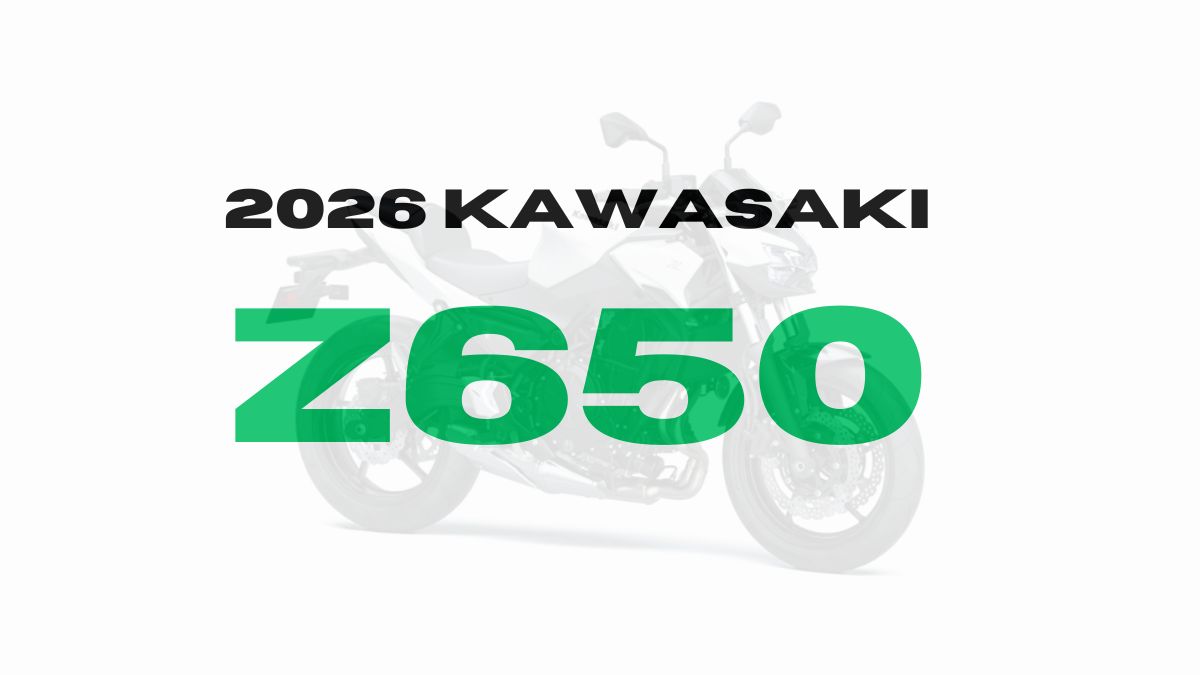
The 2026 model year for the Kawasaki Z650 platform signifies a strategic pivot toward refined segmentation and enhanced visual aggression, rather than a fundamental mechanical overhaul. The long-running 649cc parallel-twin architecture, known for its reliability and accessibility, is being maximized for market reach through distinct variants tailored to specific rider profiles.1 Kawasaki’s overall objective for the 2026 middleweight lineup is to maintain competitive parity in electronics while strategically repositioning the core product to address mounting pressure from segment rivals perceived as offering greater excitement or character.

2.1. Overview of the 2026 Z650 Lineup Strategy
Kawasaki’s approach centers on maximizing the longevity and market potential of the established platform by integrating premium technological features—such as KTRC traction control and full TFT displays—as standard equipment.2 The 2026 strategy relies on three segmented offerings:
- Z650 Standard: This variant receives minimal changes, primarily focusing on new colourways, retaining its historical position as the nimble, easily controlled, and accessible entry point to the 650cc naked segment.2
- Z650 S (New for 2026): This critical new introduction is positioned as the aggressive, performance-focused Supernaked. It boasts revised ergonomics featuring a wider handlebar and a higher seat, promoting a more forward-leaning posture and modernized Z-family styling cues.4
- Z650RS: This model continues to leverage its popular neo-retro aesthetic, receiving several new color schemes, including the classic Candy Emerald Green, ensuring its continued strong presence in the heritage-sport category.5
2.2. Key Platform Updates and Segmentation
The entire Z650 family benefits from standardized electronics, including Kawasaki TRaction Control (KTRC) and TFT color instrumentation, achieving crucial competitive parity with European and Japanese rivals.1 This uniform adoption of advanced rider aids suggests a calculated effort by Kawasaki to reinforce the Z650’s reputation for offering confidence and peace of mind under various riding conditions.2
2.3. Commercial Outlook and Challenges
While the technological updates are positive, the commercial trajectory of the Z650 is under threat in key emerging markets. The outlook in countries such as India is complicated by the introduction of the GST 2.0 tax structure, which mandates a significant tax increase on motorcycles above 350cc. This policy change leads directly to considerable price inflation, challenging the Z650’s traditional position as an affordable middleweight option and potentially dampening sales volume in this crucial region.7

III. Product Segmentation: Deep Dive into the Z650 S Variant
The Z650 S, announced for the European market with an expected wider global introduction, is the most significant strategic update to the 650 platform for 2026. This variant is designed to address consumer demand for a visually and ergonomically sportier machine.
3.1. Strategic Differentiation and the “S” Moniker
The Z650 S is Kawasaki’s attempt to inject a more aggressive attitude into the 650 class. While Kawasaki has offered multiple interpretations of the “S” designation, suggesting it could stand for “Stunning,” “Style,” “Stage,” or “Spotlight” 4, the functional interpretation points toward a focus on the aggressive Sugomi aesthetic and heightened sporting intent. The Z650 S effectively fills a perceived gap in the lineup, providing a more visually aggressive choice than the standard model, while maintaining the accessible power of the 649cc parallel-twin engine.4 The Z650 S is initially being sold alongside the regular Z650 in Europe, but industry expectation suggests it may supersede the non-S version in markets like the United States to streamline the product offering and eliminate the less aggressive variant.4
3.2. Ergonomic Deep Dive: Crafting a Sportier Posture
The Z650 S employs precise ergonomic adjustments to fundamentally alter the rider-machine interface, promoting a more engaged and forward-leaning stance without altering the chassis geometry.
The primary modifications include the integration of a new “fat-bar” handlebar that is 1.2 inches wider than the component used on the standard Z650.4 This wider configuration enhances steering leverage and encourages a sportier arm and shoulder position. Concurrently, the seat has been revised: the front seat is approximately 0.8 inches (15mm) thicker and higher, compelling the rider to lean forward and engage more actively with the front end of the motorcycle.9
These ergonomic manipulations are a calculated effort to overcome qualitative criticisms that the Z650 platform, despite its competence, has historically lacked the visceral excitement and character offered by competitors like the Yamaha MT-07 or the Triumph Trident 660.11 By making the rider posture more aggressive, Kawasaki generates a heightened subjective perception of speed and handling responsiveness, delivering “excitement” in a cost-effective manner without requiring an expensive power boost or chassis redesign. Furthermore, Kawasaki has also improved passenger comfort, providing a pillion pad that is 20mm wider with 10mm of added cushioning.10 The accessory range is also comprehensive, offering alternative seating options such as a “Style” seat and a 20mm lower ERGO-Fit seat, ensuring the revised platform retains maximum accessibility for riders of varying heights.10
3.3. Aesthetic Overhaul and Sugomi Presence
The Z650 S receives a distinct aesthetic overhaul, adopting styling cues that visually align it more closely with the aggressive Supernaked design language found on the Z500 and Z900.4
The front end is dominated by a sharper headlamp cowl and a redesigned LED headlight configuration, featuring a triple-LED setup—two upper lights for low beam and a single lower light for high beam—providing a distinct and intimidating “scowl”.9 This new headlamp array replaces the previous generation’s taller and broader light unit.4 The bodywork volume has been intentionally increased, contributing to “muscular new looks” and wider radiator shrouds that feature a sharp point, accentuating the bike’s dynamic crouching Sugomi stance.4 Additional metallic accents throughout the design contribute to a high-quality appearance, crucial for differentiating the Z650 S from the standard model and justifying a potential premium price.10
A subtle but significant mechanical change contributing to the visual package is the shift in braking hardware aesthetics; the Z650 S replaces the previous petal-style brake discs with traditional, clean circular brake discs.4 This stylistic synchronization across the Z family line is essential for branding, ensuring the Z650 S is immediately recognizable as a high-grade middle-tier Supernaked, capable of capitalizing on the market presence established by its more powerful siblings.

IV. Engineering and Mechanical Specifications
The 2026 Kawasaki Z650 platform is engineered for consistency and reliability, focusing internal efforts on achieving mandatory environmental compliance and optimizing user-interface components.
4.1. Engine Architecture and Performance Parameters
The platform continues to be powered by the highly regarded 649cc liquid-cooled parallel-twin engine.1 The engine is configured to produce a maximum power output of 50.2 kW {68 PS} (67.10 hp) at 8,000 rpm. Maximum torque is rated at approximately 64 Nm or 65.7 Nm (47.2 to 48.5 lb-ft), delivered efficiently between 6,700 and 7,000 rpm.2 This engine calibration prioritizes accessible power and response in the low-to-mid speed ranges, making the Z650 exceptionally versatile for both city commuting and spirited mountain road riding.1
The motorcycle utilizes a reliable 6-speed return shift gearbox, complemented by a standard Assist and Slipper clutch, a feature prized by riders for enhancing stability and smoothness during rapid downshifting.11 For riders seeking heightened performance, an optional quickshifter is available, enabling clutchless upshifting from 2,500 rpm.18
4.2. Emissions, Efficiency, and Thermal Management
A core focus for the 2026 model year was ensuring compliance with current emission regulations. The Z650 platform meets the stringent Euro 5+ anti-pollution standard, maintaining low reported CO2 emissions of 107 g/km.16 This compliance is supported by the integration of an O2 sensor in the exhaust system.18 In terms of efficiency, the reported fuel consumption is 4.5 L/100km.2
Kawasaki also addressed rider comfort in challenging environments. A patented fan mechanism is employed on the radiator, designed specifically to redirect hot air downwards and away from the rider, a small but impactful refinement that increases comfort during prolonged, low-speed traffic maneuvers in urban settings.18
4.3. Chassis and Dynamics
The core chassis structure remains unchanged, a strategic decision that maintains the Z650’s reputation for light weight and nimble handling.2 The foundation is a lightweight steel trellis frame, weighing a mere 15 kg, contributing to a manageable dry weight of 173 kg (fully loaded weight is 188 kg / 414 lb).16
Suspension components consist of a 41mm telescopic fork at the front (125mm travel) and a preload-adjustable horizontal back-link monoshock at the rear (130mm travel).16 This system delivers accessible and highly maneuverable dynamics, reinforcing the bike’s friendly character.17 The absence of any material change to the engine’s power output or frame geometry confirms that Kawasaki’s engineering mandate was to prioritize regulatory compliance (Euro 5+) and platform reliability over chasing higher peak performance figures, thus preserving its vital entry-level accessibility.

V. Advanced Electronics and Rider Technology Integration
Standardizing advanced electronic rider aids is central to the 2026 Z650 update, ensuring the platform remains highly relevant and competitive in a segment increasingly defined by technology.
5.1. KTRC (Kawasaki TRaction Control)
Kawasaki TRaction Control (KTRC) is a key feature now included as standard equipment across the Z650 lineup.1 This system is critical for enhancing overall sport riding performance while simultaneously providing confidence and stability, particularly when negotiating slippery or low-traction surfaces. KTRC offers adjustability and the option for complete deactivation, allowing experienced riders to tailor the system to their specific demands.18
5.2. Braking System and ABS Unit
The braking system utilizes dual 300mm discs at the front, actuated by two-piston calipers, and a single 220mm rear disc with a single-piston caliper.16 A notable safety enhancement for 2026 is the introduction of a new ABS unit sourced from Continental, which manages the brake force modulation and enhances overall safety performance.8
5.3. TFT Instrumentation and Connectivity
The 4.3-inch all-digital TFT color instrumentation is a standard element, significantly contributing to the cockpit’s “high-tech, high-grade appearance”.2
This instrumentation is highly functional and customizable, offering riders the ability to toggle between two distinct tachometer display options: a traditional bar-style layout or a modernized hexagonal design.4 The display also features adaptive lighting, automatically changing the background color between white and black based on ambient light levels, or allowing manual setting by the rider.4
The TFT serves as the crucial interface for connectivity. Via Bluetooth and Kawasaki’s proprietary RIDEOLOGY THE APP, riders can link their smartphones to the machine, gaining access to vehicle statistics, trip logs, and essential notification management.2 Addressing rider practicality needs, a convenient USB-C outlet is also available as an accessory, neatly housed within the front cowl.8 By providing comprehensive electronic packages—most notably KTRC and a refined digital interface—Kawasaki strategically removes any technological vulnerability the Z650 might have faced against the latest offerings from rivals, reinforcing its competitive standing as a modern and well-equipped middleweight option.
VI. Colorways and Market Availability
The 2026 model year refresh is heavily focused on livery updates and the phased strategic introduction of the Z650 S.
6.1. 2026 Colour Palette
The new colorways are designed to support the distinct positioning of each variant:
- Z650 Standard: The standard model receives key updates, including Pearl Blizzard White, and Ebony/Metallic Carbon Gray.1
- Z650 S: Reflecting its aggressive nature, the Z650 S is available in three striking options: Metallic Matte Graphenesteel Gray / Metallic Flat Spark Black, Candy Lime Green / Metallic Carbon Gray, and Ebony / Metallic Carbon Gray.13
- Z650RS: The neo-retro model, celebrating its heritage, receives Ebony, Metallic Ocean Blue, and the signature Candy Emerald Green.5
6.2. Market Launch Schedules
The Z650 and Z650RS are anticipated to be available in European dealerships starting in Q4 2025 (October or November).21 The critical new Z650 S variant is scheduled to arrive shortly thereafter, with availability starting in January in markets like the UK, where it has been priced at £7,199.8 While the Z650 S is initially confirmed for Europe, its visually compelling design and sporting adjustments are expected to lead to its introduction in North America, likely replacing the less aggressive standard Z650 model in that market.4

VII. Competitive Landscape Analysis
The middleweight naked segment is one of the most hotly contested categories globally, with performance and character often overshadowing pure financial metrics. The Z650 competes directly against highly successful machines characterized by unique engine configurations.
7.1. Direct Comparison: Z650 vs. Core Rivals
The Z650 platform is consistently praised for its accessibility, low weight, and capable chassis.17 However, when benchmarked purely on performance metrics, the 68 hp output places it at a numerical disadvantage compared to key rivals, which generally offer higher peak performance via alternative engine configurations.
| Model | Engine Configuration | Approx. Power (hp) | Approx. Torque (Nm) | Primary Differentiator |
| Kawasaki Z650/S | 649cc Parallel Twin | 68 hp | 64 Nm | Comprehensive Technology Suite (KTRC, TFT), accessibility, nimble chassis. |
| Yamaha MT-07 | 689cc Crossplane Parallel Twin | ~74 hp | ~67 Nm | Raw power delivery, visceral CP2 engine character, perceived high “fun factor.” |
| Triumph Trident 660 | 660cc Inline Triple | ~80 hp | ~64 Nm | Superior engine refinement, unique triple-cylinder sound/powerband, premium feel. 23 |
| Honda CB650R | 649cc Inline Four | ~94 hp | ~63 Nm | Highest peak power, inline-four sophistication, premium build quality. |
7.2. Countering the “Bland” Critique
The Z650’s reliable parallel-twin engine, tuned for low-to-mid range usability, has historically been criticized as being “clunky, lifeless, [and] ugly” when compared to the exhilarating feel of the MT-07 or the triple-cylinder character of the Trident 660.11 The Z650’s power delivery tends to drop off sharply compared to the Suzuki SV650.11
Kawasaki’s strategic deployment of the Z650 S is interpreted as an indirect but direct response to this qualitative weakness. Since a complete mechanical overhaul to boost power is costly and complex due to emissions regulations, the Z650 S focuses on manipulating the subjective riding experience. The new, wider handlebars and forward-leaning posture are designed to deliver a more intense subjective riding sensation, effectively generating perceived sporting aggression without modifying the objective power curve.9 This strategy allows the platform to retain its core strength—being the most docile, accessible, and electronically advanced option for A2 riders and beginners 2—while offering the Z650 S as a visually stimulating alternative that addresses the stylistic demands of the Supernaked segment.
VIII. Commercial Outlook: Price Volatility and Market Risk (India Focus)
The financial feasibility of the Z650 in critical high-growth markets is currently constrained by geopolitical and regulatory factors entirely independent of the product’s quality.
8.1. The Impact of India’s GST 2.0 Tax Hike
In September 2025, the Indian government implemented the GST 2.0 tax structure, dramatically increasing the tax burden on two-wheelers exceeding 350cc engine capacity. The applicable tax rate moved from a previous effective rate of approximately 31% (28% GST plus 3% cess) to a new, higher slab of 40%.7
This regulatory shock instantly necessitated a substantial and unavoidable price increase across Kawasaki’s 650cc portfolio. The Z650 MY25, for example, saw its Ex-Showroom price surge by approximately ₹47,000, moving from ₹6,79,000 to ₹7,26,000.7 This mandated increase pushes the resultant on-road price for the Z650 in major metropolitan areas, such as Pune, up to an estimated ₹8,80,000.27
Table 3: India Pricing Impact Analysis: Z650 Ex-Showroom (GST 2.0 Effect)
| Model Variant | Old Ex-Showroom Price (Pre-GST 2.0) | New Ex-Showroom Price (Post-GST 2.0 Estimate) | Percentage Increase | Approx. On-Road Price Pune |
| Z650 MY25 | ₹6,79,000 | ₹7,26,000 | 6.9% | ₹8,80,000 27 |
| Z650RS MY25 | ₹7,20,000 | ₹7,69,000 | 6.8% | N/A (Projected Higher) |
| Ninja 650 MY25 | ₹7,27,000 | ₹7,77,000 | 6.9% | N/A (Projected Higher) |
8.2. Market Competitiveness Erosion in India
The mandated price hikes significantly compromise the Z650’s competitive position. While motorcycles above 350cc became substantially more expensive, competitors in the sub-350cc category (e.g., certain entry-level performance models) simultaneously benefited from reduced GST rates.28 This bifurcated tax structure aggressively widens the price gap between the Z650 and lower-capacity, yet feature-rich, alternatives, making the middleweight segment less financially accessible. Prior to the full implementation of the hike, Kawasaki India attempted to mitigate the anticipated financial burden on consumers by offering a temporary ₹20,000 cashback on the Z650 and Z650RS, a tactical measure intended to clear inventory and soften the impact of the impending regulatory price floor adjustment.24
This acute regulatory risk is the single dominant constraint on the Z650’s commercial viability in India for 2026. The Z650 is now priced well into the aspirational segment, complicating the successful introduction of the new Z650 S variant, which would naturally command an even higher premium.
IX. Conclusions and Recommendations
9.1. SWOT Analysis Summary (2026 Platform)
The 2026 Kawasaki Z650 platform is defined by platform maturity and strategic segmentation:
- Strengths: Exceptional mechanical reliability, standardized advanced technology (KTRC, TFT), user-friendly low-to-mid range torque delivery, and the successful aesthetic differentiation provided by the Z650RS.
- Weaknesses: Engine character is widely considered less exhilarating than that of key competitors (MT-07, Trident 660), and the base price has become inflated in critical Asian markets due to regulatory changes.
- Opportunities: The introduction of the aggressive Z650 S offers a clear pathway to capture market share from performance-styled buyers; high-margin accessories like the quickshifter and standard USB-C outlet expand the platform’s utility.8
- Threats: Aggressive power output disparity from European rivals (Trident 660) and market disruption caused by severe price inflation in countries affected by GST 2.0.
9.2. Recommendations for Global Market Strategy
- Prioritize Z650 S as the Global Naked Standard: The Z650 S must be rapidly deployed globally, and should strategically replace the current non-S Z650 model in major markets outside of Europe. This move aligns the platform with the stronger visual identity of the wider Supernaked family and provides a clearer product differentiation: the Z650 S (Sporty Naked) versus the Z650RS (Retro-Sport).
- Market Focus on Technology and Accessibility: Global marketing campaigns should emphatically highlight the standardization of KTRC, the Continental ABS unit, and the sophisticated TFT instrumentation.2 This positions the Z650 platform as the most technologically advanced and confidence-inspiring entry point into the middleweight segment, a crucial appeal for riders holding A2 licenses or seeking a first “big” motorcycle.
9.3. Mitigating Price Impact in India
- Aggressive Financial Structuring: Given the on-road price escalation (approaching ₹9 Lakh in Pune), Kawasaki India must focus efforts on counteracting the high sticker price through aggressive partnerships with financial institutions. This should translate into highly competitive EMI schemes, low interest rates, and minimal down payment requirements to restore the motorcycle’s perceived financial accessibility.27
- Shifting Value Proposition: In the Indian market, the Z650 S cannot be marketed solely on affordability. Instead, the narrative must pivot toward positioning the Z650 as a premium, high-tech motorcycle that offers superior electronic safety features and reliability compared to locally assembled or older-generation rivals, thereby justifying the mandated higher cost floor.
Sources
- New liveries for eight 2026 Kawasaki Z models released, accessed October 18, 2025, https://www.kawasaki.eu/en/news/2025/july/new-liveries-for-eight-2026-kawasaki-z-models-released.html
- Z650 | 2026 – Kawasaki EU, accessed October 18, 2025, https://www.kawasaki.eu/en/Motorcycles/A2_Bikes/Z650_2026.html
- Kawasaki 2026 Motorcycles: All The New Colors Announced, So Far – SlashGear, accessed October 18, 2025, https://www.slashgear.com/1962120/kawasaki-2026-motorcycles-new-colors/
- 2026 Kawasaki Z650 S Announced for Europe – Motorcycle.com, accessed October 18, 2025, https://www.motorcycle.com/bikes/new-model-preview/2026-kawasaki-z650-s-announced-for-europe-44651944
- Kawasaki: New 2026 Colors for Cruiser and Z650RS Range [PHOTOS], accessed October 18, 2025, https://moto.motorionline.com/en/Kawasaki-new-2026-colorways-for-the-Cruiser-and-Z650RS-ranges/
- KAWASAKI Z650 RS 2026 MODEL NEW COLOR UPDATE – YouTube, accessed October 18, 2025, https://www.youtube.com/watch?v=x0EhG5qeJjE
- Kawasaki Ninja 500, Versys 650, Ninja 650 And More: Prices Hiked After GST Increase – Compare Now | BikeDekho, accessed October 18, 2025, https://www.bikedekho.com/news/kawasaki-ninja-500-versys-650-ninja-650-and-more-prices-hiked-after-gst-increase-compare-now-18452
- Level Up with the new Z650 S – Kawasaki UK, accessed October 18, 2025, https://www.kawasaki.co.uk/en/news/Level_Up_with_the_new_Z650_S?Uid=0811W11aDFxRWQwMUFleXF1bXlBeW1BcXAwLDloKXlFdWws
- 2026 NEW KAWASAKI Z650 S FEATURES AND BENEFITS – YouTube, accessed October 18, 2025, https://www.youtube.com/watch?v=86ULEEbanyk
- Level Up with the new Z650 S – GT Superbikes Ltd, accessed October 18, 2025, https://www.gtsuperbikes.com/news/level-up-with-the-new-z650-s/
- What is “wrong” with z650? : r/SuggestAMotorcycle – Reddit, accessed October 18, 2025, https://www.reddit.com/r/SuggestAMotorcycle/comments/yhotx4/what_is_wrong_with_z650/
- Z650rs vs Trident 660 : r/SuggestAMotorcycle – Reddit, accessed October 18, 2025, https://www.reddit.com/r/SuggestAMotorcycle/comments/1990qsk/z650rs_vs_trident_660/
- Z650 S | 2026 – Kawasaki EU, accessed October 18, 2025, https://www.kawasaki.eu/en/Motorcycles/Supernaked/Z650_S_2026.html
- Level Up with the new Kawasaki Z650 S – Superbike News, accessed October 18, 2025, https://superbike-news.co.uk/level-up-with-the-new-kawasaki-z650-s/
- New liveries for five 2026 Kawasaki Z models released, accessed October 18, 2025, https://www.kawasaki-autorama.com/news/new-liveries-for-five-2026-kawasaki-z-models-released/
- Kawasaki Z 650 2026 – Motorcycle specifications, reviews, photos – MotoPlanete, accessed October 18, 2025, https://www.motoplanete.us/kawasaki/11443/Z-650-2026/contact.html
- Kawasaki Z650 – technical data, prices, reviews – 1000PS.com, accessed October 18, 2025, https://www.1000ps.com/en-us/model/1125/kawasaki-z650
- Kawasaki Z 650 S (2026): More sportiness, more comfort, and modern technology, accessed October 18, 2025, https://motorcycles.news/en/kawasaki-z650s-2026/
- New Kawasaki Z650 S arrives with fresh tech and ergonomic upgrades | Visordown, accessed October 18, 2025, https://www.visordown.com/news/new-kawasaki-z650-s-arrives-fresh-tech-and-ergonomic-upgrades
- Kawasaki gets 2026 range off to colourful start – Orwell Motorcycles, accessed October 18, 2025, https://orwell.co.uk/news/kawasaki-gets-2026-range-off-to-colourful-start
- Five Kawasaki Z models receive new colours as part of 2026 release – Visordown, accessed October 18, 2025, https://www.visordown.com/news/kawasaki-confirms-new-colours-five-z-models
- 2026 KAWASAKI Z650 RS UNVEILED | BEST RETRO SPORT MIDDLE CLASS – YouTube, accessed October 18, 2025, https://www.youtube.com/watch?v=8sGERbWGuVM
- 2025 Triumph Trident 660 vs. Competitors – SoSo Cycles, accessed October 18, 2025, https://www.sosocycles.com/2025-triumph-trident-660-vs-competitors-san-francisco-ca/
- Kawasaki Z650 & Z650RS Available With Massive Benefits: Details Inside | Bike News, accessed October 18, 2025, https://www.timesnownews.com/auto/bike-news/kawasaki-z650-z650rs-available-massive-benefits-article-152829712
- Kawasaki 650 Range Prices Increase by up to Rs. 55,000 – BikeWale, accessed October 18, 2025, https://www.bikewale.com/news/kawasaki-650-range-prices-increase-by-up-to-rs-55000/
- Kawasaki India Revises Price Of Entire Portfolio- Passes On GST 2.0 Benefits – 91Wheels, accessed October 18, 2025, https://www.91wheels.com/news/kawasaki-india-revises-price-of-entire-portfolio-passes-on-gst-2-0-benefits
- Kawasaki Z650 On Road Price in Pune – BikeWale, accessed October 18, 2025, https://www.bikewale.com/kawasaki-bikes/z650/price-in-pune/
- Kawasaki’s Price List Updated After GST 2.0: Entry-Level Models Benefit – DriveSpark News, accessed October 18, 2025, https://www.drivespark.com/two-wheelers/2025/kawasaki-price-list-updated-gst-2-0-entry-level-models-benefit-076403.html
Our Social Media Handles
- Instagram : LivingWithGravity
- Medium : Akash Dolas
- YouTube Channel : Gear and Shutter
- Facebook : LivingWithGravity