





2026 Kawasaki Z1100/Z1100 SE: The Strategic Shift from Peak Power to Usable Torque
Executive Summary: The Awakening of Sugomi
The 2026 Kawasaki Z1100 represents a pivotal evolution in the company’s Supernaked lineage, succeeding the iconic Z1000 to become Kawasaki’s top naturally aspirated Z model.1 This new generation—available in standard Z1100 trim and the higher-specification Z1100 SE—is defined by a calculated engineering pivot: maximizing real-world torque and control through displacement increase and comprehensive technological integration, rather than solely pursuing class-leading peak horsepower figures.3
The motorcycle retains the fierce and intense Sugomi design ethos but significantly upgrades its mechanical and electronic foundations. Key features include a larger 1,099 $cm^3$ in-line four engine, which focuses on robust low-to-midrange power delivery (peaking at 83.3 lb-ft of torque).1 This capability is married to an advanced electronics suite featuring a six-axis Inertial Measurement Unit (IMU), which brings lean-sensitive control to rider aids like traction control (KTRC) and braking (KIBS/KCMF), positioning the Z1100 as a thoroughly modern competitor.2

The Z1100 SE variant is designated the premium offering, distinguished by premium componentry including Brembo M4.32 radial-mount monobloc front calipers and an Öhlins S46 gas-charged rear shock with remote preload adjustment.1 This high-specification package is offered in the United States market with an MSRP of $14,999.6 The standard Z1100, which features fully adjustable Showa suspension and non-Brembo monobloc calipers, is positioned highly aggressively in other global markets, such as India, where it undercuts key rivals.7
The overarching strategic decision involved accepting a nominal reduction in peak power (134 hp, down from the Z1000’s 140 hp) in favor of greater efficiency (CO2 emissions reduced to 126 g/km) and enhanced power delivery where it matters most: street and canyon riding.4 This focus on a punchier midrange is anticipated to make the Z1100 feel quicker and more accessible than its predecessor, despite the reduced on-paper output.4
II. Design, Ergonomics, and the Sugomi Legacy: Sharpening a Classic
2.1. Visual Evolution: Sharpening the Z Profile
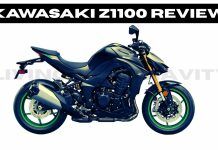
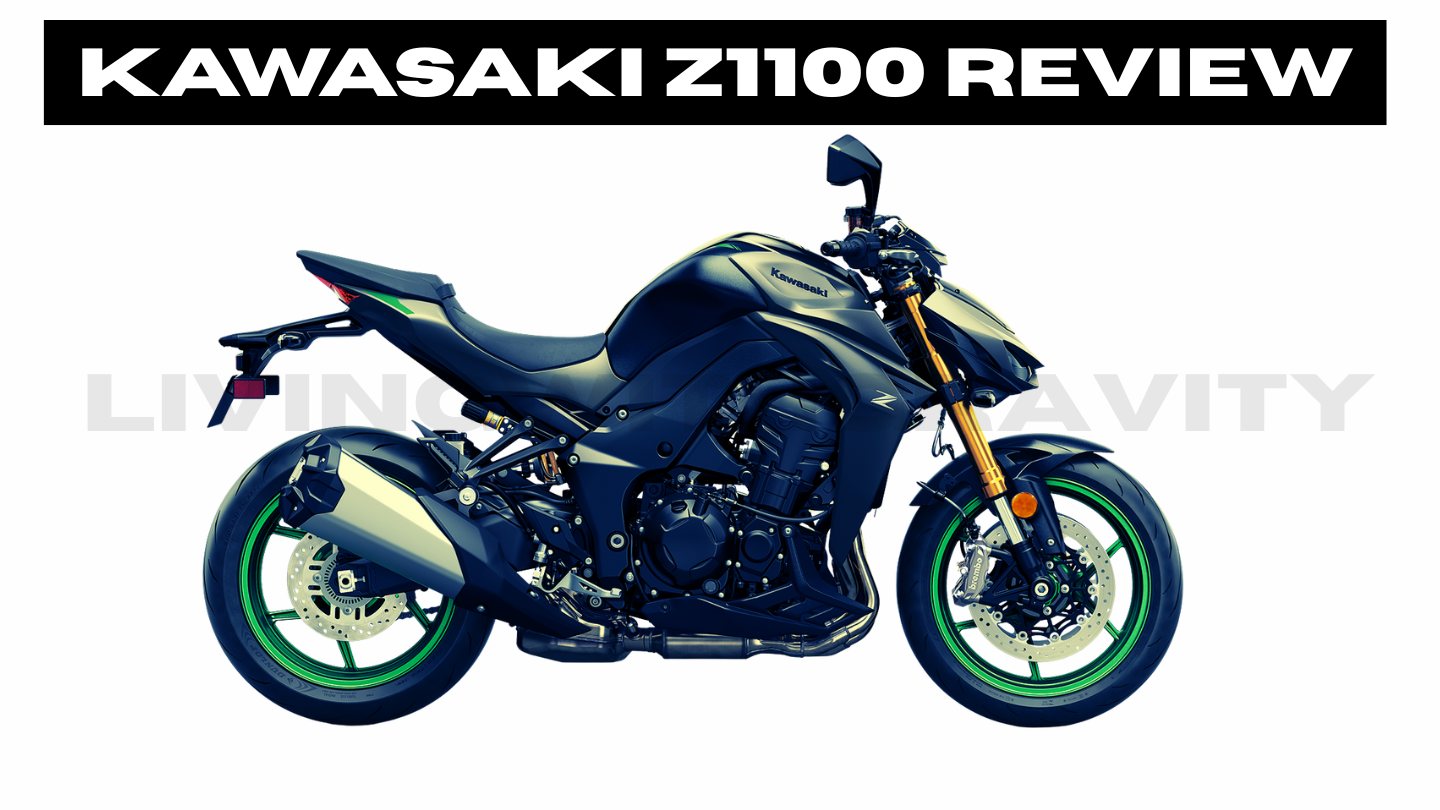
The Z1100 maintains its allegiance to Kawasaki’s established ‘Sugomi’ design philosophy, a concept introduced on the 2014 Z1000 that aims to convey palpable energy and the look of an animal ready to pounce.1 While the overall stance and bodywork share significant visual continuity with the outgoing Z1000, specific refinements have been implemented to update the aesthetic.10
These stylistic tweaks include fierce-looking LED headlights and a newly designed under-cowl that incorporates fin-like elements, which collectively amplify the aggressive posture.3 Further modernization is achieved through a redesigned exhaust system; the Z1100 features a slimmer, single silencer, replacing the signature dual 4-into-2 exhaust setup characteristic of the Z1000. While this cleans up the bike’s side profile, contributing to a sharper look, analysts note that the elimination of the trademark dual pipes may be missed by enthusiasts who valued the previous model’s muscular persona.7 The decision to maintain a design language dating back nearly a decade suggests Kawasaki placed higher priority on technical upgrades and cost containment over a radical visual refresh.4 The existing design is regarded as enduringly “head-turning”.4
2.2. Rider Interface: Ergonomic Revisions for Enhanced Control
The rider interface has been subtly but significantly improved to promote enhanced controllability, particularly in aggressive riding scenarios.1 Ergonomic changes involve positioning the handlebars 22 mm wider and 13 mm further forward than those on the Z1000.3 This adjustment provides the rider with increased leverage and encourages a more front-biased riding position.
A more forward-canted, aggressive posture, coupled with the introduction of supersport-style footpegs and smoothed transitions between the fuel tank and seat, is designed to enhance feedback from the front tire and improve responsiveness during changes of direction.11 These updates, though seemingly minor, are crucial for exploiting the capabilities of the new IMU-enabled chassis electronics, allowing the rider to provide sharper input and maintain control during high-speed cornering.3
2.3. Aesthetic Differentiation: The Significance of the SE Package
Kawasaki employs distinct visual cues to differentiate the higher-specification Z1100 SE. While the standard Z1100 is offered in subdued hues, generally a combination of ‘ebony’ and ‘metallic carbon grey’ with matching black wheels 4, the SE model features signature premium accents. These include gold fork legs (for the Showa SFF-BP fork) and sometimes signature green wheels.4 This visual cachet is an important factor in justifying the SE’s price premium and signaling the presence of superior running gear, such as the Öhlins rear shock and Brembo brakes, which are often immediately recognizable by performance enthusiasts.1 The US market receives only the SE variant, ensuring that the Kawasaki flagship Supernaked sold stateside carries these high-level components and visual distinctions.6
III. Powertrain Deep Dive: The Muscular Midrange Focus
3.1. Displacement Strategy: 1,099 $cm^3$ and the Stroke Increase
The heart of the Z1100 is a liquid-cooled, 4-stroke, DOHC, 16-valve in-line four engine, which shares its fundamental architecture and main frame with the capable Ninja 1100SX sport-tourer.1 The new engine displaces 1,099 $cm^3$ (compared to the Z1000’s 1,043 $cm^3$).3
This capacity increase was achieved by extending the stroke by 3 mm, from 56 mm to 59 mm, while retaining the 77.0 mm bore.1 This engineering decision—utilizing a longer stroke instead of a bore increase—is fundamental to the motorcycle’s intended performance character. Increasing the stroke naturally boosts torque production in the lower and middle portions of the rev range and requires a new crankshaft, which also contributes to increased rotating mass.4 This change allows the engine to run more efficiently and cleanly, contributing to a significant reduction in CO2 emissions, down from 151 g/km on the Z1000 to 126 g/km on the new Z1100.4
3.2. Tuning Philosophy: Sacrifice Peak Power for Usable Torque
The tuning of the 1,099 $cm^3$ engine prioritizes real-world, street-level usability over headline-grabbing peak horsepower numbers. The engine delivers a maximum of 134.0 hp (100.0 kW) at 9,000 rpm.1 This is marginally lower than the 140 hp peak produced by the previous Z1000, but the performance is accessed 1,000 rpm earlier.4 Crucially, maximum torque is increased to 83.3 lb-ft (113 Nm or 11.5 kgf•m), achieved at a highly accessible 7,600 rpm.1
The engineering rationale is clear: by focusing on a higher, earlier torque curve and a heavier flywheel, Kawasaki created an engine that “pulls even more strongly in the low-to-mid rpm range,” resulting in immediate acceleration that riders use frequently in daily conditions.1 This muscular midrange responsiveness leads analysts to conclude that the Z1100 should feel quicker and more engaging in typical street riding than its predecessor, even with the slightly reduced overall peak output.4
3.3. Internal Revisions, Transmission, and Efficiency
Several internal updates support the Z1100’s refined performance. These include revised camshaft profiles, new valve springs, and updated pistons.3 The intake side now features Electronic Throttle Valves (ETV), which are essential for enabling modern electronic rider aids such as Electronic Cruise Control.1 A new 4-2-1 exhaust system manages flow, contributing to both performance and aggressive styling.3
The six-speed transmission includes an Assist & Slipper Clutch for smoother downshifts and stability.5 Furthermore, a Kawasaki Quick Shifter (KQS) is fitted as standard, offering bi-directional (up-and-down) functionality to enhance the sportiness of the riding experience.1 To complement the robust midrange torque, Kawasaki revised the 6-speed gearbox with longer ratios in 5th and 6th gears, allowing the bike to sustain lower engine speeds during high-speed cruising for improved efficiency and comfort.3 This combination of standard KQS and a highly flexible engine allows riders to roll effortlessly in low and mid-range, sometimes making the gearbox almost optional for maintaining pace in traffic.13

IV. The Smart Chassis: Electronics and Dynamic Control
4.1. The Brain: Functionality of the 6-Axis Inertial Measurement Unit (IMU)
The most significant technological leap for the Z1100 platform is the integration of a six-axis Inertial Measurement Unit (IMU).1 The IMU acts as the central nervous system for the motorcycle’s dynamic controls, providing advanced “chassis orientation awareness” by measuring parameters such as lean angle, pitch rate, and yaw rate in real-time.5
This continuous data acquisition transforms the Z1100 from a conventional naked bike into one featuring lean-sensitive, sophisticated rider assistance technology, a necessity in the competitive liter-plus segment.4 The IMU’s feedback loop oversees the operation of multiple sub-systems, including the Kawasaki TRaction Control (KTRC) and the Kawasaki Intelligent anti-lock Brake System (KIBS).2
4.2. Safety and Performance Aids: KCMF, KTRC, and KIBS
The IMU powers several crucial electronic aids:
- Kawasaki Cornering Management Function (KCMF): KCMF uses IMU data to modulate brake force and engine power, thereby assisting the rider in tracing their intended line through a turn.2 This system is vital for providing precise control and facilitating smooth transitions between accelerating, braking, and accelerating again while leaned over.2
- Kawasaki TRaction Control (KTRC): The KTRC system is now lean-sensitive, meaning its intervention levels are dynamically adjusted based on the current lean angle reported by the IMU.5 This provides superior confidence and stability, managing wheelspin more accurately than conventional, non-IMU systems.
- Kawasaki Intelligent anti-lock Brake System (KIBS): KIBS provides cornering ABS functionality, preventing wheel lockup even when significant brake pressure is applied mid-corner. The integration with the KCMF and IMU ensures minimal disruption to the bike’s chassis stability.5
Additional electronic aids include Power Modes (allowing riders to choose between full or limited power delivery), an Economical Riding Indicator, and Electronic Cruise Control.5
4.3. Integrated Riding Modes and Rider Conveniences
The Z1100 simplifies complex electronic adjustments through integrated riding modes, which link predefined settings for KTRC levels and Power Modes.2 Riders can select from four factory presets and one customizable mode:
- Sport Mode: Offers the most responsive power delivery and minimal traction control intervention, optimized for spirited riding.
- Road Mode: Provides a balanced configuration suitable for a wide variety of general riding conditions.
- Rain Mode: Prioritizes safety with gentler power mapping and heightened traction control intervention for improved rider reassurance on slick surfaces.15
- Rider (Manual) Mode: Allows the rider to fine-tune individual settings for power delivery and KTRC to suit personal preferences.2
These modes are conveniently switched on the fly using buttons located on the left handlebar.15
The motorcycle features a 5-inch All-digital TFT color display utilizing thin-film transistor technology, ensuring excellent visibility regardless of ambient lighting.5 This instrument panel provides comprehensive vehicle information and allows riders to choose between two display modes, including one that features a lean angle indicator and turn-by-turn navigation at the center.15 Connectivity is enabled via RIDEOLOGY THE APP MOTORCYCLE, allowing for smartphone functions, voice command, and navigation display.5 A USB-C outlet is also a standard feature.5

V. Chassis Dynamics and Hardware Comparison
5.1. Frame Architecture and Geometry
The Z1100 is built around a highly rigid aluminum twin-tube frame.9 This foundational architecture is designed for sharper handling and enhanced feedback, utilizing the in-line four engine as a stressed member, secured by three rigid and one rubber mounting point.11 The geometry specifications contribute to its noted agility: the motorcycle maintains a short wheelbase of 56.7 inches (1,440 mm), a 24.5-degree rake, and 4.0 inches of trail.5 This compact geometry ensures the Z1100 is incredibly agile, capable of “cutting through the road with exhilarating precision”.13 The overall curb weight is 487.3 lb (221 kg), with a fuel capacity of 4.5 gallons.5
5.2. Z1100 Standard vs. Z1100 SE Suspension Analysis
Suspension components are the primary factor differentiating the Standard and SE models:
| Component | 2026 Z1100 (Standard) | 2026 Z1100 SE (Premium) |
| Front Suspension | 41mm Showa SFF-BP (Fully Adjustable; 4.7 in travel) 16 | 41mm Showa SFF-BP (Fully Adjustable; 4.7 in travel) 6 |
| Rear Suspension | Showa Horizontal Back-link (Rebound/Preload Adjustable; 5.4 in travel) 16 | Öhlins S46 Gas-Charged Shock (Rebound/Remote Preload Adjustable; 5.4 in travel) 1 |
The front suspension is uniform across both variants, utilizing the highly capable 41mm inverted Showa Separate Function Fork – Big Piston (SFF-BP), which offers full adjustability for compression, rebound damping, and spring preload.6
The critical distinction is found in the rear suspension. The standard Z1100 uses a Showa gas-charged rear shock 16, while the SE variant features the premium Öhlins S46 shock. The S46 unit is a sophisticated horizontal back-link setup, offering enhanced adjustability, including a remote spring preload adjuster, which provides superior ride compliance and ease of tuning for varied loads or riding styles.1 The decision to use the premium Öhlins shock only at the rear, while retaining the Showa SFF-BP fork up front, represents a strategic compromise aimed at maximizing performance and brand prestige while maintaining a competitive price point for the SE model.13
5.3. Braking System Evaluation: Standard Monobloc vs. Brembo M4.32
The braking systems also clearly delineate the two models, though both systems are high-performance:
- Standard Z1100 Brakes: The base model is equipped with dual 310mm semi-floating discs up front paired with radial-mount monobloc calipers.3 In some regional specifications (e.g., India), these are Tokico units.12 The rear uses a 260mm single disc with a single-piston caliper.3
- Z1100 SE Brakes: The SE model receives a significant upgrade to top-tier hardware. It utilizes dual 300mm semi-floating discs (or 310mm in some markets) with radial-mount, opposed 4-piston Brembo M4.32 monobloc calipers.1 The SE package also includes steel-braided brake lines.3
The Brembo M4.32 calipers are renowned for their strength, consistent feel, and superior modulation under extreme conditions, offering a refined, highly controllable stopping power that fully complements the SE’s higher-performance orientation.1 Both systems are managed by the IMU-enhanced Kawasaki Intelligent anti-lock Brake System (KIBS).5 Both versions ride on Dunlop Sportmax Q5A tires (120/70-17 front, 190/50-17 rear).5
VI. Competitive Landscape and Value Proposition
6.1. Market Positioning: The Litre-Plus Naked Segment Entry Strategy
The Z1100 SE is positioned as the new flagship in Kawasaki’s naturally aspirated Supernaked hierarchy, strategically entering the increasingly competitive liter-plus naked bike segment.6 With its 1,099 $cm^3$ engine, it enjoys a slight displacement advantage over many traditional 1,000 $cm^3$ rivals.17
Kawasaki’s strategy is not to compete on absolute top-end power against hyper-nakeds that exceed 170 hp, but rather to dominate the middle ground by offering a highly refined, feature-packed motorcycle at a competitive price point.8 The standard Z1100 is positioned as an exceptional value, exemplified by its UK starting price of £11,099, placing it within £100 of the Suzuki GSX-S1000.4 In the US, the Z1100 SE ABS starts at $14,999.6
6.2. Head-to-Head Technical Comparison
The Z1100 faces intense pressure from highly capable, often aggressively priced rivals:
- Honda CB1000 Hornet SP: The Hornet is a strong-selling competitor that often undercuts the Z1100 in price, especially the higher-spec SP version.4 The Hornet also produces competitive power figures, potentially exceeding the Z1100’s 134 hp peak.4 The Z1100’s counterpoint is its superior standard electronics package and significantly increased usable torque at lower RPMs.8
- Suzuki GSX-S1000: Closely matched on price, the Suzuki offers a more traditional liter-bike experience. The Z1100, however, boasts a decisive technological edge with its standard fitment of a 6-axis IMU, cornering aids, and cruise control, features often sold as optional extras by rivals.4
- Ducati Streetfighter V2: The Streetfighter V2 offers significantly higher peak output (155 PS) 18, but its track-focused geometry and premium branding demand a much higher price point (MSRP for the V2 S is around $20,324).19 The Z1100, positioned as a highly comfortable and flexible machine, also delivers superior fuel efficiency (17.85 kmpl vs. 16.7 kmpl for the Streetfighter V2).18
- Yamaha MT-10 and BMW S 1000 R: The Z1100 SE finds itself competing against higher-performance naked bikes like the Yamaha MT-10 in the $12k-plus price bracket.4 While these rivals may offer greater peak horsepower, the Z1100 SE distinguishes itself by including premium hardware (Öhlins, Brembo) and a complete electronics suite as standard equipment, avoiding the high cost associated with optional factory packages typically required to achieve a similar specification level on competitor models.
6.3. Value Proposition Analysis: Justifying the SE Premium
The value proposition of the Z1100 centers on the density of its standard features. The incorporation of the IMU-based electronics—including KCMF, cornering ABS, KTRC, KQS, and Electronic Cruise Control—as standard across both models elevates the Z1100 above many competitors that charge a premium for similar technology.4
The Z1100 SE, priced at $14,999 in the US, justifies its premium by providing true, high-performance hardware upgrades: the Brembo M4.32 monobloc calipers (known for superior control and feel) and the Öhlins S46 rear shock (offering enhanced compliance and remote adjustability).1 For an investment of $14,999, the SE variant delivers a holistic package of advanced electronics, sophisticated touring capability, and race-derived components, making it a compelling high-value choice for riders who require premium features without venturing into the highest echelons of hyper-naked pricing.

VII. Conclusions and Recommendations
7.1. Synthesis of Findings: The Calculated Evolution
The 2026 Kawasaki Z1100 successfully redefines the large-displacement Z Supernaked, strategically addressing both modern electronic necessities and rider demands for real-world usability. The fundamental engineering pivot—increasing displacement for midrange torque instead of peak power—is a sound decision that reflects the realities of street riding and the growing pressure of emissions standards. The resulting 1,099 $cm^3$ engine provides robust, accessible performance that is immediately gratifying, mitigating the theoretical disadvantage of its lower peak horsepower figure.
The technological leap is complete and essential: the six-axis IMU-enabled suite ensures that the Z1100 is fully competitive in terms of safety and dynamic control against the best offerings from Europe and Japan. This advanced technology package is consistently applied across both the Standard and SE variants, ensuring a high floor of sophistication.
7.2. Final Verdict and Expert Recommendations
The Kawasaki Z1100 is not engineered to win drag races against the supercharged Z H2 or the highest-power European hyper-nakeds. Instead, it is engineered for dominance in the high-performance, everyday riding scenario. It offers a unique synthesis of muscular four-cylinder torque, sport-touring comfort (aided by cruise control and connectivity), and sophisticated, IMU-based safety systems.
Recommendation:
- For the North American Market (Z1100 SE): The Z1100 SE, with its standard Brembo brakes and Öhlins rear shock, represents an exceptional value proposition at $14,999. It is highly recommended for discerning riders who demand premium, fully adjustable suspension and braking components coupled with a complete electronic rider aid package. The SE is ideally suited for aggressive canyon carving and high-mileage touring alike.
- For Global Markets (Standard Z1100): The standard model offers class-leading electronics and a torque-rich engine at a price point that significantly undercuts established rivals like the Honda CB1000 Hornet SP. This variant is the superior choice for riders prioritizing modern technology and engine flexibility within a strict budget. The Z1100’s return marks its consolidation as a powerful, technologically mature, and highly practical flagship Supernaked.
Sources
- Z1100 SE | 2026 – Kawasaki EU, accessed November 16, 2025, https://www.kawasaki.eu/en/Motorcycles/Supernaked/Z1100_SE_2026.html
- Kawasaki Z1100 | Supernaked Motorcycle | Sugomi™ awakens, accessed November 16, 2025, https://www.kawasaki.com/en-us/motorcycle/z/supernaked/z1100
- Kawasaki Z1100 and Z1100 SE unveiled: Top 5 changes from the Z1000 – Hindustan Times, accessed November 16, 2025, https://www.hindustantimes.com/car-bike/kawasaki-z1100-and-z1100-se-unveiled-top-5-changes-from-the-z1000-101758871910454.html
- Kawasaki Z1100 (2026) – Technical Review – Bennetts Insurance, accessed November 16, 2025, https://www.bennetts.co.uk/bikesocial/reviews/bikes/kawasaki/Z1100-2026-review
- 2026 Kawasaki Z1100 SE ABS | Naked Motorcycle | Flagship supernaked with peak Sugomi™, accessed November 16, 2025, https://www.kawasaki.com/en-us/motorcycle/z/supernaked/z1100/2026-z1100-se-abs
- Kawasaki confirms 2026 Z1100 SE for U.S. market – RevZilla, accessed November 16, 2025, https://www.revzilla.com/common-tread/kawasaki-confirms-2026-z1100-se-for-us-market
- 2026 Kawasaki Z1100 Launched In India: The ‘Big Zed’ is back!, accessed November 16, 2025, https://www.zigwheels.com/news-features/launch-story/2026-kawasaki-z1100-launched-in-india-the-big-zed-is-back/57267/
- 2026 Kawasaki Z1100 Launched In India — Top 5 Highlights You Should Know | Bike News, accessed November 16, 2025, https://www.timesnownews.com/auto/bike-news/2026-kawasaki-z1100-launched-india-top-5-highlights-you-should-know-article-153153626
- New Z1100 for 2026 – “Sugomi Awakens” – Kawasaki UK, accessed November 16, 2025, https://www.kawasaki.co.uk/en/news/New_Z1100_for_2026_-__Sugomi_Awakens_?Uid=081CXFxQXgpRDFxQXgtdXFgNClBdXFoKUV8NW1FRDFhfWFA
- 2026 Kawasaki Z1100 Styling Revealed – Cycle World, accessed November 16, 2025, https://www.cycleworld.com/motorcycle-news/kawasaki-z1100-styling-revealed/
- 2026 Kawasaki Z1100 SE ABS Preview – Motorcyclist, accessed November 16, 2025, https://www.motorcyclistonline.com/news/kawasaki-z1100-se-abs-preview/
- 2026 Kawasaki Z1100 launched at Rs 12.79 lakh, accessed November 16, 2025, https://www.autocarindia.com/bike-news/2026-kawasaki-z1100-launched-at-rs-1279-lakh-438447
- Motoplanete’s test of the Kawasaki Z 1100 SE 2026, accessed November 16, 2025, https://www.motoplanete.us/drive-test-kawasaki-z-1100-se-2026-11630/
- 2026 Kawasaki Z1100 SE ABS 1st Ride & Review | SEE Why the The Hornet Can’t COMPARE! – YouTube, accessed November 16, 2025, https://www.youtube.com/watch?v=k39dlnu2WoQ
- 2026 kawasaki z1100 se abs motorcycle – sugomi awakens, accessed November 16, 2025, https://content2.kawasaki.com/ContentStorage/KMC/PressReleases/830/7e778ed1-b298-4e9e-a605-c59219a2f9ec.pdf
- 2026 Kawasaki Z1100 and Z1100 SE – First Look | Motorcycle.com, accessed November 16, 2025, https://www.motorcycle.com/bikes/new-model-preview/2026-kawasaki-z1100-and-z1100-se-first-look-44650111
- 2026 Kawasaki Z1100 SE ABS First Look: 9 Fast Facts – Ultimate Motorcycling, accessed November 16, 2025, https://ultimatemotorcycling.com/2025/10/09/2026-kawasaki-z1100-se-abs-first-look-9-fast-facts/
- Ducati Streetfighter V2 vs Kawasaki Z1100 – Know Which is Better – BikeDekho, accessed November 16, 2025, https://www.bikedekho.com/compare/streetfighter-v2-vs-z1100
- 15 Best New Hyper Naked Motorcycles for 2026 – YouTube, accessed November 16, 2025, https://www.youtube.com/watch?v=oOK51Deb-1w
Our Social Media Handles
- Instagram : LivingWithGravity
- Medium : Akash Dolas
- YouTube Channel : Gear and Shutter
- Facebook : LivingWithGravity