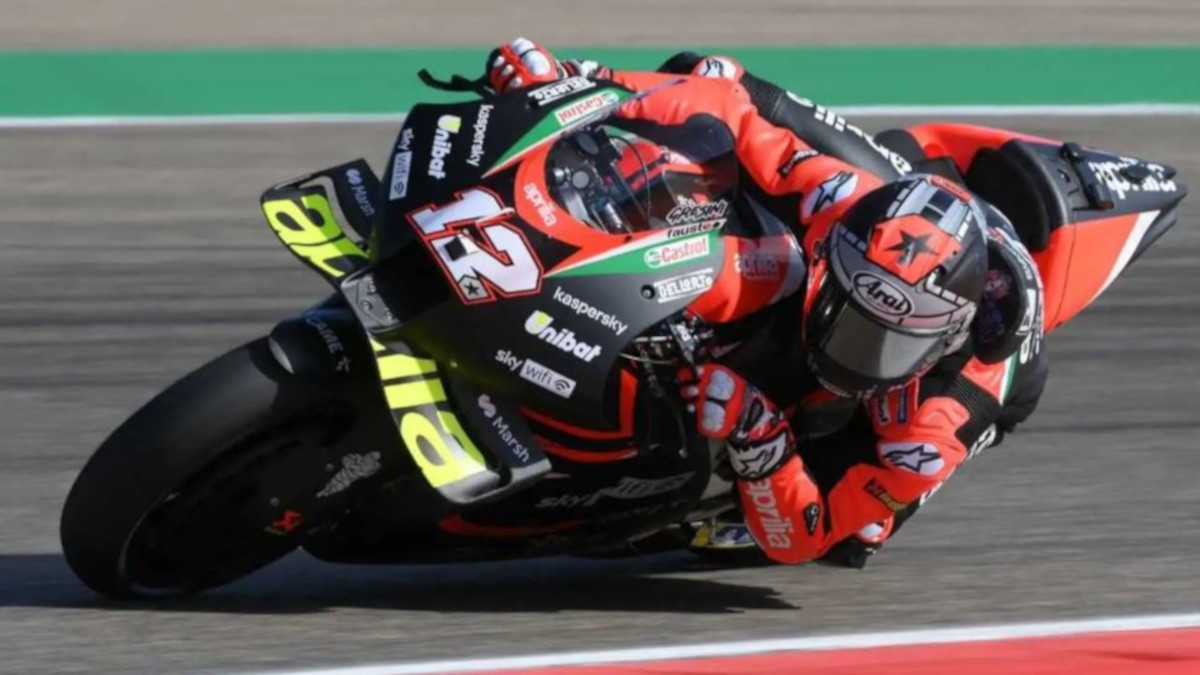




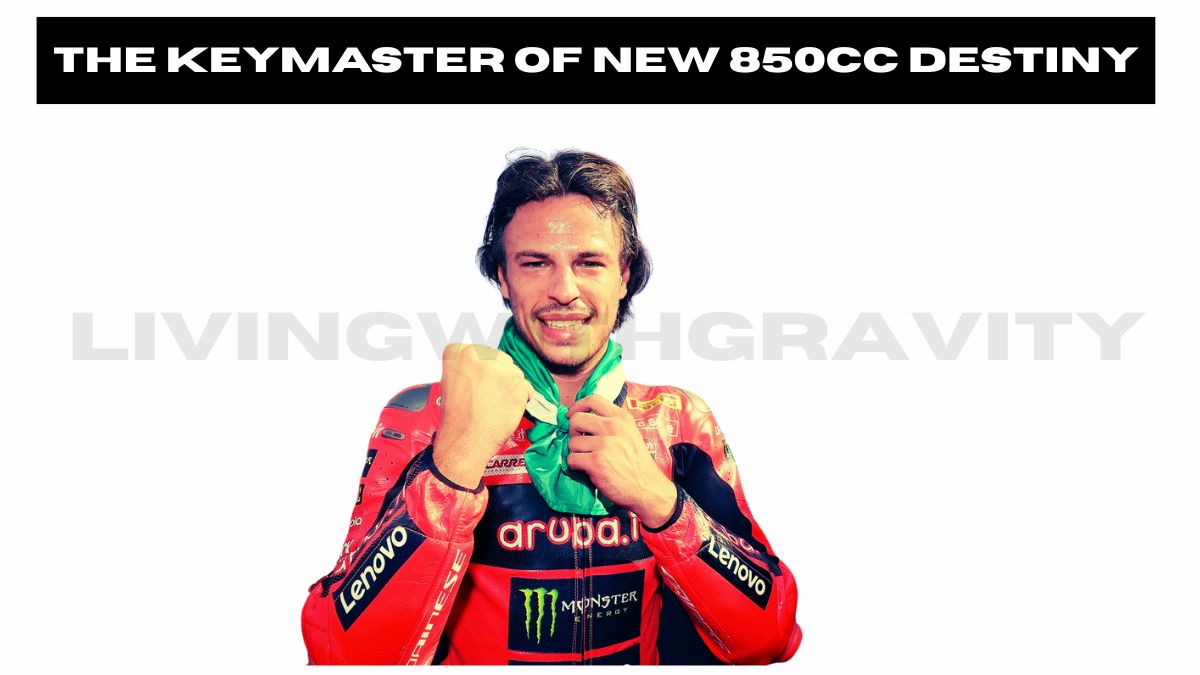
🤯 The Italian Job: Nicolo Bulega, Ducati’s Secret Weapon for the 850cc Apocalypse! 🤯
Forget what you thought you knew about MotoGP! Ducati just dropped a bomb that has the paddock sizzling hotter than a Desmosedici exhaust pipe!
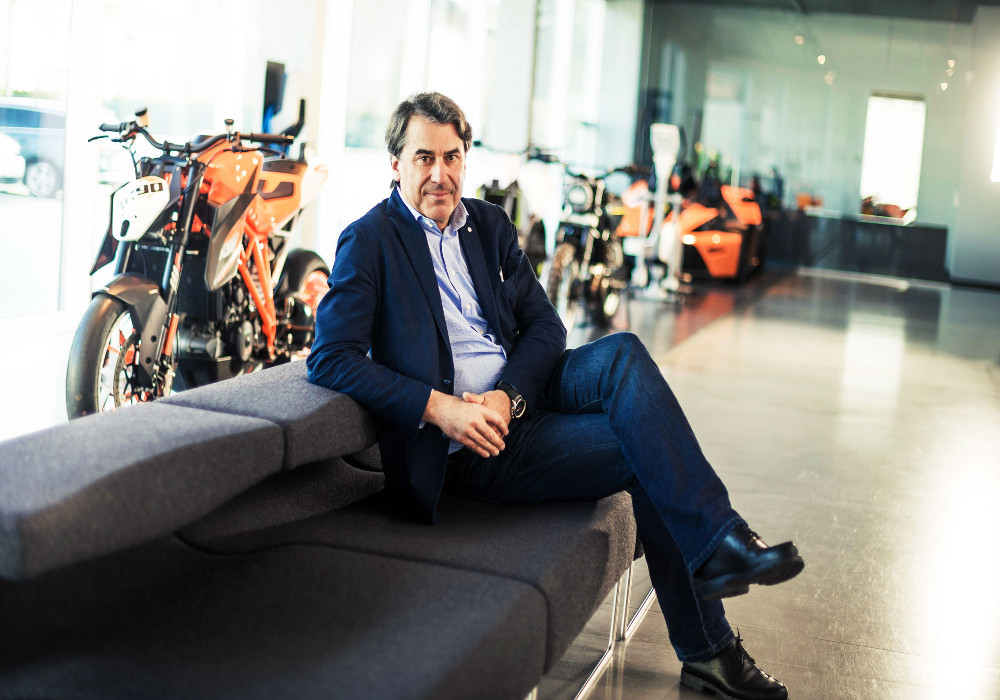
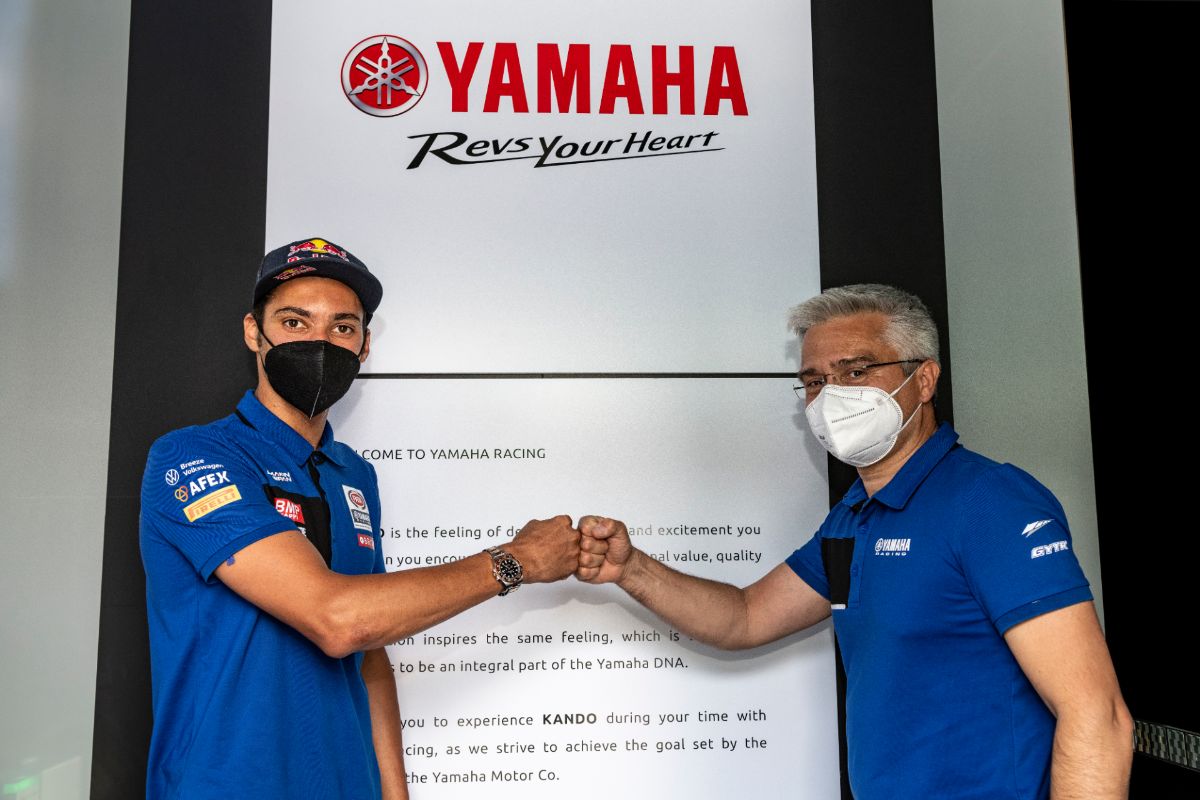
Team boss Davide Tardozzi—the man who makes the tough calls while looking impeccably sharp—has confirmed a move that’s part mad genius, part prophecy: Nicolò Bulega is being fast-tracked into the heart of Ducati’s R&D department.
🔬 The Mission: The 850cc Monster 🏍️
Remember those glorious, point-scoring laps Bulega pulled off in his Portimao MotoGP debut? That wasn’t just a fun weekend ride! That was an audition.
Tardozzi basically looked at Bulega and said: “Kid, you scored points on the old bike. Now, we need you to help us design the future!”
By 2027, MotoGP is shrinking the engine from 1000cc to 850cc. This isn’t just a tune-up; this is a rebirth. And who is Ducati entrusting with the blueprints for the next-generation, fire-breathing Desmosedici? The man who cut his teeth and learned the dark arts of tyre management in World Superbike (WSBK) with Pirelli!
It’s a masterstroke, a move of pure, Machiavellian brilliance!
- The Problem: The entire MotoGP paddock has to figure out the 850cc engine and the new, yet-to-be-confirmed-but-highly-anticipated tyre changes.
- The Ducati Solution: They’re injecting a rider who has lived and breathed WSBK’s unique tyre philosophy! Bulega’s brain is like a supercomputer programmed with secrets the current MotoGP grid is only guessing at.
👑 Bulega: From Debut Scorer to Kingmaker!
Bulega isn’t just a test rider; he’s the Keymaster to Ducati’s 2027 crown! Every single vibration, every ounce of feedback, every tiny adjustment he suggests will be etched into the carbon fiber of the new Desmosedici GP bike.
He didn’t just score points; he earned a seat at the table where the Destiny of Ducati is decided.
“He will be the guy who will develop the bike,” Tardozzi declared, making Bulega sound less like a rider and more like a mythical forge master hammering out the next championship-winning machine.
So, the message is clear: While the current MotoGP stars are battling for 2025 and 2026 glory, Nicolo Bulega is already living in 2027, secretly creating the bike that will either dominate the new era… or fall dramatically short.
No pressure, Nicolo! Just the weight of the entire Borgo Panigale factory resting on your shoulders!
That is a MASSIVE set of changes! This isn’t just a rule tweak; it’s a technological reset designed to shake up the entire pecking order and put the rider back in the spotlight.
Here is the high-octane breakdown of the 2027 MotoGP technical revolution:
💥 The Great Equalizer: MotoGP 2027 Rule Changes 💥
The goal? Safer, more sustainable, and more spectacular racing by reducing top speed and minimizing the technological “crutches” that currently help the bikes.
1. The Engine Shrink (The Core Change)
| Metric | Current (1000cc Era) | Future (850cc Era) | The Impact |
| Engine Displacement | 1000cc | 850cc | Limits outright power and top speed. Bikes will be slower on the straights, making corner entry safer. |
| Max Cylinder Bore | $81 \text{ mm}$ | $75 \text{ mm}$ | A critical dimension change that directly limits engine potential (how fast it can rev) and reduces performance. |
| Engine Allocation | 7 per season | 6 per season | Increases reliability focus and cost control (fewer engines to build). |
| Fuel Capacity (GP) | 22 Litres | 20 Litres | Forces a major focus on fuel efficiency/management across the race distance. |
| Fuel | Minimum 40% Sustainable | 100% Sustainable | A huge step towards environmental sustainability and road relevance. |
2. The Ban Hammer (Rider Skill Returns)
The technology that has dominated the last few years is being eliminated:
- 🚫 Ride-Height Devices (RHD): GONE. No more lowering the rear (or front) of the bike mid-corner or during acceleration. This was a complex, expensive, and performance-boosting technology.
- 🚫 Holeshot Devices: BANNED. The systems that lower the bike for a faster launch off the line are gone. Starts will now rely purely on the rider’s skill to manage wheelies and clutch delivery—something Bulega, a former WSBK rider, knows well.
The effect? Performance will be controlled, and the ability of a rider to manage the bike’s raw physical movement will be more crucial than ever.
3. The Aero Diet (The Slim-Down)
Aerodynamics will be significantly restricted to reduce their powerful negative effects (like dirty air, which hurts the following rider’s tyres and handling):
- The width of the front fairing will be 50mm narrower and the nose will be pushed back by 50mm.
- This will reduce the aero effect on straights and in braking zones, aiming to promote closer racing and more overtakes.
- The overall bike weight will be reduced from $157 \text{ kg}$ to $153 \text{ kg}$.
4. The Data Share (Leveling the Field)
- All riders’ GPS data will be made available to all teams at the end of every session.
This is huge! Less competitive teams will get immediate access to the lines, braking points, and acceleration curves of the fastest riders. It’s a massive injection of knowledge to help everyone catch up.
Why Bulega is Ducati’s Ace
With all these variables changing—smaller engine, less aero, no ride-height devices—the entire bike concept needs a reboot.
- His WSBK Experience: WSBK bikes are heavy, powerful, and rely far less on complex aero and RHD. Bulega’s style is tuned for raw mechanical grip and tyre conservation in a high-power environment.
- The Development Vacuum: The current MotoGP superstars are focused on winning now with the 1000cc bike. Bulega’s job is to put 100% of his effort into the 850cc future.
- A Clean Slate: Ducati has to build an entirely new Desmosedici around these rules. Bulega is the man they trust to lay the foundations for the next era of domination!
This is why Tardozzi called him the key: Bulega is testing the future while the champions are still fighting over the past!
Get ready for the Concessions Colosseum Reset! This is where the political drama of MotoGP truly meets the racetrack.
The concessions system is basically the rulebook’s way of giving the struggling manufacturers (like Honda and Yamaha recently) a massive bag of perks—more engines, more testing, and engine development freedom—to help them catch the dominant factories (like Ducati).
Here is the exciting reset coming in 2027:
⚖️ The 2027 Concessions Reboot: The Great Leveler 🤯
The goal of the 2027 technical regulations is to give everyone a fair shot at the new 850cc bike. To do this, they are effectively hitting the “Factory Reset” button on the competitive rankings.
1. The Global Re-Ranking: Everyone Starts Equal-ish
When the first 850cc Grand Prix race fires up in 2027, the manufacturers will NOT be ranked based on their performance in the preceding 1000cc era.
| Manufacturer Status | Starting Rank (2027) | Rationale |
| Existing Manufacturers | Rank B | This includes everyone (Ducati, KTM, Aprilia, Honda, Yamaha). It stops Ducati from running away with the early development, but also prevents Honda/Yamaha from getting maximum concessions right away. |
| New Manufacturers | Rank D | Any new factory joining the grid (like a rumored BMW or others) gets the maximum possible perks to help them integrate quickly. |
This move is a subtle but powerful strike against the existing hierarchy. Ducati, the reigning champ, loses its “Rank A” restrictions, but crucially, it doesn’t get the max perks of Rank D either. Everyone is in the mid-tier.
2. The Mid-Season Reckoning (The Pressure Cooker)
The real twist is the timeline for evaluation:
- The first assessment of each factory’s ranking will take place mid-season 2027 (around the summer break).
- This assessment will be based only on the results of the first half of the 2027 season (the new 850cc era).
This means the early part of the season will be a chaotic, high-stakes sprint. Every single point, podium, and win matters immediately, as it could radically change a factory’s privileges for the rest of the year.
3. What Rank B Means for Ducati’s Development
Starting in Rank B means a reduction in privileges compared to Rank D, but an increase in freedom compared to their current Rank A status.
| Concession Perk | Rank D (Maximum Perks) | Rank B (Starting 2027) |
| Engine Development | Free (no freeze) | Frozen (spec must be finalized for the year) |
| Test Riders | Race riders can test | Official test riders only |
| Wildcard Appearances | 6 per season | 3 per season |
| Private Testing | Unlimited | Limited (e.g., specific tracks) |
The Bulega Connection: The Perfect Storm
This Concessions Reset perfectly explains why Ducati’s Tardozzi is already calling Bulega the key developer:
- Engine Freeze: Since Ducati will start in Rank B, their engine specification will be frozen before the first 2027 race. Bulega’s job is to ensure the 850cc engine design they homologate is absolutely perfect and bulletproof before the gun fires.
- Testing Limitations: Being in Rank B limits their private testing. They need Bulega, a fast, current-spec rider, to maximize the value of every single test day they do get.
In short, the 2027 rules are designed to create a momentary power vacuum. Every team—Ducati included—is starting from a new, relatively restricted base, making the work done right now with development riders like Bulega the most important secret weapon in the garage!
This is where the plot thickens! The entire point of the radical 2027 rules—smaller engines, simplified aero, banned ride-height devices—is to lower the cost and technical barrier to entry.
The 2027 rules were designed to be a massive “Welcome Mat” for new factories, and the Concessions Reset (starting all existing factories at Rank B while giving new entrants Rank D perks) is the juicy incentive.
Here is the thrilling drama surrounding the potential new manufacturers:
🇩🇪 The German Giant: BMW (The Perennial Tease)
BMW has been the most rumored manufacturer for years, and the 2027 rules presented their perfect chance.
- The Lure: BMW is already hugely successful in World Superbike (WSBK) and is one of the only major global motorcycle manufacturers absent from the premier class. The move to 850cc and the new Pirelli tyres (also used in WSBK) would have provided significant technical synergy.
- The Hype: For a long time, the rumor mill linked their star WSBK rider, Toprak Razgatlıoğlu (a huge draw and world champion), to spearheading a 2027 MotoGP project.
- The Crushing Reality: The latest news is a significant blow to this dream. BMW Motorrad CEO Markus Flasch has been transparent, stating that a 2027 entry is “not viable” due to the massive development time and the fact that they haven’t made the final strategic decision yet. The 2027 deadline is simply too close for them to build a competitive machine from scratch.
The Verdict: On Hold (Heartbreak for 2027). While they haven’t ruled out MotoGP forever, it won’t be in time for the big rules reset.
🇯🇵 The Fallen Samurai: Suzuki (The Dream Return)
The biggest question mark is the team that left far too early. Suzuki pulled out after the 2022 season, mere months after winning the 2020 World Championship.
- The Hope: They still have a massive factory infrastructure and technical knowledge ready to go. Unlike others, they don’t need to learn MotoGP; they need to re-engage it. Furthermore, their unexpected exit left two coveted grid slots empty.
- The New Owners Factor: With Liberty Media (the company that transformed F1) now owning MotoGP, there is immense pressure and strategic push to get the grid back to its full capacity of six manufacturers. Liberty will likely offer a huge incentive to any manufacturer with a proven track record.
- The Challenge: Suzuki’s corporate headquarters would need a massive change of heart and re-allocate the colossal budget required to return, a hurdle that seems high despite the fans’ yearning.
The Verdict: Highly Unlikely, but the Best Fit. It’s a long shot, but if anyone can be tempted back quickly, it’s a factory with a recent MotoGP title under its belt.
🟢 The Stealth Bomber: Kawasaki (The WSBK Stalwart)
Kawasaki is another Japanese giant that focuses its top-tier racing efforts almost exclusively on WSBK, where they have enjoyed phenomenal success (mainly with Jonathan Rea).
- The Rationale: Like BMW, they have a massive global presence, a championship-winning culture, and the technical know-how. The 850cc shift could theoretically be more in line with a production-derived philosophy, which would suit their current WSBK program.
- The History: Kawasaki left MotoGP in 2008 due to the global financial crisis and has shown little serious appetite to return, focusing entirely on their successful and more budget-friendly WSBK platform.
The Verdict: Very Low Probability. They appear comfortable dominating the World Superbike stage and avoiding the monumental cost of a full MotoGP commitment.
The Overall Impact
The 2027 rules are still seen as the single best opportunity for a new manufacturer in over a decade.
If a new factory does enter, they will automatically be placed in the maximum Concessions Rank D, granting them:
- More engines to test and develop.
- More private testing days.
- The freedom to develop the engine throughout the year (not having it frozen like Ducati’s Rank B).
This ensures that the new entrant has the fastest possible pathway to becoming competitive, creating an even more volatile and exciting future for the sport!
Source
1. Ducati’s Bulega Development Role
- Source: MotoGP Official Website
- Source: Crash.net
2. MotoGP 2027 Technical Regulations
- Source: Crash.net (Official Regulation Summary)
- Source: Motorsport.com
3. Concessions System Reset
- Source: MotoGP Official Website (FAQ on New Bikes/Rules)
- Source: RevZilla
Our Social Media Handles
- Instagram : LivingWithGravity
- Medium : Akash Dolas
- YouTube Channel : Gear and Shutter
- Facebook : LivingWithGravity