






Executive Summary
Honda Motorcycle & Scooter India (HMSI) has launched the new CB 125 Hornet, signaling a pivotal strategic shift from its long-standing dominance in the traditional 125cc commuter motorcycle segment towards the burgeoning sporty 125cc category. This move, coinciding with HMSI’s 25th anniversary in India, introduces a motorcycle designed to appeal to the urban youth and Gen-Z demographic with its aggressive styling and advanced features.
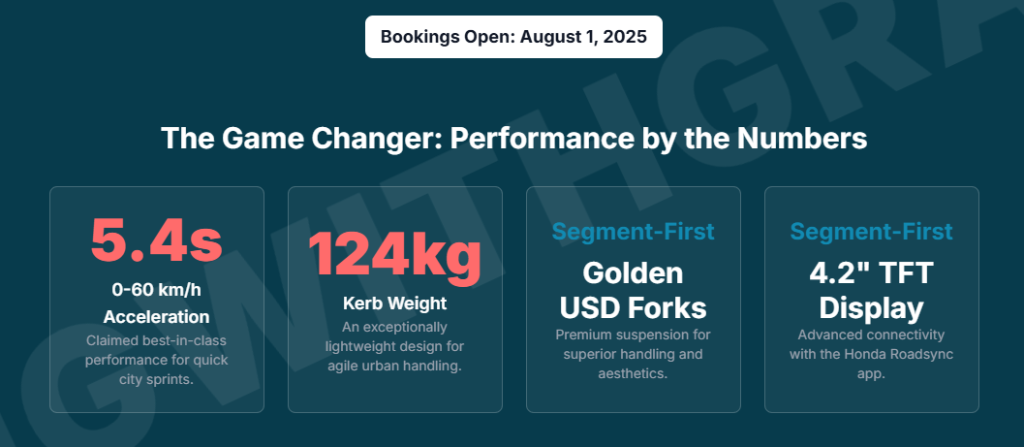
The CB 125 Hornet distinguishes itself with segment-first inclusions such as golden Upside Down (USD) front forks and a 4.2-inch TFT display offering comprehensive connectivity via the Honda RoadSync app. These premium features position the Hornet as a technologically advanced and visually striking offering. Honda aims to directly challenge established segment leaders like the TVS Raider 125 and Hero Xtreme 125R, asserting a performance advantage with a claimed best-in-class 0-60 km/h acceleration time of 5.4 seconds.
This strategic entry is designed to significantly boost Honda’s overall market share by tapping into a rapidly evolving consumer preference for style, features, and spirited performance within the 125cc displacement class.
1. Introduction: Honda’s Strategic Shift in the 125cc Segment
1.1. Evolution of the Indian 125cc Motorcycle Market
For many years, the Indian 125cc motorcycle market was primarily characterized by commuter-focused models, where fuel efficiency, affordability, and utilitarian design were the paramount considerations for buyers. Honda itself has held a dominant position in this traditional segment, catering to the needs of daily commuters [User Query]. However, recent trends indicate a significant transformation in consumer preferences. The market has witnessed the emergence and rapid growth of a “sporty 125cc” sub-segment. This shift is particularly driven by urban youth and Gen-Z buyers who seek motorcycles that offer more than just basic transport; they demand a blend of dynamic styling, advanced features, and engaging performance.
The success of models like the TVS Raider 125, which established this sporty segment several years ago, clearly demonstrates a strong demand for differentiated products even within lower displacement categories.1 This evolution signifies a maturation of the Indian two-wheeler market, where consumers are increasingly willing to invest in products that provide enhanced aesthetics, technological sophistication, and a more spirited riding experience. Honda’s strategic entry into this segment with the CB 125 Hornet validates this ongoing trend, indicating a broader industry movement towards more specialized and aspirational offerings beyond purely functional considerations. The company’s recognition of this evolving demand underscores a responsive approach to market dynamics.
1.2. Honda’s 25-Year India Operations and the Hornet’s Market Intent
The launch of the Honda CB 125 Hornet holds particular significance as it coincides with Honda Motorcycle & Scooter India’s (HMSI) celebration of 25 years of operations in the country.2 This timing is not merely coincidental; it serves as a powerful statement of intent from Honda, signaling a renewed and aggressive strategy in a crucial global market. The introduction of such a pivotal new model on a milestone anniversary suggests a deep commitment to innovation and market expansion, moving beyond merely maintaining existing segment strongholds.
Honda’s stated aim is to “expand into this sporty 125cc segment to boost its overall market share”.5 This marks a notable departure from their previous approach, where their existing premium 125cc offering, the SP 125, was not sufficiently equipped to compete effectively against the modern, feature-rich sporty models in the sub-segment.6 The decision to introduce the Hornet reflects a realization that the 125cc market is ripe for disruption, and that a product tailored to the contemporary demands of style and performance is essential. This strategic timing is designed to capture significant public and media attention, reinforcing Honda’s long-term vision for the Indian market and its determination to reclaim leadership across all relevant segments. It also implies a substantial investment in research and development, as well as marketing resources, dedicated to this new and important product line.
2. Honda CB 125 Hornet: Detailed Specifications and Features
2.1. Design Philosophy and Aggressive Styling
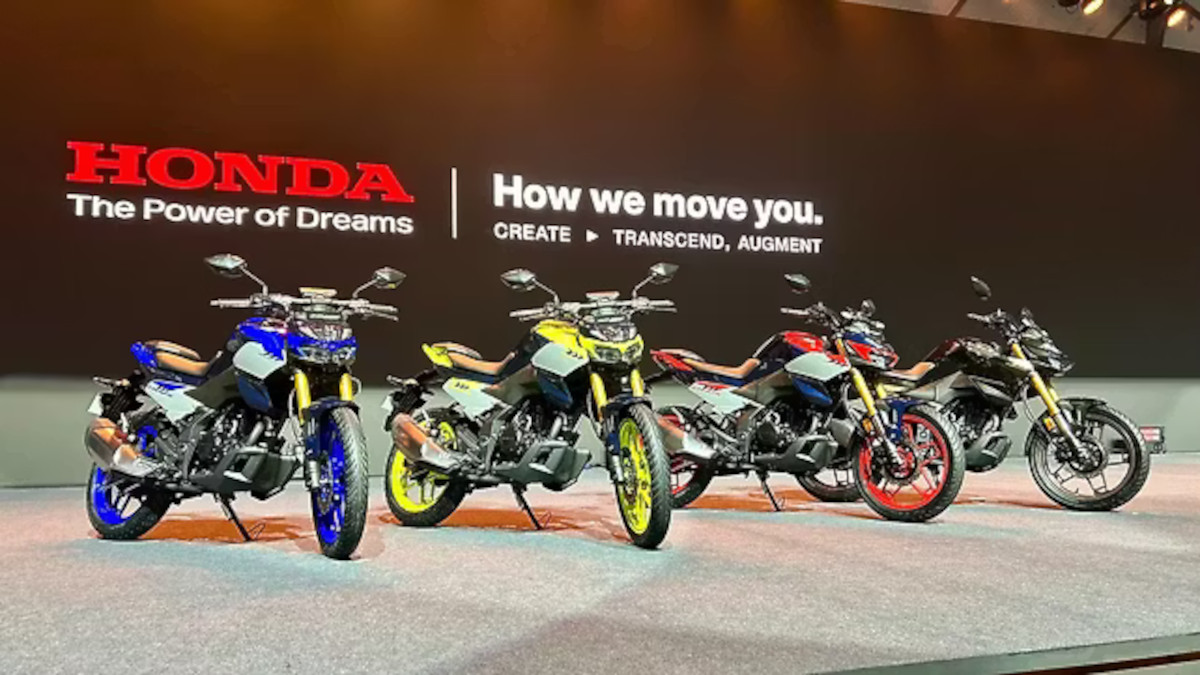
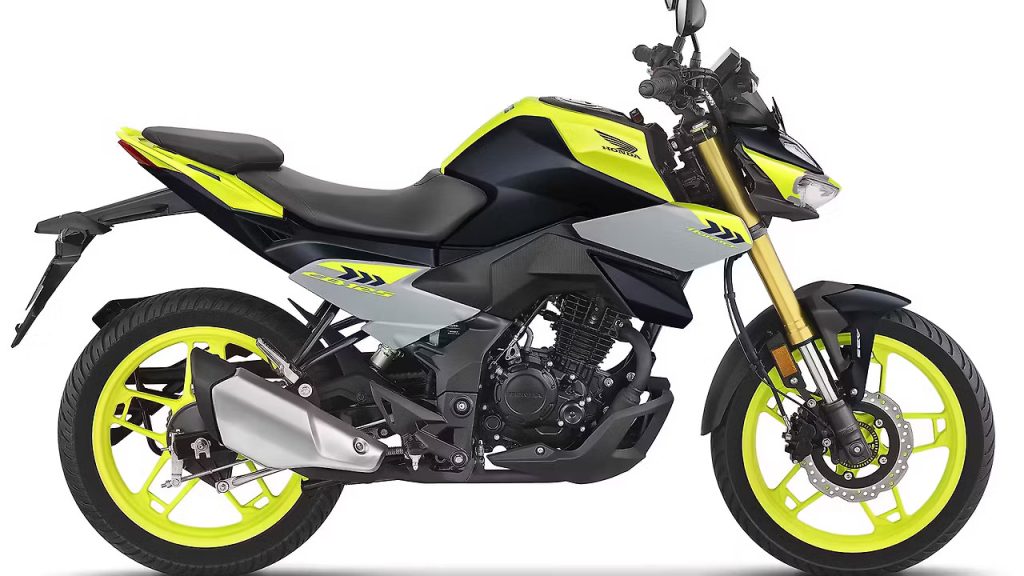
The Honda CB 125 Hornet makes a bold statement with its design, adopting a “sharp streetfighter-style design” and an “aggressive streetfighter stance” that distinctly sets it apart from Honda’s more traditional commuter motorcycles.3 This design philosophy is a deliberate choice to appeal to the target demographic of “urban youth” and “Gen-Z” buyers.2 The motorcycle features a “bold front fascia” complemented by an “angular LED headlamp,” a “signature twin-LED headlamp with LED DRLs,” and high-mounted LED turn indicators, all contributing to its commanding road presence.2
From the side, the Hornet showcases a “muscular fuel tank with sharp tank shrouds” and a “sculpted fuel tank,” enhancing its sporty appeal.2 A “stylish muffler” and a “split seat setup” further accentuate its dynamic character, promising comfort for both rider and pillion.2 A unique and premium touch is the “positioning of ignition key on the fuel tank,” adding a distinctive flair that resonates with a younger audience seeking “motorcycling drama”.2 The motorcycle is equipped with multi-spoke alloy wheels, and its overall proportions and sharp lines contribute to a premium appearance that stands out in its class.2
To further align with its youthful target audience, the CB 125 Hornet is offered in four vibrant and “funky” color options, including dual-tone combinations. These include Pearl Siren Blue with Lemon Ice Yellow, Pearl Igneous Black, Pearl Siren Blue with Athletic Blue Metallic, and Pearl Siren Blue with Sports Red.2 The wheels are also color-coded, adding to the bike’s “in-your-face” aesthetic.6 This strong emphasis on visual appeal and a “sporty vibe” underscores Honda’s understanding that for this demographic, design is a primary competitive tool, reflecting personal style as much as functional utility.
2.2. Advanced Technology and Rider-Centric Features
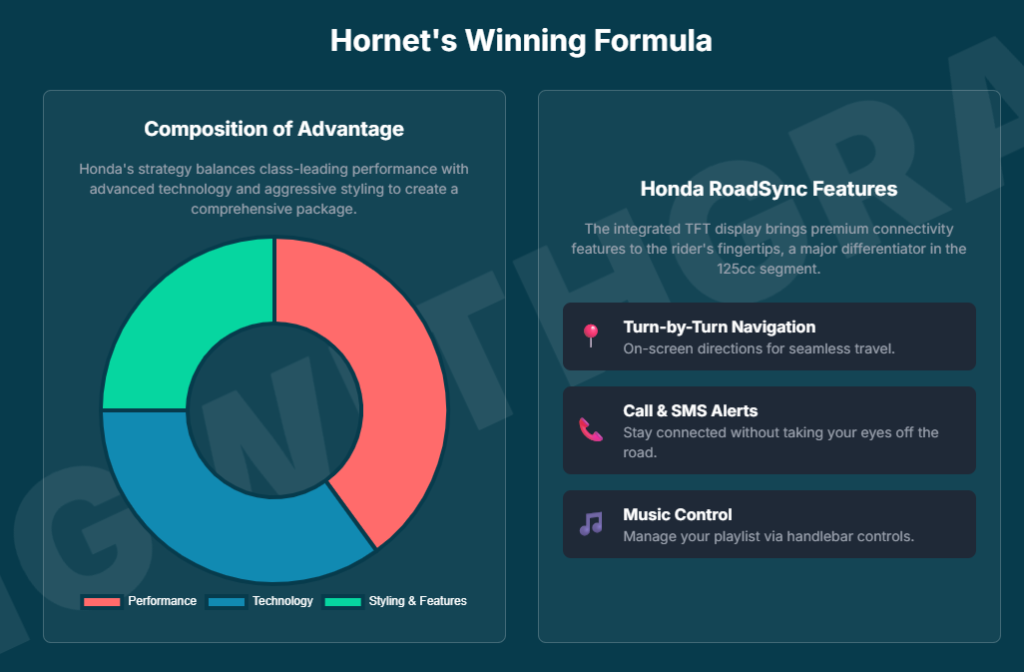
The Honda CB 125 Hornet is loaded with technology typically found in higher-segment motorcycles, representing a significant technological leap for the 125cc category. At its core is a “4.2-inch TFT display”.2 This full-color screen offers “Bluetooth connectivity and Honda RoadSync app compatibility,” providing a comprehensive suite of digital features.2 The Honda RoadSync app enhances the riding experience by offering “navigation support, call and SMS alerts, and music control through a paired headset”.3 All these functionalities can be conveniently controlled using “toggle switches on the left handlebar,” ensuring minimal distraction for the rider.4
For added convenience, the motorcycle includes a “USB Type-C charging port” as standard, allowing riders to keep their devices charged on the go.3 The entire lighting system is “full LED,” contributing to both modern aesthetics and enhanced visibility.5
Safety features are also a standard inclusion on the CB 125 Hornet. It comes equipped with “single-channel ABS” (Anti-lock Braking System) for improved braking control.5 Additionally, it features a “side-stand engine cut-off” and an “engine kill switch,” enhancing overall rider safety and convenience.4 The inclusion of these advanced features, particularly the TFT display and RoadSync connectivity, are explicitly highlighted as “segment-first” offerings.2
This is a clear attempt by Honda to redefine consumer expectations within the 125cc sporty segment, aiming to elevate the entire category by offering technology and amenities usually associated with more premium, higher-displacement motorcycles. This strategy suggests Honda’s confidence in its ability to integrate these features while maintaining competitive pricing, potentially attracting a wider range of buyers seeking superior value.
2.3. Engine Performance and Dynamics
The Honda CB 125 Hornet is powered by a “123.94cc, single-cylinder, fuel-injected engine” that adheres to “OBD2B emission norms”.3 This powerplant is tuned to deliver a balance of performance and efficiency suitable for urban environments. It produces “8.2 kW (approximately 11 bhp) of peak power at 7,500 rpm” and “11.2 Nm of peak torque at 6,000 rpm”.3 While there are slight variations in reported power figures (e.g., 11.1 bhp, 10.99 bhp, 11.14 PS) across different sources, they consistently point to a strong and responsive output for its class.6 The engine is mated to a “5-speed gearbox” for smooth and efficient power delivery.5
A key performance highlight emphasized by Honda is its acceleration. The company claims a “0-60 km/h sprint time of 5.4 seconds,” positioning the CB 125 Hornet as the “quickest bike in its segment”.4 This focus on quick acceleration, rather than just top speed, is particularly relevant for city commuting, where rapid overtakes and agile maneuvering are crucial. Furthermore, the motorcycle features a remarkably low “kerb weight of just 124 kg”.3 This lightweight construction, combined with the engine’s tuning for quick responsiveness, contributes significantly to the bike’s “lightweight and agile handling,” making it an “ideal” companion for navigating congested urban traffic.4 This engineering approach demonstrates a deliberate strategy to offer spirited urban performance, appealing to a demographic that values responsiveness and ease of maneuverability in their daily rides.
2.4. Chassis, Suspension, and Braking System
The Honda CB 125 Hornet is built on a “lightweight diamond-type frame,” designed to provide a balance of rigidity and agility.9 A significant highlight in its chassis setup is the inclusion of “segment-first golden USD (Upside Down) front forks”.2 While these forks are noted as “non-adjustable” 3, their presence enhances both the motorcycle’s premium aesthetics and its handling characteristics, a feature typically reserved for higher-end models. At the rear, the bike is equipped with a “5-step adjustable mono-shock absorber,” which further aids in providing superior handling and ride comfort.2
Braking duties at the front are managed by a “240mm petal disc”.3 The petal disc design is specifically chosen to “improve heat dissipation and cooling, thereby enhancing braking efficiency”.5 For the rear, the motorcycle uses a “130mm drum brake”.3 As an essential safety measure, the CB 125 Hornet comes standard with “single-channel ABS”.4 It is worth noting that this single-channel ABS setup would likely require modification if the bike were to be introduced in European markets, which often have stricter ABS regulations.3 The bike rides on “wide tubeless tyres,” with an “80/100-17 unit at the front and a 110/80-17 unit at the rear,” contributing to a planted stance and confident grip.3
The strategic choice to include “segment-first golden USD front forks” represents a calculated investment by Honda. While some might consider them “overkill for a 125cc bike” 6, their inclusion serves multiple purposes: they undeniably enhance handling dynamics, contribute significantly to the motorcycle’s “premium touch” and visual appeal, and act as a strong differentiator that captures attention.2 This approach allows Honda to create a strong perception of value and performance, even while balancing costs with other components like the rear drum brake. This strategy aims to attract buyers who are increasingly discerning about features and aesthetics, even in entry-level performance segments. The localized design choices, such as the ABS system, further highlight Honda’s tailored product development for the Indian market.
2.5. Available Color Options and Dimensions
The Honda CB 125 Hornet is offered in four “dynamic color options with striking combinations,” designed to resonate with its youthful target audience.2 These “funky” and “in-your-face” color schemes include Pearl Siren Blue with Lemon Ice Yellow, Pearl Igneous Black, Pearl Siren Blue with Athletic Blue Metallic, and Pearl Siren Blue with Sports Red.2 The wheels are also color-coded, adding to the bike’s distinctive visual appeal.6 This emphasis on vibrant and aggressive aesthetics is a deliberate marketing strategy to make the motorcycle visually appealing and to help it stand out in a highly competitive market, acknowledging that for younger demographics, the bike’s visual identity is as important as its functional attributes.
In terms of dimensions, the CB 125 Hornet is designed for agile urban maneuverability:
- Overall Length: 2,015 mm 9
- Overall Width: 783 mm 9
- Overall Height: 1,087 mm 9
- Wheelbase: 1,330 mm 9
- Ground Clearance: 166 mm 9
- Fuel Tank Capacity: 12 litres 9
- Seat Length: 597 mm 9
These dimensions, combined with its lightweight design, contribute to the Hornet’s suitability for city commutes, allowing for nimble handling and easy navigation through traffic.
Table 1: Honda CB 125 Hornet Key Specifications
| Parameter | Measurement |
| Engine Type | 123.94cc, Single-Cylinder, Fuel-Injected |
3. Competitive Landscape and Market Positioning
The Honda CB 125 Hornet enters a fiercely competitive and rapidly growing segment, directly targeting established players that have successfully carved out a niche in the sporty 125cc category.
3.1. Direct Rivalry: Honda CB 125 Hornet vs. TVS Raider 125
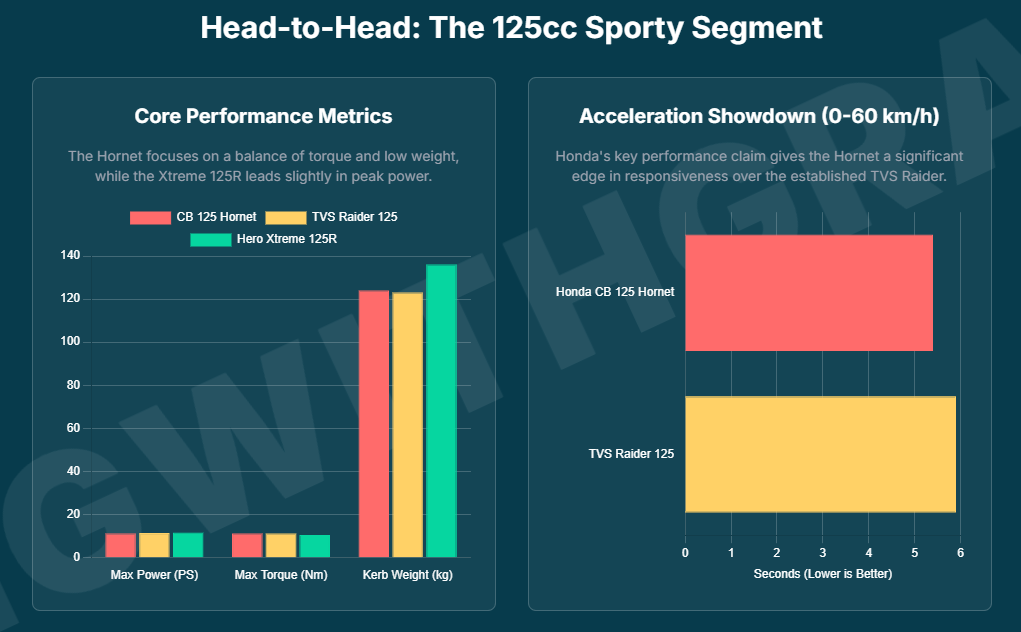
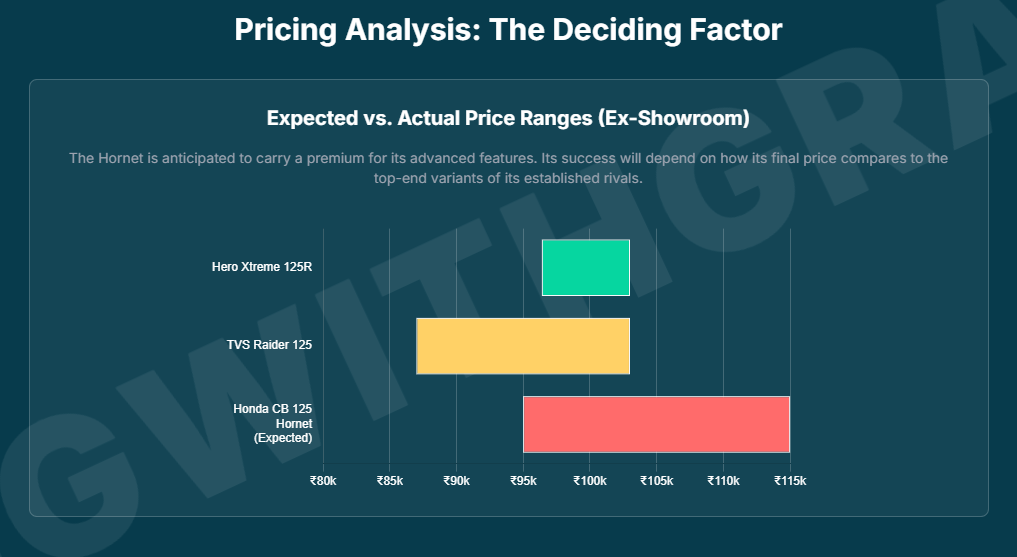
The TVS Raider 125 has been a pioneering force in the sporty 125cc segment, having “established this segment several years ago” and maintaining a leadership position.1 Its success is attributed to a compelling blend of features and performance. The Raider is powered by a 124.8 cc air and oil-cooled single-cylinder engine with 3 valves, producing 11.38 PS of power at 7500 rpm and 11.2 Nm of torque at 6000 rpm.1 It boasts a claimed 0-60 kmph acceleration time of 5.9 seconds and a kerb weight of 123 kg.1 The Raider’s front suspension utilizes telescopic forks, and it features a full digital instrument cluster, with higher variants offering Bluetooth connectivity and turn-by-turn navigation via its SmartXonnect system.1 It offers riding modes (Eco, Power, Boost) and practical underseat storage.1 Braking is handled by a front disc/drum and a rear drum, with disc brake options available on certain variants.1 The ex-showroom price for the TVS Raider 125 ranges from ₹87,010 to ₹1.03 Lakh.1
In this direct comparison, the CB 125 Hornet aims to achieve feature parity or even superiority. While the Raider’s digital console and riding modes have been segment-leading, the Hornet’s 4.2-inch TFT display, Honda RoadSync compatibility, and USB-C charging offer a highly competitive and modern technological package.2 Crucially, the Hornet’s claimed 0-60 km/h time of 5.4 seconds is demonstrably faster than the Raider’s 5.9 seconds.1 This performance advantage in acceleration allows Honda to directly challenge the Raider’s core strengths, indicating a strategy to not merely enter the segment but to disrupt the existing hierarchy by offering a more “thrilling performance”.2
3.2. Direct Rivalry: Honda CB 125 Hornet vs. Hero Xtreme 125R
The Hero Xtreme 125R has emerged as a significant competitor, “giving TVS stiff competition” in the sporty 125cc segment.5 It is powered by a 124.7 cc air-cooled 4-stroke single-cylinder engine, which produces 11.55 PS of power at 8250 rpm and 10.5 Nm of torque at 6500 rpm.2 At 136 kg, the Xtreme 125R is heavier than the Hornet.15 Its front suspension consists of a conventional 37mm fork, and it features a digital instrument cluster.15 Braking is handled by a 240mm front disc and a rear drum, with single-channel ABS available on higher variants.15 The Xtreme 125R’s ex-showroom price ranges from ₹96,425 to ₹1.03 Lakh.2
When comparing the Hornet to the Xtreme 125R, it becomes apparent that Honda is emphasizing agility and premium features. While the Xtreme 125R boasts a slightly higher peak power output (11.55 PS vs. the Hornet’s ~11 PS), the Hornet’s lower kerb weight (124 kg vs. 136 kg) and higher torque (11.2 Nm vs. 10.5 Nm) are critical factors contributing to its superior 0-60 km/h acceleration.3 Furthermore, the Hornet’s “segment-first golden USD forks” offer a significant premium appeal and a potential handling advantage over the Xtreme’s conventional forks.2 Honda is positioning the Hornet as a more agile and feature-rich offering, focusing on the overall riding experience and perceived value through premium hardware, rather than solely on top-end power figures. This approach aims to attract buyers who prioritize a refined and feature-rich sporty 125cc motorcycle.
3.3. Unique Selling Propositions and Competitive Advantages
The Honda CB 125 Hornet enters the market with several distinct advantages designed to set it apart from its rivals:
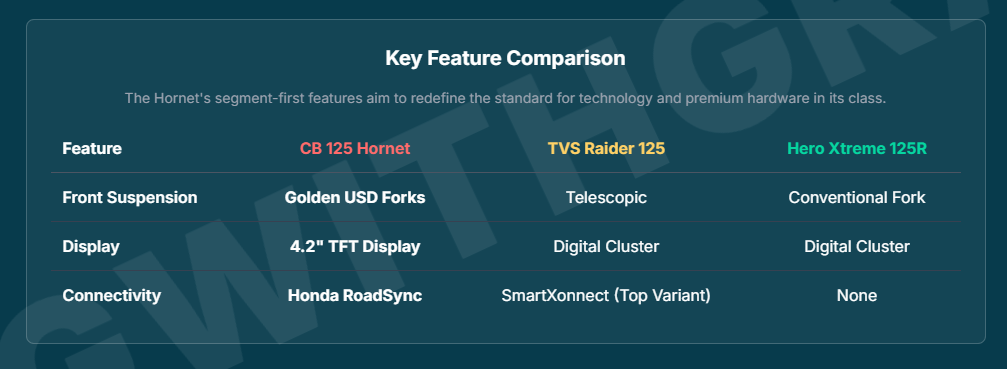
- Segment-First USD Forks: The inclusion of “golden USD front forks” is a standout feature, typically found in higher motorcycle segments. This not only enhances the bike’s aggressive aesthetics but also contributes to superior handling dynamics, providing a significant visual and performance differentiator.2
- Advanced TFT Display with RoadSync: The 4.2-inch TFT display, coupled with Bluetooth connectivity and Honda RoadSync app compatibility, offers comprehensive navigation, communication alerts, and music control. This advanced technological integration provides a substantial edge in its class, appealing to tech-savvy riders.2
- Best-in-Class Acceleration: With a claimed 0-60 km/h acceleration time of 5.4 seconds, the Hornet is positioned as the “quickest bike in its segment”.4 This performance metric is a strong appeal for buyers who prioritize quick city performance and responsiveness.
- Lightweight Design: Weighing just 124 kg, the Hornet is exceptionally light for a 125cc motorcycle.3 This low kerb weight translates directly into highly agile and nimble handling, making it ideal for navigating dense urban traffic.
- Honda Reliability and Brand Trust: Leveraging Honda’s long-standing reputation for quality, reliability, and an extensive service network across India provides a significant underlying advantage.17 This brand trust offers buyers “peace of mind” and contributes to higher resale values.
Honda’s strategy is not merely to introduce another 125cc sporty bike, but to premiumize the entire segment. By incorporating “segment-first” features like USD forks and advanced TFT connectivity, Honda is attempting to establish a new benchmark for consumer expectations within the 125cc category.2 This approach shifts the competitive battleground beyond just price and basic performance to encompass technology, aesthetics, and perceived value.
This premiumization strategy could lead to higher profit margins per unit for Honda compared to traditional commuter models. It also aims to attract a more affluent subset of the 125cc market or even draw buyers from higher segments who are seeking a feature-rich, stylish, and agile urban motorcycle without the associated higher running costs. The success of this approach will depend heavily on the final pricing and how effectively consumers perceive the value of these premium features.
Table 2: Comparative Analysis: Honda CB 125 Hornet vs. Key Rivals
| Feature/Specification | Honda CB 125 Hornet | TVS Raider 125 | Hero Xtreme 125R |
| Engine Displacement (cc) | 123.94 5 | 124.8 1 | 124.7 15 |
| Max Power (PS/bhp) | ~11 bhp (8.2 kW) @ 7500 rpm 3 | 11.38 PS @ 7500 rpm 1 | 11.55 PS @ 8250 rpm 15 |
| Max Torque (Nm) | 11.2 Nm @ 6000 rpm 3 | 11.2 Nm @ 6000 rpm 1 | 10.5 Nm @ 6500 rpm 15 |
| 0-60 km/h Acceleration (seconds) | 5.4 (claimed best-in-class) 5 | 5.9 1 | Not specified, but likely slower than Hornet due to weight/torque balance |
| Kerb Weight (kg) | 124 5 | 123 1 | 136 15 |
| Front Suspension Type | Golden USD Forks (Segment-First) 5 | Telescopic 2 | Conventional Fork (Dia. 37) 16 |
| Rear Suspension Type | 5-step Adjustable Mono-Shock 2 | Monoshock 2 | Hydraulic Shock Absorbers 16 |
| Front Brake Type | 240mm Petal Disc 5 | Disc/Drum (variants) 1 | 240mm Disc 15 |
| Rear Brake Type | 130mm Drum 5 | Drum 1 | Drum 15 |
| ABS | Single-Channel ABS 5 | Not standard across all variants, some disc variants 1 | Single-Channel ABS (higher variants) 16 |
| Display Type | 4.2-inch TFT Display 5 | Full Digital Instrument Cluster 1 | Digital Instrument Cluster 15 |
| Connectivity | Bluetooth (Honda RoadSync app) 5 | Bluetooth (SmartXonnect on higher variants) 1 | No explicit mention of Bluetooth/app in snippets |
| Key Differentiating Features | Golden USD Forks, TFT Display, Honda RoadSync, USB-C Charging, Best-in-class 0-60 km/h 5 | Riding Modes (Eco, Power, Boost), Underseat Storage 1 | LED lights, Lightweight chassis for handling 16 |
| Expected/Current Ex-showroom Price Range (INR) | ₹95,000 – ₹1.40 Lakh (expected) 6 | ₹87,010 – ₹1.03 Lakh 1 | ₹96,425 – ₹1.03 Lakh 15 |
4. Pricing, Availability, and After-Sales Support
4.1. Booking Commencement and Expected Price Range
Bookings for the all-new Honda CB 125 Hornet are scheduled to “commence from August 1, 2025,” and will be available across Honda’s authorized dealerships nationwide.2 While the official prices are “expected to be announced closer to the launch” 5, various industry sources have provided a range of anticipated ex-showroom prices. These estimates vary significantly, from around ₹95,000 to ₹1.00 Lakh 10, to ₹95,000 – ₹1.05 Lakh 6, and even up to ₹1.20 Lakh to ₹1.40 Lakh.11 Another estimate places it around ₹1.10 Lakh.9
This wide range of expected prices highlights a critical uncertainty surrounding the Hornet’s market success. Honda’s inclusion of “premium hardware” and a “good mix of modern tech” suggests a potentially higher price point.5 However, the 125cc segment in India is notoriously price-sensitive. The final pricing decision will be the ultimate determinant of whether the Hornet can effectively challenge its established rivals, such as the TVS Raider (priced from ₹87,010 to ₹1.03 Lakh) 1 and the Hero Xtreme 125R (priced from ₹96,425 to ₹1.03 Lakh).15 Honda faces a delicate balancing act: pricing the Hornet competitively enough to attract mass-market buyers while simultaneously reflecting the value of its segment-first features.
A price that is perceived as too high could significantly limit its sales volume, despite its advanced features. Conversely, an aggressive pricing strategy could rapidly disrupt the segment and substantially boost Honda’s market share, even if it initially means thinner profit margins. The varying “expected” price ranges from different analysts suggest ongoing internal deliberations and market testing by Honda.
4.2. Honda’s After-Sales Service and Warranty Offerings
Beyond the initial purchase, Honda leverages its robust after-sales service network and comprehensive warranty programs to enhance customer confidence and ensure long-term ownership satisfaction. Honda offers “Extended Warranty” programs, allowing customers to extend their vehicle’s protection beyond the standard 3 years, for “up to half a decade” or even “up to 7 additional years”.17
The benefits of these extended warranty programs are substantial, including comprehensive parts coverage, the assurance of reliable and genuine Honda parts, nationwide validity, and service performed by expert Honda technicians.17 These warranties are also transferable if the vehicle changes hands, which can enhance the resale value of the two-wheeler. Furthermore, they offer significant cost savings on major replacements and provide “peace of mind” to owners, knowing their vehicle is covered anywhere in India.17 This comprehensive support system allows Honda to leverage its long-standing brand equity and reputation for reliability. For a product entering a competitive segment, strong after-sales support significantly reduces perceived risk for buyers and contributes to higher resale value, fostering trust and loyalty, especially among first-time buyers or those upgrading from lower segments.
Regarding maintenance, for motorcycles like the CB 125 Hornet, the recommended service interval dictates that the gap between two services should not exceed 6 months or 6,000 Kms, whichever comes sooner.18 Adherence to this service schedule is crucial, as failure to do so can invalidate the extended warranty.18 For prospective buyers interested in experiencing the CB 125 Hornet firsthand, Honda dealerships, such as Gagan Wings Honda in Pune, facilitate test rides that can be scheduled via online forms or direct phone calls.21
5. Market Impact and Future Outlook
5.1. Potential Influence on Honda’s Overall Market Share
Honda’s entry into the sporty 125cc segment with the CB 125 Hornet is explicitly aimed at “boosting its overall market share” in the Indian two-wheeler market [User Query]. By introducing a “more performance-oriented and feature-packed alternative” 5, Honda intends to capture a significant portion of this growing sub-segment, which has historically been dominated by rivals. The CB 125 Hornet is positioned as Honda’s direct “answer to the popular TVS Raider 125, Hero Xtreme 125R and the Bajaj Pulsar N125” 6, signifying a direct assault on the strongholds of its competitors.
This strategic move by Honda presents a dual potential: it could either significantly expand the overall sporty 125cc segment or primarily lead to market share shifts from existing players. By offering a compelling blend of style, features, and economy, the Hornet could attract new buyers who might otherwise have considered 100cc or 150cc motorcycles. The “aggressive approach to the design” [User Query] and the inclusion of “premium hardware” 5 suggest an attempt to capture both types of consumers.
If successful, this initiative could substantially increase Honda’s overall two-wheeler market presence, particularly among the younger, aspirational demographics. The success of the Hornet will serve as a key indicator of Honda’s ability to adapt to the evolving consumer preferences in India. Should it capture substantial market share, it could signal a broader trend of premiumization within lower displacement segments across the industry, potentially prompting other manufacturers to follow suit with more feature-rich and stylish offerings, leading to increased competition and innovation within the 125cc category.
5.2. Challenges and Opportunities for the CB 125 Hornet
The Honda CB 125 Hornet faces both notable challenges and significant opportunities as it enters the competitive Indian market.
Challenges:
- Pricing Sensitivity: The 125cc segment remains highly sensitive to price. Despite its advanced features, a premium price point for the Hornet could deter some buyers who prioritize affordability.5
- Established Rivals: Overcoming the brand loyalty and established market presence of the TVS Raider 125 and Hero Xtreme 125R will require sustained and effective marketing campaigns, coupled with strong dealer support and customer engagement.
- Engine Performance Perception: While the Hornet boasts best-in-class acceleration, its peak power output (around 11 bhp) is slightly lower than some European 125cc counterparts 3 and marginally less than the Hero Xtreme 125R (11.55 PS).15 This could become a point of comparison for a subset of performance-focused buyers.
Opportunities:
- Untapped Demand: There is a growing and undeniable demand for sporty, feature-rich 125cc motorcycles, particularly from the Gen-Z demographic. This presents a significant growth opportunity for Honda.
- Brand Trust: Honda’s strong brand reputation for reliability, quality, and extensive service network in India is a major competitive advantage that instills confidence in potential buyers.5
- Differentiated Offering: The segment-first golden USD forks and the advanced 4.2-inch TFT display with Honda RoadSync provide clear and compelling differentiators that can attract tech-savvy and style-conscious buyers, setting the Hornet apart from its competition.
- Urban Commuter Appeal: The motorcycle’s lightweight nature (124 kg) and agile handling make it “ideal for city commutes”.4 This broadens its appeal beyond just performance enthusiasts to include daily commuters who seek a stylish, easy-to-manage, and efficient ride.
Honda’s decision to aggressively enter this segment with premium features involves inherent strategic risks, primarily concerning pricing and the market’s acceptance of such “overkill” features in a typically cost-conscious segment.6 However, the potential rewards are substantial: capturing a growing, aspirational demographic and significantly boosting overall market share. This move represents a calculated strategic risk-reward assessment. The ultimate success or failure of the CB 125 Hornet will provide valuable lessons for Honda and the broader industry regarding the viability of premiumization strategies in mass-market segments. If successful, it could pave the way for similar approaches in other displacement categories, indicating a fundamental shift in consumer spending patterns and priorities within the Indian two-wheeler market.
6. Conclusion and Recommendations
The launch of the Honda CB 125 Hornet represents a bold and strategic maneuver by Honda Motorcycle & Scooter India to capture a crucial and expanding segment of the Indian two-wheeler market. Its aggressive styling, segment-first features such as golden USD front forks and an advanced 4.2-inch TFT display with Honda RoadSync, coupled with its claimed best-in-class acceleration, position it as a formidable contender against established rivals like the TVS Raider 125 and Hero Xtreme 125R. This move underscores Honda’s commitment to adapting to evolving consumer preferences and expanding its market footprint beyond traditional commuter segments.
To maximize the CB 125 Hornet’s success in this competitive landscape, the following recommendations are put forth:
- Aggressive Pricing Strategy: Honda should aim for a highly competitive launch price, ideally positioned towards the lower end of the projected range (e.g., ₹95,000 – ₹1.05 Lakh ex-showroom). This strategy would maximize initial adoption and effectively counter the pricing of established rivals, driving volume sales.
- Highlight Unique Selling Propositions: Marketing and promotional efforts must heavily emphasize the “segment-first” features, particularly the golden USD forks, the advanced 4.2-inch TFT display with Honda RoadSync connectivity, and the best-in-class 0-60 km/h acceleration time. These unique attributes should be clearly communicated as key differentiators and value propositions.
- Leverage Brand Trust and After-Sales Support: Honda’s renowned reputation for reliability, quality, and its extensive nationwide after-sales service network should be prominently featured in all communications. Promoting the benefits of extended warranty options can further enhance customer confidence and reinforce the long-term value of ownership.
- Targeted Marketing to Gen-Z: Continue to tailor marketing campaigns specifically to the “urban youth” and “Gen-Z” demographic. Messaging should focus on lifestyle, technology integration, and the bike’s “street-smart character” and dynamic appeal, connecting with the aspirations of this key audience.
- Monitor Competitive Response: It is imperative for Honda to closely observe and analyze how TVS and Hero MotoCorp respond to the Hornet’s market entry. Competitors may introduce upgrades, new variants, or revised pricing strategies to counter Honda’s aggressive positioning, necessitating agile and responsive counter-strategies.
Sources
- TVS Raider 125 Price – Mileage, Images, Colours | BikeWale, accessed on July 24, 2025, https://www.bikewale.com/tvs-bikes/raider-125/
- Honda Unveils CB125 Hornet, Shine 100 DX To Mark 25 Years Of …, accessed on July 24, 2025, https://www.etvbharat.com/en/!technology/honda-unveils-cb125-hornet-shine-100-dx-to-mark-25-years-of-india-operations-check-features-enn25072302820
- Honda CB125 Hornet announced for the Indian market | Visordown, accessed on July 24, 2025, https://www.visordown.com/news/honda-cb125-hornet-announced-indian-market
- Golden Forks, Killer Looks! Honda CB125 Hornet Roars In As Gen-Z’s Urban Beast, accessed on July 24, 2025, https://www.motoroids.com/news/golden-forks-killer-looks-honda-cb125-hornet-roars-in-as-gen-zs-urban-beast/
- Honda CB 125 Hornet Breaks Cover- Bookings From August 1, accessed on July 24, 2025, https://www.91wheels.com/news/honda-cb-125-hornet-unveiled-bookings-from-august-1
- BREAKING NEWS: Honda Shine 100 DX, Honda CB125 Hornet Unveiled In India, accessed on July 24, 2025, https://www.zigwheels.com/news-features/general-news/breaking-honda-stirs-the-125cc-hornets-nest-with-cb125-hornet-unveil/56740/
- Honda unveils CB125 Hornet, Shine 100 DX to mark 25 years of …, accessed on July 24, 2025, https://www.tribuneindia.com/news/business/honda-unveils-cb125-hornet-shine-100-dx-to-mark-25-years-of-india-operations-check-features/
- Honda CB 125 Hornet Colours – BikeWale, accessed on July 24, 2025, https://www.bikewale.com/honda-bikes/cb-125-hornet/colours/
- Honda CB125 Hornet Finally Breaks Cover, Bookings Next Month – Gaadiwaadi.com, accessed on July 24, 2025, https://gaadiwaadi.com/honda-cb125-hornet-finally-breaks-cover-bookings-next-month/
- Honda CB125 Hornet Expected Price ₹ 1 Lakh, Launch Date & Specs – BikeDekho, accessed on July 24, 2025, https://www.bikedekho.com/honda/cb125-hornet
- New Honda CB 125 Hornet Launched – Takes on TVS Raider 125 and Hero Xtreme 125R, accessed on July 24, 2025, https://www.freejobalert.com/article/new-honda-cb-125-hornet-launched-takes-on-tvs-raider-125-and-hero-xtreme-125r-13167
- Honda CB 125 Hornet – BikeWale, accessed on July 24, 2025, https://www.bikewale.com/honda-bikes/cb-125-hornet/
- Honda CB 125 Hornet officially revealed – Team-BHP, accessed on July 24, 2025, https://www.team-bhp.com/news/honda-cb-125-hornet-officially-revealed
- TVS Raider Specifications, Features, Mileage, Weight, Tyre Size – BikeDekho, accessed on July 24, 2025, https://www.bikedekho.com/tvs/raider/specifications
- Hero Xtreme 125R Specifications, Features, Mileage, Weight, Tyre Size – BikeDekho, accessed on July 24, 2025, https://www.bikedekho.com/hero/xtreme-125r/specifications
- Hero Xtreme 125R Price – Mileage, Images, Colours | BikeWale, accessed on July 24, 2025, https://www.bikewale.com/hero-bikes/xtreme-125r/
- Extended Warranty – Sameer Honda, accessed on July 24, 2025, https://sameerhonda.com/extended-warranty/index.html
- Extended Warranty @bigwingblr – Honda BigWing Bangalore, accessed on July 24, 2025, https://www.bigwingblr.com/services/extended-warranty
- Extended Warranty – Shyam Honda, accessed on July 24, 2025, https://www.shyamhonda.com/product/extended-warranty
- Honda CB 125 Hornet Launched | Full Features & Review | Can It Beat TVS Raider & Pulsar 125? – YouTube, accessed on July 24, 2025, https://www.youtube.com/watch?v=DXEyUKDdvkw
- Book Test Ride – Strong Wings Honda, accessed on July 24, 2025, https://strongwingshonda.com/BookTestRide
- Submit Schedule Test Ride form at Gagan Wings Honda, Pune and we will be at your service, accessed on July 24, 2025, https://www.gaganhonda.in/schedule-test-ride-en-in.htm
Our Social Media Handles
- Instagram : LivingWithGravity
- Medium : Akash Dolas
- YouTube Channel : Gear and Shutter